This post contains affiliate links. As an Amazon Associate, I earn from qualifying purchases at no extra cost to you.
Drying herbs is one of the easiest and most rewarding ways to enjoy your garden all year long. A summer of basil, oregano, thyme, rosemary and mint can fill your spice cabinet with fragrant, homemade seasonings that taste far better than store-bought.
The process is simple: harvest at the right time, clean the leaves, remove moisture slowly and store the dried herbs properly. You can air dry herbs in bundles, use a hanging mesh rack, or speed things up with an oven, dehydrator or microwave.
This guide walks you through 12 steps, from harvesting to storing and cooking with dried herbs, with tips and helpful tools for each stage.
Which Herbs Dry Best?
Woody, low-moisture herbs like rosemary, thyme, oregano, sage, marjoram and bay leaves dry beautifully and keep their flavor well.
Tender, high-moisture herbs like basil, mint, parsley, tarragon and lemon balm can also be dried, but they need faster methods like a dehydrator or low oven to prevent mold.
Delicate herbs like chives and cilantro lose much of their flavor when dried and are often better frozen.
Air Drying vs. Faster Methods
Air drying is free and gentle, preserving essential oils, but it takes one to three weeks.
Dehydrators, ovens and microwaves dry herbs in minutes to hours, which is ideal for humid climates and moist herbs.
12 Steps to Drying, Storing and Using Fresh Herbs
Follow these steps from harvest to kitchen. Choose the drying method that best suits your herbs, climate and time.
Harvest and Prepare
1. Harvesting Herbs at the Right Time
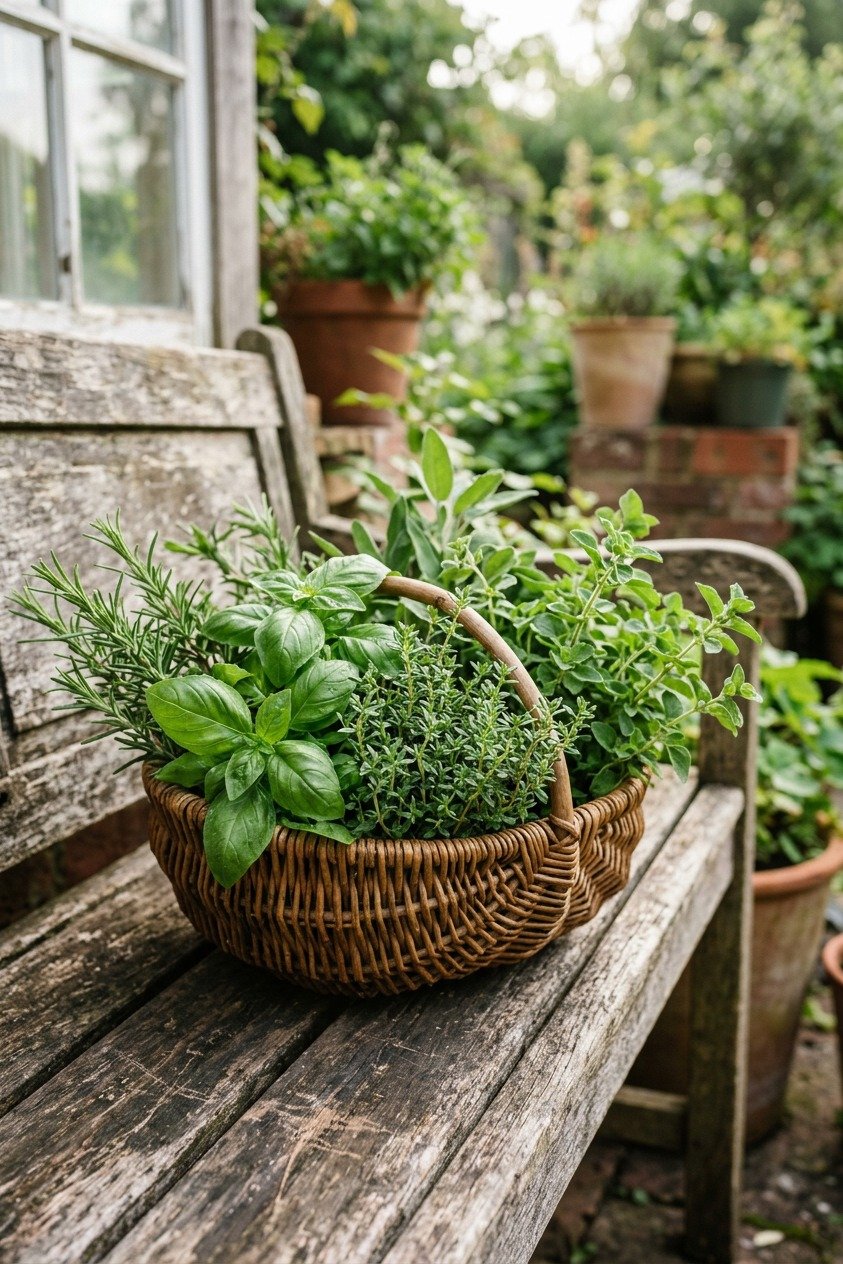
Harvest herbs in the morning after the dew has dried but before the midday sun. This is when their essential oils, and flavor, are strongest.
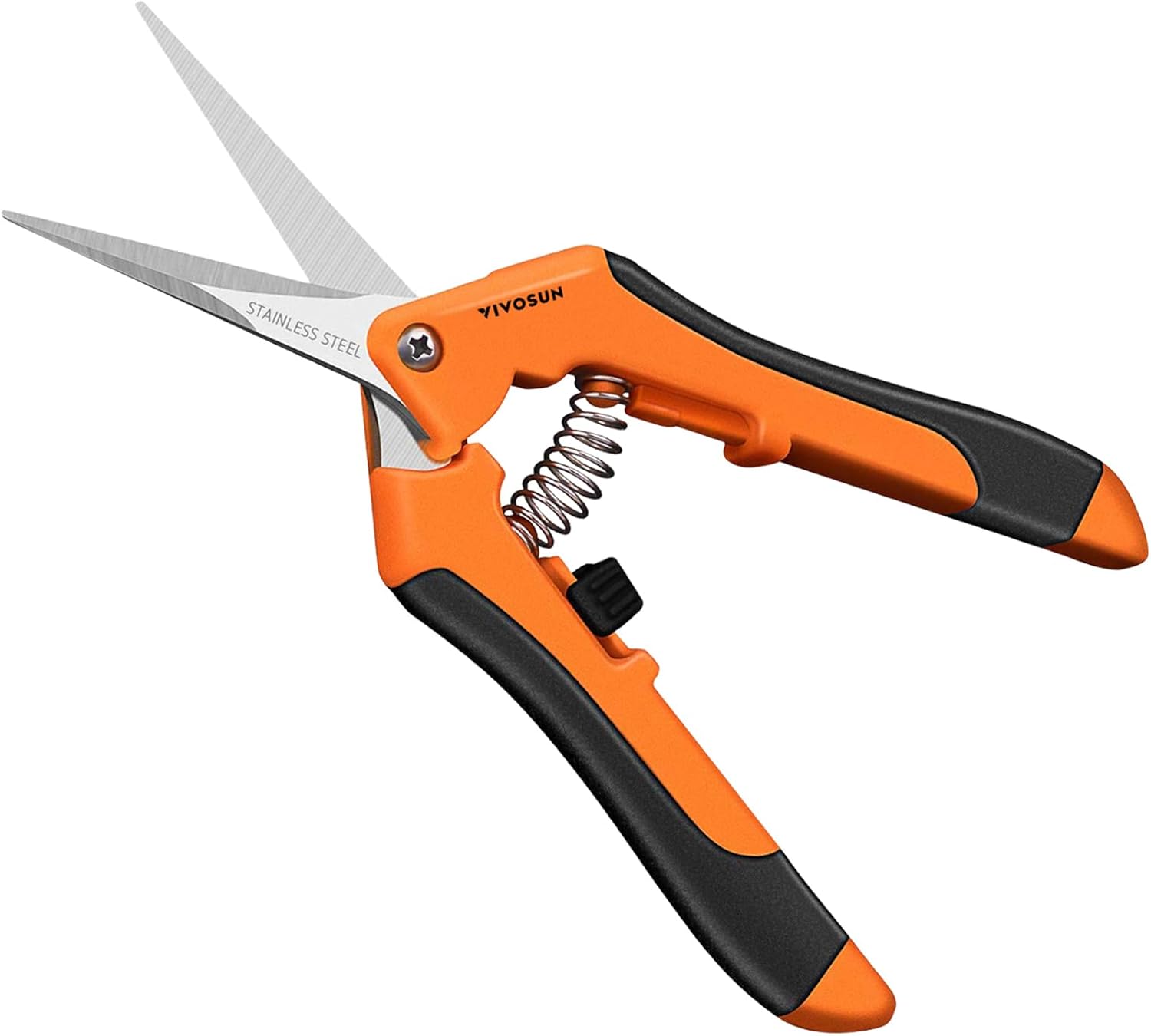
For the best flavor, harvest just before the plant flowers. Cut stems with clean, sharp snips, leaving at least two-thirds of the plant so it keeps growing.
Choose healthy, unblemished stems and avoid any with yellow or damaged leaves.
Pro tip: Never harvest more than one-third of the plant at once.
2. Rinsing and Drying the Leaves
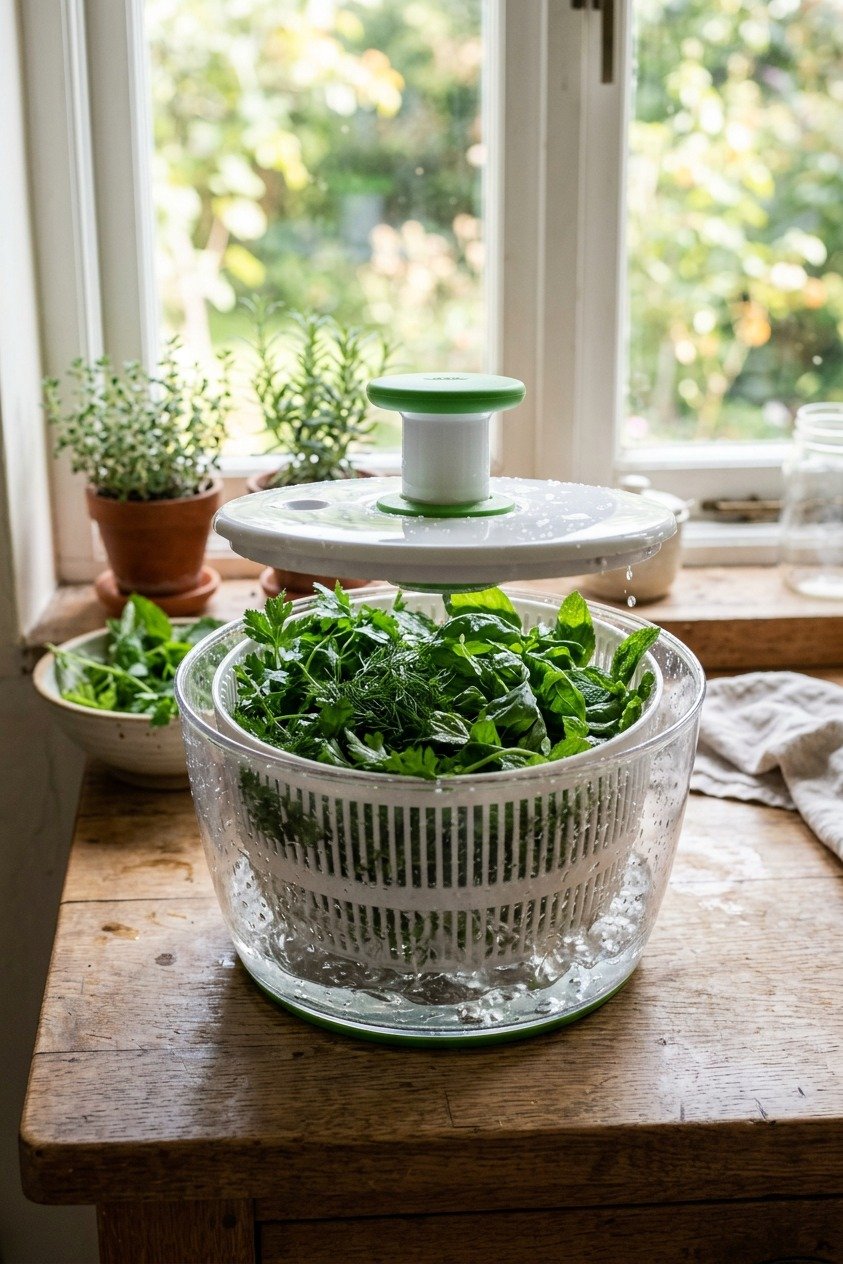
Gently rinse herbs in cool water to remove dust and insects. Shake off the excess water.
Use a salad spinner or pat herbs dry with clean towels. Removing surface moisture prevents mold during drying.
Let herbs air dry on a towel for an hour or two before drying.
Pro tip: Only rinse herbs if they are dirty; clean garden herbs can often skip this step.

Drying Methods
3. Air Drying in Bundles
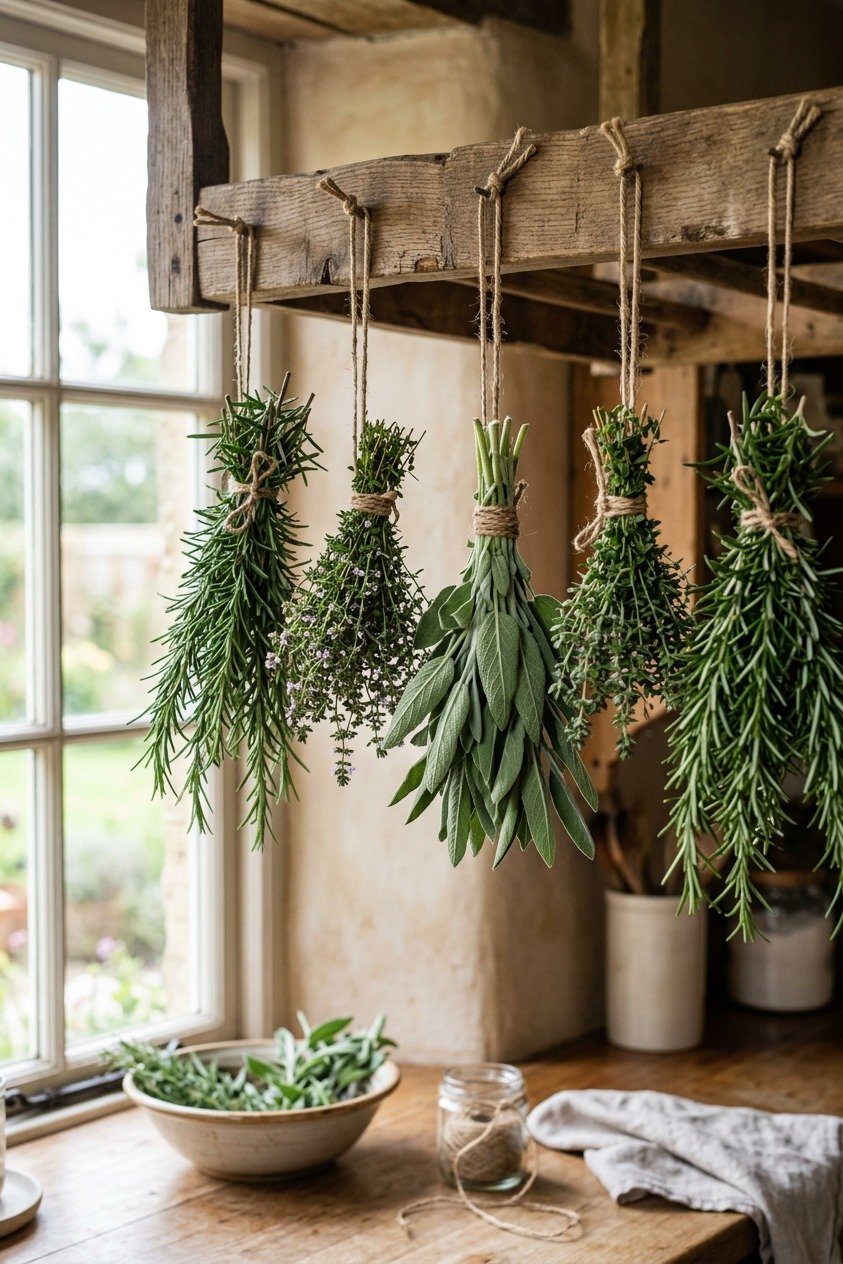
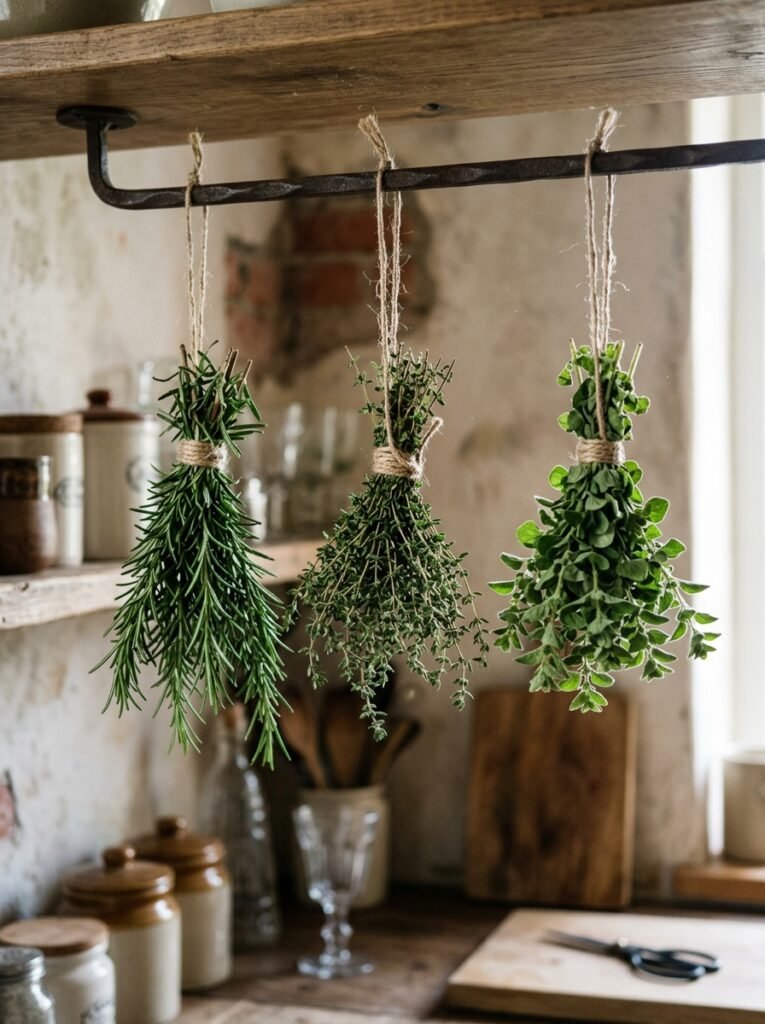
Air drying in bundles is the classic method for woody herbs like rosemary, thyme, oregano and sage.
Gather 5 to 10 stems, tie them with twine and hang them upside down in a warm, dry, dark and well-ventilated place.
Herbs usually dry in one to three weeks.
Pro tip: Place a paper bag with holes over bundles to keep dust off and catch falling leaves.

4. Using a Hanging Mesh Drying Rack
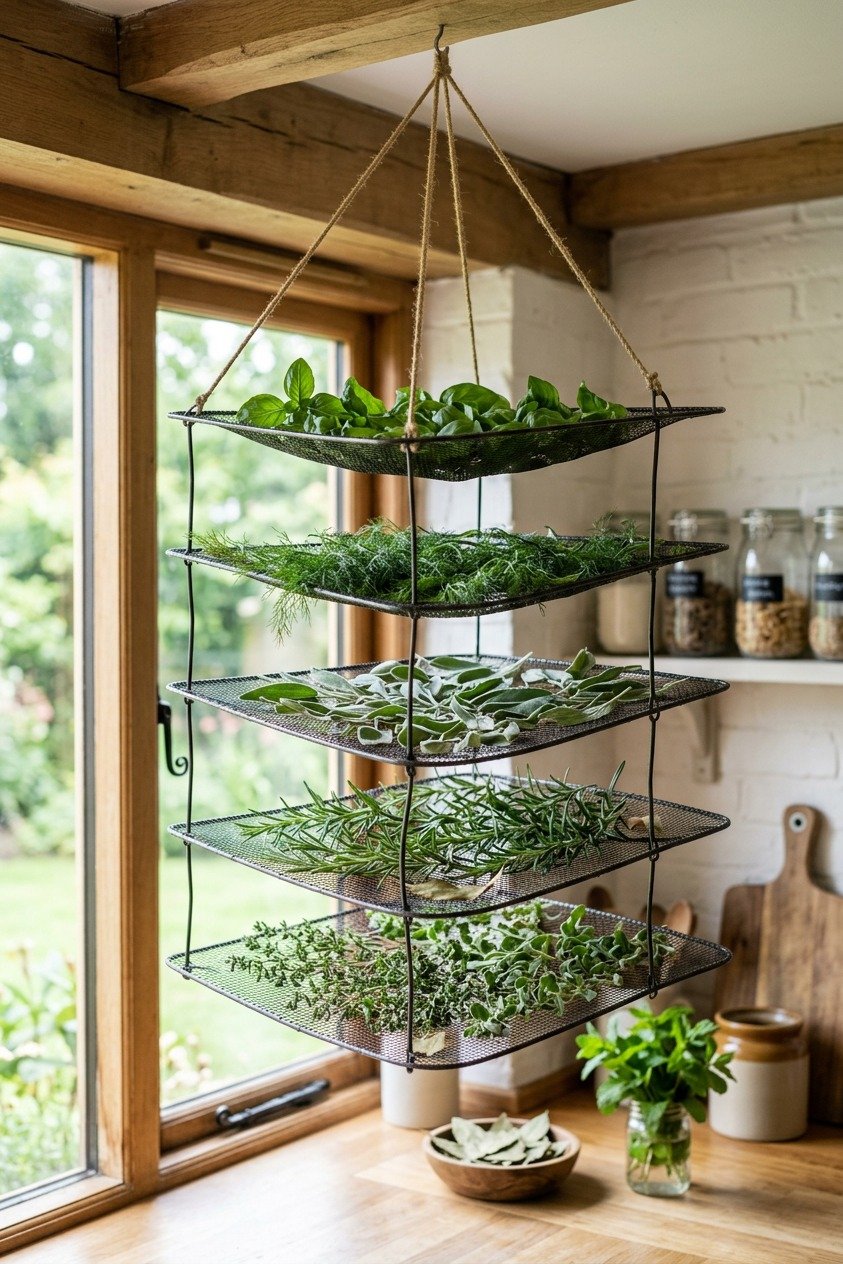
A hanging mesh drying rack is perfect for leaves and smaller herbs. It allows air to circulate on all sides.
Spread leaves in a single layer on each tier and hang the rack in a dry, airy spot.
Turn leaves every few days for even drying.
Pro tip: Mesh racks work well for basil and mint leaves removed from stems.

5. Drying Herbs in the Oven
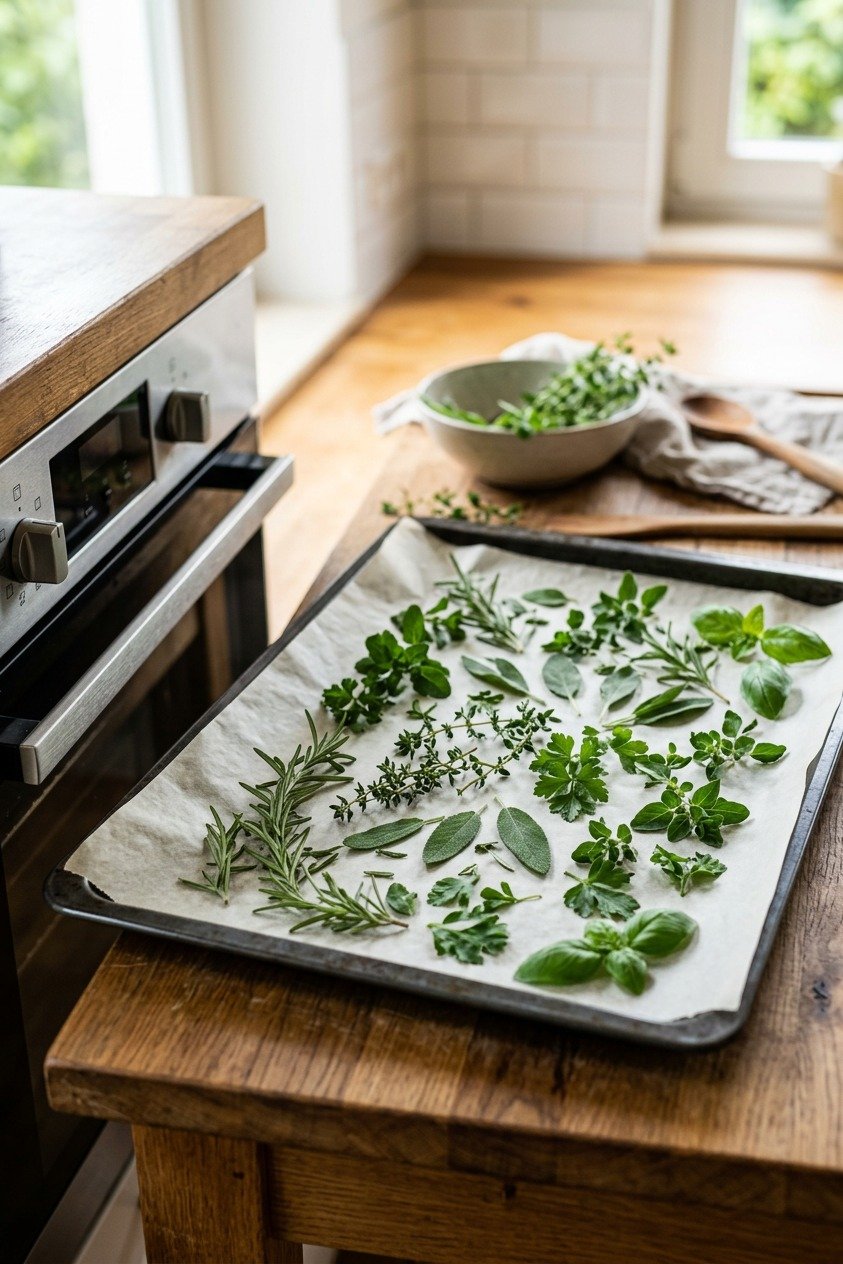
Oven drying is fast and works well for most herbs. Spread leaves in a single layer on a parchment-lined baking sheet.
Bake at the lowest setting, usually 170°F to 180°F, with the door slightly open. Check every 15 minutes; most herbs dry in 1 to 4 hours.
Watch closely, since herbs can scorch quickly.
Pro tip: Use convection mode if available for faster, even drying.

6. Drying Herbs in a Dehydrator
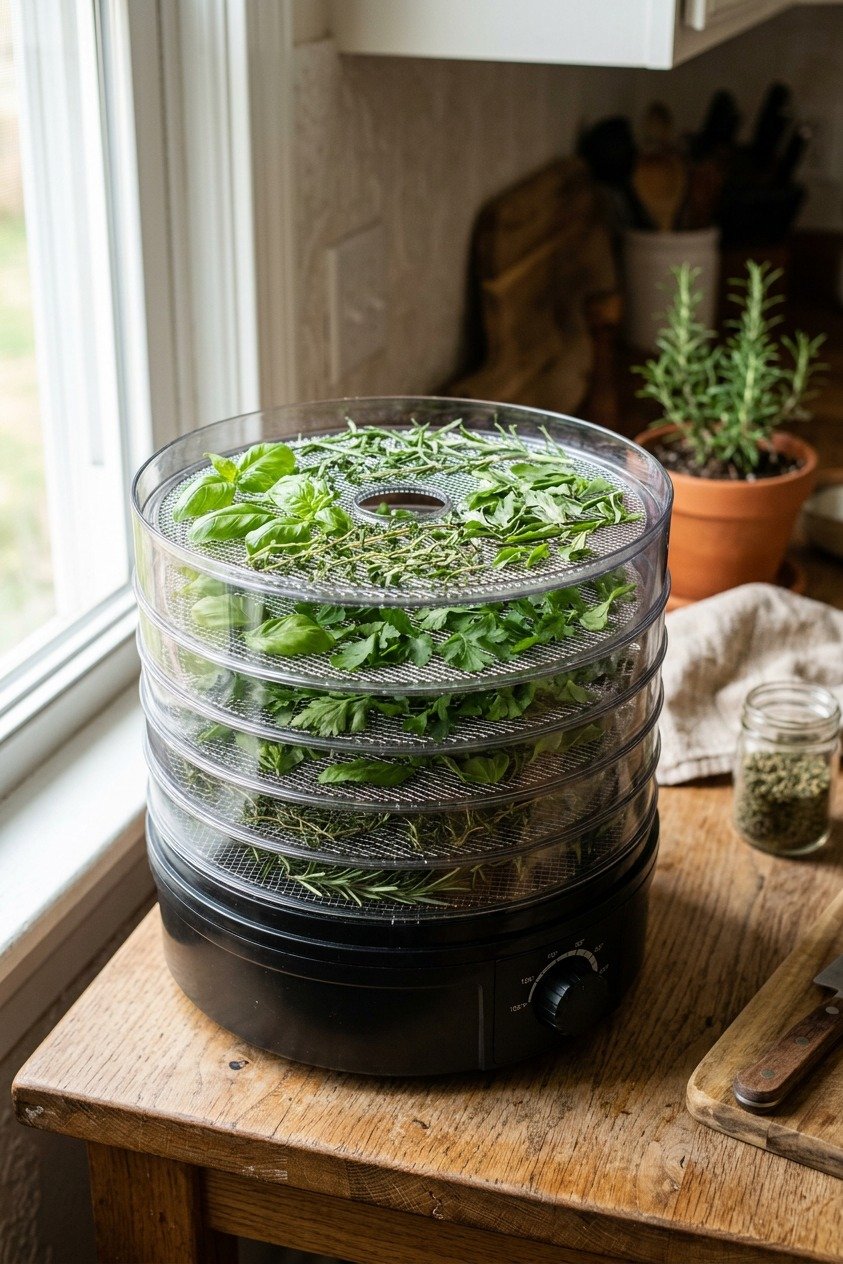
A food dehydrator is one of the best ways to dry herbs, especially moist ones like basil and mint. It provides steady low heat and airflow.
Set the dehydrator to 95°F to 115°F and dry for 1 to 4 hours, depending on the herb.
Dehydrators preserve color and flavor well.
Pro tip: Place a mesh liner on trays to keep small leaves from falling through.

7. Microwave Drying for Small Batches
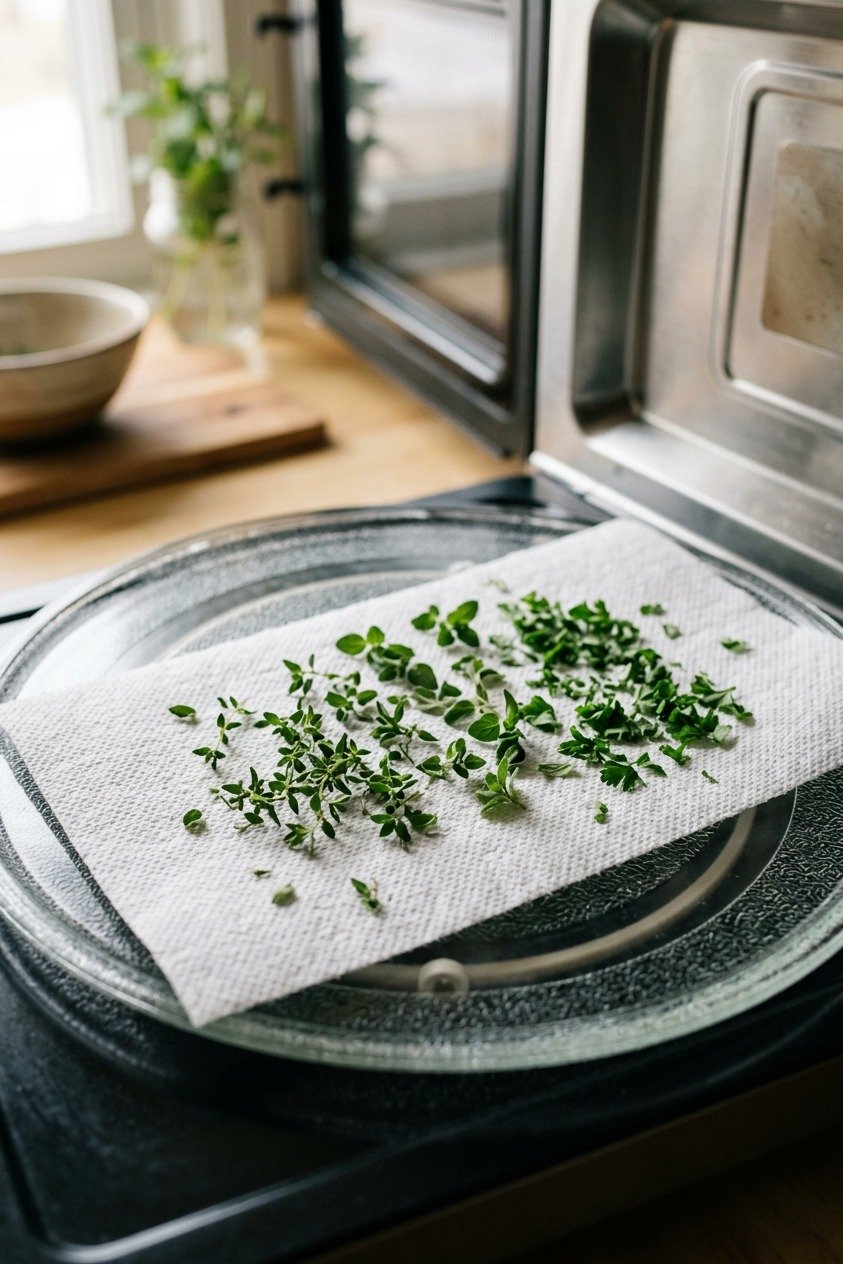
The microwave is the quickest method for small batches. Place leaves between two paper towels on a microwave-safe plate.
Microwave in 30-second bursts, checking each time, until leaves are dry and crumbly, usually 1 to 3 minutes total.
This method works best for small amounts of herbs.
Pro tip: Do not leave the microwave unattended; herbs can overheat.

Store and Use
8. Testing for Dryness
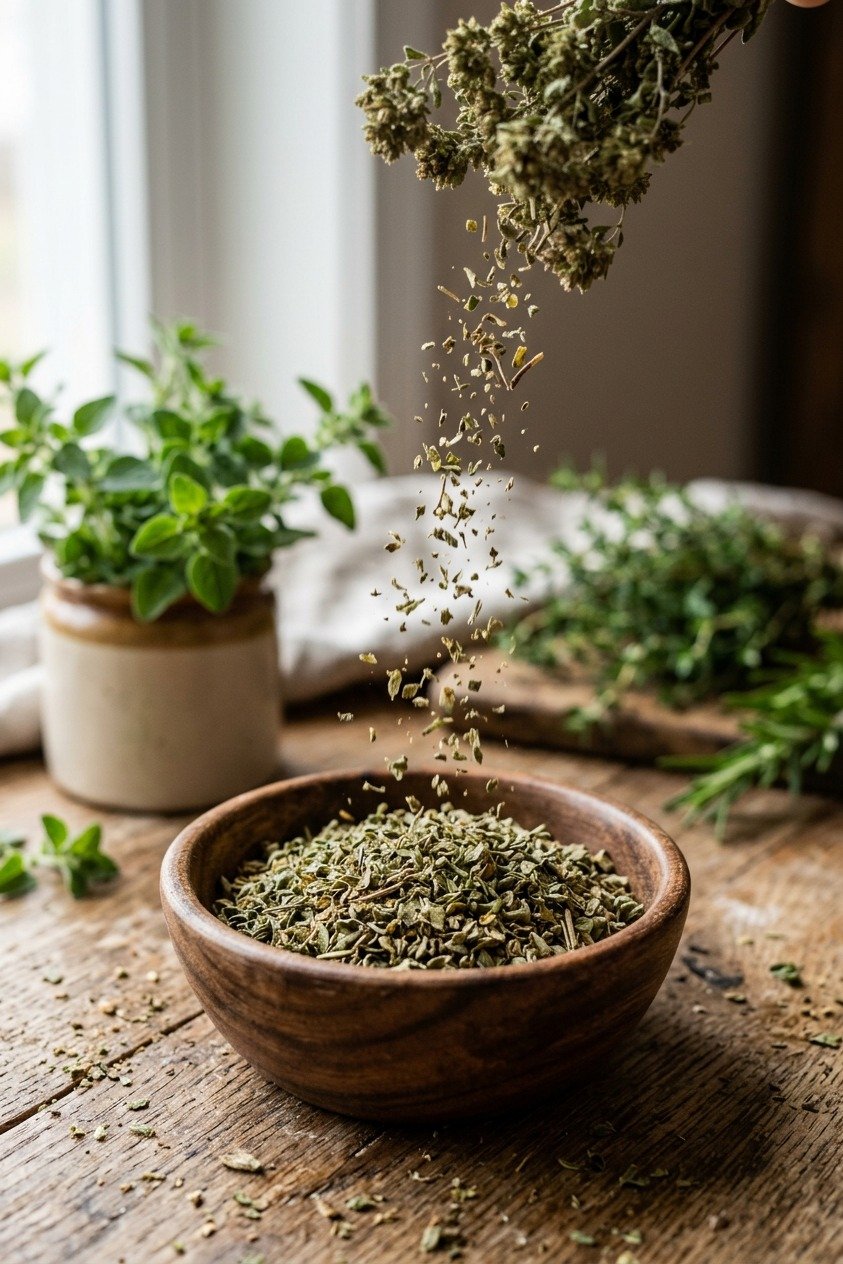
Herbs are fully dry when the leaves crumble easily between your fingers and stems snap rather than bend.
Any remaining moisture can lead to mold in storage.
Crush or leave leaves whole; whole leaves keep flavor longer.
Pro tip: Use a mortar and pestle to crush herbs just before using for the most flavor.

9. Storing Dried Herbs in Glass Jars
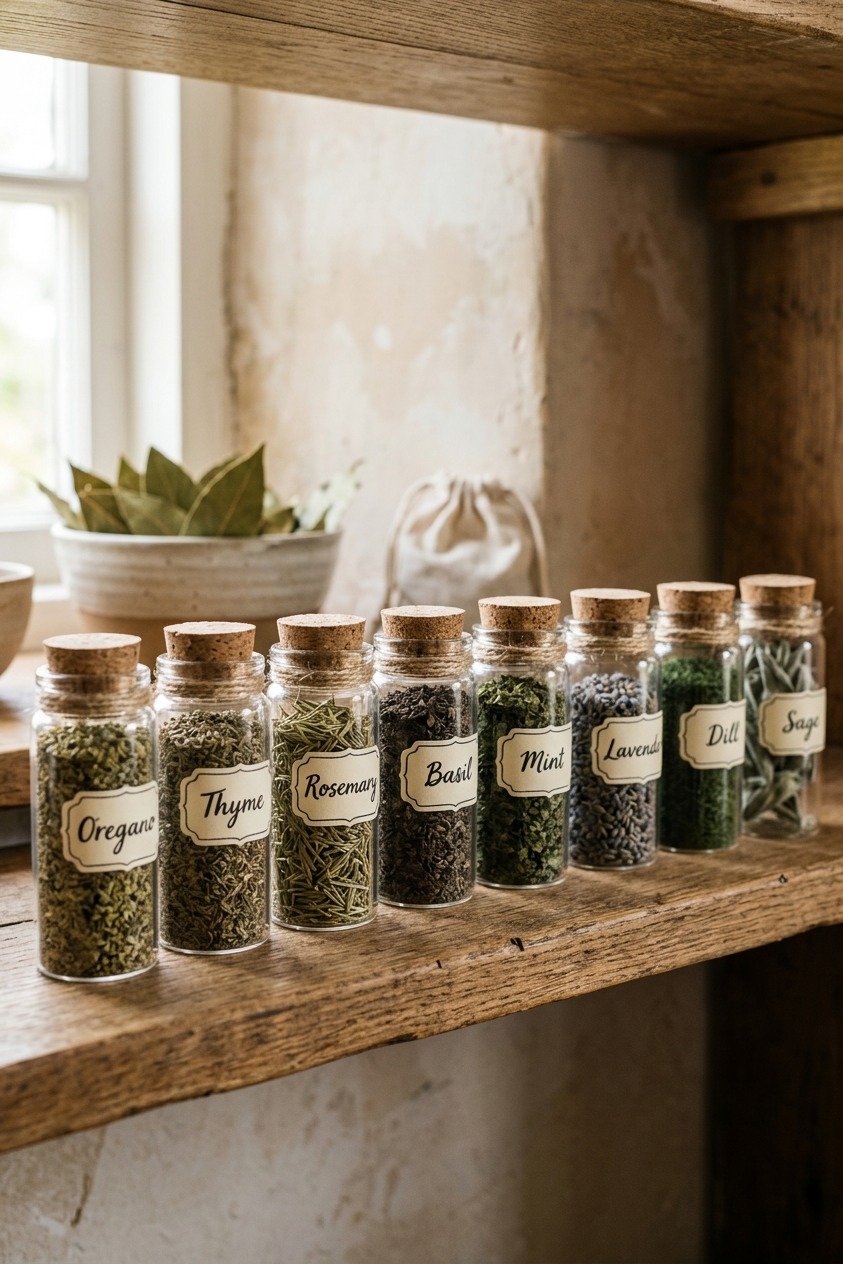
Store dried herbs in airtight glass jars away from heat, light and moisture. A cool, dark pantry or cabinet is ideal.
Remove leaves from stems before storing, and fill jars loosely.
Properly stored dried herbs keep their best flavor for 6 to 12 months.
Pro tip: Avoid storing herbs above the stove, where heat and steam reduce flavor.

10. Labeling and Organizing
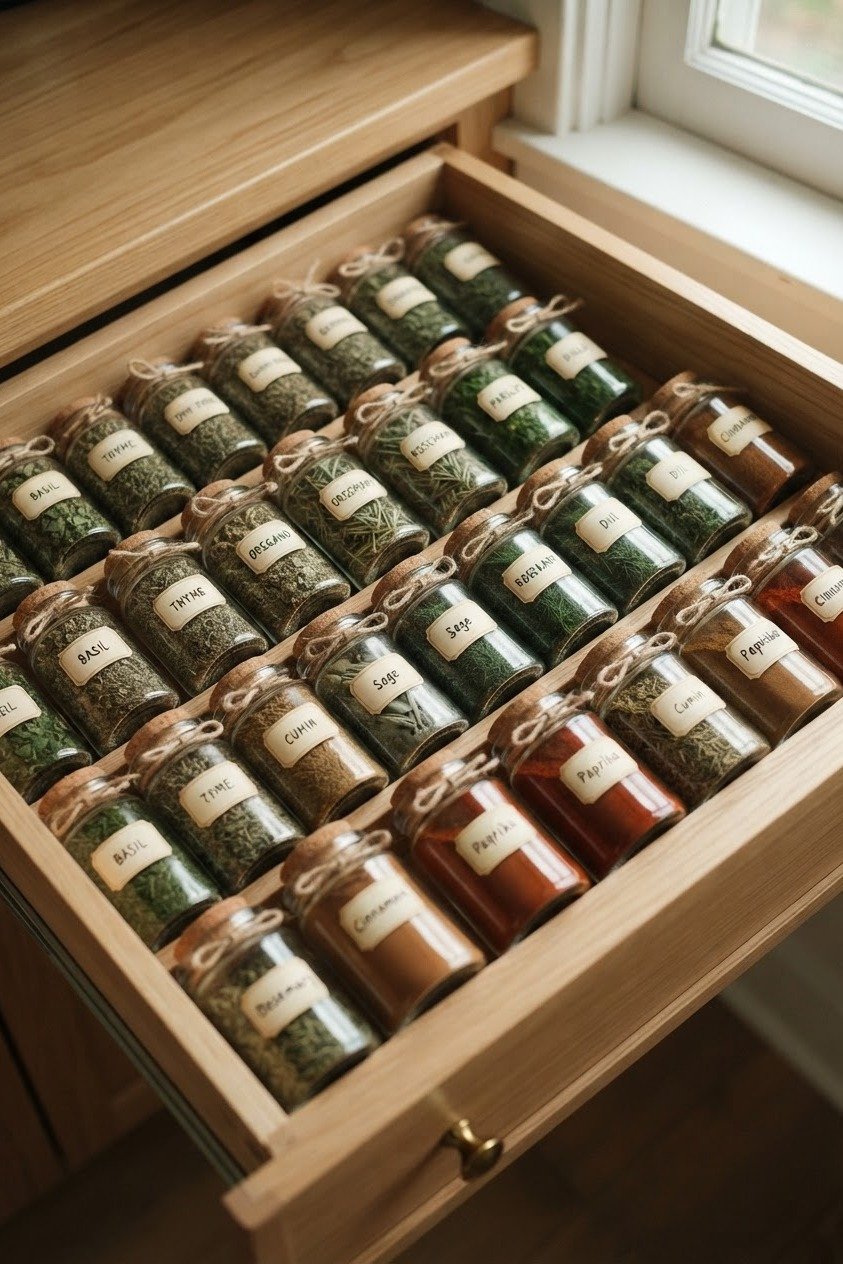
Label each jar with the herb name and date. This helps you use the oldest herbs first.
Organize jars alphabetically or by cuisine in a drawer or on a rack.
Labels make your spice collection look neat and professional.
Pro tip: Replace herbs that have lost their color and aroma.

11. Making Herb Blends
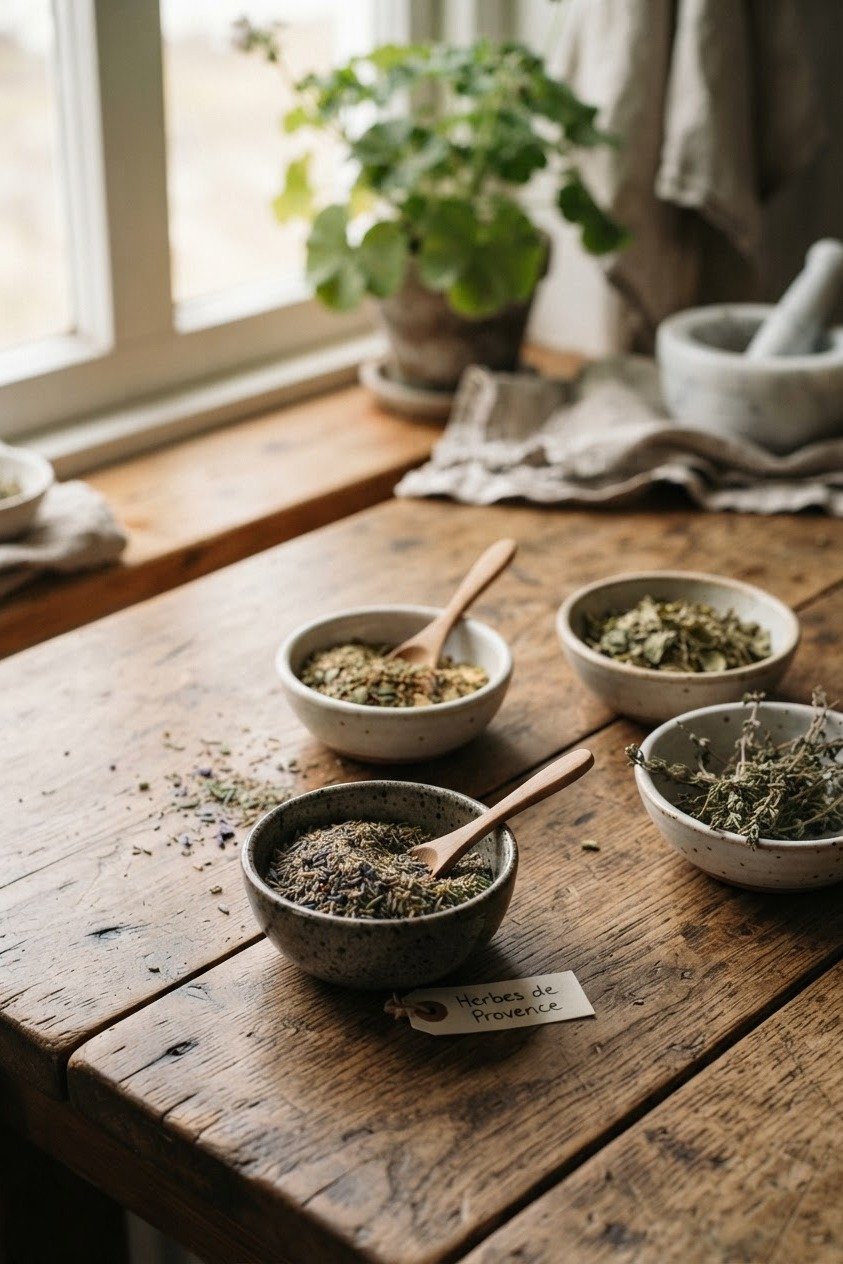
Homemade herb blends make great seasonings and gifts. Try Italian seasoning, herbes de Provence or a simple poultry blend.
Mix dried herbs in small batches and store in labeled jars.
A spice grinder helps create fine blends.
Pro tip: Add dried citrus zest or garlic powder for extra flavor.

12. Cooking With Dried Herbs
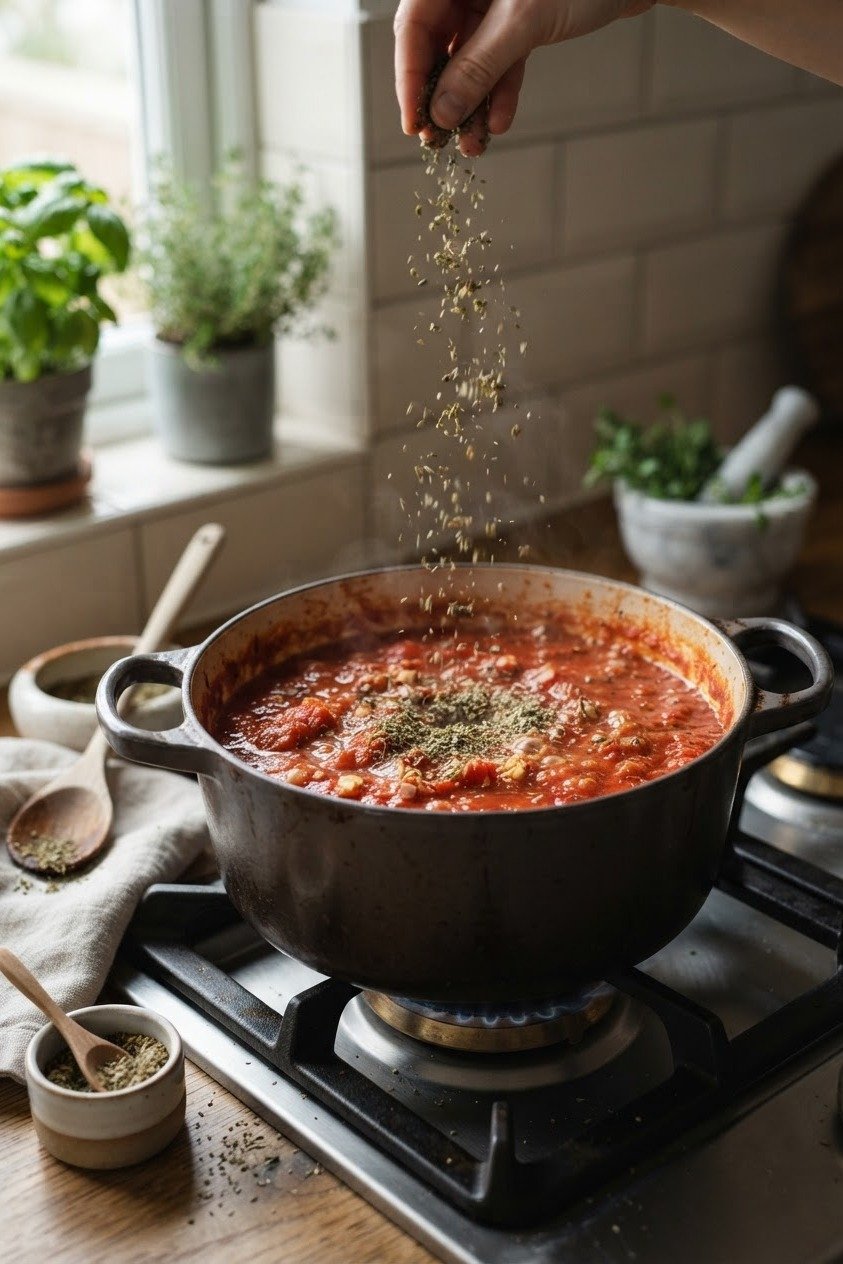
Dried herbs are more concentrated than fresh. Use about one-third the amount of dried herbs in place of fresh.
Add dried herbs early in cooking so their flavor can develop in sauces, soups and stews.
Crush herbs between your fingers before adding to release their oils.
Pro tip: Toast dried herbs briefly in oil to wake up their flavor.

How Long Do Dried Herbs Last?
Dried leafy herbs keep their best flavor for about 6 to 12 months. Whole leaves last longer than crushed.
Check herbs by smell and color. If they have little aroma or have faded, it is time to replace them.
Store in airtight glass jars in a cool, dark place for the longest shelf life.
Frequently Asked Questions
What is the best way to dry herbs?
Air drying works well for woody herbs like rosemary and thyme. A dehydrator is best for moist herbs like basil and mint.
How long does it take to air dry herbs?
Air drying usually takes one to three weeks, depending on the herb and humidity.
Can you dry herbs in the oven?
Yes. Spread herbs on a baking sheet and dry at the lowest oven setting with the door slightly open for 1 to 4 hours.
How do you store dried herbs?
Store dried herbs in airtight glass jars in a cool, dark place away from heat, light and moisture.
How much dried herb equals fresh?
Use about 1 teaspoon of dried herbs for every 1 tablespoon of fresh herbs.
Final Thoughts
Drying herbs from your garden is simple, satisfying and a great way to enjoy your harvest all year. Harvest at the right time, choose the drying method that suits your herbs and store them in airtight jars.
With a pantry full of homemade dried herbs and blends, every meal can carry a taste of your summer garden.