Let’s get the counterintuitive part out of the way first.
Yes. You can grow a banana tree in a cold climate. Not just survive it in a pot on a sunny windowsill, either — actually grow it outside, in the ground, in a garden in Pennsylvania or Ohio or even southern Canada, and have it come back year after year with leaves the size of surfboards.
People do this. Real gardeners, in real cold places, are doing it right now.
The proof isn’t anecdotal. There are documented banana plantings thriving in zone 6 Chicago gardens, zone 5 Iowa backyards, and even zone 4 microclimates with the right variety and the right winter prep. The banana family is genuinely much more cold-tolerant than its tropical reputation suggests — and once you understand which species to grow and how to handle winter, the whole thing becomes surprisingly manageable.
This isn’t about tricking a fragile tropical plant into surviving. It’s about choosing the right plant for what you’re actually trying to do.
Here’s everything you need to know.
Which Banana Varieties Are Cold-Hardy
Not all bananas are created equal when it comes to cold. The grocery-store banana — Cavendish — would die in a hard frost and isn’t what we’re talking about here. Cold-hardy bananas are a different category of plant entirely, bred or selected for their ability to handle freezing temperatures at the root level even when the above-ground growth dies back.
Here are the varieties worth knowing about.
Musa basjoo — The Cold-Hardy Champion
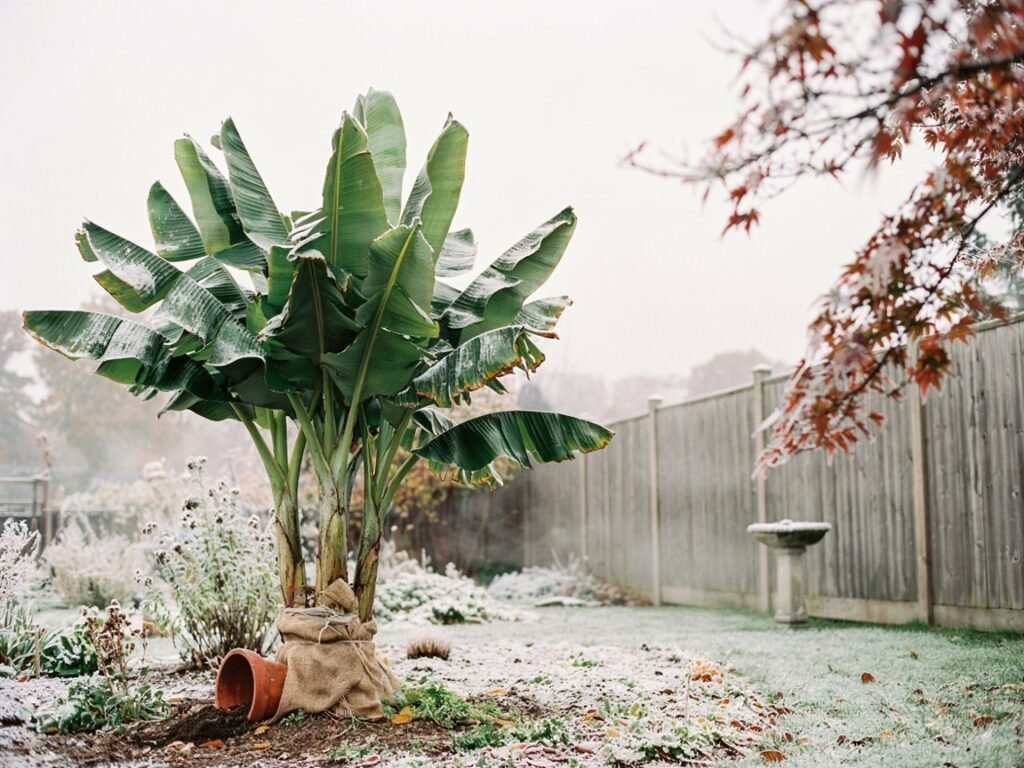
- Cold tolerance: Down to USDA Zone 5 (–20°F / –29°C) with proper mulching
- The most widely grown cold-hardy banana in the world
- Grows 6–14 feet tall with enormous tropical-looking leaves
- Won’t produce edible fruit (the bananas are small and seedy) but the ornamental impact is extraordinary
- Rhizomes survive hard freezes underground even when the top growth is completely killed
- This is the variety to start with if you’re in a genuinely cold zone
Musa sikkimensis (Darjeeling Banana)
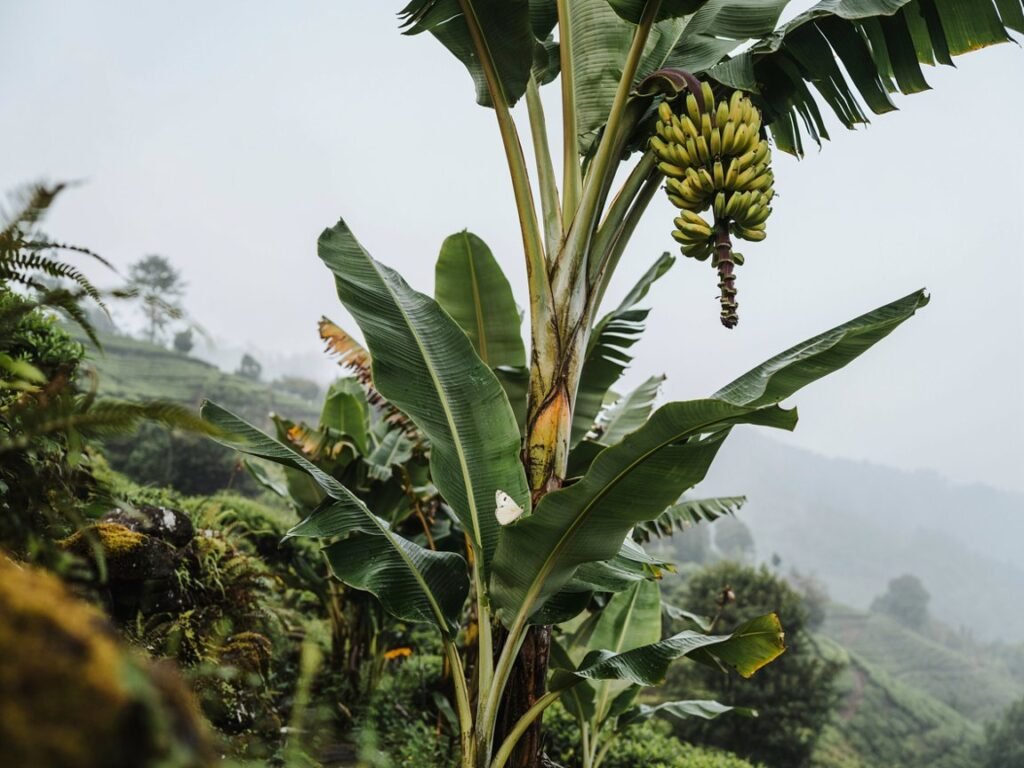
- Cold tolerance: Zone 7 reliably, Zone 6 with good mulching and a protected site
- Stunning burgundy-tinged leaves that emerge red and mature to green with red midribs
- Grows 10–15 feet tall and arguably the most beautiful of the cold-hardy varieties
- More ornamental drama than basjoo, slightly less cold tolerance
- Worth trying in zone 6 with good preparation; expect to lose some years in harsh winters
Musella lasiocarpa (Chinese Dwarf Banana / Golden Lotus Banana)
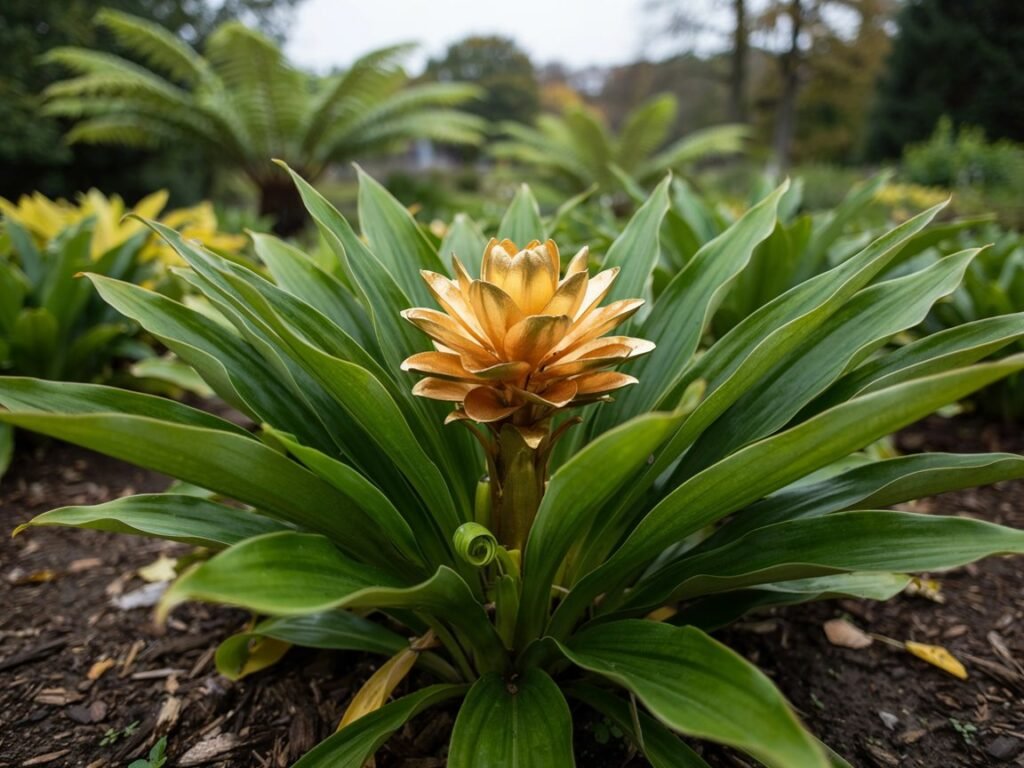
- Cold tolerance: Zone 7–8 reliably, zone 6 with protection
- Unique in that it actually flowers even in cooler climates — produces a stunning golden lotus-shaped flower that lasts for months
- Much shorter than other varieties at 3–5 feet, making it ideal for containers
- Technically more of a close banana relative than a true Musa, but in the same family
- Excellent for small gardens and patio containers where you want the tropical look without the towering height
Musa nagensium
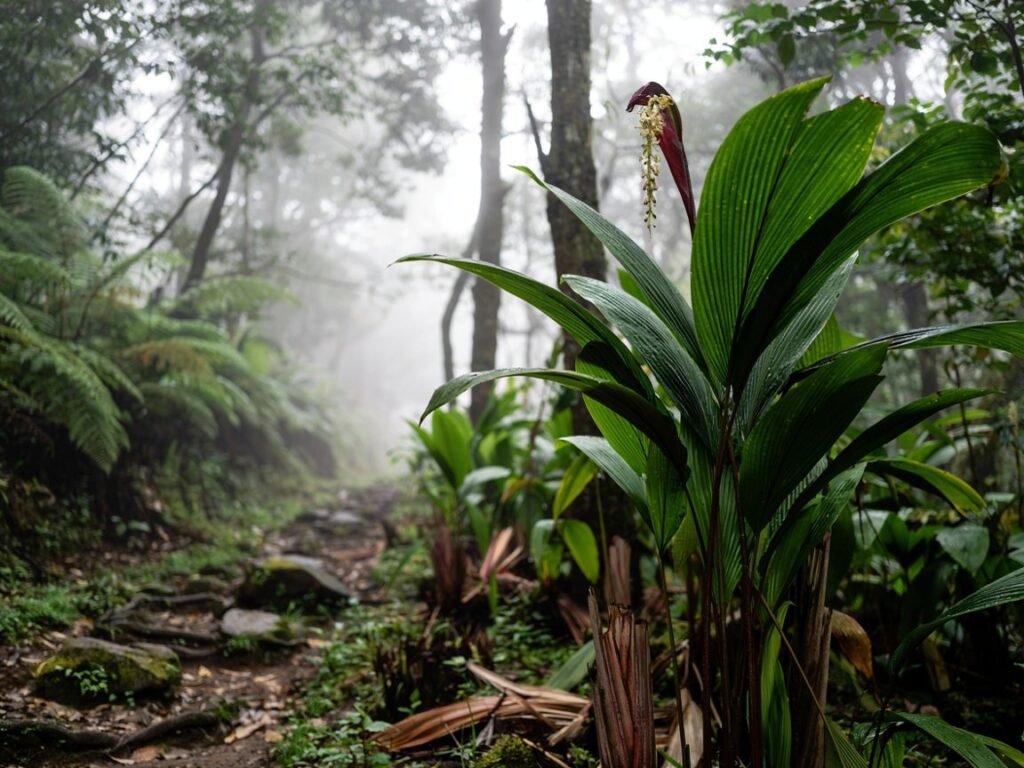
- Cold tolerance: Zone 7 reliably, zone 6 in protected spots
- Less commonly available but worth seeking out from specialty nurseries
- Produces genuinely edible fruit in warmer parts of its range
- Attractive and vigorous, with a more upright habit than basjoo
Musa zebrina (Blood Banana)
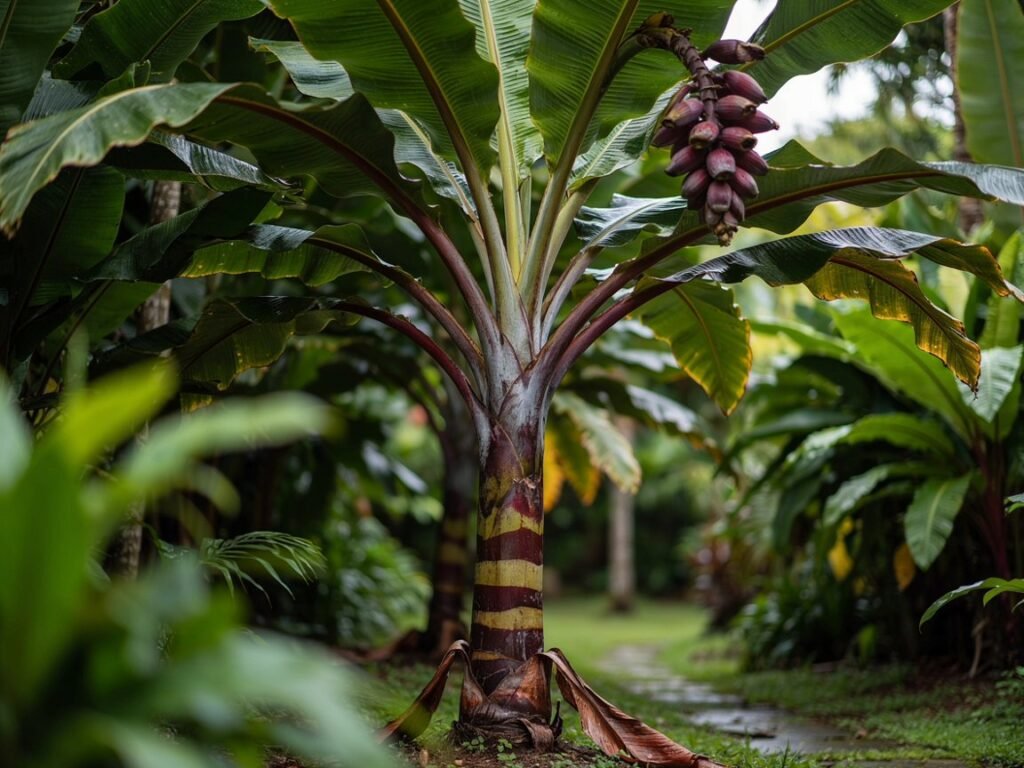
- Cold tolerance: Zone 8 and above without significant protection; zone 7 with mulching
- Grown primarily for its extraordinary leaves — deep burgundy-purple undersides and streaked upper surfaces that genuinely look unreal
- Not truly cold-hardy in the same class as basjoo, but worth including for zone 7–8 gardeners who want maximum visual impact
- Best treated as a container plant in colder zones and brought indoors before first frost
The bottom line on variety selection: If you’re in Zone 5 or 6, start with Musa basjoo. Full stop. Everything else is a bonus experiment once you’ve got basjoo established. If you’re in Zone 7 or 8, you have genuine options — and the Darjeeling banana or Musella lasiocarpa will give you more visual interest.
Container vs. In-Ground — Which Is Right for Cold Climates?
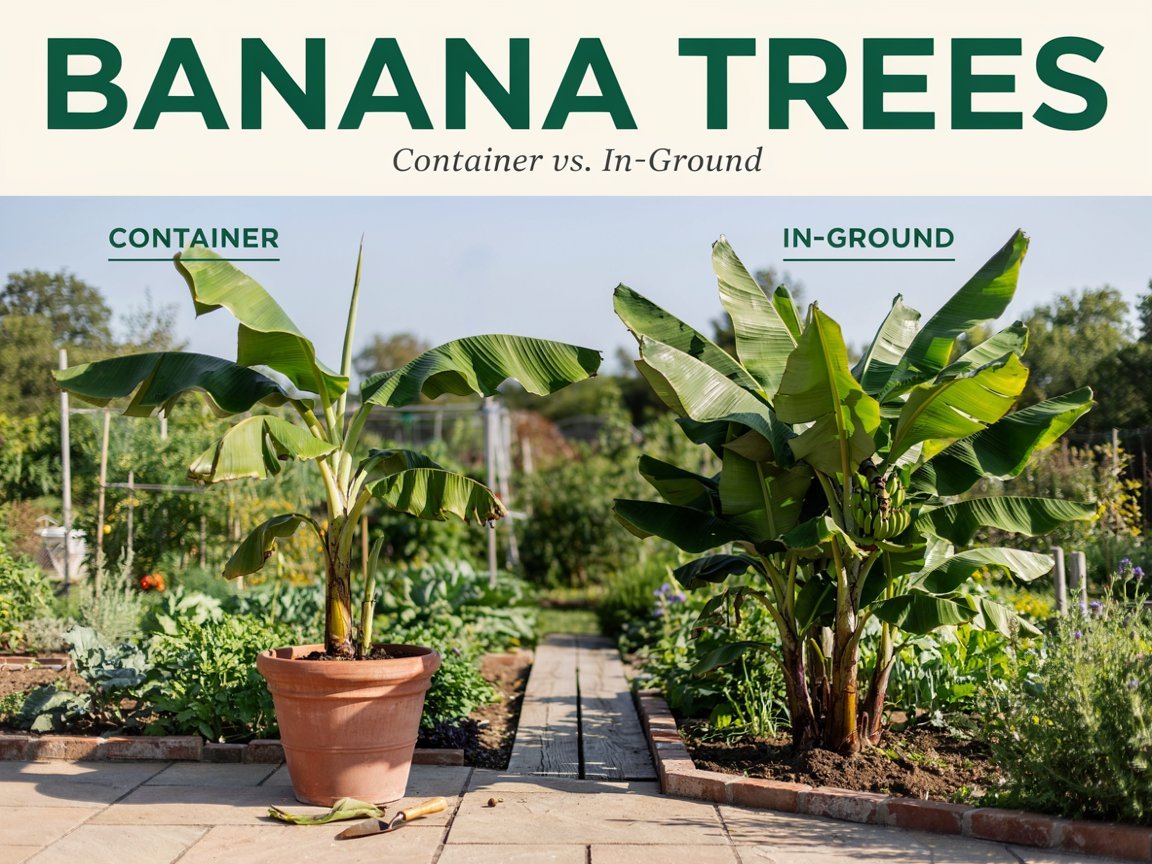
This is the first real decision you’ll make, and it affects everything downstream.
Growing in a Container
Pros:
- You can bring the whole plant indoors or into a garage for winter — no elaborate outdoor mulching required
- Works in any zone because you control the environment entirely
- Lets you grow varieties that aren’t cold-hardy enough for your zone outside
- Easier to manage water and fertilizer in a contained root system
- Can be positioned on a deck or patio for maximum visual impact all summer
Cons:
- Bananas are vigorous, large plants and they will outgrow pots faster than you expect
- Requires large containers — minimum 15–20 gallon to start, ideally 30+ gallon for mature plants
- Heavy. A large planted banana pot is not easy to move, which complicates the “just bring it in” plan
- Root restriction limits ultimate size and vigor
- You’ll need to repot every year or two as the plant multiplies and the rhizome fills the container
Growing In-Ground
Pros:
- Unrestricted root growth means much faster, larger, more vigorous plants
- Once established, truly cold-hardy varieties like basjoo essentially take care of themselves through winter with mulching
- More dramatic visual impact — a basjoo in the ground will reach 12 feet in a good season
- Lower maintenance overall once the overwintering routine is established
- Pups (offshoots) can be allowed to form a genuine clump over years, which looks spectacular
Cons:
- Works reliably only with genuinely cold-hardy varieties in your zone
- Requires the overwintering mulching process every year (more on this in Section 4)
- In the coldest zones, above-ground growth will be killed every winter — the plant comes back from the roots, which means you’re restarting the above-ground growth each spring
- Not portable if something goes wrong
The recommendation for cold climates: In zones 7–8, either approach works well — grow in-ground for drama, container for flexibility. In zones 5–6, grow Musa basjoo in-ground and mulch heavily. Container growing is also viable in those zones but requires genuine commitment to moving large, heavy pots before freeze. Many cold-climate gardeners do both — basjoo in the ground as the main statement plant, and one or two more ornamental varieties in containers that come inside for winter.
The Full Growing Guide
Soil
Bananas want soil that drains quickly but holds some moisture — the distinction matters. They’ll die in waterlogged soil (root rot sets in fast) but they’re also genuinely thirsty plants that don’t want to dry out completely.
- Aim for rich, loose, well-draining soil with a pH between 5.5 and 7.0
- Amend heavy clay soil with significant quantities of compost and coarse grit or perlite before planting
- Raised beds work extremely well for bananas in cold climates — they drain faster and warm up sooner in spring
- For containers: a mix of potting soil, perlite, and compost in roughly equal thirds works well
- Plant in a spot that’s protected from strong wind — banana leaves are dramatic but they shred in wind and the plant will look ragged by August if it’s exposed
Planting Location
- Full sun is essential — aim for at least 6 hours, 8 or more is better
- South or west-facing walls or fences are gold in cold climates because they reflect heat and provide wind protection
- Near a building or hardscape that absorbs heat during the day and releases it overnight can meaningfully extend the season
- Low spots and frost pockets are the enemy — cold air sinks, and a frost pocket can kill top growth weeks earlier than a slightly elevated spot nearby
Watering
- Bananas are heavy drinkers during the growing season — in summer, water deeply 2–3 times per week in hot weather
- The leaves will tell you when the plant is stressed: they roll inward from the edges when the plant needs water
- Reduce watering significantly in fall as temperatures drop and the plant slows
- For in-ground plants in winter dormancy, natural rainfall is usually sufficient — don’t water a mulched crown in winter
- Overwatering is more dangerous than underwatering — if in doubt, check the soil an inch or two down before watering
Fertilizing
This is where many cold-climate banana growers underperform their plants.
- Bananas are hungry plants — a balanced slow-release fertilizer at planting is a good start
- During the growing season (roughly May through August), feed every 2–3 weeks with a high-nitrogen fertilizer — something like a 3-1-2 or 4-1-2 ratio (nitrogen-phosphorus-potassium)
- Switch to a lower-nitrogen, higher-potassium fertilizer in late August to harden off the plant before frost
- Compost worked into the base of the plant monthly during summer is a low-maintenance supplement that genuinely makes a difference
- Stop fertilizing entirely once temperatures drop below 50°F
Summer Care Routine
The summer routine is genuinely low-maintenance once you’re established.
- Water deeply and regularly
- Fertilize every 2–3 weeks through midsummer
- Remove any obviously dead or damaged leaves at the base — they don’t recover and they look untidy
- Allow pups (offshoots from the base) to grow if you want a clump effect; remove them if you want to keep the plant as a single stem or redirect energy to the main plant
- In very hot weather, a mid-afternoon partial shade from direct scorching sun can help prevent leaf burn, though most bananas handle heat well if watered adequately
Fall Care Routine (The Transition Period)
This is where the cold-climate banana grower earns their results.
- Begin tapering water and fertilizer in late August or early September
- Stop fertilizing completely by early September
- Let the plant experience light frosts (28–32°F) without intervention — this helps harden off the rhizome
- Begin the overwintering process (see Section 4) before a hard freeze — temperatures consistently below 28°F
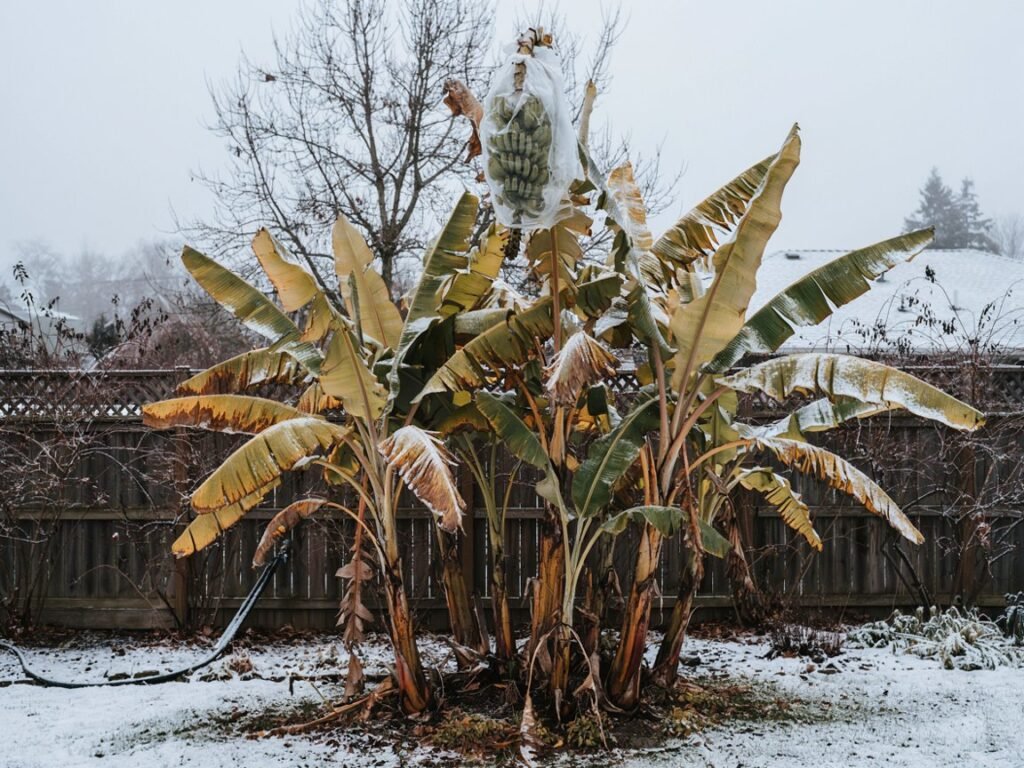
How to Overwinter a Banana Tree
This is the section that makes or breaks cold-climate banana growing. Most people who fail do so here — and they fail not because the plant isn’t hardy enough, but because they make one of two common mistakes.
The two most common overwintering mistakes:
- Cutting the plant down too early, before the rhizome has properly hardened
- Not applying enough mulch — people read “mulch it well” and put down three inches, when what’s needed is closer to 18–24 inches
Here is the step-by-step process for overwintering in-ground bananas in zones 5–7.
Step 1 — Wait for the right time (late October to early November for most zones)
Don’t rush this. Let the plant experience light frost and begin dying back naturally. The above-ground dying signals the rhizome is going dormant and hardening off. If you cut the plant and mulch it too early while it’s still actively growing, you interrupt that hardening process.
Step 2 — Cut down the stem
Once the top growth has been killed or significantly damaged by frost, cut the stem down to about 6–12 inches above the ground. Don’t cut it to the soil — that stub helps keep mulch from piling directly against the crown and trapping moisture in a way that can cause rot.
Step 3 — Apply a thick layer of dry leaves or straw over the crown
This is the step people underdo. You want a minimum of 18 inches of light, airy mulch over the crown and surrounding root zone. Dry leaves are ideal — they’re insulating without becoming waterlogged. Straw works well. Avoid heavy, dense materials that pack down and hold moisture against the crown.
- Pile leaves or straw at least 18–24 inches deep over the crown
- Extend the mulch layer out at least 2 feet in all directions from the base to protect the root zone
- In zone 5 or colder, consider adding an additional layer of pine boughs over the leaves to hold them in place and add extra insulation
Step 4 — Optional: Add a protective cage or frame
In zones 5–6, many gardeners build a simple wire cage (like a chicken wire cylinder) around the crown before filling with leaves. This keeps the mulch from blowing away and allows you to pile much more insulation in place.
Step 5 — Leave it alone through winter
Resist the urge to uncover it during a warm spell in February. One warm week doesn’t mean winter is over, and exposing the crown to a subsequent hard freeze after it’s begun to break dormancy can be more damaging than consistent cold.
Step 6 — Uncover gradually in spring
Begin uncovering in stages once night temperatures are consistently above freezing — typically late April in zones 6–7, May in zone 5. Remove the bulk of the mulch but leave a light layer until the last frost date has passed. New growth emerges from the base, not from the cut stem, so don’t panic if the stem looks dead — watch the base.
For container plants:
The overwintering process is simpler but requires space.
- Before first frost, bring the container into a garage, basement, or cool room where temperatures stay above 20°F (ideally above 28°F)
- Cut the plant back to 12–18 inches for easier storage
- Water minimally — just enough to keep the rhizome from completely desiccating, roughly once a month
- Bring it back outside in spring after the last frost date, gradually reintroducing it to outdoor light over a week or two to prevent sun shock
Will It Actually Fruit?
Honest answer: it depends — and in most cold climates, probably not on the varieties you’re growing.
Here’s the reality.
For Musa basjoo in zones 5–6:
Basjoo can technically fruit, but the bananas are small, seedy, and not worth eating. More importantly, a banana plant needs to be in continuous active growth for about 9–15 months to reach flowering stage — and in a cold climate where top growth is killed every winter, the plant is essentially starting over from the rhizome each spring. Nine to fifteen months of uninterrupted growth simply isn’t available.
You’re growing basjoo for the extraordinary tropical drama of its leaves, not for fruit. That’s a completely legitimate reason to grow it, and the visual impact genuinely delivers.
For zones 8–9 with cold-hardy varieties:
In zone 8 or 9, where the above-ground growth isn’t killed every winter, fruit production becomes realistic — particularly with varieties like Musa sikkimensis or certain cold-tolerant fruiting selections.
For fruiting in cold climates — what it actually takes:
- Zone 8 or warmer as a baseline
- A variety selected for fruit production, not just cold hardiness
- Several years for the plant to establish and reach maturity
- A long, warm growing season — bananas need consistent heat to ripen fruit, not just to grow
The middle path — protected growing:
Some dedicated cold-climate gardeners grow bananas in large unheated greenhouses or polytunnels, which keeps the plant in continuous growth year-round and makes fruiting realistic even in zone 6 or 7. This is a significant investment in infrastructure, but it works.
The bottom line: If you’re in zone 5 or 6, grow bananas for the spectacle. If you want fruit and you’re in zone 7 or warmer, choose your variety carefully, let the plant establish over 2–3 years, and you have a real shot.
Quick-Start Shopping List
Everything you need to get started.
The plant:
- Musa basjoo rhizome or plant (zones 5–7, starting recommendation)
- Musa sikkimensis for zones 7+ or for something more ornamental
- Musella lasiocarpa for containers or zone 6–7 with a showier bloom
Where to buy:
- Specialty mail-order nurseries (more reliable than big-box stores for cold-hardy varieties)
- Look for: Logee’s, Plant Delights Nursery, Wellspring Gardens, or search “cold-hardy banana rhizome” on reputable plant marketplaces
Supplies:
- Large fabric grow bags or nursery pots (30 gallon minimum for containers)
- Slow-release balanced fertilizer for spring planting
- High-nitrogen liquid fertilizer for summer feeding
- Compost — a lot of it
- Coarse perlite for soil amendment
- A very large bag of dry leaves or a bale of straw for winter mulching
- Chicken wire (optional, for building a mulch cage in colder zones)
Optional but genuinely useful:
- A soil thermometer — soil temperature above 60°F is the real trigger for spring growth
- Frost cloth for unexpected late frosts in spring when new growth is emerging
- A pH soil test kit to confirm your soil is in the right range before planting
You don’t need tropical weather to grow something that looks like you do. You just need the right variety, the right spot, and the willingness to tuck it in for the winter.
Start with basjoo. Mulch it like you mean it. Watch what happens.