There’s a moment — maybe you’ve had it — where you lift a mug of jasmine tea to your lips and the scent hits you before the liquid does. Something floral and warm and faintly honeyed, like walking past a garden at dusk when the air is still. It’s one of the most distinctive aromas in the entire world of tea, which might explain why jasmine tea has quietly gone from “something your grandmother kept in a tin” to “sold out at every specialty shop in town.”
The reason it’s suddenly everywhere is simple: jasmine tea sits at a beautiful intersection. It’s floral enough to feel special, familiar enough to not intimidate, and versatile enough to show up in a morning cup, an afternoon bubble tea, or a chilled evening glass over ice. But walk into any tea aisle or scroll through an online shop and you’ll find at least a dozen different versions all calling themselves “jasmine tea” — and they are not the same drink.
Some are delicate and complex. Some are sweet and creamy. Some taste like they were made by steeping a candle. Knowing which is which will save you from wasting money on a tin of disappointment.
Here are seven distinct types of jasmine tea, what they actually taste like, and which one is genuinely worth buying for you.
1. Jasmine Green Tea
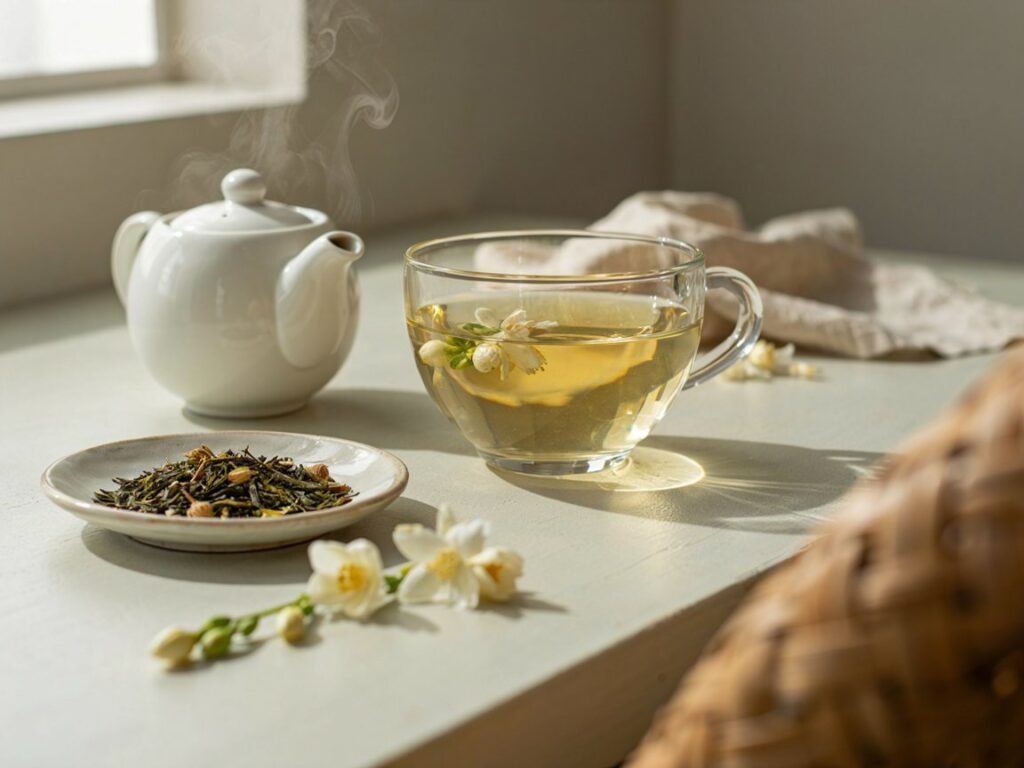
This is the classic. The one people mean when they just say “jasmine tea” without any further description. Jasmine green tea is made by laying fresh jasmine blossoms over green tea leaves — sometimes repeatedly, over multiple nights — so the tea slowly absorbs the fragrance. The result is a cup that’s simultaneously grassy and floral, with a clean, lingering sweetness that doesn’t overwhelm.
The flavor profile is light and layered: you’ll notice the jasmine first, bright and perfumed, then a gentle vegetal note underneath, and finally a soft, slightly nutty finish. It’s not sweet on its own, but it never feels sharp or bitter when brewed correctly. Think of it as the tea equivalent of a white linen shirt — simple, but unmistakably good.
Best for: Anyone new to jasmine tea, or anyone who wants something light enough to drink all day without flavor fatigue.
How to brew: Use water around 175°F (80°C) — not boiling, which will scorch the delicate leaves and turn the cup bitter. Steep for 2–3 minutes. If you like it stronger, add more leaves rather than more time.
Worth buying if… you want a daily-driver jasmine tea that’s approachable, affordable, and genuinely satisfying.
2. Jasmine Pearl Tea
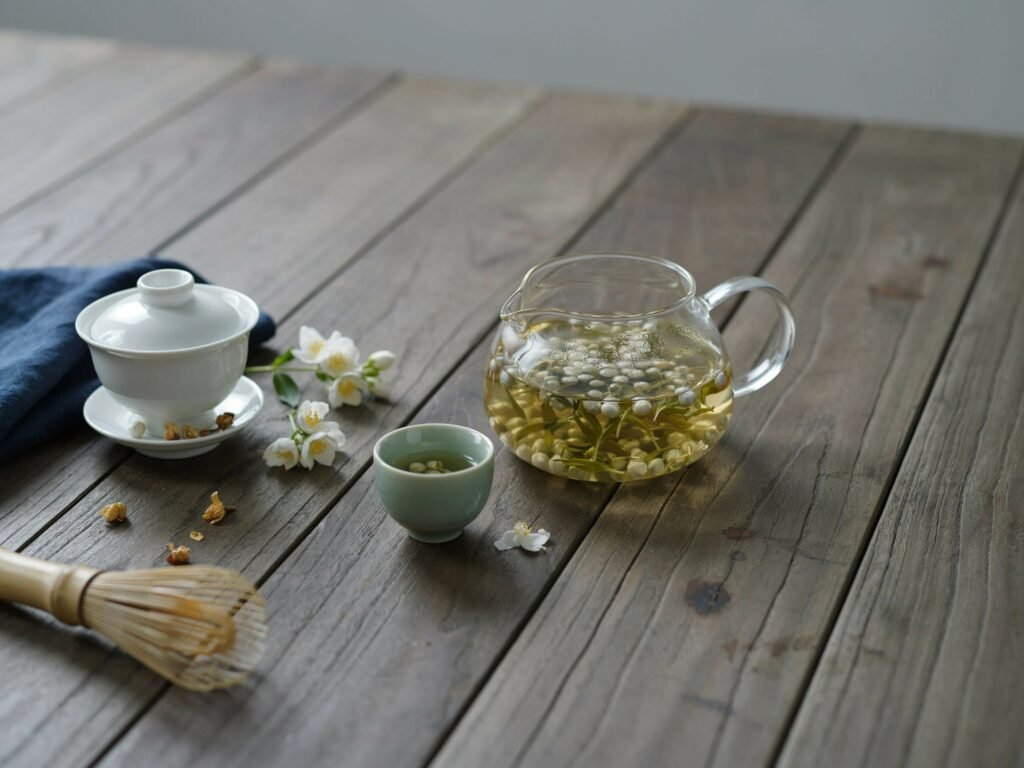
Jasmine pearl tea is jasmine green tea that has been hand-rolled into tiny, tight little balls — and it’s one of the most visually satisfying things in the tea world. Drop a few pearls into a glass teapot and watch them slowly unfurl in the hot water, releasing their fragrance in slow, graceful waves. It feels almost ceremonial, even on a Tuesday morning.
The flavor is rounder and more concentrated than regular jasmine green tea because the rolling locks in aroma during the scenting process. You’ll get a slightly thicker mouthfeel, a more intensely floral note, and a sweetness that’s genuinely complex — sweet but not cloying, the way good jasmine should be. The finish is long and clean, with none of the flat, synthetic aftertaste you get from cheaper jasmine teas.
Best for: People who want a more elevated, mindful tea experience — or anyone who needs something beautiful to serve to guests.
How to brew: Use 175–185°F (80–85°C) water and steep for 3–4 minutes. Use a glass teapot or cup if you have one — watching the pearls unfurl is half the experience.
Worth buying if… you want the best version of classic jasmine tea and don’t mind paying a little more for something genuinely special.
3. Jasmine White Tea
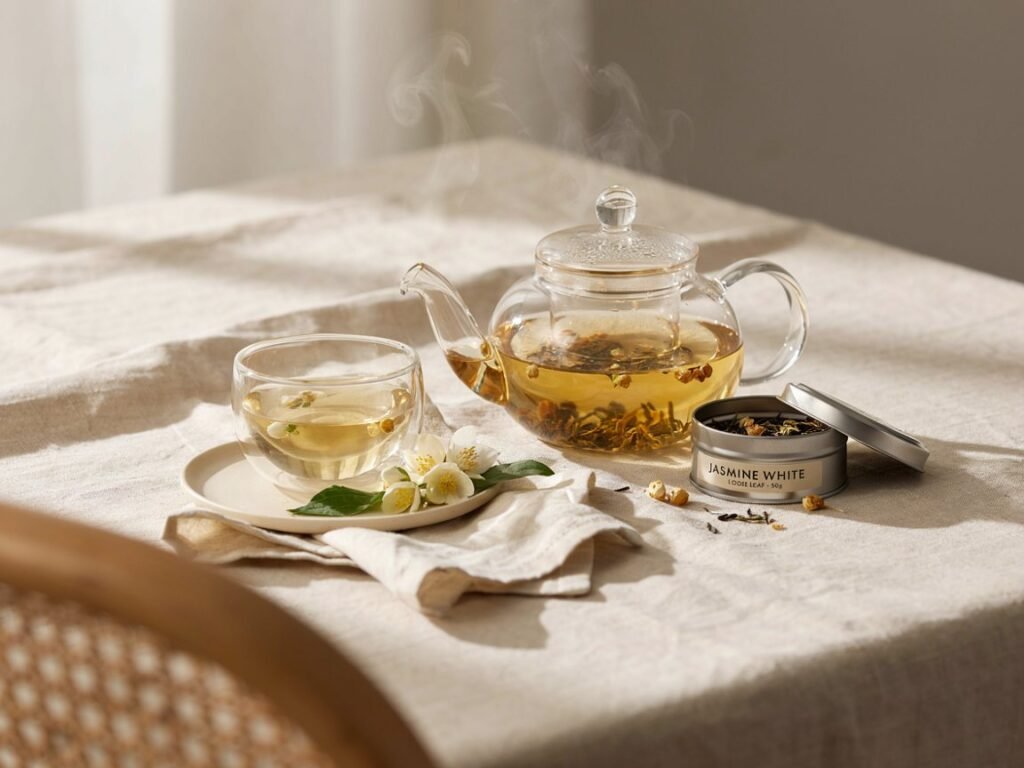
If jasmine green tea is a garden at dusk, jasmine white tea is a garden at dawn — quieter, softer, almost gossamer. White tea is made from young tea buds and leaves that are minimally processed, which gives it a naturally sweet, delicate flavor that’s unlike any other tea. Pair that with jasmine scenting and you get something extraordinarily light and refined.
The taste is subtle in the best possible way: there’s a honeyed quality to it, a faint melon-like sweetness, and the jasmine sits gently on top rather than dominating the cup. It doesn’t have the grassy edge of green tea, so the floral note comes through even more cleanly. Drink it slowly, without distraction, and you’ll catch notes you’d miss if you were rushing.
Best for: Experienced tea drinkers who want nuance, or anyone with a sensitive palate who finds green tea too sharp.
How to brew: Use the lowest temperature of all — 160–170°F (70–76°C) — and steep for 3–5 minutes. White tea is delicate and punishes high heat harshly.
Worth buying if… you already love white tea or you’re specifically looking for the most gentle, refined jasmine experience possible.
4. Jasmine Oolong
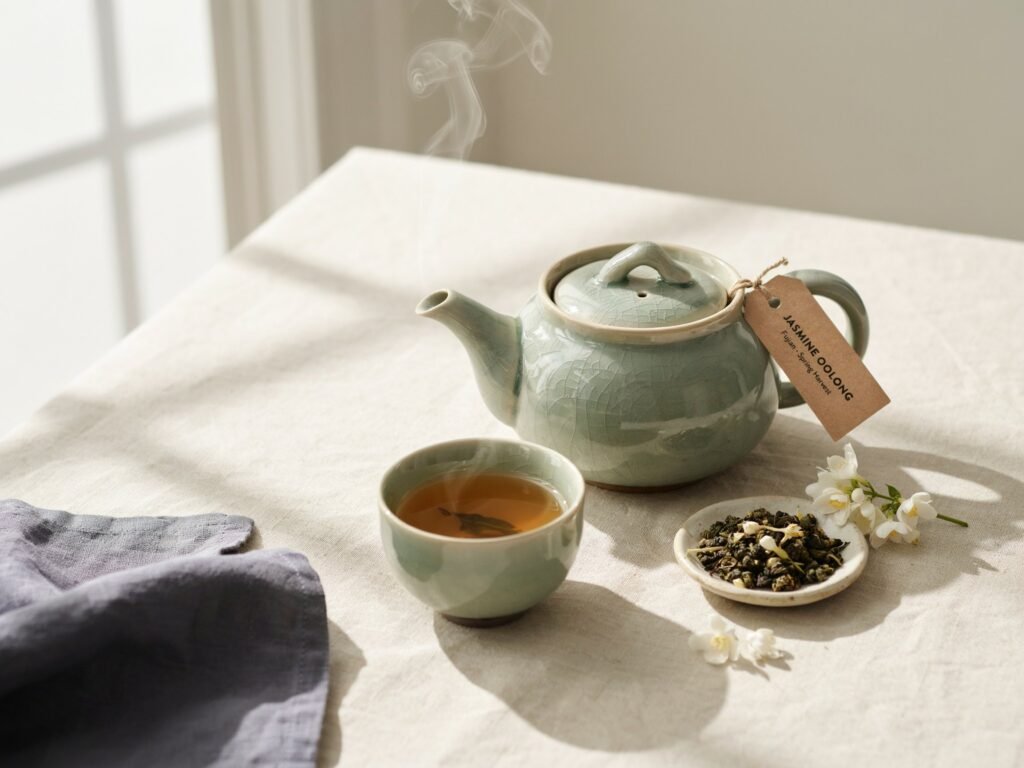
Oolong is the middle child of tea — partially oxidized, sitting somewhere between green and black — and it brings a richness to jasmine that neither green nor white tea can quite match. Jasmine oolong can vary quite a bit depending on how oxidized the base tea is, but most versions you’ll find lean toward the lighter end, which means you still get floral brightness alongside something deeper and more toasty underneath.
The flavor is layered and genuinely complex: the jasmine comes in waves rather than all at once, first on the nose, then on the palate, then as a long, warm finish. There’s a slight creaminess — almost like the ghost of a macaron — and an earthiness that anchors the whole thing so it doesn’t float away into pure perfume. It’s the kind of tea you keep taking sips of just to figure it out.
Best for: People who find green tea too light but black tea too heavy, or anyone who wants a jasmine tea they can pair with food without it getting lost.
How to brew: Use 185–195°F (85–90°C) water and steep for 3–4 minutes. Oolong is forgiving and actually rewards multiple steepings — your second cup can be just as good as your first.
Worth buying if… you want something more complex and satisfying than standard jasmine green tea and you’re ready to explore.
5. Jasmine Milk Tea
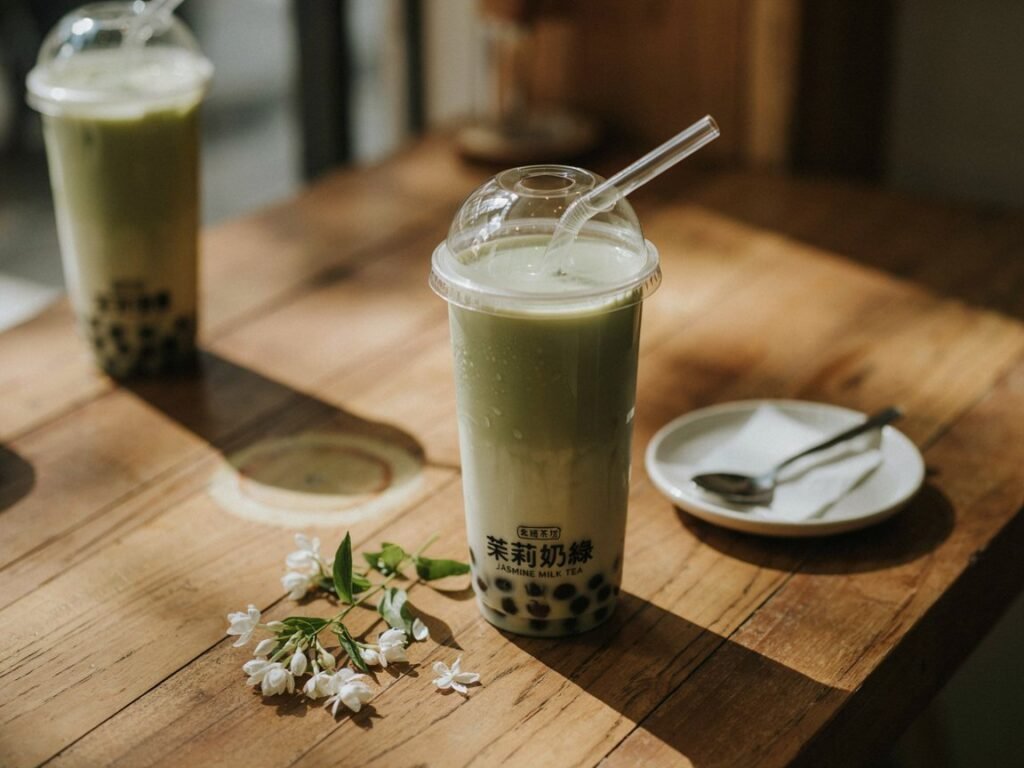
Here’s where we leave the world of traditional loose-leaf and step into something altogether more indulgent. Jasmine milk tea — the kind you order in bubble tea form or make at home with a powder or concentrate — is a completely different experience. It’s rich, creamy, sweet, and unapologetically dessert-adjacent.
The jasmine flavor in milk tea reads less like fresh flowers and more like floral vanilla — rounder and softer, the kind of scent that makes you think of candles and bakeries in the best way. The creaminess of the milk (or milk alternative) smooths out any potential bitterness and turns the whole thing into something that feels like a treat. Served over ice with tapioca pearls, it’s genuinely joyful.
Best for: People who aren’t sure they “like tea” but love a sweet, floral iced drink, or anyone looking for a caffeine option that competes with a frappuccino.
How to brew: Brew jasmine green tea double strength using 175°F (80°C) water for 3 minutes, then add cold milk (dairy or oat both work beautifully) in roughly a 1:1 ratio. Sweeten with simple syrup to taste. Serve over ice.
Worth buying if… you want something delicious and approachable and you’re not precious about “authentic” tea — this is purely about enjoyment.
6. Jasmine Matcha Blend
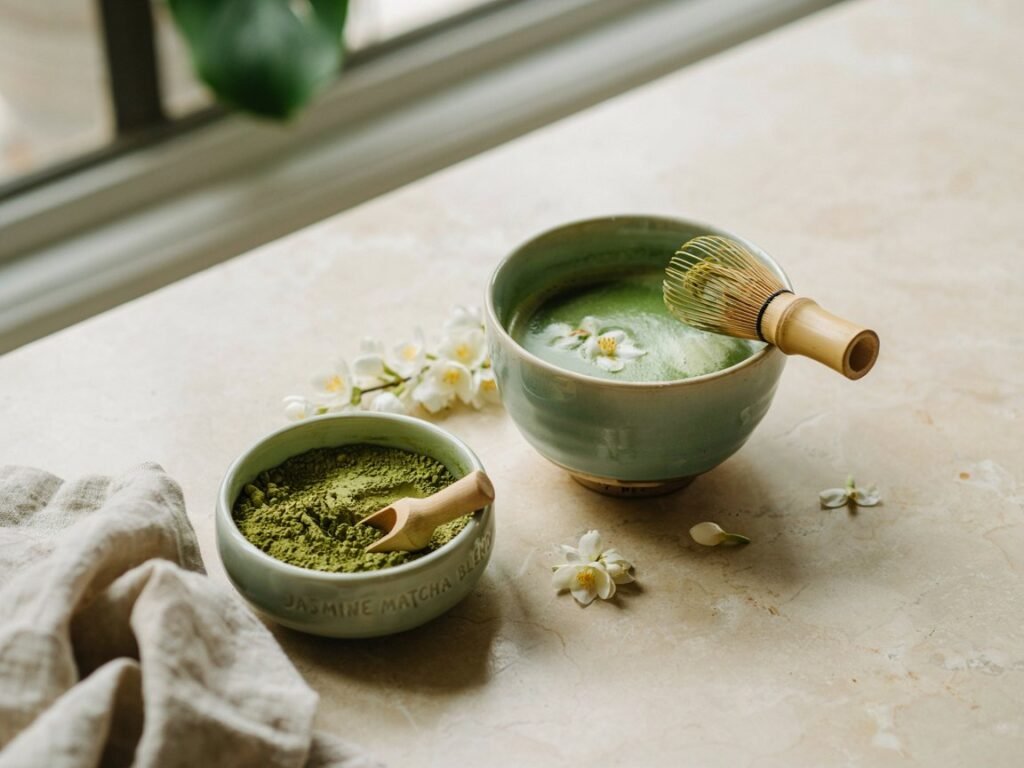
This one is polarizing, and honestly, it deserves to be talked about honestly. Jasmine matcha is exactly what it sounds like: finely ground matcha powder blended with jasmine flavoring or scented green tea powder. When it’s done well, it’s genuinely interesting — the umami depth of matcha meeting the sweetness of jasmine creates a kind of push-pull on your palate that’s surprisingly compelling.
When it’s done poorly (and a lot of commercial versions are), the jasmine smells artificial and the matcha tastes bitter, and the whole thing tastes like someone tried to make perfume drinkable. The key is quality: good jasmine matcha made with ceremonial-grade or at least premium-grade matcha will have a vivid green color, a creamy texture when whisked, and a floral note that feels like a natural complement rather than an afterthought. Look for blends that use actual scented green tea powder rather than “jasmine flavoring.”
Best for: Matcha lovers who want to soften matcha’s intensity, or curious tea explorers who want something genuinely unusual.
How to brew: Sift 1–2 teaspoons of powder into a bowl or cup, add a small amount of 170°F (76°C) water, and whisk vigorously until frothy. Top with steamed milk for a latte, or simply add more hot water for a straight cup.
Worth buying if… you buy from a reputable source that uses real matcha — skip the cheap grocery store versions entirely.
7. Jasmine Herbal Tea
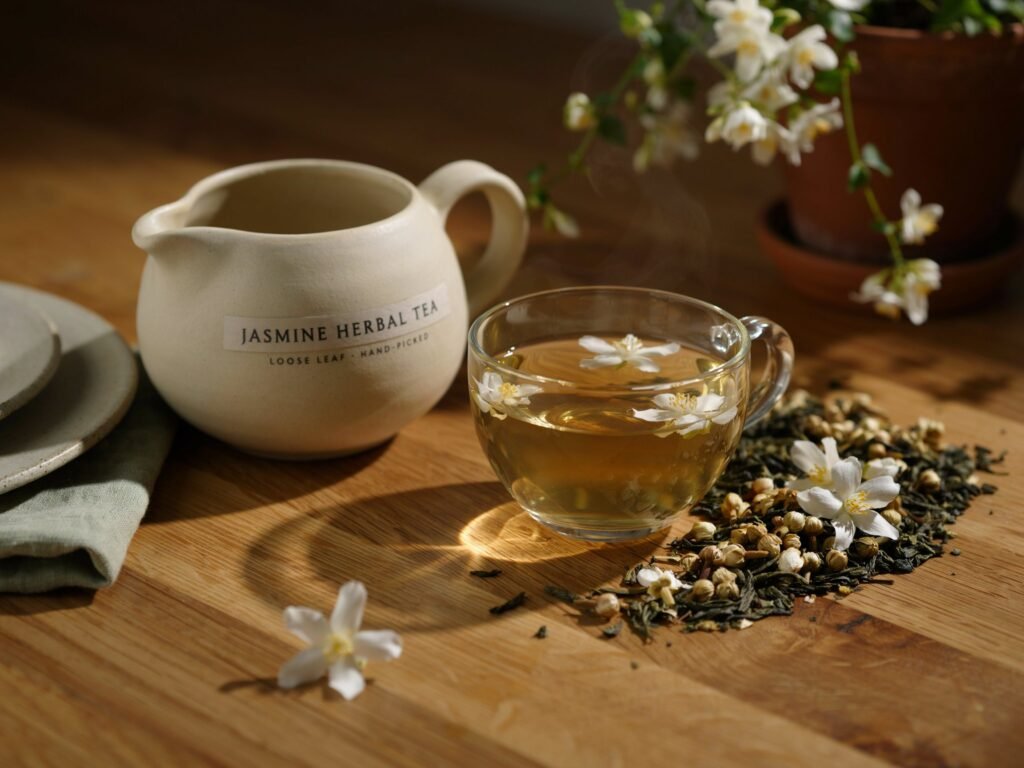
A note upfront: jasmine herbal tea contains no actual tea leaves, which means it’s naturally caffeine-free. It’s made from dried jasmine flowers, often combined with other herbs like chamomile, lemon balm, or rose, and it’s the right choice if you want the jasmine experience without any of the caffeine.
The flavor is lighter and more one-dimensional than jasmine teas made on a tea base — all floral, all the time, with none of the grassy or earthy underpinning that a real tea leaf provides. That’s not a criticism; it’s simply a different kind of drink. It’s lovely in the evening, genuinely calming, and smells extraordinary. Think: a warm, fragrant hug in a mug. Just don’t expect complexity — this one is about comfort, not nuance.
Best for: Caffeine-sensitive tea lovers, evening wind-down rituals, or anyone who just wants something beautiful and soothing without thinking too hard.
How to brew: Use 200°F (93°C) water — since there are no delicate tea leaves to scorch, you can use near-boiling. Steep for 5–7 minutes for a full, rounded flavor.
Worth buying if… you want a caffeine-free floral drink that smells and tastes genuinely lovely before bed.
How to Tell Good Jasmine Tea From Cheap Jasmine Tea
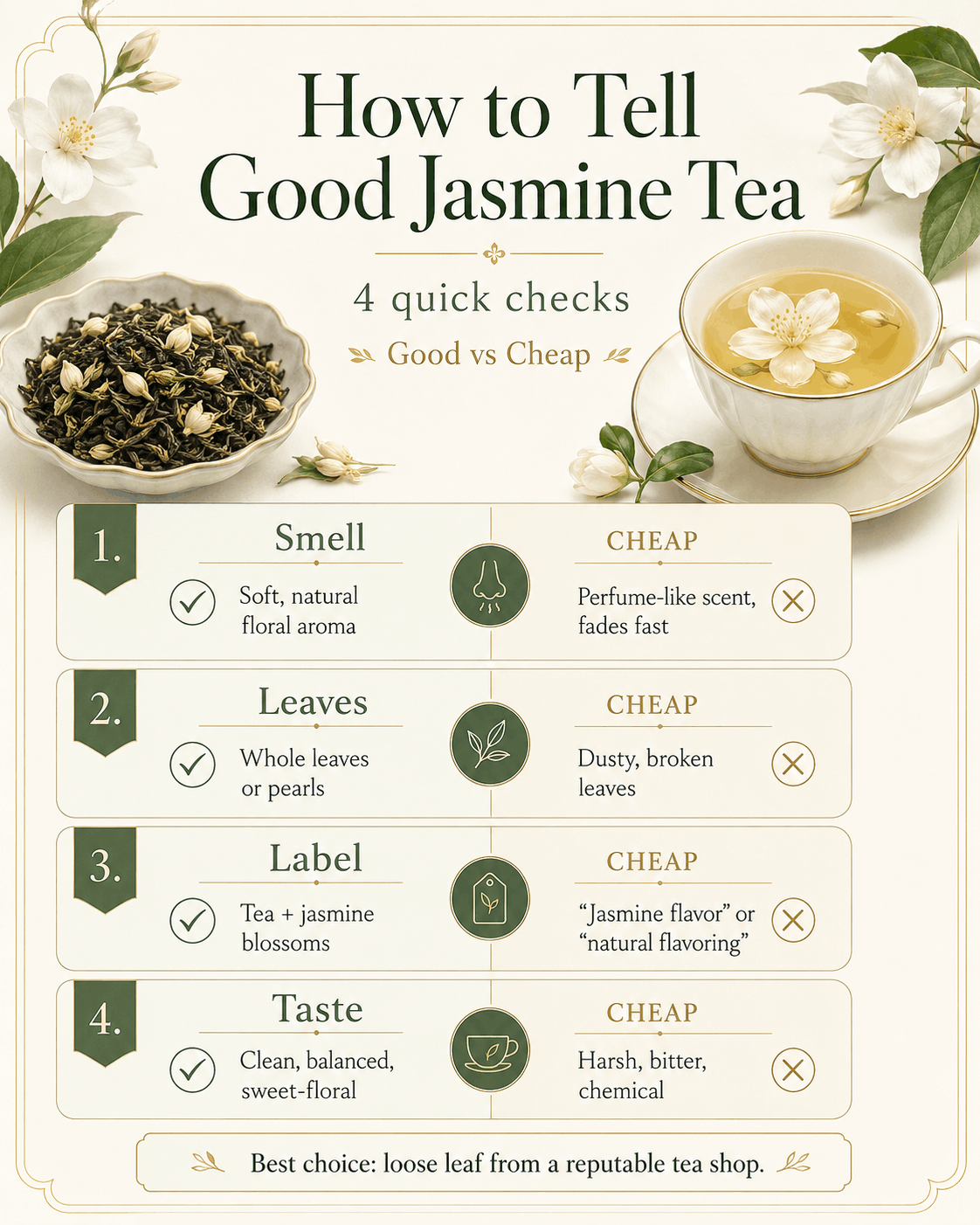
Here’s the uncomfortable truth: a lot of jasmine tea on the market is made by spraying dried tea leaves with synthetic jasmine fragrance. It smells strong in the tin and flat in the cup, and the “jasmine” note disappears within a minute of steeping. Real jasmine tea takes more time and more flowers — and it tastes infinitely better. Here’s how to tell the difference.
1. Smell it dry, then smell it wet. Good jasmine tea smells floral but natural when dry — like actual flowers, not a candle. When you brew it, that scent should bloom in the cup and linger pleasantly. Cheap jasmine tea smells very strong and slightly chemical when dry, and then loses most of its fragrance the moment it hits hot water. If the cup smells weaker than the tin, that’s a red flag.
2. Look for whole or intact leaves (or pearls). Quality jasmine tea is made with whole or minimally broken tea leaves, which means they have surface area to absorb fragrance gradually and release flavor slowly. Jasmine tea made from tea dust or fannings (the broken bits at the bottom of the barrel, usually found in teabags) will brew fast and bitter, and won’t hold jasmine fragrance well. If you can see actual leaves, that’s a good sign.
3. Check the ingredient list for “jasmine flavor” or “natural flavoring.” Traditional jasmine tea has two ingredients: tea and jasmine flowers (sometimes listed as “jasmine blossoms” or “scented with jasmine”). If you see “jasmine flavor,” “natural flavor,” or “fragrance” on the label, the jasmine note was added artificially. It’s not necessarily terrible, but it’s a shortcut — and you’ll taste the difference.
4. Taste it plain, without sugar. This is the real test. Good jasmine tea is pleasant and balanced on its own — sweet, floral, clean. If you instinctively want to add sugar to mask something harsh or chemical, the tea isn’t good quality. Buy loose leaf from a reputable tea shop or brand if you can, even just once, and you’ll immediately understand what you’ve been missing.
The bottom line? If you’re just starting out, go with a high-quality jasmine green tea or jasmine pearl tea — you’ll get the full, classic experience without any confusion. If you’re ready to explore, jasmine oolong is the most interesting rabbit hole to fall down. And if it’s 9 PM and you just want something that smells like a flower garden and makes you feel calm? Jasmine herbal, no contest.
Happy steeping.