This post contains affiliate links. As an Amazon Associate, I earn from qualifying purchases at no extra cost to you.
A pair of big planters by the front door can do more for a house than new shutters. A cluster of pots in a bare patio corner can turn a slab of concrete into somewhere you actually want to sit. Planters are one of the fastest, cheapest ways to change how an outdoor space feels, and you can do it in an afternoon.
The catch is that large planters are expensive to fill. A 30-inch pot can swallow six or seven bags of potting mix, and most plants never send their roots more than 12 to 18 inches down anyway. So you end up paying for soil that does nothing except make the pot impossible to move.
This guide covers both halves of the problem. First, 25 outdoor planter ideas: where to put them, what to plant, and which styles suit which homes. Then the practical part: how to fill a big planter the smart way, what to put in the bottom, what to avoid, and how to keep everything alive through a hot summer.
Why Big Planters Look Better Than Small Ones
Scale is the thing most people get wrong. A row of small pots scattered along a patio looks fussy, and from the street it reads as clutter. One or two oversized planters read as a decision. They have presence, they hold their own next to the house, and they make the whole space look designed.
Big planters are also easier to care for. More soil means more water held in reserve, so a large pot might need watering every two or three days in summer where a small one bakes dry by lunchtime. Roots stay cooler, plants grow bigger, and you lose fewer of them in a heatwave.
If you take one idea from this whole post, make it this: go bigger than feels natural. The planter that looks almost too large in the store usually looks exactly right once it’s beside a door or in the corner of a deck.
Pick the Material Before the Plants
Terracotta is classic, affordable and breathable, which roots love. It also dries out fast and can crack in hard frosts, so it suits warm climates and drought-tolerant plants best. Glazed ceramic holds moisture better and comes in rich colors, but it’s heavy and needs bringing in or wrapping in cold winters.
Fiberglass and resin planters are the practical choice for big sizes. They look like stone, concrete or metal, but weigh a fraction as much, don’t crack in frost and won’t fade quickly. They are usually the best value once you get above about 24 inches.
Concrete and cast stone are heavy, permanent and beautiful, and they suit formal entrances and modern gardens. Wood looks warm and natural but needs a liner to stop rot. Galvanized metal suits farmhouse and industrial styles but heats up in full sun, so it’s better in light shade or with heat-tolerant plants.
Whatever you choose, check for drainage holes. A planter without one will drown its plants the first time it rains hard. If you fall in love with a pot that has no hole, drill one or use it as a decorative sleeve around a plastic nursery pot.
25 Outdoor Planter Ideas
The ideas are grouped into three parts: where to put planters, what to plant in them, and which styles suit which homes. Mix and match freely; the best planter displays usually borrow from all three.
Placement Ideas
1. Flank the Front Door With a Matching Pair
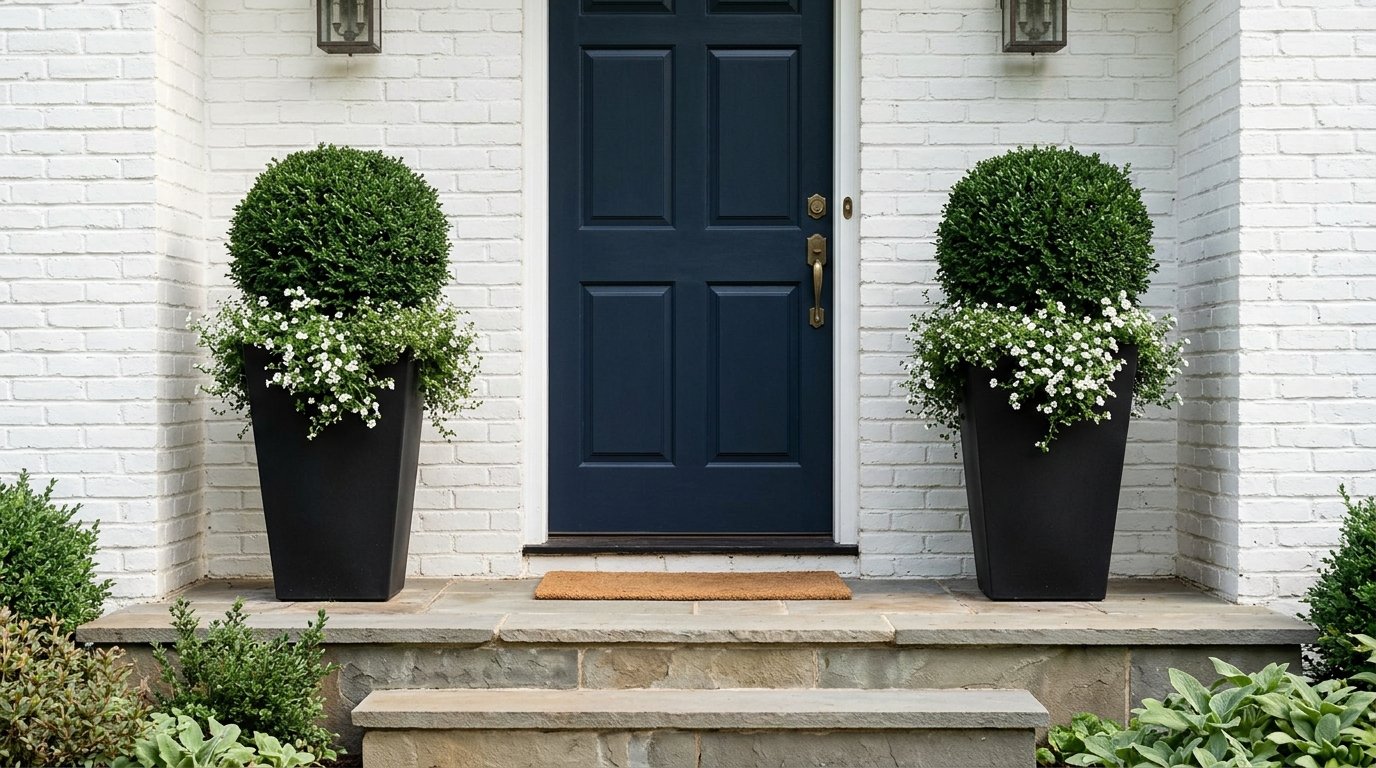
Nothing makes an entrance look more finished than two matching planters either side of the door. Symmetry signals order and welcome, and it frames the door the way a picture frame finishes a painting.
Choose planters that are at least a third of the door’s height, and tall, slim shapes if your porch is narrow. Clipped boxwood balls, cone-shaped evergreens or standard topiaries look smart all year, and you can tuck seasonal flowers around the base.
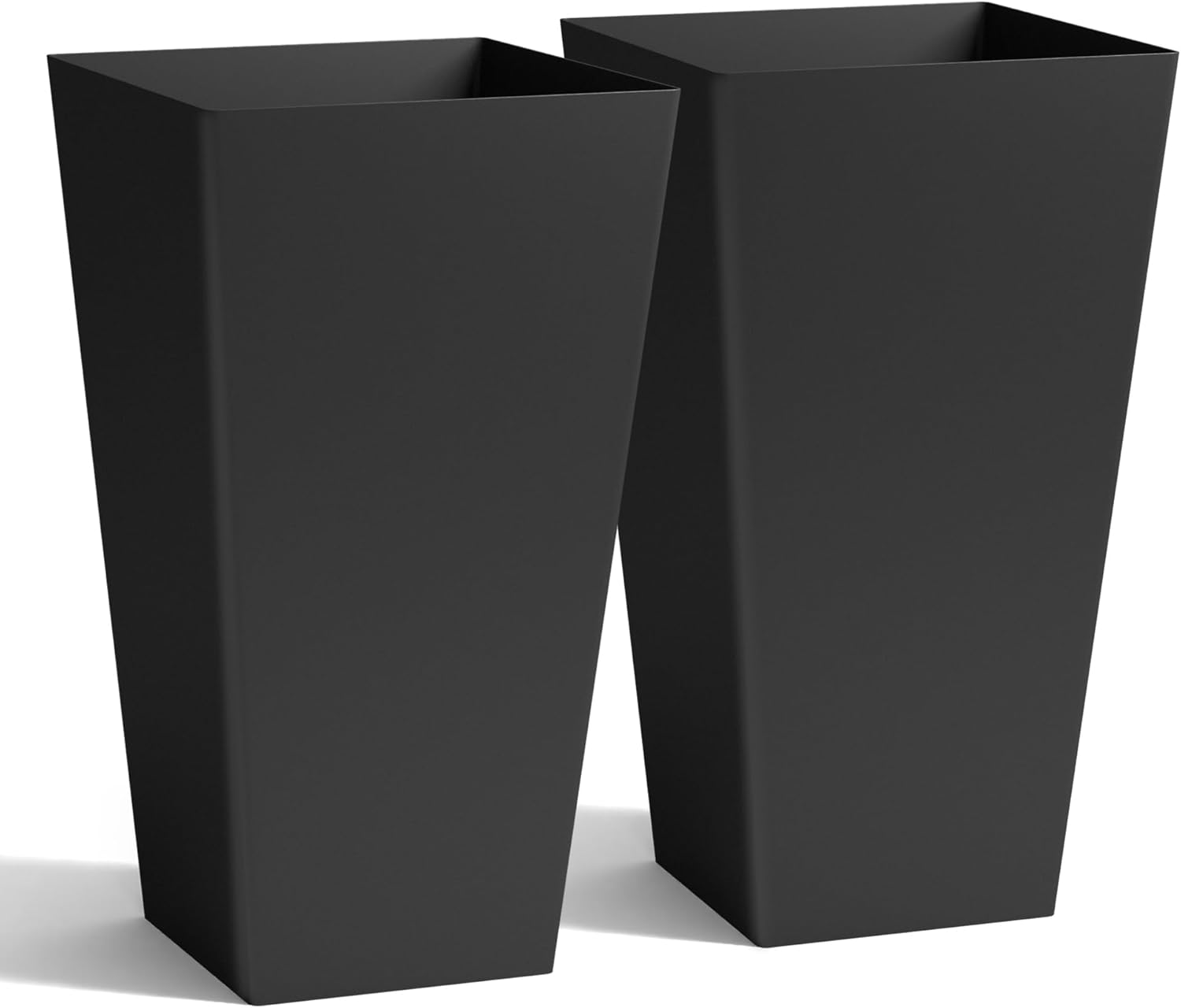
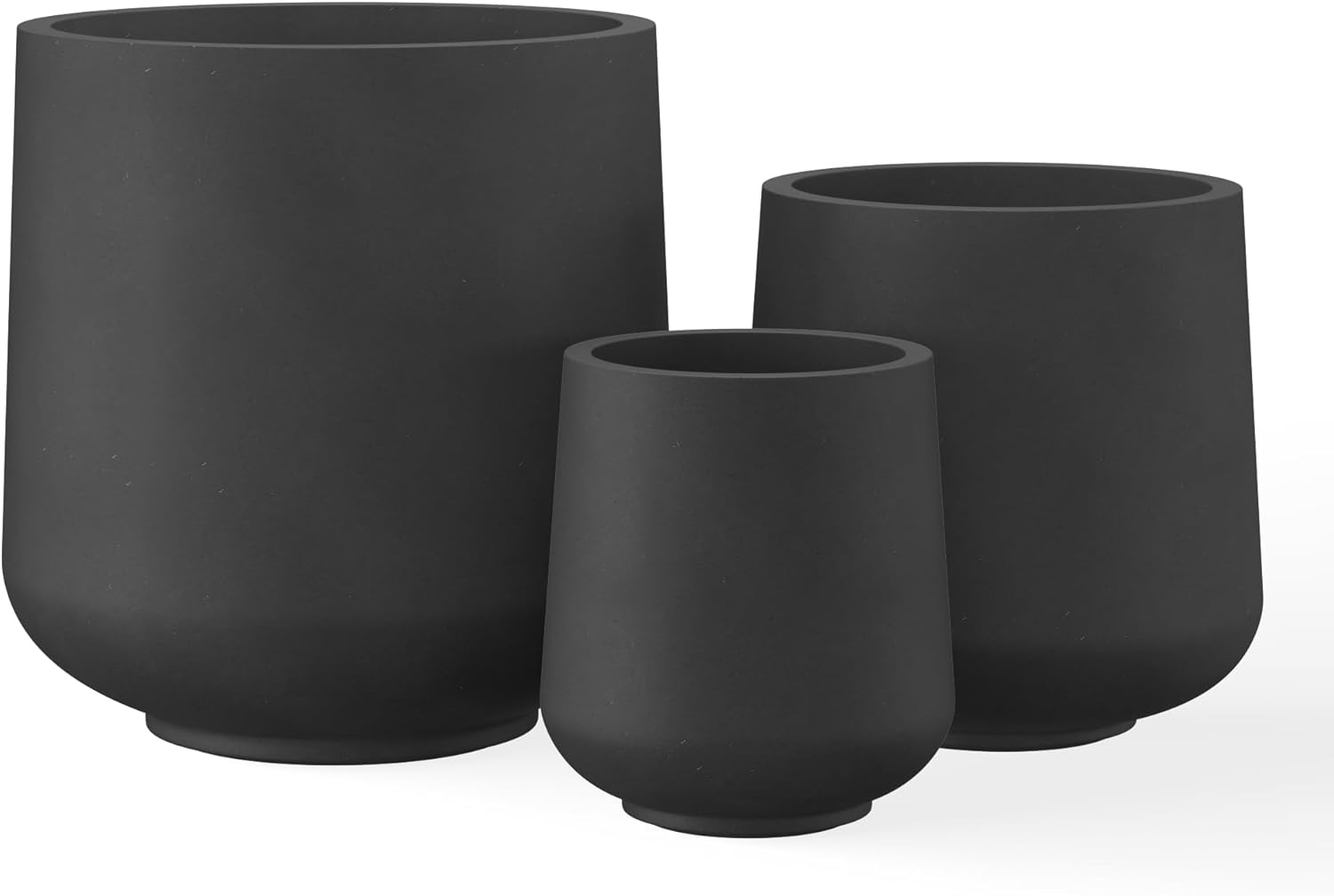
Black, charcoal or white planters suit almost any front door. If your door is a bold color, pick up a tone from the house trim instead so the door stays the star.
Pro tip: Set the planters a few inches out from the wall and the door frame. Pushed tight against the house, they look cramped and collect dirt behind them.

2. Cluster Planters in Odd Numbers
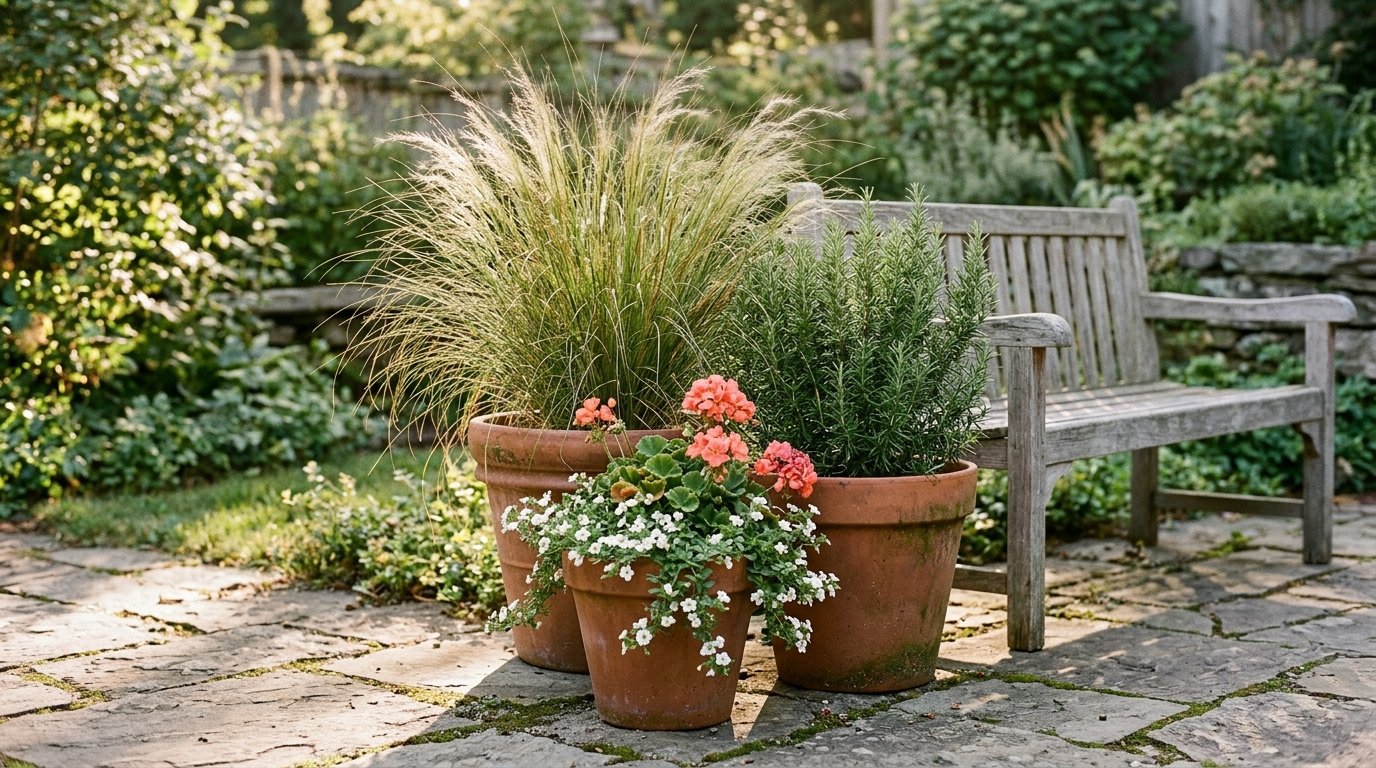
Groups of three or five look relaxed and natural, while pairs look formal. A cluster of three planters in different heights but the same material or color is one of the easiest ways to fill a patio corner without it looking busy.
Pick a tall, medium and short pot and stagger them in a loose triangle. The tallest one holds the biggest plant, such as an ornamental grass or small tree, and the smaller pots carry flowers or trailing plants.
Keeping the material consistent, all terracotta or all black fiberglass, ties the group together even when the sizes vary a lot.
Pro tip: Leave a little space between the pots so each one reads clearly. Jammed together, three pots look like one shapeless lump.

3. Line the Front Steps
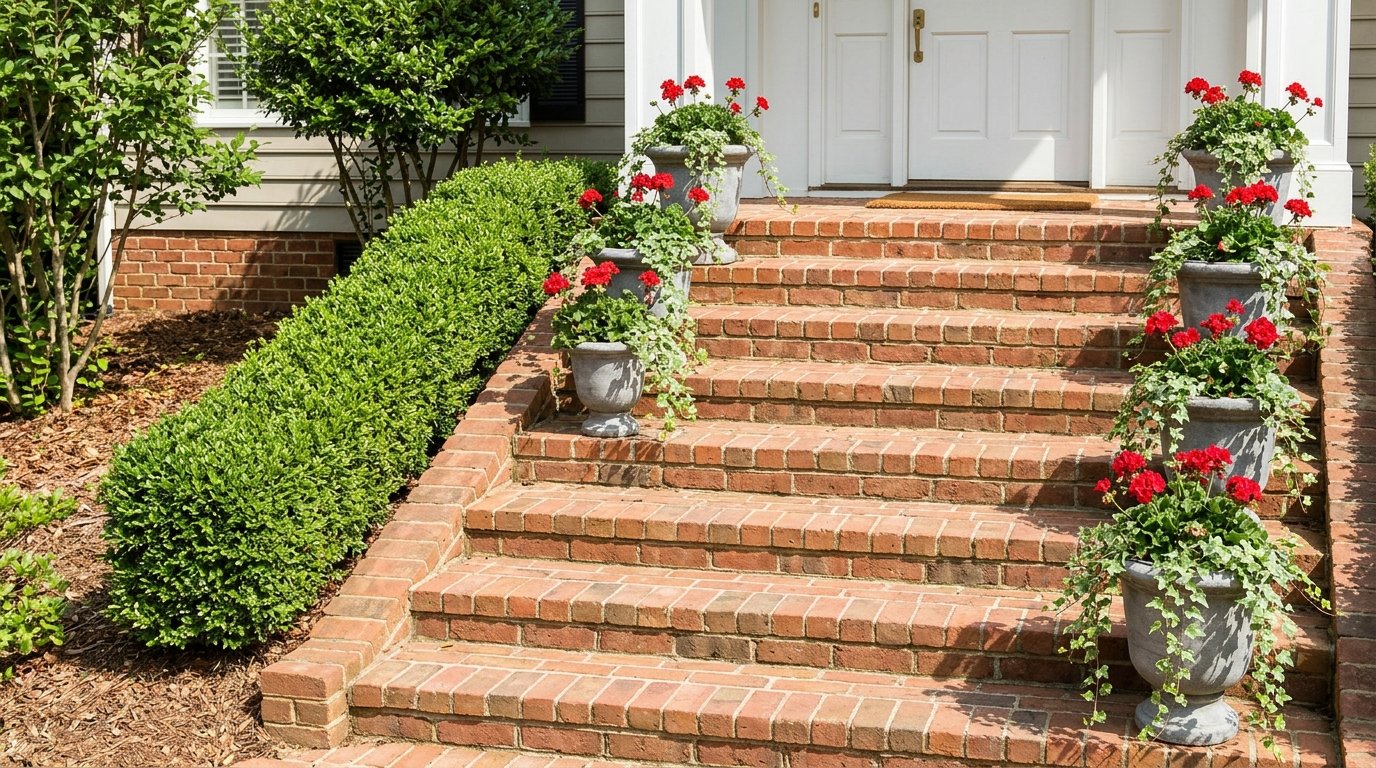
A planter on each step, or on every other step, turns a plain staircase into a welcoming approach. It works on wide brick steps, concrete stoops and wooden deck stairs alike.
Use the same pot and the same planting on each step for a crisp, formal look, or vary the heights for a cottage feel. Geraniums, petunias, begonias and small grasses all suit step planters because they stay compact.
Keep the walking path clear. Place pots to one side of each step, never in the middle, and make sure they are stable and won’t tip if someone brushes past.
Pro tip: Medium pots, around 14 to 18 inches, are usually the sweet spot for steps. Anything bigger crowds the tread; anything smaller looks lost.

4. Fill an Empty Corner With One Statement Planter
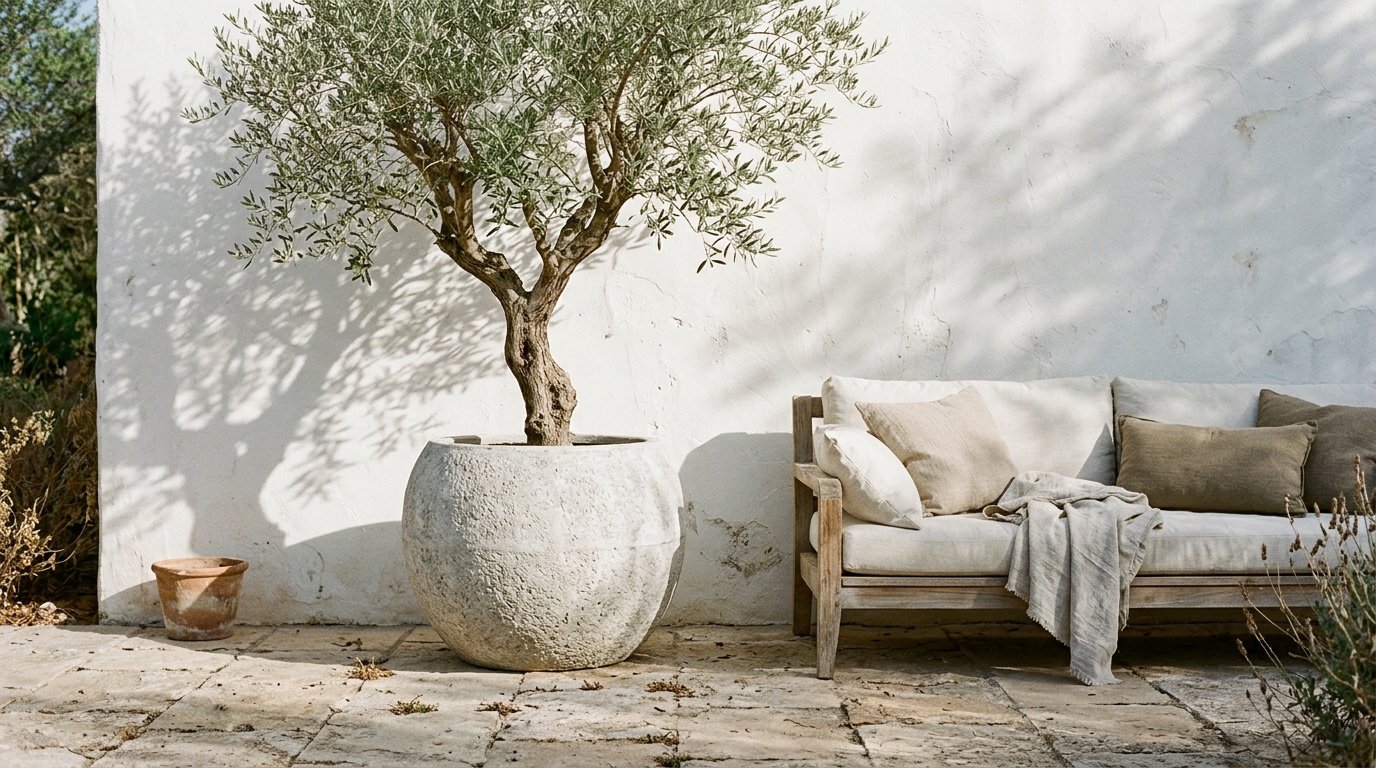
Bare corners make a patio feel unfinished. One oversized planter with a small tree in it fixes that instantly and gives the space height, which flat patios usually lack.
Olive trees, dwarf citrus, Japanese maples and standard bay trees all work well. They have structure and look good from every side, which matters when the planter is seen from the house and the garden.
Choose a planter at least 24 inches wide, and preferably bigger. The tree needs root room, and the bigger pot balances the height visually.
Pro tip: Put the planter on a wheeled plant caddy before you fill it. Once it’s full of soil and a tree, you won’t be moving it any other way.


5. Use Trough Planters to Create an Outdoor Room
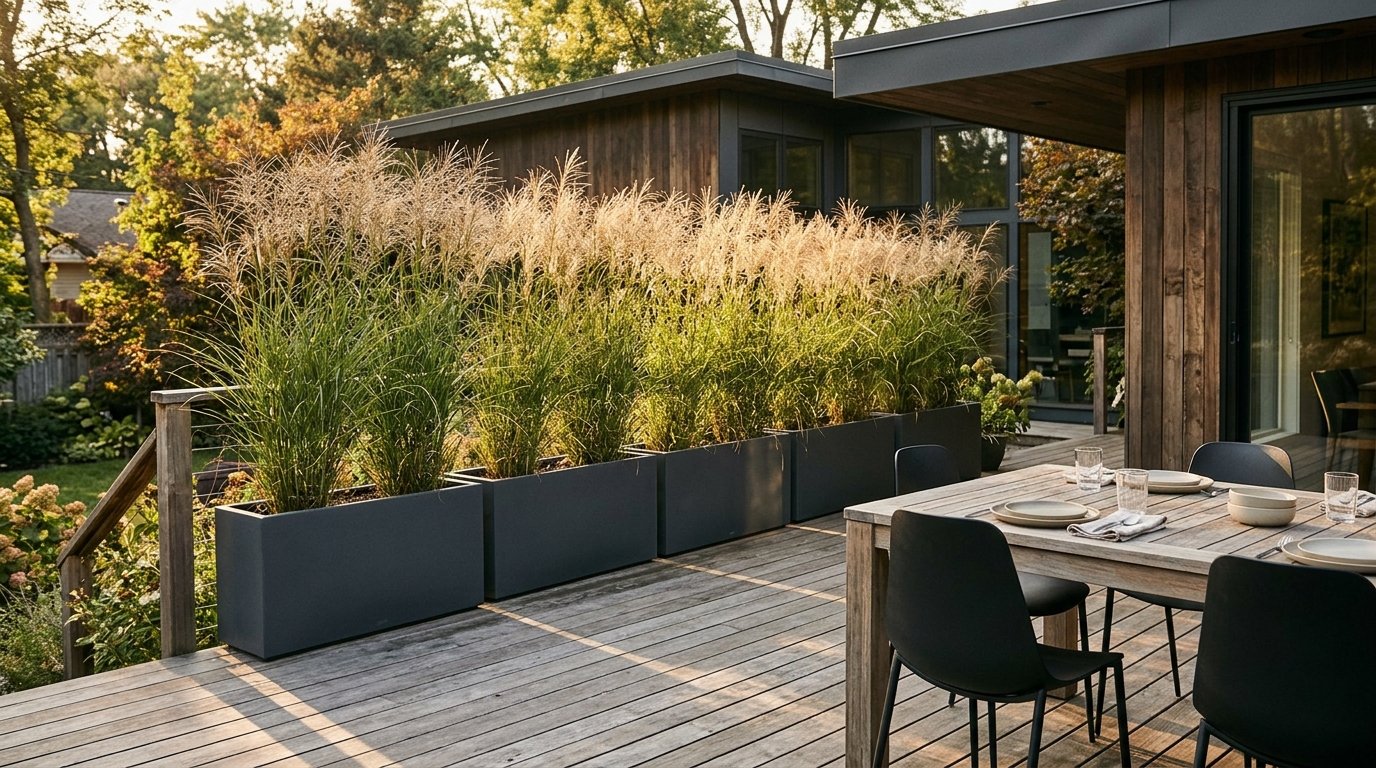
Long rectangular planters filled with tall grasses or shrubs make a living screen. Use them to divide a big deck into zones, block a neighbor’s view, or give a dining area a sense of enclosure.
Fast, upright plants work best: clumping bamboo, tall ornamental grasses like Karl Foerster feather reed grass, or columnar evergreens. Within a season, the planter becomes a soft green wall.
Because the planters are movable, you can rearrange the space as your needs change, which a hedge can’t do.
Pro tip: Avoid running bamboo even in planters. It can escape through drainage holes. Clumping varieties are the safe choice.

6. Mark the Entrance to a Path or Driveway
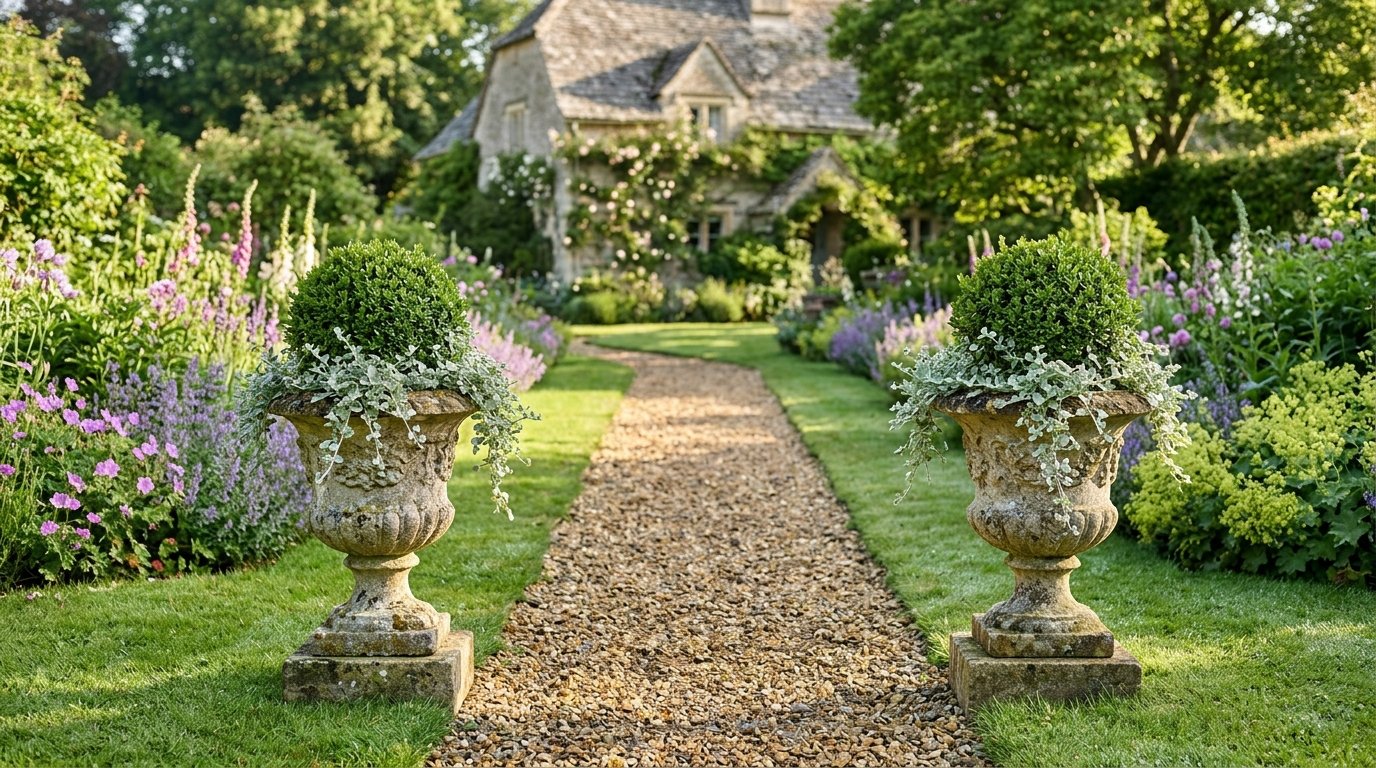
A pair of planters at the start of a garden path or the end of a driveway works like a gateway. It tells visitors where to go and makes even a plain path look intentional.
Classic urns suit traditional houses, while tall square planters suit modern ones. Fill them with something that has structure year-round, then add seasonal color at the base.
This is also a clever trick for gardens without a gate. The planters create a sense of arrival without building anything.
Pro tip: Plant something with a little height, so the planters are visible from the street rather than hidden by parked cars or hedges.

7. Hide an Eyesore
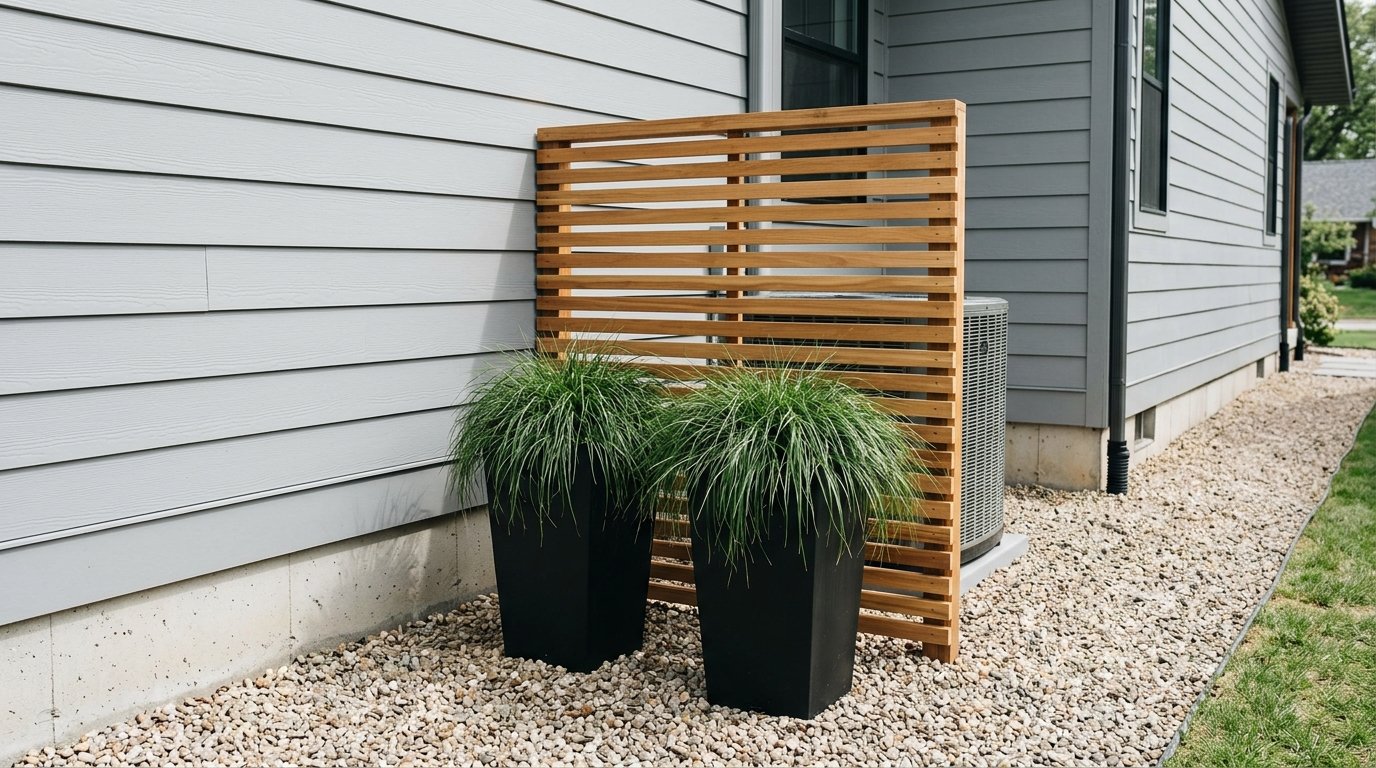
Air-conditioning units, utility boxes, trash cans and drainpipes rarely improve a view. Tall planters with dense plants hide them far more elegantly than a fence panel.
Rectangular planters work best because they sit flat against walls and form a solid screen. Fill them with evergreen grasses, tall shrubs or upright evergreens so the screen works all year.
Leave space for access and airflow, especially around AC units. Most need around two feet of clearance to work properly.
Pro tip: Check your AC manual for clearance before placing planters. A blocked unit works harder and costs more to run.

Planting Recipe Ideas
8. The Classic Thriller, Filler, Spiller
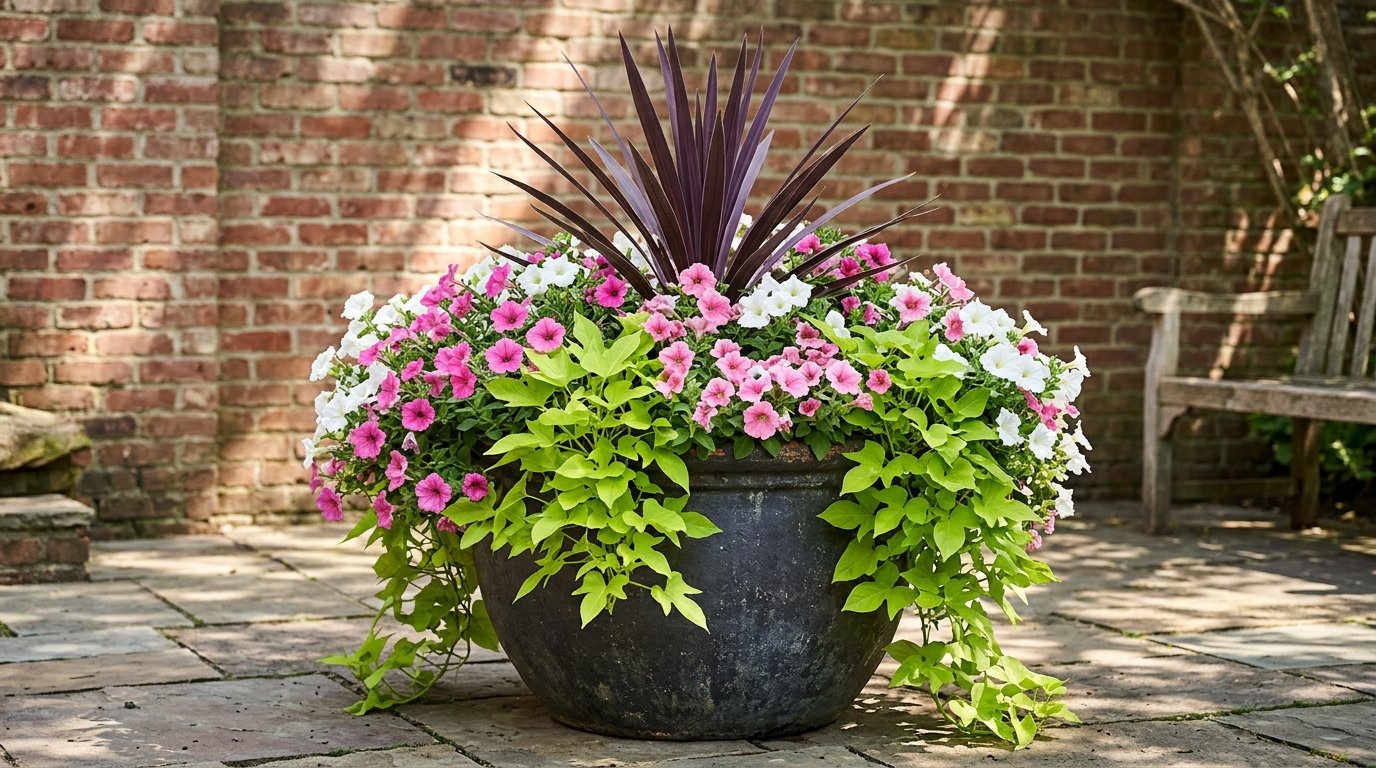
This is the most reliable formula for a full, professional-looking planter. A thriller is a tall, eye-catching plant in the center or back. Fillers are mounding plants that fill the middle. Spillers trail over the edge and soften the pot.
A classic combination is a purple cordyline or tall grass as the thriller, petunias or calibrachoa as fillers, and lime sweet potato vine or trailing ivy as the spiller. Swap in your own favorites, but keep the three layers.
Plant more densely than the tag suggests. Planters look best when they are full from day one, and the plants will knit together quickly.
Pro tip: Choose plants with the same light and water needs. A sun-loving petunia and a shade-loving fern will never both be happy in the same pot.

9. An Evergreen Topiary With a Seasonal Skirt
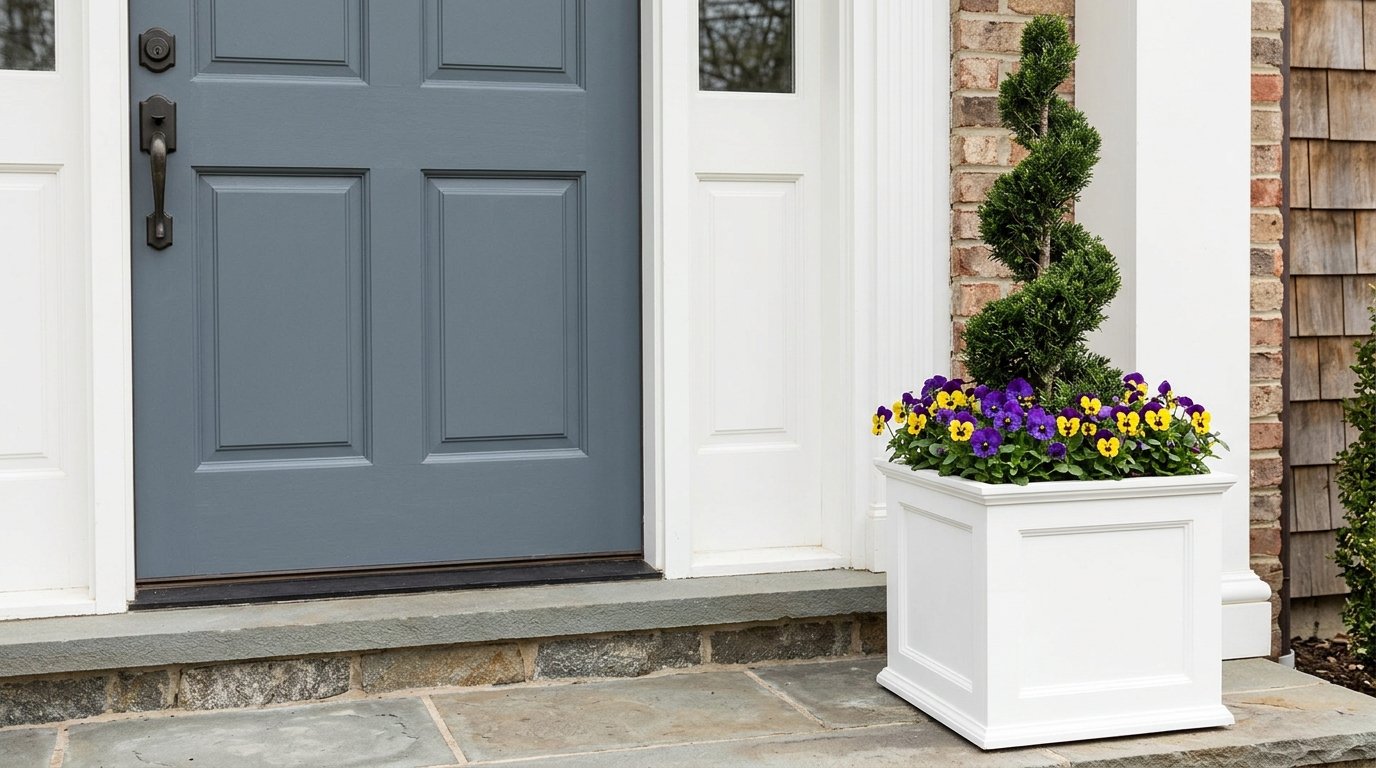
Topiaries are the backbone of a smart planter. A spiral juniper, a boxwood ball or a cone-shaped evergreen looks good every month of the year, even in winter when everything else is bare.
The trick is to plant a seasonal skirt around the base: pansies and violas in spring, trailing annuals in summer, ornamental kale in fall and a little ivy or moss in winter. The topiary stays, the skirt changes.
It’s an efficient way to keep planters looking fresh without replanting the whole thing four times a year.
Pro tip: Trim topiaries little and often during the growing season. Two light clips a year keep the shape far better than one hard cut.
10. A Dwarf Citrus Tree
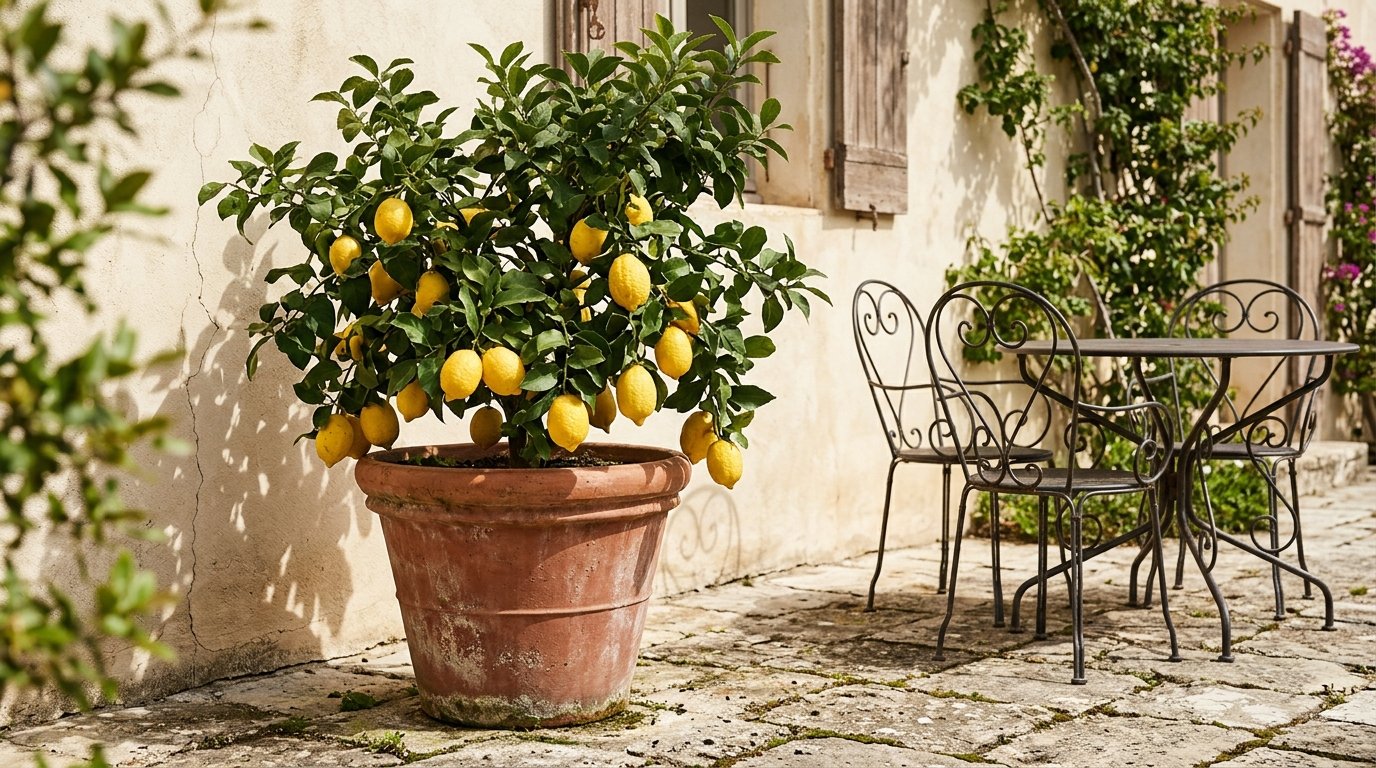
Meyer lemons, kumquats and calamondin oranges grow happily in large planters. They have glossy evergreen leaves, scented flowers and fruit that looks beautiful even if you never pick it.
Give citrus as much sun as you can, at least six to eight hours, and a free-draining citrus or cactus mix. In cold climates, a planter makes it possible to grow citrus at all, because you can roll it into a bright garage or sunroom for winter.
Terracotta and glazed pots both suit citrus. A pale pot shows off the dark leaves and bright fruit best.
Pro tip: Citrus hate wet feet. Water deeply, then let the top couple of inches dry before watering again.

11. A Japanese Maple in a Glazed Pot
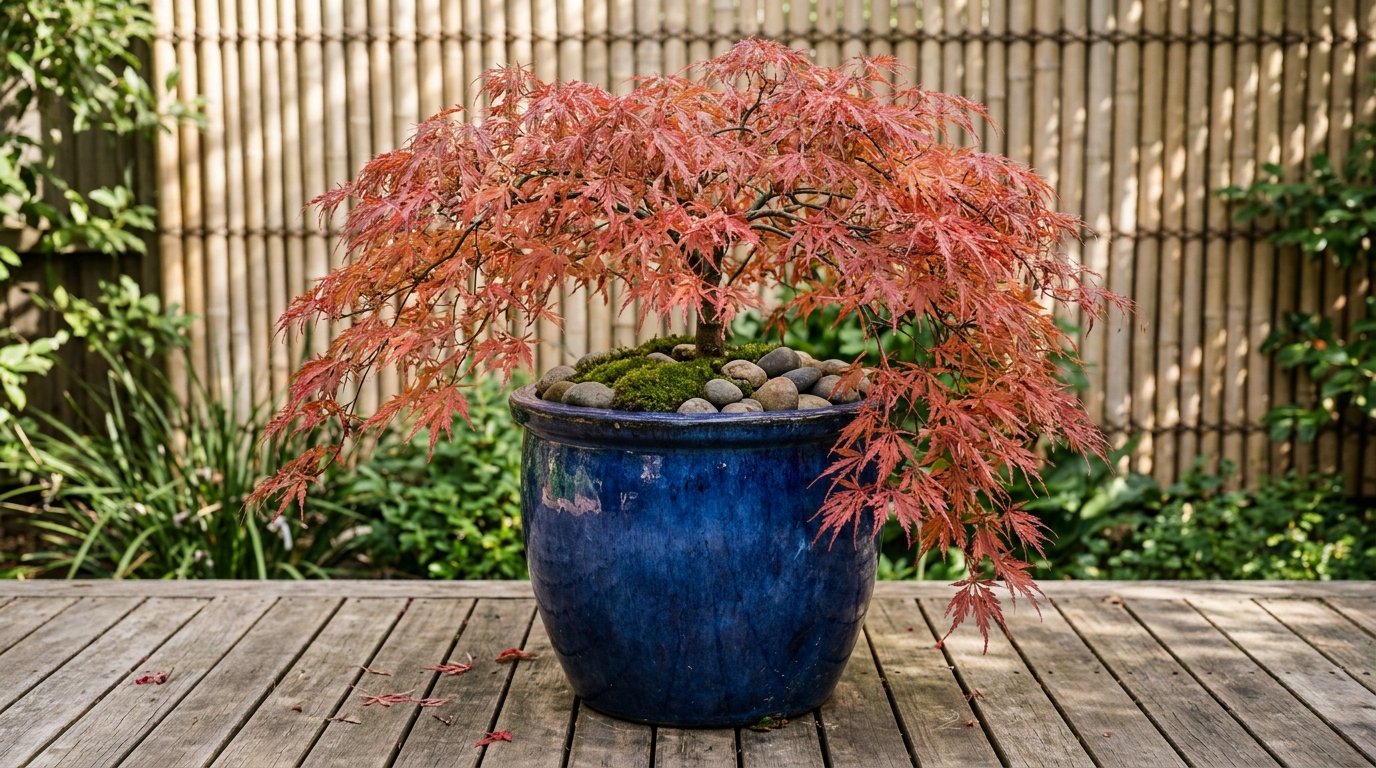
A Japanese maple in a large glazed pot is a living sculpture. The delicate leaves change color through the seasons, from fresh spring green or deep red to blazing orange in fall.
Dwarf and weeping varieties are best for containers. They stay small, grow slowly and keep a graceful shape. Give them morning sun and afternoon shade, and shelter from strong wind.
Dark glazed pots in navy, black or deep green make the leaf color glow.
Pro tip: Maples dislike drying out. A layer of mulch on top of the soil helps keep roots cool and moist in summer.
12. Grasses and Succulents for Low Water
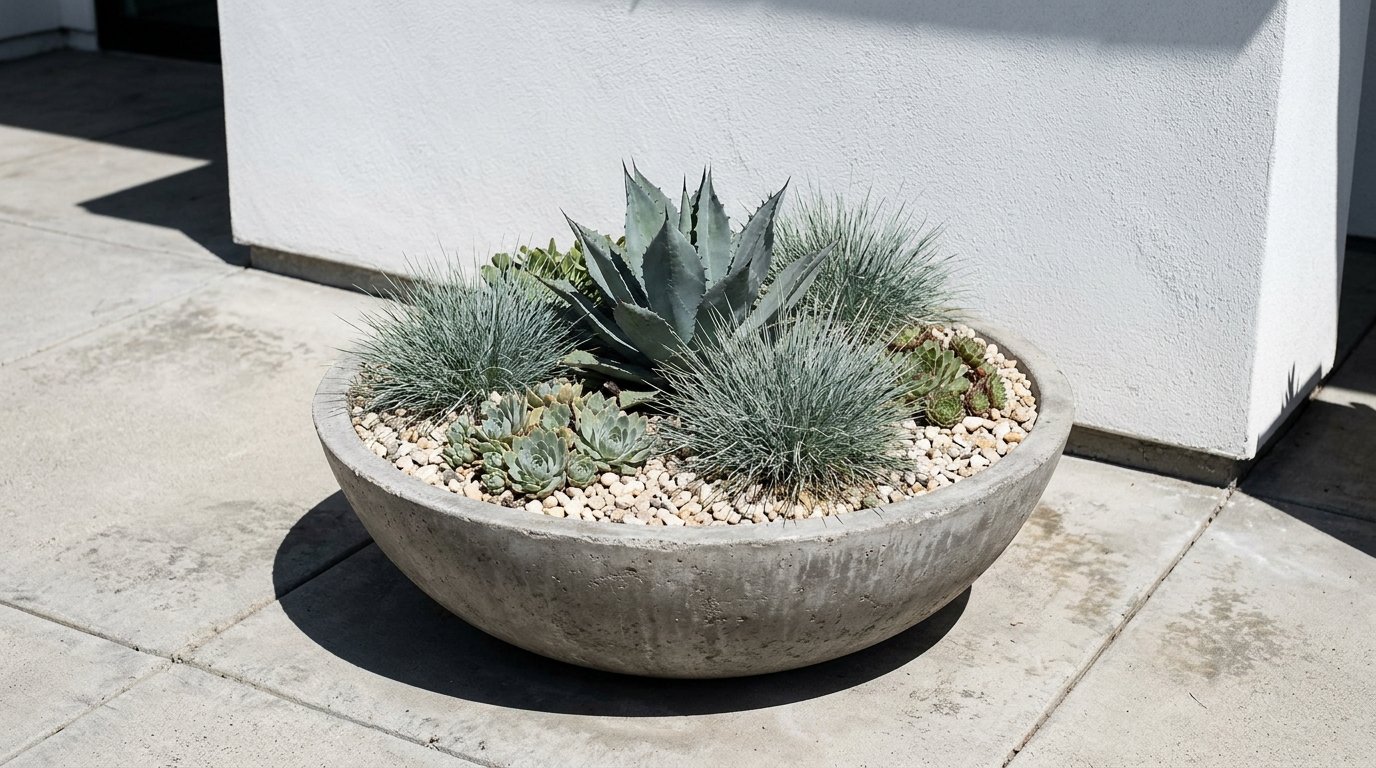
If you forget to water, or live somewhere hot and dry, build a planter around drought-tolerant plants. Blue fescue, Mexican feather grass, agave, sedum and echeveria all thrive on neglect.
Use a gritty cactus mix, or add perlite and grit to regular potting mix, so water drains quickly. Top-dress the soil with gravel for a clean, finished look.
These planters suit modern, Mediterranean and desert-style homes, and look good in concrete and fiberglass pots.
Pro tip: Group drought-tolerant planters together so you can water them less often than your thirstier pots.


13. An Edible Planter
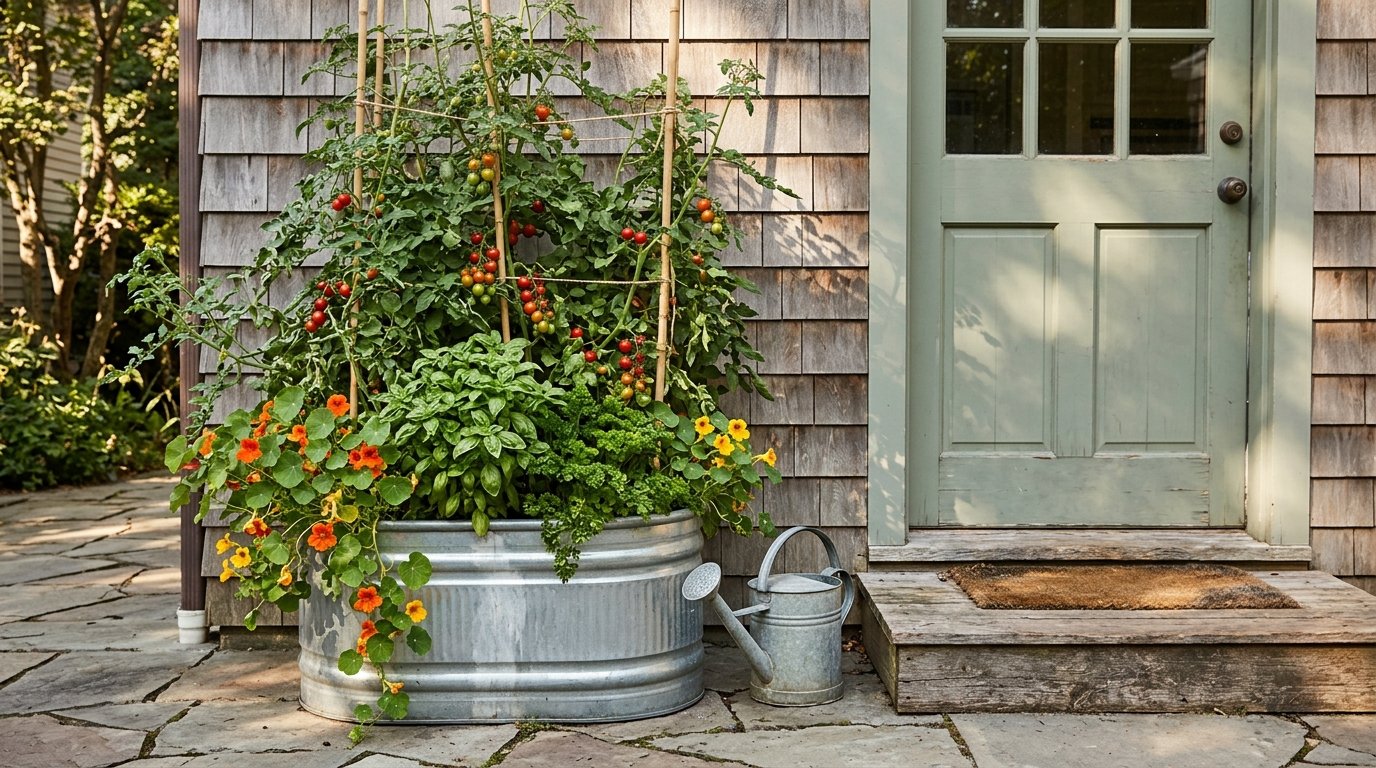
Large planters are perfect for growing food. A single 24-inch pot can hold a tomato, a few basil plants and some trailing nasturtiums, and it will produce more than you expect.
Choose compact or patio varieties of tomatoes, peppers, eggplant and herbs. Put them in the sunniest spot you have and feed them regularly, because vegetables in pots use up nutrients quickly.
An edible planter by the kitchen door is especially useful. Herbs you can pick while cooking get used far more than herbs at the end of the garden.
Pro tip: Vegetables need consistent watering. A self-watering planter or a drip line makes a big difference to your harvest.

14. A Shade Planter That Isn’t Boring
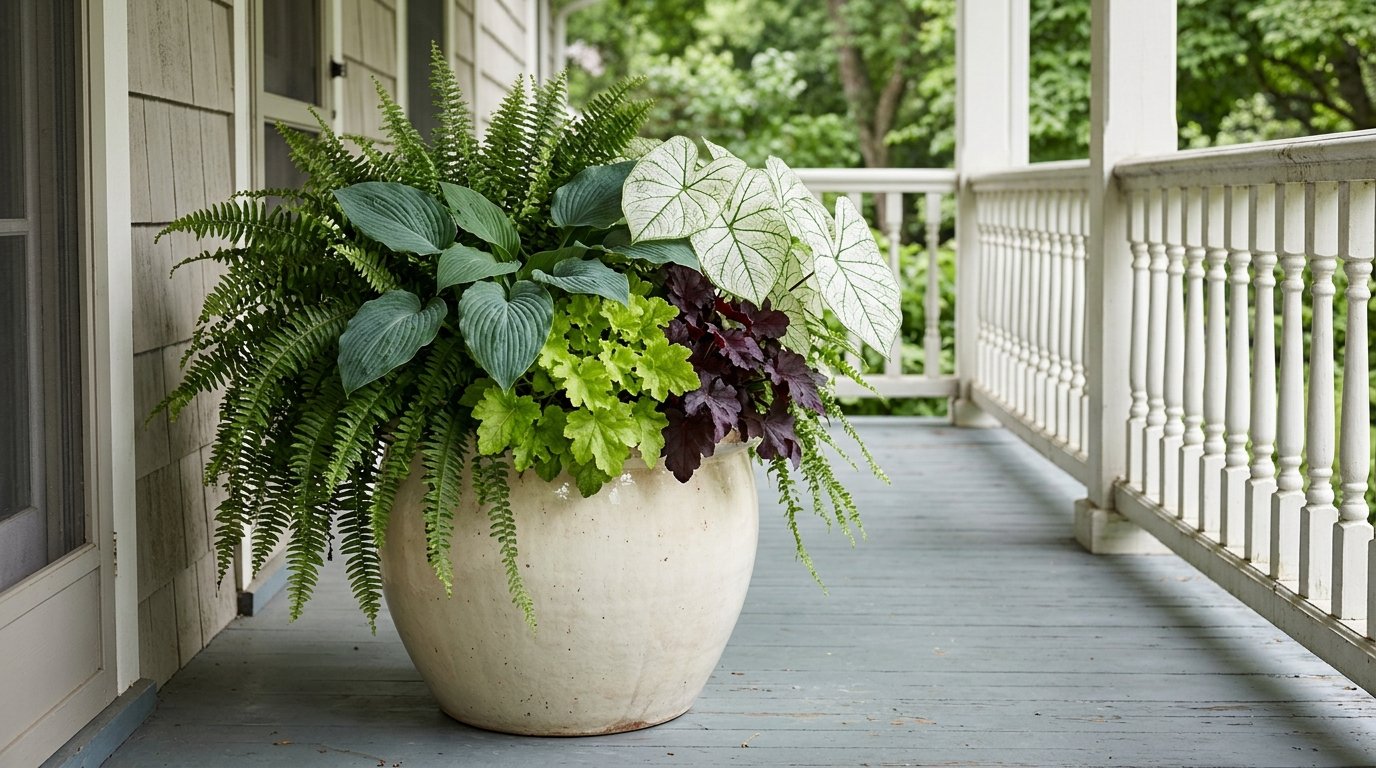
A shady porch or north-facing patio doesn’t mean dull planters. Hostas, ferns, heuchera, caladiums, begonias and coleus all bring color and texture without needing sun.
Play with leaf shape and color instead of flowers: lime-green heuchera next to a dark fern, a white-veined caladium beside a blue hosta. Foliage planters look good for months.
Light-colored planters brighten a dark corner, so choose white, cream or pale grey pots for shade.
Pro tip: Shade planters dry out more slowly. Check the soil before watering so you don’t overwater.
15. A Hydrangea in a Big Pot
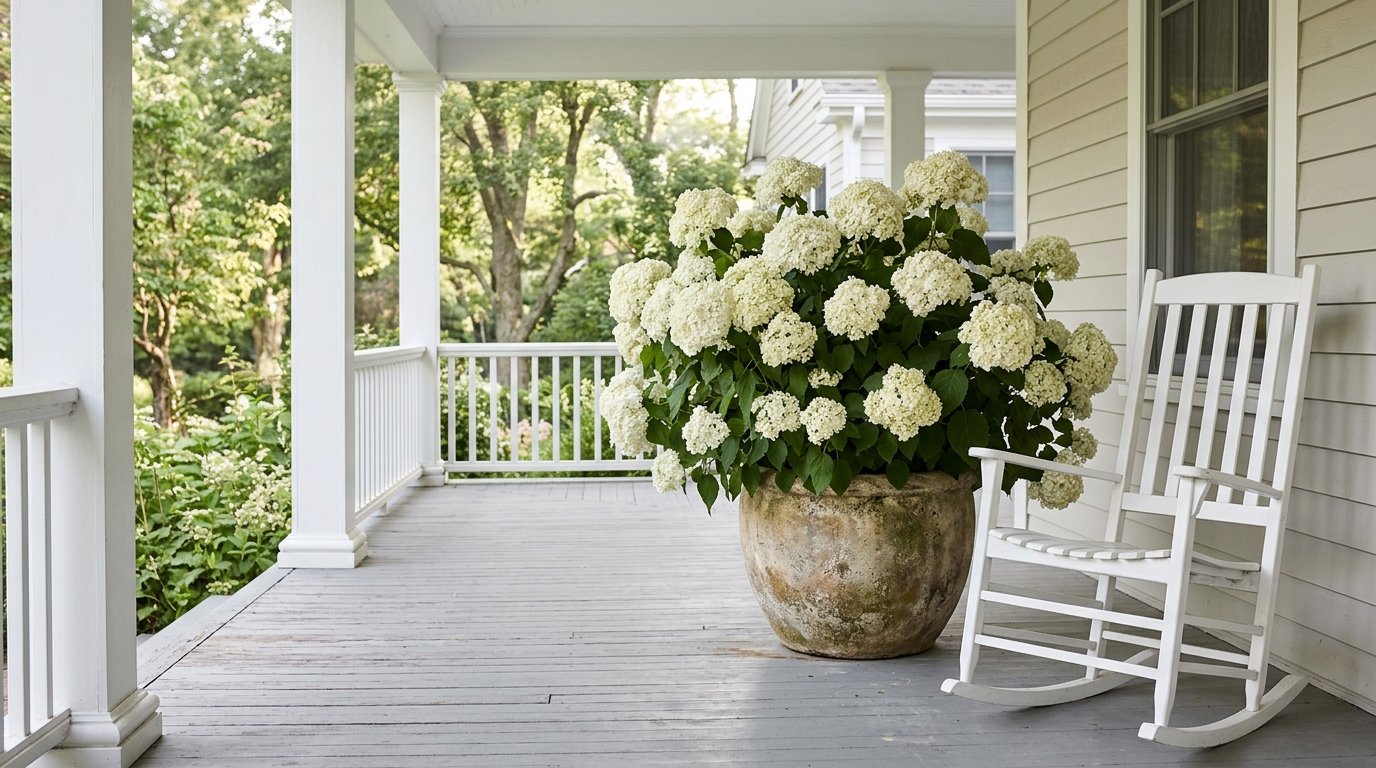
Hydrangeas make spectacular planter plants, with huge blooms all summer. Compact varieties like the Little Lime panicle hydrangea or dwarf mophead types are bred to stay small enough for containers.
Give them morning sun and afternoon shade, a large pot at least 20 inches wide and plenty of water. They are thirsty plants.
A pair of potted hydrangeas on a porch or patio looks generous and romantic, especially in white or soft blue.
Pro tip: Panicle hydrangeas are hardier in pots than mopheads, which can lose their flower buds in cold winters.
16. A Four-Season Rotation
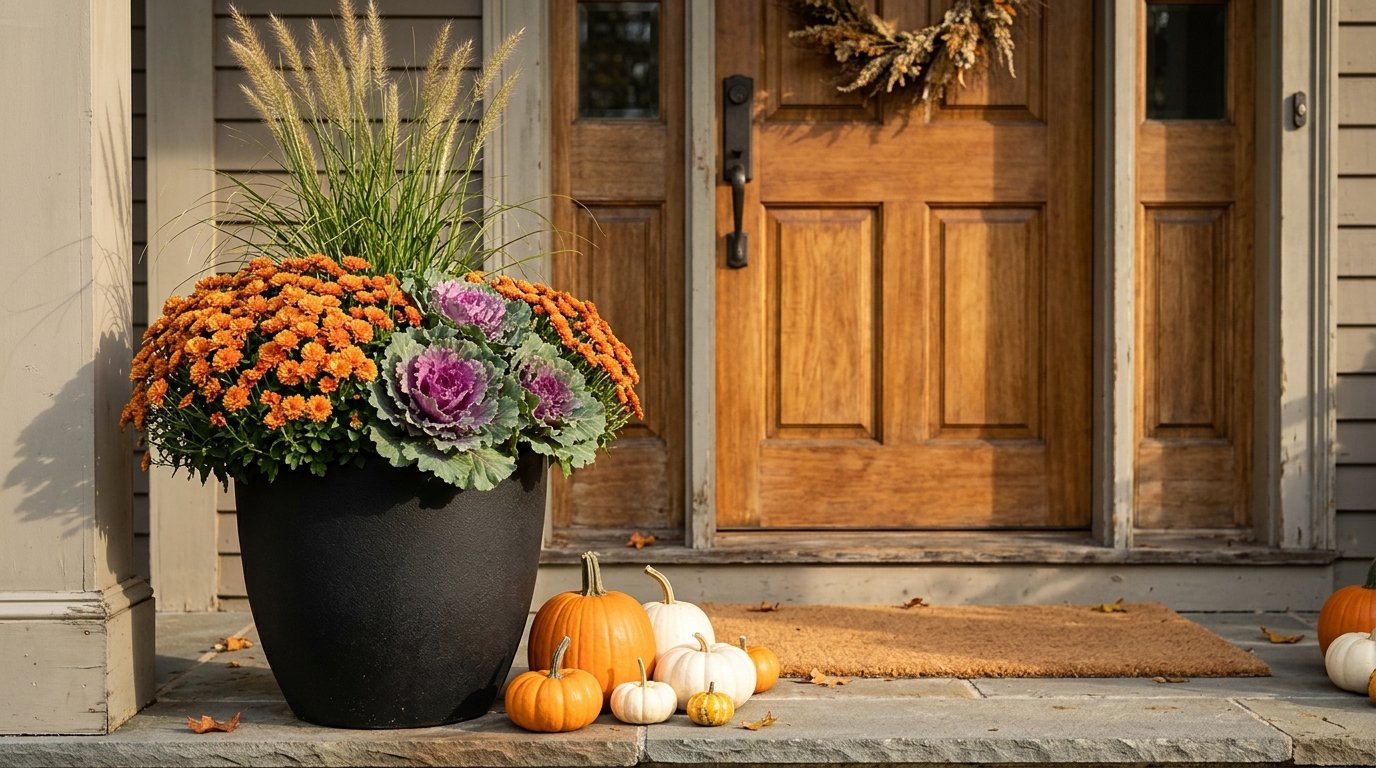
Planters don’t have to look the same all year. Treat them like a stage set: tulips and daffodils in spring, bright annuals in summer, mums, ornamental kale and grasses in fall, and evergreen branches and berries in winter.
The easiest way to rotate is to keep a plastic nursery pot inside your decorative planter. Swap the inner pot each season and the decorative pot stays put.
Fall is the season where planters do the most work. A few mums, a cabbage and a couple of small pumpkins on the steps make a house look cared for with very little effort.
Pro tip: Plant spring bulbs in fall in a separate pot, store it somewhere cool, then drop it into the planter when the shoots appear.
Style Ideas
17. Modern Black Cylinders With One Sculptural Plant

For a modern home, restraint looks best. Tall black cylinder or square planters, each holding a single strong plant, look crisp and architectural.
Choose plants with bold shapes: a snake plant, a yucca, an agave, a dwarf olive or a clipped evergreen column. One variety per planter keeps the look clean.
Repeat the same planter several times along a wall or deck for a gallery-like effect.
Pro tip: Matte finishes look more expensive than gloss on modern planters, and they hide water spots and dust.
18. Weathered Terracotta for a Mediterranean Feel

Old, mossy terracotta has a warmth no other material matches. A collection of weathered pots filled with lavender, rosemary, geraniums and olive trees looks like a corner of Provence or Tuscany.
Mix pot sizes and shapes freely. Terracotta looks best in generous, slightly imperfect groupings.
If your pots are new and bright orange, rub them with yogurt or plain soil and leave them in a shady spot. Moss and patina will develop surprisingly quickly.
Pro tip: Raise terracotta pots on pot feet in winter so they drain well and are less likely to crack in frost.
19. A Classic Urn for a Traditional Home
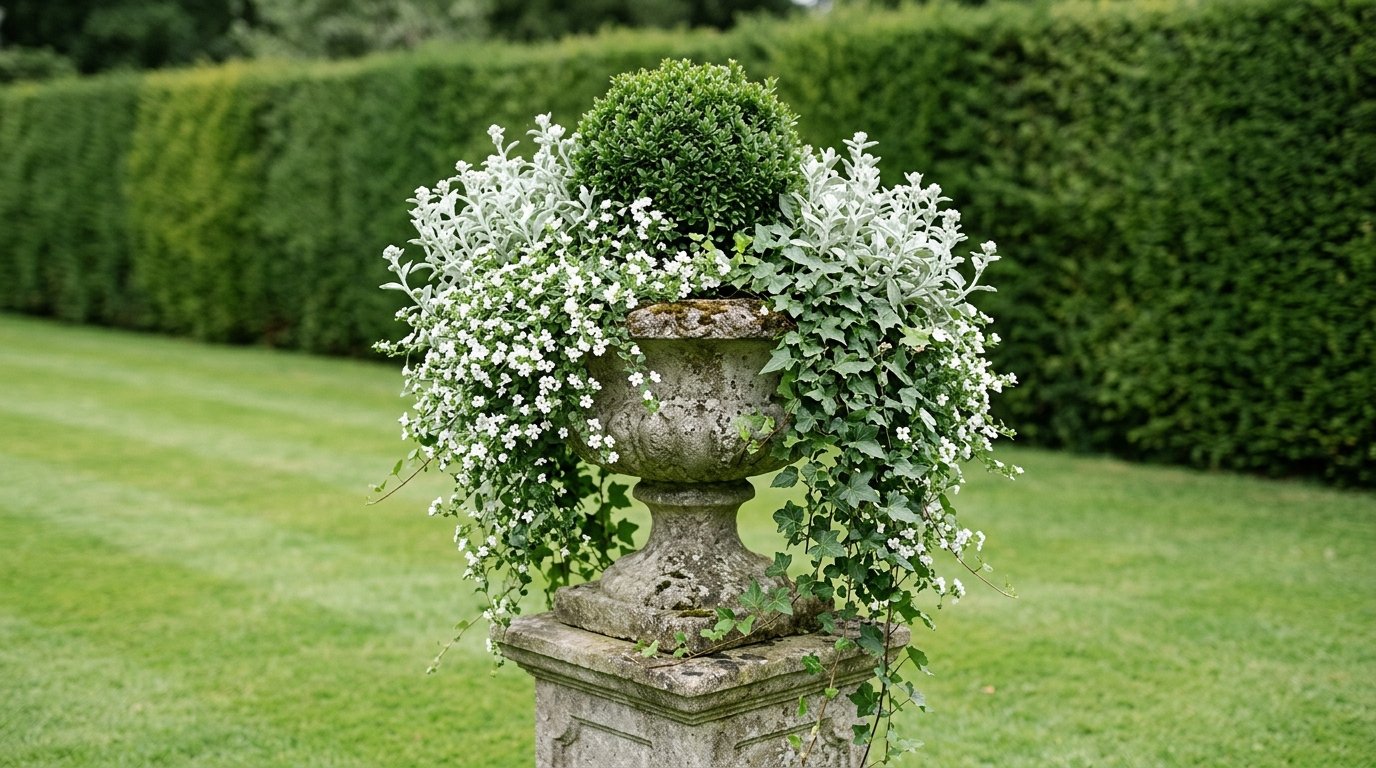
Cast stone or cast iron urns have been gracing gardens for centuries, and they still suit traditional, colonial and Georgian homes perfectly.
Plant urns simply: a clipped boxwood ball, a standard rose, or a mound of trailing plants like ivy, bacopa and helichrysum. Formal shapes need formal planting.
Lightweight resin urns look almost identical to stone and are much easier to place and move.
Pro tip: Urns often have small soil capacity for their size. Water them more often than you would a straight-sided planter.

20. Galvanized Troughs for Farmhouse Style
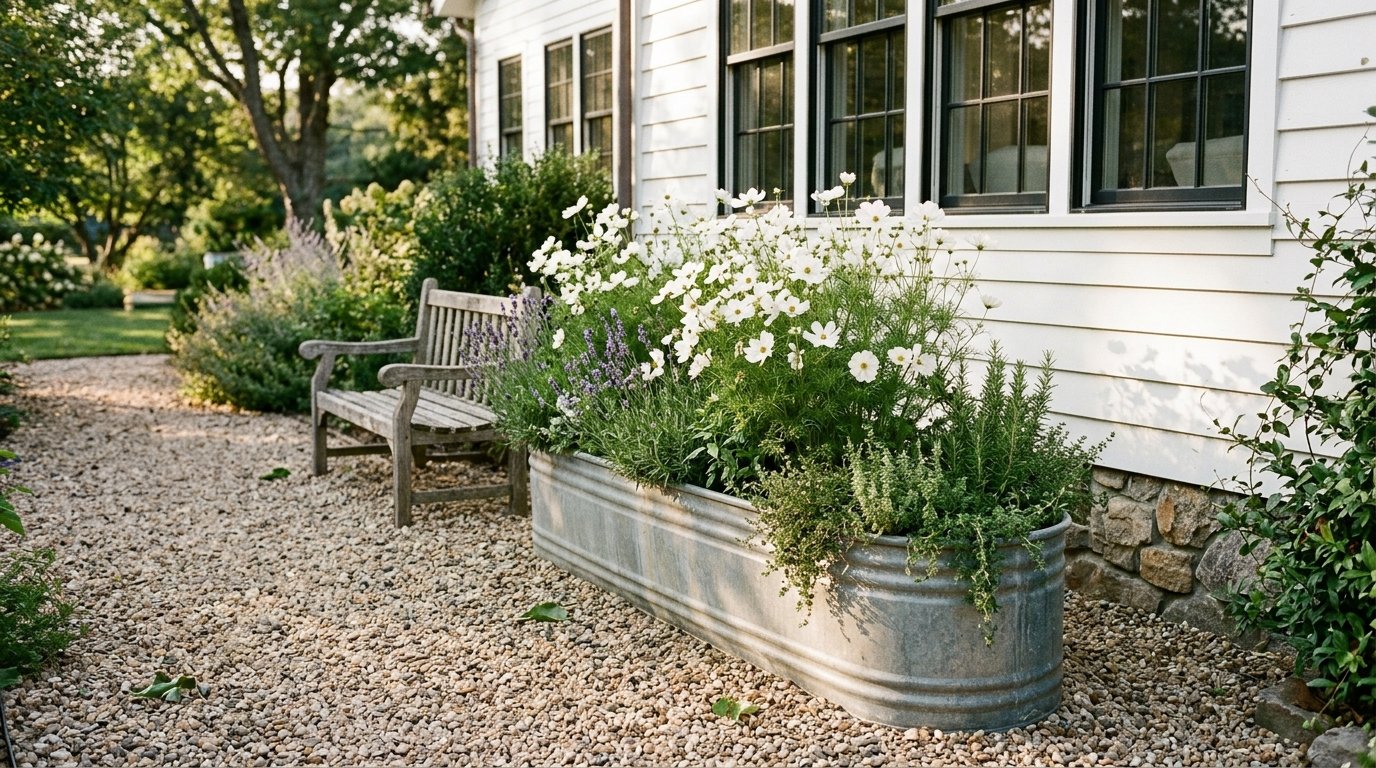
Galvanized metal troughs and tubs suit farmhouse, cottage and industrial homes. They have a relaxed, practical charm and come in very large sizes for a fair price.
They are excellent for herbs, vegetables, flowers and grasses. Drill drainage holes in the bottom if they don’t have any.
Metal heats up in strong sun, so line the sides with bubble wrap or a fabric liner and choose heat-tolerant plants for south-facing spots.
Pro tip: Raise metal troughs slightly on bricks or feet so water drains away and the base doesn’t rust.

21. Cedar Planter Boxes
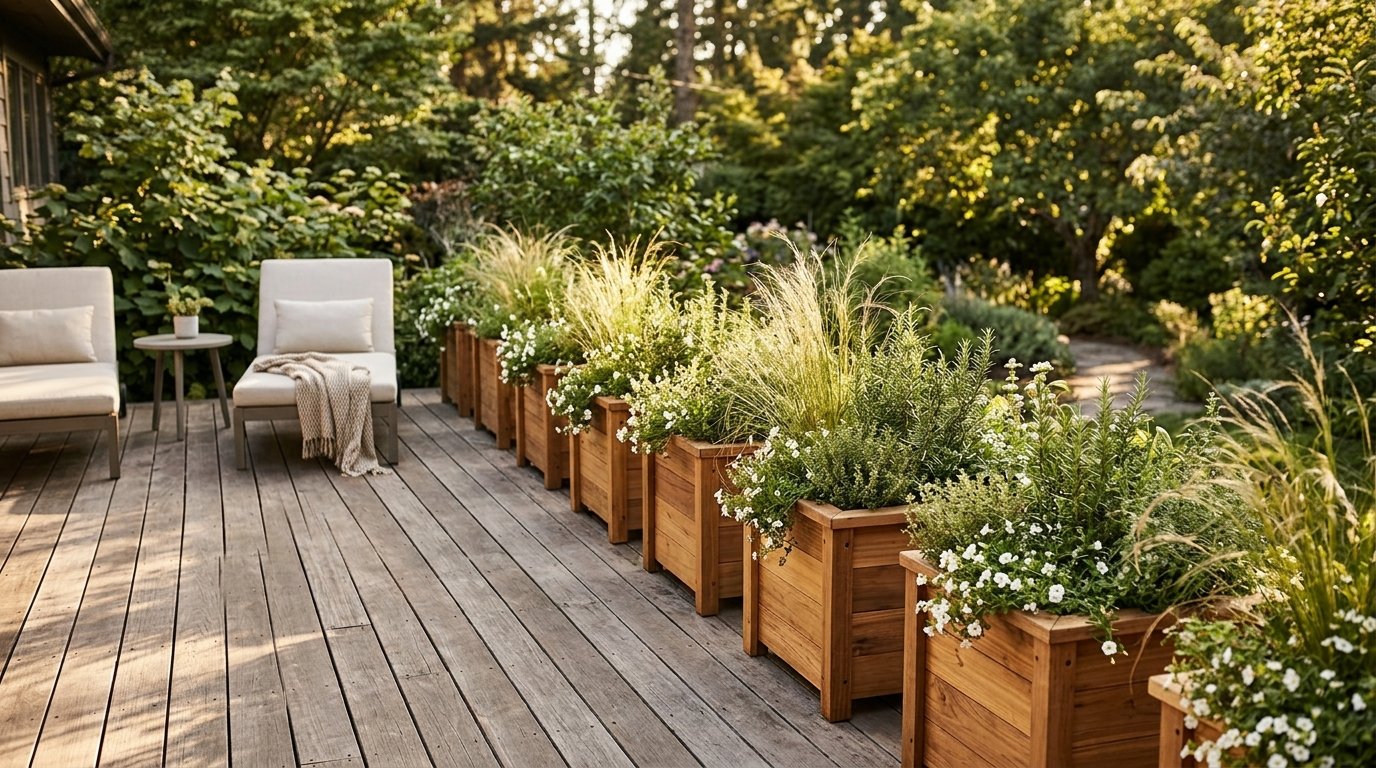
Wooden planter boxes bring warmth to decks and patios and blend naturally with garden settings. Cedar is the best choice because it resists rot and insects naturally.
Large raised cedar planters on legs are great for herbs and vegetables because they save bending, and box planters at ground level suit shrubs and flowers.
Leave cedar to silver naturally, or oil it once a year to keep the warm honey tone.
Pro tip: Line wooden planters with landscape fabric or a plastic liner with holes. It extends the life of the wood by years.

22. Low Concrete Bowls for a Minimal Look
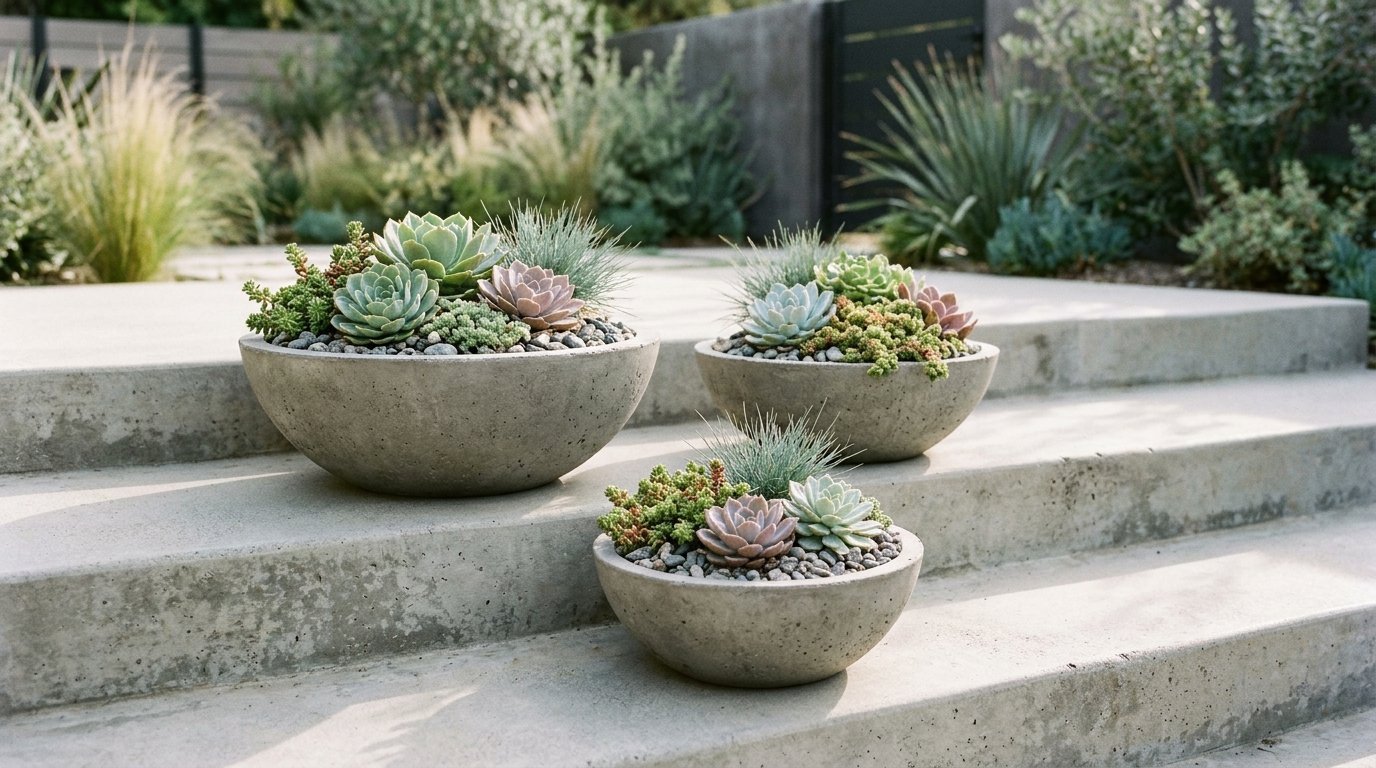
Wide, shallow concrete bowls look calm and modern, especially in groups on steps, walls or patios. They suit succulents, sedums, small grasses and alpines.
Because they are shallow, they are cheap to fill and need less soil than tall planters. They do dry out quickly, so choose drought-tolerant plants.
Mix two or three sizes for an elegant, low-maintenance display.
Pro tip: Concrete is alkaline when new. Rinse new concrete planters several times before planting acid-loving plants.
23. Glazed Ceramic in a Bold Color
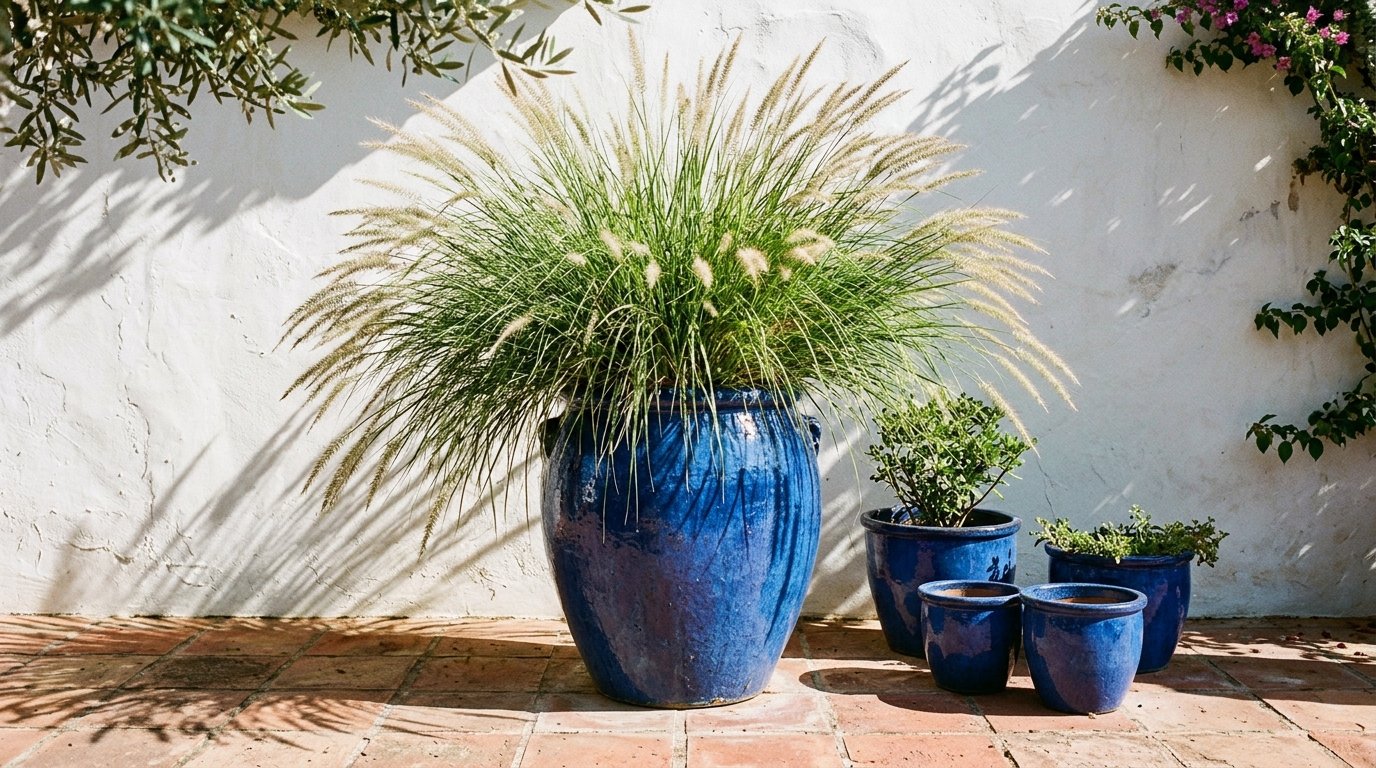
A single glazed planter in cobalt blue, emerald green or deep ochre can be the focal point of a whole garden. Bold color works especially well against white walls, grey decking and lots of green.
Keep the planting simple so the pot gets the attention: a single grass, a clipped shrub or a mound of one flower color.
Repeat the pot color elsewhere, in cushions or a door, to tie the scheme together.
Pro tip: Glazed pots can crack if water freezes inside. Bring them under cover or empty them in hard-frost areas.
24. Self-Watering Planters for Balconies
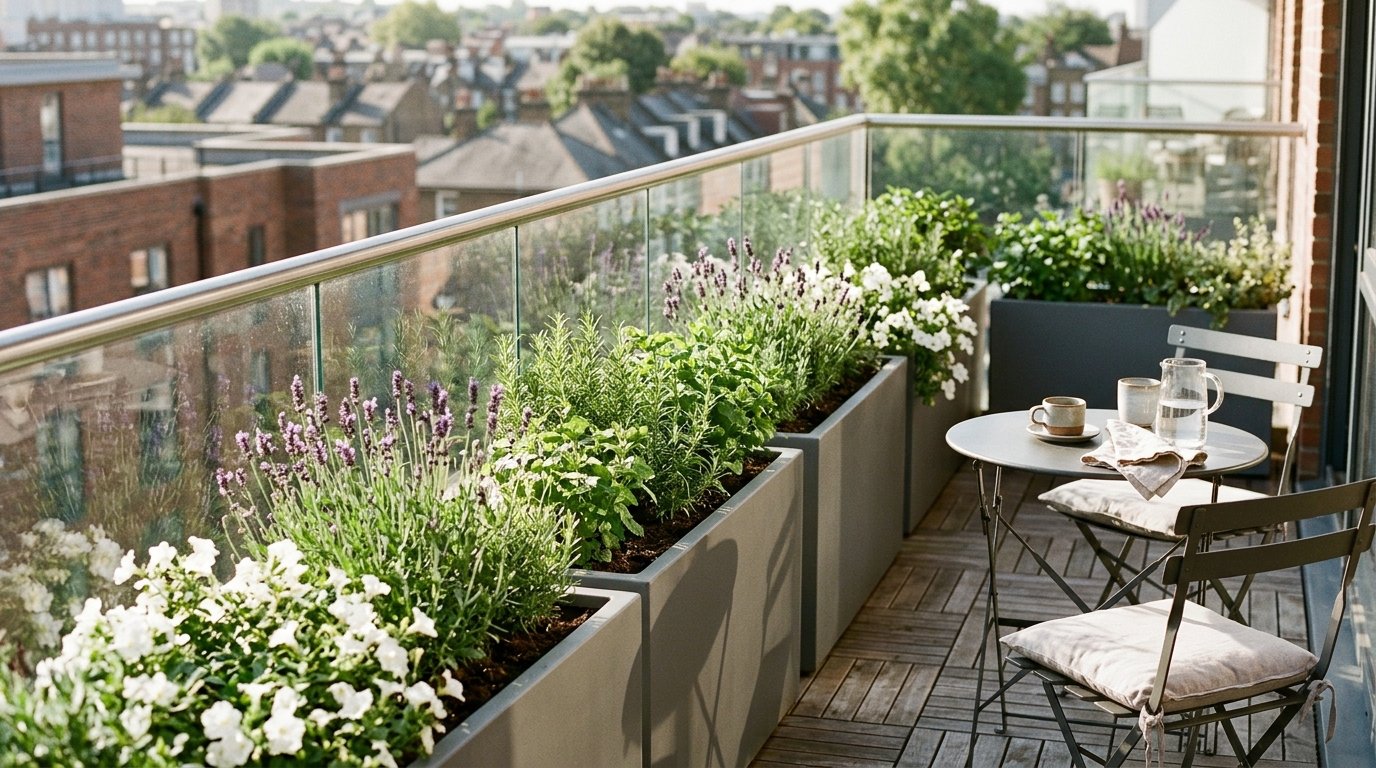
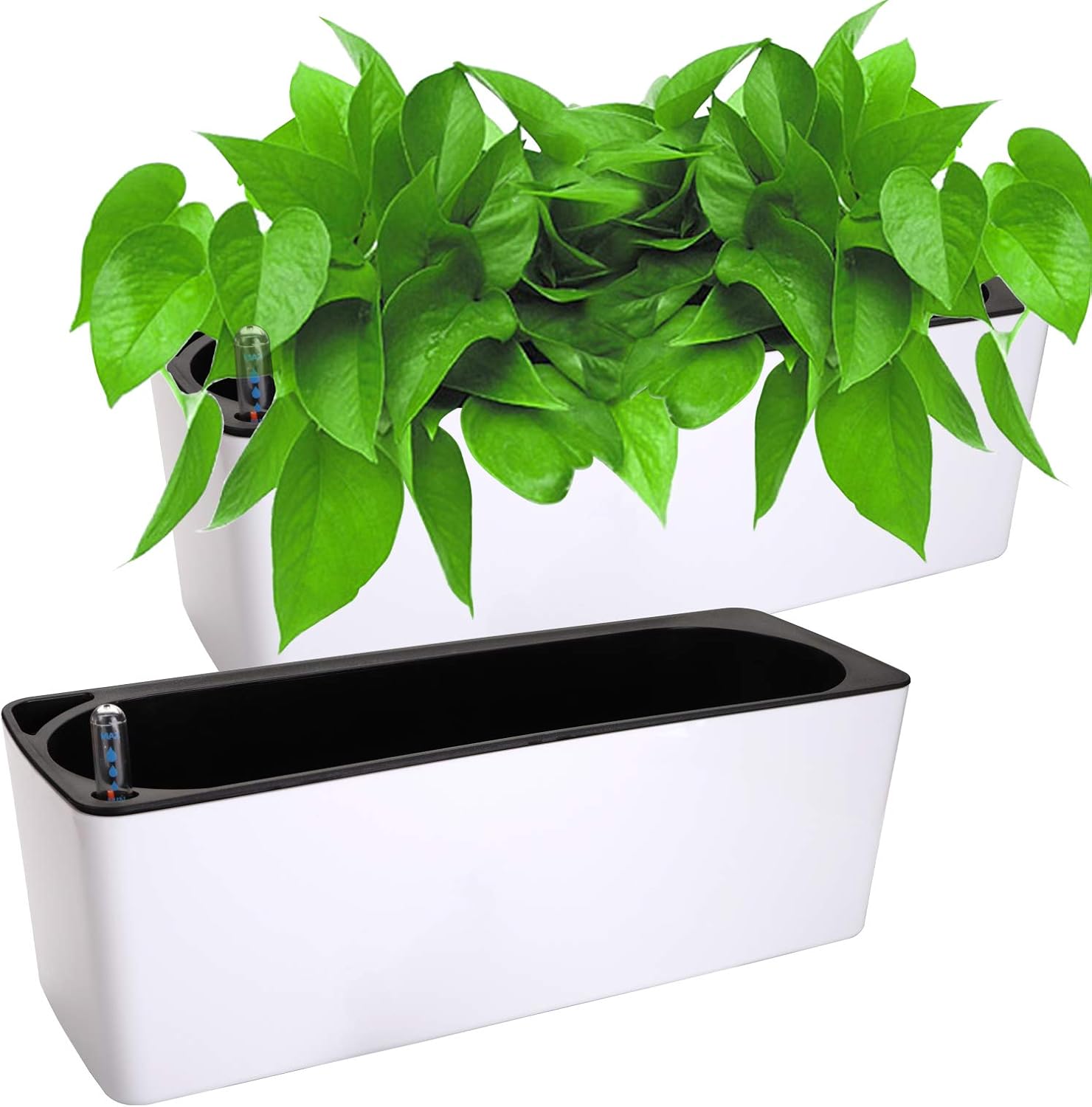
Balconies and roof terraces are hot, windy and easy to forget about. Self-watering planters have a reservoir in the base that feeds water up to the roots, so plants can go several days without attention.
They are ideal for herbs, flowers and small shrubs, and many come in lightweight plastic or resin, which matters on balconies with weight limits.
Long rectangular self-watering planters along a railing make a balcony feel like a garden.
Pro tip: Check your building’s rules and the balcony’s weight limit before adding large planters. Wet soil is very heavy.

25. Raise a Planter on a Plinth or Stand
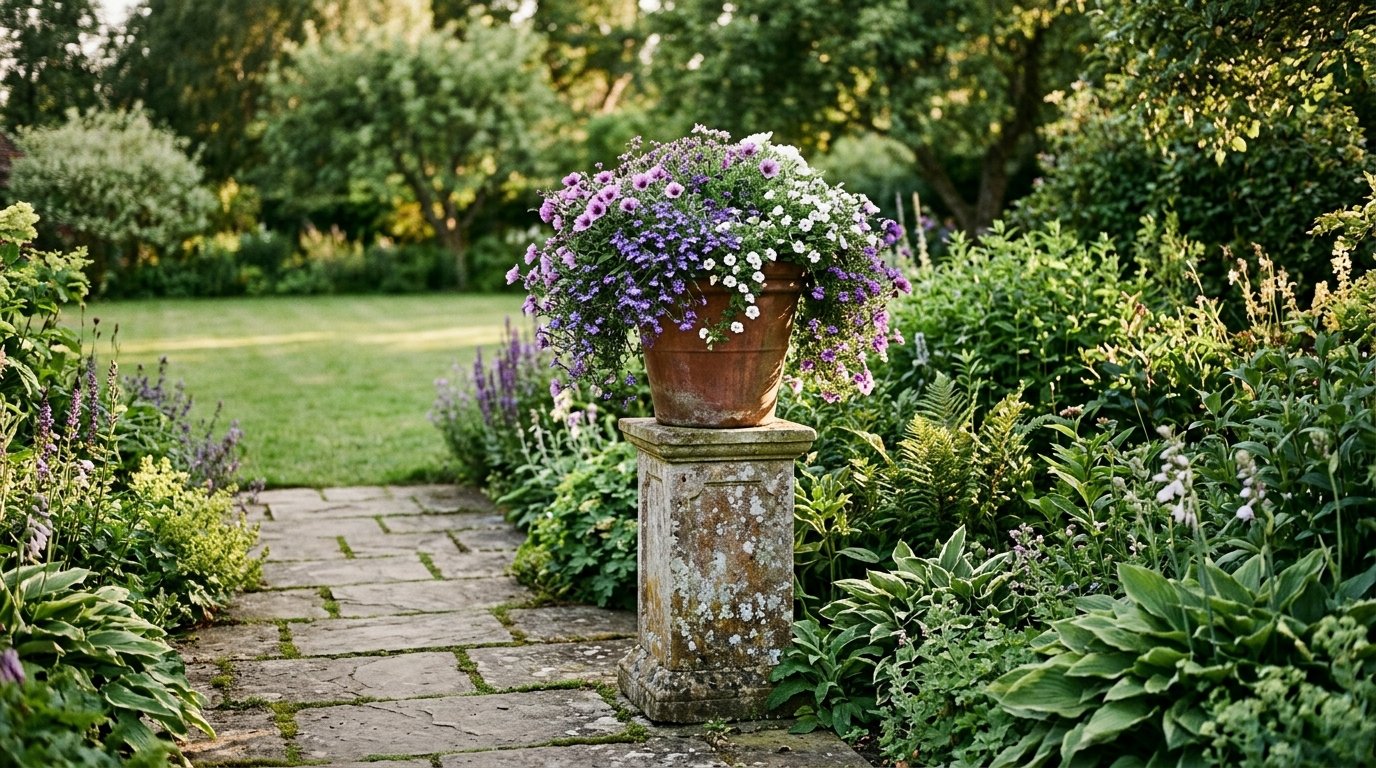
Lifting a planter up even 12 inches can make it look twice as important. Plinths, plant stands and upturned planters give height to low plants and make them easier to see and care for.
Use this trick to create layers in a cluster, to raise trailing plants so they can spill properly, or to give a single planter the presence of a sculpture.
Match the stand to the style: stone plinths for formal gardens, black metal stands for modern spaces, and wooden stools or crates for cottage gardens.
Pro tip: Make sure the plinth is wider than the base of the planter and fixed level. A tall, top-heavy pot on a narrow stand is a tipping risk.
How to Fill Large Planters (The Smart, Cheap Way)
Most plants only use the top 12 to 18 inches of soil. In a 30-inch planter, everything below that is wasted soil and weight. The fix is to fill the bottom third to half with a lightweight filler, then add potting mix only where the roots will actually grow.
Step one: check the drainage hole and cover it with a piece of mesh, a coffee filter or a shard of broken pot so soil doesn’t wash out. Step two: add your filler until the planter is a third to half full, depending on what you’re planting. Shallow-rooted annuals need less soil; shrubs and trees need more.
Step three: lay a piece of landscape fabric over the filler. This stops soil sifting down into the gaps and makes it easy to lift the soil out later. Step four: fill the rest with good-quality potting mix, not garden soil, which compacts and drains badly in containers.
Step five: plant, water thoroughly and top up the soil if it settles. Leave about an inch between the soil surface and the rim so water doesn’t run straight off.
Best Fillers for the Bottom of Large Planters
Empty plastic nursery pots, turned upside down, are the best filler of all. They’re free, light, don’t break down and leave plenty of air space for drainage. Crushed plastic bottles and milk jugs with the caps on work the same way.
Packing peanuts are light and cheap, but only use the polystyrene kind. The biodegradable cornstarch type dissolves when wet and turns into sludge. Put them in a mesh or plastic bag first so they don’t mix into the soil.
Pine cones, sticks and logs suit planters you’ll replant every year. They break down slowly and add organic matter over time, so expect the soil to sink a little each season. This is known as the hugelkultur approach.
Avoid gravel and rocks in the bottom. Contrary to the old advice, they don’t improve drainage. They raise the wet zone higher in the pot, add a lot of weight and make big planters almost impossible to move. Also avoid anything treated with chemicals, like painted wood or old carpet.
One exception: if your planter is tall, light and in a windy spot, a few heavy stones at the very bottom stop it from blowing over. Use just enough for stability.
The Thriller, Filler, Spiller Formula in Practice
For a sunny planter, try a cordyline, canna or purple fountain grass as the thriller; petunias, verbena, lantana or calibrachoa as fillers; and sweet potato vine, bacopa or trailing verbena as spillers.
For shade, use a fern, a tall caladium or a hosta as the thriller; begonias, impatiens or coleus as fillers; and creeping Jenny, trailing ivy or lamium as spillers.
For a low-water planter, try an agave, a phormium or a tall grass as the thriller; sedums or echeveria as fillers; and string of pearls, trailing rosemary or creeping thyme as spillers.
Watering and Care for Large Planters
Water deeply rather than often. A big planter needs enough water to soak right through to the bottom, until it runs out of the drainage hole. Then wait until the top inch or two of soil is dry before watering again. In midsummer, that might be every day for small pots and every two or three days for large ones.
The finger test is still the best guide: push a finger into the soil up to the second knuckle. If it’s dry, water. If it’s damp, wait. A cheap moisture meter helps if you’re not sure.
Feed regularly. Potting mix runs out of nutrients within six to eight weeks, and frequent watering washes the rest away. Mix slow-release fertilizer into the soil at planting time, and top up with a liquid feed every couple of weeks in summer for flowering and fruiting plants.
Refresh the top few inches of soil each spring, and repot permanent plants like trees and shrubs into fresh mix every two or three years. A layer of mulch, bark or gravel on top keeps moisture in and gives the planter a finished look.
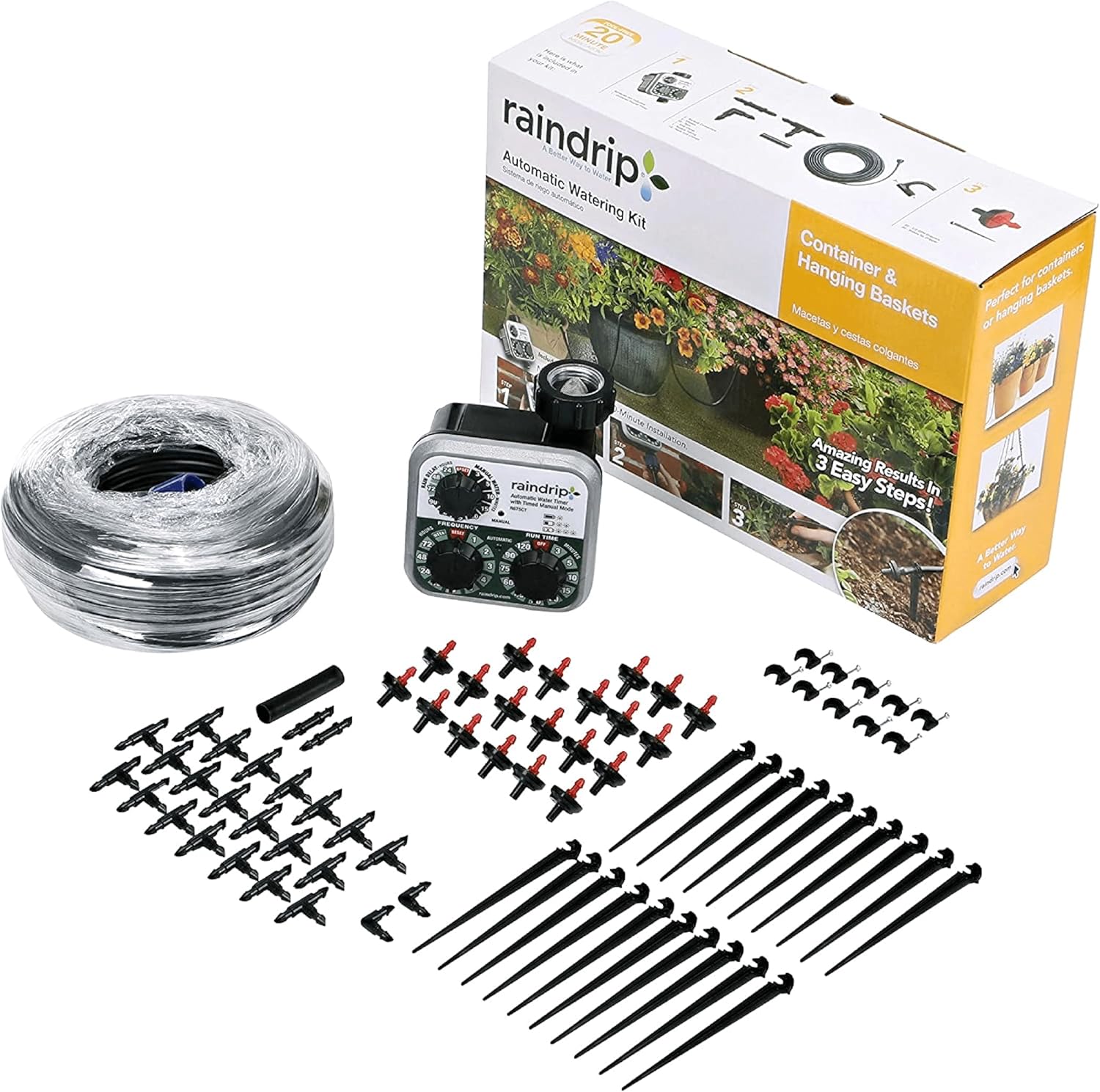
If you travel, group planters together in partial shade, give them a deep soak before you leave, and consider a simple drip system with a timer. It’s one of the best investments for anyone with more than a handful of pots.
Frequently Asked Questions
What do you put in the bottom of a large planter?
Use a lightweight filler such as upside-down nursery pots, crushed plastic bottles or bagged polystyrene packing peanuts, covered with landscape fabric. Avoid gravel and rocks, which add weight without improving drainage.
How much soil does a large planter need?
Most plants only need 12 to 18 inches of potting mix. Shrubs and small trees need more, often the full depth of the pot, so only use filler under shallow-rooted plants like annuals and herbs.
Can I use garden soil in planters?
No. Garden soil compacts in pots, drains badly and can carry pests and diseases. Use a good-quality potting mix made for containers.
How often should I water large outdoor planters?
Water when the top inch or two of soil is dry. In summer, large planters usually need watering every two to three days, and more often in hot, windy or very sunny spots.
What are the best plants for large outdoor planters?
Boxwood, olive trees, dwarf citrus, Japanese maples, hydrangeas, ornamental grasses and evergreen topiaries all thrive in big planters. For seasonal color, add petunias, geraniums, begonias or mums around the base.
Final Thoughts
Big planters are one of the easiest ways to make a porch, patio or garden look finished. Go larger than you think, group them with intention and plant them generously.
Then fill them the smart way. A third of a planter full of old nursery pots and a layer of landscape fabric saves money, saves your back and gives plants exactly what they need. Pick one idea from this list, try it this weekend and build from there.