Succulents are the rare plant that rewards a little neglect. Pot a few in the right container, water them less than you think you should, and they thrive on a sunny shelf for years. No wonder demand is climbing fast. The global succulent plant market hit roughly $5.2 billion in 2024 and is forecast to grow about 17% a year through 2031 (Cognitive Market Research, Succulent Plant Market Report, 2024). Below are 12 container ideas for any space, plus the two care rules that keep them alive.
Key Takeaways
- The global succulent market reached ~$5.2B in 2024, growing ~17% annually (Cognitive Market Research, 2024).
- Every good succulent container needs one thing above all: a drainage hole and gritty, fast-draining mix.
- Overwatering is the single most common reason succulents die (Iowa State University Extension).
- You can start with a thrifted teacup or a $4 terracotta pot; succulents don’t care about the price tag.
Why are succulent container gardens having a moment?
Money is the loudest signal. In 2023, US spending on container gardening jumped to $2.5 billion, up from $1.3 billion a year earlier, while indoor houseplant spending climbed to $3.4 billion (National Gardening Association via Garden Center magazine, 2024). Both categories nearly doubled in a single year. Succulents sit right where those two trends meet: small, container-friendly, and forgiving enough for a first-time plant owner.
There’s a generational pull too. By 2023, about 34% of younger adults were caring for houseplants, up from 25% in 2018, according to industry data reported by the Press Herald (April 2024). Renters and apartment dwellers can’t dig a flower bed, so a windowsill of potted succulents becomes the garden instead.
What makes a good container for succulents?
One feature beats all others: drainage. A pot needs a hole in the bottom and a gritty, fast-draining mix, because succulents rot when their roots sit in wet soil. The University of Minnesota Extension recommends a coarse cactus or succulent blend, often cut with extra perlite or pumice (UMN Extension, Tips for growing succulents in containers). Skip a regular potting mix straight from the bag. It holds far too much water for these desert plants.
Material matters less than people expect. Terracotta breathes and pulls moisture out, which suits heavy-handed waterers. Glazed ceramic and metal hold water longer, so go lighter on the can. Here’s the trick most guides skip: match the pot to your habits, not the other way around. If you tend to forget watering, use glazed pots. If you fuss and overwater, terracotta forgives you.
12 Stylish Ways to Arrange Succulents
1. The minimalist single pot
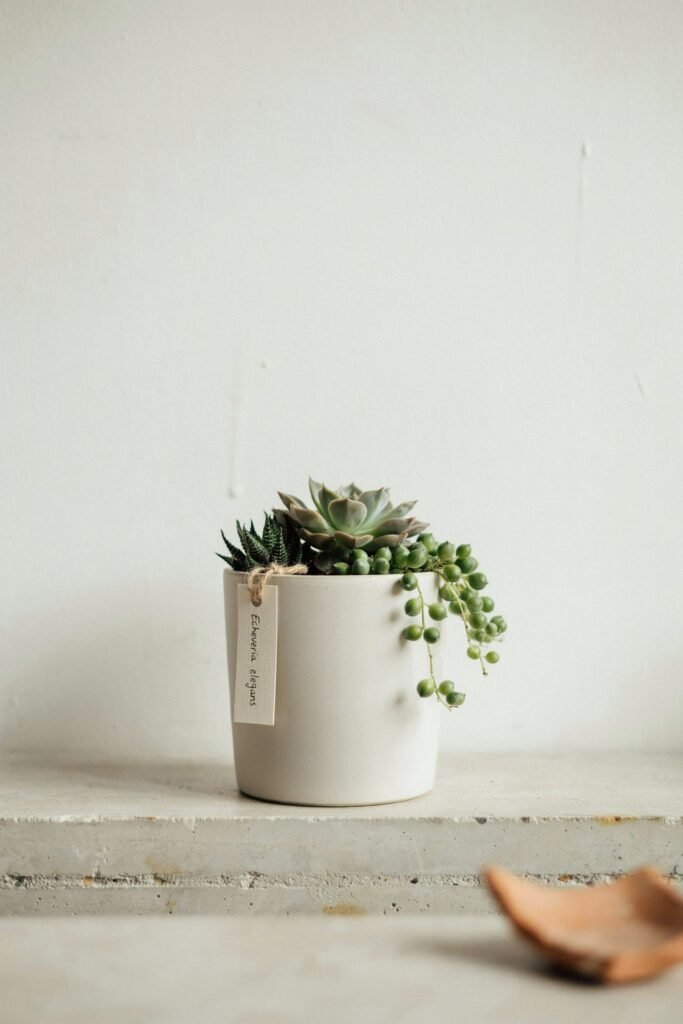
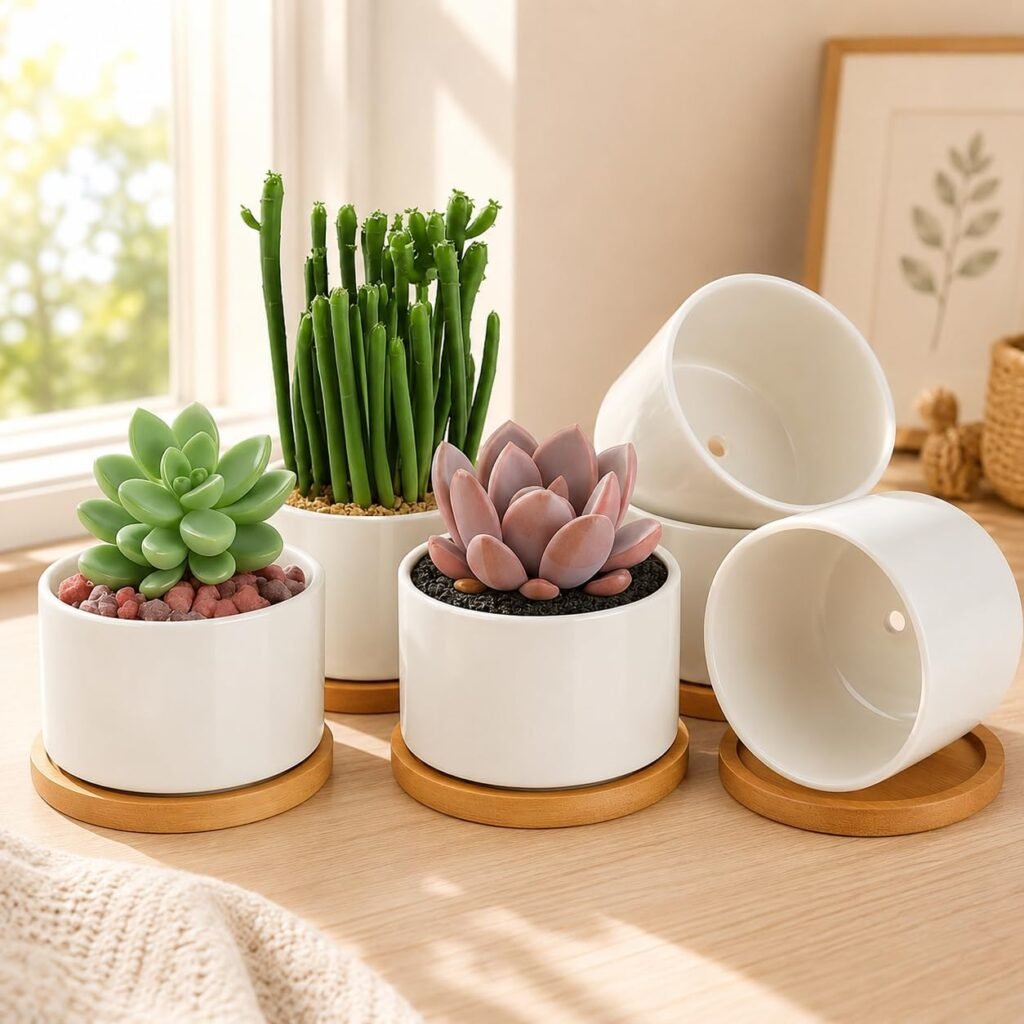
One sculptural succulent in a plain pot is the easiest win in the whole list. A jade plant or a tight echeveria rosette in a matte white container reads as intentional on a desk, shelf, or nightstand without any fuss. The trick is letting the plant be the focal point and keeping the pot quiet, with no busy patterns competing for attention. Choose a container only slightly wider than the plant so it doesn’t look swallowed. Best for beginners and clean, modern rooms.
2. The “thriller, filler, spiller” arrangement
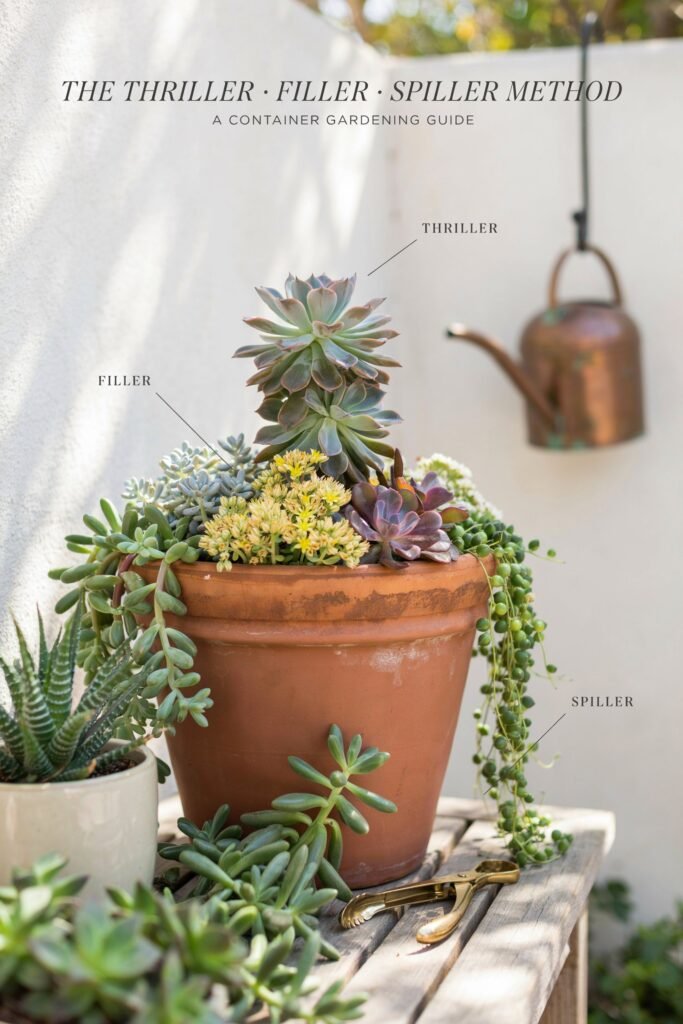
Borrow this florist formula for a fuller, more designed pot. Use a tall upright succulent as the thriller in the center or back, low rosette types as the filler around it, and a trailing variety to spill over the rim. The first time I tried this, I packed the plants too tightly and they stretched toward the light within weeks, going leggy and pale. Leave breathing room between them and let the arrangement fill in over a season. This one rewards a little experience, so don’t be discouraged if your first attempt looks crowded.
3. The hanging basket
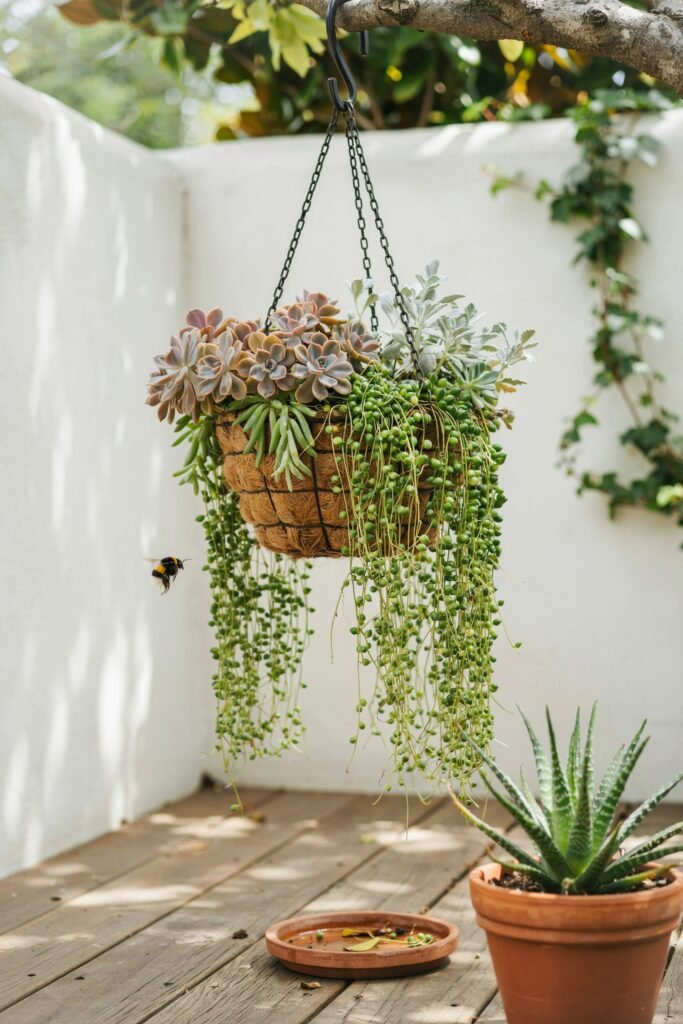
Trailing succulents like string of pearls or burro’s tail were practically made for a hanging pot. They drape over the edge and catch light from a window without claiming any surface space below. Hang one near a bright window but out of harsh midday sun, which can scorch those delicate strands. Rotate the pot every couple of weeks so the growth stays even instead of leaning toward the glass. Ideal for small apartments where every flat surface is already spoken for.
4. The vertical wall planter
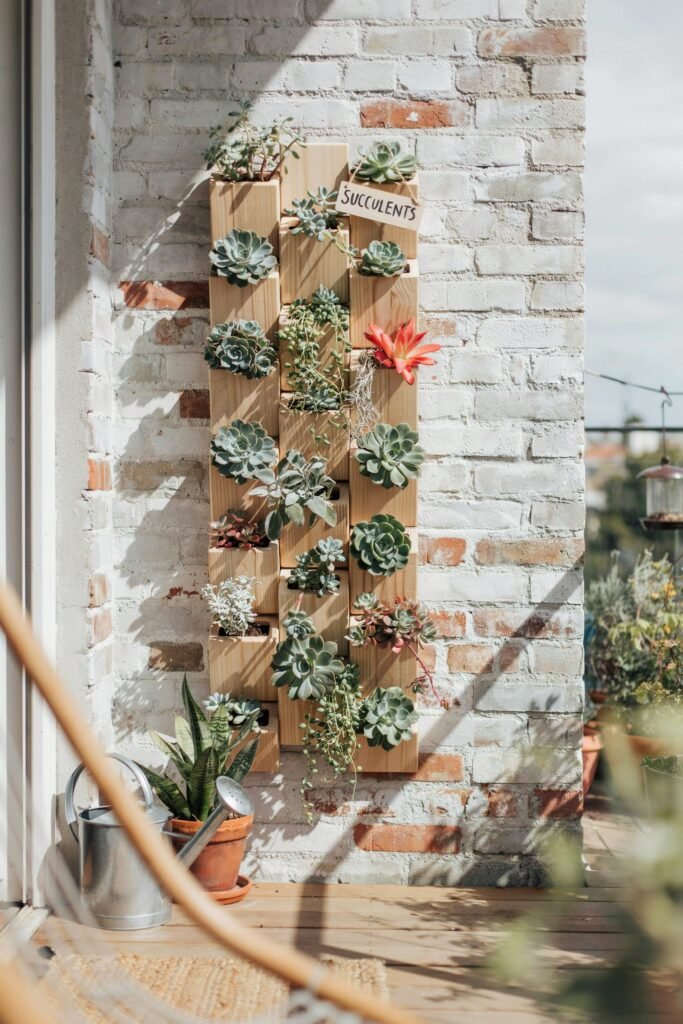
A framed panel or pocket planter turns a cluster of succulents into living art you hang like a picture. It needs shallow, well-draining cells and genuinely bright light, since plants on a wall get less airflow and sun than they would on a sill. Start with tight, slow-growing rosettes that won’t outgrow their pockets too quickly. Let it root and fill in while lying flat before you mount it upright, or gravity will pull loose plants out. Worth the extra setup for a real statement wall.
5. The glass terrarium centerpiece
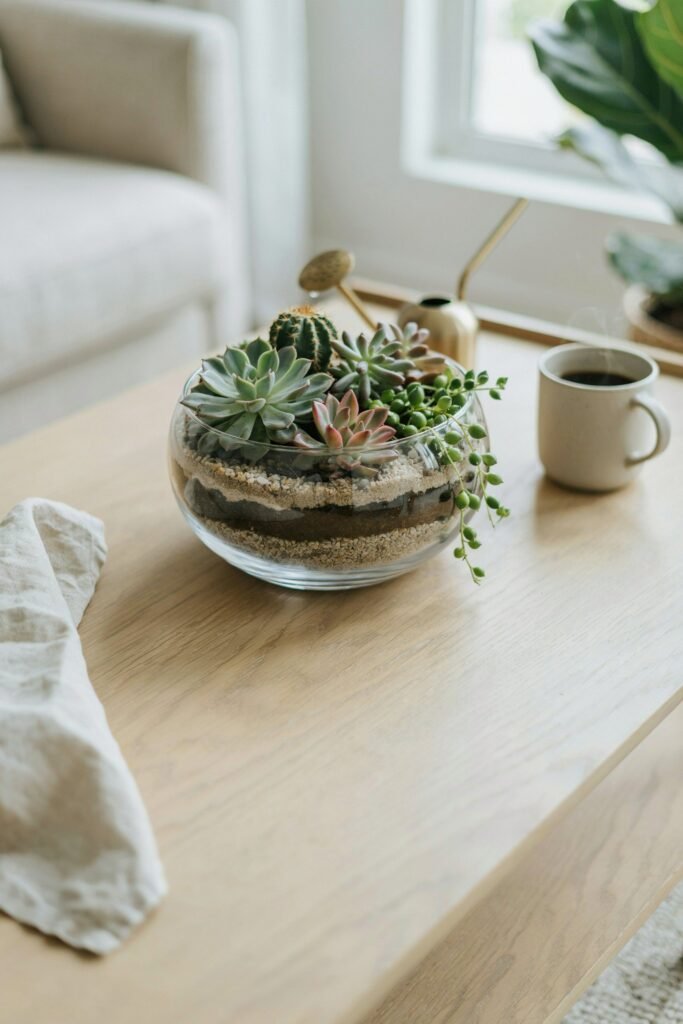
A shallow glass bowl of mixed succulents makes a striking centerpiece for a table or sideboard. Layer a little gravel at the bottom, then cactus soil, then arrange your plants and finish with a top layer of sand or pebbles for a clean look. One caution worth repeating: glass has no drainage hole, so water sparingly with a spoon or squeeze bottle rather than a can. Standing water at the base is the fastest way to rot the roots.
6. The upcycled vessel
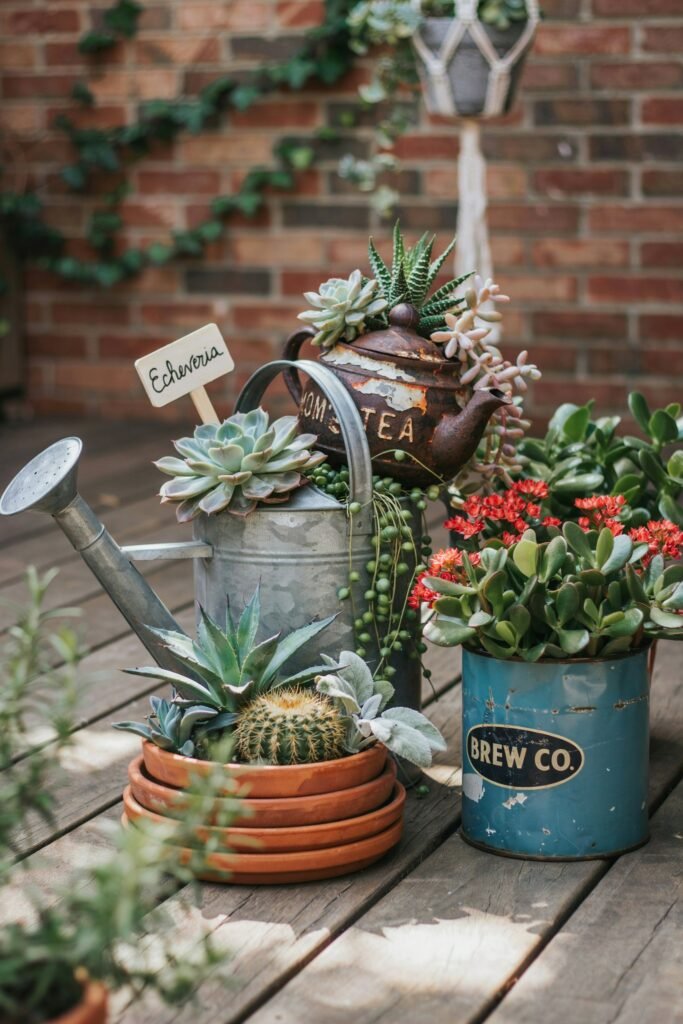
A thrifted teacup, an old colander, a wooden crate, a dented paint tin: almost anything can become a charming planter for a few dollars. Drill or punch a drainage hole if there isn’t one, and add a layer of gravel for vessels you can’t drill. Half the charm is the mismatch, so don’t overthink whether the pieces “go together.” This is container gardening at its cheapest and most personal.
7. The sunny windowsill row
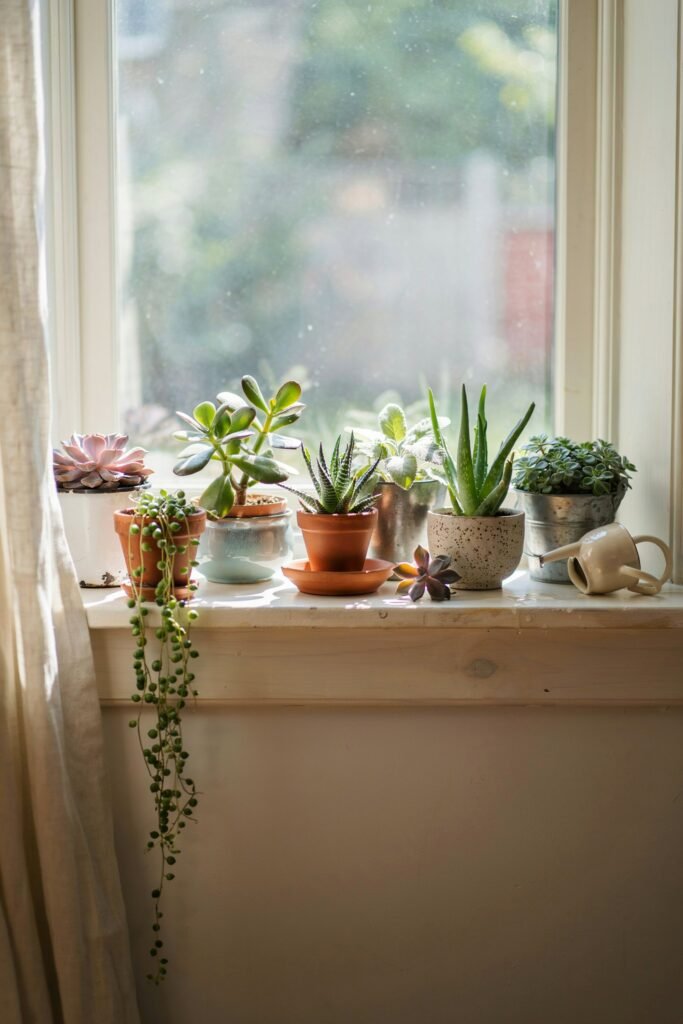
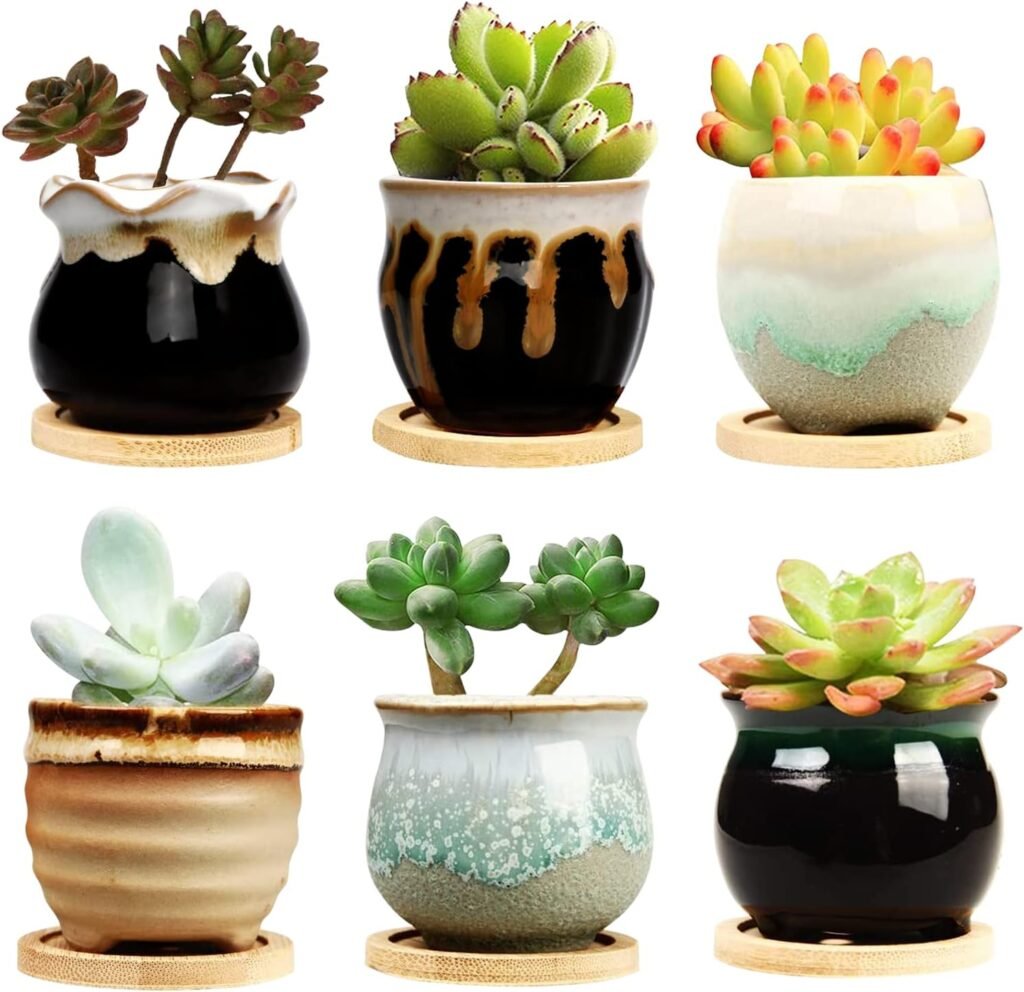
Line up small matched pots along a bright sill for an instant mini garden with a tidy, collected look. South- or east-facing light keeps the colors vivid and the rosettes tight; too little light and they’ll stretch and fade. Terracotta works especially well here because it dries quickly between waterings. Perfect for renters who want real greenery without giving up any floor space.
8. The outdoor statement pot
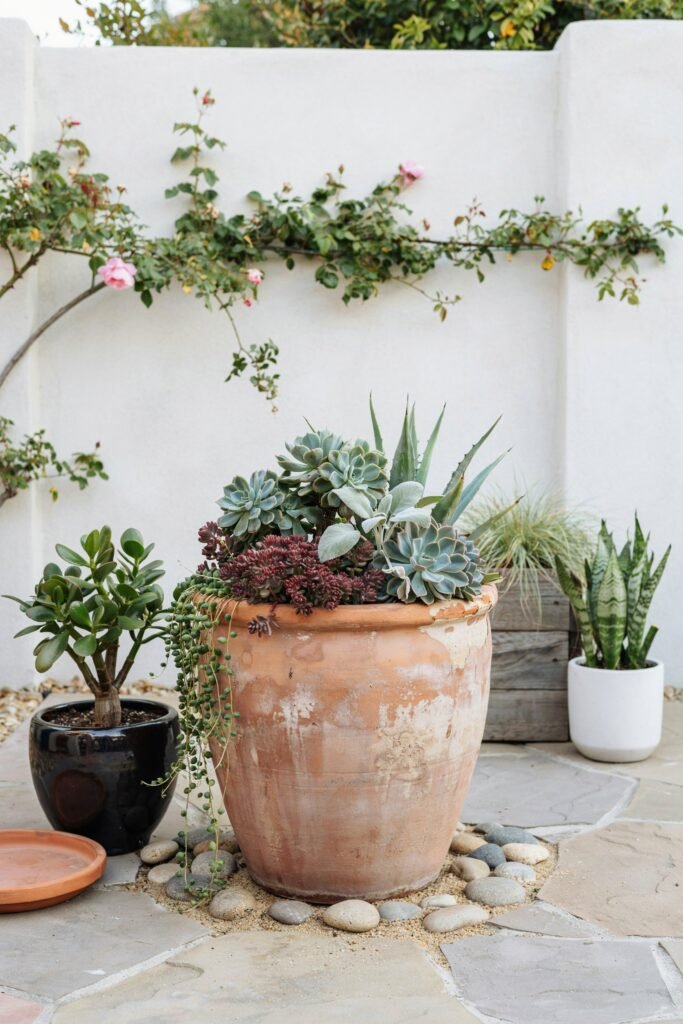
A large bowl of drought-tolerant succulents anchors a patio, porch step, or quiet garden corner. Sempervivums and sedums shrug off heat and the occasional skipped watering, which makes them forgiving for a spot you don’t fuss over daily. Use a container with a wide drainage hole, since a hard rain can drown them faster than you’d expect. Move any tender types indoors before the first frost, and let the hardy ones ride out the cold.
9. The tiered stacked planter
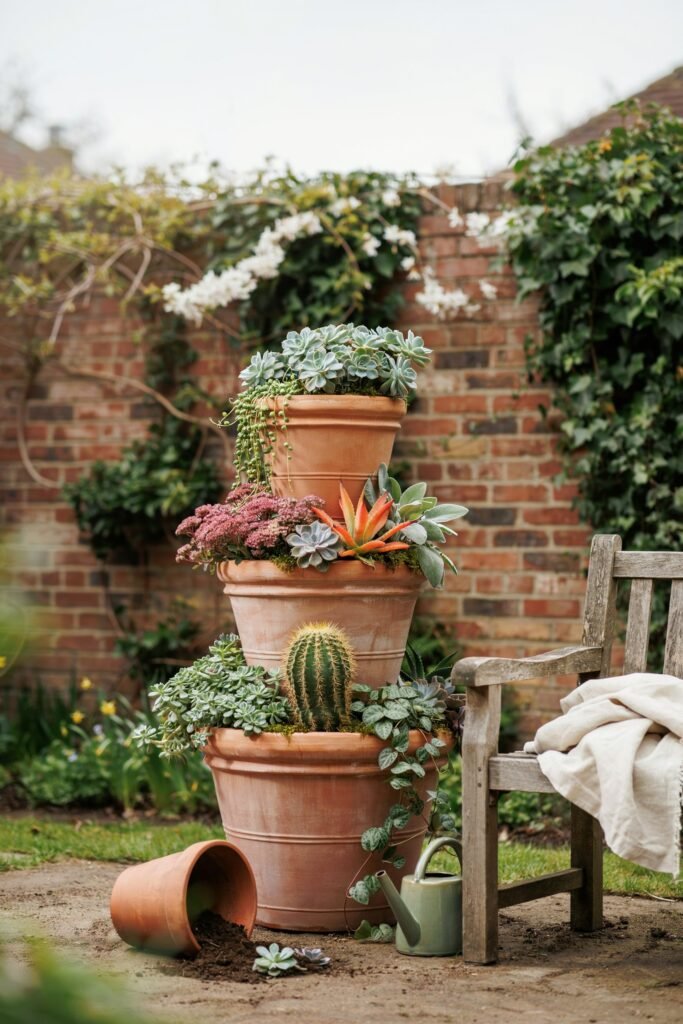
Stacked or strawberry-style pots give you a vertical garden in a single footprint. Each tier holds its own little cluster, so you can pack in a surprising amount of variety on a balcony or in a tight corner. Plant the most sun-loving types up top where light lands first, and the more shade-tolerant ones below. Water from the top and let it trickle down through the levels. Great when you want a lot of plants but have almost no horizontal room.
10. The driftwood or branch planter
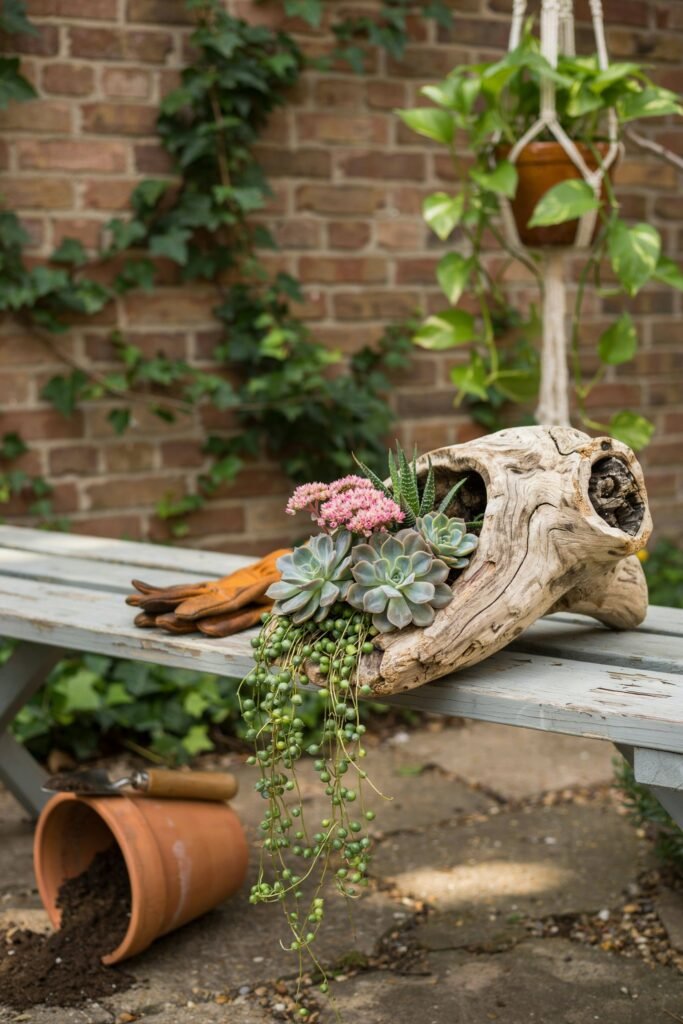
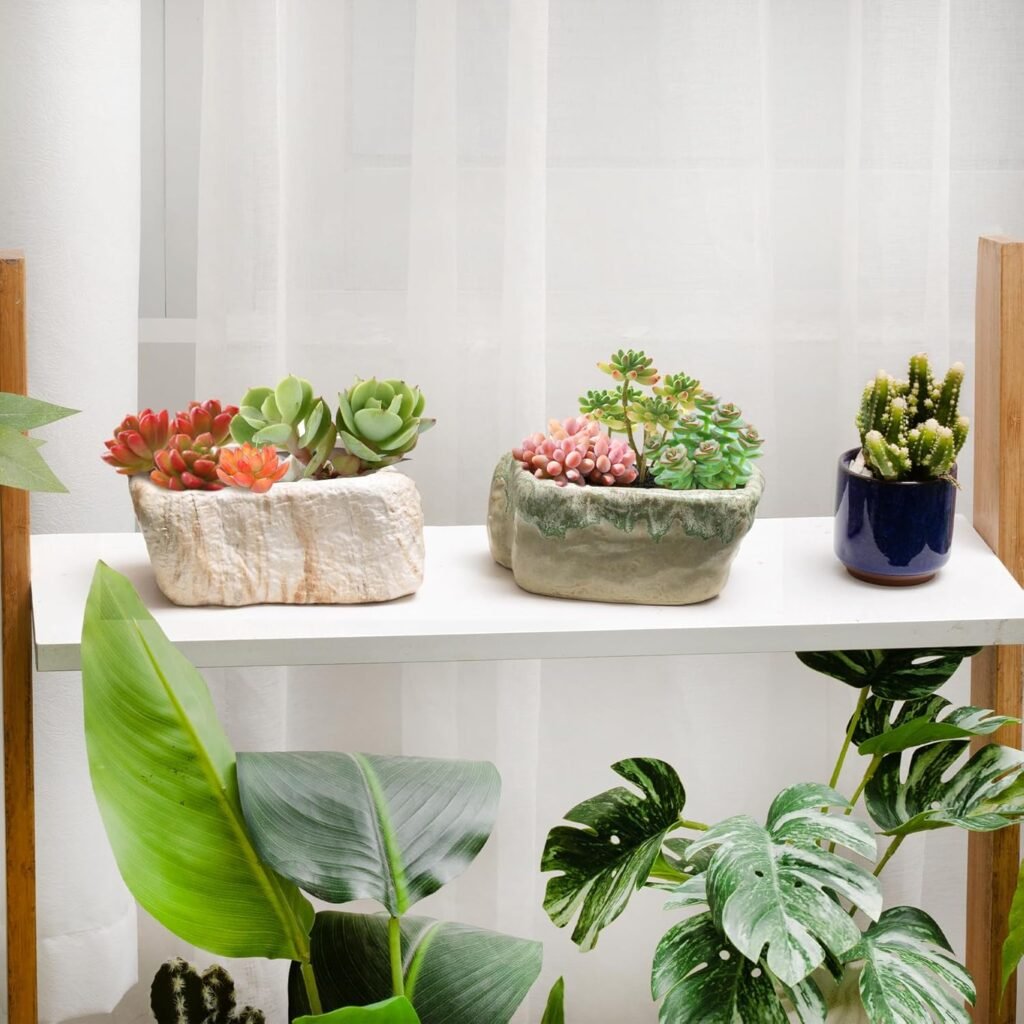
A piece of driftwood, a hollow log, or a chunk of weathered branch makes an organic base that looks like it wandered in from a forest floor. Tuck small succulents into the natural hollows with a bit of soil, or attach them with a moss backing for a more sculptural piece. The irregular shape is the whole point, so lean into the quirks rather than forcing symmetry. It’s a favorite for centerpieces and mantels with a natural, lived-in feel.
11. The DIY concrete planter
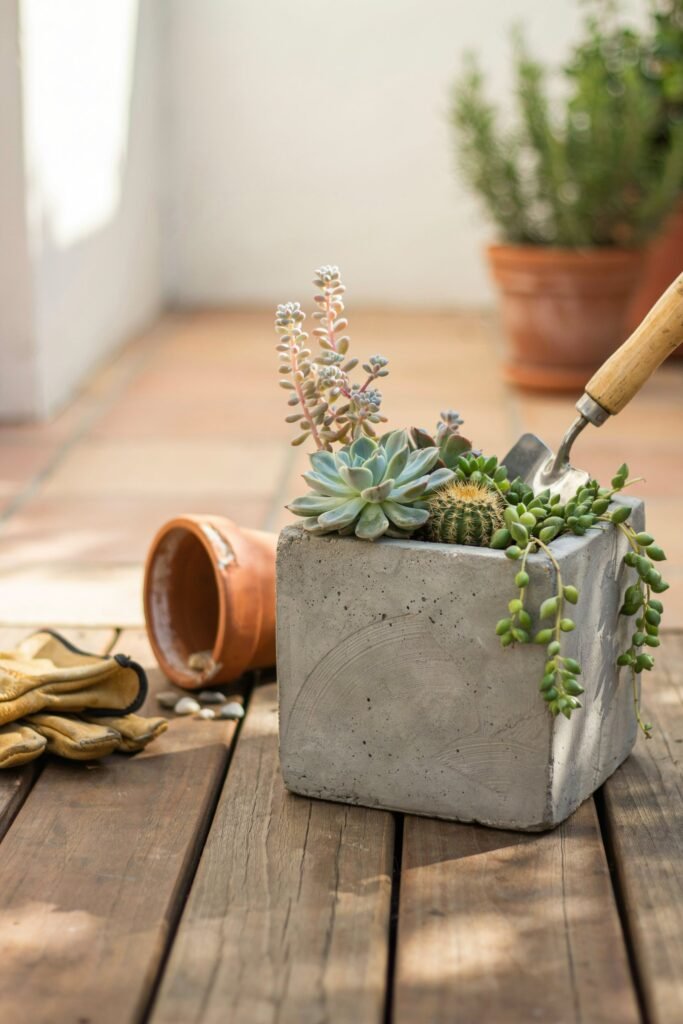
If you like a project, a cast concrete pot gives you a heavy, modern container for the cost of a bag of mix. Pour it into a mold — a plastic tub, a milk carton, a silicone form — and press a smaller cup inside to hollow out the center. The raw gray finish pairs beautifully with the blue-green tones of echeveria and senecio. Seal the inside or expect it to wick moisture, and remember to add a drainage hole before it cures. Deeply satisfying for makers who want a planter no one else has.
12. The color-story cluster
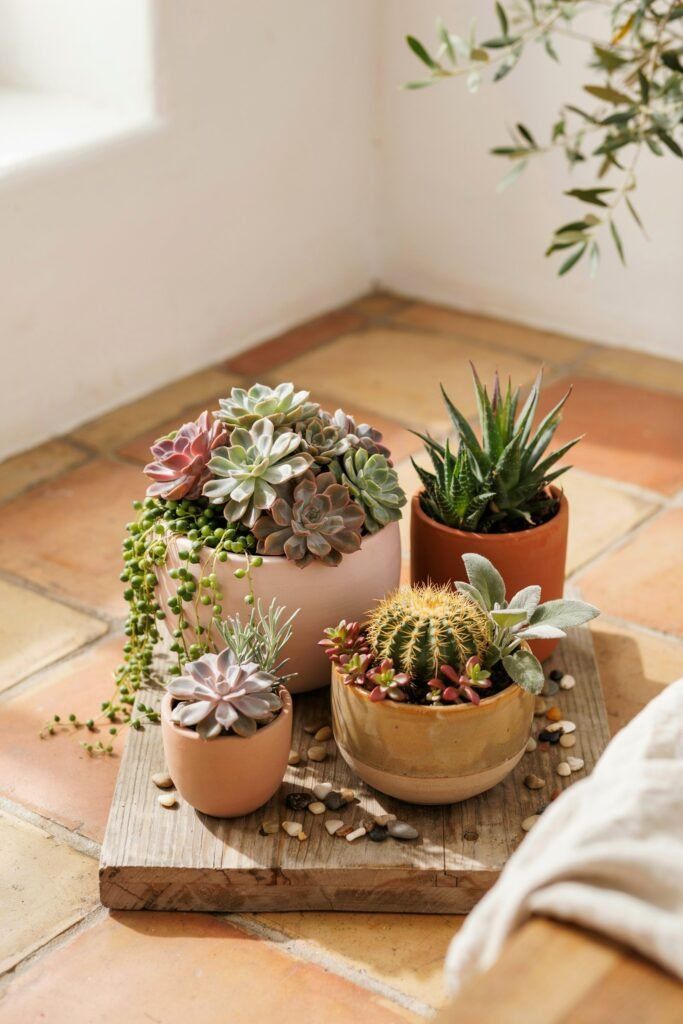
Group several pots around a single color story instead of building one big arrangement. Go all silvery blue-gray, or hunt down the red- and orange-tipped varieties for a warm, sunset palette. Repeating one color across different shapes and pots makes a windowsill or shelf look styled rather than random. Vary the pot heights so the eye has something to travel across. A simple way to make a collection feel like a deliberate display.
How do you keep succulent containers alive?
Water less, and water deeply when you do. Overwatering is the most common problem people hit with succulents, per Iowa State University Extension. Let the soil dry out completely between drinks, then soak until water runs from the drainage hole. Pair that habit with bright light, and most succulents forgive nearly everything else.What kills container succulentsRanked by how often it causes trouble1 · Overwatering / root rot2 · Poor drainage3 · Too little light (stretching)4 · Cold / frost damageOrdered by frequency, not measured percentages. Source: Iowa State University Extension, Common Problems and Issues of Succulents
Watch the leaves for clues. Mushy, translucent, yellowing leaves mean too much water. Wrinkled, shriveling leaves mean too little. Stretched, pale stems reaching sideways mean not enough light. Think of succulent care as the opposite of most houseplants: here, doing less is usually the fix, not doing more.
Frequently Asked Questions
Do succulents need a pot with a drainage hole?
Almost always, yes. Overwatering and trapped moisture are the top causes of succulent decline, per Iowa State University Extension. A drainage hole lets excess water escape. If you love a no-hole vessel, like a glass bowl, water in tiny amounts and never let the base stay wet.
How often should I water container succulents?
Far less than you’d guess. Most container succulents want water only when the soil is fully dry, often every one to three weeks indoors. Light, pot material, and season all shift the timing. The University of Minnesota Extension advises soaking thoroughly, then letting the mix dry out completely before the next watering.
What’s the best soil for succulents in containers?
A gritty, fast-draining mix. Use a commercial cactus or succulent blend, ideally amended with perlite or pumice for extra drainage (UMN Extension). Standard potting soil holds too much moisture and is the most common reason beginners lose plants to root rot.
Are succulents a good choice for beginners?
Yes, which helps explain the boom. The succulent market is growing roughly 17% a year (Cognitive Market Research, 2024), driven partly by how forgiving they are. They tolerate missed waterings, suit small spaces, and propagate easily, making them one of the lowest-stress ways to start a container garden.
Final thoughts
Succulent container gardens give you the most greenery for the least effort, which is exactly why spending on container and indoor plants is surging. Start simple. Pick one idea from the list, use a pot that drains, fill it with gritty mix, and resist the urge to overwater. From a thrifted teacup to a patio statement bowl, the formula stays the same. Want to go further? Try propagating a single leaf into a whole new pot — it’s the cheapest way to grow your collection.