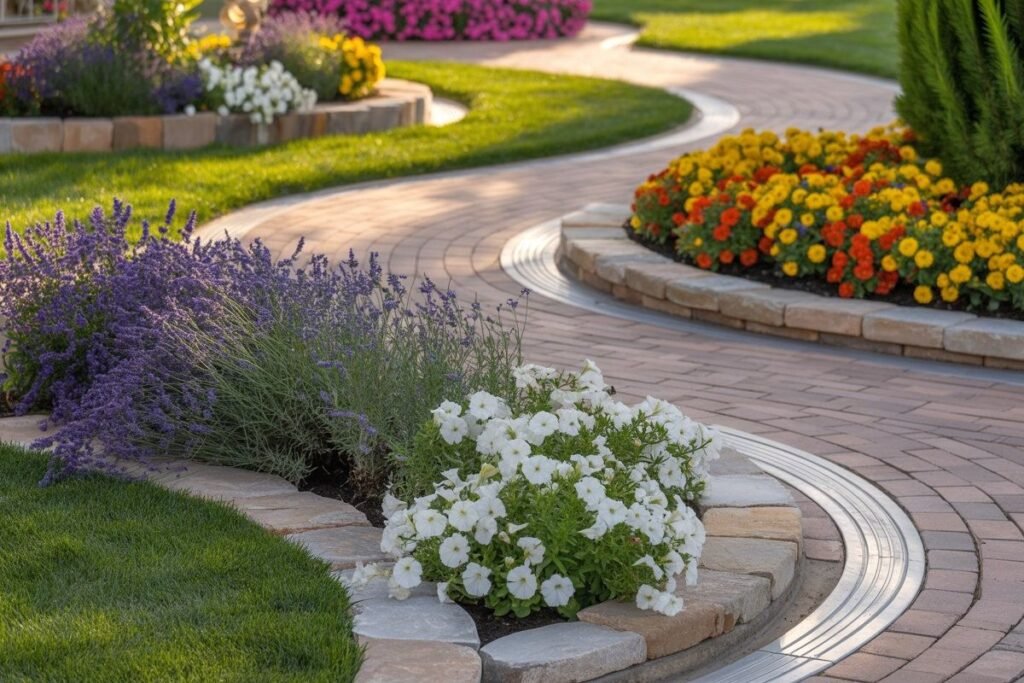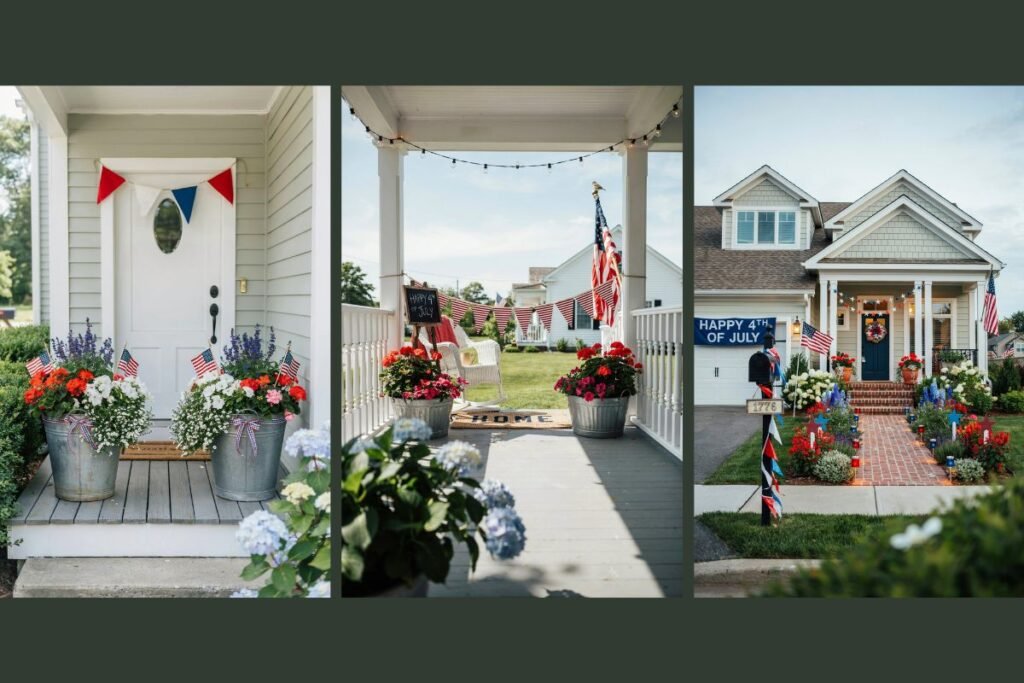
A great front yard rarely costs what it looks like. In a Virginia Tech Extension review of consumer research, good landscaping raised a home’s perceived value by 5.5% to 12.7% over the same house with a bare lot — and the projects that did it weren’t the flashy ones. The expensive look comes from a handful of cheap, repeatable habits: clean edges, repeated plants, a little symmetry. Below are 15 of them. Most cost a weekend and a trip to the garden center, not a contractor’s invoice. Want to know where to start if you only have one Saturday? Idea 1 is the one I’d pick every time.
Key Takeaways
- The cheapest outdoor project tested by realtors and landscapers — basic lawn care, with a typical cost of about $415 — had the highest cost recovery of any, at 217% (NAR & NALP, 2023 Remodeling Impact Report: Outdoor Features).
- “Expensive” reads as intentional. Repetition, layered heights, and a tight color palette do more for the eye than rare or pricey plants.
- Design quality matters more than plant cost. Virginia Tech research ranked design sophistication as the single biggest driver of perceived home value, ahead of plant size and plant type.
- Low-maintenance and high-end aren’t opposites. Native plants can cut outdoor water use 20% to 50% (U.S. EPA WaterSense) while still looking lush.
- Clean edges and fresh mulch are the fastest “before and after” you can buy.
Why does landscaping make a home look more expensive than it cost?
Because buyers and neighbors read care, not price tags. In a seven-state study reviewed by Virginia Tech Extension, homes with good landscaping were perceived as worth 5.5% to 12.7% more than the same home with only a lawn, and design sophistication outranked plant size and plant type as the top value driver (Niemiera, Virginia Cooperative Extension). Polish is mostly composition.
That’s the whole trick. A $40 flat of one perennial, planted in a clean repeated drift, looks more deliberate than $400 of mismatched one-offs scattered around. The eye rewards order. It’s also why 92% of realtors recommend improving curb appeal before a home is listed, according to the same NAR and NALP report — the front yard sets the price expectation before anyone walks inside. The mental model that helped me most: a yard reads as “designed” or “collected.” Designed yards repeat a few plants in deliberate groups. Collected yards have one of everything. Buyers can’t always name the difference, but they feel it, and “designed” is the look that says expensive. –>
15 front yard landscaping ideas that look expensive
The single highest-return yard project realtors measured was also the cheapest: standard lawn care recovered 217% of its cost at resale (NAR & NALP, 2023 Remodeling Impact Report: Outdoor Features). That sets the tone for this whole list. None of these need a designer. Most need a spade, a few plants, and a willingness to repeat yourself.
1. Cut a clean, deep bed edge
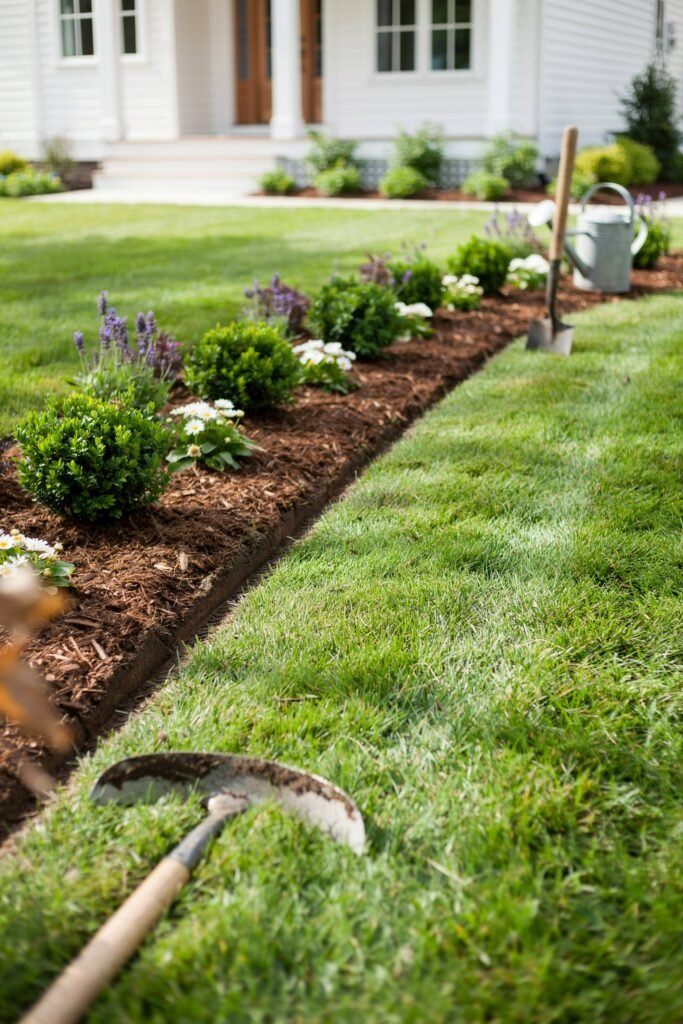
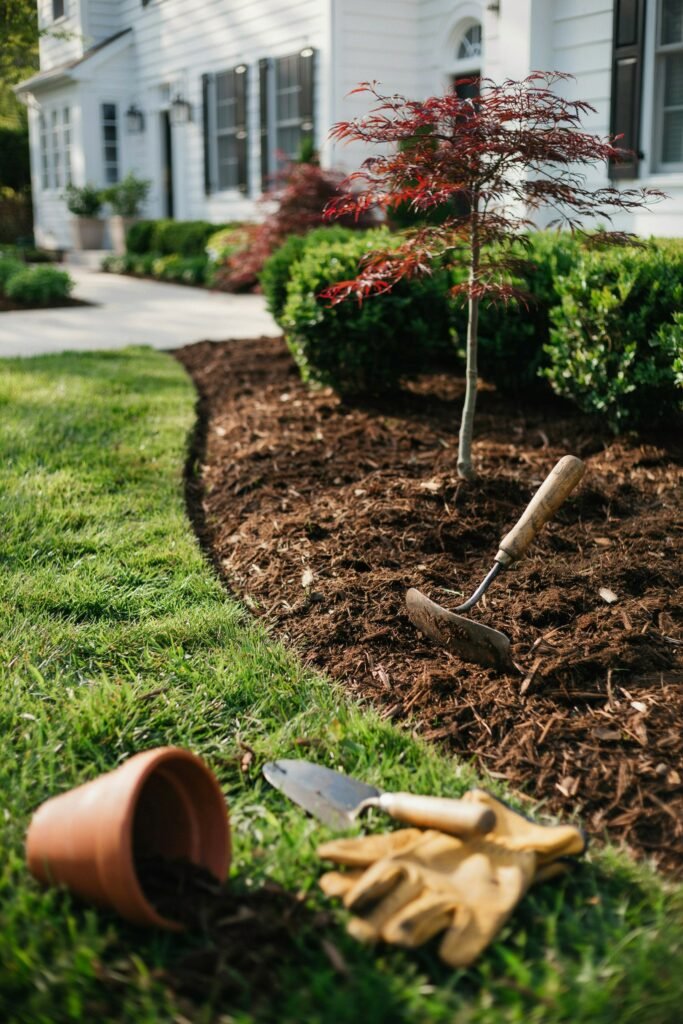
Nothing fakes a professional install faster than a crisp, spade-cut edge between bed and lawn. That little V-shaped trench casts a shadow line that frames every plant behind it, the way a mat frames a print. It also keeps grass from creeping into the beds, so the line you cut in spring still looks sharp in August.
You don’t need steel or plastic edging to get the effect, though those help on slopes. A half-moon edger and an hour of work will redraw every bed on a normal lot. Recut it once or twice a season and the whole yard reads as maintained. <!– [PERSONAL EXPERIENCE] The first time I re-cut all my bed edges in one weekend, two neighbors asked which company I’d hired. I hadn’t hired anyone. It was a $0 job and the most-noticed thing I’ve ever done out front. –>
2. Lay fresh, natural-toned mulch
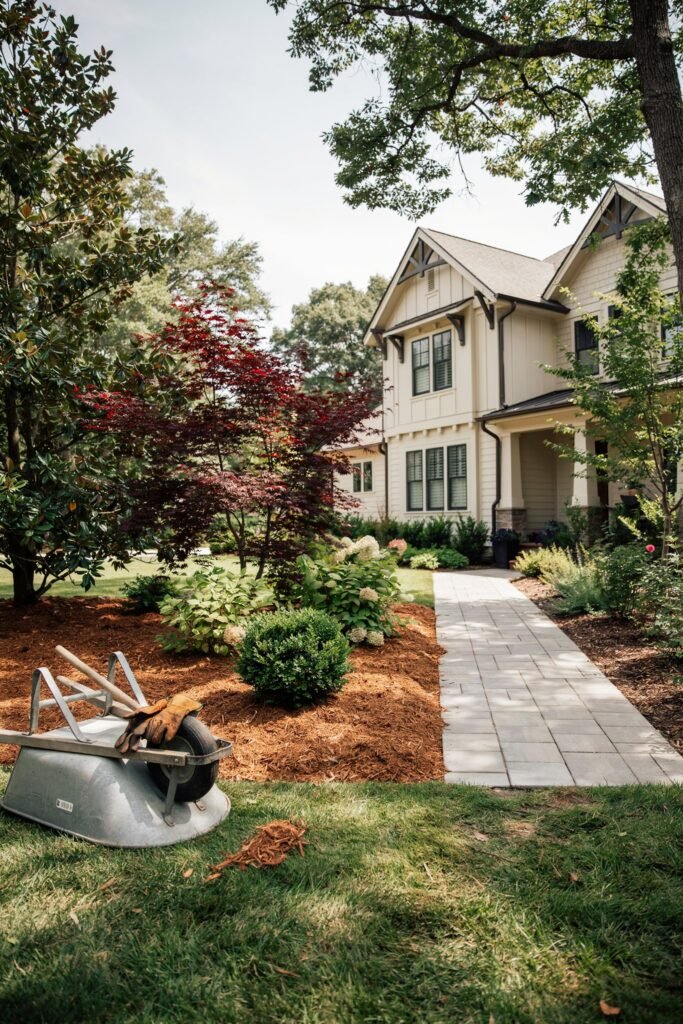
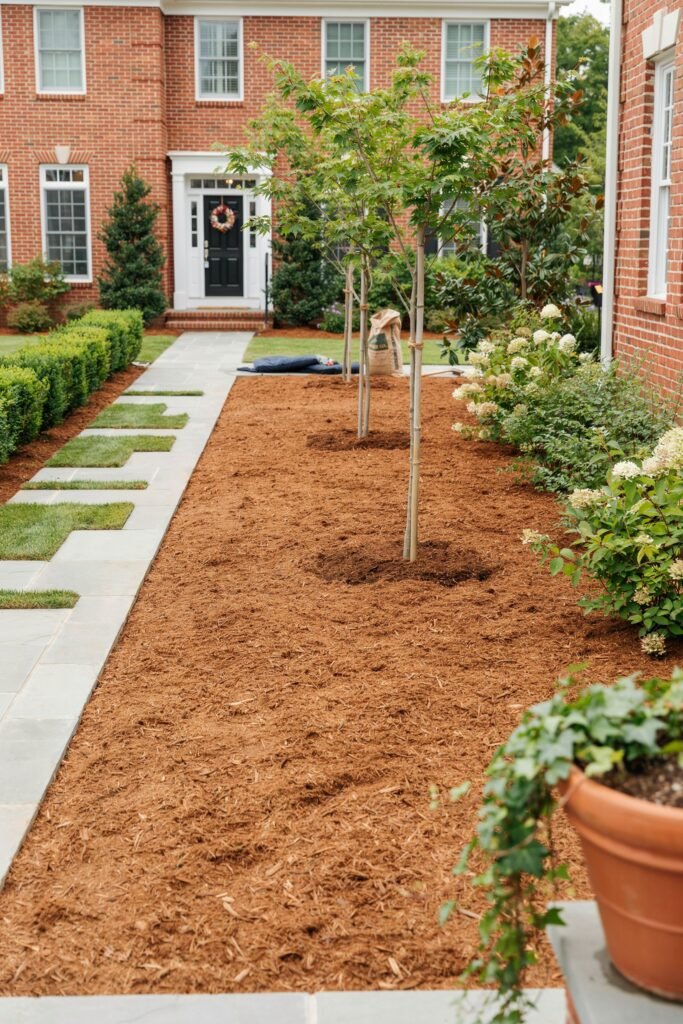
A two-to-three-inch layer of mulch pulls scattered plantings into one clean composition, holds soil moisture, and smothers most weeds before they start. Color matters more than people expect. Skip the dyed-black stuff if your house is warm-toned brick or stone; a natural brown or pine-bark tone reads richer and less synthetic against almost any facade.
Keep mulch a couple of inches off stems and trunks so you’re not inviting rot, and one refresh a year is usually plenty. Bagged is fine for small yards, but order it bulk by the cubic yard once you’re covering real square footage, since it’s far cheaper that way. I switched one bed from dyed-black mulch to natural shredded hardwood and shot both from the curb. Against my warm-brick house the black looked like a parking lot; the brown looked like a garden. Same plants, same edge, about a ten-dollar difference per bag tier. –>
3. Repeat one plant in odd-numbered groups
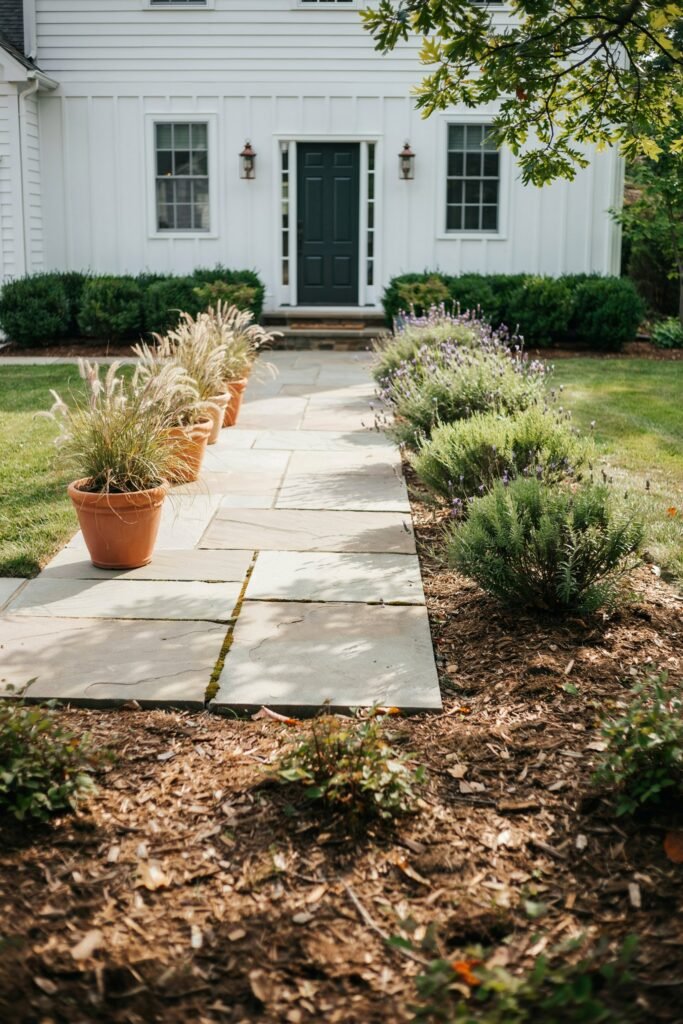
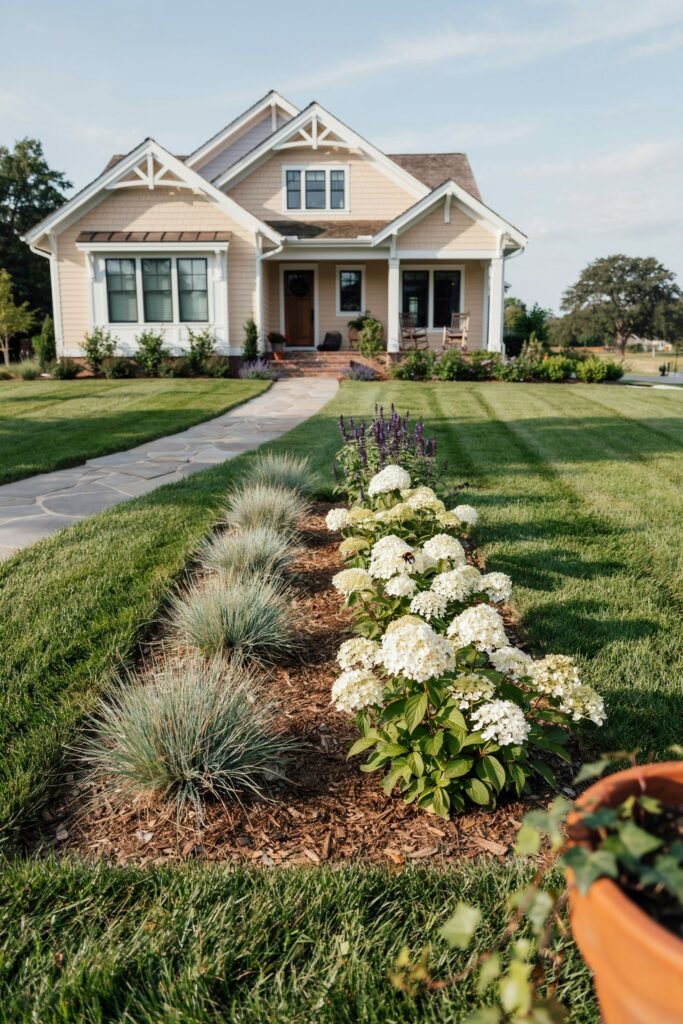
Mass three, five, or seven of the same plant instead of buying one of everything. Repetition is the trick high-end designers lean on, and buying by the flat costs less per plant than picking up singles. Drifts of one thing look calm and intentional; a row of mismatched one-offs looks like a collection you couldn’t stop adding to.
Odd numbers help because the eye groups them naturally instead of pairing them off. Pick two or three workhorse plants you love, repeat them through the beds, and let that rhythm carry the design. It’s the single cheapest way to look like you hired someone.
4. Frame the front door with symmetry
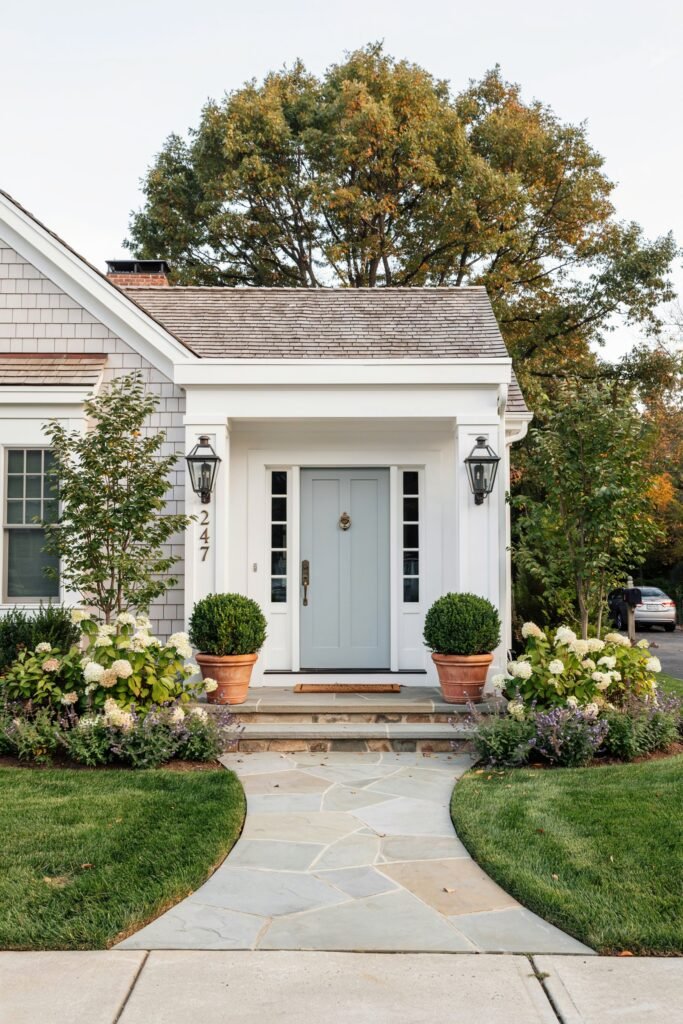
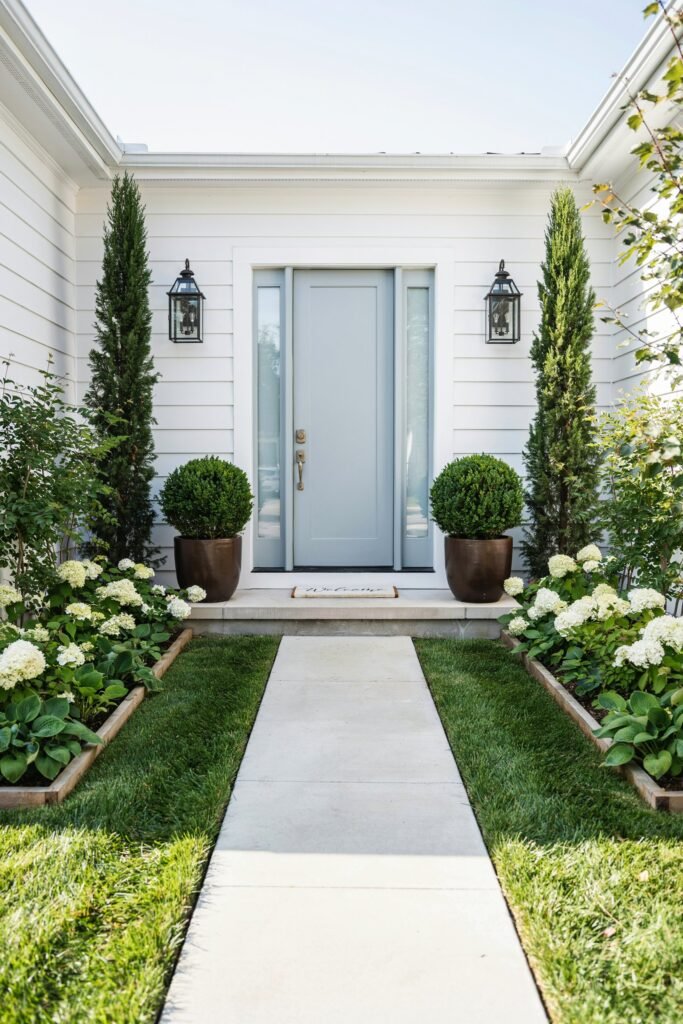
A matching pair of planters, shrubs, or small trees on either side of the entry signals a styled, cared-for home before anyone reads a single detail. Symmetry is the cheapest design language there is, and the brain registers it instantly as finished. Two identical pots with two identical plants will do it; matching lanterns or clipped topiaries push it further.
The entry is also where guests and buyers pause, so a few dollars there punch above their weight. If your door sits off-center, don’t fight it. Anchor the symmetry on the door itself rather than the whole house, and it still reads as deliberate.
5. Layer plants by height
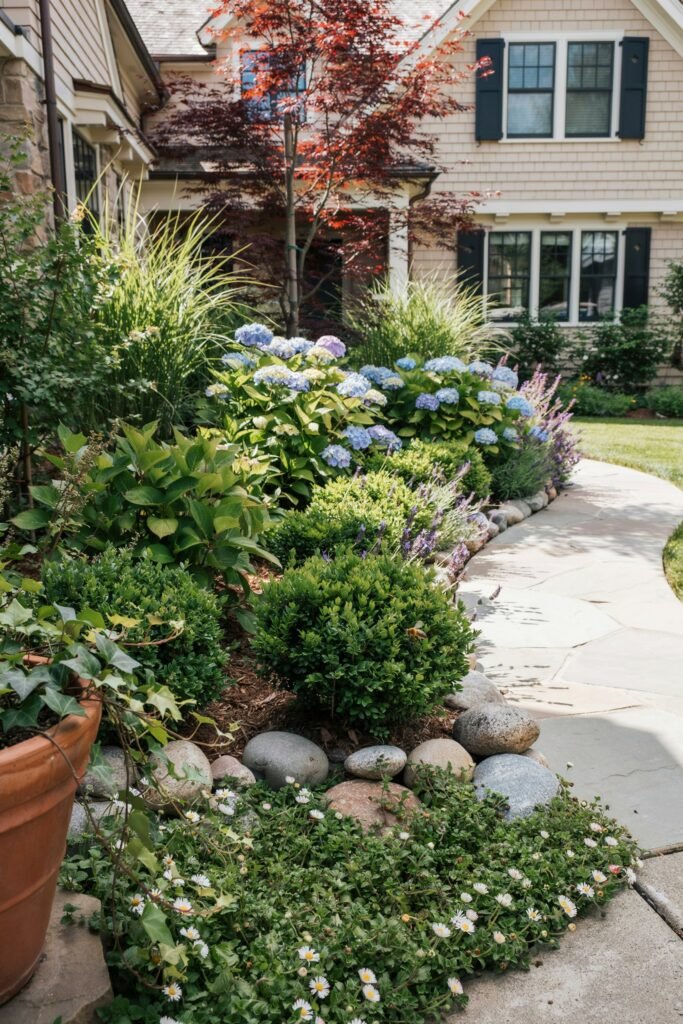
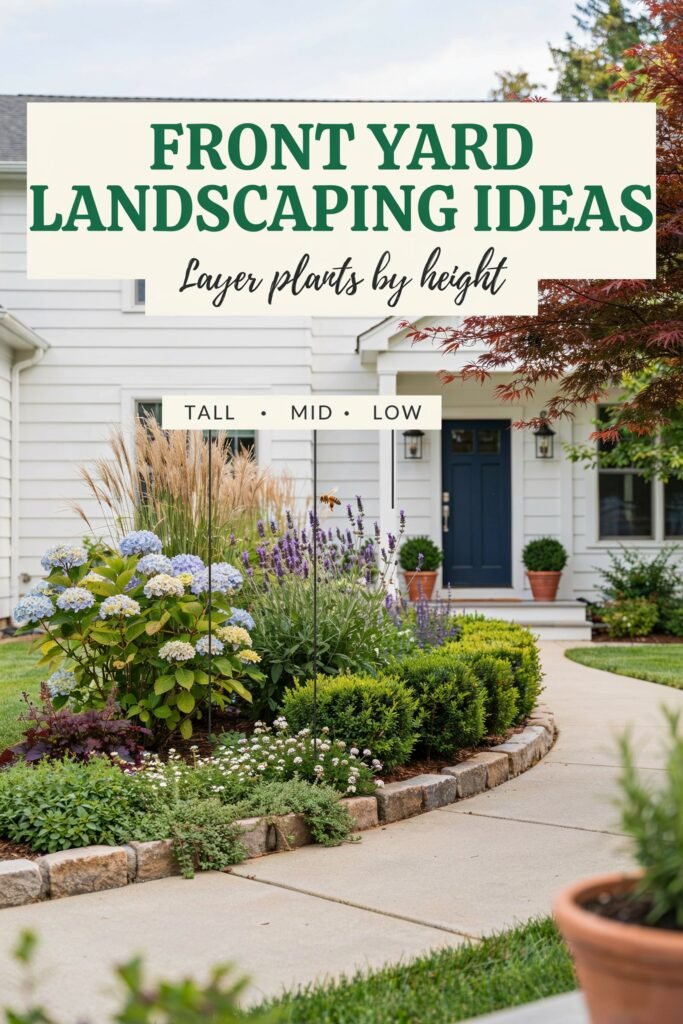
Stack low groundcover or trailing plants in front, mid-height perennials and grasses in the middle, then taller shrubs or a small tree at the back. Three tiers give a flat bed depth and that planned, designed feel, even with inexpensive plants. The rule is simple: tall to short, back to front, so nothing hides behind anything else.
Layering also stretches the season, since something is usually coming into its own at each level. Aim for a rough stair-step when you look at the bed from the curb. If a bed ever looks thin, it’s almost always missing that middle layer.
6. Choose native and drought-tolerant plants
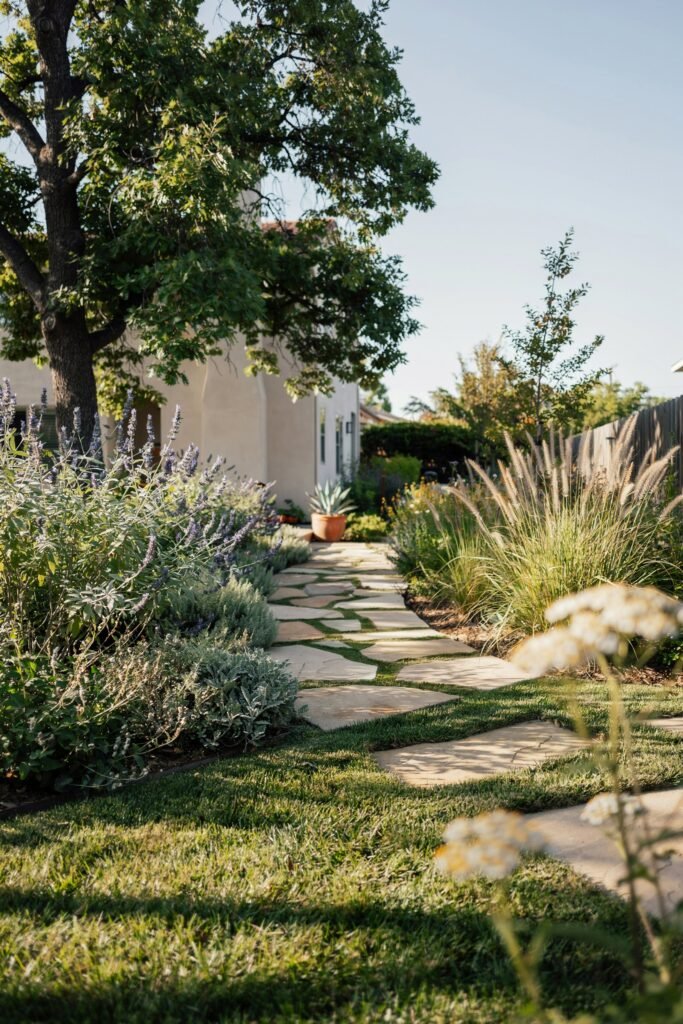
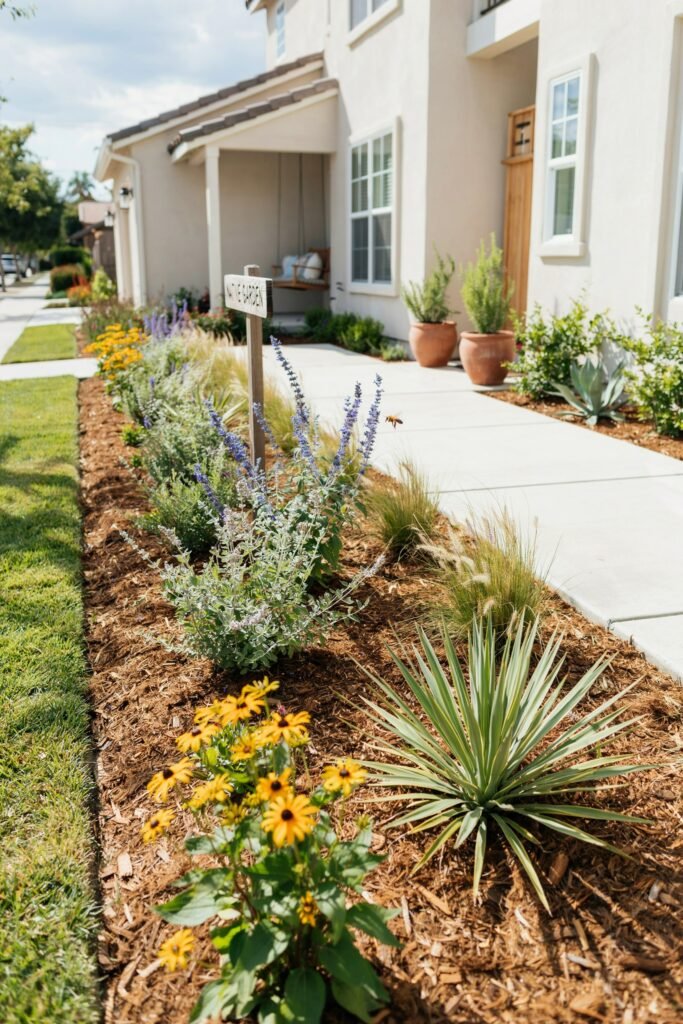
Plants suited to your region look full and healthy with far less fuss, and they cut outdoor water use by 20% to 50% once established (U.S. EPA WaterSense). They’ve adapted to your rainfall, soil, and local pests, so they shrug off the conditions that quietly kill fussy imports.
That means fewer replacements, smaller water bills, and less time babying things that were never going to thrive. Ask a local extension office or native-plant nursery for a short list that suits your zone. Lush doesn’t have to mean thirsty, and a well-chosen native bed can look like a magazine garden on rainfall alone.
7. Upgrade the walkway to your door
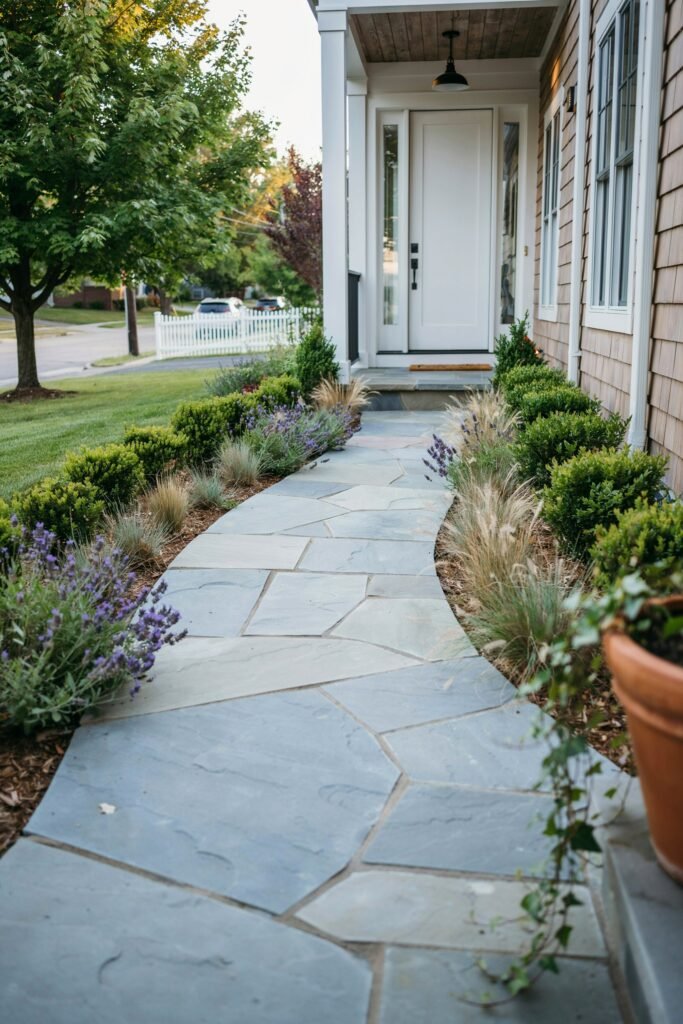
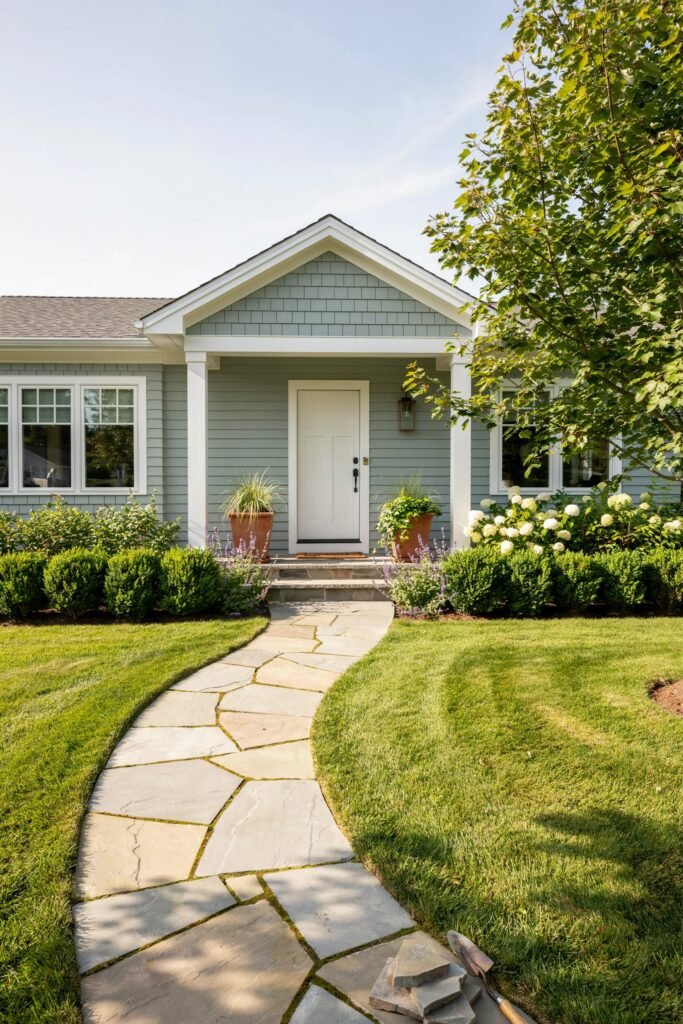
Swap a plain concrete strip or a muddy, worn-in shortcut for flagstone, pavers, or large stepping stones set in gravel. A defined path tells the eye exactly where to go and instantly reads as custom work. You don’t have to redo the whole run, either.
Even refacing the existing path or adding a short stone landing at the door changes a yard’s whole class. Gentle curves feel more designed than a dead-straight line, and wider is better; a path two people can walk side by side feels generous. Materials that echo your home’s stone or brick tie the whole look together.
8. Add low-voltage path and uplighting
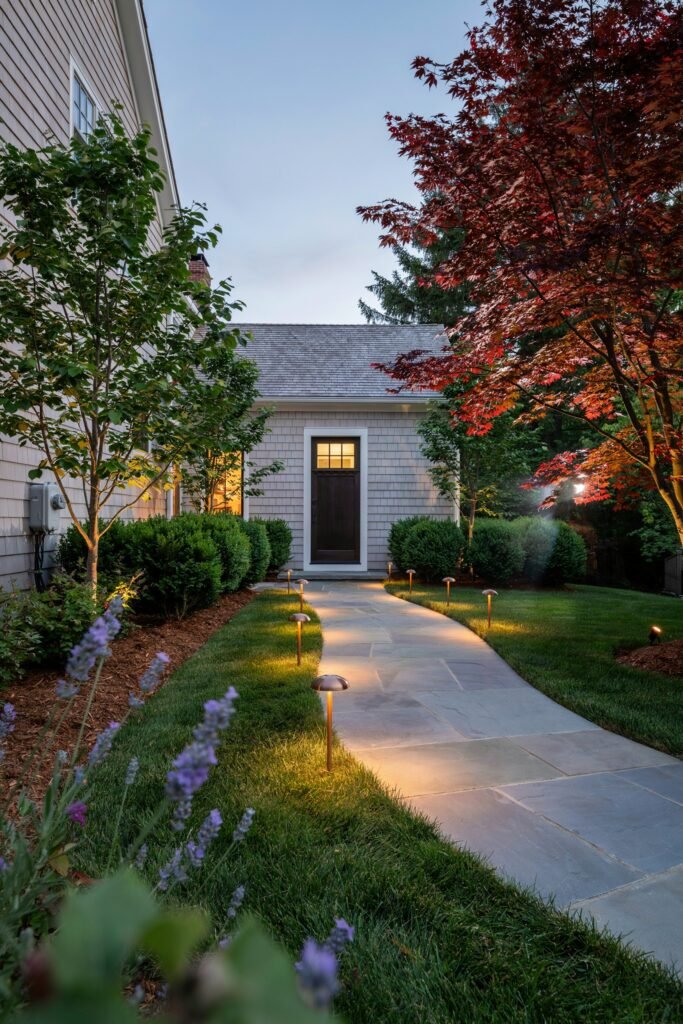
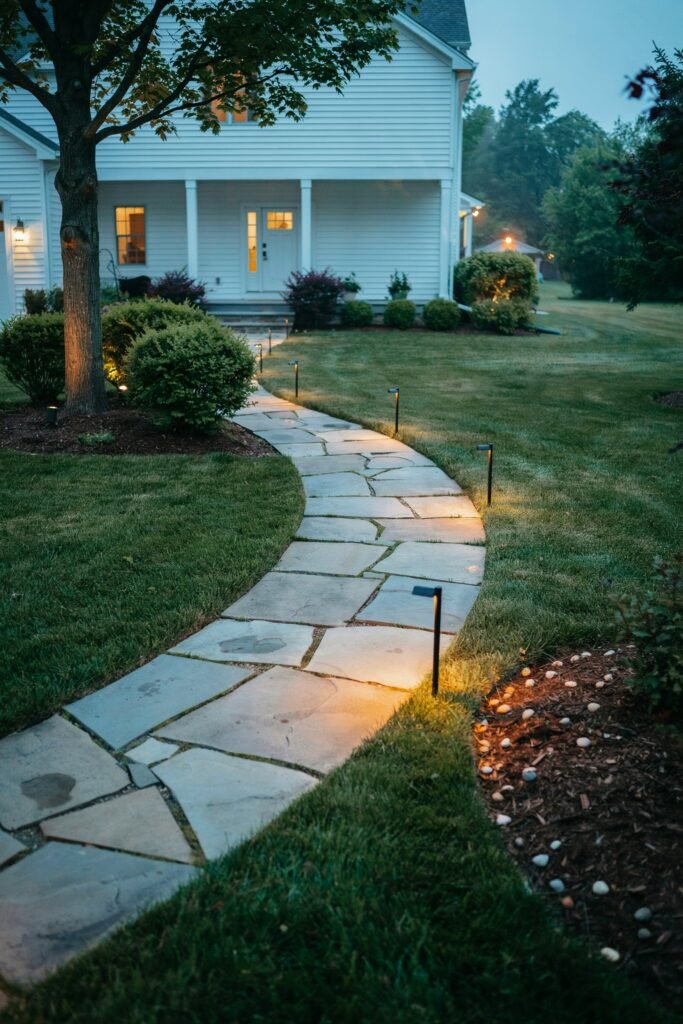
A few well-placed lights make a modest yard look like a magazine shot after dark, and homeowners rated landscape lighting a perfect Joy Score of 10 in the NAR and NALP report, the highest of any outdoor project they tested. Restraint is the whole game here.
Uplight one specimen tree, wash the facade gently, and line the path just enough to walk it safely. Warm-white LEDs around 2700K flatter brick and greenery; cool blue light makes a house look like a parking garage. Plug-in low-voltage kits are genuinely DIY and run on pennies a night, so stop adding fixtures before it starts to look like a runway.
9. Plant one specimen tree or focal point
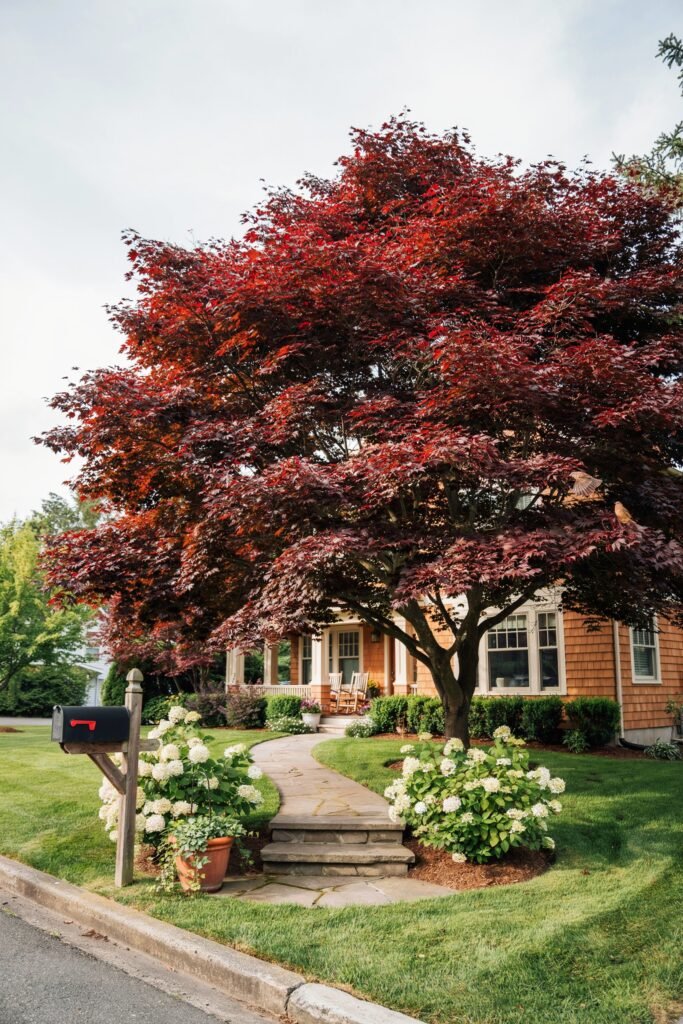
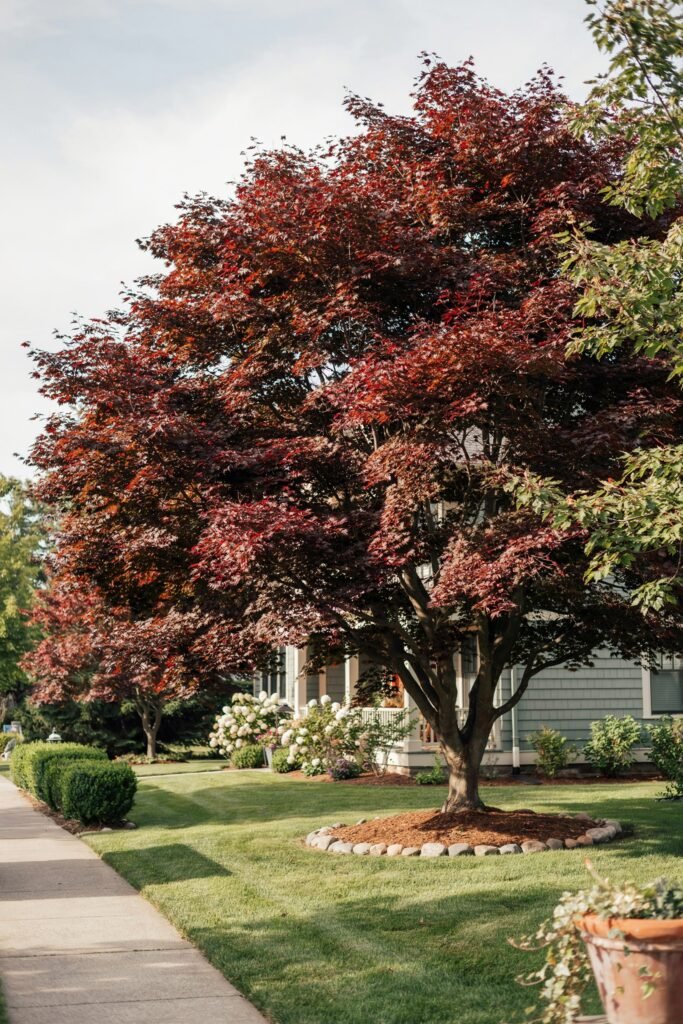
Every good front yard has one thing the eye lands on first. A single small ornamental tree, whether a Japanese maple, a dogwood, a crepe myrtle, or a serviceberry, gives the yard an anchor and a sense of maturity that shrubs alone can’t deliver.
Focal points read as intentional design, the visual equivalent of a topic sentence. Place the tree where it frames the entry or closes off a sightline from the street, rather than dropping it dead-center in the lawn out of habit. One well-chosen specimen does more than a dozen filler shrubs, and a young tree is cheap. It just needs a few years and a little patience.
10. Go big with containers
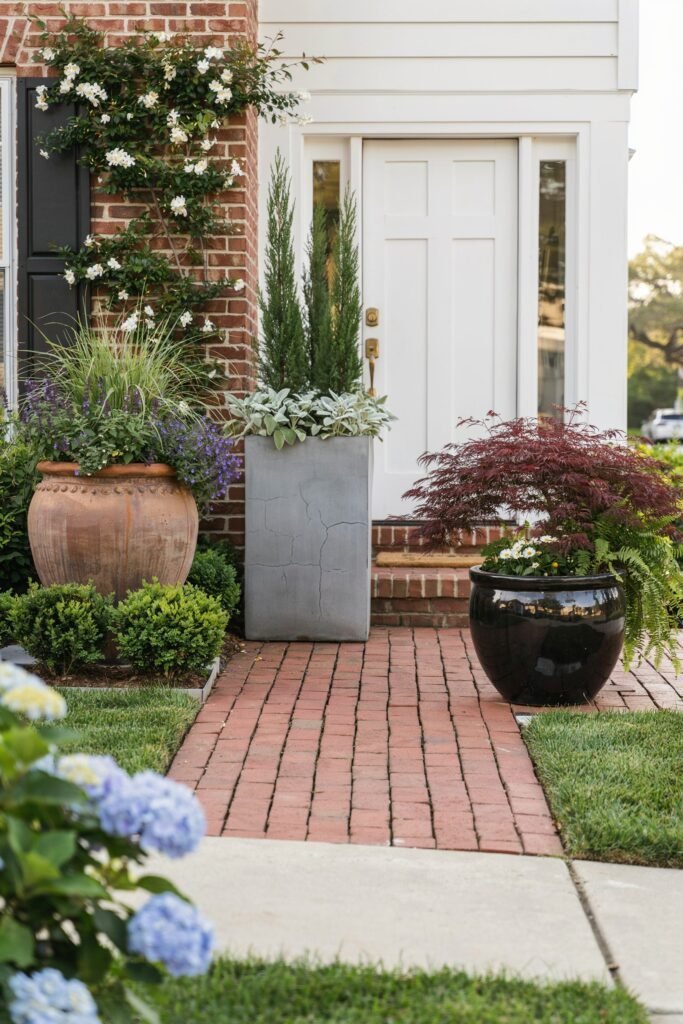
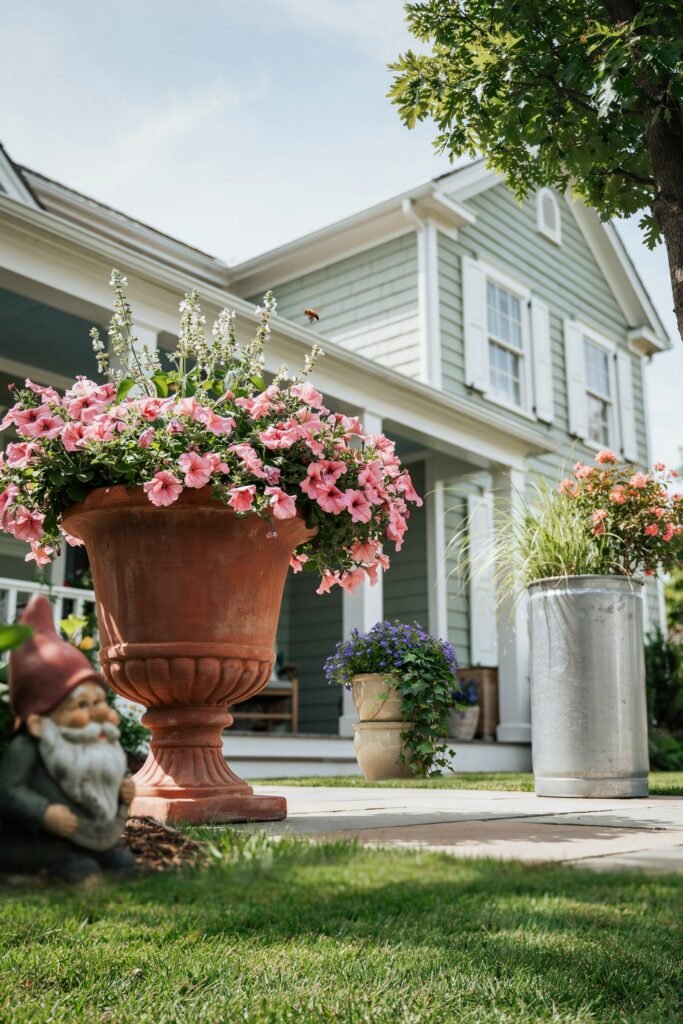
A few oversized planters look far more expensive than a scattering of small ones, which tend to read as clutter the moment they’re not perfectly kept. Big pots also hold more soil, so they dry out slower and forgive a missed watering.
Cluster them in odd numbers, keep the finishes matching or closely related, and put them where they earn their keep: flanking the door, anchoring a porch corner, marking the top of the steps. Stick to a tight plant palette inside them so they feel like part of the design rather than a separate project. Think gallery, not garage sale.
11. Build in evergreen structure
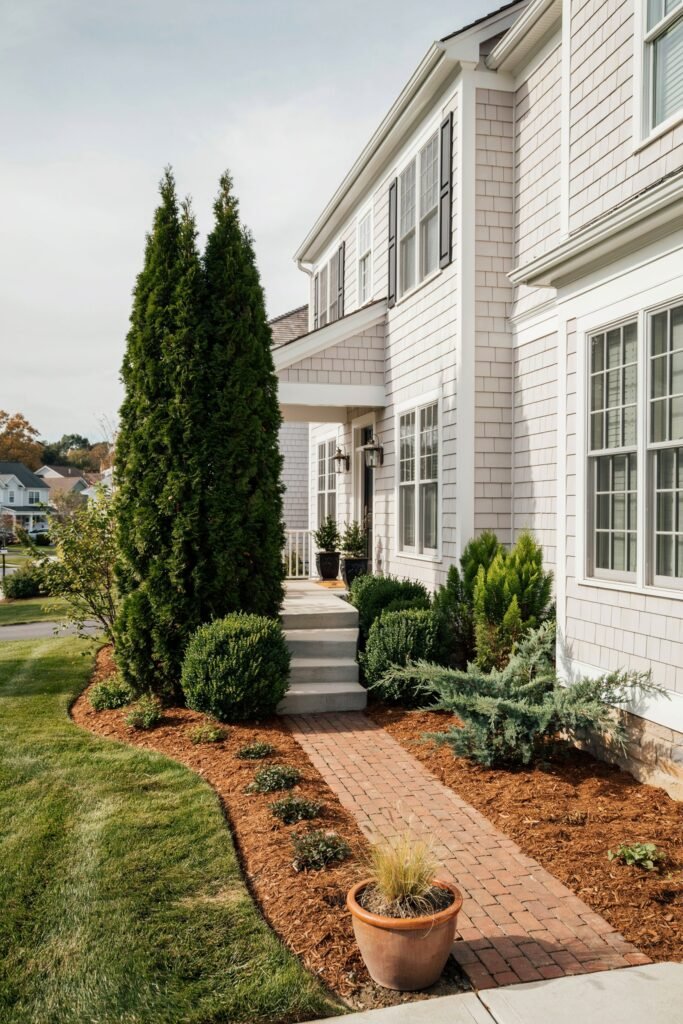
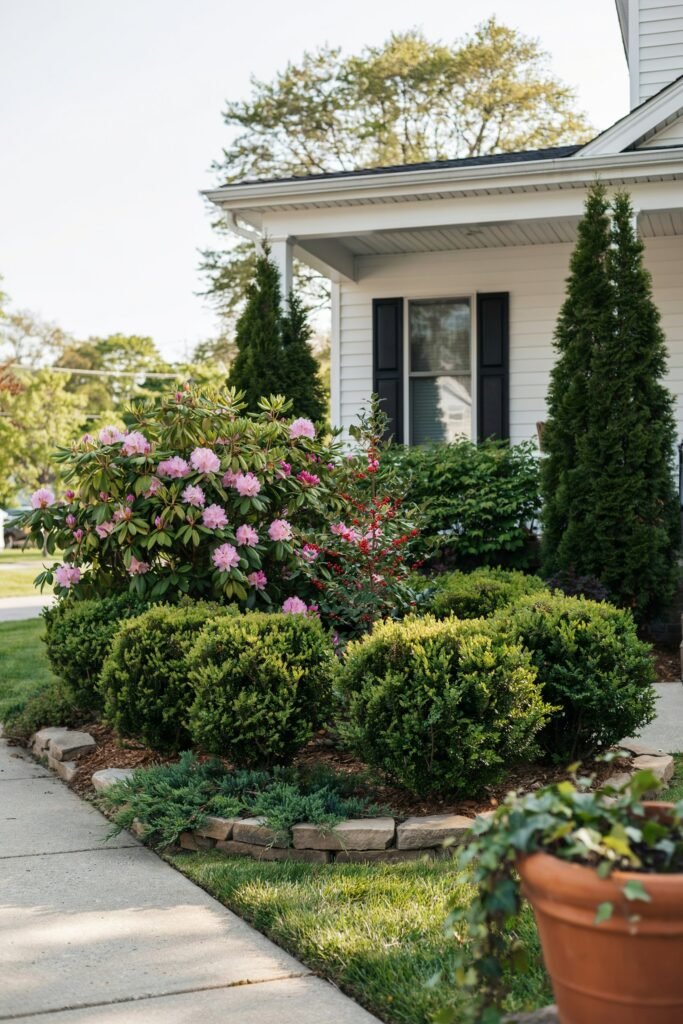
Flowers are the fun part, but evergreens are what keep a yard looking designed in January. Two or three of them give the beds a backbone that holds the composition together once the perennials have died back. Boxwood, holly, inkberry, or a compact juniper all carry the off-season without much work.
Think of the evergreens as the frame and the seasonal color as the picture inside it. Set them at the corners of beds and beside the entry so the structure still reads from the street in winter. A yard with good bones looks expensive twelve months a year, not just for the few weeks everything blooms.
12. Define a gravel or stone area
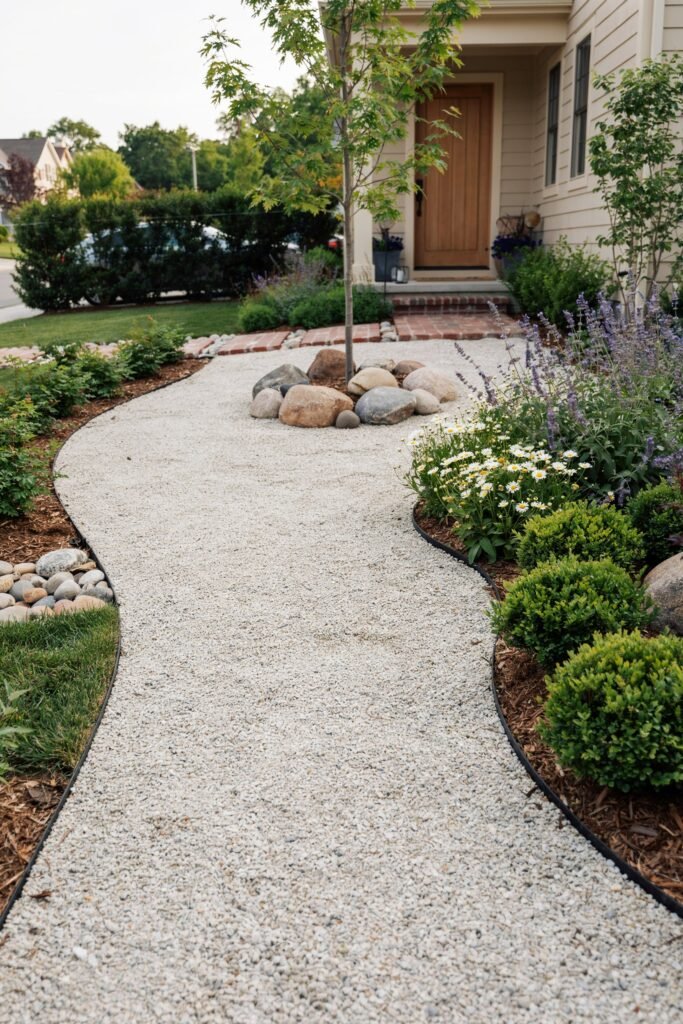
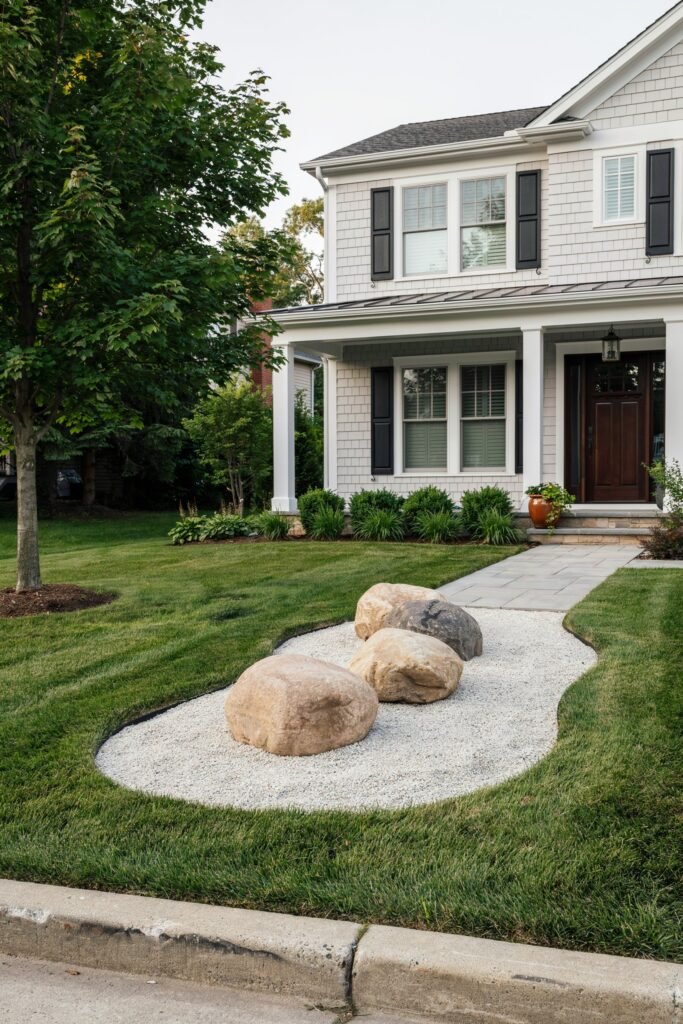
A small bed of decomposed granite or river rock with a few sculptural plants looks modern and intentional, and it reads as a designed feature rather than a patch you gave up on. Once it’s in, it’s close to maintenance-free.
The key is definition. Edge it cleanly with steel, stone, or a crisp spade line so it looks chosen, not abandoned, and lay landscape fabric underneath to keep weeds down and the gravel from sinking into the soil. A boulder or two, an ornamental grass, and one spiky accent plant are all it takes to make a gravel area look composed on purpose.
13. Keep the lawn crisp and edged
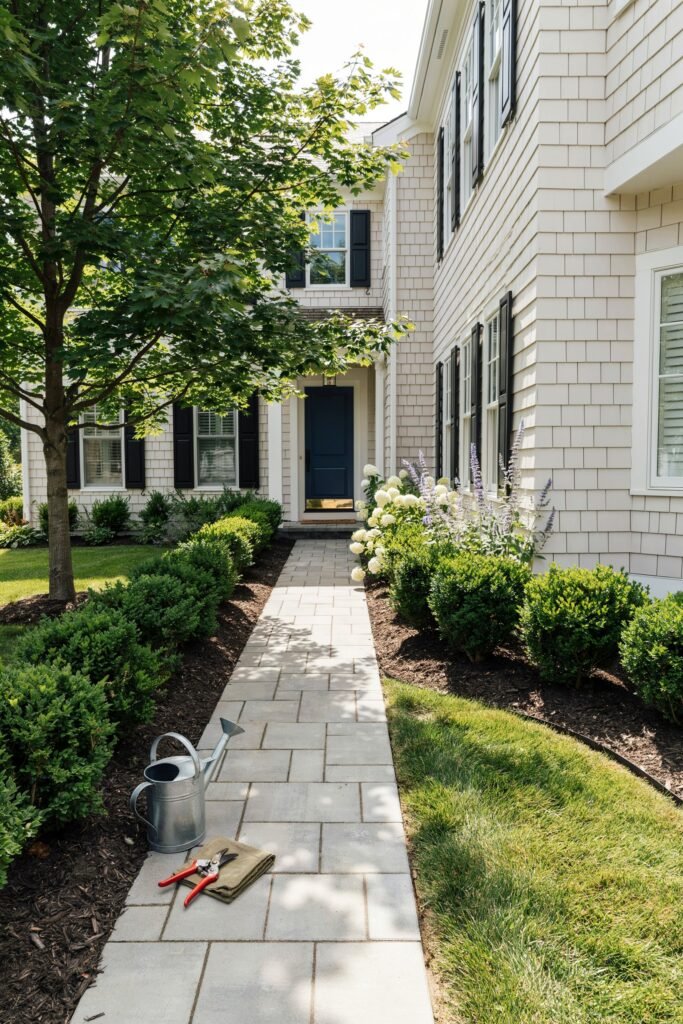
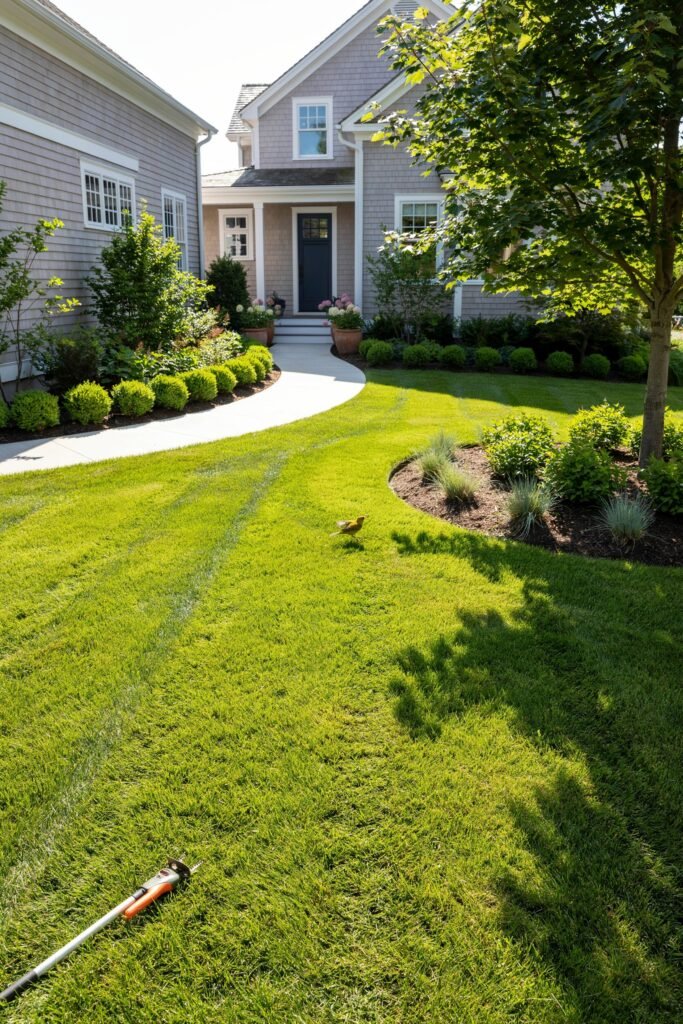
The lawn is the backdrop everything else sits against, so a thick, sharply edged one quietly makes every other element look better. Mow a notch higher than you think, since taller grass shades out weeds and looks lusher, then edge along walks and beds and overseed the thin spots in fall.
This is also the highest-return project realtors measured: standard lawn care recovered 217% of its cost at resale (NAR & NALP). You don’t need a golf-course lawn. You need a green, weed-free, sharply bordered one, which is well within reach of a weekend and a bag of seed.
14. Limit your color palette
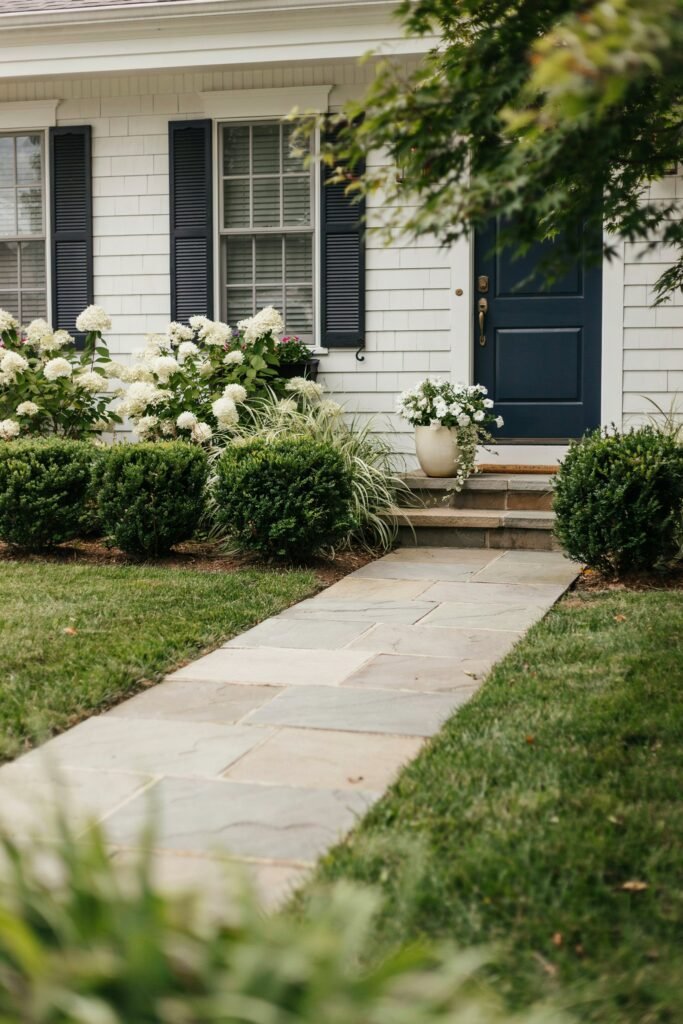
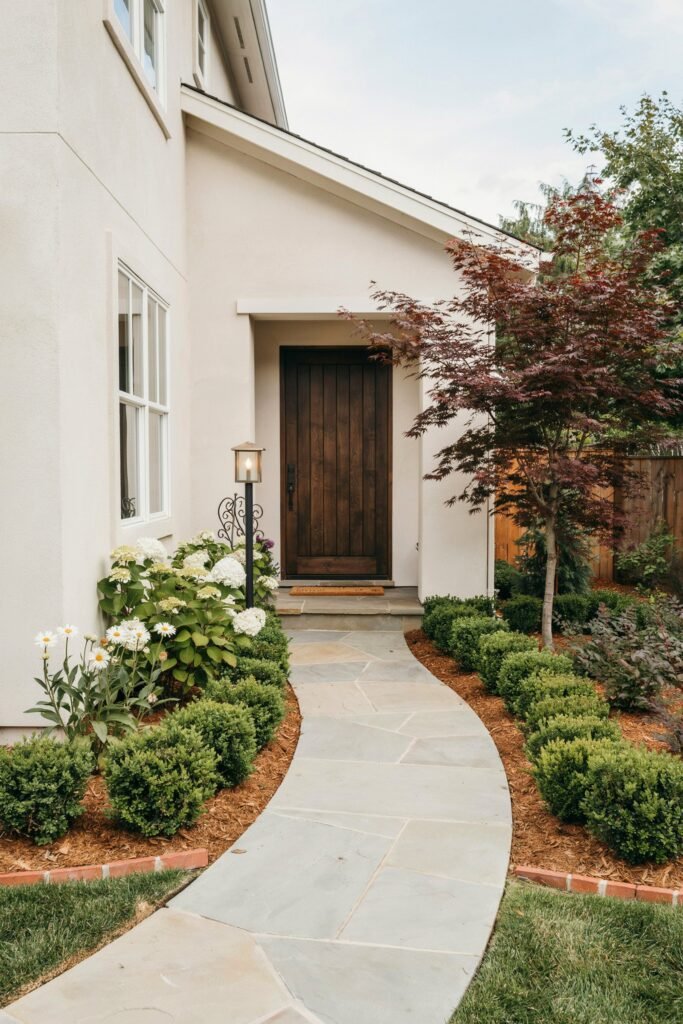
Pick two or three colors and repeat them throughout the yard. A restrained palette looks deliberate and expensive; a rainbow of every bloom that caught your eye at the nursery looks accidental, no matter how much you spent on it.
Greens and whites with a single accent, like deep burgundy, soft purple, or warm gold, is a reliable, high-end combination almost anywhere. Carry that palette into your pots, your front door, and even your mulch so the whole picture agrees with itself. The discipline feels counterintuitive while you’re standing in the garden center, but it’s exactly what makes the result look styled rather than collected.
15. Refresh the small details at the entry
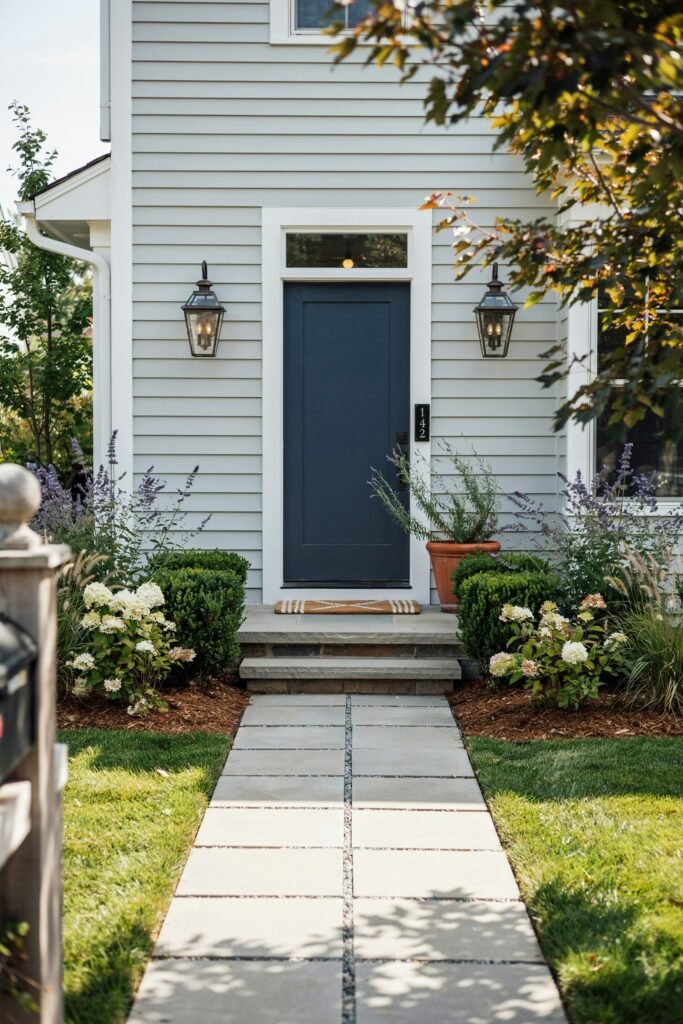
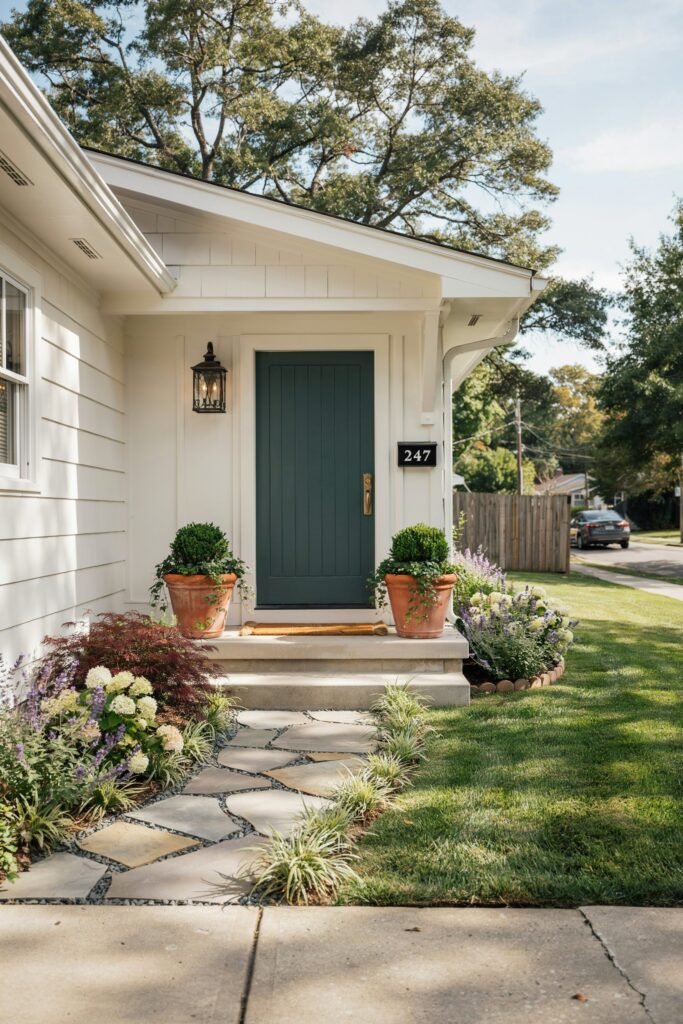
People read the details up close, so the entry is where small money shows the most. New house numbers in a clean font, a fresh mailbox, a simple bench or arbor, a tidy doormat, a light fixture that isn’t dated or rusted: each is cheap on its own.
Together they signal that the whole property is cared for. Pull the numbers, the fixture, and the door hardware into one finish, since matte black and aged bronze both wear well, for a pulled-together look. Details are where “expensive” actually lives. They’re the last thing visitors see and the first thing they remember.
Which front yard upgrades give the best return for the lowest cost?
The simplest, cheapest projects win. In the NAR and NALP report, standard lawn care (typical cost about $415) recovered 217% of its cost, landscape maintenance recovered 104%, and an overall landscape upgrade recovered 100% — all beating most interior remodels. The pattern is clear: tidy fundamentals out-earn big-ticket features like pools and outdoor kitchens.
How do you keep an expensive-looking front yard low-maintenance?
Plant for your climate, then water smart. Outdoor use makes up about 30% of the average U.S. household’s water — and as much as 70% in dry regions — so plant choice is the biggest lever you have (U.S. EPA WaterSense). Native and climate-adapted plants thrive on rainfall once established, which keeps the yard looking full without a watering routine that eats your weekends.
Frequently asked questions
How much does front yard landscaping actually add to home value? Estimates vary, but a Virginia Tech Extension review of consumer research found good landscaping raised perceived home value by 5.5% to 12.7% compared with a bare lot (Niemiera, Virginia Cooperative Extension). Realtors agree it matters early: 92% recommend improving curb appeal before listing (NAR & NALP).
What’s the cheapest way to make a yard look expensive? Clean edges and fresh mulch, then basic lawn care. It’s not just cheap — standard lawn care had the highest cost recovery of any outdoor project at 217%, on a typical cost of about $415 (NAR & NALP, 2023 Remodeling Impact Report: Outdoor Features). Polish beats spending almost every time.
Do native plants really save money? Yes, mostly through water and replacement costs. Native and climate-adapted plants can cut outdoor water use 20% to 50% once established (U.S. EPA WaterSense), and since outdoor use is about 30% of a typical household’s water, that adds up. They also tend to live longer than struggling non-natives.
How often should I mulch and maintain beds? Once a year for mulch is plenty for most yards; bed maintenance is ongoing but light. The payoff is real — landscape maintenance recovered 104% of its cost at resale, on a typical yearly cost near $4,800 for a standard lot (NAR & NALP). A spring refresh carries the whole season.
Is landscape lighting worth it? For enjoyment, absolutely — homeowners gave landscape lighting a perfect Joy Score of 10, the highest in the NAR and NALP report. For resale it’s softer, recovering about 59% of cost, so keep it modest.
Bringing it together
The expensive look is mostly discipline, not budget. Repeat a few plants, cut clean edges, keep a tight palette, and let the fundamentals — a crisp lawn, fresh mulch, a clear path to the door — do the heavy lifting. That’s the same logic behind the numbers: the cheapest projects realtors measured, like basic lawn care at 217% cost recovery, beat the splashy ones (NAR & NALP). Pick two or three ideas from this list and finish them completely rather than starting ten. A done yard always looks more expensive than an ambitious one in progress.