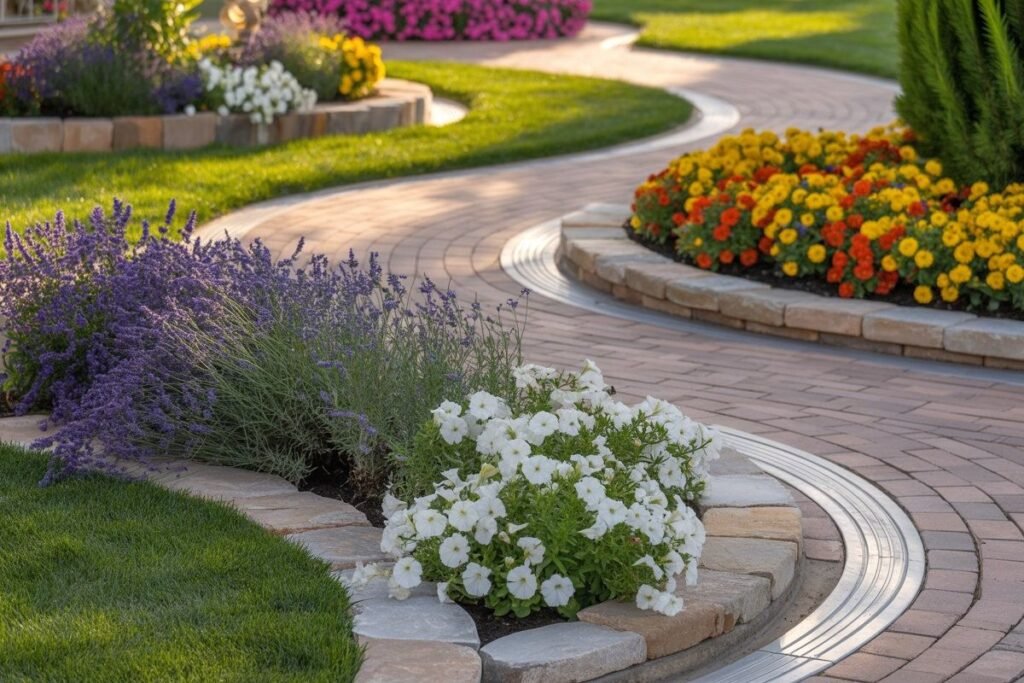
A patio is so much more than a slab of concrete out back. Done well, it becomes an outdoor room — the place you drink your morning coffee, host summer dinners, and unwind after a long day. And the best part? You don’t need a contractor or a huge budget to get there. With the right layout, a few smart materials, and some thoughtful styling, even a small or plain patio can become the favorite spot in your home.
Here are 14 patio and terrace design ideas that actually work, from the ground up.
1. Plan Your Zones First
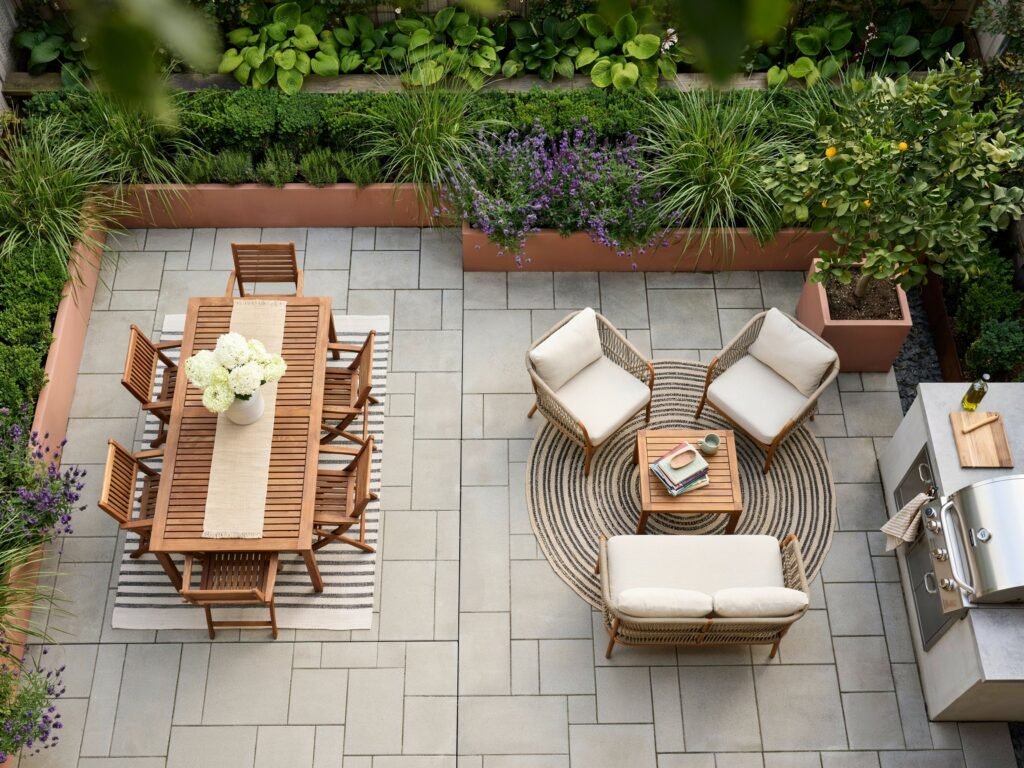
Before buying a single thing, decide how you want to live on your patio. Long dinners with friends? A quiet reading corner? A space for the kids? A little of everything?
The most successful patios are divided into zones — even small ones. A dining zone with a table and chairs, a lounge zone with comfortable seating, maybe a corner for plants or a grill. Defining these areas, even loosely with an outdoor rug or a cluster of planters, makes a patio feel intentional and larger than it actually is.
Sketch a rough layout before you start and leave room to walk comfortably between zones. A cramped patio never feels relaxing no matter how nicely it’s decorated.
2. Refresh Your Concrete Instead of Replacing It

If you have an existing concrete slab that looks tired, you don’t need to tear it out. This is one of the highest-impact, lowest-cost patio upgrades available.
Options that work well:
- Pressure wash the surface to remove years of grime — this alone makes a dramatic difference
- Apply a concrete stain or paint in a fresh color
- Use a resurfacing overlay to give the slab a completely new texture and appearance
Any of these options costs a fraction of replacement and can make a ten-year-old slab look brand new. Plain concrete is also having a genuine design moment right now — it pairs beautifully with warm wood furniture and lush greenery for a clean, modern look.
3. Lay Pavers for a More Designed Look
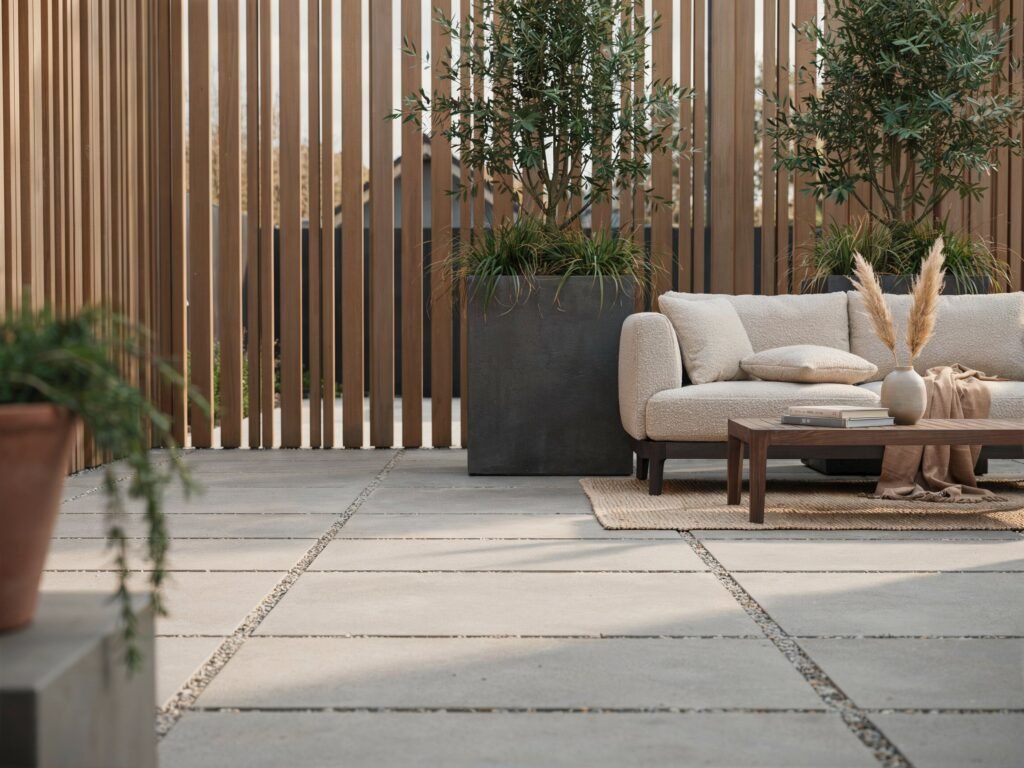
Pavers are the next step up from plain concrete and give you far more design flexibility. The pattern, color, and material you choose set the entire tone for the space.
A few combinations that work especially well:
- Large square concrete pavers in a clean grid for a modern look
- Mixed-size natural stone for a relaxed, organic feel
- Brick pavers in a herringbone pattern for a classic courtyard vibe
Pavers can be installed yourself over a prepared gravel base, and individual pavers can be lifted and reset if they ever shift — which makes them far more forgiving than poured concrete. Budget-conscious tip: concrete pavers are significantly cheaper than natural stone and look just as good in most applications.
4. Try a Gravel Patio for a Relaxed European Courtyard Feel
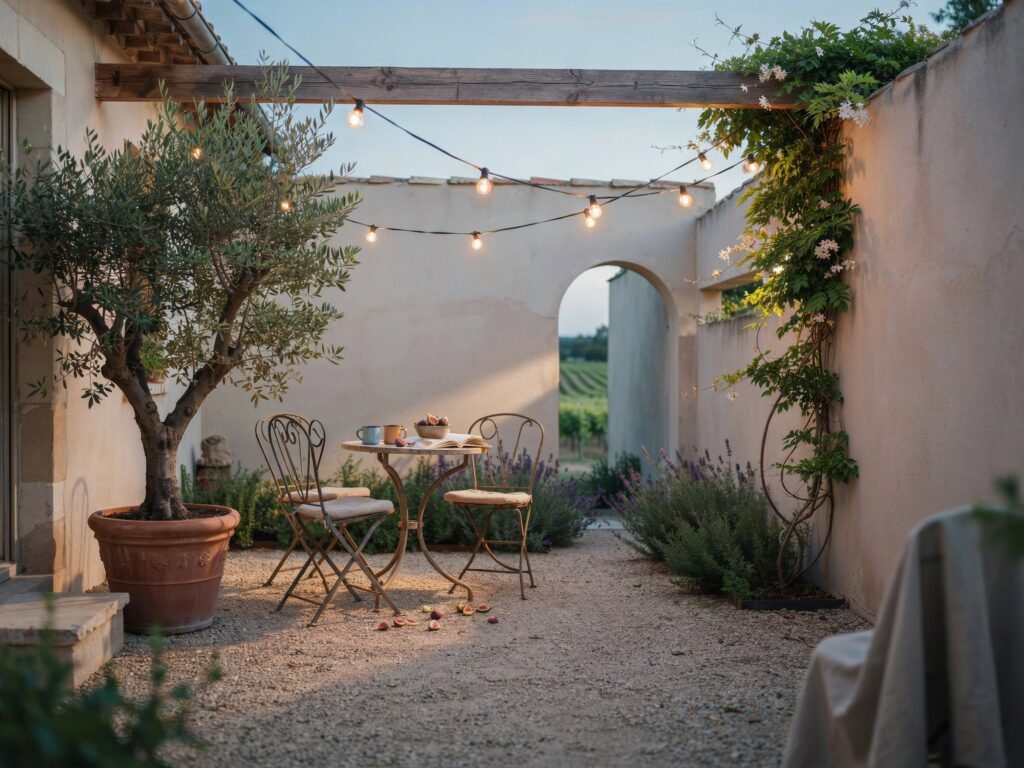
Gravel is the most budget-friendly patio option of all and one of the most underrated. A leveled gravel patio with a simple timber or steel edge has a relaxed, Mediterranean courtyard charm that’s genuinely hard to achieve with any other material.
It installs in a weekend, drains perfectly (no puddles after rain), and is easy to refresh or extend. Pair it with a mix of potted plants, a bistro table, and string lights overhead and it looks like something from a French countryside home.
The one requirement: lay landscape fabric underneath before adding gravel to prevent weeds from pushing through.
5. Add a Pergola to Define the Space Overhead
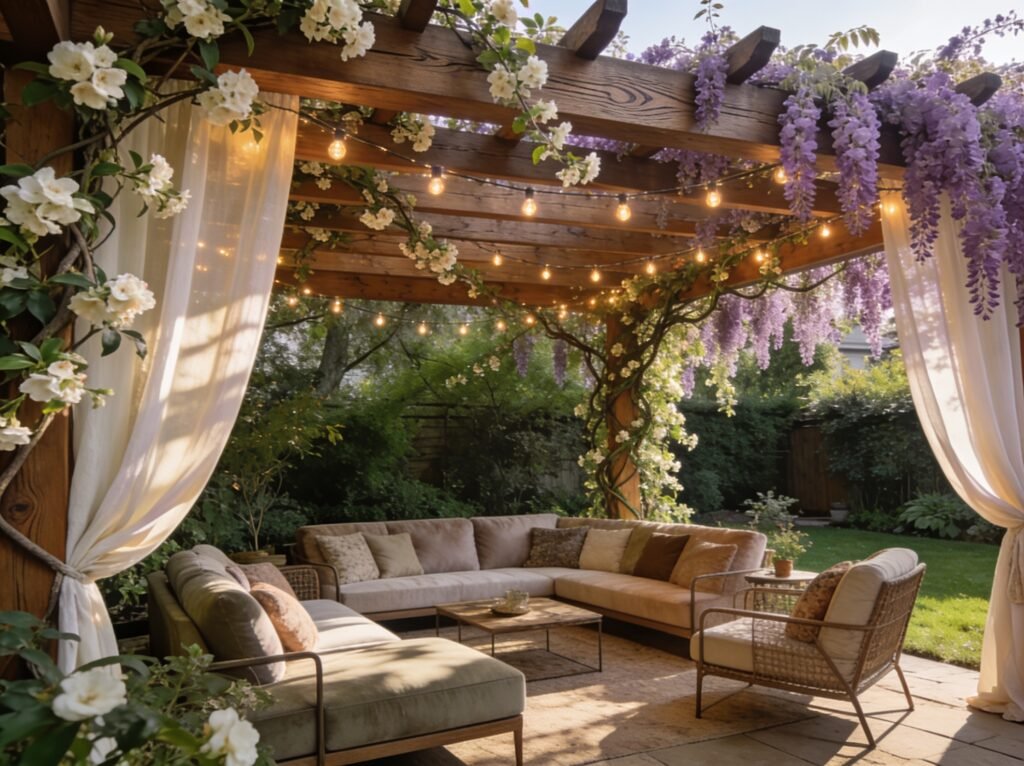
A pergola does several things at once — it defines the patio as a room, provides partial shade, and gives you a structure to hang string lights, grow climbing plants, and attach fabric panels for privacy or extra shade.
Even a simple freestanding pergola kit dramatically changes how a patio feels. Once there’s a structure overhead, the space below instantly reads as a room rather than just a surface. It also gives you something to work with visually — lattice sides for climbing roses or jasmine, a lush ceiling of wisteria, or simple outdoor curtains for shade and privacy.
For small patios, a sail shade or a large market umbrella does a similar job at a fraction of the cost.
6. Use an Outdoor Rug to Anchor the Seating Area
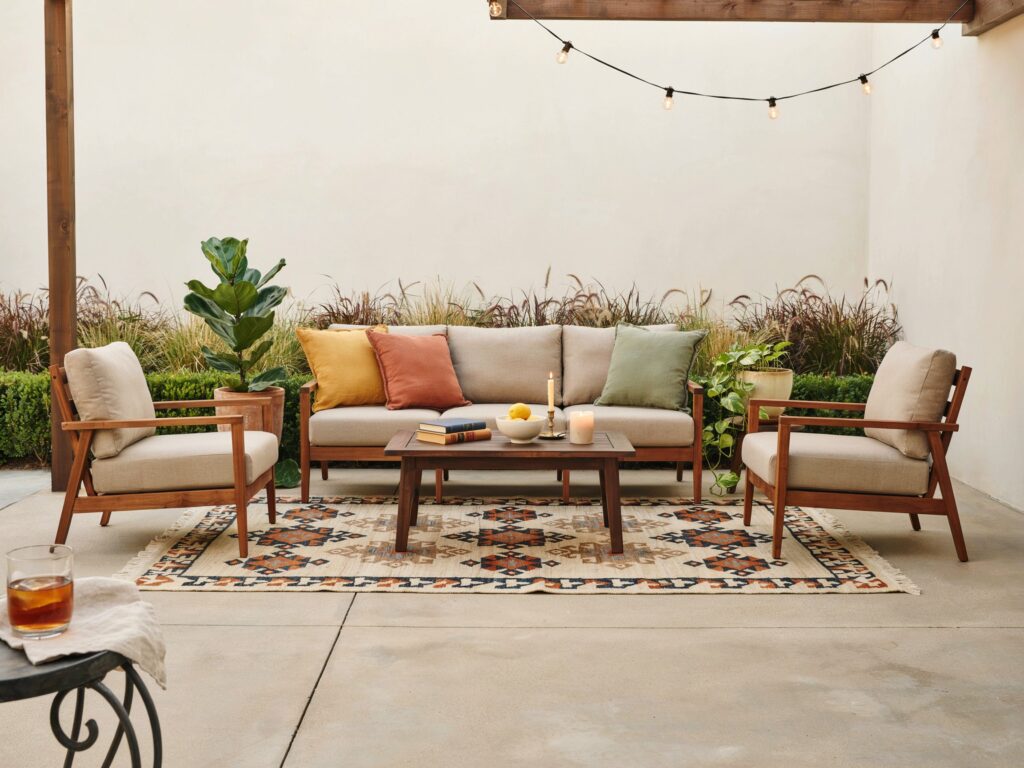
An outdoor rug is one of the single most impactful additions you can make to a patio — and one of the cheapest per square foot of visual impact. It defines the seating zone, adds color and pattern, and instantly makes the space feel like a finished room rather than furniture sitting on concrete.
What to look for:
- Polypropylene or other synthetic outdoor-rated materials that resist mildew and UV fading
- A size that fits under all four legs of your seating furniture with a few inches to spare
- A pattern or color that anchors your palette and ties pieces together
Layer throw pillows in outdoor fabric on top and the whole setup looks designed with very little effort or cost.
7. Choose Furniture Scaled to Your Space
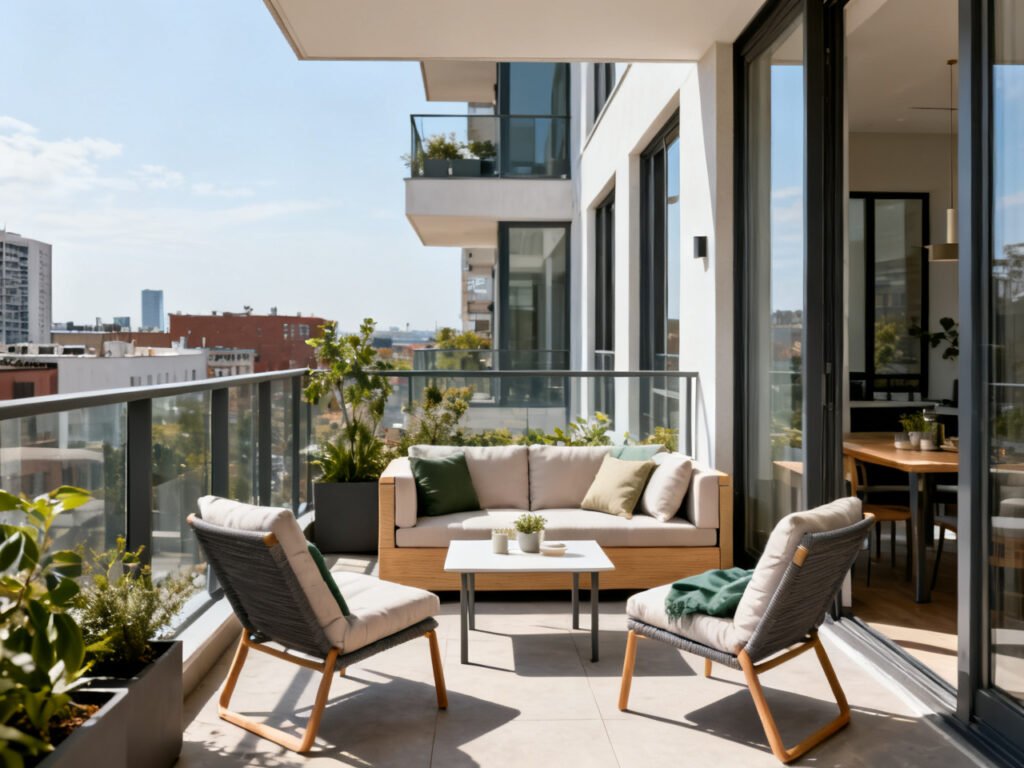
Comfortable, well-scaled furniture is what turns a patio from a place you pass through into a place you linger. This is where most people go wrong — either cramming oversized pieces onto a small terrace until it feels claustrophobic, or choosing pieces so small they look lost on a generous patio.
For dining areas, a table that seats your usual group with a little room to spare is the target. For lounging, deep-seated chairs or a compact outdoor sofa with weather-resistant cushions invite people to settle in and stay.
Material matters too — powder-coated aluminum is lightweight and rust-proof, teak weathers beautifully outdoors, and all-weather wicker gives a warm, relaxed look that works with almost any style.
8. Add String Lights for Instant Evening Ambiance
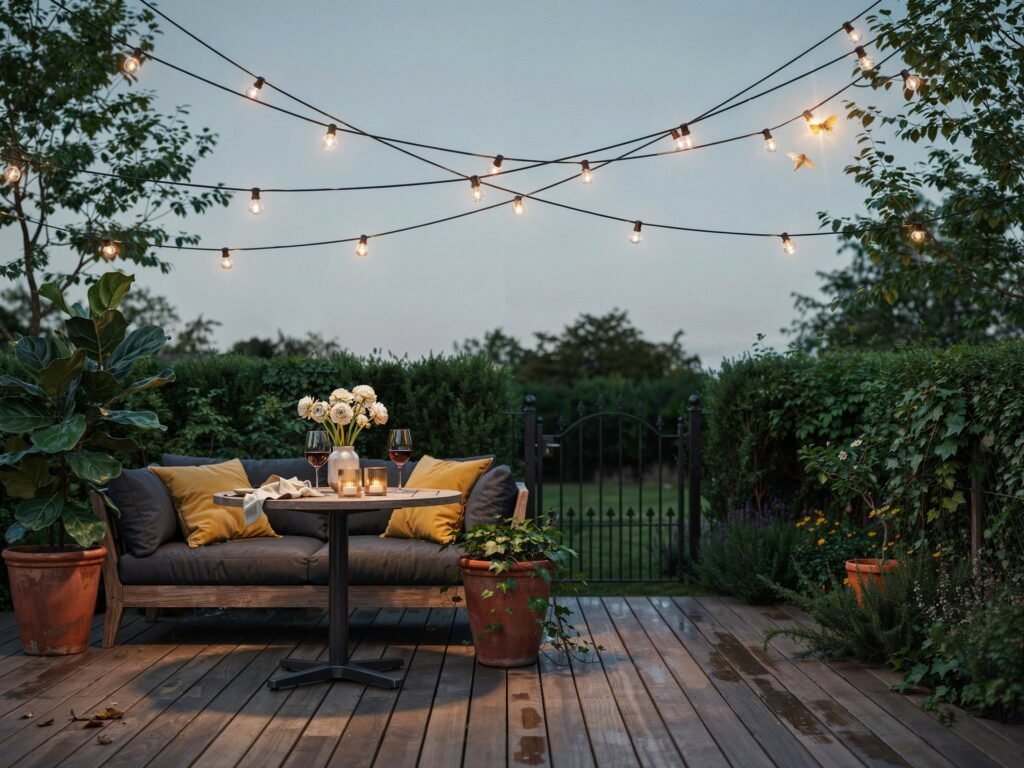
If there’s one patio upgrade that changes everything after dark, it’s string lights. Cafe lights draped overhead cast a warm, golden glow that makes a patio feel festive, cozy, and genuinely magical — and they’re one of the cheapest per-impact additions on this entire list.
How to hang them well:
- Run them from the pergola or house eave to a tall post or fence on the opposite side
- Layer multiple strands at the same height for more impact
- Use S-hooks for easy seasonal removal and storage
Complement with lanterns on tables, solar stake lights in planters, and a few uplights aimed at a tree or wall for depth. Layering light sources at different heights creates atmosphere that a single overhead fixture can never replicate.
9. Create Privacy With Plants Instead of Fences
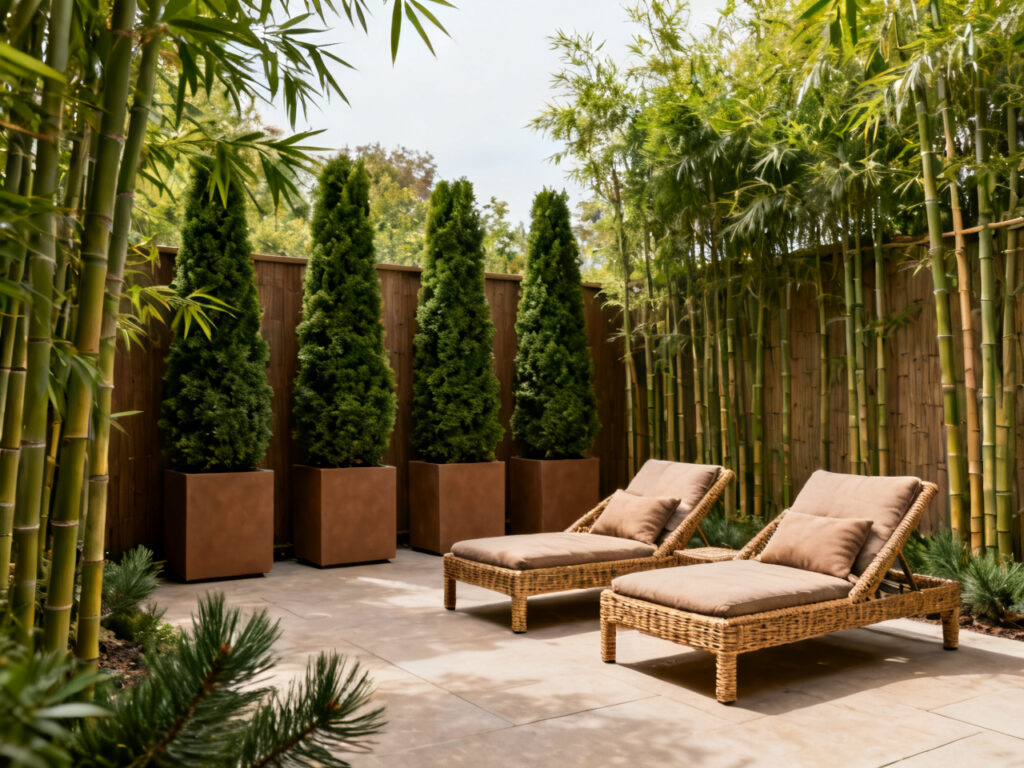
A patio that sits fully exposed to neighbors won’t get used as much as it should. But hard barriers — solid fences, privacy screens — can make a space feel closed-in and dark.
Plants almost always feel more welcoming than hard barriers. Great options for patio privacy:
- Tall planters with ornamental grasses that move in the breeze
- Slim columnar evergreens like Italian cypress or sky pencil holly
- Bamboo in large containers (just use clumping varieties, not running)
- A row of large potted arborvitae that can be moved if needed
If you need something quicker, lattice panels with climbing plants growing over them give you an instant screen that becomes more beautiful over time. Outdoor curtains on a pergola are another soft, elegant option.
10. Build a Lounge Zone Around a Fire Feature

A fire pit or tabletop fire bowl does two things: it extends your patio season deep into spring and fall when evenings get cool, and it gives people a reason to gather and stay. There’s something about a fire that naturally draws a group together.
For a permanent setup, a built-in fire pit with surrounding seating is the ultimate lounge zone anchor. For a more flexible option, a portable fire bowl or a tabletop bioethanol fire feature gives you the same atmosphere without any construction.
Arrange seating in a circle or horseshoe shape around the fire at a comfortable distance, add a side table or two for drinks, and you have the best seat in the house — outdoors.
11. Go Vertical With Greenery

You don’t need garden beds or a lot of floor space to make a patio feel lush. Going vertical is the answer for small patios, balconies, and any space where floor space is at a premium.
Vertical greenery ideas that work:
- Wall-mounted planters in a grid arrangement for a living wall effect
- A tall trellis with climbing plants like clematis, jasmine, or climbing roses
- Hanging baskets from a pergola or fence hooks
- A freestanding plant stand with several tiers of pots
A mix of leafy foliage, a few flowering plants for seasonal color, and an herb pot you can actually cook from makes the whole space feel abundant and alive. Trailing plants spilling from raised planters or overhead hooks soften hard edges beautifully and add movement.
12. Choose a Style to Tie It All Together
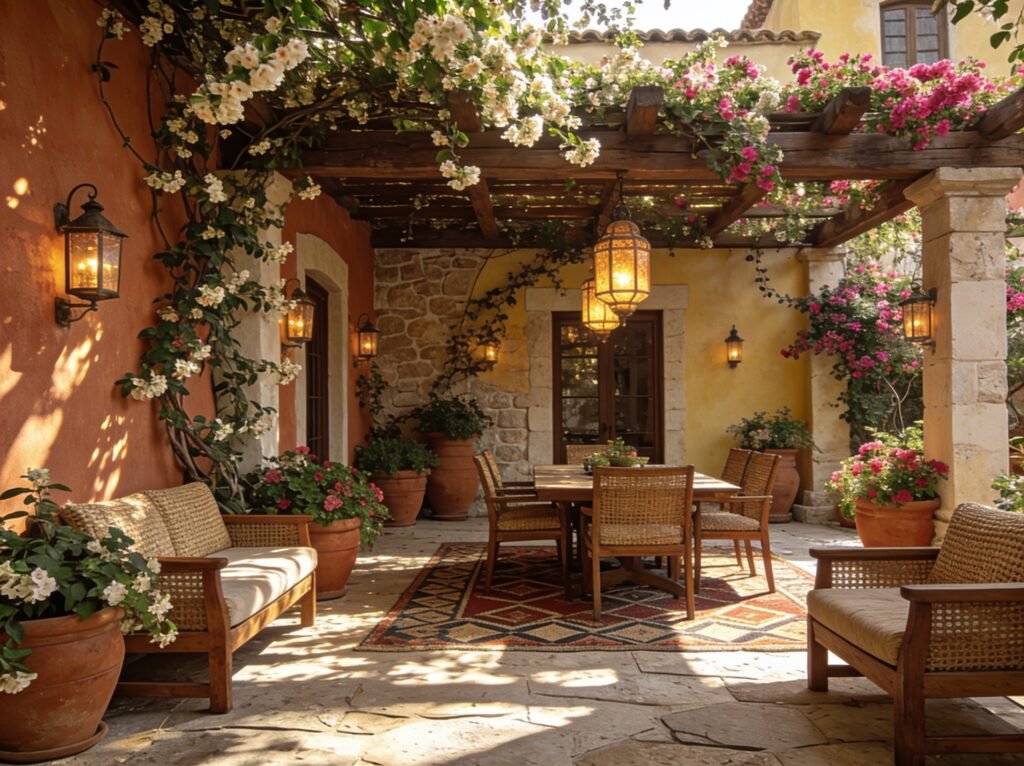
Beyond individual pieces, settling on an overall aesthetic gives your patio a cohesive, intentional feel. You don’t need to follow any style rigidly, but choosing a general direction helps you make consistent decisions about colors, materials, and furniture.
Modern minimalist: clean lines, neutral tones, concrete and metal, a few sculptural plants. Calm and uncluttered.
Boho relaxed: warm textiles, layered rugs, rattan and macramé, lots of trailing greenery. Cozy and collected.
Mediterranean: terracotta, warm earth tones, climbing vines, lantern lighting. Sun-drenched courtyard feel.
Coastal: whites, blues, natural wood, airy fabrics. Light and breezy.
Cottage garden: wooden furniture, mixed florals, vintage lanterns, climbing roses on a trellis. Romantic and lush.
Pick the mood that makes you feel most relaxed — this is your space to unwind in.
13. Make a Small Patio or Balcony Feel Bigger
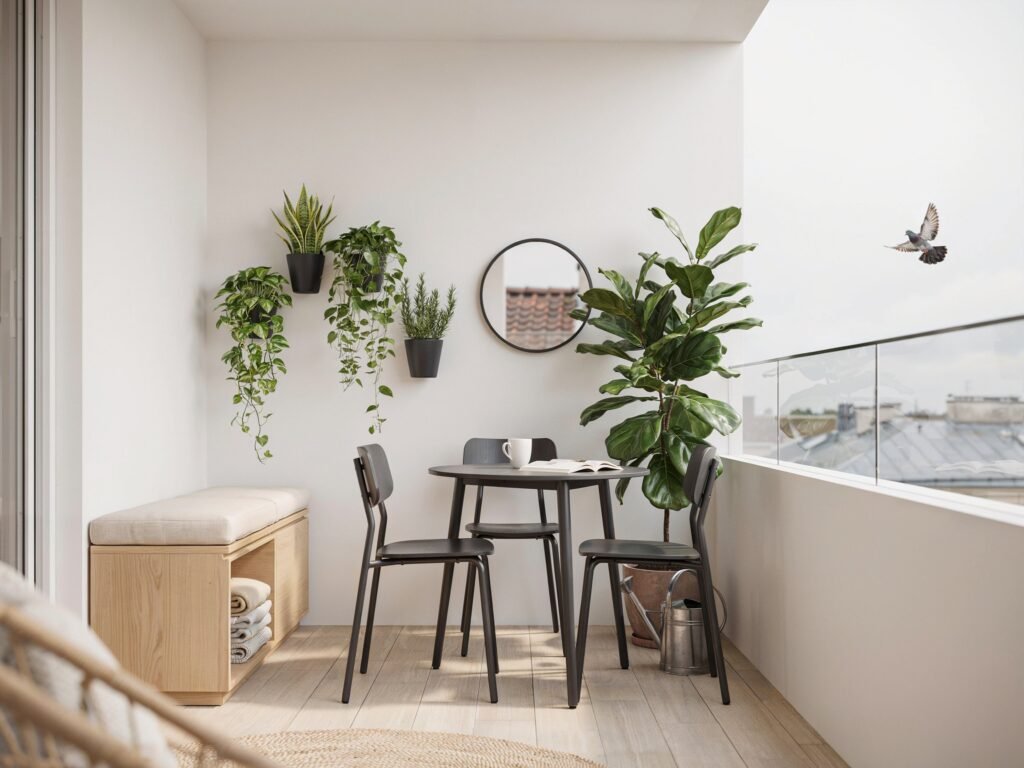
Tight on space? A small terrace styled with intention often feels cozier and more special than a large one left bare. A few adjustments make a big difference:
- Use a bistro set or a bench with hidden storage instead of a full dining set
- Go vertical with wall planters and hanging baskets so plants don’t eat floor space
- Choose one statement plant rather than many small scattered ones
- Keep the color palette simple — two or three colors maximum so the space feels calm
- Add a mirror on an exterior wall to create a sense of depth and make the space read larger
Resist the urge to fill every inch. Breathing room is what makes a small patio feel curated rather than cluttered.
14. Layer the Finishing Touches
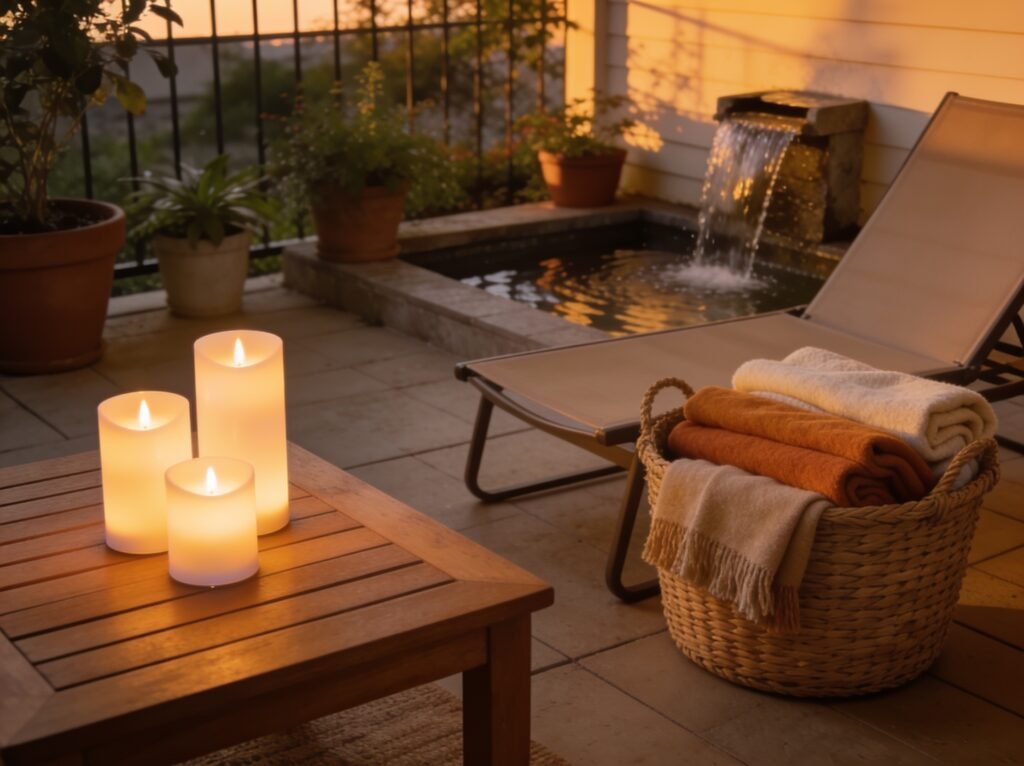
The final layer is what makes a patio feel like yours rather than a furniture showroom. This is where personality comes in.
Finishing touches worth adding:
- Lanterns with candles or flameless LEDs on tables and steps
- A small water feature for soothing background sound
- Weatherproof art or a large outdoor mirror on an exterior wall
- A decorative tray with citronella candles on the coffee table
- A stack of weatherproof books or a basket of outdoor throws for cool evenings
- House numbers or a nameplate on the gate if you have one
None of these cost much individually, but layered together they take a patio from “nice” to “this is exactly where I want to be.”
FAQs
What is the cheapest way to build a patio from scratch? A leveled gravel patio is the most affordable option — it can be completed in a weekend with basic tools and costs far less than concrete or pavers. Lay landscape fabric underneath first to keep weeds from pushing through.
How can I make a plain concrete patio look better without replacing it? Pressure wash it first, then stain, paint, or resurface it. Add an outdoor rug, a few large potted plants, comfortable furniture, and string lights overhead. These changes can make a dated concrete slab look like a completely different space.
What is the most impactful thing I can add to a patio? String lights and an outdoor rug deliver the biggest visual change for the least money. String lights transform the space after dark, and a rug instantly makes the seating area feel like a finished room.
How do I make my patio private without building a fence? Use tall planters with ornamental grasses, slim columnar evergreens, or bamboo in containers to create a living screen. Lattice panels with climbing plants, outdoor curtains on a pergola, or a row of large arborvitae pots all create privacy without the closed-in feeling of a solid fence.
What outdoor furniture material lasts the longest? Powder-coated aluminum is arguably the most durable — it’s lightweight, rust-proof, and handles all weather conditions without needing much maintenance. Teak also lasts decades outdoors and develops a beautiful silver-gray patina over time.