
This post contains affiliate links. As an Amazon Associate, I earn from qualifying purchases at no extra cost to you.
Chocolate brown is back, and in the bedroom it makes more sense than almost any other color. It is warm, grounding and enveloping, the color equivalent of a heavy wool blanket. Where grey can feel cold and black can feel severe, brown feels like a hug.
The trick is using it well. A dark brown bedroom done carelessly can feel heavy and dated. Done with the right finish, the right partner colors and layered lighting, it feels rich, calm and quietly luxurious, more boutique hotel than 1970s den.
Below are 33 chocolate brown bedroom ideas, grouped into walls and paint, color pairings, furniture and wood, textiles, lighting and metals, and style variations. Each comes with a practical tip, and many include products to help you recreate the look.
Why Chocolate Brown Works in a Bedroom
Dark colors make walls visually recede, which can actually make a room feel more intimate rather than smaller. In a bedroom, where you want calm rather than energy, that cocooning effect is exactly the point.
Brown also flatters almost everything you put against it. Wood looks richer, white bedding looks crisper, brass glows and plants look greener. It is a backdrop that makes the rest of the room look more expensive.
Choosing the Right Brown
Not all browns are equal. Warm browns with red undertones read cozy and traditional. Cooler browns with grey or green undertones, like Urbane Bronze (SW 7048), read modern and sophisticated. Very deep browns such as Black Fox (SW 7020) can look almost black in low light.
Always sample on at least two walls and look at them morning, afternoon and night. Brown shifts more than most colors as light changes, and the version you see under store lighting is rarely the one you live with.
33 Chocolate Brown Bedroom Ideas
The ideas are grouped into walls and paint, color pairings, furniture and wood, textiles and bedding, lighting and metals, and style variations. Combine one idea from each group for a complete room.
Walls and Paint
1. Full Chocolate Brown Walls

Painting all four walls chocolate brown is the boldest move and often the most successful. With no light walls to compare against, the room reads as one warm, wrapped space rather than a dark box.
Pair it with white or cream bedding, warm wood furniture and a few brass accents, and the room immediately feels finished. The brown does most of the decorating for you.
If you are nervous, remember that paint is the cheapest thing in the room to change. Live with it for a month before deciding.
Shades worth sampling include Urbane Bronze (SW 7048) for a modern grey-brown, Turkish Coffee (SW 6076) for a classic warm chocolate, and London Clay (Farrow & Ball No. 244) for a soft, slightly red-leaning brown.
Pro tip: Use a matte or eggshell finish. Gloss on dark walls shows every roller mark and bump.


2. A Single Brown Accent Wall
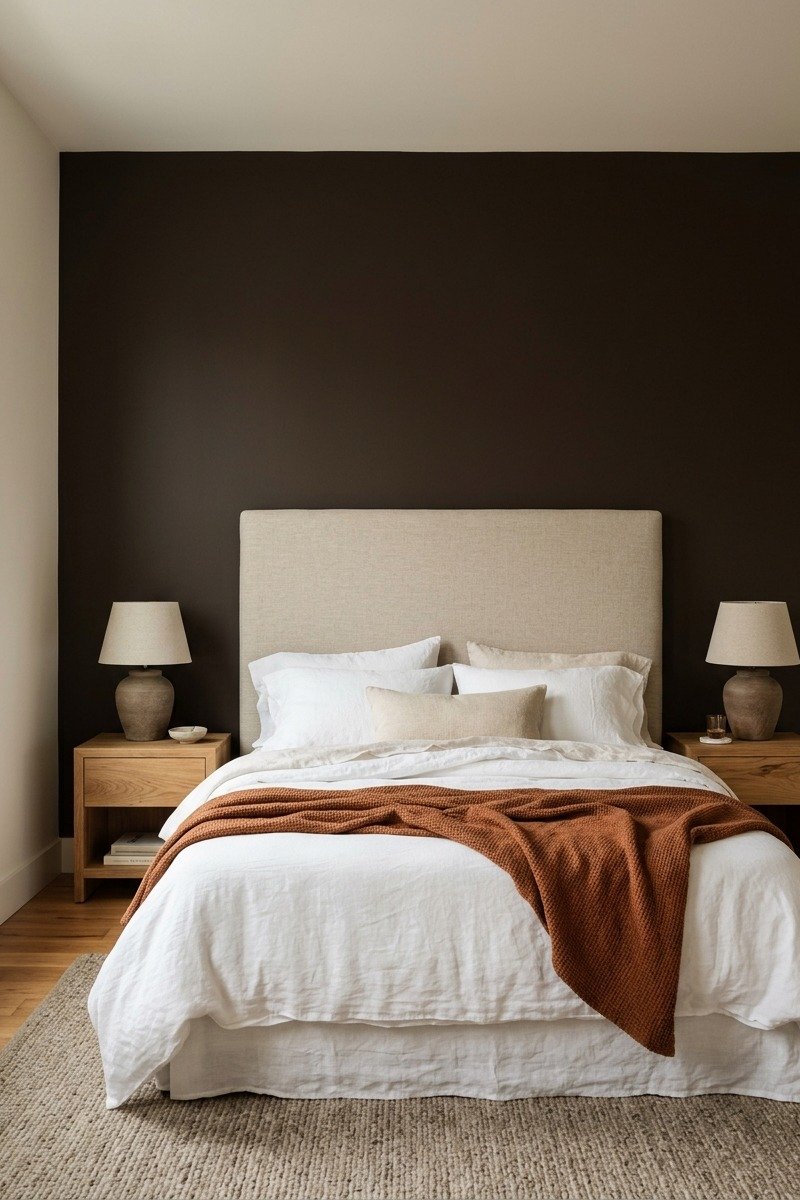
A brown accent wall behind the bed gives you the warmth without committing the whole room. It frames the headboard and gives the eye somewhere to land.
Keep the remaining walls a warm white or soft greige so the transition feels intentional. Cool bright whites can look stark next to brown.
This is also the easiest way to test how a particular brown behaves in your light before going further.
An accent wall also gives you a natural place for a statement headboard. Upholstered headboards in cream, oatmeal or blush look especially good against a brown backdrop and soften its depth.
Pro tip: Paint the accent wall from floor to ceiling, corner to corner. Partial accent walls look unfinished.

3. Color-Drenched Walls and Ceiling
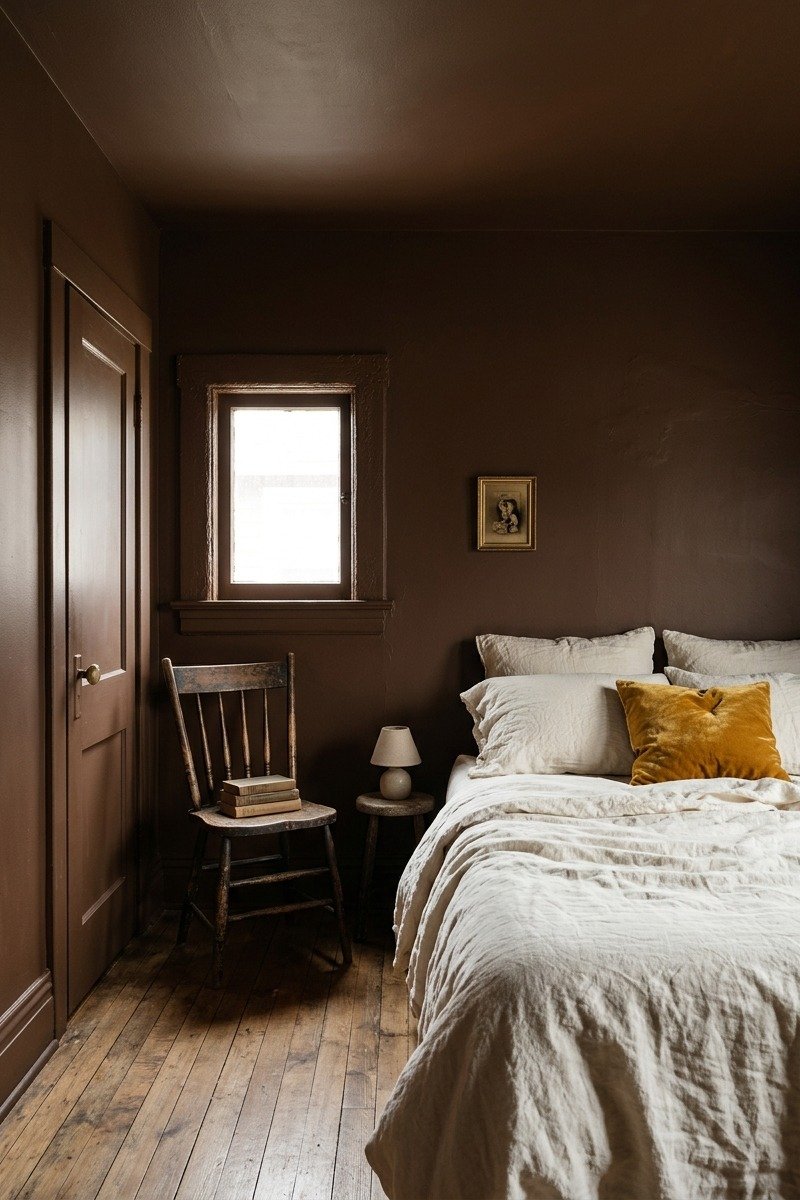
Color drenching means painting walls, trim and even the ceiling in the same brown. It erases edges and makes a small bedroom feel cocooning and deliberate rather than cramped.
It works especially well in rooms with awkward angles, sloped ceilings or small windows, where contrasting trim would only highlight the problems.
Use one color in two finishes: matte on walls and ceiling, satin or eggshell on trim and doors for subtle depth.
Drenched rooms look best with simple, well-made furniture. Because the walls are so unified, a few strong pieces stand out more clearly than they would in a busier room.
Pro tip: Buy all the paint in one batch so the color is identical across every surface.


4. Brown Wainscoting or Paneling
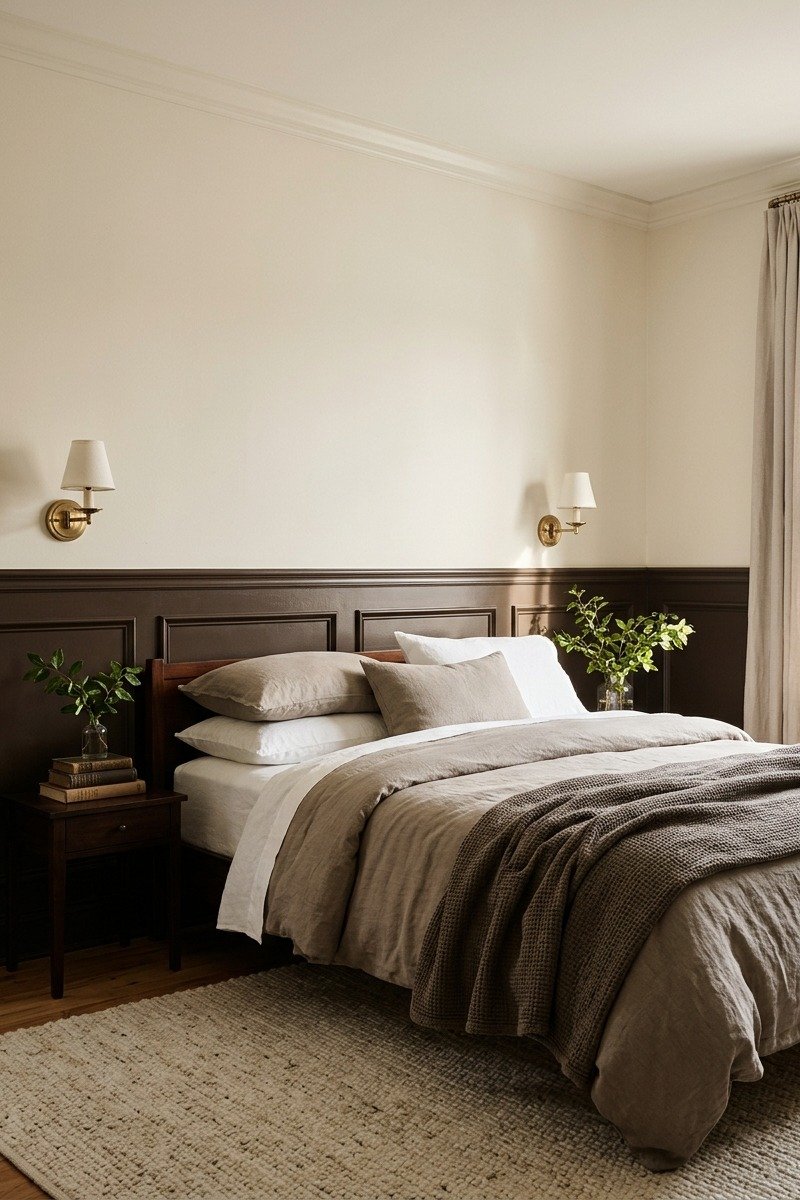
Paint wainscoting or picture-frame molding brown and leave the walls above a soft cream. It adds architectural interest and a tailored, traditional feel.
Paneled walls in brown also hide scuffs from headboards and furniture, which makes them practical as well as beautiful.
Peel-and-stick or MDF molding kits make paneling a weekend project rather than a carpentry job.
If you want a softer version, paint the paneling a mid caramel brown instead of deep chocolate. It still adds warmth and structure without making the lower half of the room feel heavy.
Pro tip: Run paneling about a third of the way up the wall, or up to headboard height, for the best proportions.

5. Brown Limewash for Soft Texture
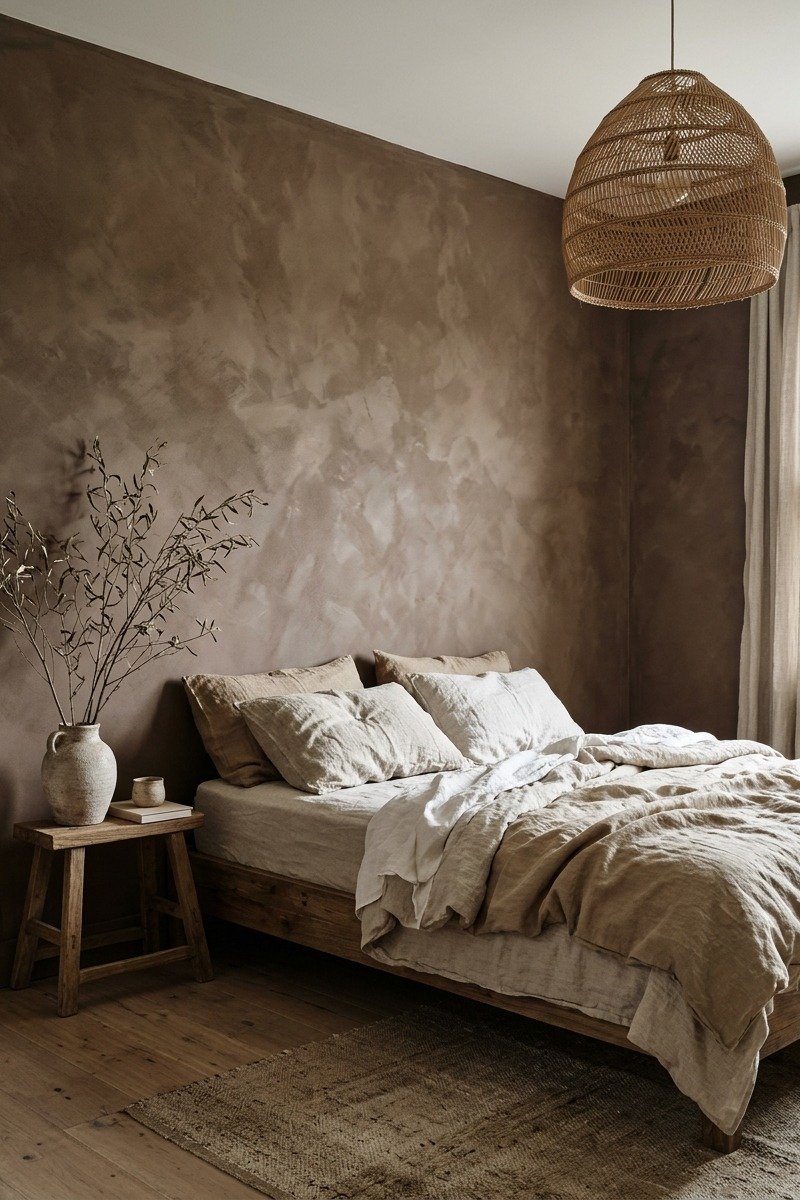
Limewash paint creates a soft, cloudy, slightly mottled finish that makes brown feel earthy and organic rather than flat and heavy.
It suits Mediterranean, Japandi and rustic bedrooms, and pairs beautifully with linen, rattan and natural wood.
Apply with a large block brush in random crisscross strokes, and accept that every wall will look slightly different. That is the charm.
Limewash also ages gracefully. Small marks and scuffs blend into the texture rather than standing out the way they would on flat paint, which makes it forgiving in a well-used bedroom.
Pro tip: Limewash works best on porous surfaces. Use the manufacturer’s primer if painting over existing latex paint.

6. Brown Behind Open Shelving or a Niche
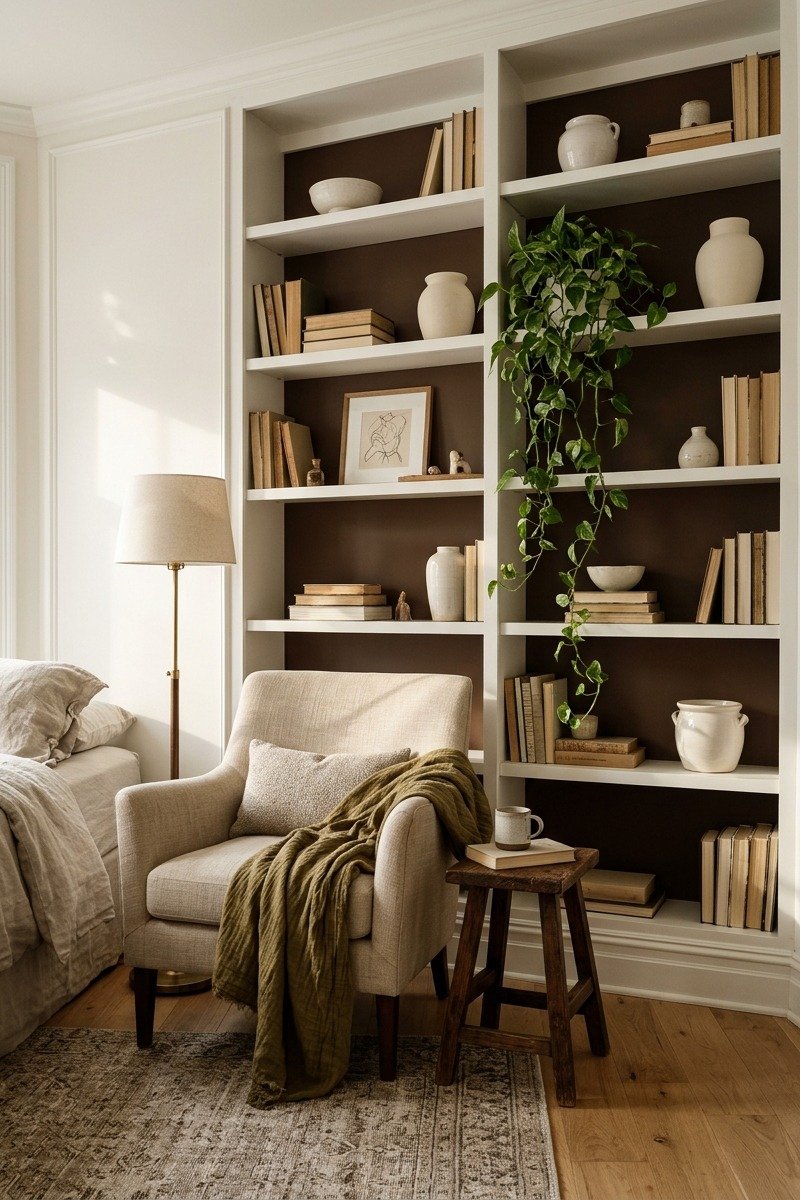
Painting just the back of a bookcase, alcove or built-in niche in brown adds depth and makes the objects on the shelves stand out.
It is a subtle way to introduce brown in a mostly light room, and it pulls the eye into the architecture.
Style the shelves sparingly with books, ceramics and a plant so the color shows through.
A painted niche is also a smart solution for renters, since it is a small area that is easy to repaint before moving out.
Pro tip: Use a small foam roller for the back of shelves. It gives a smooth finish and fits between shelf brackets.
7. Brown Ceiling, Light Walls
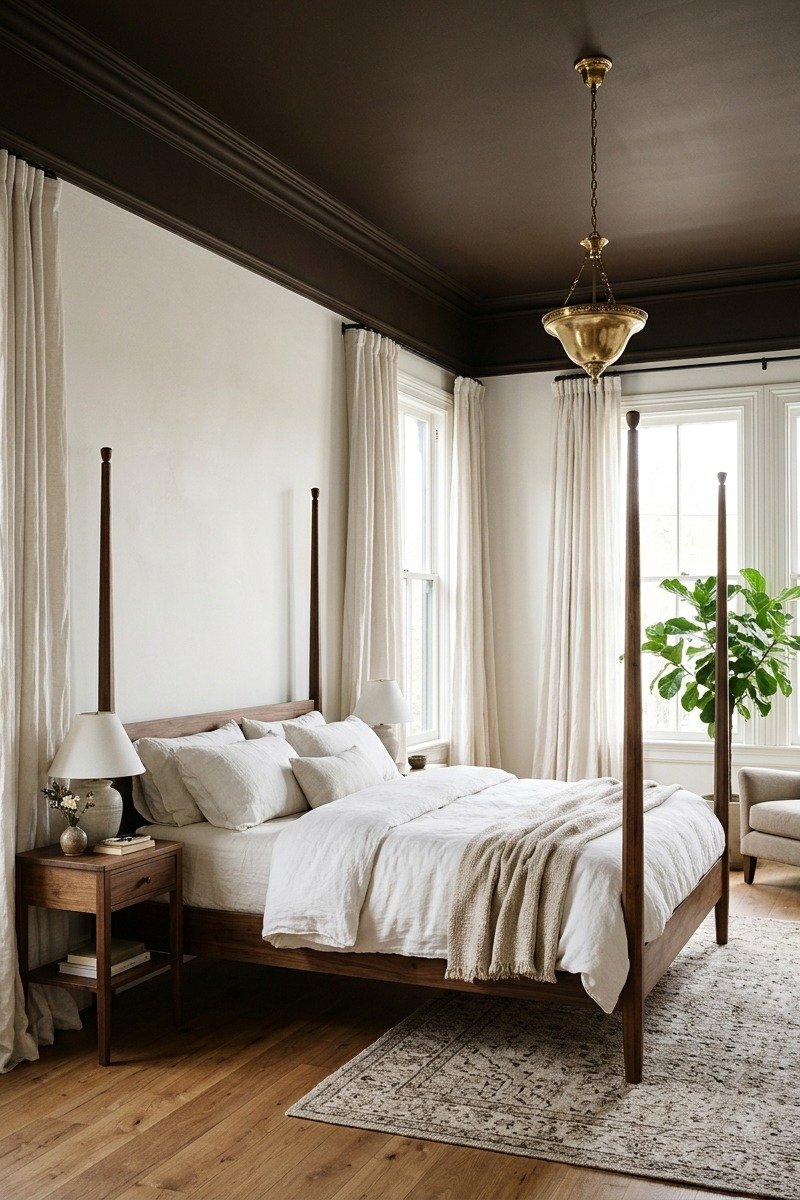
The fifth wall is often forgotten. A brown ceiling over warm white walls lowers the visual height and makes a bedroom with very tall ceilings feel cozier.
It is also a dramatic way to add color without overwhelming the room, because you mostly see it when lying in bed.
This works best in rooms with good natural light or high ceilings. In low rooms, keep the ceiling a shade lighter than the walls instead.
A brown ceiling also works beautifully with a statement light fixture. A brass or rattan pendant stands out against the dark surface and draws the eye upward in the best way.
Pro tip: Paint the ceiling first, then cut in the walls. It makes clean lines much easier.

Color Pairings
8. Chocolate Brown and Cream
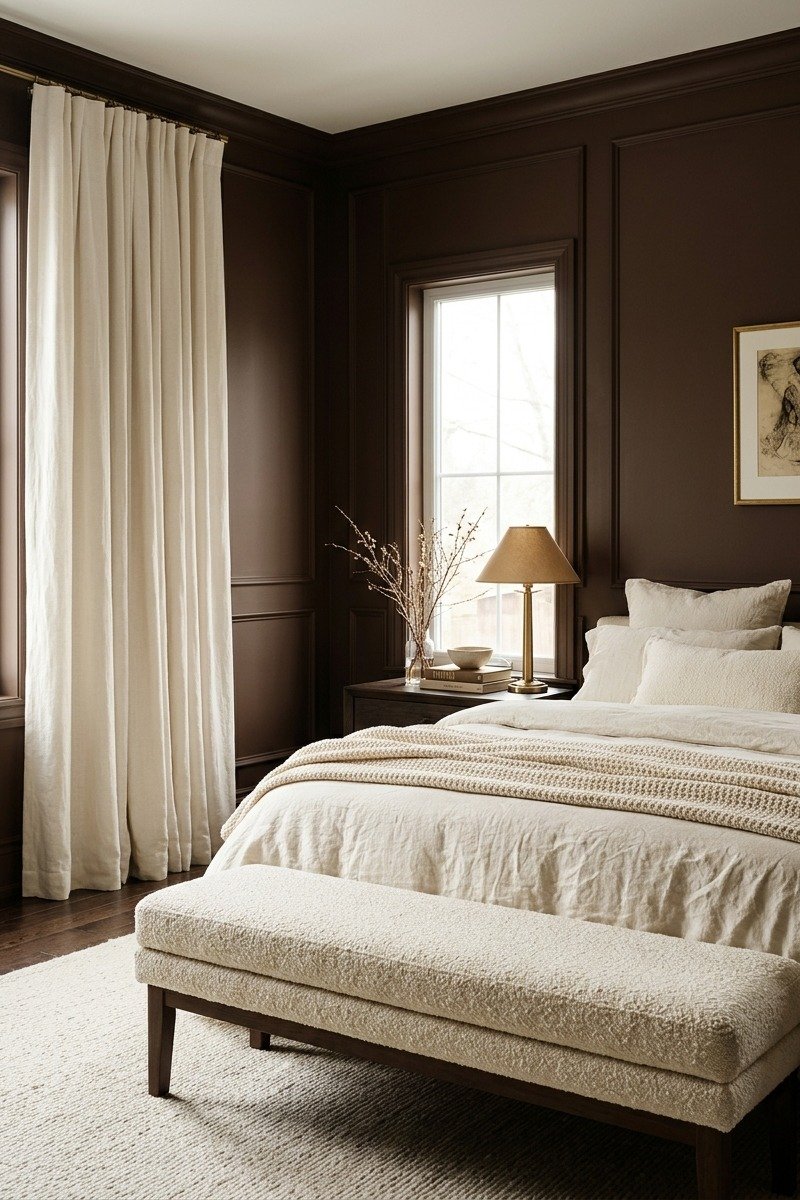
The most classic pairing of all. Cream softens brown, keeps the room bright enough and feels effortlessly elegant.
Use cream for bedding, curtains and upholstery against brown walls, or flip it with cream walls and brown furniture and textiles.
Add texture with boucle, wool and linen so the palette doesn’t feel flat.
This pairing is also forgiving if you change your mind later. Cream works with nearly every accent color, so you can add sage, rust or blush in the future without starting over.
Pro tip: Choose cream with a warm yellow undertone rather than stark white. It blends more naturally with brown.

9. Chocolate Brown and Blush Pink
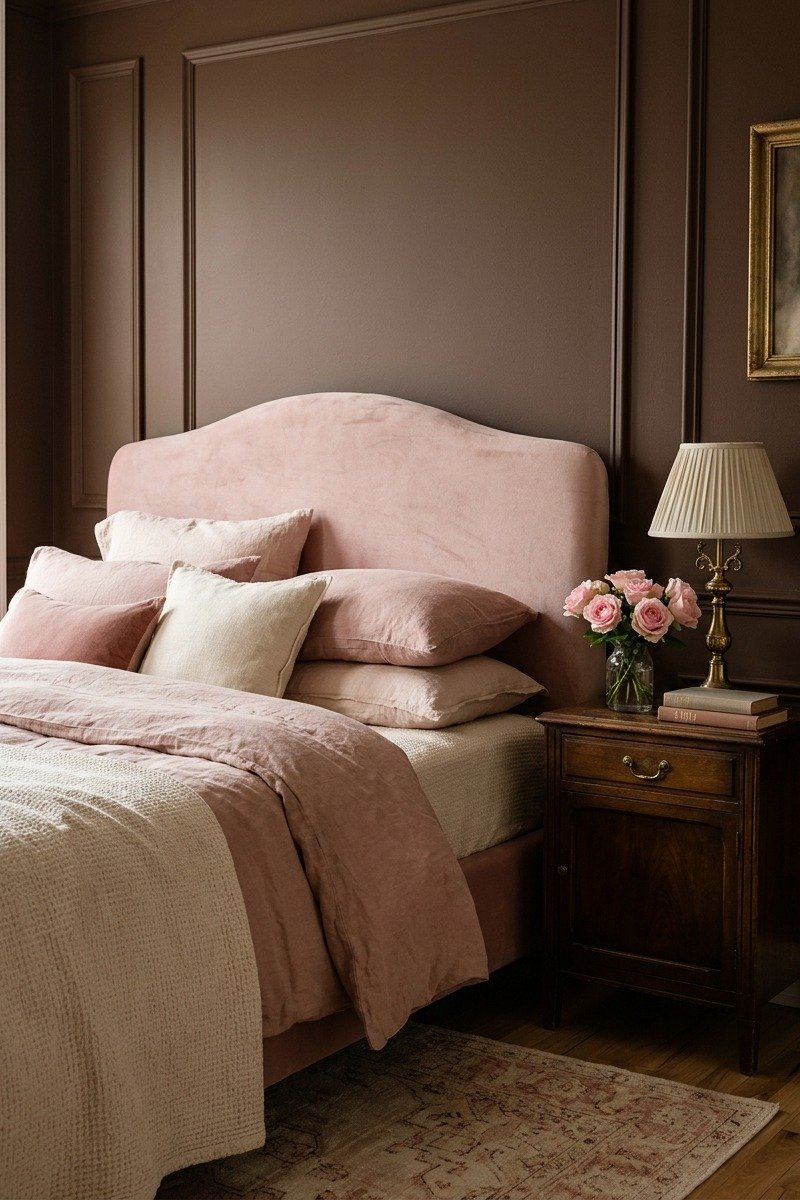
Brown and soft pink is a surprisingly sophisticated combination. The pink lifts the brown, and the brown grounds the pink so it never looks sugary.
Use blush in bedding, a velvet headboard or cushions, and keep metals warm with brass or bronze.
This pairing works well for anyone who wants a romantic room that still feels grown up.
Florals in pink and cream, either fresh or in artwork, tie the palette together and add a gentle, lived-in softness to the room.
Pro tip: Choose dusty, muted pinks rather than bright candy shades.

10. Chocolate Brown and Sage Green
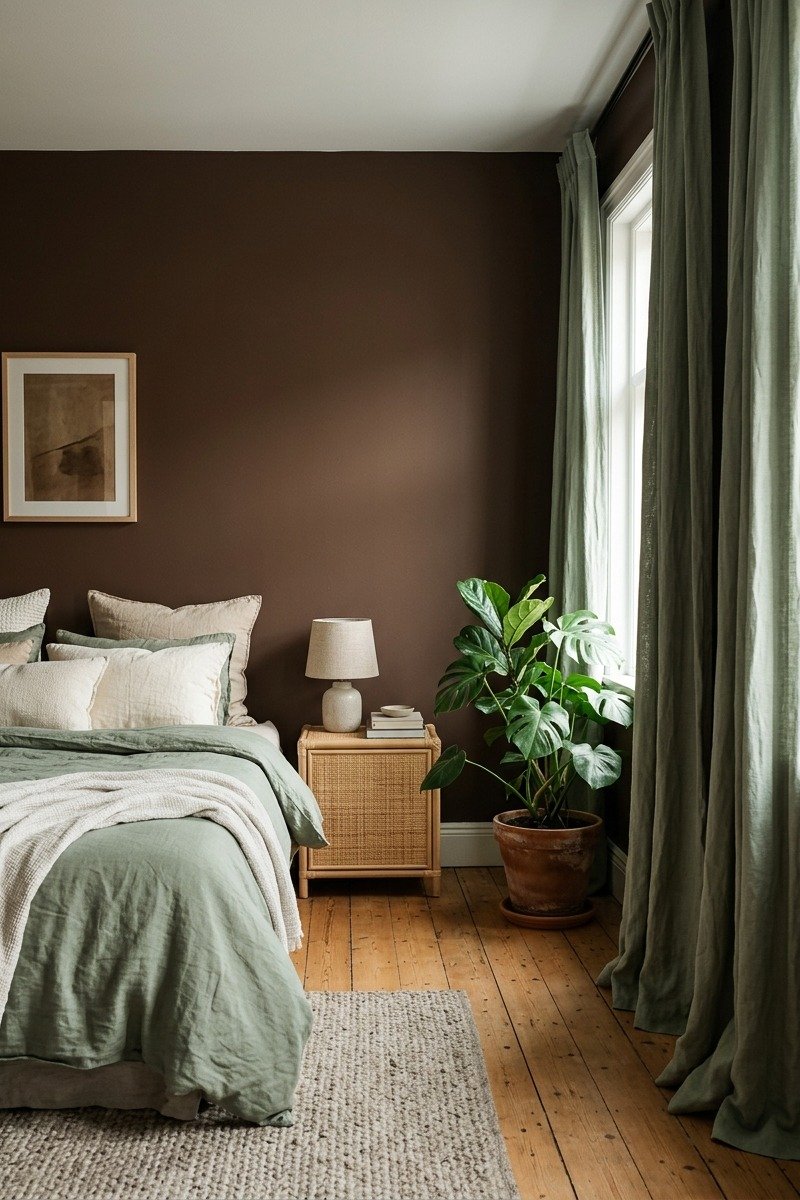
Sage green and brown feel natural and calm, like a woodland walk. Together they create a restful, earthy bedroom.
Try sage bedding or curtains against brown walls, or sage walls with dark brown furniture and wood.
Add plenty of plants and natural materials to complete the look.
Botanical prints framed in thin wood or brass frames are a simple way to repeat the green and make the scheme feel connected from wall to bed.
Pro tip: Sage can look grey or minty depending on light. Pick a version with a warm undertone to sit happily with brown.

11. Chocolate Brown and Terracotta

Terracotta, rust and burnt orange sit next to brown on the color wheel, which makes the combination feel warm, cohesive and very of the moment.
Use rust in throws, cushions and a rug against brown walls, or paint one wall terracotta and use brown furniture.
This pairing suits boho, desert and Mediterranean bedrooms especially well.
Terracotta pots, clay lamps and woven baskets bring the earthy tones in through natural materials as well as fabric, which makes the room feel richer and more layered.
Pro tip: Balance warm tones with plenty of cream or white so the room doesn’t feel overly hot.

12. Chocolate Brown and Navy
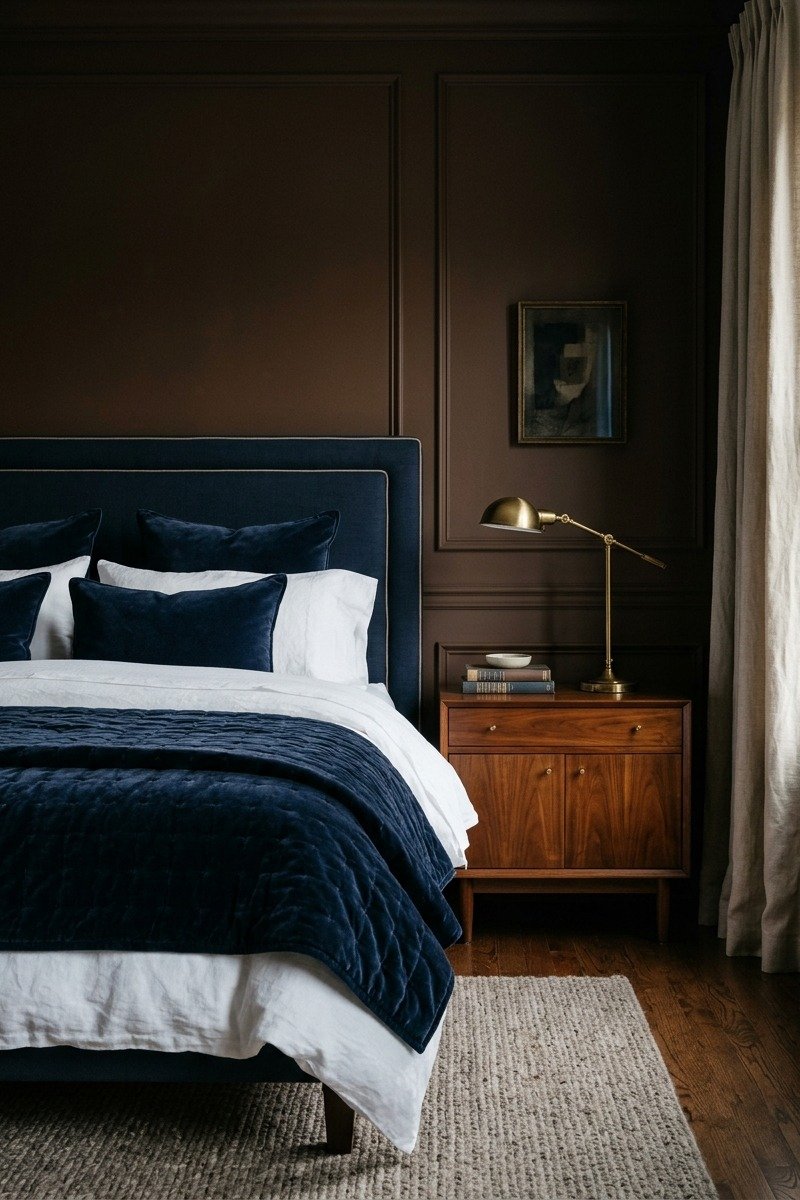
Navy and brown is a quietly classic pairing, both deep and calm. It feels tailored and a little masculine without being cold.
Use navy bedding or a navy velvet headboard against brown walls, and add white for contrast and brass for glow.
This pairing suits traditional and modern bedrooms alike.
Striped or plaid textiles in navy and cream are a classic way to blend the two colors, especially on cushions or a throw at the foot of the bed.
Pro tip: Keep one of the two colors dominant. Equal amounts of navy and brown can feel muddy.
13. Chocolate Brown and Mustard
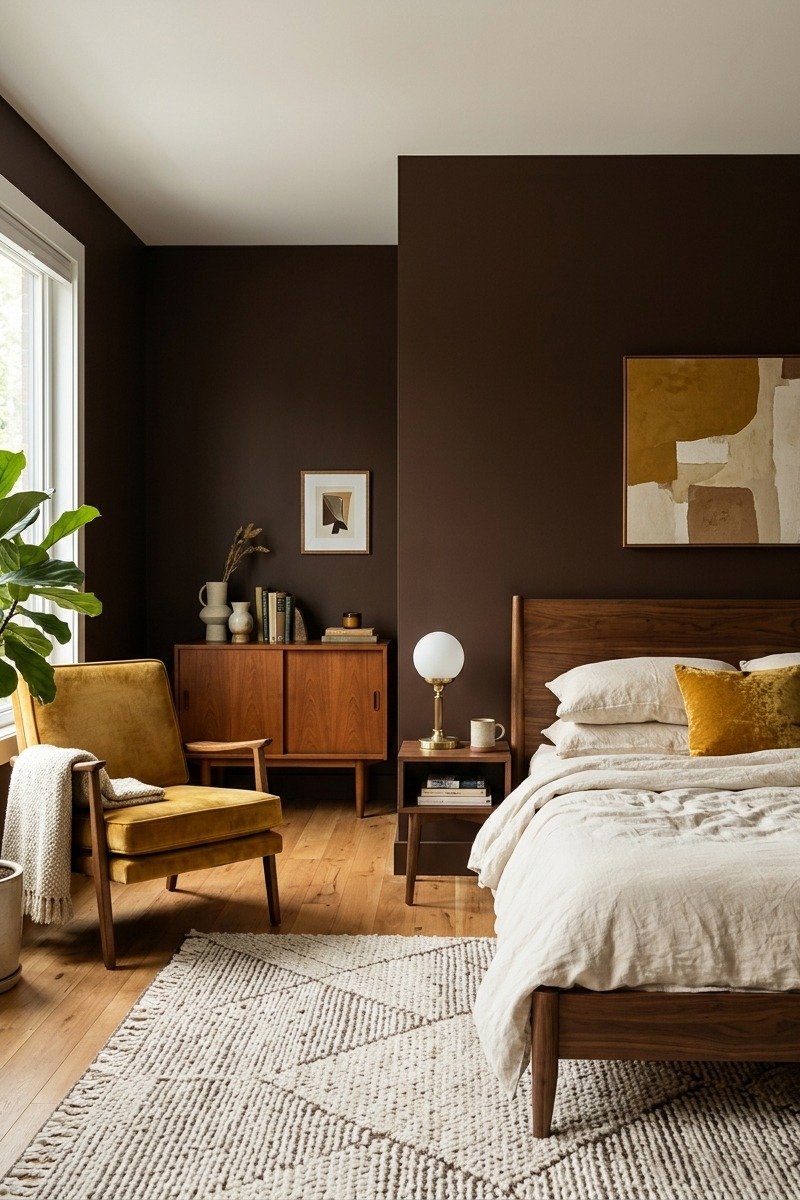
Mustard and ochre bring sunshine to a brown room. A mustard velvet chair, throw or cushion adds energy and a retro warmth.
It is a strong combination, so use mustard as an accent in two or three places rather than everywhere.
This pairing works particularly well in mid-century modern bedrooms.
Mustard also looks wonderful in natural light. Place a mustard piece near a window and it will brighten the whole room on grey days.
Pro tip: Repeat the accent at least three times in the room so it looks deliberate.
14. Tone-on-Tone Browns
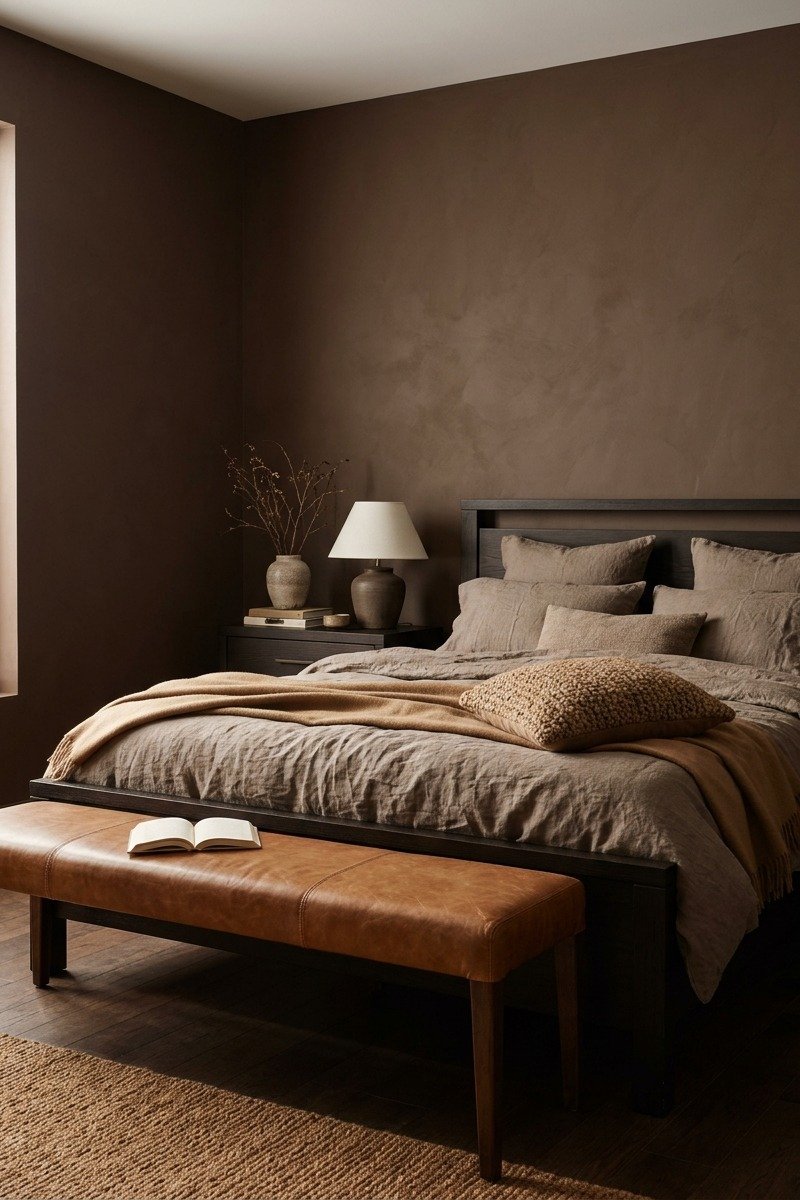
Layering several browns, from caramel and camel to cocoa and espresso, creates a rich, monochrome room full of depth.
The secret is texture: pair smooth leather with nubby wool, velvet with linen, and polished wood with woven baskets.
Tonal rooms look calm and expensive, and they are easier to pull off than they sound.
Tonal rooms are also very forgiving when you shop. Almost any brown, caramel or tan piece you find will fit, which makes it easy to build the room slowly over time.
Pro tip: Vary the shades by at least two or three steps so each layer reads distinctly.

Furniture and Wood
15. Dark Walnut Furniture
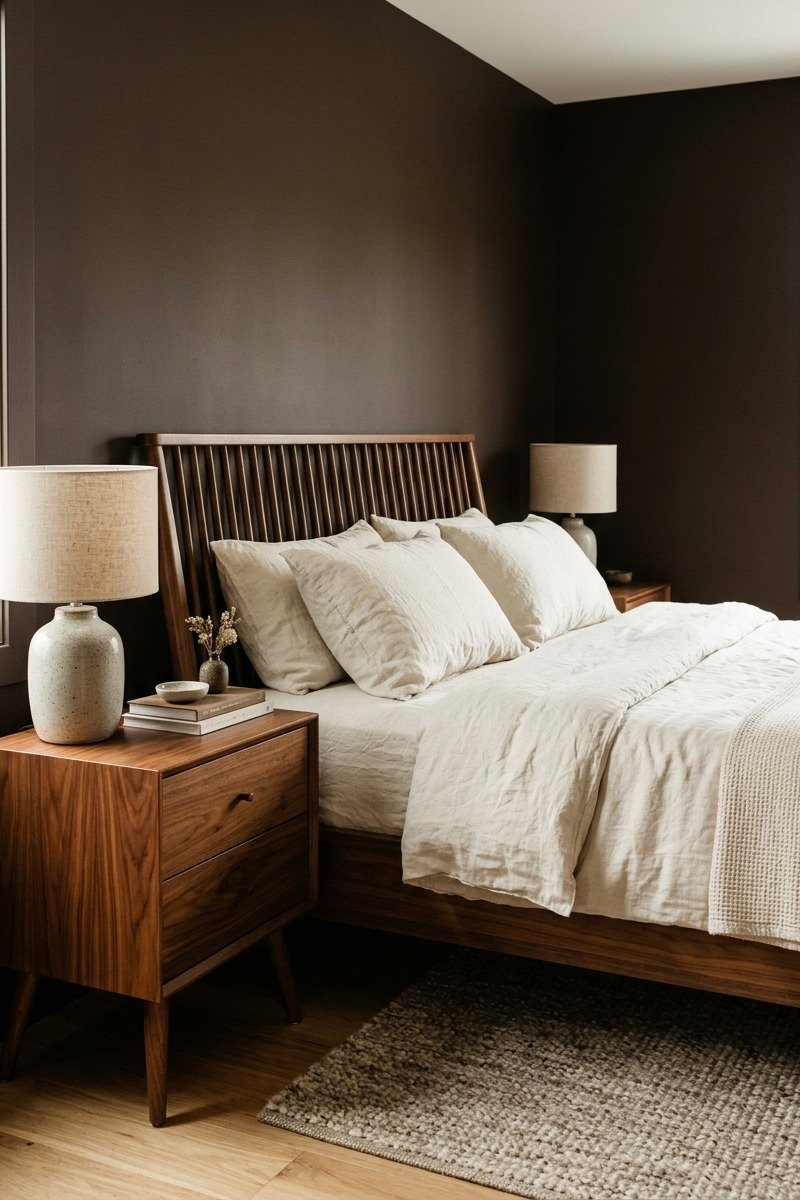
Walnut’s warm, swirling grain is a natural match for chocolate brown. A walnut bed, nightstands or dresser look rich and timeless.
Against brown walls, walnut adds depth; against cream walls, it introduces brown without paint.
Mid-century walnut pieces with tapered legs keep the look light and modern.
If walnut feels too dark against brown walls, mix in one or two lighter oak pieces. The contrast keeps the room interesting and stops furniture from disappearing into the walls.
Pro tip: Mix walnut with one lighter material, like cane or brass, so the room doesn’t feel heavy.

16. A Leather Headboard or Bench
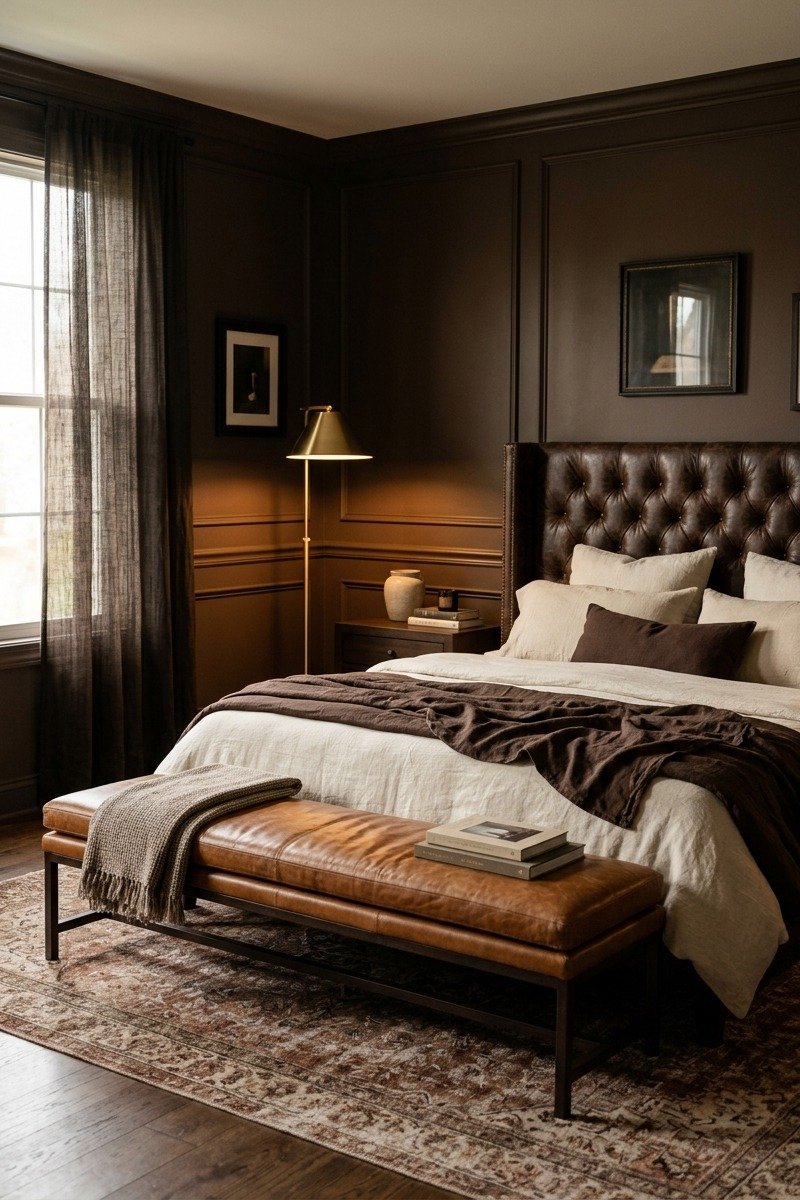
Brown leather adds texture and a sense of luxury. A leather headboard, bench at the foot of the bed or a leather sling chair makes a brown bedroom feel collected.
Leather ages beautifully, developing a patina that only adds character.
Faux leather is a practical, affordable alternative that looks surprisingly convincing.
A leather bench also offers practical value, giving you somewhere to sit while putting on shoes and a place to set down a throw or tomorrow’s clothes.
Pro tip: Condition real leather once or twice a year to keep it supple and stop it cracking.
17. Cane and Rattan for Lightness
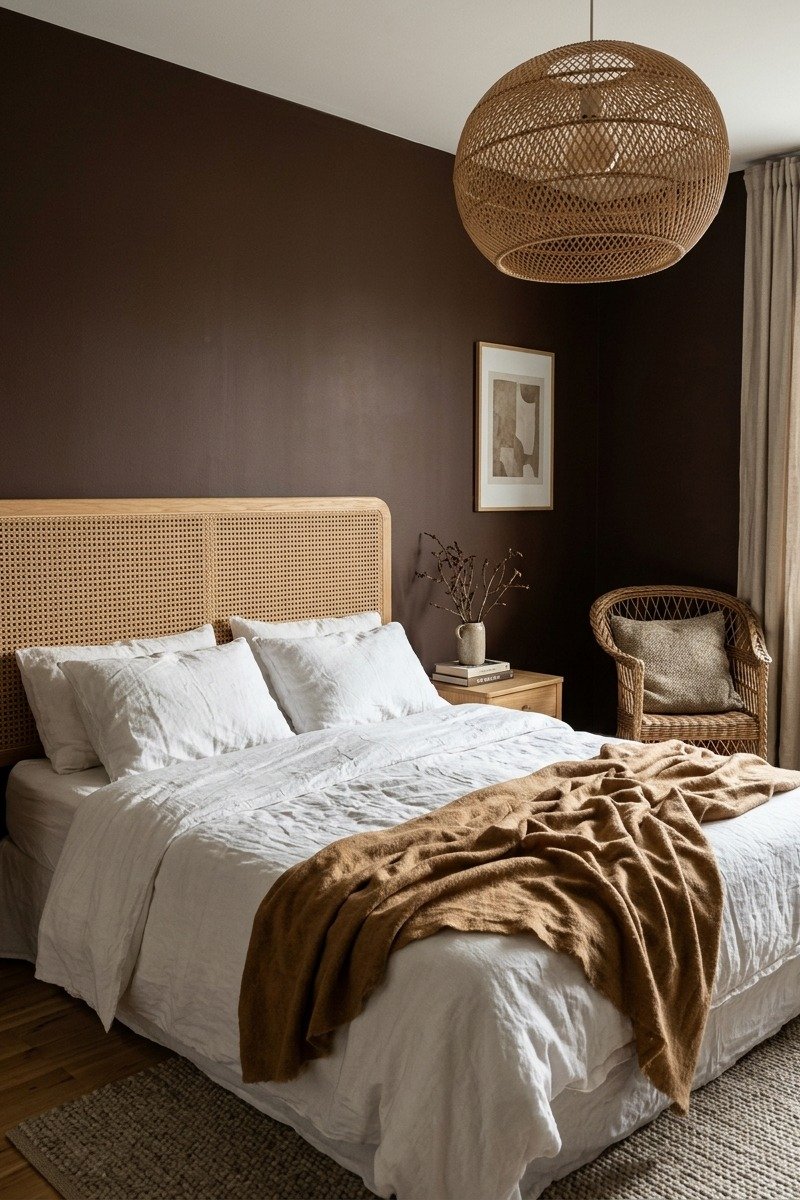
Cane, rattan and wicker lighten a brown room and add a relaxed, natural feel. A cane headboard, rattan pendant or wicker chair breaks up dark surfaces.
Their open weave lets light and air through, which matters in a dark room.
This combination suits coastal, boho and Japandi bedrooms.
Natural fibers also add a pleasant scent and texture. A rattan pendant casts patterned shadows on brown walls at night that look beautiful and soft.
Pro tip: Pair cane with linen and plants for a relaxed resort look.
18. A Four-Poster or Canopy Bed
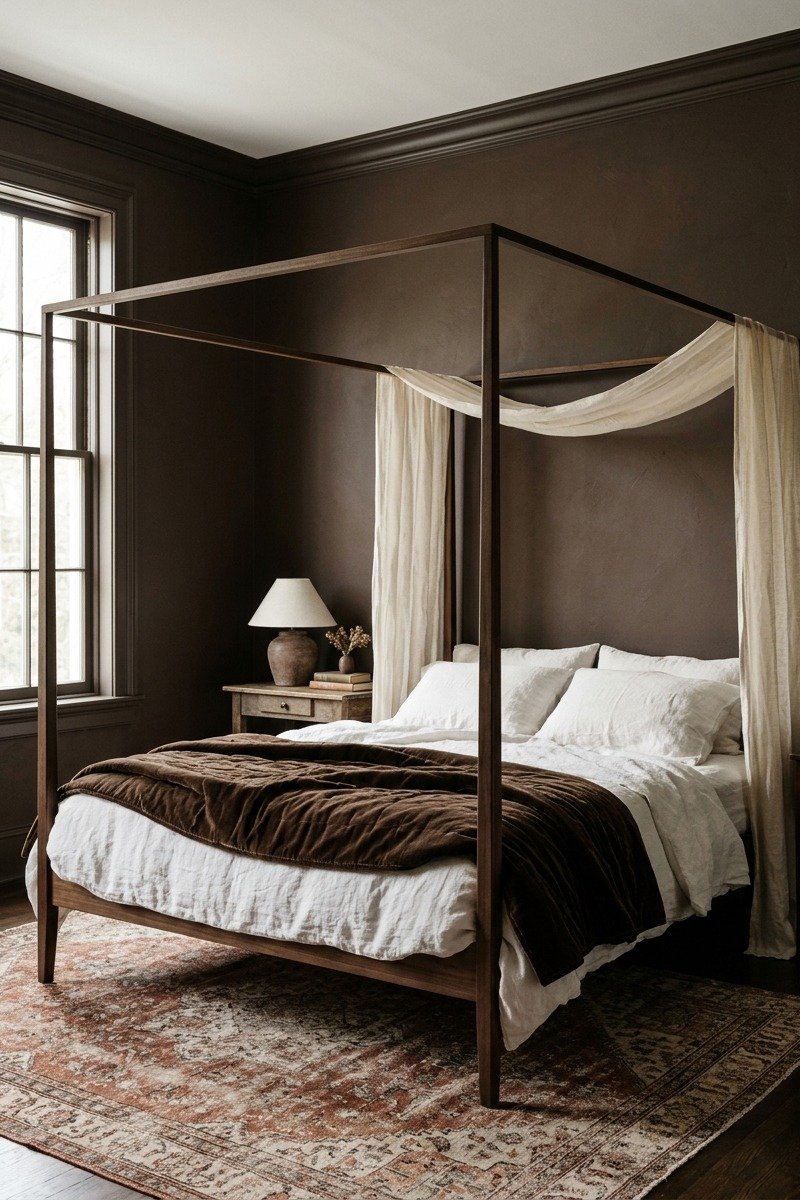
A dark wood four-poster bed in a brown room feels grand, romantic and enveloping. It adds height and structure, and draws the eye up.
Keep the frame simple and slim so it does not dominate, or drape sheer cream linen from the top for softness.
This works best in rooms with ceilings at least nine feet high.
Four-poster beds also create a room within a room, which feels especially cozy in a large or open-plan bedroom where the bed can otherwise feel exposed.
Pro tip: Choose a metal four-poster in black or bronze for a lighter, more modern version.
19. A Velvet Upholstered Bed
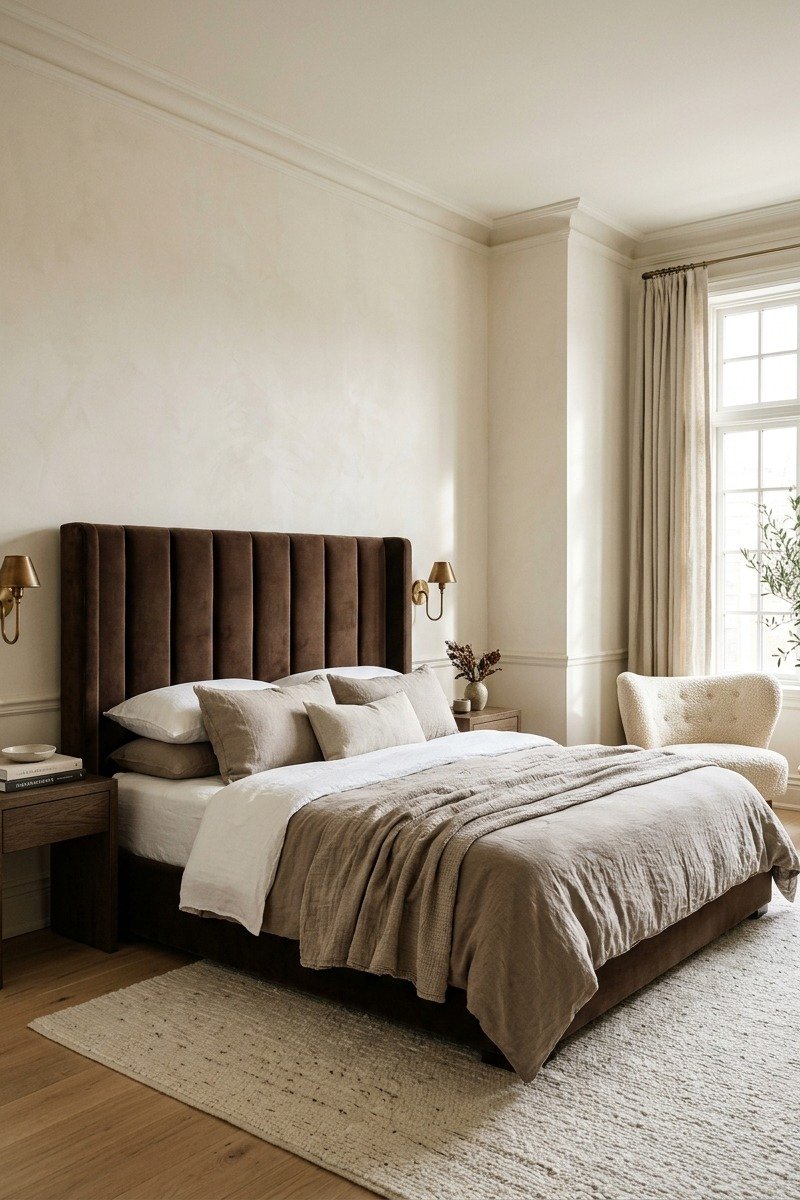
Velvet adds softness, depth and a touch of glamour. A chocolate brown velvet bed looks luxurious against cream walls, while a cream or blush velvet bed glows against brown walls.
Channel-tufted or wingback shapes add drama; simple rectangles feel modern.
Velvet also absorbs sound, which helps a bedroom feel quieter.
Velvet looks richest under warm lighting. Bedside lamps that graze the fabric bring out its sheen and make the color look deeper.
Pro tip: Choose performance velvet for easier cleaning, especially if you have pets.
20. Vintage and Antique Pieces
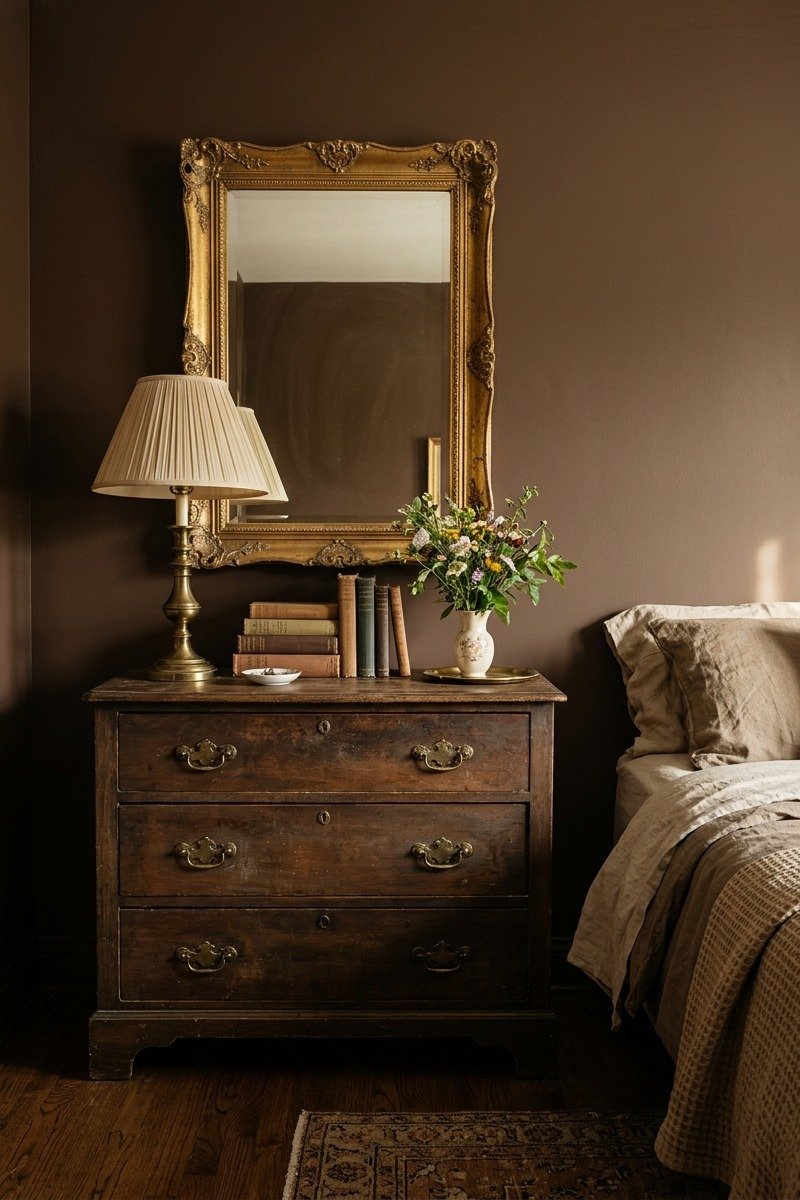
Brown rooms are a natural home for vintage furniture. Antique dressers, old trunks and inherited chairs look right at home against warm dark walls.
Mixing old and new keeps the room from feeling like a period set and adds personality.
Look for pieces with good bones and don’t worry about matching wood tones exactly.
Vintage pieces also tend to be better made and more affordable than new furniture of the same quality. Flea markets, estate sales and online marketplaces are good places to look.
Pro tip: Swap old hardware for new brass knobs to give a vintage dresser a fresh look.

Textiles and Bedding
21. Layered Neutral Bedding
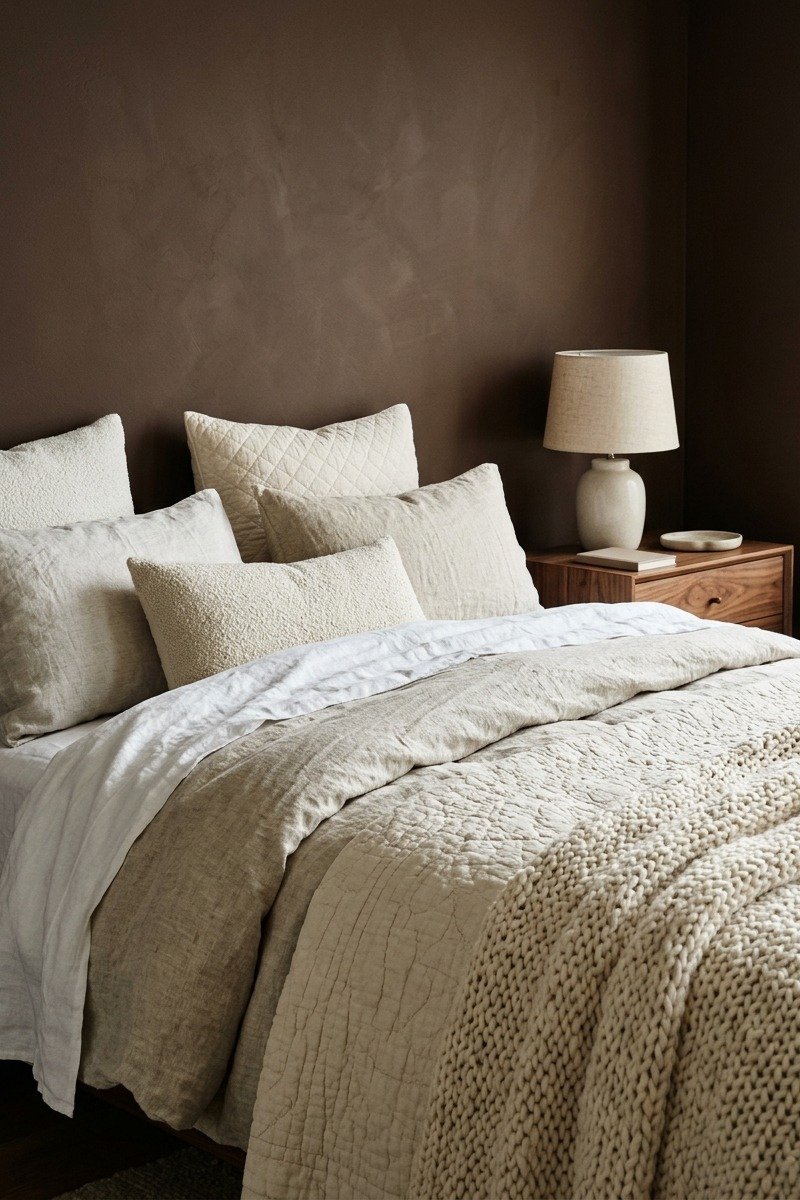
White, cream, oatmeal and taupe bedding layered in different textures is the easiest way to keep a brown bedroom from feeling heavy.
Start with crisp white sheets, add a linen duvet, a waffle or quilted coverlet and a chunky knit throw.
Finish with three or four pillows in varying sizes for a full, inviting bed.
A neutral bed against brown walls is also the most flexible choice. Swap cushions and throws each season and the whole room feels new without repainting.
Pro tip: Wash linen bedding before using it. It softens beautifully and looks more relaxed.

22. Chocolate Brown Bedding
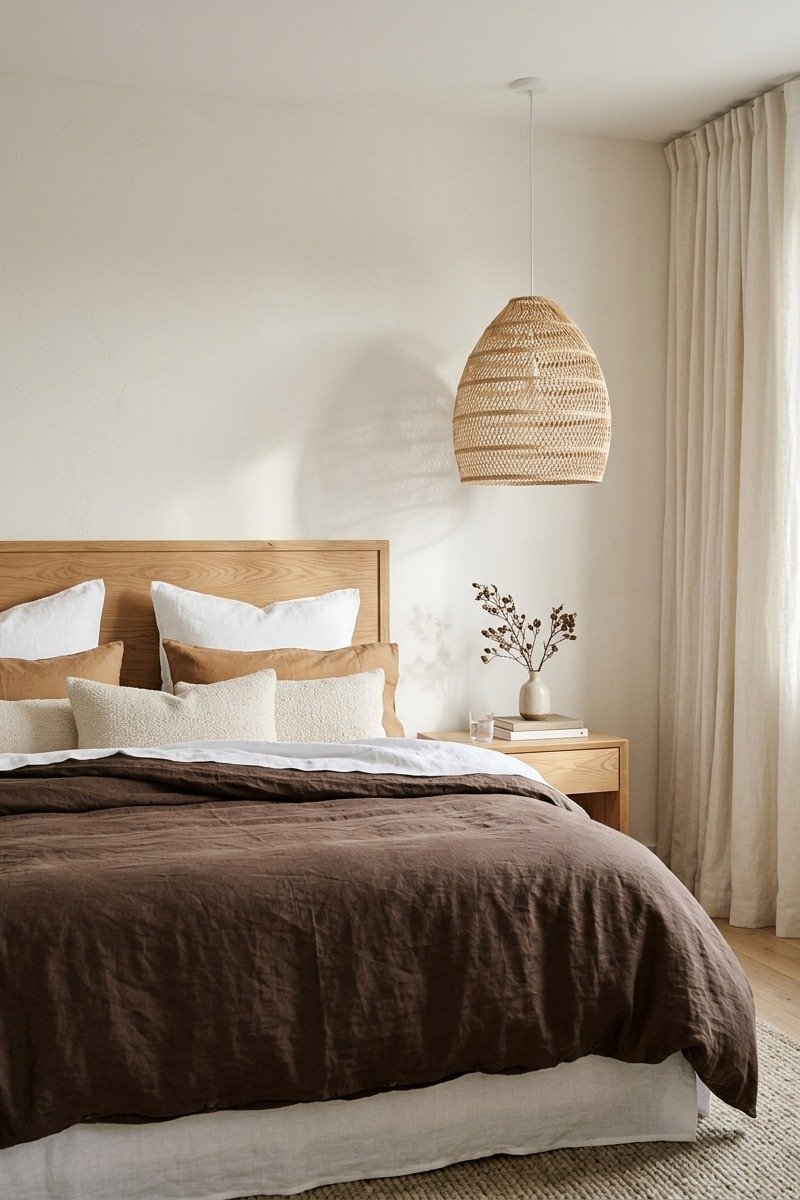
If the walls are light, use brown in the bedding instead. A chocolate linen or velvet duvet over white sheets looks rich and hotel-smart.
Brown bedding also hides wear and stains better than white, which makes it practical for everyday use.
Layer with cream and caramel for depth.
Brown bedding looks particularly good against wood headboards and cane, where the warm tones repeat and the bed looks rich and cohesive.
Pro tip: Choose stonewashed linen for a relaxed look, or sateen for a smoother, more polished finish.

23. Heavy Velvet or Linen Curtains
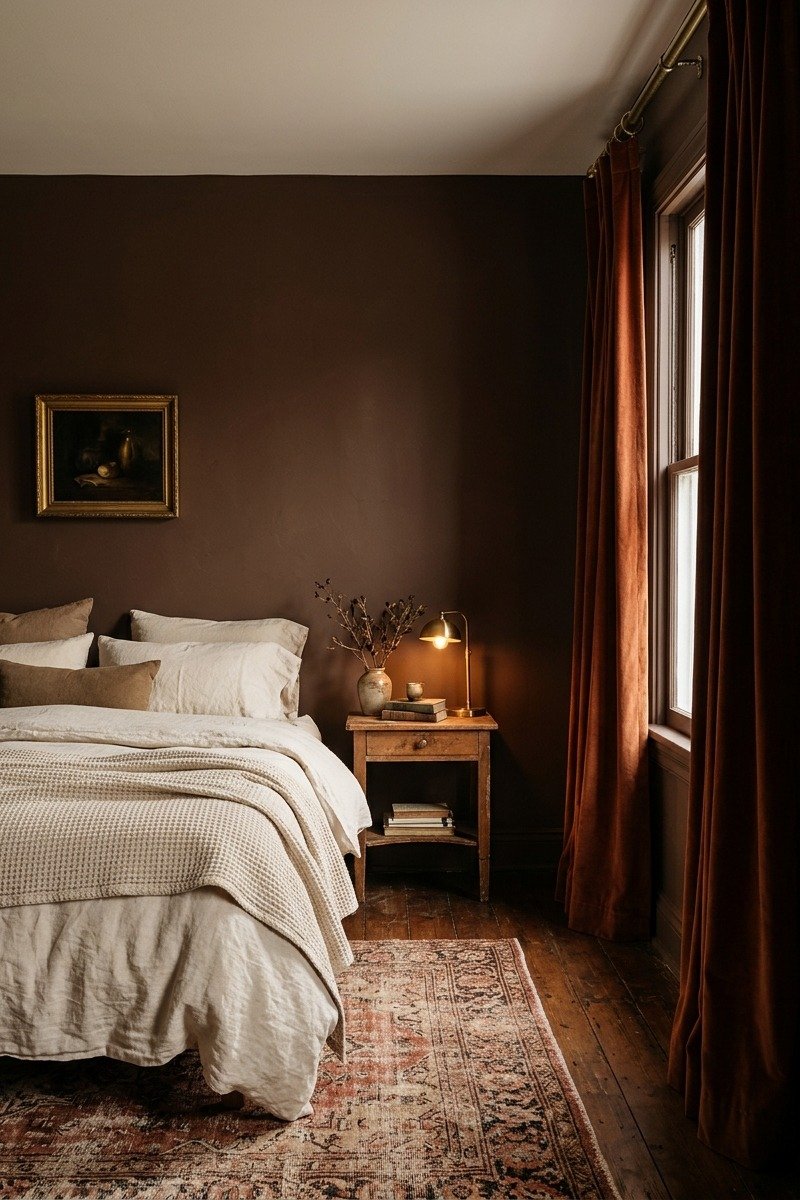
Floor-to-ceiling curtains add softness and height, and in a brown room they help balance the dark walls with texture.
Cream linen curtains keep the room bright; brown or rust velvet curtains make it even more enveloping and help with blackout.
Hang the rod close to the ceiling and let curtains just kiss the floor.
Curtains also help acoustics, softening echo in a room with hard floors and making the bedroom feel quieter and calmer.
Pro tip: Use blackout lining behind lighter curtains for better sleep without losing the airy look.
24. A Patterned Rug
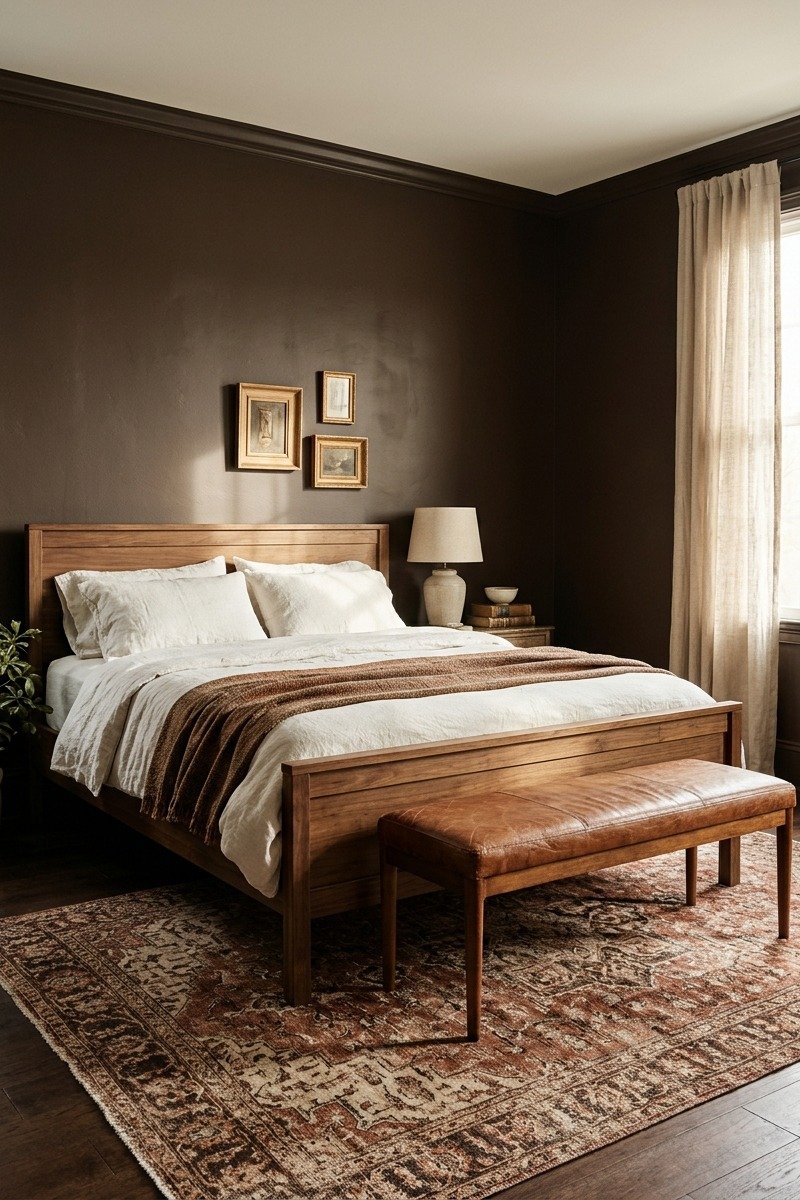
A rug with pattern breaks up a large area of brown floor or wall and adds warmth underfoot. Vintage-style, Persian-inspired or geometric rugs all work.
Choose a rug with brown, rust or cream in it so it ties the room together.
Size it so it extends at least 18 inches beyond each side of the bed.
A rug is also the easiest way to add color and pattern without painting. If you get tired of it, a new rug changes the whole personality of the room.
Pro tip: Place a rug pad underneath to stop slipping and make the rug feel thicker.

25. Faux Fur and Sheepskin

Faux fur throws and sheepskin rugs add instant coziness and softness, especially in winter.
A cream sheepskin beside the bed or draped over a chair glows against brown walls.
They are also an easy seasonal swap: bring them out in fall and store them in summer.
Mix one or two faux fur pieces with linen and wool so the room feels cozy rather than overly plush.
Pro tip: Shake out sheepskin rugs regularly and brush with a wide-tooth comb to keep them fluffy.

26. Boucle and Nubby Textures

Boucle, wool and nubby fabrics catch the light and add depth, which keeps a dark room from feeling flat.
A boucle bench, armchair or cushions in cream or oatmeal look beautiful against brown.
Mix several textures in the same color family for a tactile, layered room.
Texture matters more in dark rooms than in light ones, because flat surfaces disappear in low light while textured ones catch it and stay visible.
Pro tip: Boucle can pill over time. A fabric shaver keeps it looking new.

Lighting and Metals
27. Layered Warm Lighting
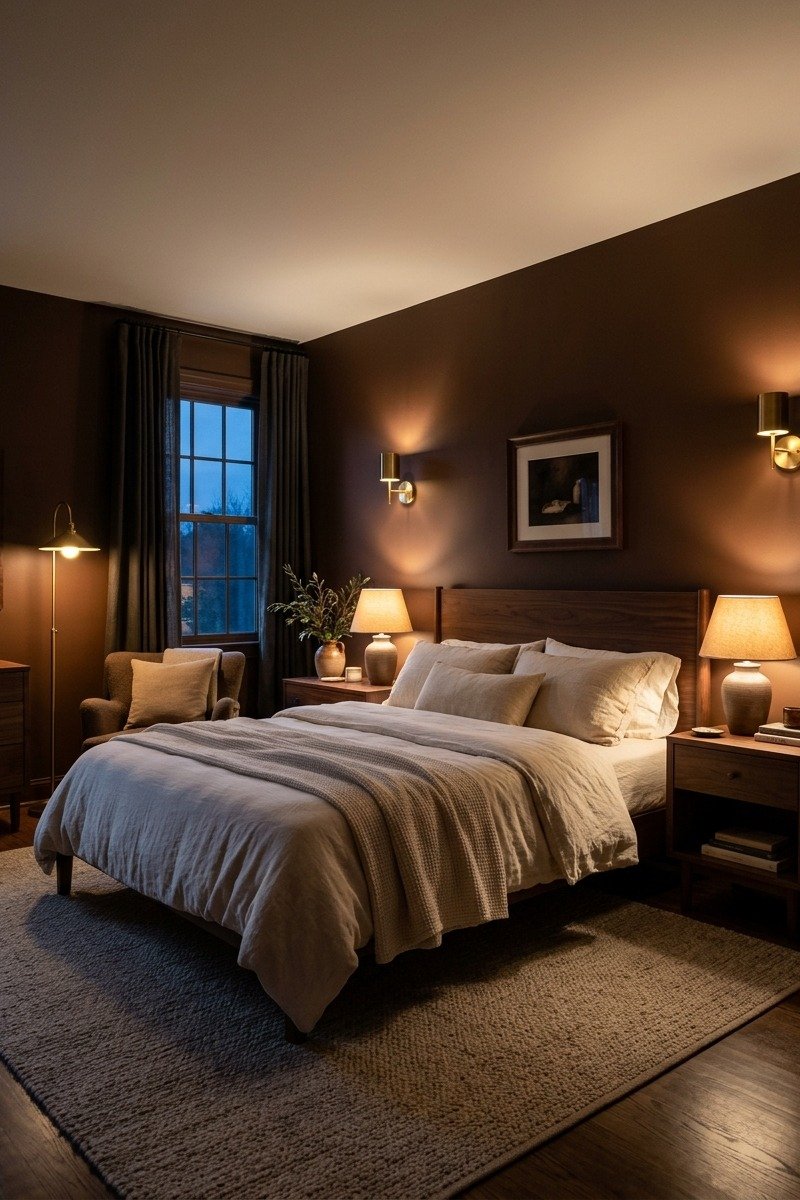
Dark rooms need more light than you think, and they need it in layers. Combine a ceiling light, bedside lamps, a floor lamp and wall sconces.
Choose warm white bulbs, around 2700K, to make brown glow rather than look muddy.
Dimmers are essential. They let you move from bright and practical to soft and intimate.
Add a candle or two for evenings. Their flickering light looks especially beautiful against brown walls and makes the room feel calm and intimate.
Pro tip: Put lamps on smart plugs so they turn on together, and the room never feels gloomy.

28. Brass and Gold Accents
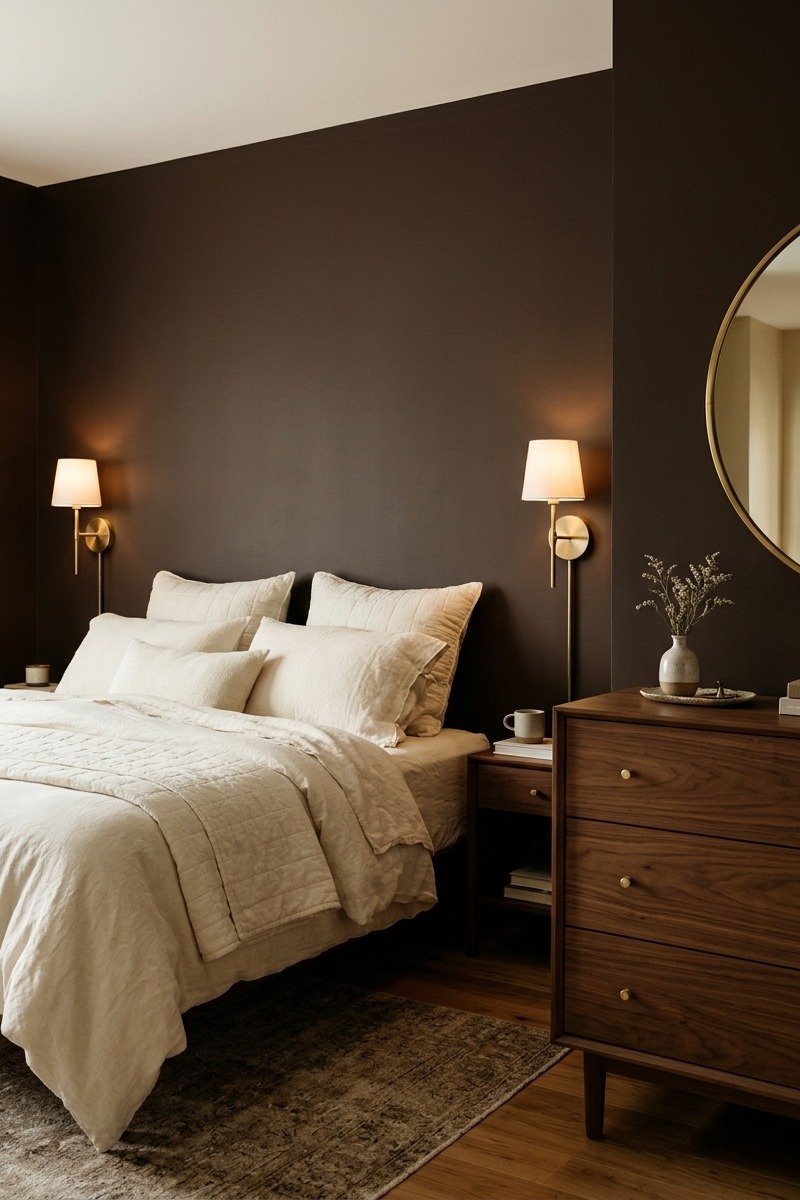
Brass and gold glow against brown like nothing else. Brass lamps, mirror frames, cabinet hardware and picture lights add warmth and a little glamour.
Aged or brushed brass looks more sophisticated than shiny gold.
Repeat brass in three or four places so it feels intentional.
Brass also ages well. Unlacquered brass develops a soft patina over time, which suits the warm, lived-in feel of a brown bedroom.
Pro tip: Mix brass with one other metal at most. More than two finishes looks accidental.


29. Bronze and Black Metal
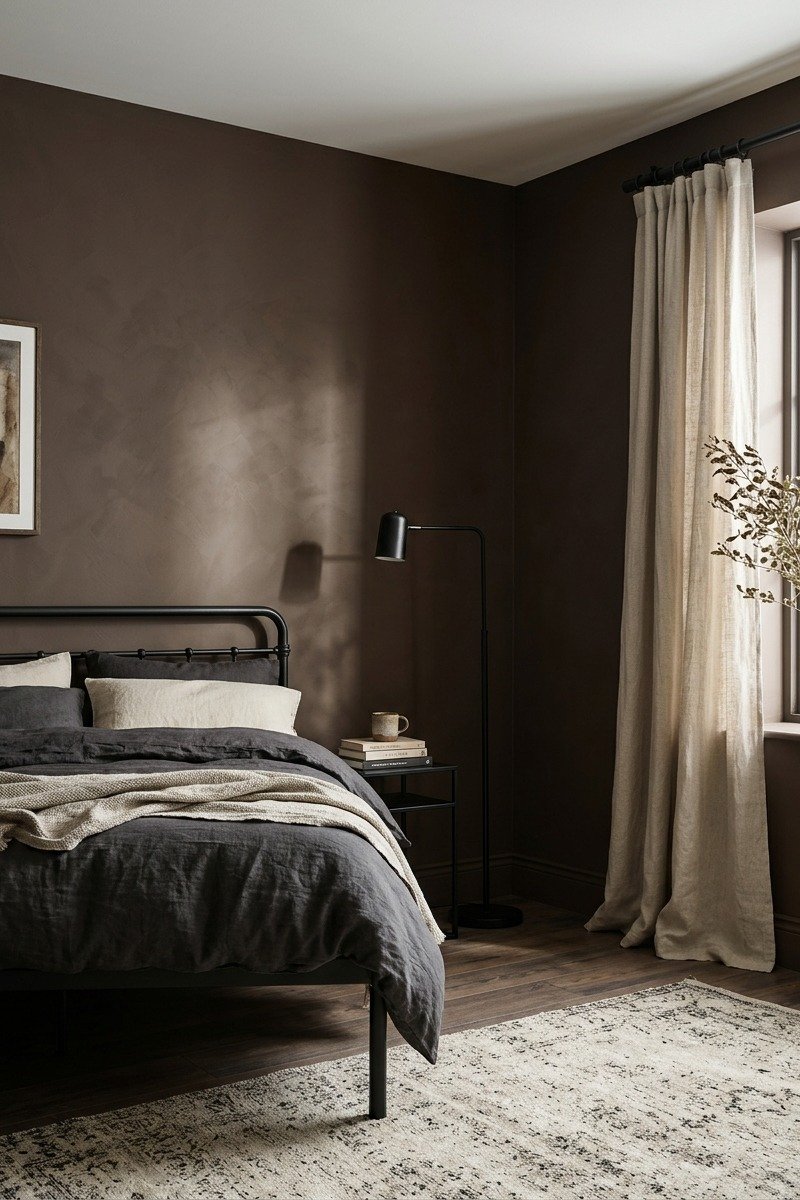
For a moodier, more modern look, use oil-rubbed bronze or matte black metal instead of brass. It feels industrial and understated.
Black metal bed frames, curtain rods and lamps sharpen the edges of a brown room.
This approach works well in lofts and contemporary apartments.
Black metal also photographs well and keeps the room feeling crisp. Pair it with crisp white bedding for contrast against the brown.
Pro tip: Add one warm metal, like a single brass object, to keep a dark palette from feeling flat.

30. A Statement Mirror
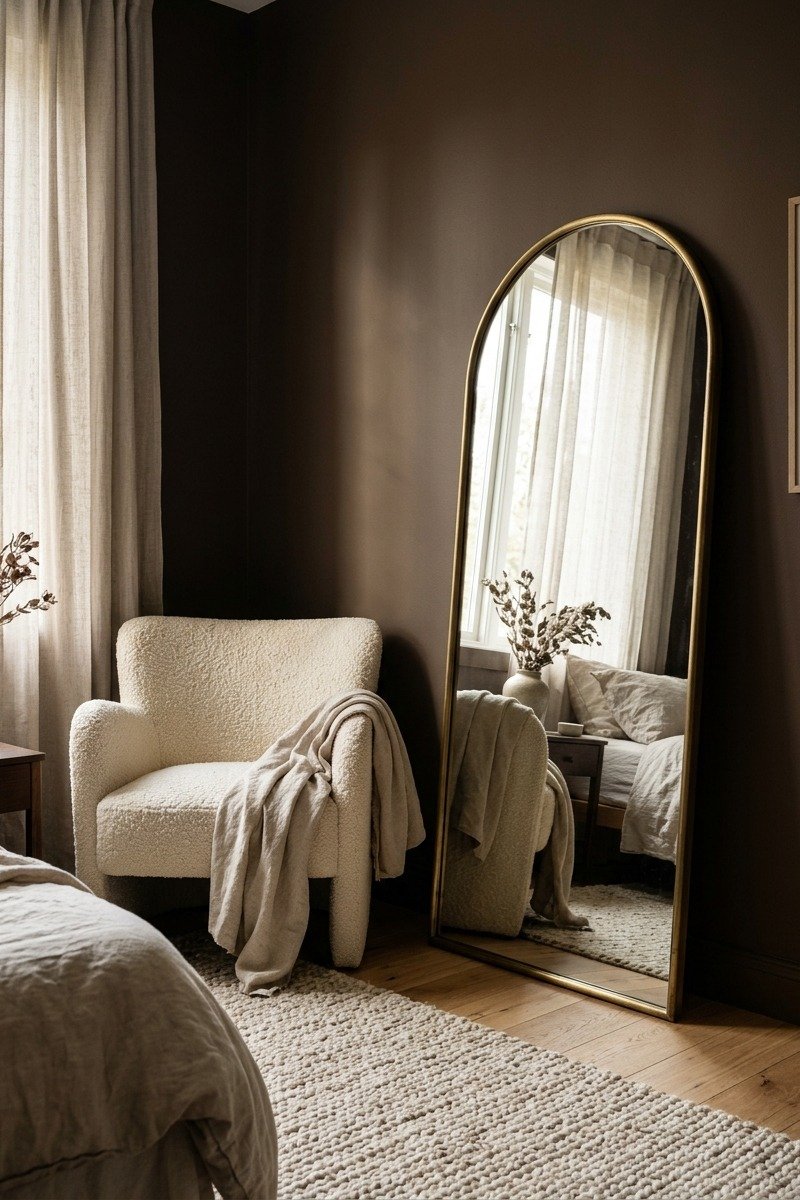
Mirrors bounce light around a dark room and make it feel bigger and brighter. A large arched or round mirror also becomes a focal point.
Place it opposite or beside a window to double the daylight.
Floor mirrors leaned against a wall look relaxed; framed wall mirrors look polished.
A mirror also helps with getting dressed in a dark room, especially if it is placed where daylight falls across it.
Pro tip: Use a mirror with a warm wood or brass frame to tie into the brown palette.
Style Variations
31. Japandi Brown Bedroom
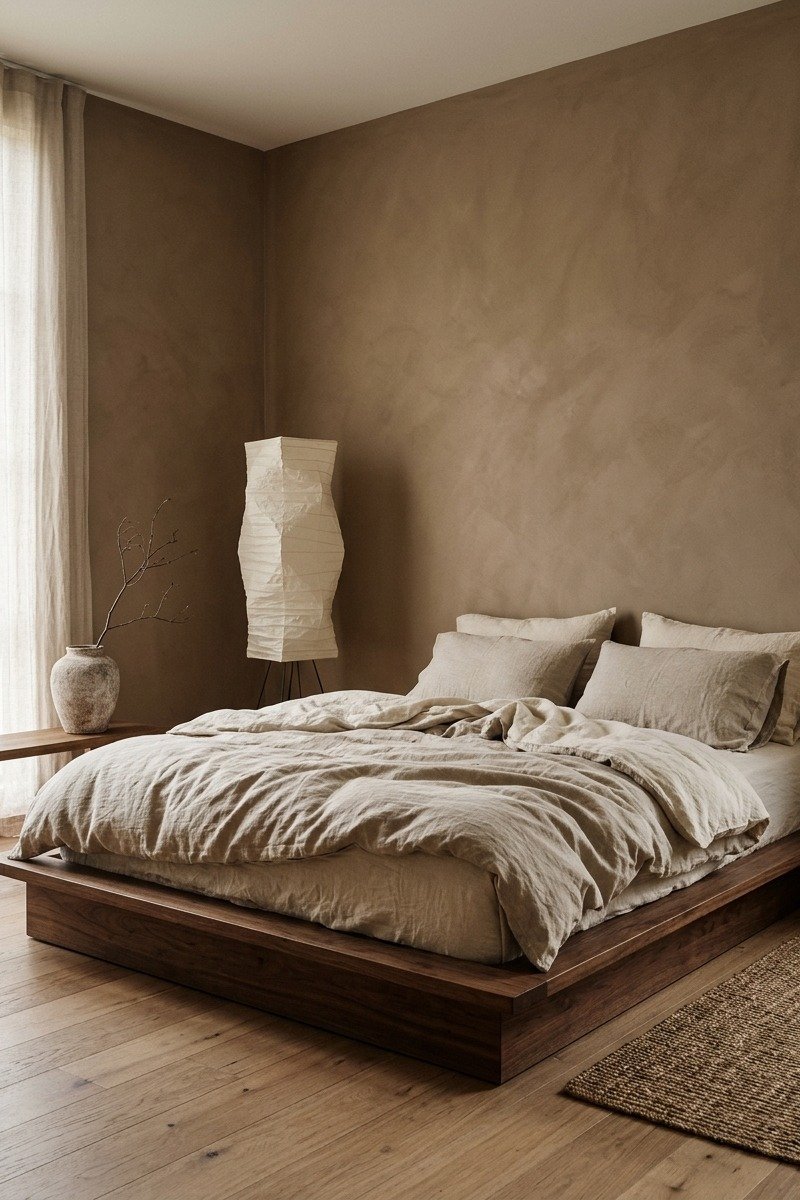
Japandi blends Japanese minimalism and Scandinavian warmth, and brown fits it perfectly. Think low wooden bed, brown limewash walls, linen bedding and very little else.
Keep the palette to browns, creams and soft blacks, and choose furniture with simple, honest shapes.
Add a single sculptural branch or ceramic vase as the focal point.
Choose natural, organic textures throughout, such as linen, wool, paper and raw wood. They make the restrained palette feel warm and inviting rather than sparse.
Pro tip: Leave empty space on purpose. In Japandi, what you leave out matters as much as what you add.

32. 70s Retro Brown Bedroom
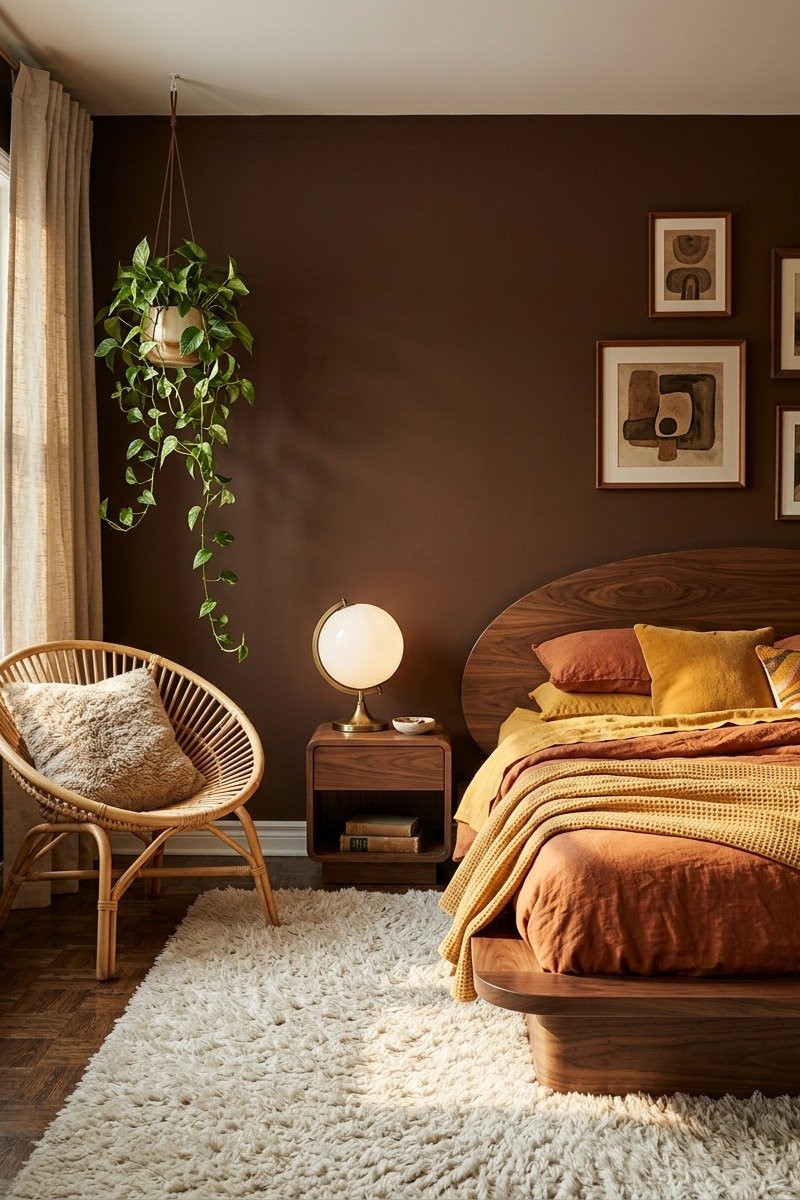
Brown was the color of the 1970s, and a retro bedroom celebrates it with mustard, orange and warm wood paneling.
Use curved furniture, globe lamps, a shag rug and a few vintage finds for a playful but cozy look.
Modern bedding and good lighting keep it from feeling like a time capsule.
Keep modern essentials like a comfortable mattress, good bedding and warm LED lighting so the room feels nostalgic but still works for everyday life.
Pro tip: Choose one or two retro statement pieces and keep the rest simple.

33. Dark Academia Brown Bedroom
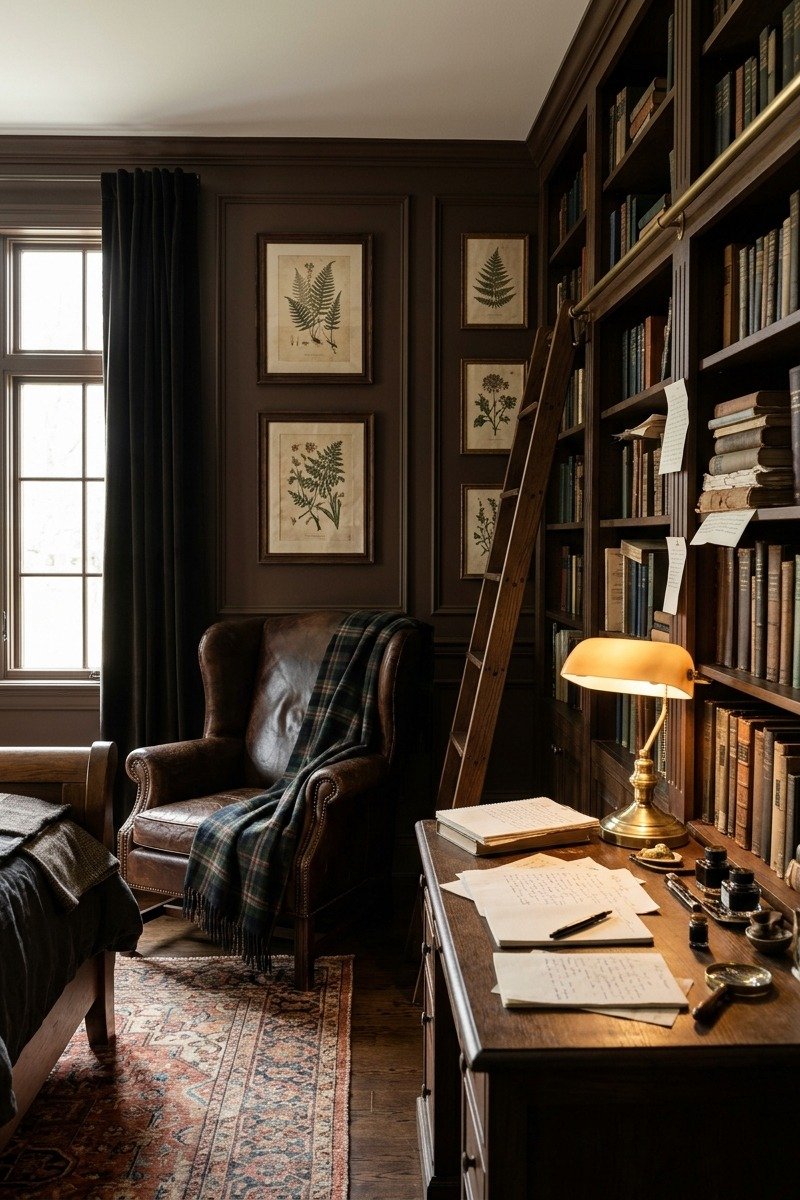
Dark academia pairs brown with books, antique wood, brass and plaid for a scholarly, moody room.
Fill shelves with old books, add a leather armchair, a desk lamp and some vintage art.
It suits readers, writers and anyone who loves a cozy, lived-in room.
Dark academia also works beautifully in small rooms, where floor-to-ceiling shelves and dark walls make the space feel deliberate and cozy rather than cramped.
Pro tip: Add a plaid wool throw and a vintage map or botanical print to complete the look.


How to Keep a Brown Bedroom From Feeling Dark
Balance is everything. For every large dark surface, add something light: bedding, curtains, a rug or a cream chair. A rough rule is about 60 percent dark, 30 percent mid-tone and 10 percent light accents.
Add reflective surfaces, like a mirror, brass, glass and satin finishes, to bounce light around. And never rely on a single ceiling light; use at least three light sources at different heights.
Finally, bring in life. Plants look especially vivid against brown walls, and fresh flowers make the room feel cared for.
Frequently Asked Questions
Is chocolate brown a good color for a bedroom?
Yes. Chocolate brown is warm, calming and cocooning, which suits a bedroom. Pair it with cream, natural wood and warm lighting so it feels cozy rather than heavy.
What colors go with chocolate brown in a bedroom?
Cream, white, blush pink, sage green, terracotta, navy and mustard all pair well with chocolate brown. Brass and warm wood also complement it beautifully.
Will a dark brown bedroom feel small?
Not necessarily. Dark colors make walls recede, so the room often feels more intimate rather than smaller. Good lighting, light textiles and a mirror keep it from feeling cramped.
What paint finish is best for brown bedroom walls?
Matte or eggshell. They hide imperfections and look rich on dark colors. Use satin or semi-gloss only on trim and doors.
Final Thoughts
A chocolate brown bedroom is one of the coziest rooms you can create. Start with the right shade and finish, pair it with soft neutrals or one accent color, and layer in warm wood, texture and lighting.
Pick an idea or two from this list and try them in your own space. Brown rewards a little confidence, and the result is a bedroom that feels warm, calm and entirely your own.

