
This post contains affiliate links. As an Amazon Associate, I earn from qualifying purchases at no extra cost to you.
A luxury kids’ bedroom is not about spending the most money. It is about the feeling you get when you walk in: soft, layered, calm and a little bit magical, like a page from a storybook that someone actually lives in.
The best ones balance two things. They feel special enough to spark a child’s imagination, and they are practical enough to survive spilled juice, sleepovers and a growth spurt or three. That means good materials, thoughtful storage and a design that can grow with them.
Below are 29 luxury kids bedroom ideas, grouped into beds, walls and ceilings, lighting, reading and play, storage and furniture, and finishing touches. Each comes with a practical tip, and many include products that help you get the look without a designer budget.
What Makes a Kids’ Bedroom Feel Luxurious
Texture does more than color. Velvet, linen, wool, rattan and painted wood make a room feel rich, even in a simple palette. Layering three or four textures in one corner, such as a wool rug, a linen bed skirt and a velvet cushion, instantly lifts the space.
A soft, restrained palette helps too. Muted pinks, sage, sky blue, butter yellow and warm whites feel more expensive than primary colors, and they grow with a child far better than a cartoon theme.
Plan for Today and in Five Years
Children change fast. Put the money into pieces that last, like a good bed frame, built-in storage and quality lighting, and keep the personality in things that are easy to swap, like bedding, art and cushions.
Think about safety at every step. Anchor tall furniture to the wall, choose cordless window treatments, keep heavy decor away from the bed and use non-toxic paint and finishes wherever you can.
29 Luxury Kids Bedroom Ideas
The ideas are grouped into dreamy beds, walls and ceilings, lighting, reading and play, storage and furniture, and finishing touches. Choose a statement idea or two, then layer in the practical ones.
Dreamy Beds
1. An Upholstered Canopy Bed

Nothing says storybook like a canopy bed. Fabric draped from a ceiling crown or a canopy frame turns the bed into a cozy, private little world.
Choose soft, breathable fabrics like linen, cotton voile or muslin in white, blush or sage. Gathered fabric looks romantic; straight panels look tailored and modern.
A canopy also helps with sleep. Many children feel safer and settle faster when the bed feels enclosed.
For a lighter touch, a simple canopy over just the head of the bed gives the same dreamy effect with less fabric. It also works well in smaller rooms where a full canopy would feel crowded.
Pro tip: Mount ceiling canopies into a joist or use a heavy-duty anchor, and keep fabric well clear of lamps and nightlights.


2. A Four-Poster Bed With Sheer Drapes
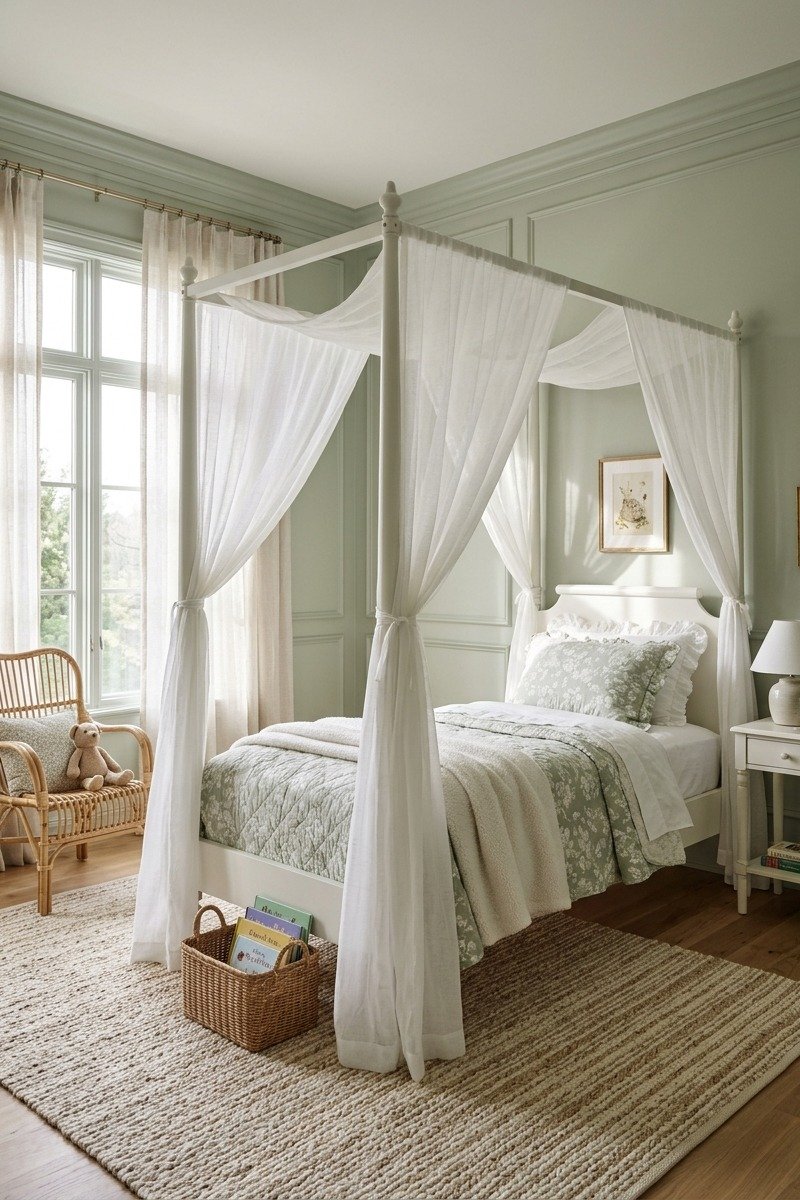
A slim four-poster bed in painted wood or brass makes a child’s room feel instantly grand. Tie sheer panels to the posts for a soft, floating effect.
Four-poster beds work for boys and girls alike: white or natural wood for a classic look, black or brass for something more modern.
Choose a full-size frame if the room allows. It will last through the teen years and handle bedtime stories with a parent squeezed in.
Brass four-poster frames feel slightly more grown-up and pair beautifully with floral bedding and soft painted walls. Wood frames feel warmer and more traditional, especially in a cottage-style room.
Pro tip: Keep drapes tied back during the day so the room still gets plenty of light and air.

3. A House-Frame Bed
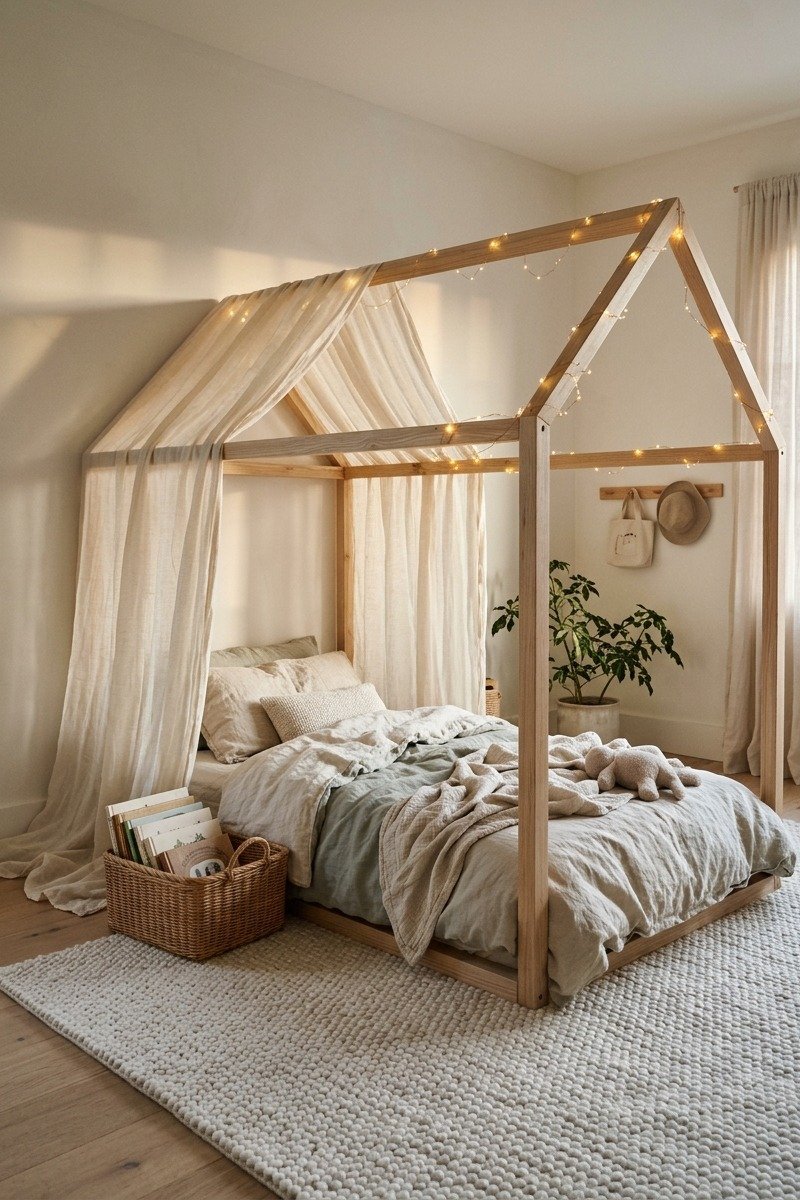
House-shaped bed frames are a playful favorite for younger children. They feel like a little home inside the room, and they are perfect for draping fairy lights or fabric.
Floor-level versions are Montessori-friendly, letting toddlers climb in and out on their own.
Style it with a canopy over the roof line and a basket of books beside it for an instant reading den.
As children grow, a house bed can be raised on legs or swapped for a standard bed, while the canopy and fairy lights move with them to a new reading corner.
Pro tip: Choose a solid wood frame with rounded edges and non-toxic finishes for younger children.

4. Built-In Bunks With Curtains
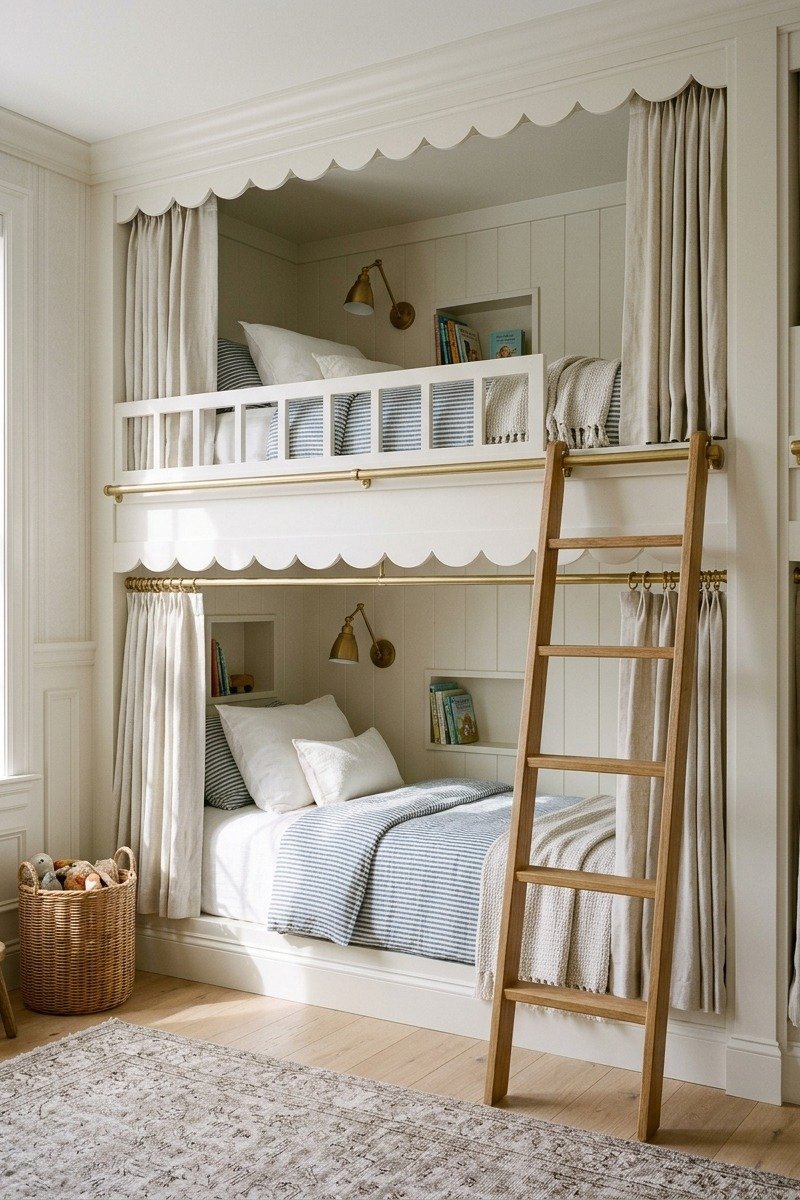
For shared rooms, built-in bunks with curtains feel like a luxury train sleeper. Each child gets a private nook with their own reading light and shelf.
Painted wood, scalloped trim and linen curtains on brass rods make bunks look custom and high-end.
If built-ins aren’t an option, a sturdy freestanding bunk with fabric curtains clipped to the frame gives a similar cozy feel.
Built-in bunks also add valuable storage. Drawers under the bottom bunk or a cubby at the end of each bed keep shared rooms tidy and give each child their own space.
Pro tip: Add a small wall sconce and a shelf inside each bunk so children have their own space for books and a water bottle.

5. A Velvet Wingback Bed
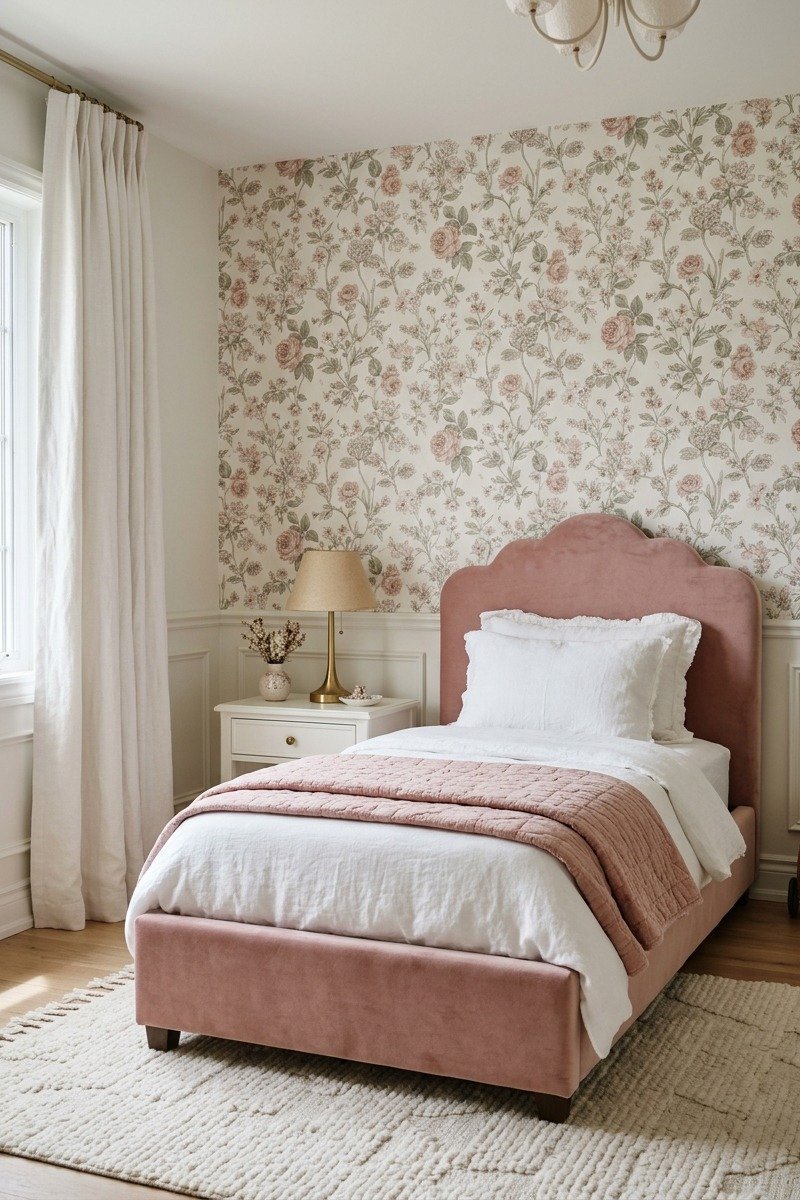
A velvet upholstered bed with a curved or wingback headboard is pure luxury. It feels soft to lean against and adds a boutique-hotel feel to a child’s room.
Dusty pink, sage, sky blue and mustard velvets look especially beautiful in kids’ rooms.
Choose performance velvet that can be wiped clean. Little hands are not always tidy.
A velvet bed also anchors the room visually, so you can keep the rest of the furniture simple and still have a space that feels finished and special.
Pro tip: A padded headboard is also safer for active sleepers than a hard wooden frame.

6. Hotel-Style Layered Bedding
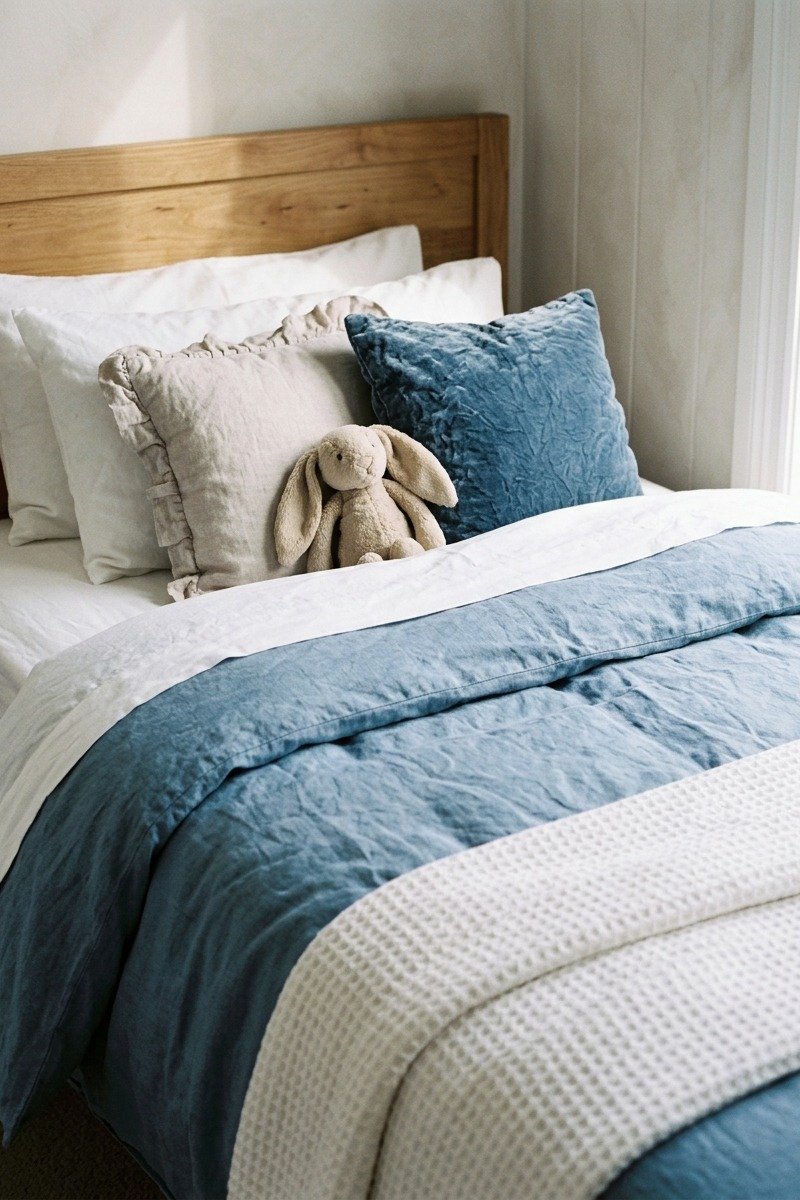
Layered bedding is the quickest way to make any child’s bed feel luxurious. Start with crisp cotton sheets, add a quilt or duvet, then a folded throw and two or three pillows.
Mix textures: a cotton percale sheet, a washed linen duvet, a waffle blanket and a velvet or ruffled cushion.
Stick to a calm palette of two or three colors so the bed looks considered rather than busy.
Swap bedding with the seasons. Light cotton and linen in summer, and flannel or a thicker quilt in winter, keep the bed inviting and help children sleep comfortably all year.
Pro tip: Choose bedding that is machine washable and dryer friendly. Luxury still needs to survive a stomach bug at 2 a.m.
Walls and Ceilings
7. Designer Wallpaper
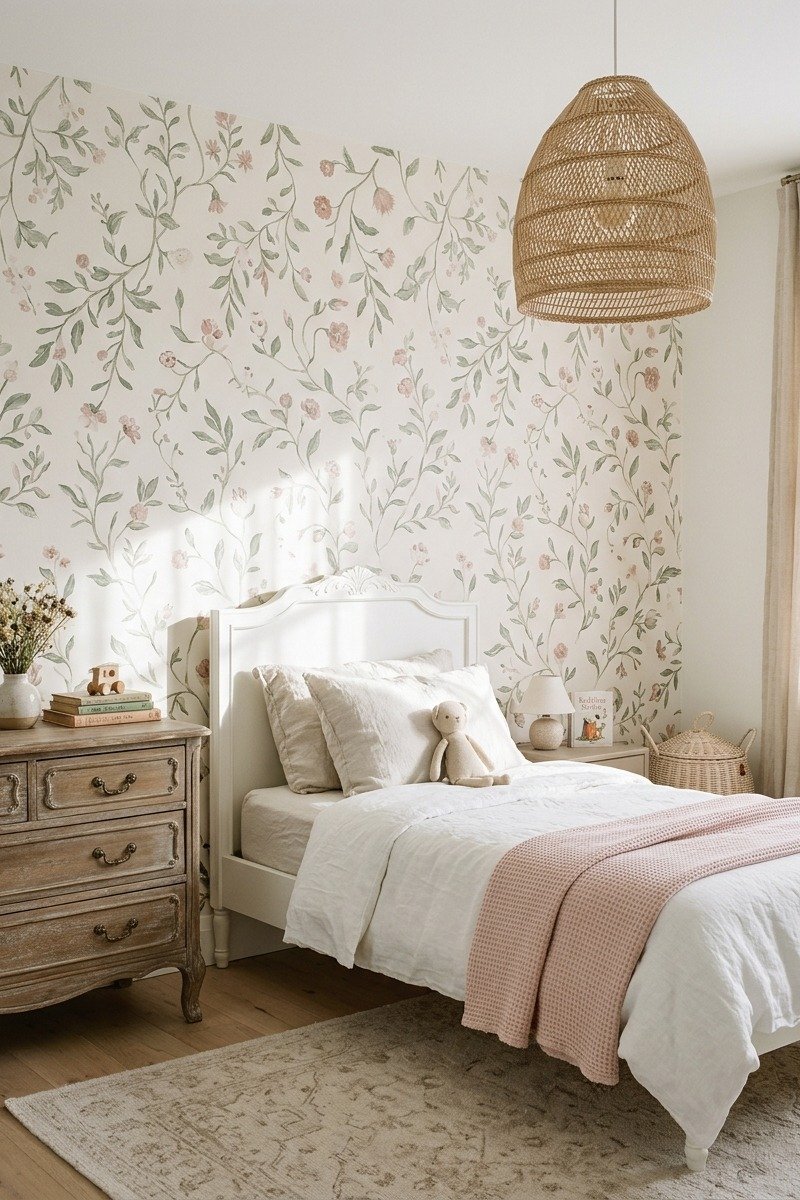
Wallpaper adds instant personality and pattern, and it is one of the clearest signals of a high-end room. Think botanical prints, soft florals, delicate stripes or hand-painted chinoiserie.
Use it on one feature wall behind the bed, or on all four walls in a small room for a cocooning effect.
Removable peel-and-stick wallpaper makes it easy to change as your child grows.
Wallpaper inside a closet, on the back of shelves or on the ceiling is another luxurious surprise that adds pattern without overwhelming the main room.
Pro tip: Pick a pattern with a light background in a small room. It keeps the space feeling bright and open.

8. A Scenic Wall Mural
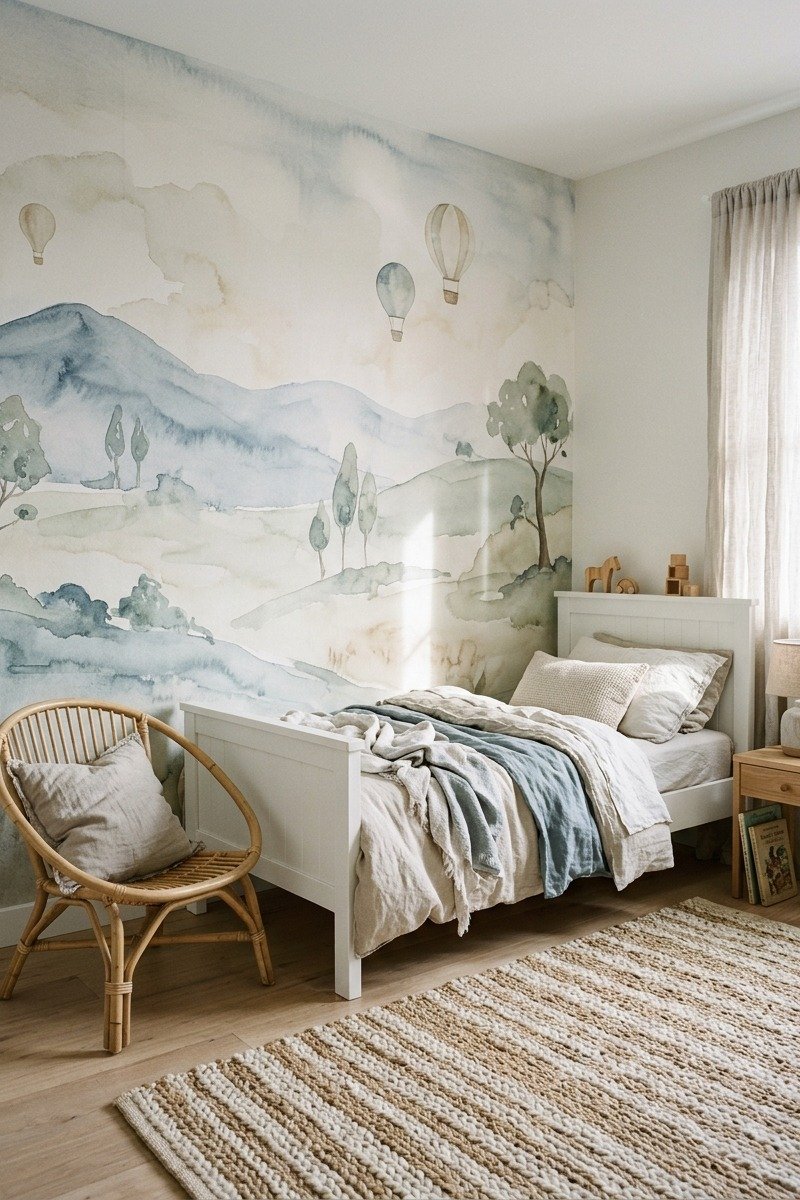
A mural turns a wall into a story. Soft watercolor landscapes, hot-air balloons, forests or clouds give a room a dreamy, immersive feel.
Muted, painterly murals look far more luxurious than bright cartoons and will still feel right when your child is ten.
Wall mural decals or printed mural wallpaper make this possible without hiring an artist.
If you want something truly unique, a local artist can add a small hand-painted detail, such as a child’s initial or a favorite animal hidden in the scene, for a one-of-a-kind touch.
Pro tip: Place the mural on the wall opposite the bed so it is the first thing your child sees when they wake up.

9. Picture-Frame Wall Molding
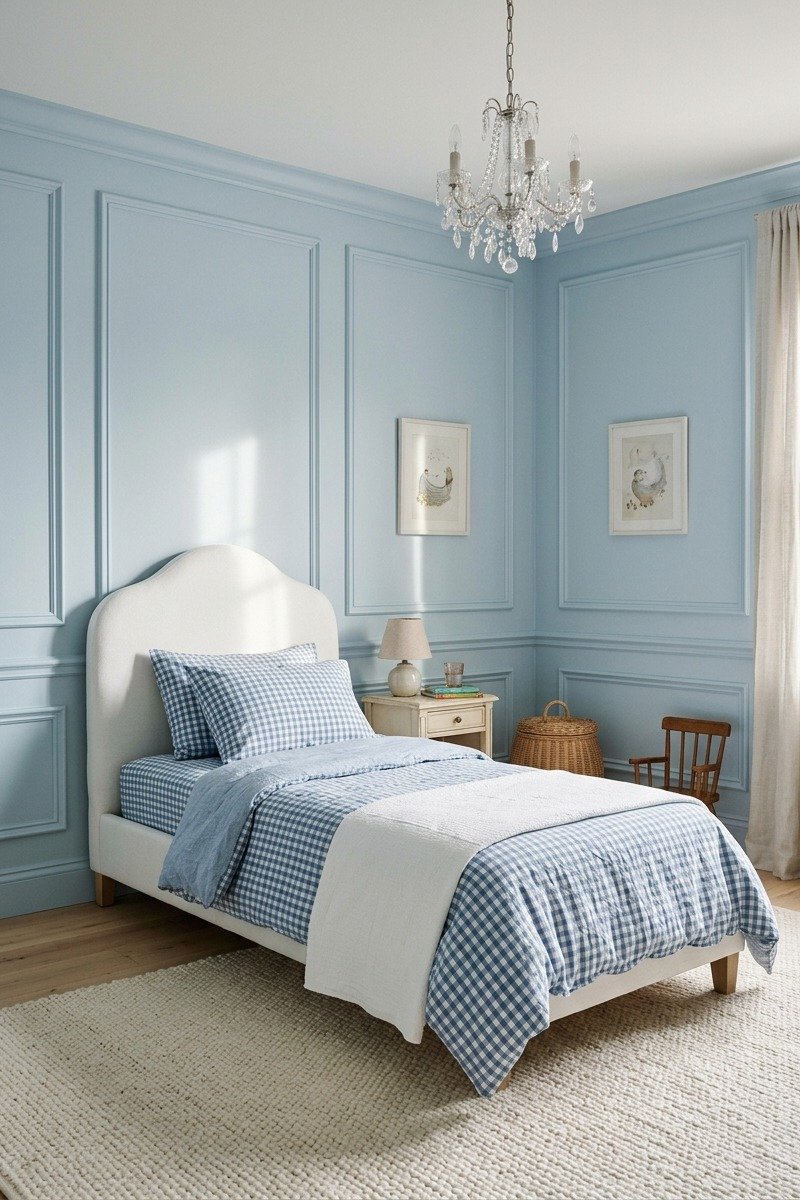
Picture-frame molding painted the same color as the walls adds architecture and elegance. It is the detail that makes a room look custom-built.
Paint everything in a soft, chalky color like blush, sage or pale blue for a refined, Parisian feel.
Peel-and-stick or MDF molding kits make this an achievable weekend project.
Molding also creates natural frames for art and mirrors, so the walls look intentional even before you hang anything on them.
Pro tip: Plan the layout on the wall with painter’s tape before cutting, and align boxes with the bed and furniture.

10. A Painted or Starry Ceiling
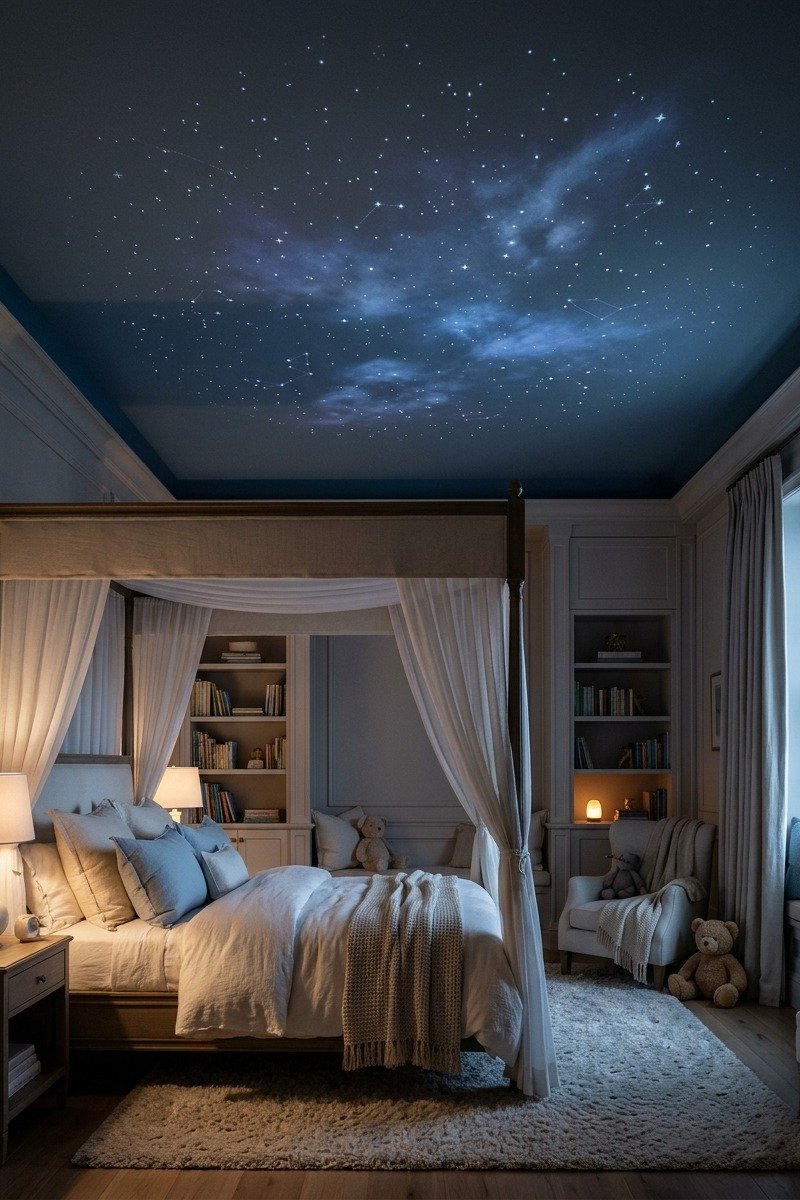
The ceiling is the fifth wall, and in a child’s room it is the wall they stare at most. A soft painted sky, a pale color or a subtle star pattern makes bedtime feel magical.
A star projector or glow-in-the-dark stars give the same effect without paint.
Choose a soft blue, blush or cloud white to keep it calming rather than stimulating.
Pair a starry ceiling with blackout curtains so the effect looks its best at bedtime, and set the projector on a timer so it switches off once your child falls asleep.
Pro tip: If you paint the ceiling, go one shade lighter than you think. Ceilings always read darker than the swatch.

11. Scalloped Details
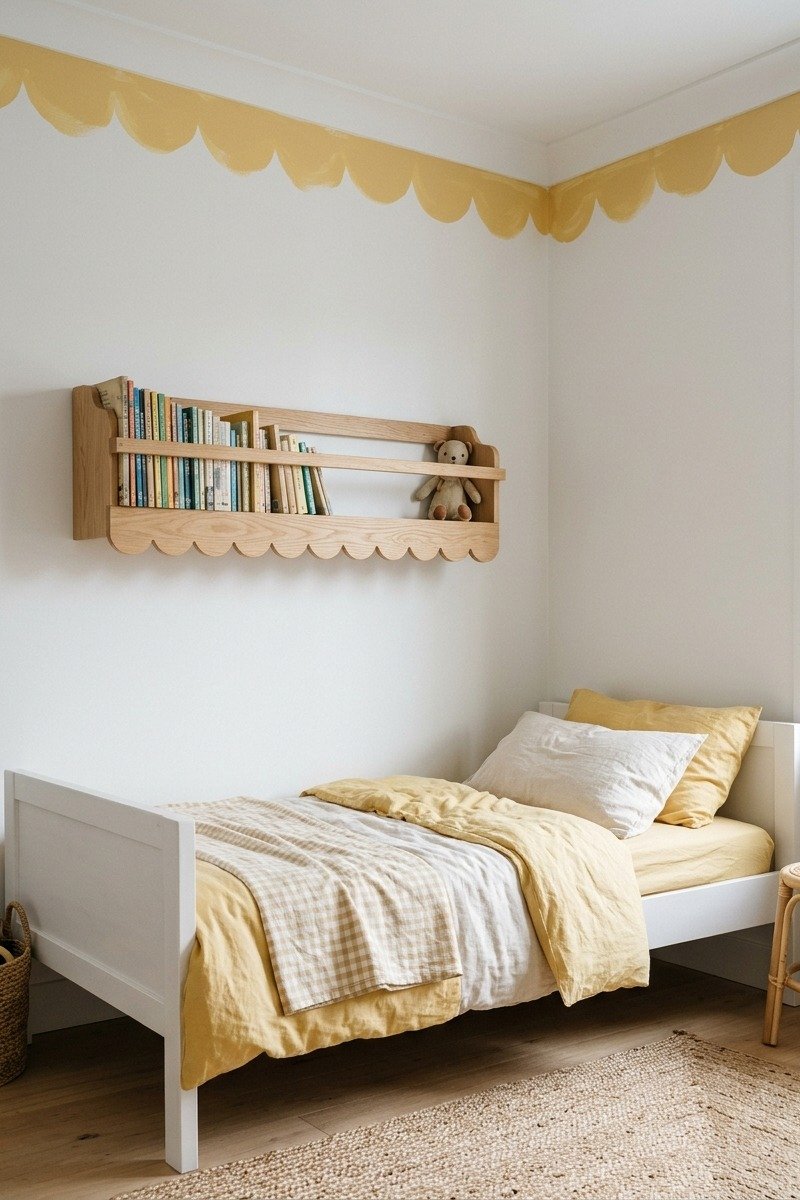
Scallops are having a moment, and they suit kids’ rooms perfectly. A scalloped headboard, shelf, valance or painted wall edge adds whimsy without being childish.
Use scallops in one or two places for a playful, tailored look.
Pair them with soft colors and natural textures to keep the room feeling elegant.
Scallops also look lovely on lampshades, cushion edges and rugs. Repeating the shape in two or three places ties the whole room together in a subtle, playful way.
Pro tip: Scalloped shelves are an easy, renter-friendly way to try the trend.

Lighting
12. A Statement Chandelier
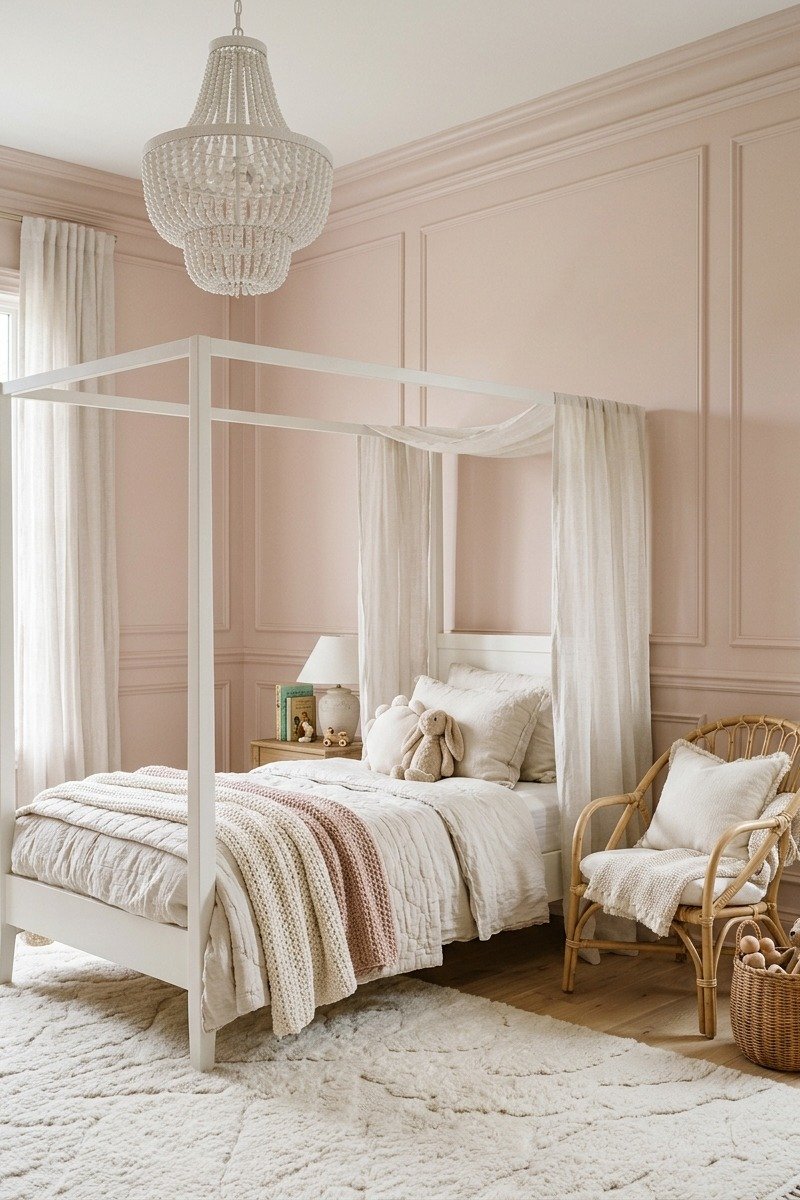
A chandelier is the jewelry of a room. A small crystal, beaded or rattan chandelier makes a child’s room feel instantly special.
Choose a fixture scaled to the room, roughly the room’s length plus width in feet, converted to inches for the diameter.
Beaded wood and rattan chandeliers are softer and safer than glass for younger children.
If the ceiling is low, a flush-mount fixture with beads or rattan detail gives the same charm without the risk of bumping heads during pillow fights.
Pro tip: Put the chandelier on a dimmer. Bright overhead light at bedtime is stimulating; dim light is calming.

13. Bedside Sconces
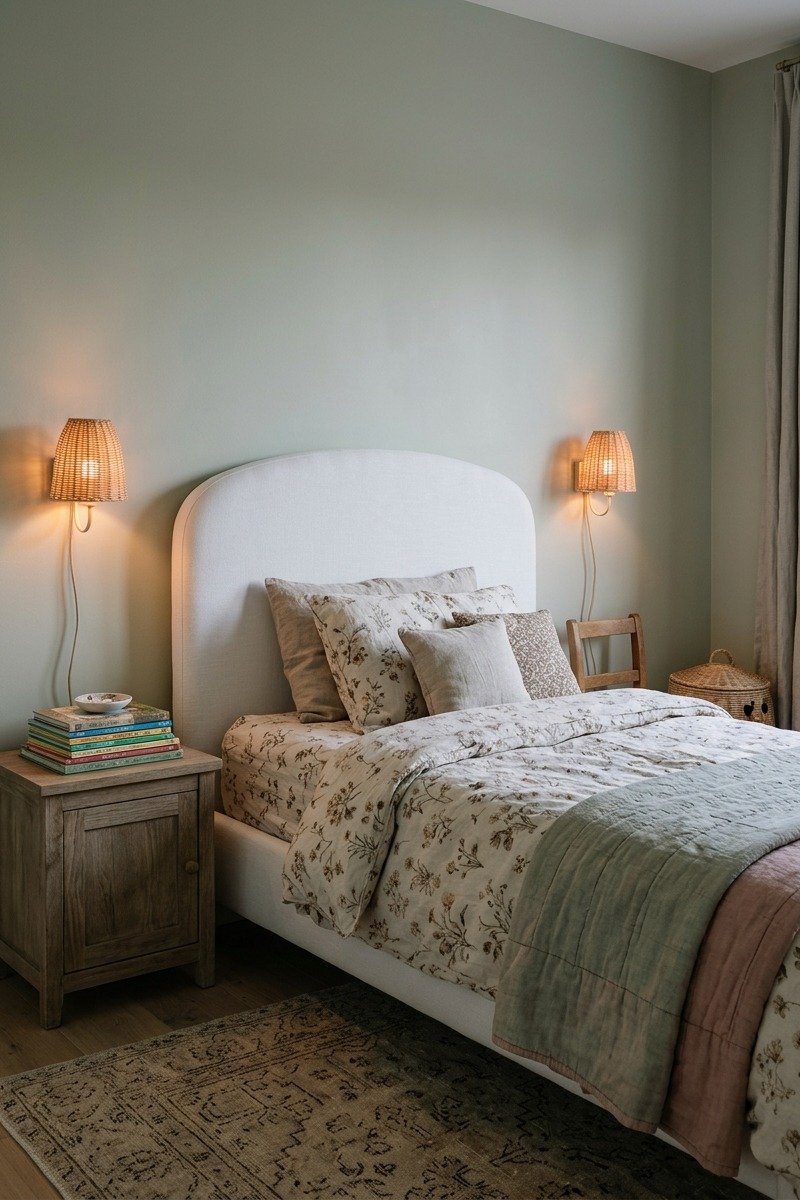
Wall sconces free up nightstand space and add a hotel touch. Plug-in versions with fabric shades or rattan shades are easy to install and safe for kids.
Mount them high enough that little hands can’t reach the bulb but low enough to read by.
Choose warm white LED bulbs that stay cool to the touch.
Sconces with an on-off switch on the cord are easiest for children to use themselves, which encourages independent reading at bedtime.
Pro tip: Use cord covers painted the wall color to hide plug-in cables neatly.
14. A Soft Nightlight
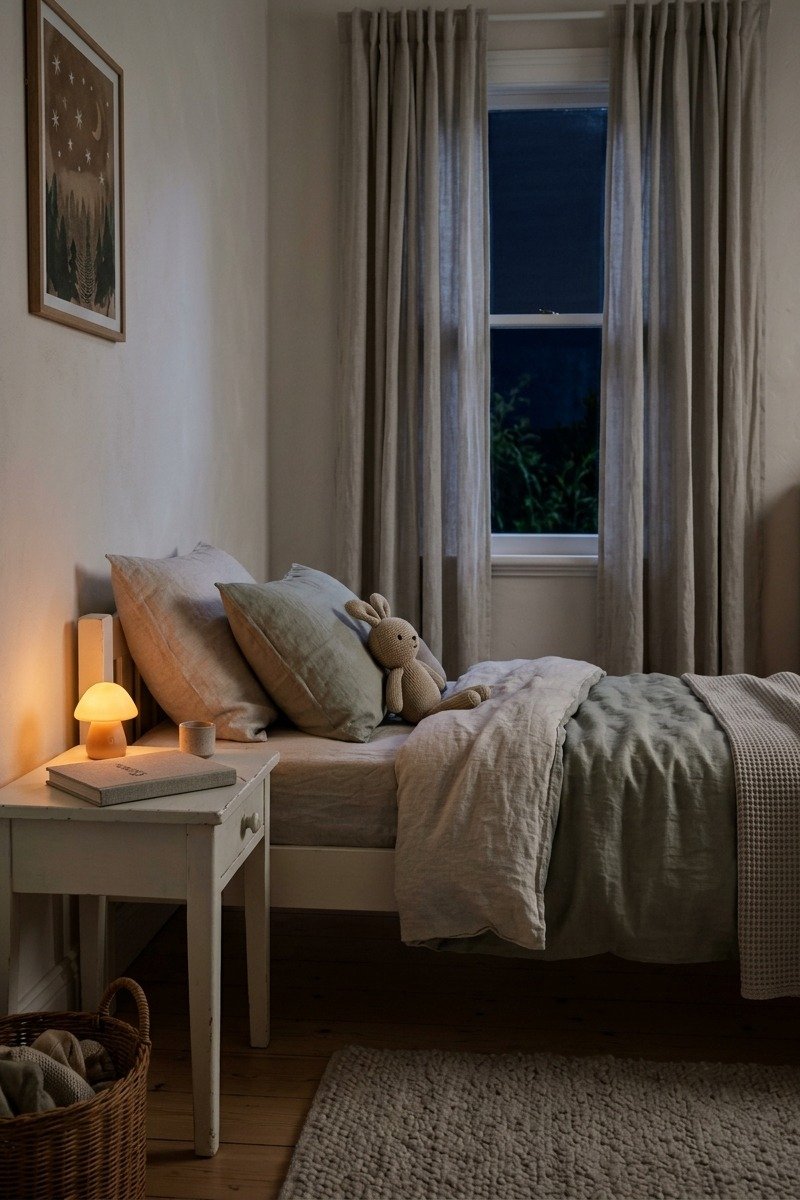
A good nightlight helps children settle and makes the room feel safe. Choose one with warm, dimmable light rather than a harsh blue glow.
Many modern nightlights double as sound machines and wake-up clocks, which helps with sleep routines.
Place it low and out of direct line of sight from the bed.
Some nightlights let you change color and brightness from your phone, so you can adjust the light without going into the room and waking a sleeping child.
Pro tip: Warm, amber-toned light is least disruptive to sleep. Avoid bright white or blue nightlights.

Reading and Play
15. A Window Seat Reading Nook
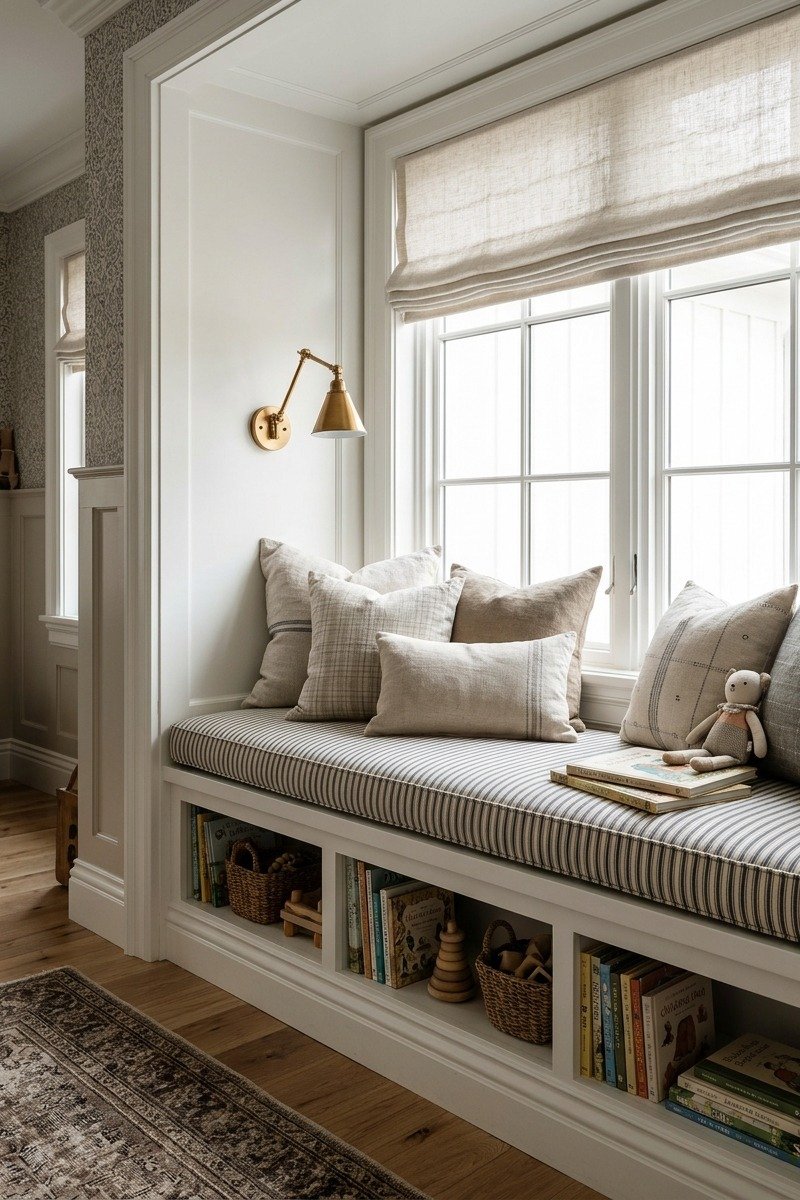
A built-in window seat with a thick cushion, piles of pillows and shelves below is the ultimate reading spot. It makes use of awkward window space and doubles as storage.
Add a curtain or roman shade and a small wall light for evening reading.
Even a simple bench with a custom cushion and baskets underneath can create the same feeling.
If you have a radiator under the window, look for a cushion with a breathable cover and leave a small gap for air circulation so the seat stays comfortable.
Pro tip: Choose cushion fabric that can be removed and washed. Window seats get a lot of use.


16. A Teepee or Canopy Reading Corner
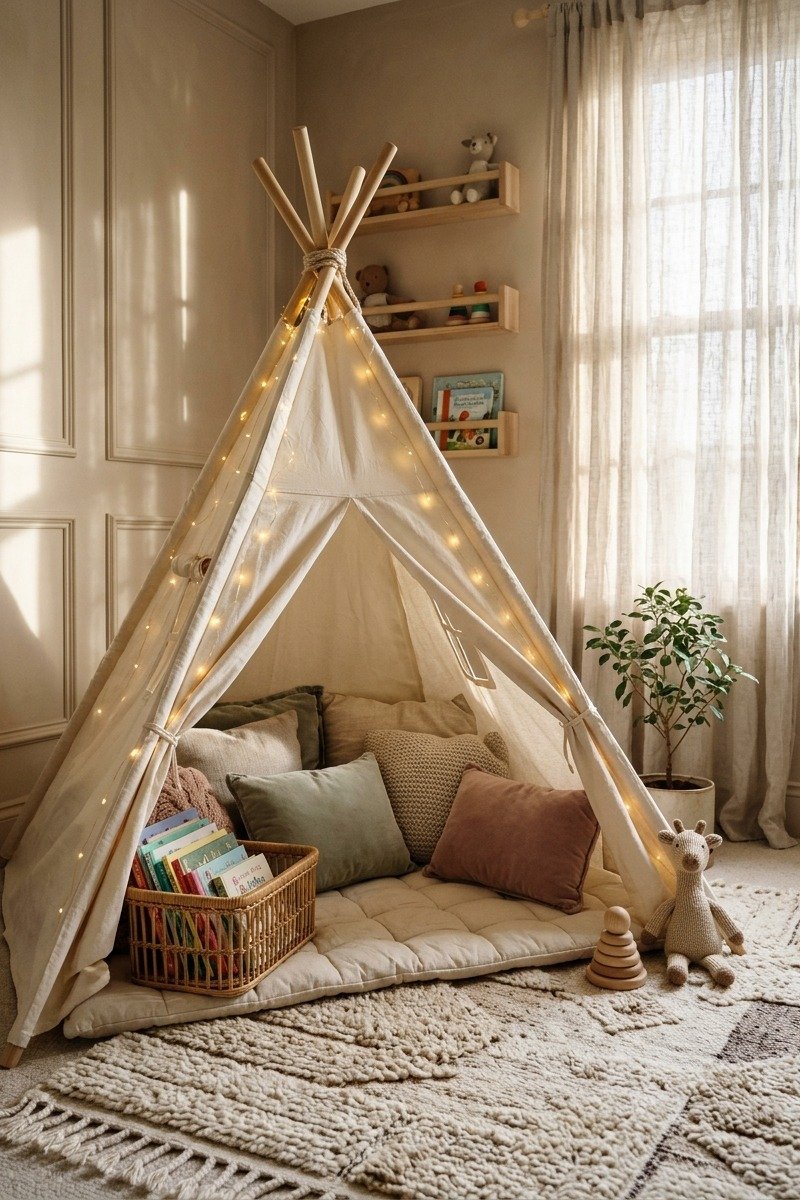
A play tent or hanging canopy in a corner creates a cozy hideaway for reading and quiet time. Children love having a small space that feels entirely theirs.
Fill it with a soft mat, floor cushions and a basket of books.
Choose natural canvas, linen or cotton in soft colors so it blends with the room.
A hanging canopy suspended from a ceiling hook takes up less floor space than a teepee and works beautifully over a floor cushion or beanbag.
Pro tip: Add a string of battery fairy lights for a magical glow that is safe for unsupervised use.

17. A Montessori Play Zone
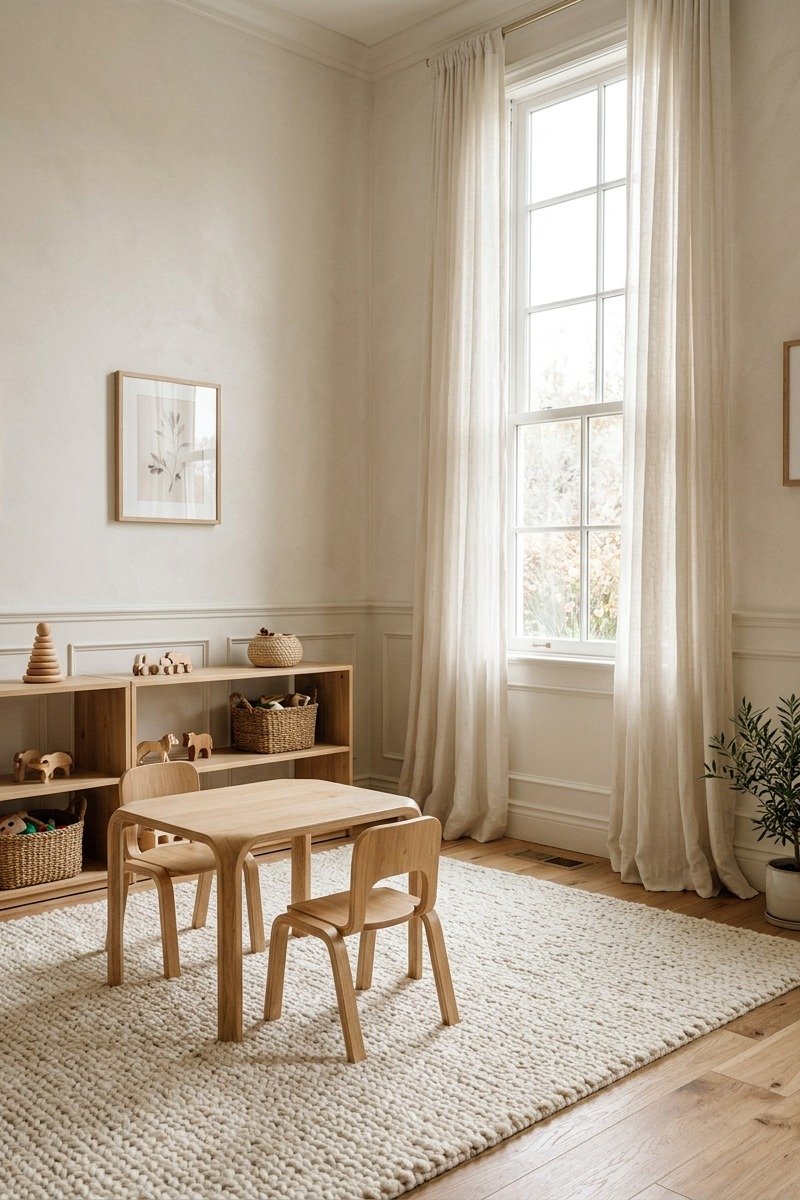
Low open shelves, a small table and chairs and a few carefully chosen toys create a calm, independent play space. Montessori zones are as beautiful as they are practical.
Display only a handful of toys at a time and rotate them weekly. Less clutter means more focused play.
Natural wood and woven baskets keep the zone looking elegant.
Montessori spaces also encourage independence. When children can see and reach their toys, they are more likely to play on their own and tidy up afterward.
Pro tip: Keep everything at child height so they can choose and put away toys themselves.

18. A Mini Art Studio
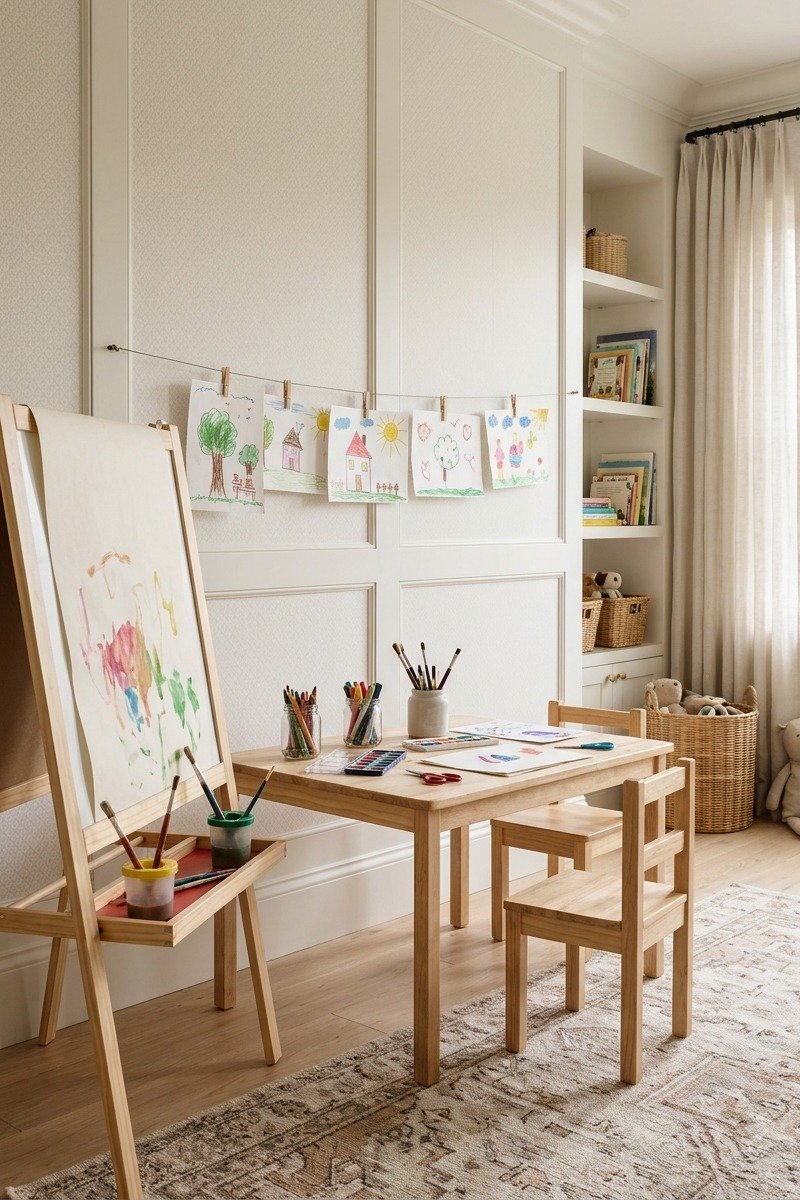
A small art corner with an easel, a craft table and organised supplies encourages creativity and keeps the mess in one place.
Hang finished artwork on a wire with clips so the display changes constantly.
Wipeable surfaces and a washable rug make it practical.
A washable splat mat under the easel protects floors and rugs from paint, so you can say yes to messy art more often.
Pro tip: Store supplies in clear jars or labelled bins so children can see and choose what they need.

19. An Active Play Corner
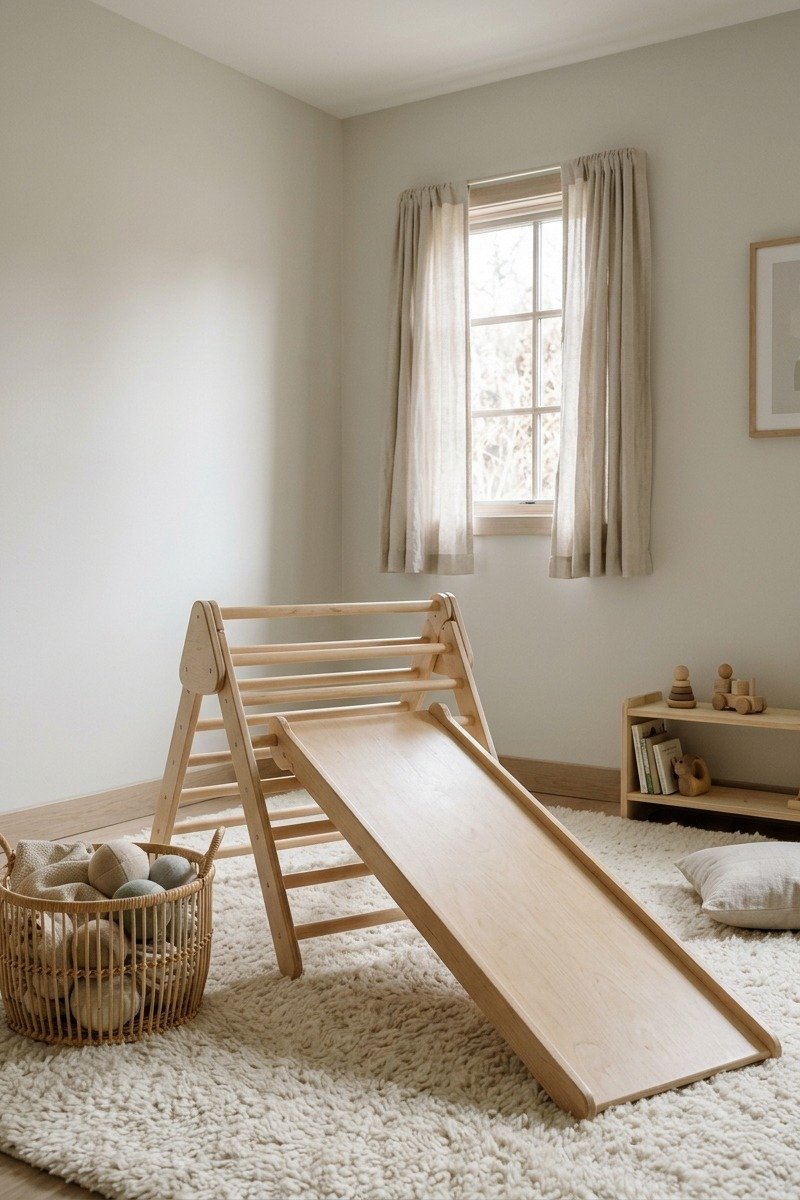
For energetic kids, a climbing triangle, a play gym or a small indoor swing turns part of the bedroom into a place to burn energy.
Choose natural wood pieces that look like furniture rather than bright plastic, so the room stays calm.
Place active play on a soft rug or play mat, away from furniture edges.
Natural wood play equipment also tends to have a much higher resale value than plastic, which makes it a better long-term investment.
Pro tip: Always check weight limits and installation instructions, especially for anything mounted to the ceiling.

20. A Dress-Up Corner
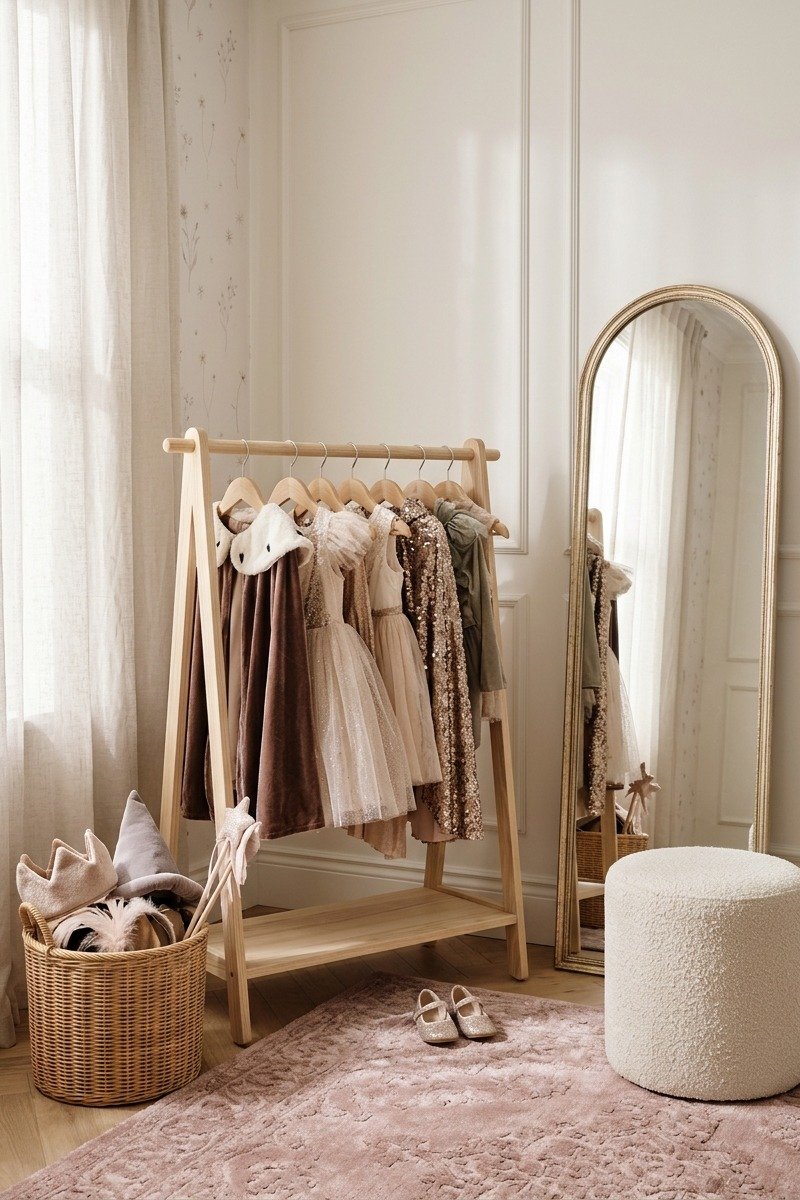
A small clothing rail, a basket of costumes and a mirror give children a dedicated place for imaginative play.
Hang outfits on matching wooden hangers to keep the corner looking pretty.
Add a soft rug and a small stool so the area feels like a mini boutique.
A dress-up corner can evolve into a fashion or vanity corner for older children, with the same rail holding favorite outfits and accessories.
Pro tip: Use a shatterproof acrylic mirror for safety in younger children’s rooms.

Storage and Furniture
21. Built-In Wardrobes With Beautiful Hardware
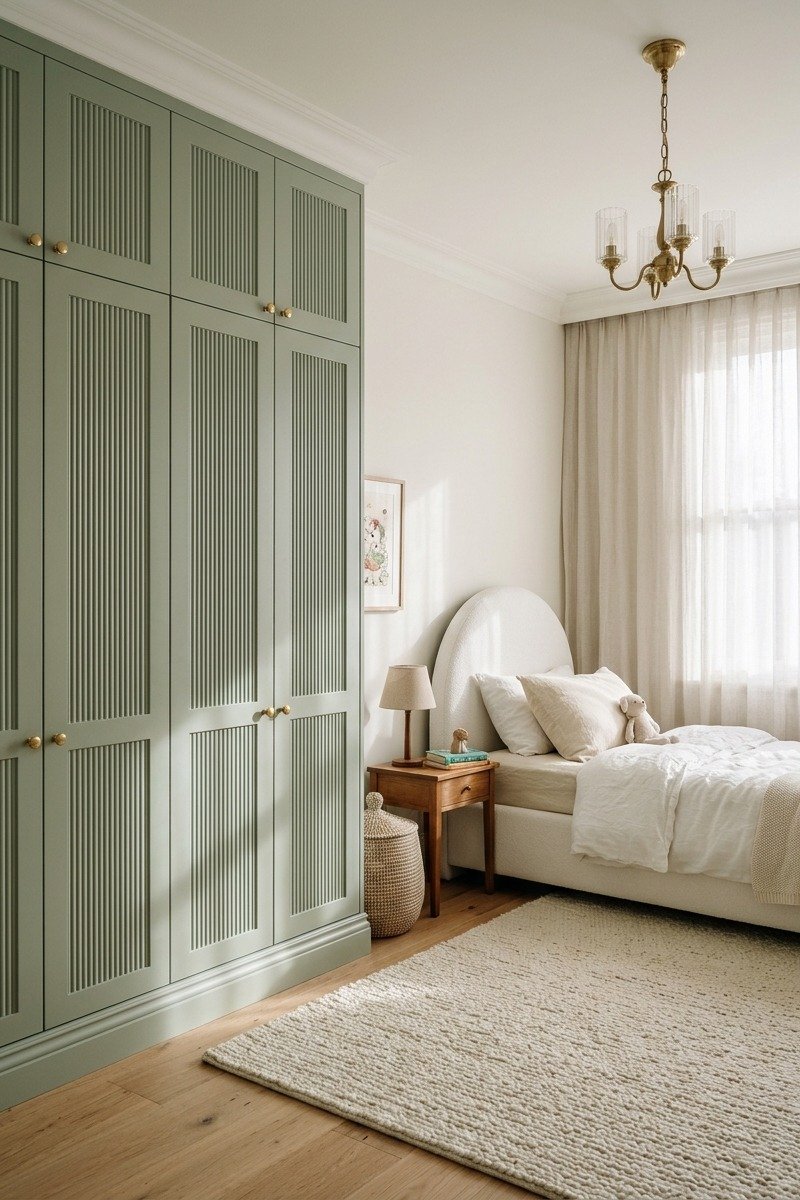
Built-in wardrobes and closets hide clutter and make a room look custom. Paint them the wall color and add special hardware for a luxurious finish.
Brass, ceramic or fluted knobs are an easy upgrade that makes simple cabinetry look expensive.
Include low rails and shelves so children can reach their own clothes.
Built-ins with adjustable shelves grow with your child. Lower the rail for toddlers and raise it for teens, and the wardrobe never needs replacing.
Pro tip: Swap standard knobs for brass or ceramic ones. It is a tiny change that makes a big difference.

22. Woven Basket Toy Storage
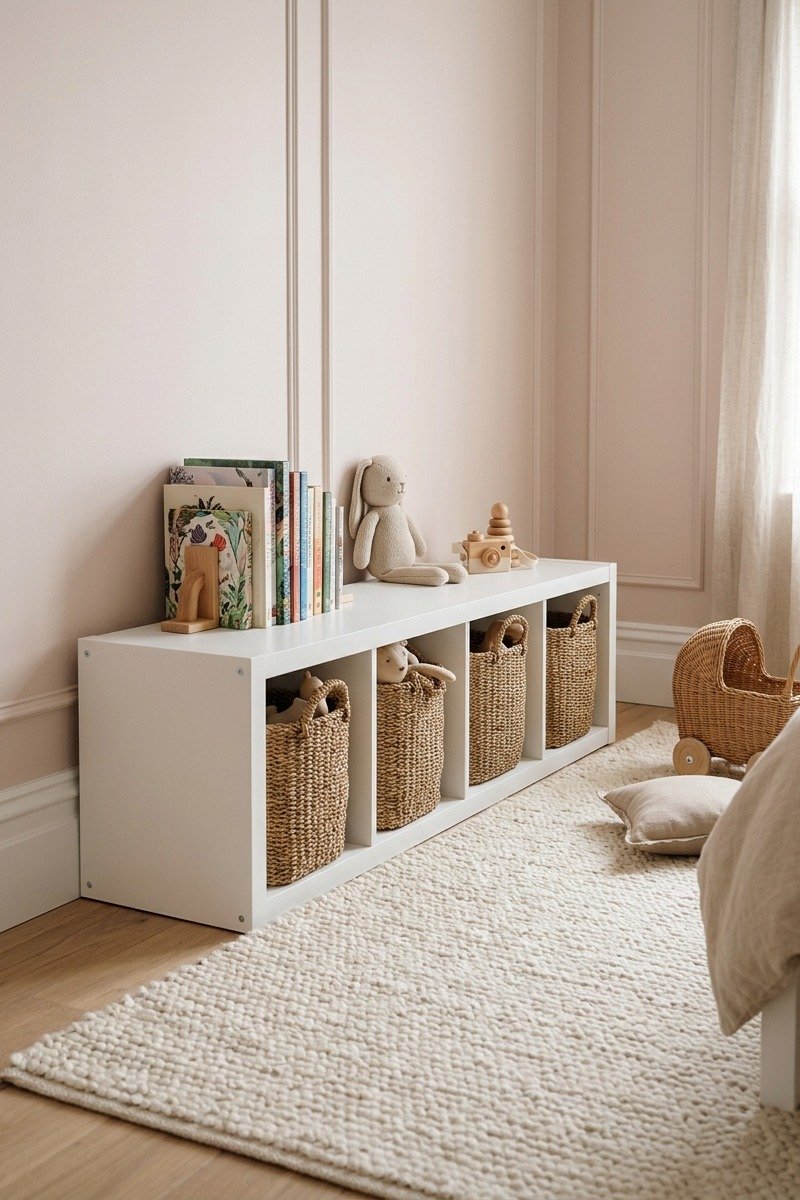
Woven baskets in seagrass, rattan or cotton rope make toy storage look beautiful. They soften shelves and hide the chaos instantly.
Use matching baskets in a cube unit or along a low shelf for a calm, uniform look.
Lightweight baskets are easy for children to pull out and put back.
Label baskets with simple picture tags for younger children who can’t read yet. It makes tidying up feel like a game rather than a chore.
Pro tip: Keep one basket per category, like blocks, dolls or cars, so tidying up is simple.
23. A Vintage or Painted Dresser
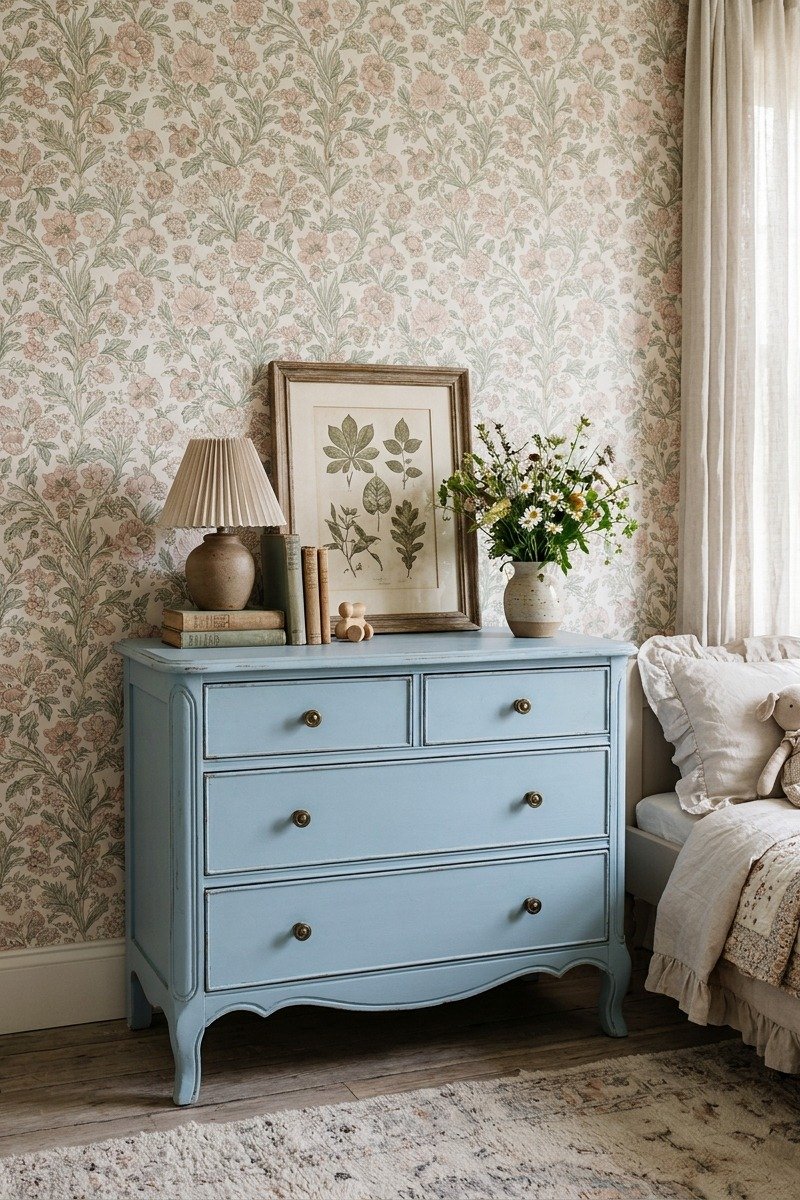
A vintage dresser, painted in a soft color with new knobs, adds character and charm. It is also more solid and affordable than many new pieces.
Use it as a changing table for babies, then a dresser and display surface as they grow.
Top it with a lamp, a framed print and a small vase of flowers.
Painting a dresser is a satisfying family project. Let your child help choose the color, and they will feel proud of their room for years.
Pro tip: Always anchor dressers to the wall with anti-tip kits, especially in children’s rooms.

24. A Storytime Armchair or Glider
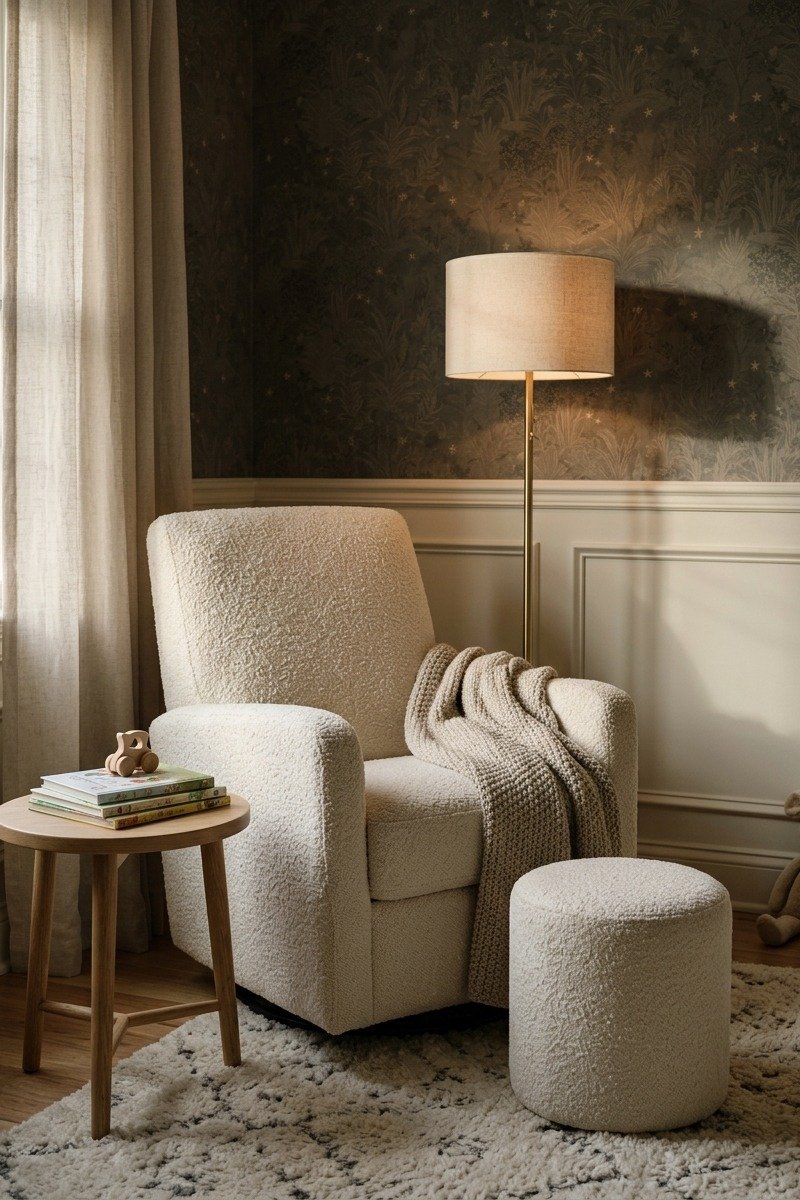
A comfortable armchair or glider gives parents a proper place for bedtime stories and night feeds. It is one of the most-used pieces in a child’s room.
Choose a classic shape in boucle, velvet or linen so it can move to a living room later.
Add a footstool, a soft throw and a small side table for a book and a glass of water.
A swivel glider also lets you face your child’s bed during stories and turn toward a window for daytime reading, which makes it more versatile than a fixed chair.
Pro tip: Choose a glider with a smooth, quiet motion. Squeaky rockers are no fun at 3 a.m.

25. A Pretty Desk and Acrylic Chair
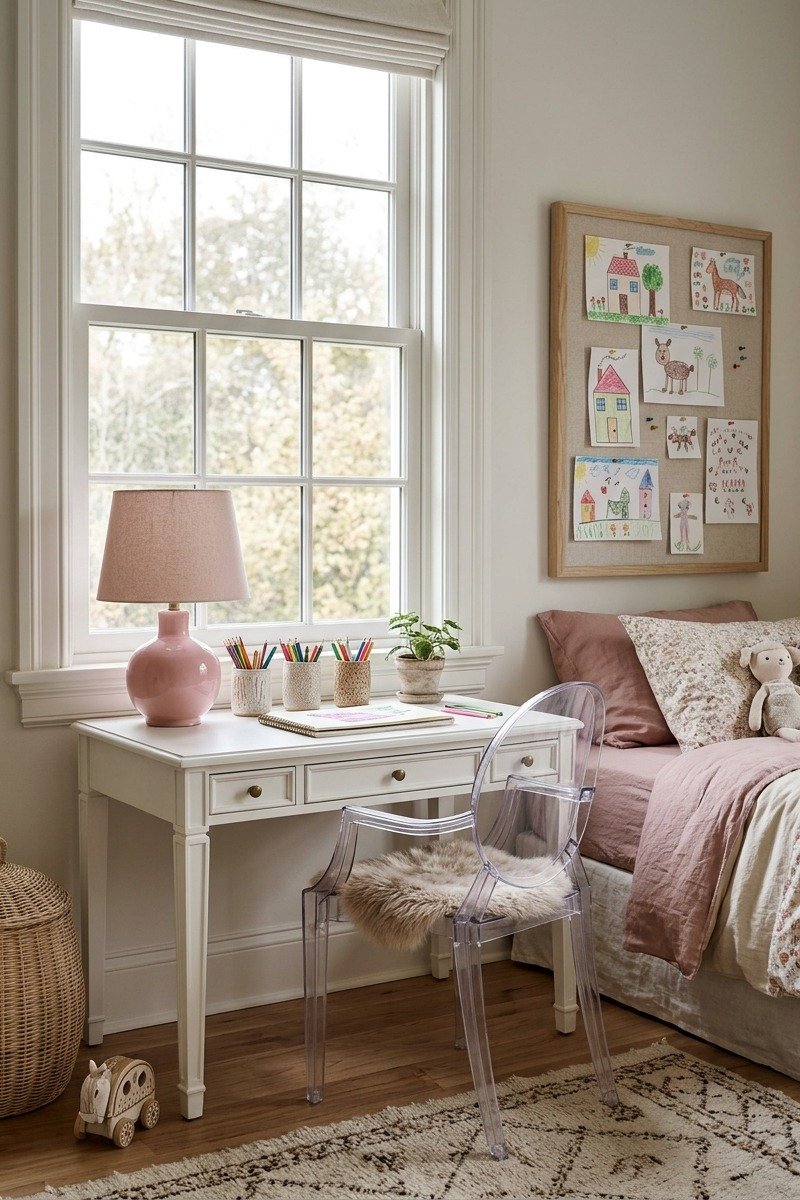
A small desk with a clear acrylic chair looks light, modern and chic, and gives older children a place for homework and drawing.
Acrylic chairs take up very little visual space, which helps in small rooms.
Add a pretty lamp, a pinboard and a few organisers to make the desk inviting.
A desk with drawers keeps supplies organised and the surface clear, which makes homework time easier and the room look calmer.
Pro tip: Position the desk near a window for natural light, but not facing directly into the glare.

Finishing Touches
26. A Statement Rug
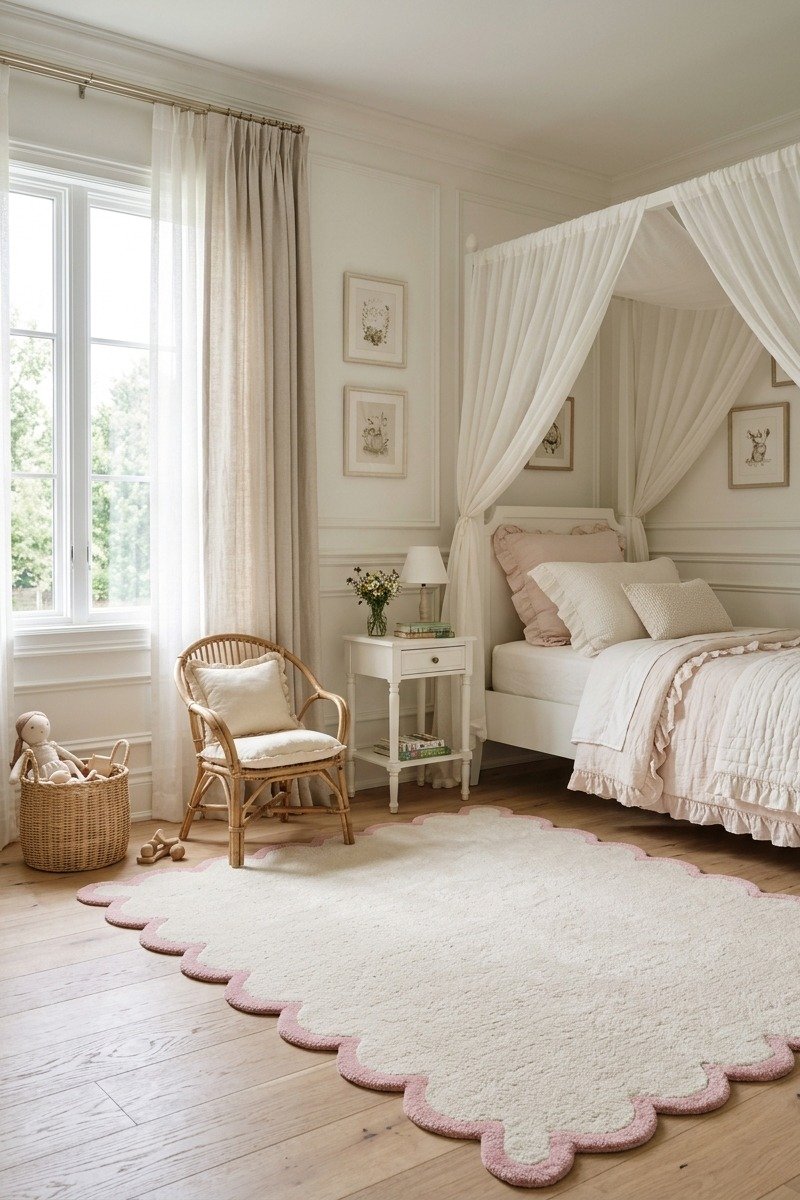
A soft, beautiful rug grounds the room and gives children a comfortable place to play. Wool rugs in soft colors, scalloped edges or gentle patterns look especially luxurious.
Size the rug so the bed, nightstand or play area sits on it, not floating beside it.
Washable rugs are a smart choice for younger children.
A rug also helps with noise, softening footsteps and play in upstairs bedrooms, which the rest of the household will appreciate.
Pro tip: Add a rug pad underneath to stop slipping and make the rug feel thicker and softer.

27. A Curated Gallery Wall
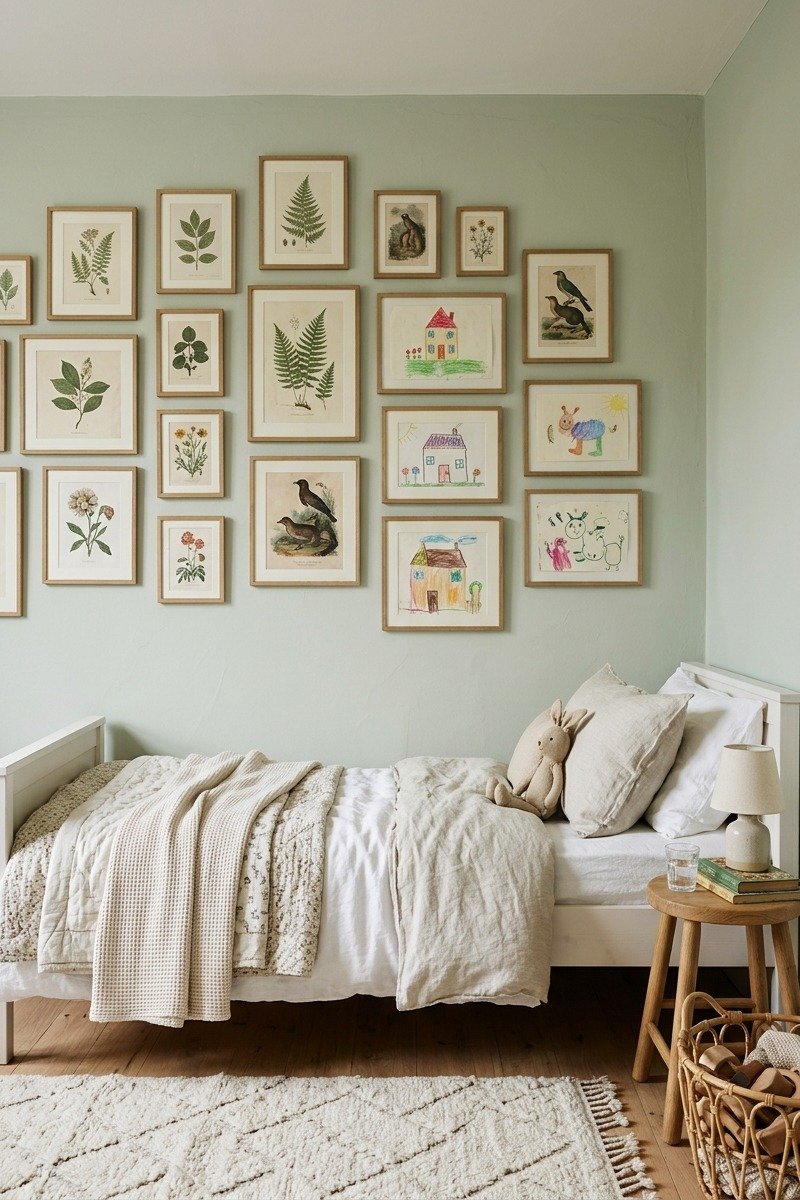
A gallery wall of framed prints, children’s own artwork and family photos adds personality and warmth.
Use matching frames for a cohesive look, and mix sizes for interest.
Swap pieces as your child grows so the wall tells their story.
Lay out frames on the floor first, or tape paper templates to the wall, to get the arrangement right before putting any holes in the plaster.
Pro tip: Use lightweight frames with acrylic instead of glass in children’s rooms for safety.

28. Luxe Window Treatments
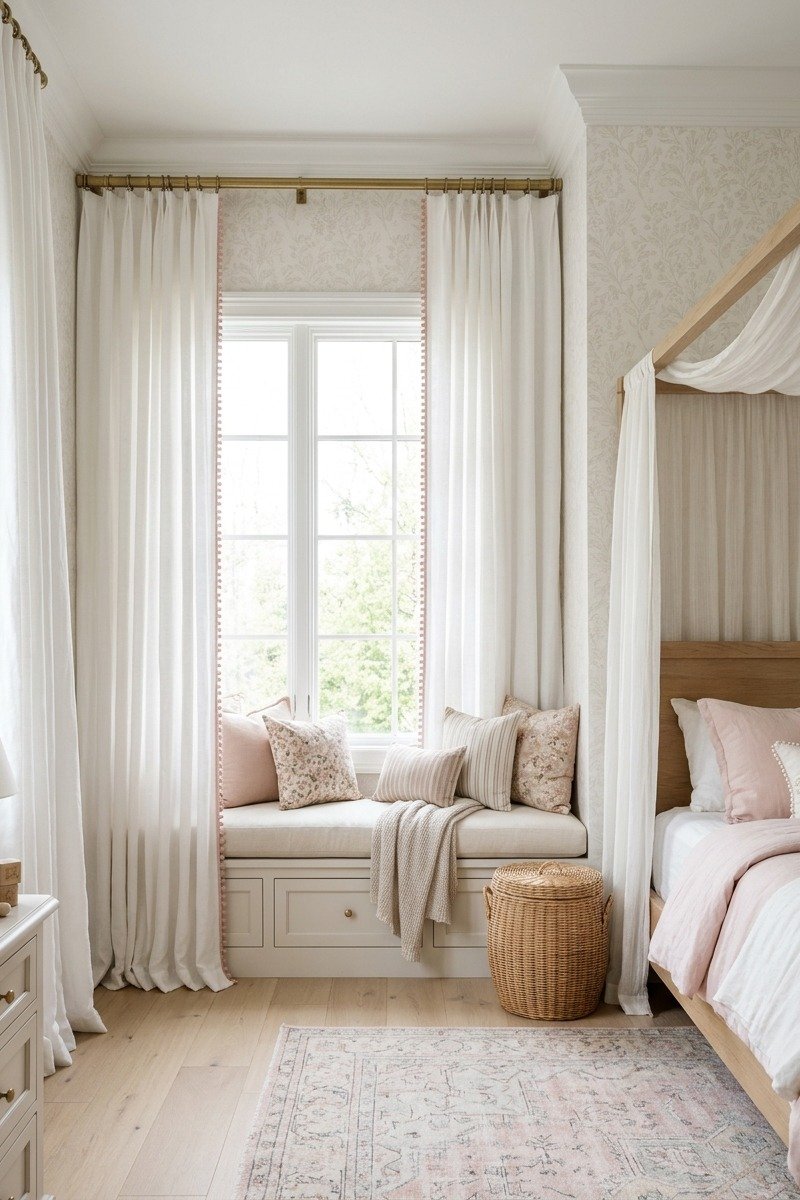
Floor-length curtains with trim, pom-poms or a scalloped edge add softness and polish. Blackout lining helps with naps and early summer sunrises.
Hang curtain rods close to the ceiling to make the room feel taller.
Choose cordless shades or motorized blinds for safety.
Motorized shades on a timer can open gently with the morning light, which helps children wake up more naturally and calmly.
Pro tip: Layer a blackout roller shade behind decorative curtains for the best of both looks and sleep.

29. Personal Touches
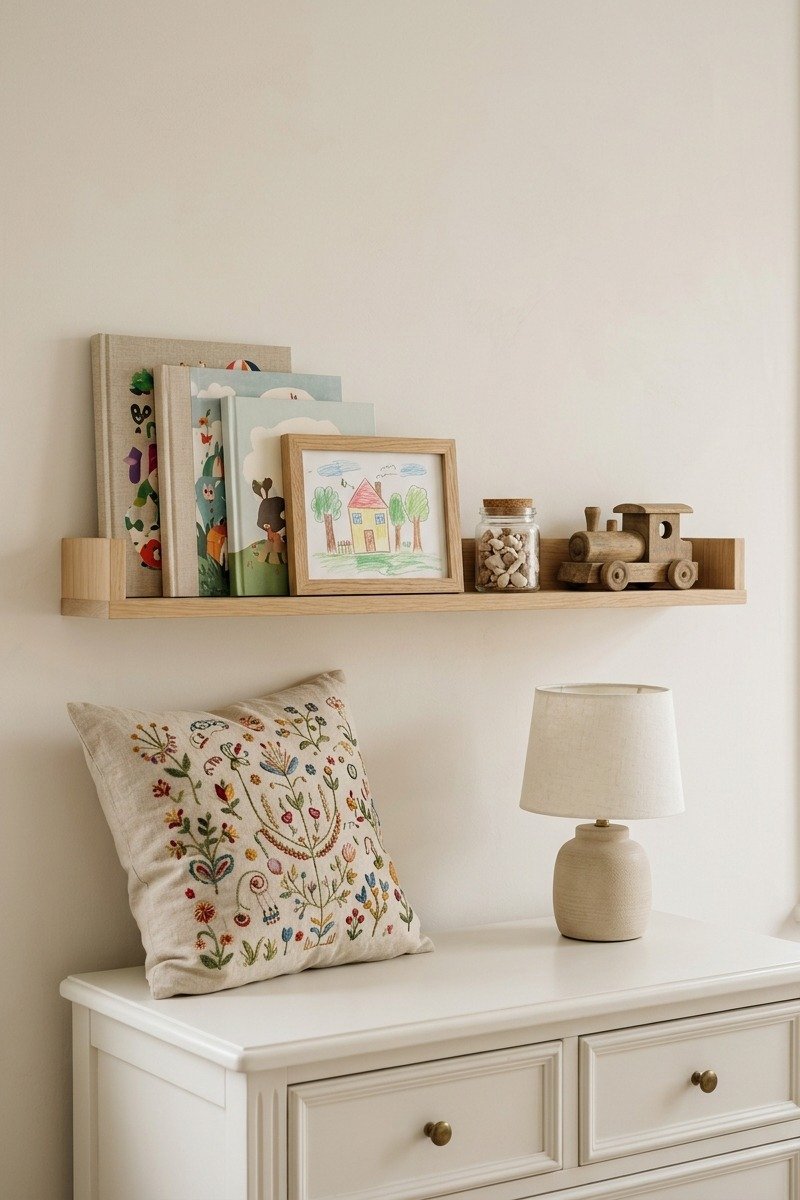
The most luxurious rooms feel personal. A monogrammed pillow, a framed first drawing or a shelf of treasured books makes the room feel like it belongs to your child.
Let children choose one or two items, such as a favorite color for a cushion or a special print.
Personal touches can change as they grow, keeping the room fresh and meaningful.
Personal touches also make children feel ownership of their space, and that sense of pride often translates into a room they actually want to keep tidy.
Pro tip: Create a small display shelf for treasures, from seashells to trophies, so they have a place to show off what matters to them.

Keep Luxury Safe
Anchor every dresser, bookcase and wardrobe to the wall. Choose cordless blinds, keep cables tidy and out of reach, and avoid heavy wall decor over the bed.
Choose low-VOC or zero-VOC paint, solid wood furniture and natural fabrics where you can. And make sure any canopy or fabric is well away from heat sources and lights.
Frequently Asked Questions
How do I make my child’s bedroom look luxurious?
Focus on texture, a soft color palette and a few statement pieces, like a canopy bed, designer wallpaper or a chandelier. Layered bedding, a wool rug and beautiful hardware also make a big difference.
What colors make a kids’ room look expensive?
Soft, muted shades like blush, sage, powder blue, butter yellow and warm white look more refined than bright primary colors. Natural wood and brass add warmth.
How can I design a kids’ bedroom that grows with them?
Invest in timeless furniture, like a full-size bed, built-in storage and quality lighting, and add personality with easily changed items like bedding, art and cushions.
Are canopy beds safe for kids?
Yes, when installed correctly. Anchor the canopy securely, keep fabric away from lights and heat, and avoid long ties or cords within reach of young children.
Final Thoughts
A luxury kids’ bedroom is about softness, texture and a little bit of magic. Start with a beautiful bed, add walls with character and layered light, then make room for reading, play and storage.
Choose a few ideas from this list, keep safety in mind and let your child add their own touches. The result will be a room that feels like a dream and works for real life.

