This post contains affiliate links. As an Amazon Associate, I earn from qualifying purchases at no extra cost to you.
Nobody quotes you a driveway gate. They quote you a project, and the number that comes back is somewhere between four thousand and twenty, which is not information.
So here is the material cost broken into parts, with the ranges that actually move the total. Prices are US, mid-2026, and lumber swings enough by region that you should treat these as proportions more than absolutes. Every line has a range, a reason, and the place where people usually go wrong.
Short version: a DIY wood double-swing gate on a 12-foot opening runs $700 to $2,100 in materials. Add an operator and you are at $1,900 to $4,600. A contractor doing the same work bills $6,000 to $15,000. The rest of this post explains why, one line at a time.
The Short Version
| Build | Materials (DIY) |
|---|---|
| Manual wood double swing, 12 ft | $700 – $1,400 |
| Same, cedar and better hardware | $1,200 – $2,100 |
| Automated wood double swing, 12 ft | $1,900 – $4,600 |
| Steel frame, 16 ft, automated | $3,400 – $7,200 |
| Cantilever slider, 16 ft, automated | $5,500 – $11,000 |
| Contractor installed, 12 ft automated wood | $6,000 – $15,000 |
The Four Things That Decide Your Number
Before the line items, understand what you are actually paying for, because the wood is not it.
Opening width. Under 12 feet you can swing two leaves off wood posts. Past 14 feet, wood posts start losing the argument with physics and you are into steel or a slider. The jump from 12 to 16 feet roughly doubles the hardware cost and can double the post cost.
Swing or slide. Swing is cheaper and simpler. Slide needs level ground, a track or a cantilever frame, and clear space alongside the opening equal to the gate width. Cantilever sliders cost more than everything else on this page combined.
Automation or not. This is the single biggest line. A manual gate you get out of the car to open is a $900 project. The same gate with an operator, safety sensors and a keypad is $2,400 or more.
Who digs the holes. Two 6×6 posts at four feet deep in clay, by hand, is a genuinely bad Saturday. Renting an auger is about $80. Hiring it out is $300 to $600, and worth considering if you value your back.
22 Costs, Line by Line
Each line below has a cost range for a 12-foot double-swing gate, what drives the number, and the mistake that usually costs money. Items marked as alternatives replace a line rather than add to it.
Planning and Prep
1. Permit and Utility Locate
Typical cost: $0 – $400
Many jurisdictions require a permit for a driveway gate, especially an automated one, and some have setback rules that dictate how far back from the road the gate has to sit so a car can pull fully off the street while it opens. Twenty feet is common. Check before you dig, not after.
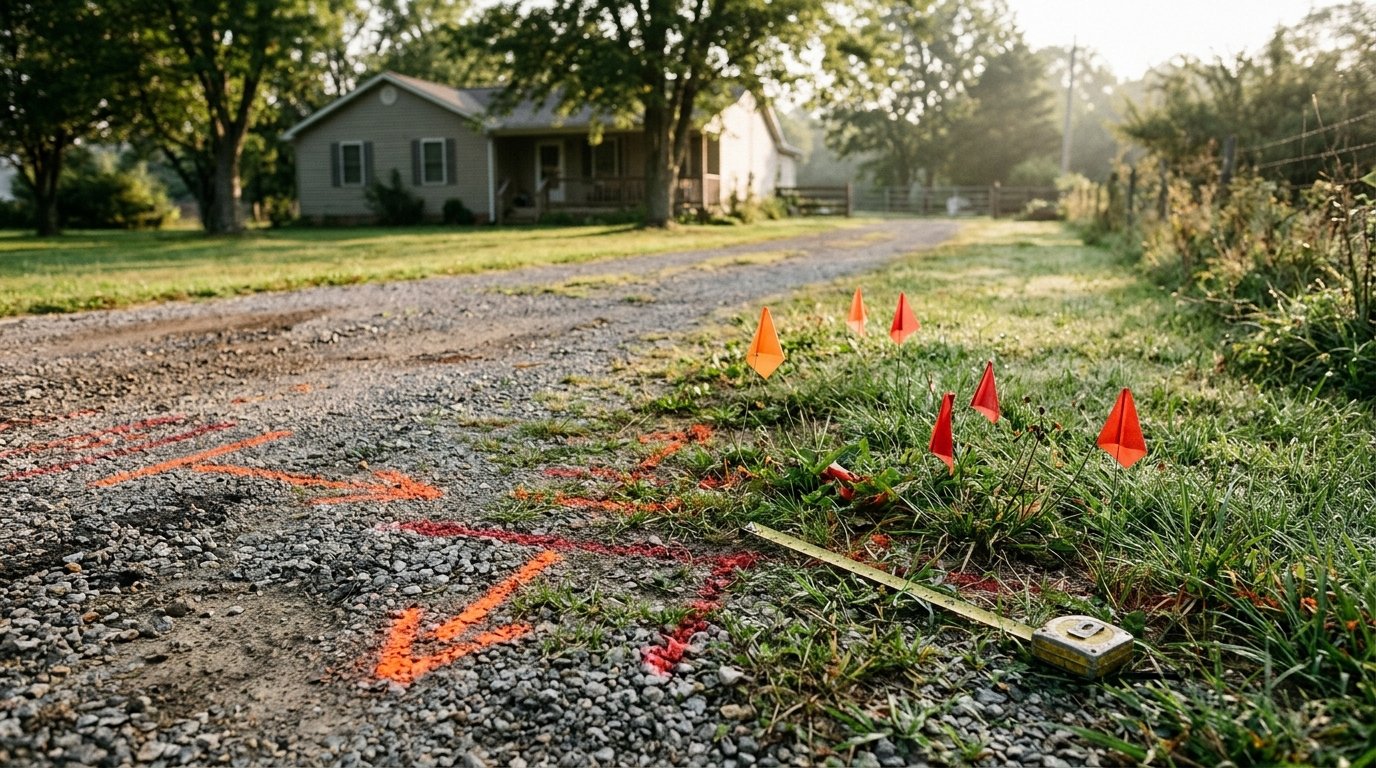
The utility locate is free in most of the US and is the one phone call between you and an extremely expensive afternoon. Call 811 or your local equivalent, wait the required days, and keep the paint marks visible until the posts are set.
If you are in an HOA, add their approval to the timeline. It rarely costs money, but it can cost a month.
Pro tip: Ask the permit office whether an automated gate needs an electrical inspection. It often does, and it changes whether you can do the wiring yourself.
2. Layout and Measuring the Swing Arc
Typical cost: $20 – $60
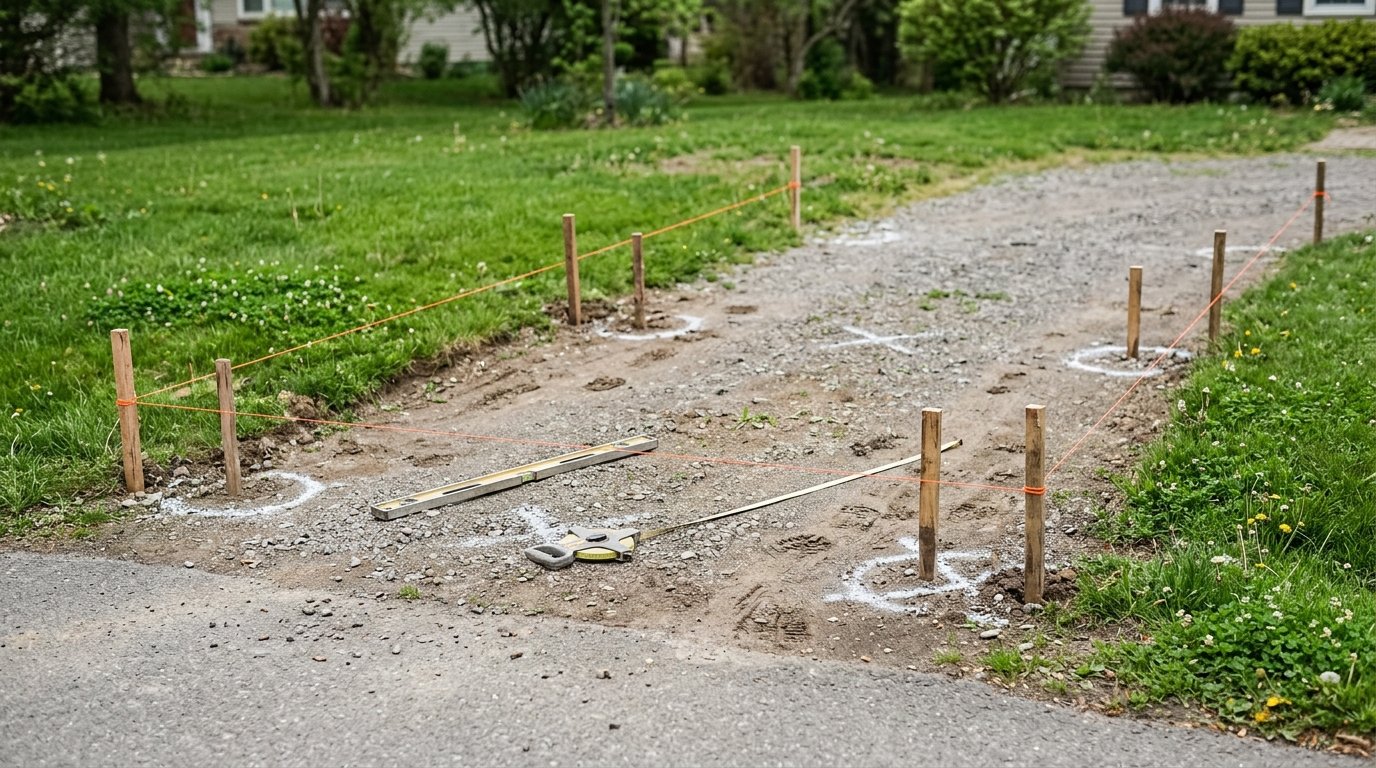
String line, stakes, a long tape, a four-foot level and a can of marking paint. This is the cheapest line on the page and the one that decides whether the rest of the money works.
Mark the centerline of the opening, then the post centers. Then measure the swing arc: each leaf sweeps a quarter circle, and if your driveway slopes up through that arc, a swing gate will hit the ground before it is fully open. Measure the rise across the arc before you commit to swing. This one sinks projects at the very end.
Decide now whether the gate swings in or out. Inward is standard for driveways, because an outward swing pushes into the road or sidewalk.
Pro tip: Run a string across the opening at gate-bottom height and measure down to the ground every foot along the arc. More than two inches of rise means you need a split gate, a slider, or rising hinges.


3. Auger Rental or Hired Digging
Typical cost: $70 – $600
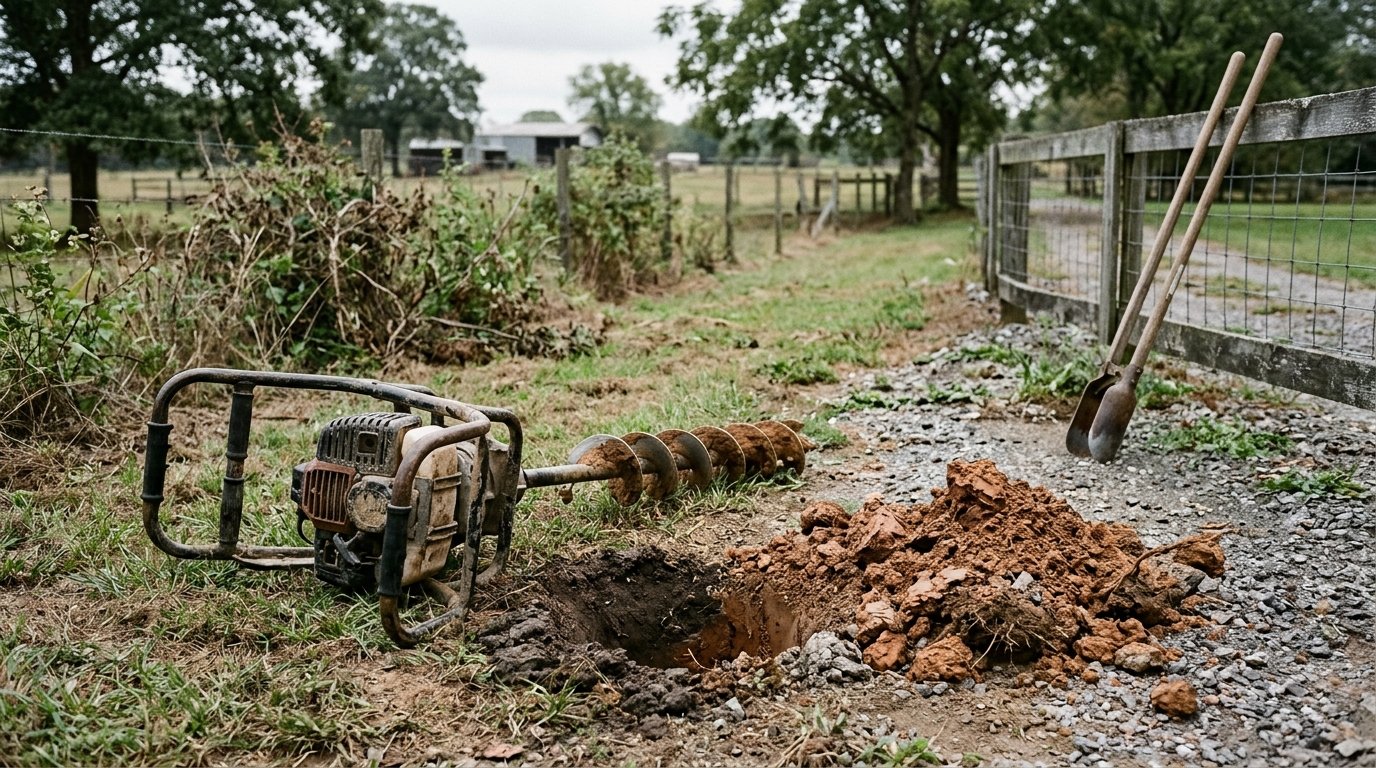
A half-day two-person auger rental runs $70 to $110 and turns two hours of misery into twenty minutes. A tow-behind or skid-steer auger costs more but is worth it in rocky or clay soil.
Hiring someone to dig two holes is $300 to $600 depending on access and soil. It sounds like a lot until you hit a buried rock at three feet with a manual digger.
Whatever you use, the hole has to be the full depth and the right diameter. A narrow hole saves concrete and costs you the gate.
Pro tip: Have a manual post hole digger on hand even if you rent an auger. Augers leave loose soil in the bottom that you need to clean out by hand.

Posts and Footings
4. Wood Gate Posts
Typical cost: $110 – $190
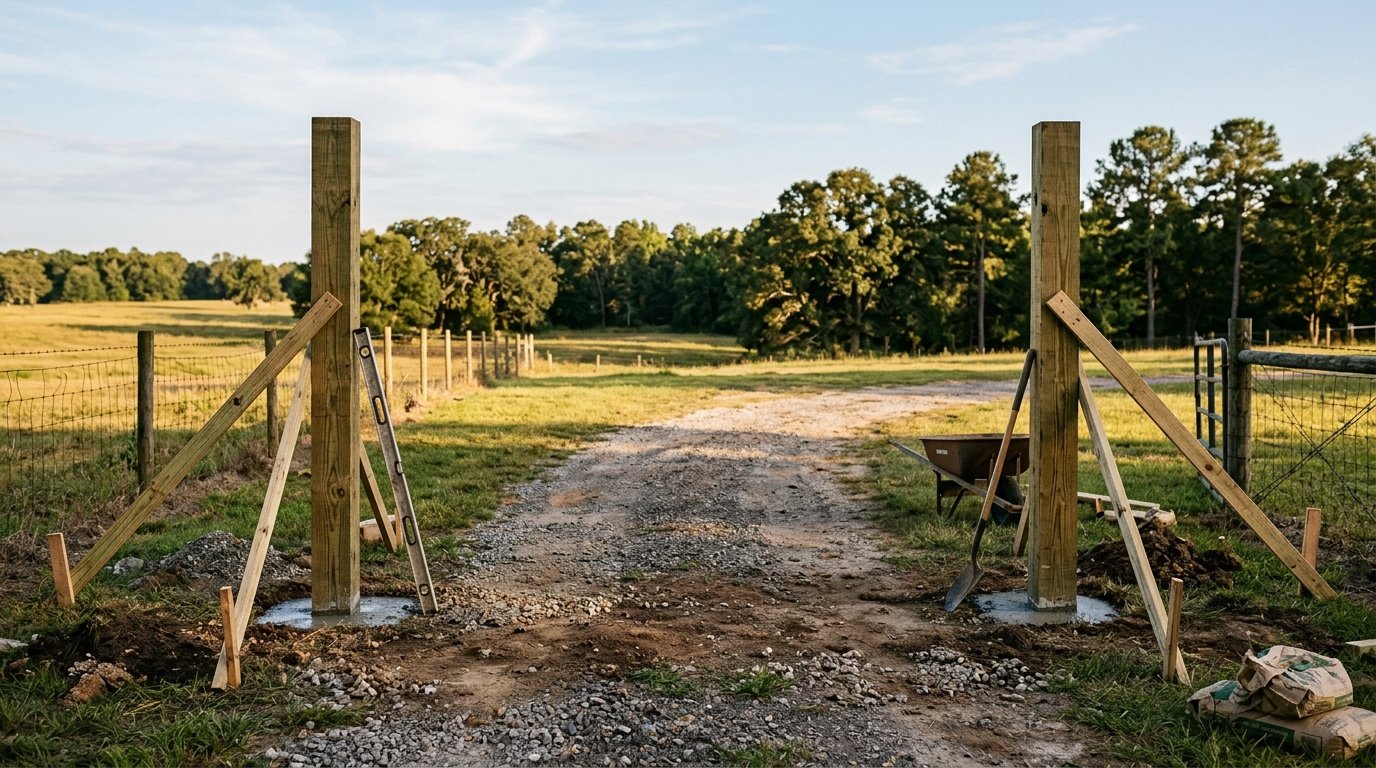
This is where people underspend and then rebuild. A driveway gate post is not a fence post. Go 6×6 minimum for wood, never 4×4, and buy posts rated for ground contact.
For a 6-foot gate, buy 12-foot posts so you have four feet in the ground and a little extra above the gate for caps and adjustment. Pick the straightest, driest posts in the pile and check them for twist and large checks.
Two posts at $55 to $95 each is a small line. Getting them wrong is the most expensive mistake on the whole project.
Pro tip: Set the posts a little taller than you need and cut them to final height after the gate is hung. It is much easier to cut down than to wish you had.
5. Steel Posts (the Alternative)
Typical cost: $220 – $380
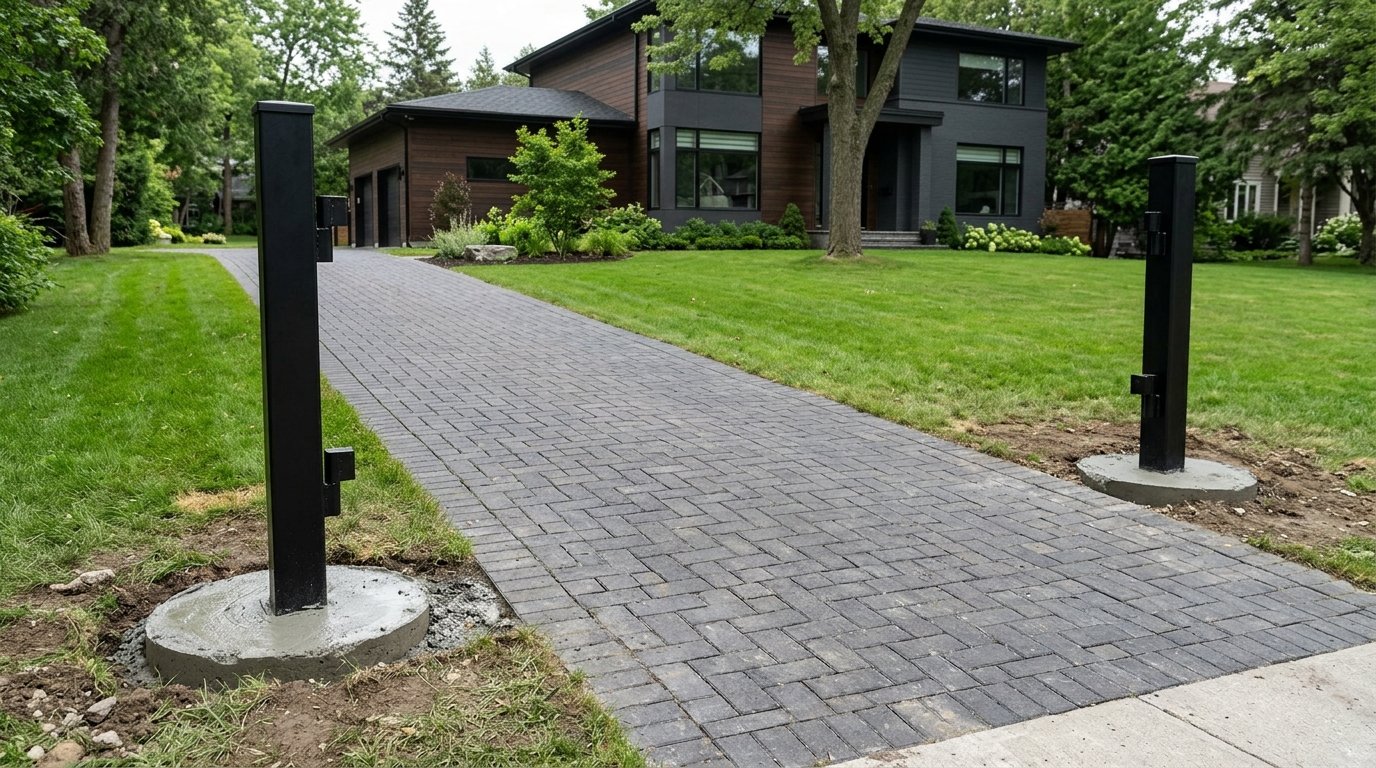
Past 14 feet, or for any gate over about 200 pounds per leaf, steel posts are the honest choice. Four-inch schedule 40 steel pipe, 10 feet long, set in concrete, will not twist, rot or lean.
Steel posts cost roughly double wood, and you will need weld-on or bolt-on hinge brackets. If you do not weld, many fence suppliers will cut and fit brackets for a small fee.
You can still clad steel posts in wood if you want the look. You get the strength of steel and the warmth of timber.
Pro tip: Cap steel posts or fill them with concrete. An open-topped post fills with water, rusts from the inside and freezes in winter.

6. Concrete and Gravel
Typical cost: $90 – $125
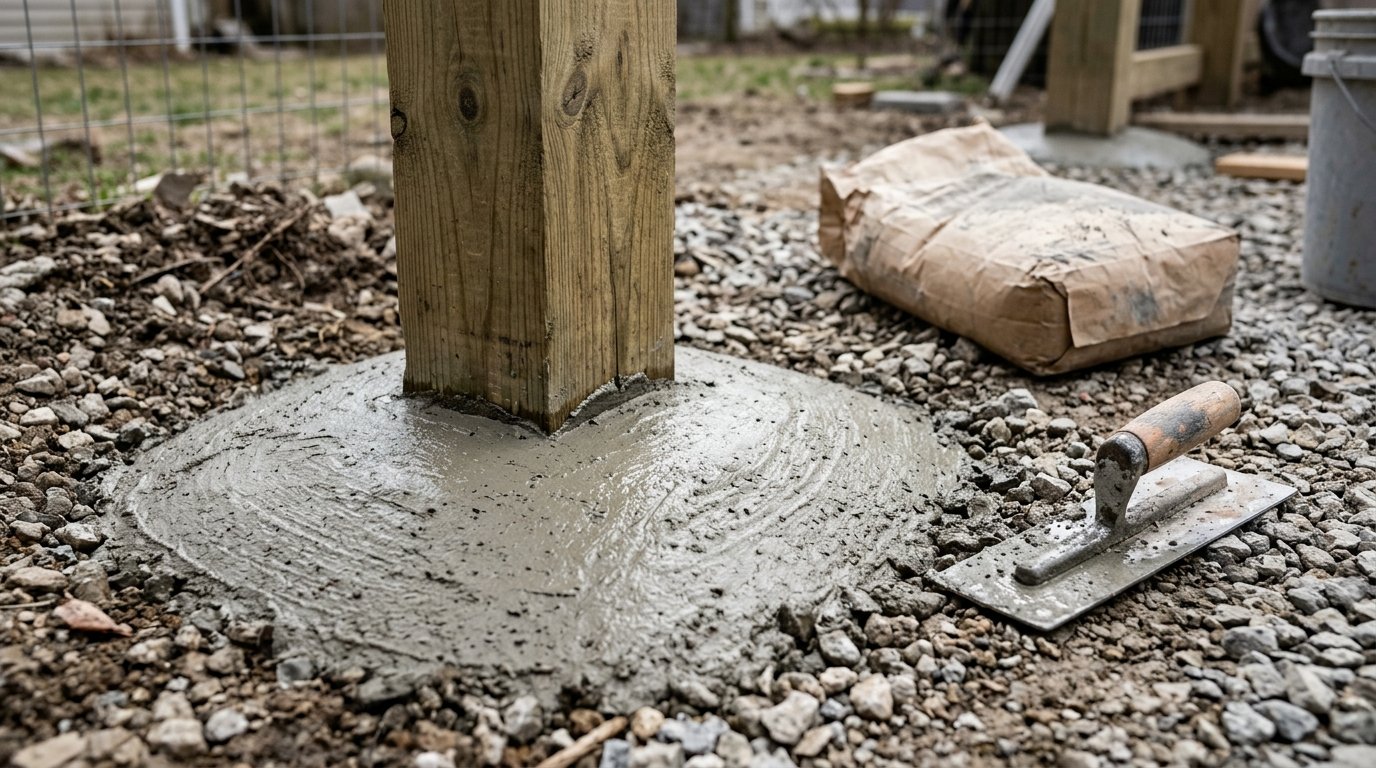
Twelve to sixteen 60-pound bags of concrete for two posts, plus two bags of gravel. Hole diameter should be three times the post width, so 18 inches for a 6×6. Depth at least four feet, and below your frost line whatever that costs you.
Put four to six inches of gravel in the bottom so water drains away instead of sitting against the end grain. Crown the concrete above grade so it sheds water away from the post.
A post set in a concrete bathtub rots from the bottom, and you will not see it until the gate tells you.
Pro tip: Let the concrete cure for at least three days, and ideally a week, before you hang a heavy gate. Hanging it the next morning is how posts lean.
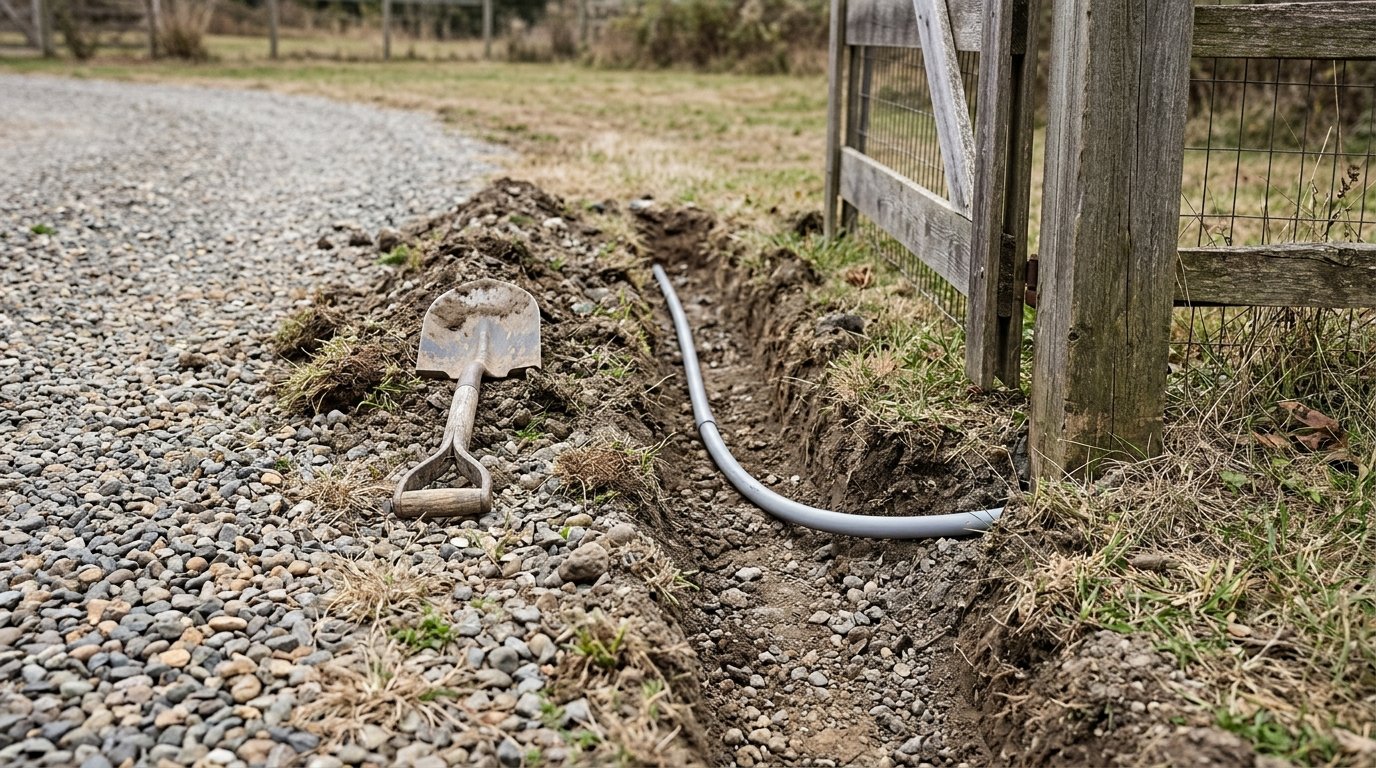
7. Conduit While the Trench Is Open
Typical cost: $40 – $120
If you are going automated, or might ever, run conduit to at least one post while the holes are open. A length of gray PVC conduit and a pull string costs less than a takeout dinner.
Doing it later means cutting your own driveway. Even if you plan to use solar, a conduit across the opening lets you run wiring between the two gate operators without surface cables.
Bury it at the depth your local code requires and mark where it runs on a phone photo with a tape measure in the shot.
Pro tip: Leave a pull string in the conduit and cap both ends. Future you will be very grateful.
The Gate Leaves
8. Gate Frame: Wood
Typical cost: $90 – $170
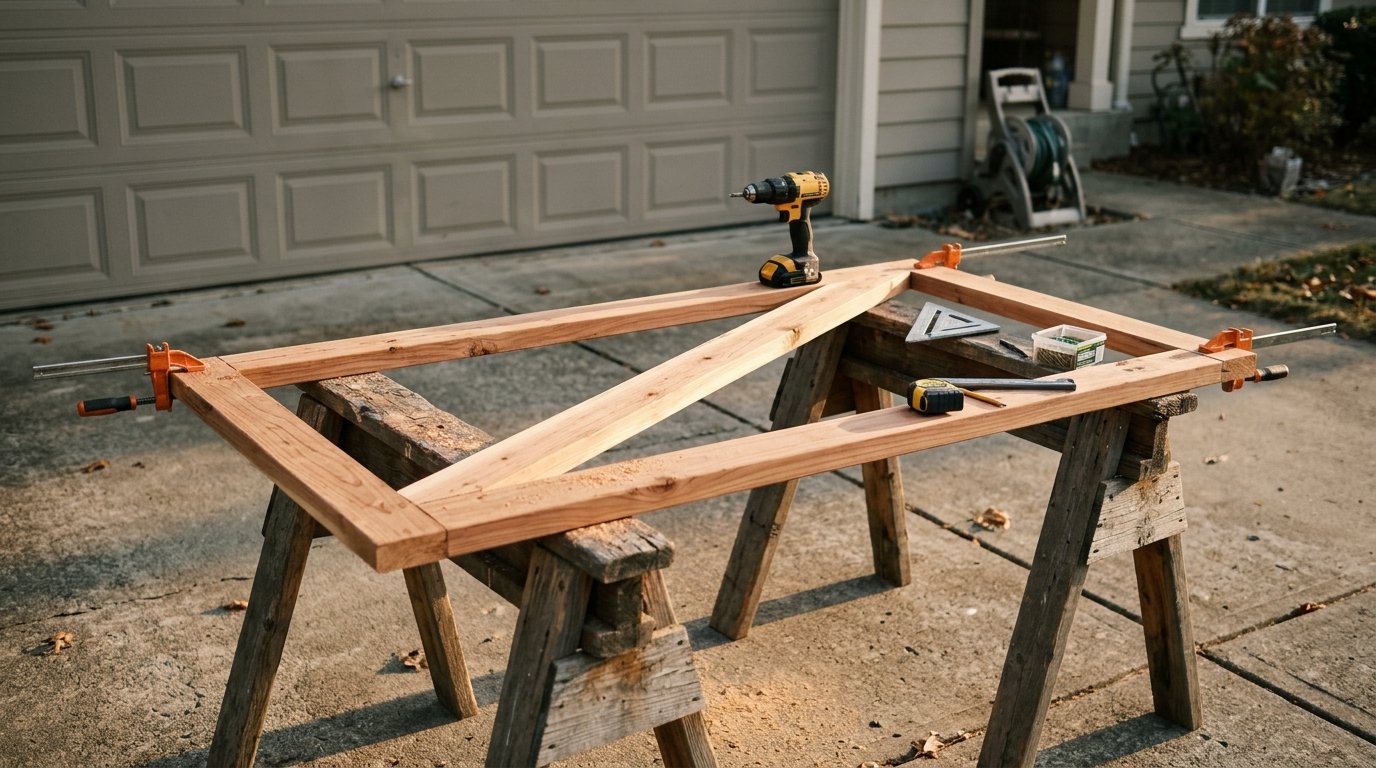
For a 12-foot opening, two leaves at roughly 5 feet 10 inches each. A wood frame takes about ten 2x4s in cedar or pressure-treated lumber, assembled as a rectangle with a diagonal brace.
The brace has to run from the bottom hinge corner up to the top latch corner. Put it in backwards and it does nothing; the gate sags anyway.
If you do not want to cut and fit the frame yourself, gate frame kits with steel corner brackets make square, rigid frames from standard lumber.
Pro tip: Glue and screw every frame joint with an exterior glue. A glued frame stays square for years longer than a screwed-only one.


9. Steel Frame (the Alternative)
Typical cost: $180 – $340
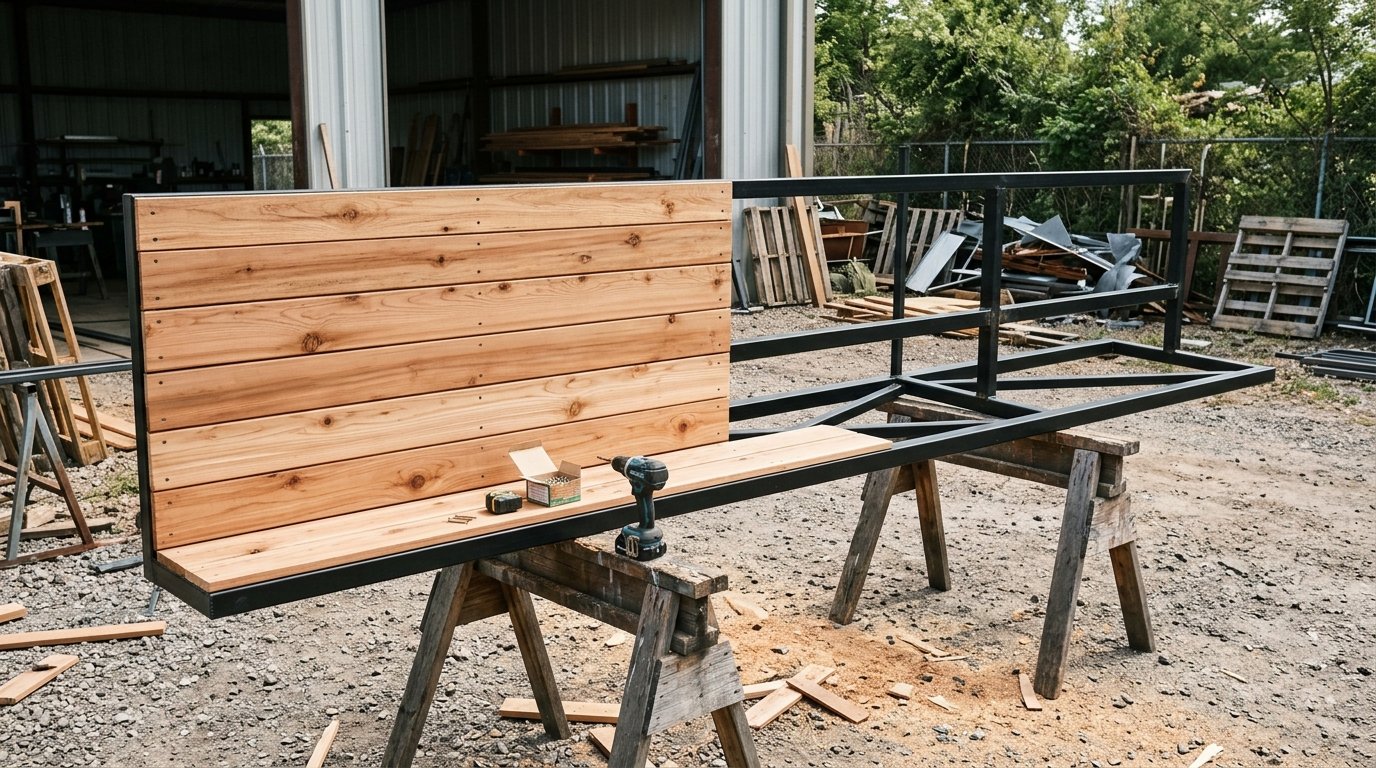
A welded frame of 1.5-inch square tube is lighter than you think, stays square forever and lets you clad it in wood for a modern look.
If you weld, this is a weekend. If you don’t, a local fabricator will often weld two simple frames for a few hundred dollars, and it is money well spent on any gate over 14 feet.
Steel frames need a rust-proof finish: powder coating, or a good primer and two coats of exterior metal paint.
Pro tip: Drill weep holes at the bottom of each steel tube so condensation can drain out.
10. Cladding: Cedar or Pressure-Treated
Typical cost: $190 – $430
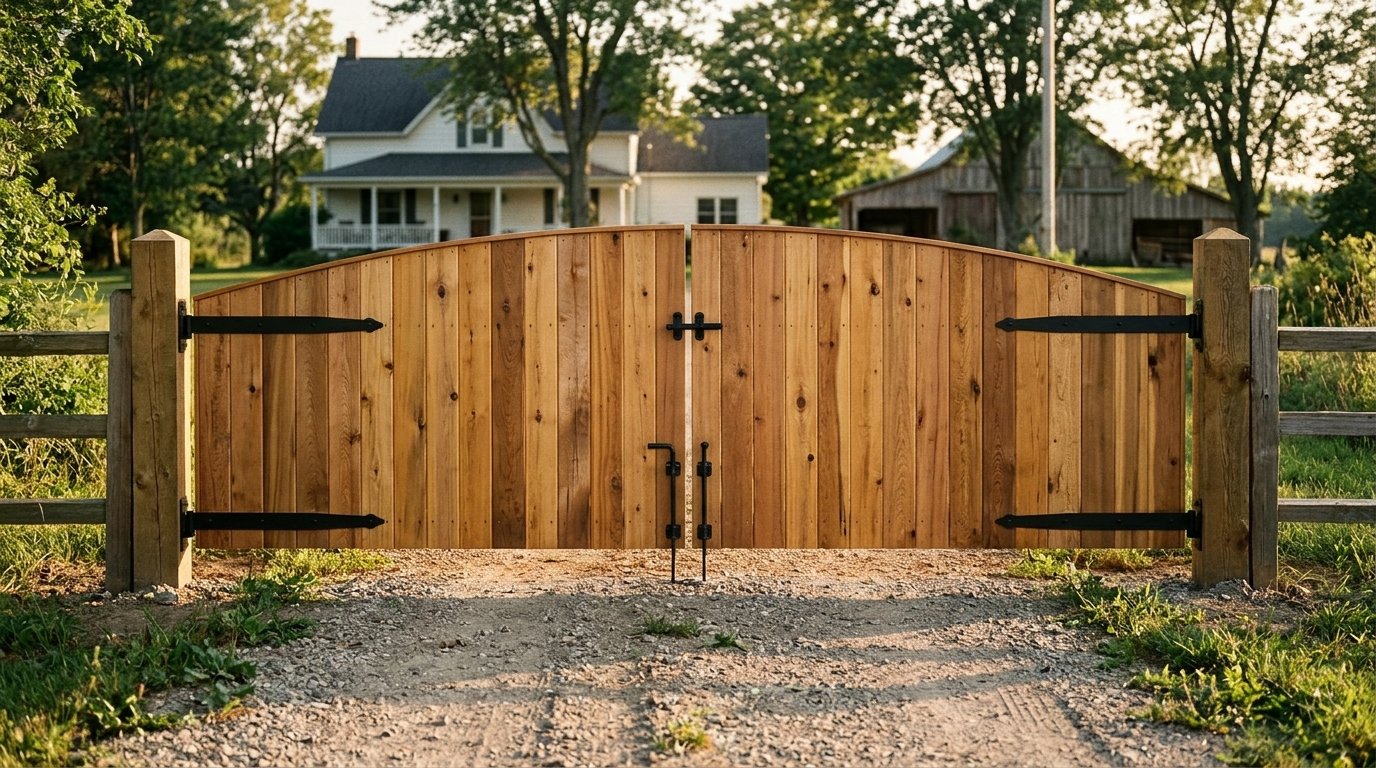
About 24 1×6 boards for two leaves. Cedar versus pressure-treated is the swing here. Cedar is roughly double and worth it if the gate is visible from the road. Pressure-treated is fine if you are painting it solid anyway.
Leave a small gap between boards, about an eighth of an inch, so the wood can move. Boards butted tight will buckle in a wet season.
Weight check: a 5-foot-10 by 6-foot clad wood leaf runs 110 to 160 pounds. Write that number down, because the hardware section depends entirely on it.
Pro tip: Clad one face only if you can. Cladding both faces nearly doubles the weight and the hinge load.

11. Screws, Glue and Fasteners
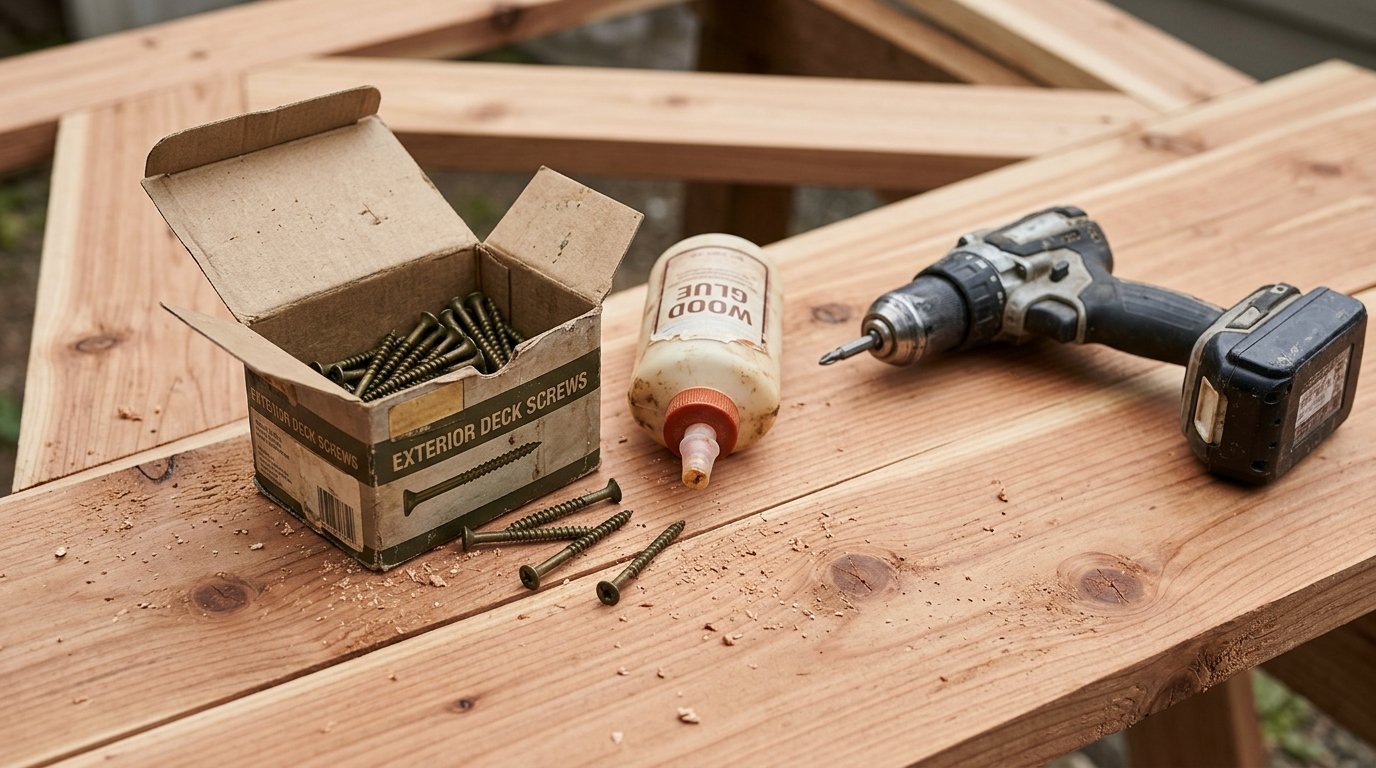
Typical cost: $45 – $65
A five-pound box of exterior screws, hot-dip galvanized or coated for ACQ-treated lumber, plus a bottle of exterior wood glue. Standard zinc screws will corrode in treated wood and leave black streaks.
Use stainless steel screws with cedar if your budget allows. They do not stain the wood and they last as long as the gate.
This is a small line, but cheap fasteners are why so many gates look streaky and loose after two years.
Pro tip: Pre-drill near board ends. Cedar splits easily, and a split board at the bottom of a gate lets water in.
12. Finish: Stain or Paint
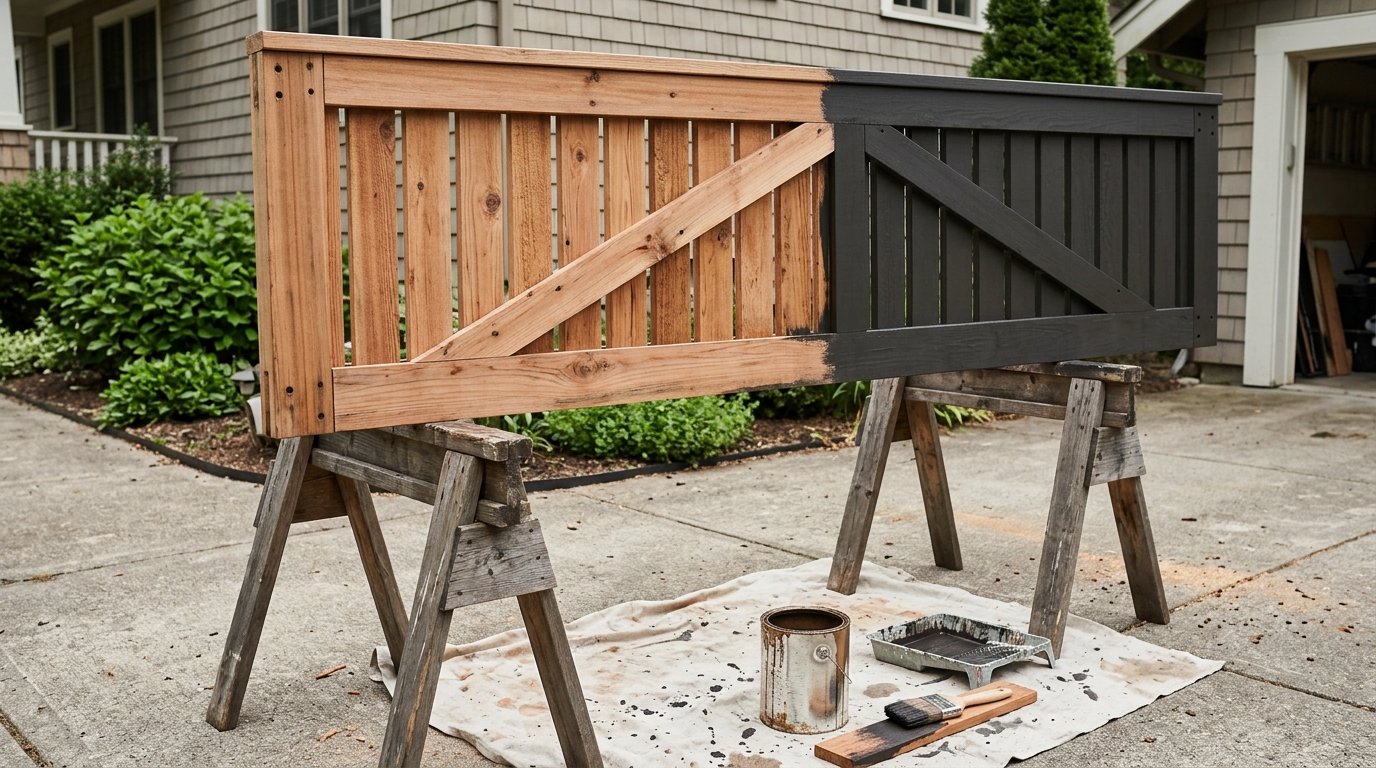
Typical cost: $90 – $150
Budget two gallons, not one. Everyone buys one. A 12-foot double gate clad on both faces is close to 140 square feet of surface, and rough cedar drinks the first coat.
Solid stain is the most forgiving finish for a gate. It hides grain, rarely peels and is easy to refresh. Paint gives a crisper color but needs a primer on bare wood and more prep when it is time to redo it.
Finish every board on all sides before assembly if you can. End grain is where water gets in.
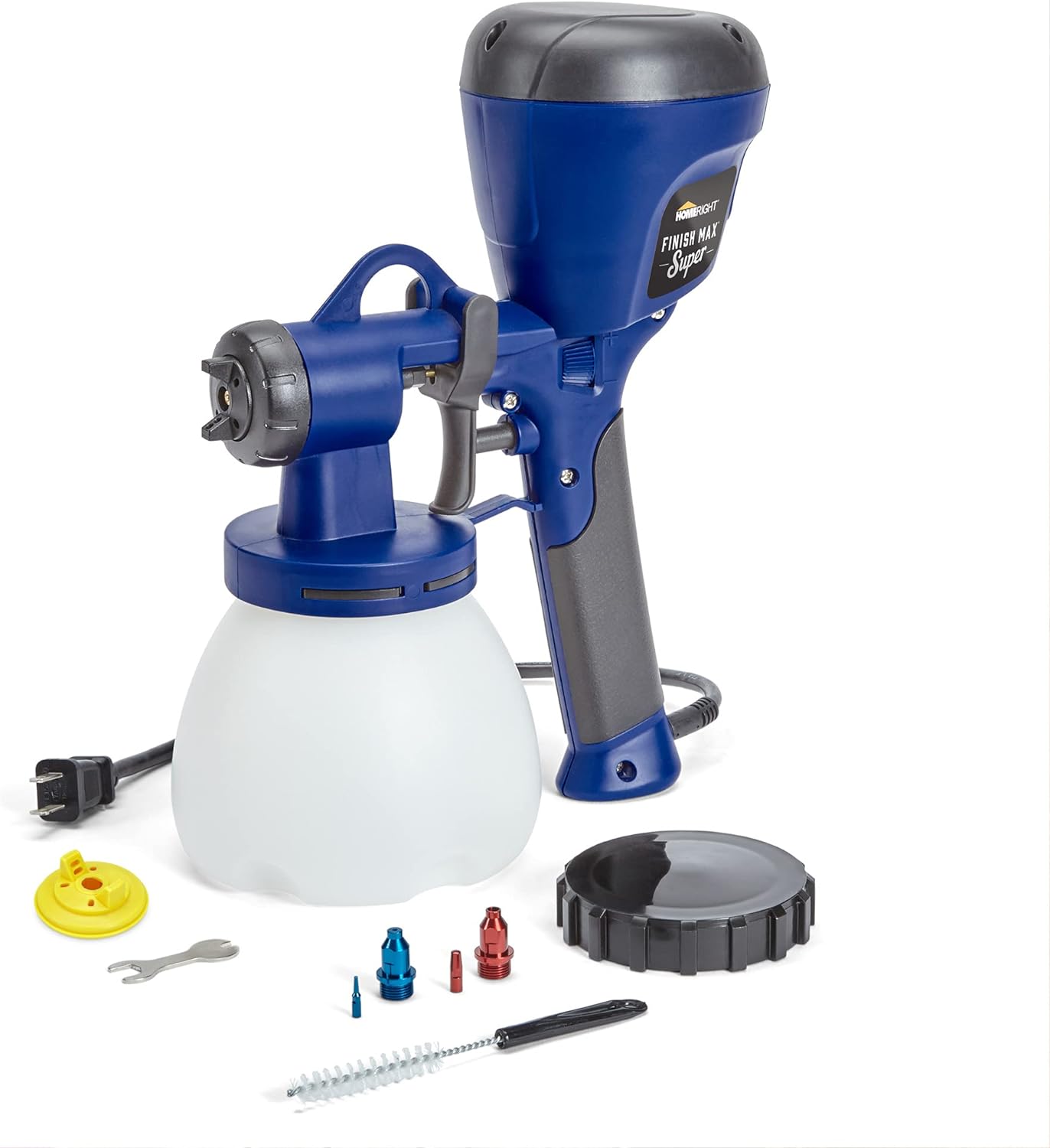
Pro tip: A paint sprayer pays for itself on a double gate, especially for the gaps between boards that a brush never quite reaches.

Hardware
13. Hinges
Typical cost: $90 – $220
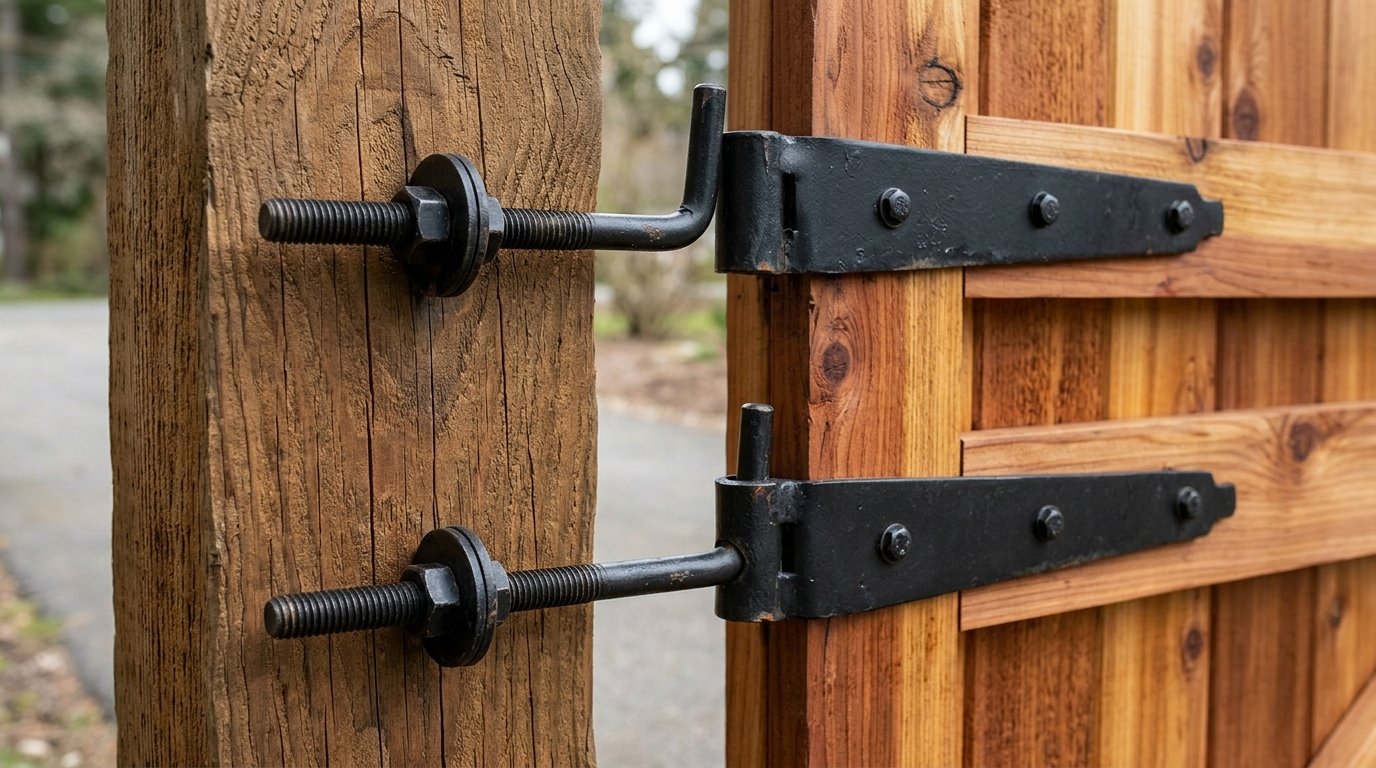
Where DIY builds fail. Do not buy the gate hardware kit next to the mailboxes. You want 5/8-inch or 3/4-inch hot-dip galvanized J-bolt or barrel hinges rated for at least the weight of your leaf.
Two hinges per leaf on anything over 100 pounds, and I would argue three. J-bolt hinges thread through the post and adjust, which you will need, because the gate will settle in the first season no matter how well you set the posts.
Strap hinges look good but must be bolted through, not screwed. Lag screws pull out of wood posts under a heavy gate.
Pro tip: Hang the gate with a scrap block under the bottom rail to hold it at height while you fit the hinges. Fighting a 150-pound leaf freehand is how hinges end up crooked.

14. Drop Rod
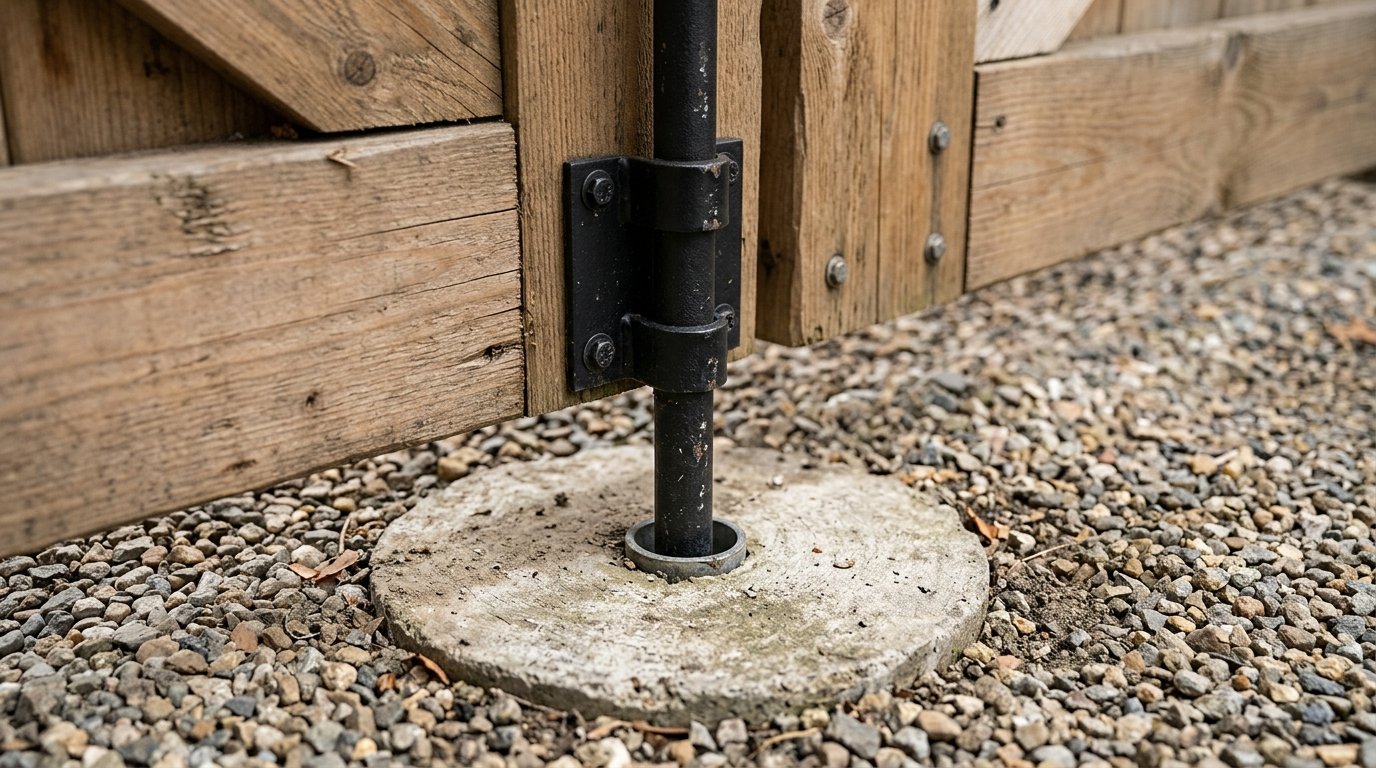
Typical cost: $35 – $70
The drop rod is not optional on a double gate. The inactive leaf has to be pinned to the ground, or both leaves work against the latch every time the wind blows.
Buy a 3/4-inch rod at least 24 inches long, and set a ground sleeve, or drill a hole in the concrete or pavers, so the rod drops into something solid.
Add a second sleeve in the open position if you want the leaves to stay open in wind.
Pro tip: Set the ground sleeve in a small concrete pad, not loose gravel. Gravel holes fill in and wander.

15. Latch
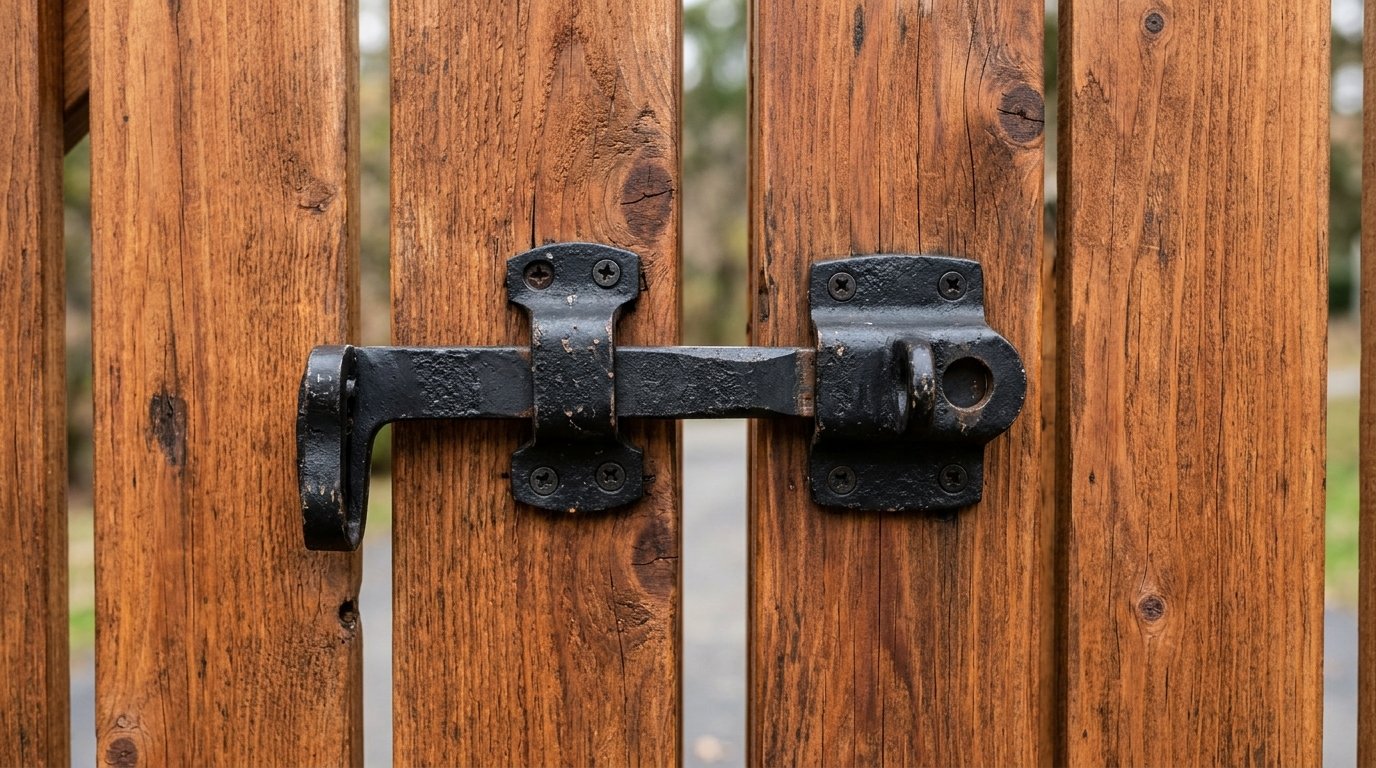
Typical cost: $40 – $130
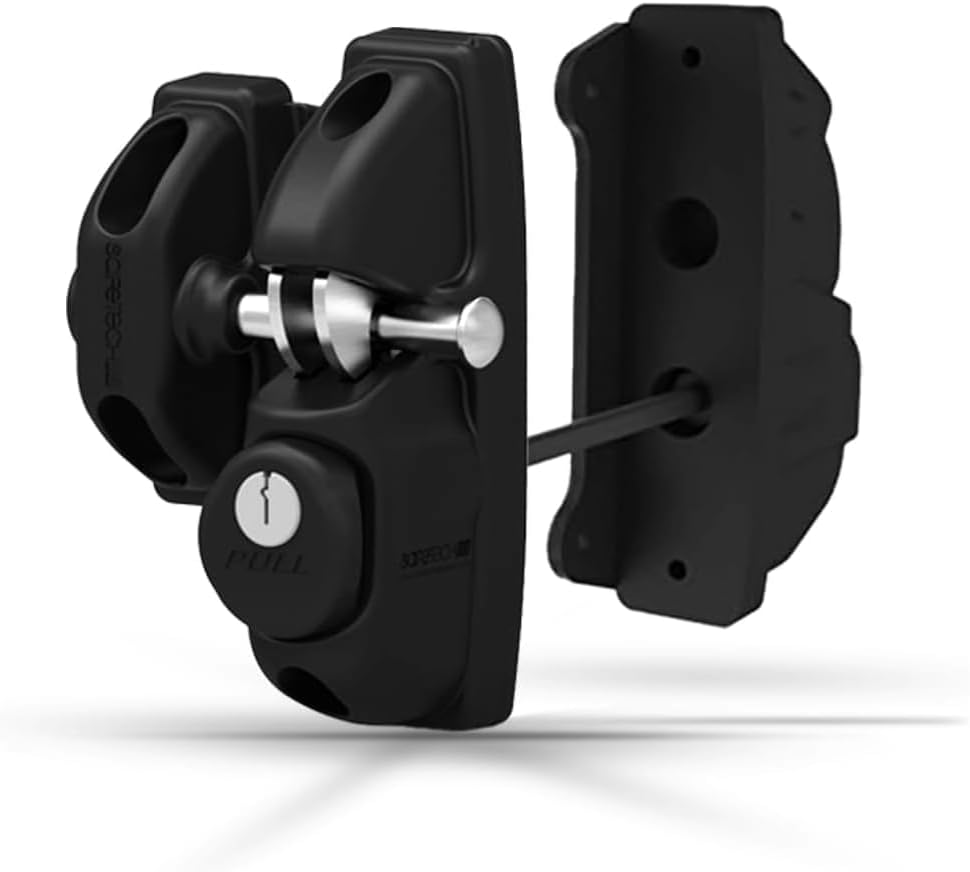
A heavy gravity latch or a lockable latch, depending on whether you need security. Gravity latches close themselves when the gate swings shut, which matters if pets or children are involved.
On a double gate, the latch goes between the two leaves. Make sure it can be reached and opened from both sides, or from the car if you want to open it without getting out.
Lockable latches with a padlock loop cost a little more and are worth it on any gate that faces a road.
Pro tip: Fit the latch last, after the gate has settled for a week or two. Latches fitted on day one rarely line up by day thirty.

16. Anti-Sag Cable Kits
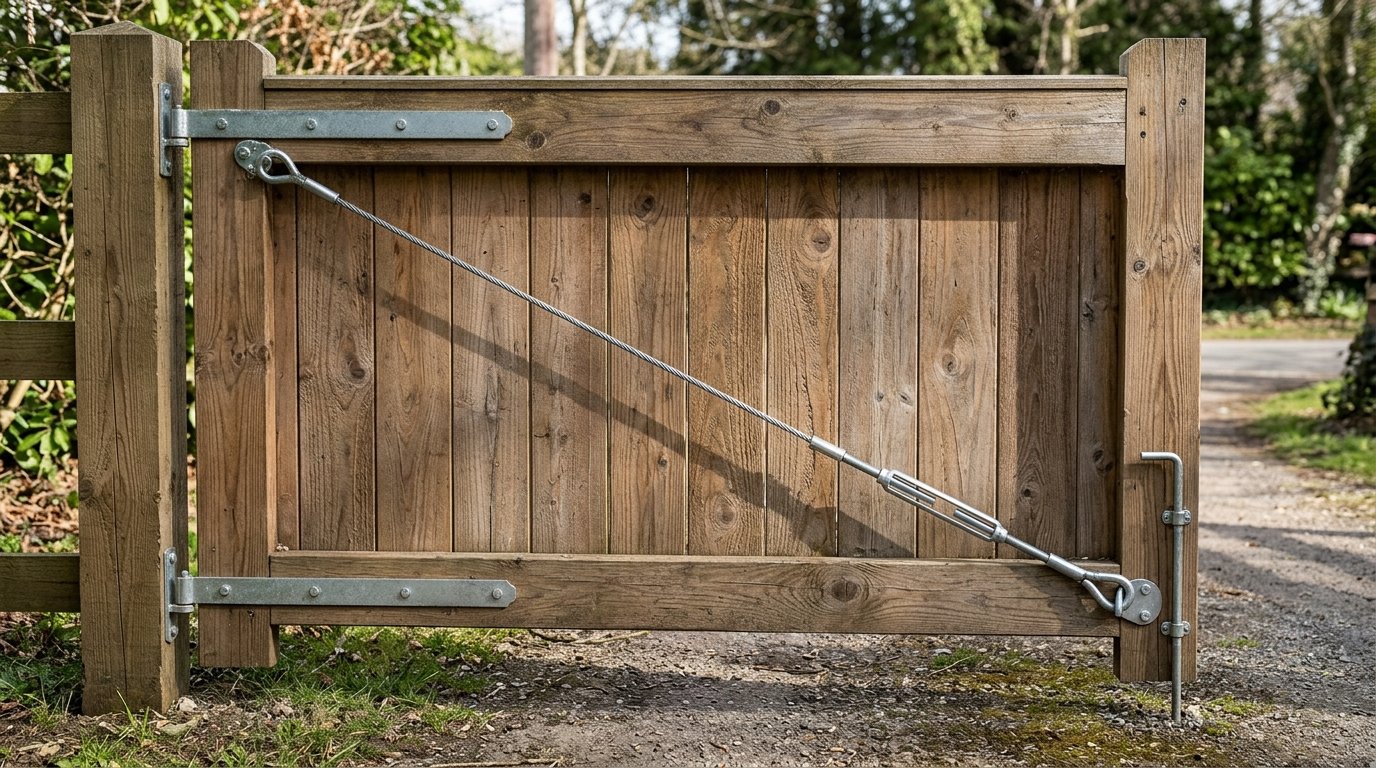
Typical cost: $40 – $60
A cable and turnbuckle running from the top hinge corner to the bottom latch corner of each leaf. It is the cheapest insurance on the page.
Wood gates sag. It is not a question of if. An anti-sag kit lets you pull the latch corner back up with a few turns of the turnbuckle instead of re-hanging the gate.
Install it before you finish the gate, so you are not scratching fresh paint later.
Pro tip: Give the turnbuckle a quarter turn each spring. Small adjustments keep the gate square; large ones crack the frame.

17. Post Caps and Gate Stops
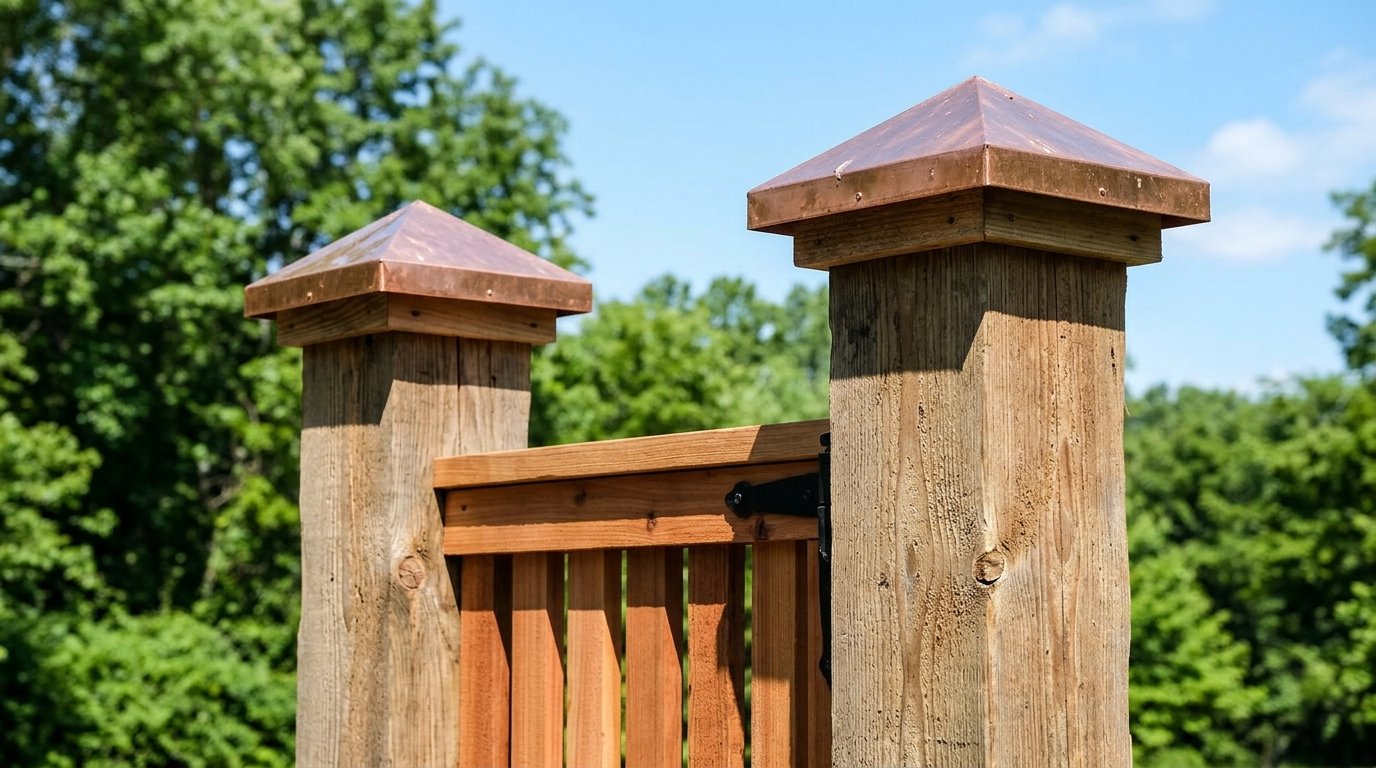
Typical cost: $25 – $80
Post caps keep water out of the end grain, which is where wood posts rot first. A pair of simple copper, metal or wooden caps costs very little and adds years.
A gate stop, a block or a ground stop where the leaves meet, keeps the gate from swinging past closed and straining the hinges.
Solar post cap lights do both jobs: they cap the post and light the entrance at night.
Pro tip: Cut the post top at a slight angle under the cap so any water that gets in runs off.

Automation and Extras
18. Gate Operator
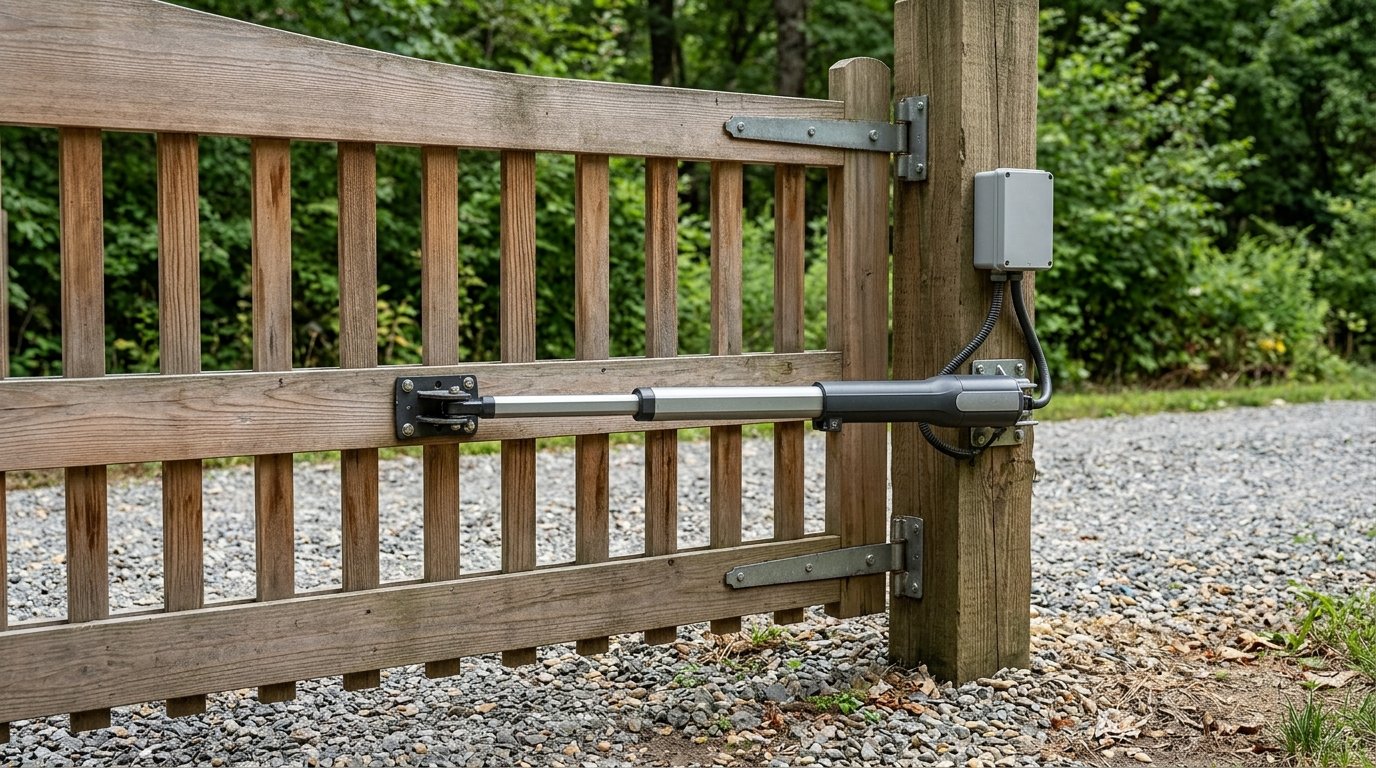
Typical cost: $650 – $1,700
This is the single biggest line. A dual-arm swing gate operator, 12-volt or 24-volt, for two leaves. Match the operator to the gate weight and length, not just the opening width, and buy one rated for more than you need.
Linear arm operators are the most common for residential swing gates. Underground and articulated-arm operators are neater but cost more and need more installation work.
Most quality operators include battery backup, so the gate still opens in a power cut. Check, because a gate that will not open is a big problem when it is your only way in.
Pro tip: Mount the operator brackets on the inside face of the posts and leaves, and confirm the arm geometry with the manufacturer’s chart before drilling.


19. Solar Kit or Hardwiring
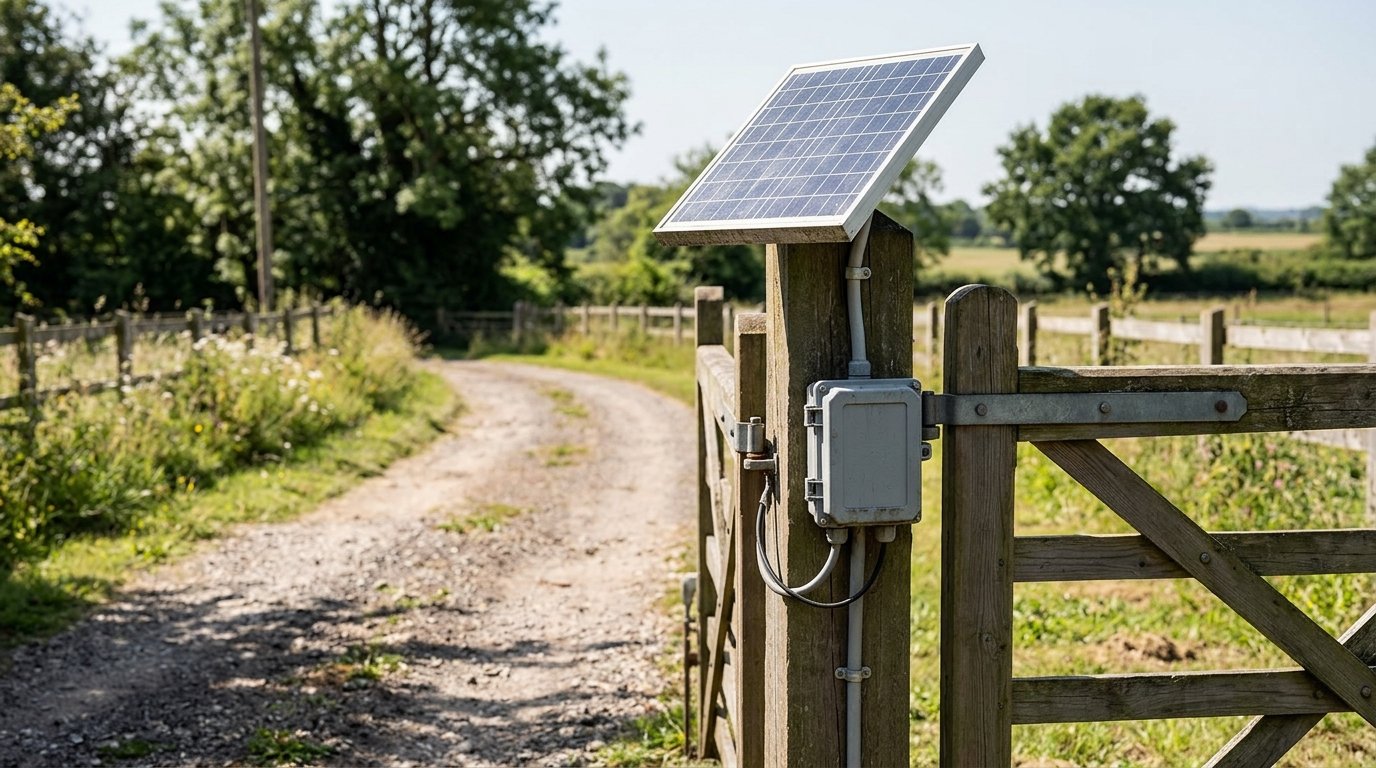
Typical cost: $250 – $800
Solar is genuinely competitive if your gate is far from the house. A 100-foot trench across a driveway costs more than a panel and a battery.
A solar kit is a panel, a battery and a charge controller, and costs $250 to $600. Hardwiring needs a circuit to the gate, and an electrician if your jurisdiction requires it, at $300 to $800.
Solar works best with a panel facing south in full sun. In shady spots or heavy-use gates, hardwiring is more reliable.
Pro tip: Size the solar panel for winter, not summer. Short days and low sun are when solar gates stop working.

20. Safety Photo Eyes
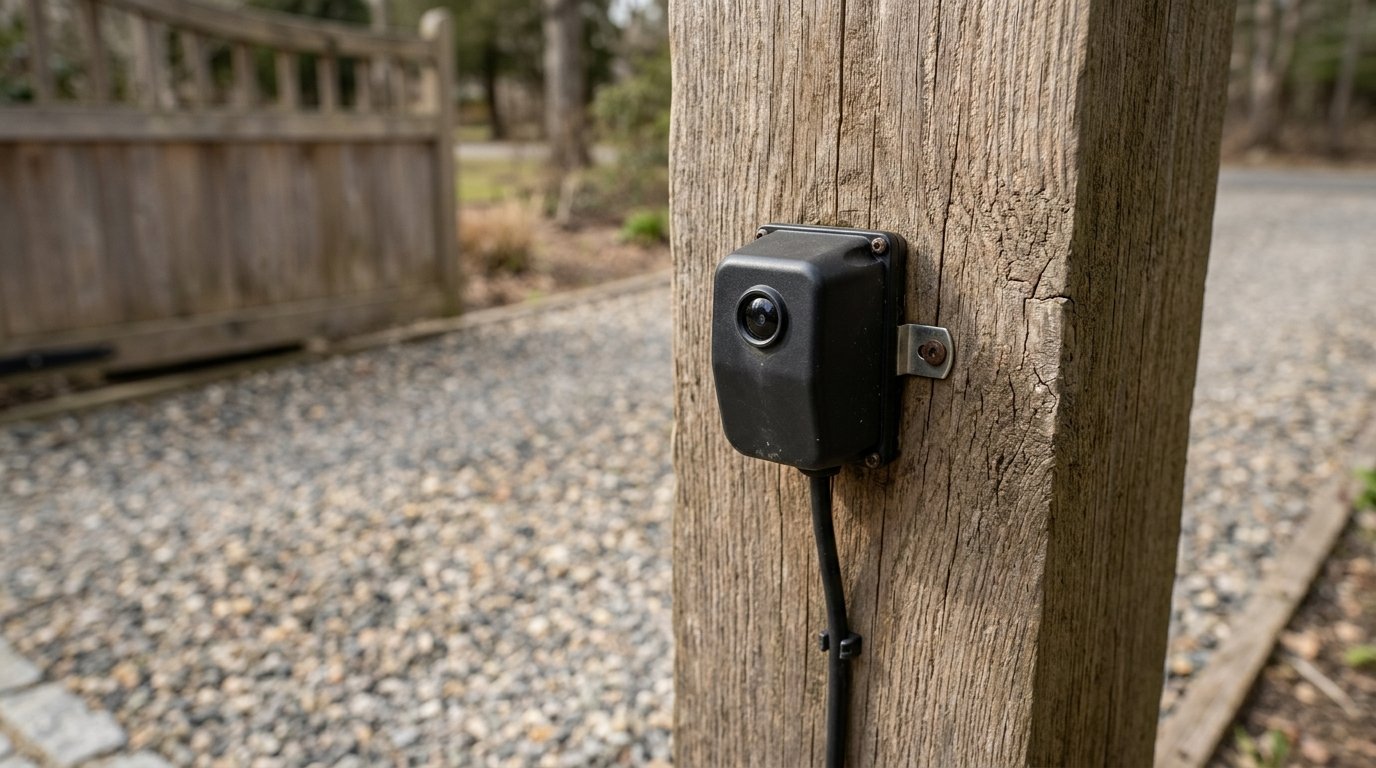
Typical cost: $80 – $180
Gate operators sold in the US fall under UL 325, which requires entrapment protection. Photo eyes are not an upsell, and skipping them is not a budget decision.
A pair of sensors, one on each side of the opening, stops and reverses the gate if something crosses the beam. Some setups add a second pair on the swing side.
An automated gate closing on a child or a pet is the failure mode this rule exists for.
Pro tip: Mount photo eyes at bumper height, around 20 inches, so they catch both vehicles and small children.

21. Keypad, Remote or Intercom
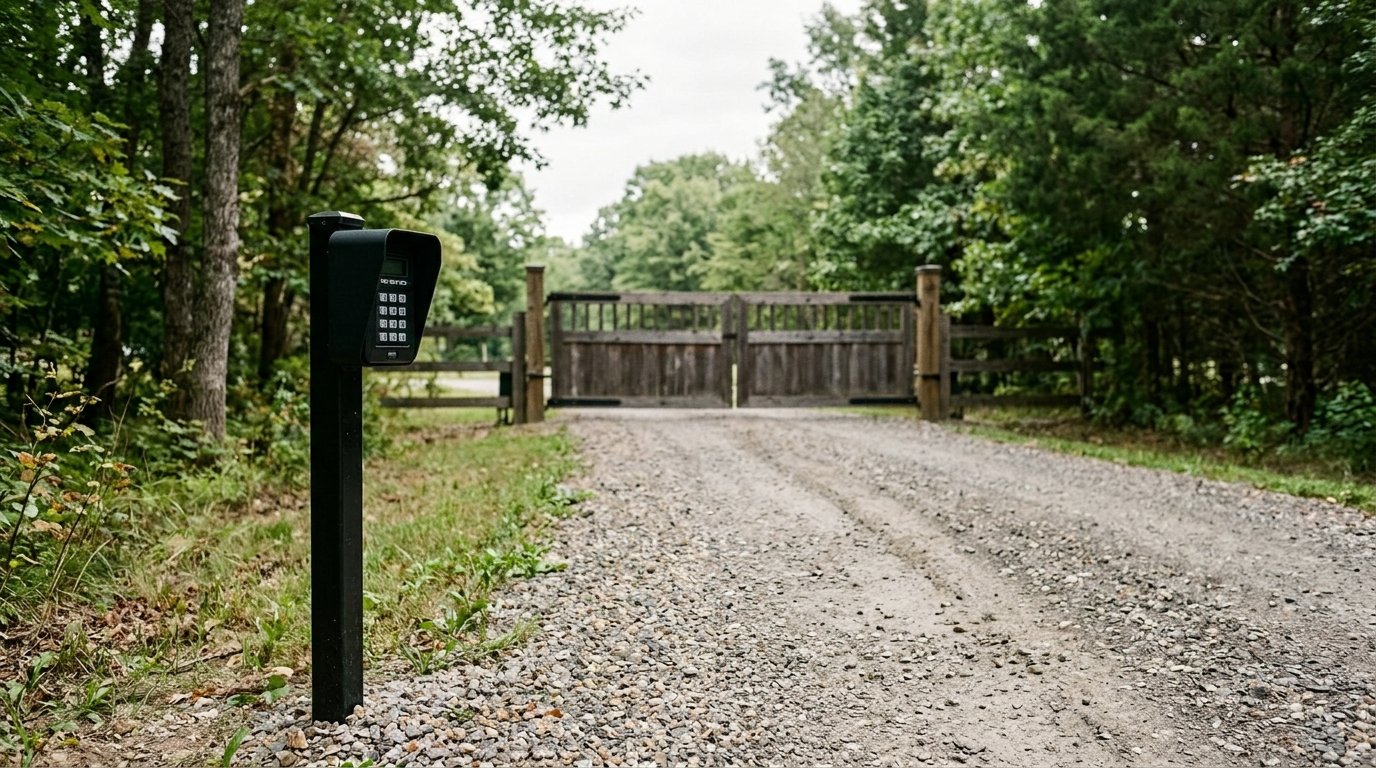
Typical cost: $60 – $900
A wireless keypad is around $60. A full video intercom that rings your phone can run $900. Most homes do fine with a keypad on a post at driver-window height and a couple of remotes.
Put the keypad on a gooseneck post set back from the gate so a driver can reach it without opening the car door, and far enough from the gate that it does not swing into the car.
Smart gate controllers that work with your phone are cheap now, and useful for letting in deliveries when you are away.
Pro tip: Mount the keypad on the driver side of an incoming car, not the passenger side. It sounds obvious until you are leaning across the seat in the rain.


22. Lighting
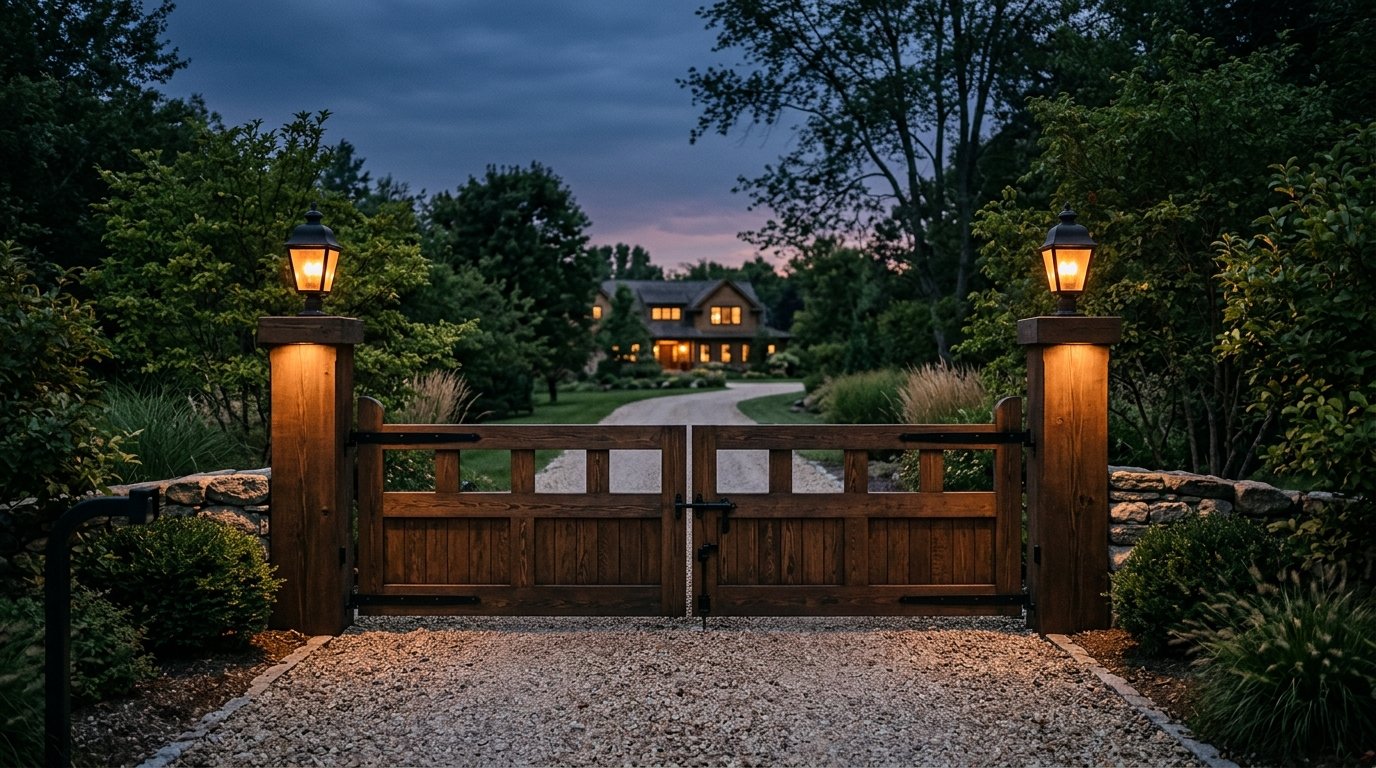
Typical cost: $40 – $200
A gate you cannot see at night is a gate you will drive into. Lighting is optional on the permit, but not in practice.
Solar post cap lights are the simplest option. Wired lanterns on the posts look more substantial and are easy to add if you ran conduit.
Lighting also makes a gate look finished from the road, which is half the reason people build one.
Pro tip: Aim for warm white light at around 2700K. Cool white looks harsh and commercial on a house.

Where the Money Goes
Rolled up from the line items above, here is how a 12-foot wood double-swing gate splits by category. Permits vary too much by area to include.
| Category | Materials (DIY) |
|---|---|
| Posts and footings (posts, concrete, gravel, auger) | $270 – $425 |
| Gate leaves (frame, cladding, fasteners, finish) | $415 – $815 |
| Hardware (hinges, drop rod, latch, anti-sag, caps) | $230 – $560 |
| Automation, optional (operator, power, sensors, keypad, conduit) | $1,080 – $3,500 |
The gap between the DIY numbers and a contractor quote is mostly labor, permits and someone else carrying the warranty. That last one has real value if the gate crosses the only vehicle access to your house.
If you are on the fence, a middle path works well: build and hang the gate yourself, and hire an installer just for the operator and wiring. You save most of the labor and still get a professional set-up on the part that can hurt someone.
Swing or Slide? What It Does to the Budget
Swing gates are cheaper because they need less hardware and no track. They do need clear, reasonably flat ground across the swing arc, and space inside the property for the leaves to open.
Sliding gates suit sloped driveways and tight spaces where a swing gate cannot open. A track slider runs on a ground rail and costs less than a cantilever, but the track collects debris, ice and leaves. A cantilever slider rolls on rollers mounted beside the opening and never touches the ground, which is why it costs the most.
Rule of thumb: if the ground is flat and you have room, swing. If it slopes, or you get heavy snow and do not want to clear an arc, consider a slider and budget at least double.
What People Forget to Budget
The second gallon of finish, as above. The delivery charge on long posts and lumber, which can be $50 to $100 if you do not have a truck. Blades and bits, because cedar and treated lumber dull them faster than you think.
Grade change, again. If the driveway slopes up through the opening, the fix costs money: rising butt hinges, a split gate, or regrading. Measure first.
Time. A manual double gate is two to three weekends for one person, including concrete curing time. An automated gate adds another weekend for the operator, sensors and testing.
And maintenance. Plan for a coat of stain every three to five years, a hinge and turnbuckle adjustment every spring, and a battery replacement on the operator every few years.
A Sensible Build Order
Weekend one: permit, utility locate, layout, dig, set posts and run conduit. Let the concrete cure for a week.
Weekend two: build the frames, clad them, fit the anti-sag cables and finish all surfaces. Let the finish cure.
Weekend three: hang the leaves on the hinges, set the drop rod sleeve, adjust, then fit the latch and post caps.
Weekend four, if automating: mount the operator, photo eyes and keypad, program the limits and test every safety feature before anyone drives through it.
Where I Would Spend the Extra Money
Posts and hinges. Nowhere else.
You can cheap out on cladding and re-clad in ten years for a few hundred dollars. You cannot cheap out on a post and fix it without removing the gate, breaking out concrete and starting over. Every driveway gate failure I have looked at closely was a post or a hinge, and the wood was fine.
If there is money left after that, spend it on the operator. A slightly oversized operator runs cooler, lasts longer and does not struggle on windy days.
Where You Can Save Without Regret
Use pressure-treated lumber for the frame even if you clad in cedar; nobody sees the frame. Skip the video intercom and use a basic keypad and a smart controller. Do the digging with a rented auger instead of hiring it out.
Paint pressure-treated cladding instead of buying cedar if the gate is set back from the road. And clad one face only. It saves money, weight and hinge strain.
Frequently Asked Questions
How much does it cost to build a driveway gate yourself?
A manual wood double-swing gate on a 12-foot opening costs about $700 to $2,100 in materials. Adding an automatic operator, safety sensors and a keypad brings it to roughly $1,900 to $4,600.
What size posts do I need for a driveway gate?
Use 6×6 wood posts at minimum, set at least four feet deep and below the frost line, in an 18-inch diameter hole with gravel at the bottom. For openings over 14 feet or heavy gates, use 4-inch steel posts.
Is it cheaper to build or buy a driveway gate?
Building is usually cheaper for wood gates, since most of a contractor’s price is labor. Prefabricated steel and aluminum gates can be competitive, especially for wide openings, but you still need posts, hardware and installation.
Do I need a permit for a driveway gate?
Often, yes, especially for automated gates or gates near the road. Many areas also have setback rules for how far the gate must sit from the street. Check with your local building department before digging.
Can I use solar power for an automatic gate?
Yes. Solar kits are common and often cheaper than trenching power across a long driveway. Size the panel and battery for winter sun and the number of times the gate opens each day.
Final Thoughts
A driveway gate is not one big cost. It is twenty small decisions, and most of them are cheap. The expensive mistakes are almost always the same three: undersized posts, weak hinges and an operator that was never rated for the gate it is pushing.
Get those right, budget for the things people forget, and a DIY driveway gate can cost a third of the contractor quote and outlast it.