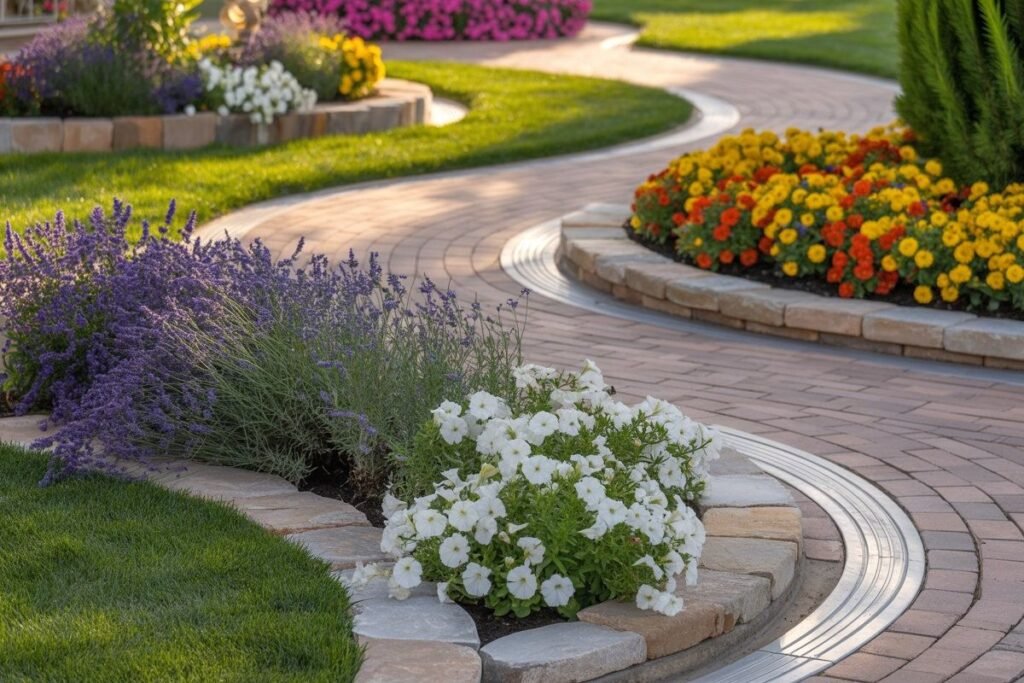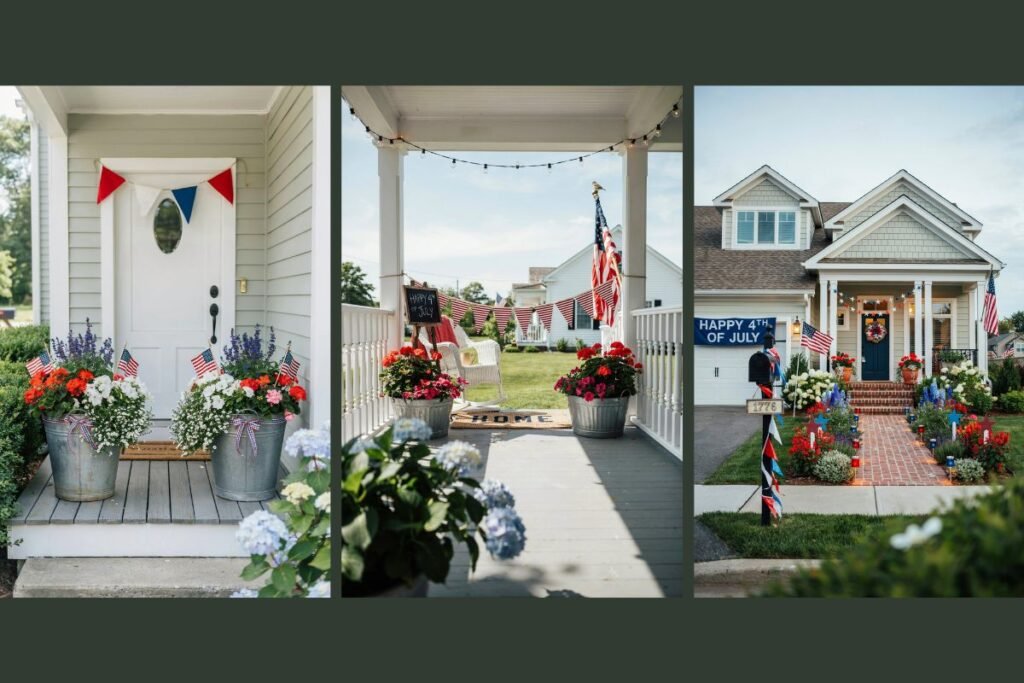
Your front yard is the first thing anyone sees, from guests and neighbors to potential buyers if you ever sell. The good news is that great curb appeal has very little to do with money. Most of what makes a front yard look cared for comes down to clean lines, healthy grass, a few well-placed plants and some fresh finishing touches.
The 21 ideas below are all doable for under $200 each, and most cost far less. Many of them are weekend projects you can finish with basic tools and a bit of elbow grease. Pick three or four for a quick refresh, or work through the list over a season for a front yard that looks professionally landscaped.
We’ve grouped the ideas loosely from the lawn outward: start with the grass and edges, then build up the beds, and finish with the details around the walkway and front door.
Disclosure: As an Amazon Associate we earn from qualifying purchases. If you buy through our links, we may earn a small commission at no extra cost to you.
1. Edge Your Lawn for Crisp, Clean Lines
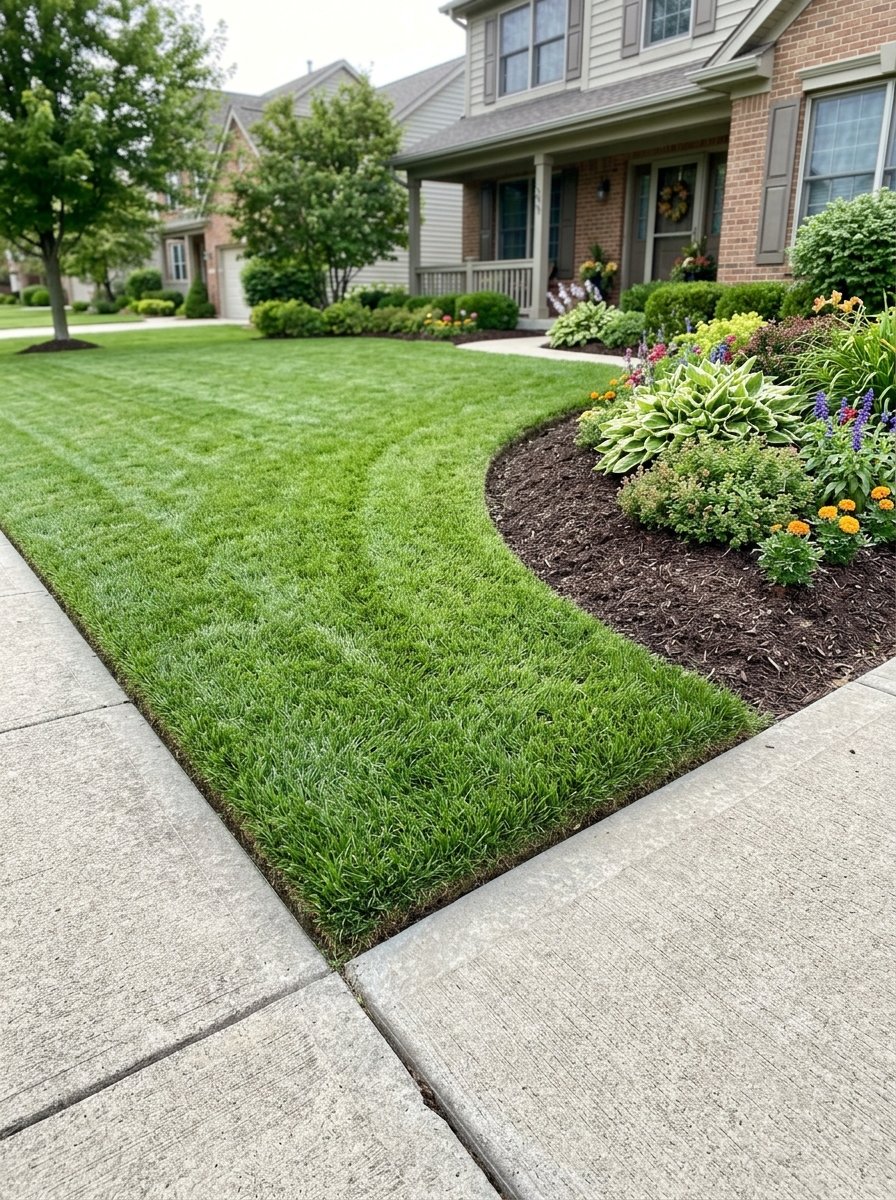
Nothing makes a lawn look sharper for less money than a clean edge. A crisp line where the grass meets the driveway, sidewalk and flower beds instantly makes the whole yard look maintained, even if nothing else has changed.
You can cut a natural edge with a half-moon edging tool or a flat spade. Cut straight down about 3 to 4 inches, then angle the spade to remove a small wedge of soil and turf. Re-cut the edge two or three times a season to keep it sharp.
If you want an edge that stays put, install a plastic, metal or paver border. Steel edging gives a slim, modern line, while bricks or pavers set flush with the lawn make mowing easier because the mower wheel can ride right along the top.
2. Refresh Garden Beds with Fresh Mulch
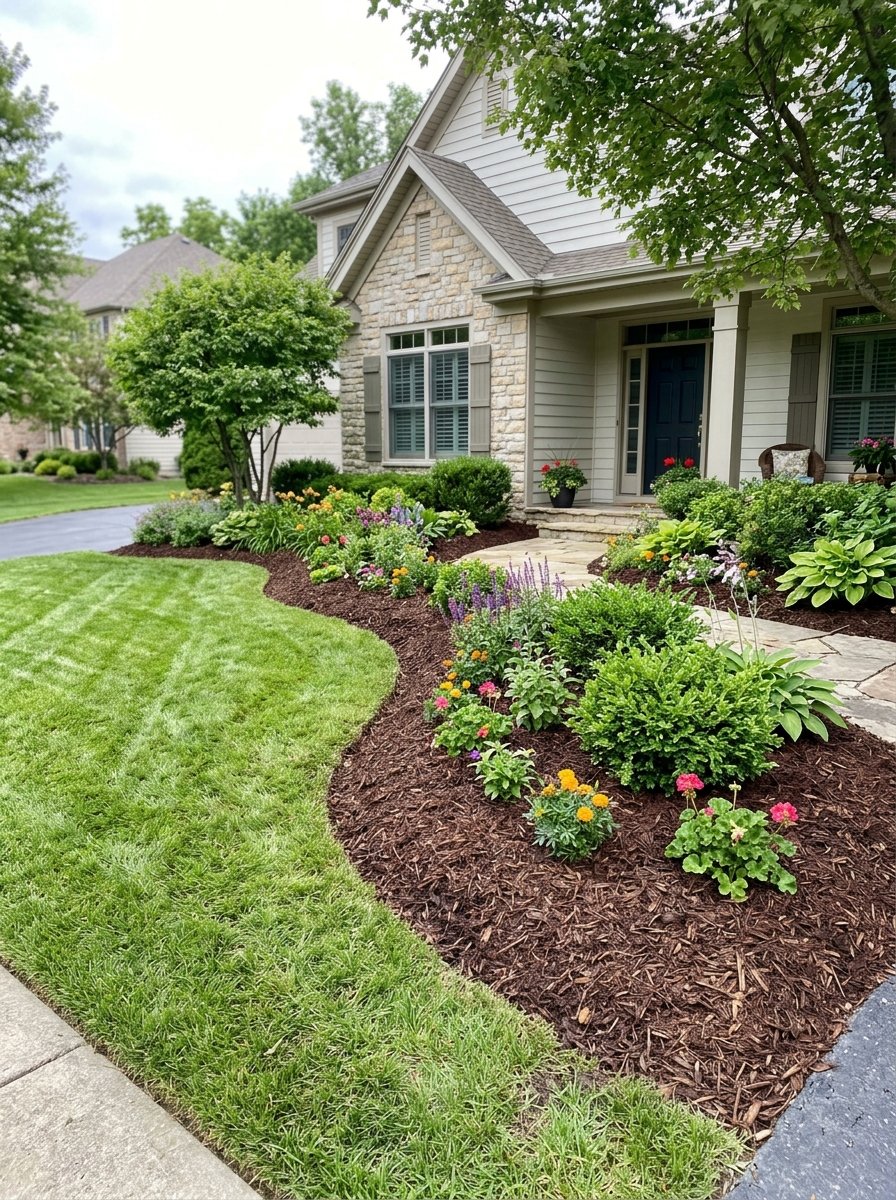
A new layer of mulch is one of the most dramatic, low-cost upgrades for any front yard. It darkens and unifies the beds, suppresses weeds, holds moisture in the soil and makes plants look healthier.
Spread mulch 2 to 3 inches deep, and keep it a few inches away from tree trunks and plant stems to prevent rot. Avoid the “mulch volcano” look around trees, which can damage the bark over time.
Dark brown or black mulch makes green plants and flowers pop, while natural cedar or pine bark gives a softer, more rustic look. Bagged mulch is easy for small yards, but buying in bulk from a landscape supplier is usually cheaper for larger areas.
3. Overseed Thin or Patchy Grass
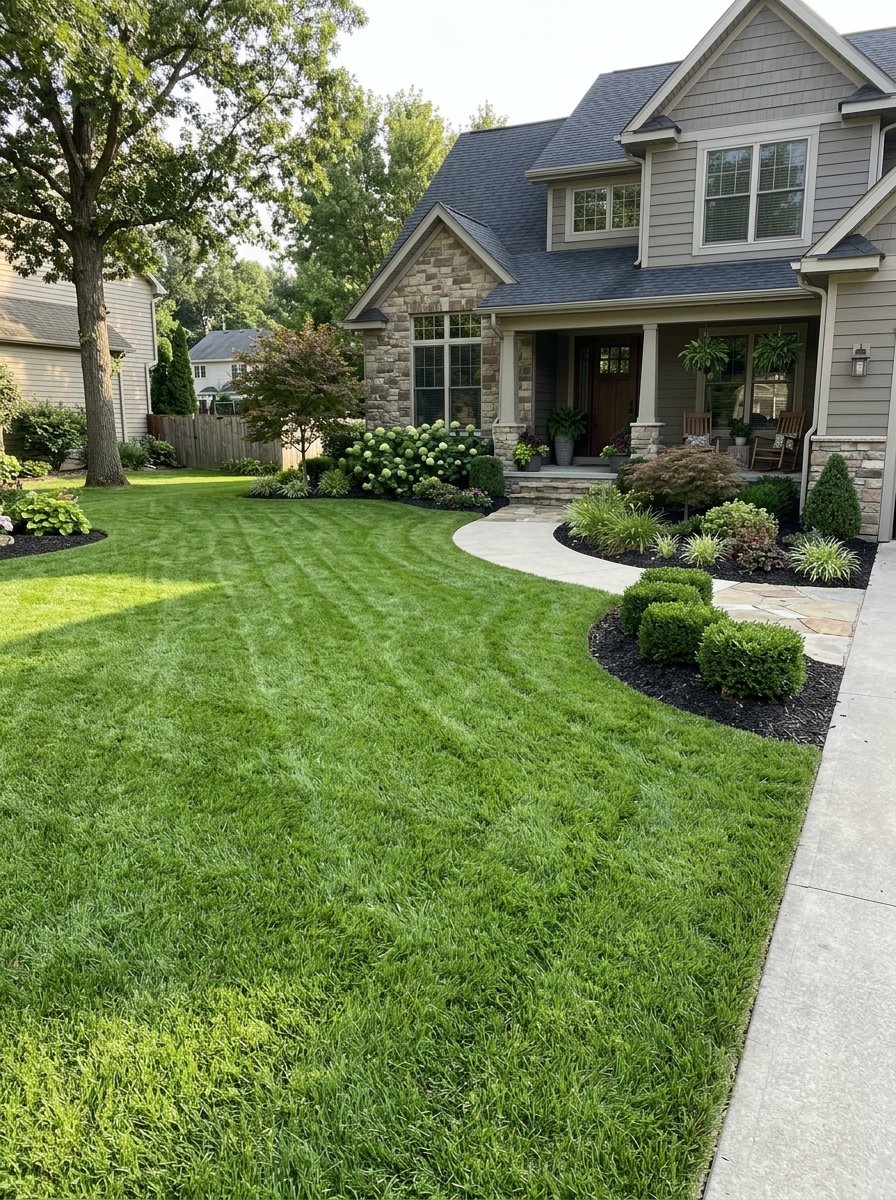
Thin, patchy grass makes even a nice house look neglected. Overseeding spreads new grass seed over your existing lawn to fill in bare spots and thicken the turf.
Early fall is the best time to overseed cool-season lawns such as fescue, bluegrass and ryegrass, because the soil is still warm and the air is cooler. Mow short, rake to loosen the top layer of soil, spread the seed, and keep it consistently moist until it sprouts.
For warm-season grasses like Bermuda and zoysia, late spring and early summer are better. Choose a seed blend suited to your region and how much sun your front yard gets.
4. Feed the Lawn on a Schedule
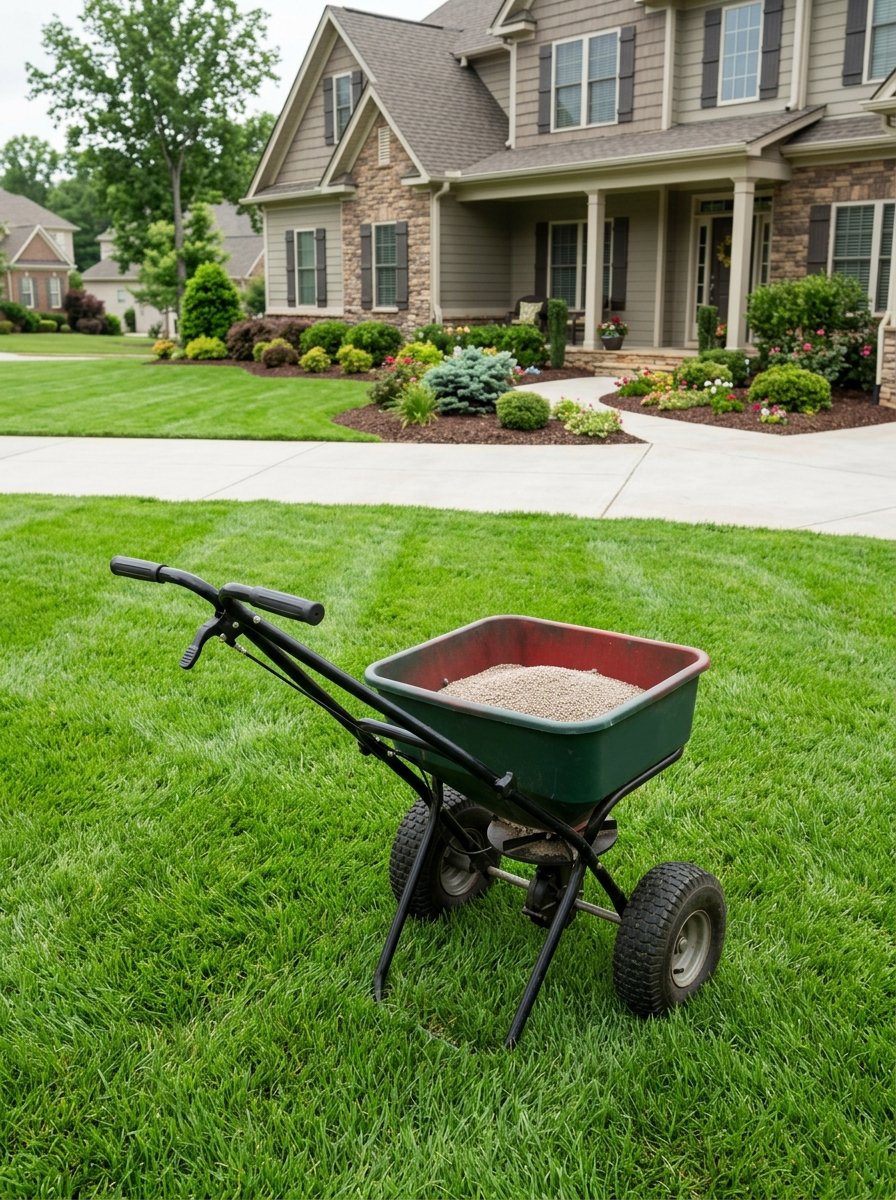
A well-fed lawn grows thicker and greener, and thick turf naturally crowds out weeds. A simple fertilizer schedule is one of the cheapest ways to keep your lawn looking its best.
Most cool-season lawns benefit most from feeding in early fall and again in late fall, with a lighter feeding in spring. Warm-season lawns are fed during their active growing season in late spring and summer.
Use a broadcast spreader for even coverage, follow the bag rates, and water the fertilizer in afterward. A soil test from your local extension office will tell you exactly what your lawn needs.
5. Build a Curved Flower Bed Along the Walkway
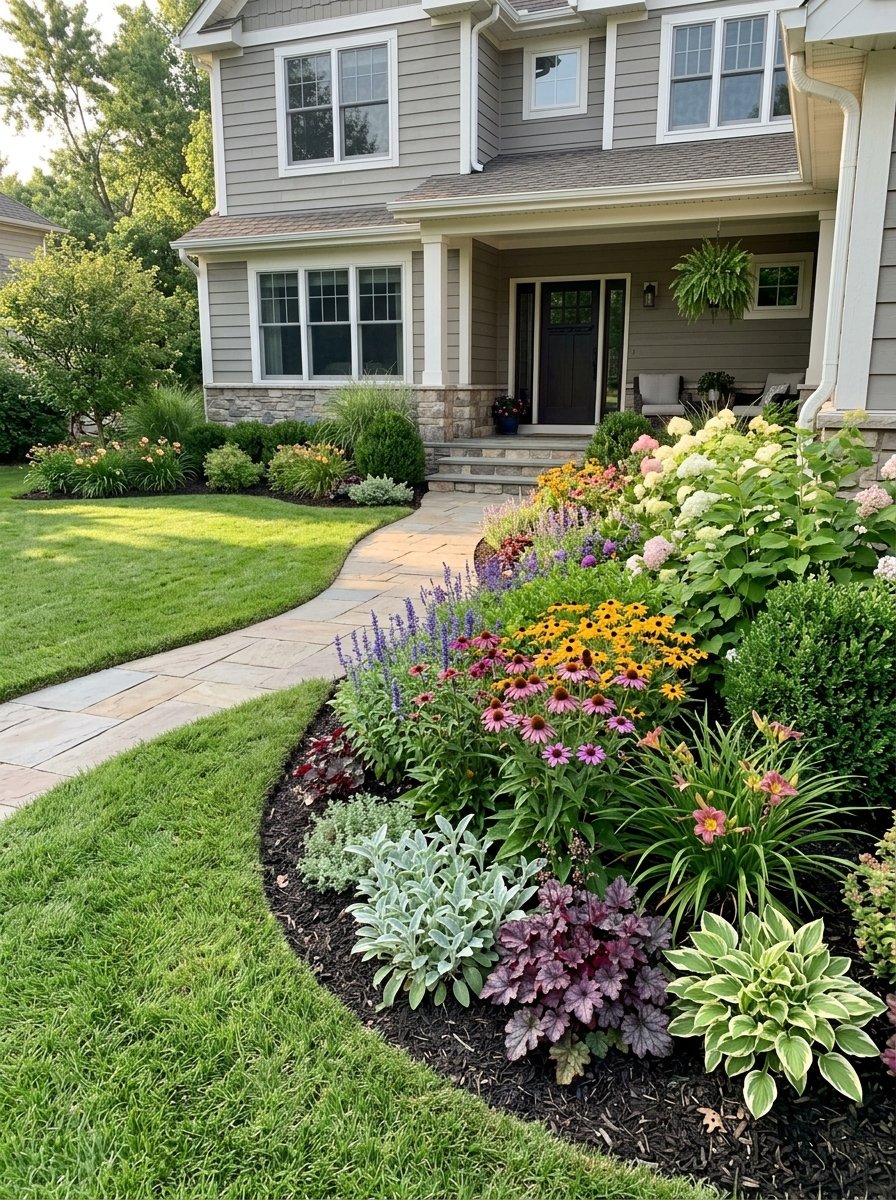
A curved bed along the front walk softens straight concrete lines and draws visitors toward your door. Gentle curves look more natural and are easier to mow around than sharp corners.
Lay a garden hose on the lawn to plan the shape, then remove the sod with a flat spade. Loosen the soil, mix in some compost, and edge the bed so grass doesn’t creep back in.
Plant in layers: taller perennials or small shrubs at the back, mid-height plants in the middle, and low groundcovers or annuals along the front edge.
6. Create a Tree Ring Bed
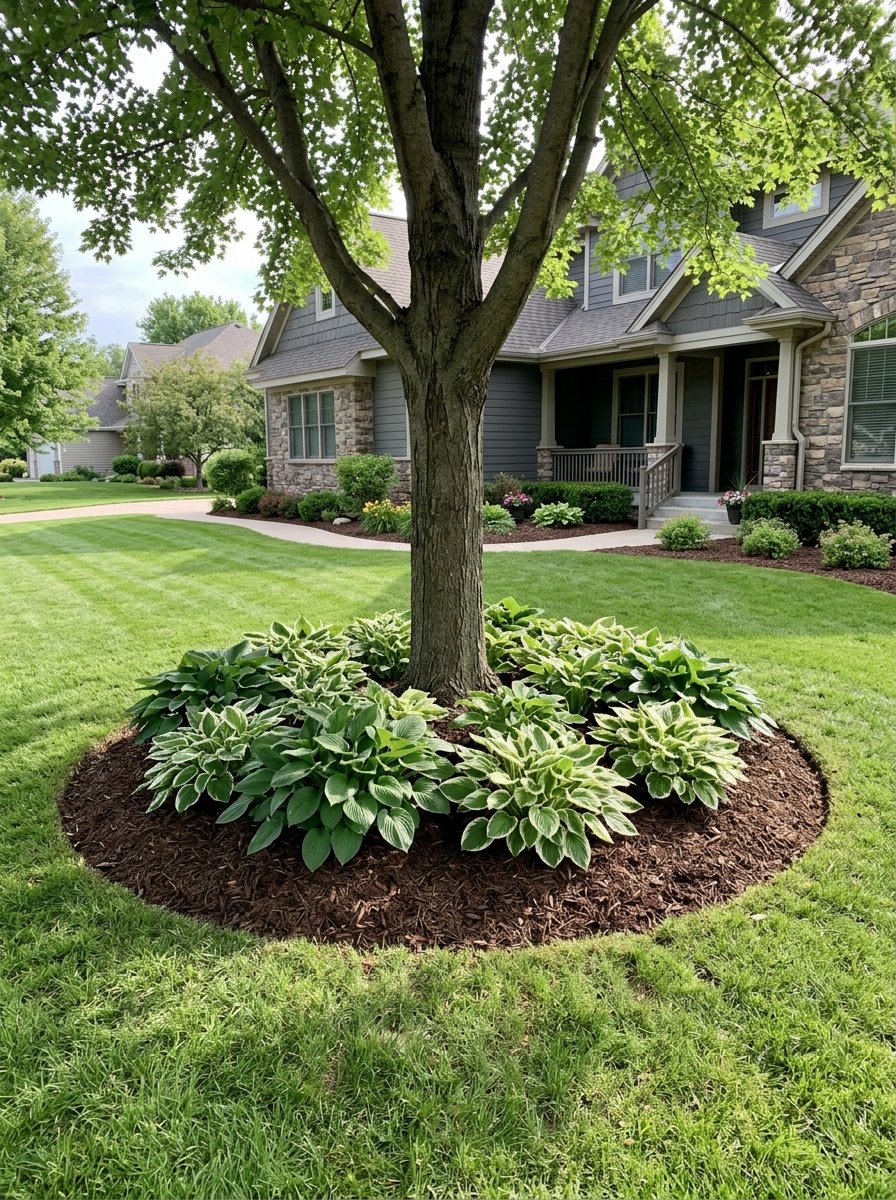
Mowing right up to a tree trunk can damage the bark and leaves a messy look. A neat circle of mulch or plants around the tree solves both problems and adds a finished focal point to the lawn.
Mark a circle 3 to 4 feet wide around the trunk, remove the grass by hand to avoid damaging roots, and add a thin layer of mulch. Don’t pile soil or mulch against the trunk.
For extra color, plant shade-tolerant perennials such as hostas, heuchera or ferns around the ring, or edge it with a simple row of stones.
7. Add Foundation Shrubs
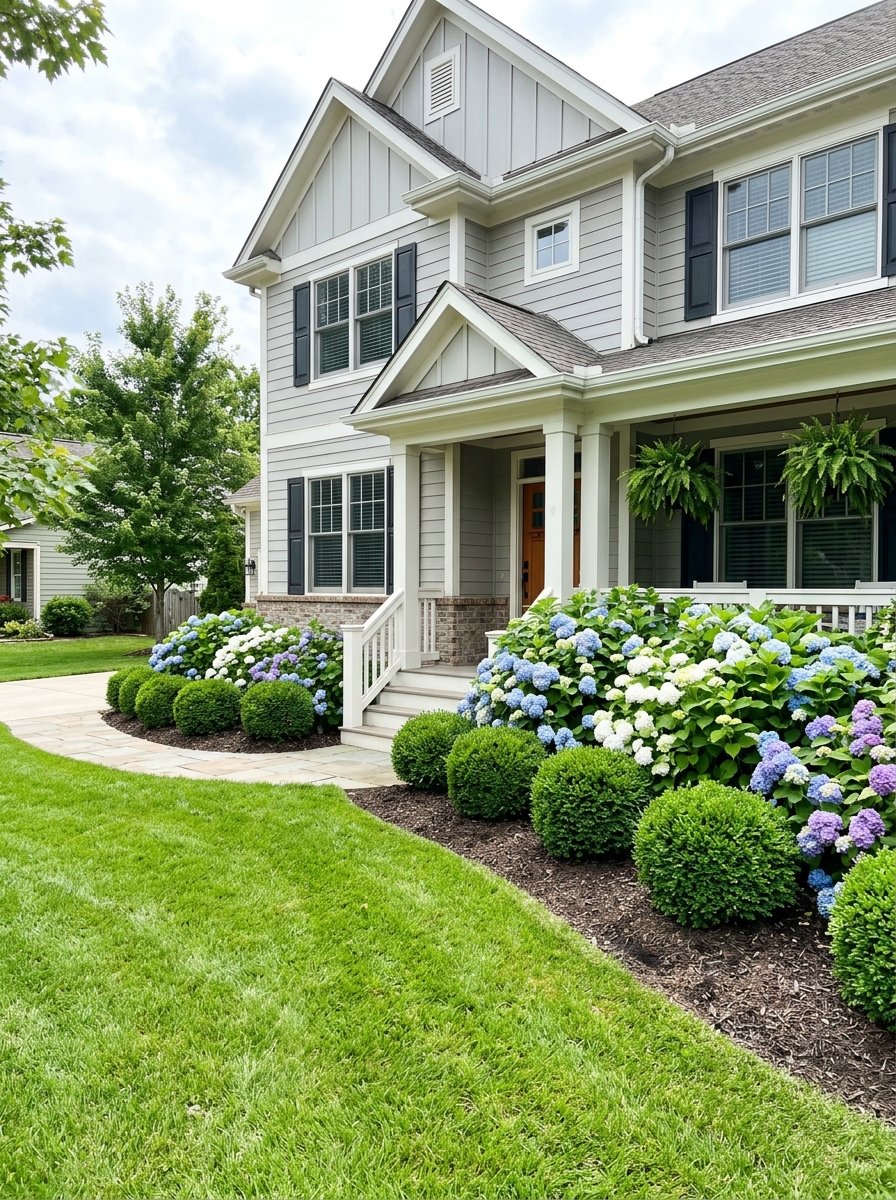
Shrubs planted along the front of the house soften the hard line where the foundation meets the ground and anchor the home in the landscape. Even a few small shrubs make a bare house look settled and welcoming.
Choose compact varieties that will stay below your window sills at maturity, such as dwarf boxwood, compact hollies, dwarf spirea or small hydrangeas. Check the mature width so you leave enough space between plants and the house.
Plant shrubs at least 2 to 3 feet away from the foundation to allow air circulation and room to grow. Small container shrubs are much cheaper than large ones and will fill in within a couple of seasons.
8. Plant Perennials for Year-After-Year Color
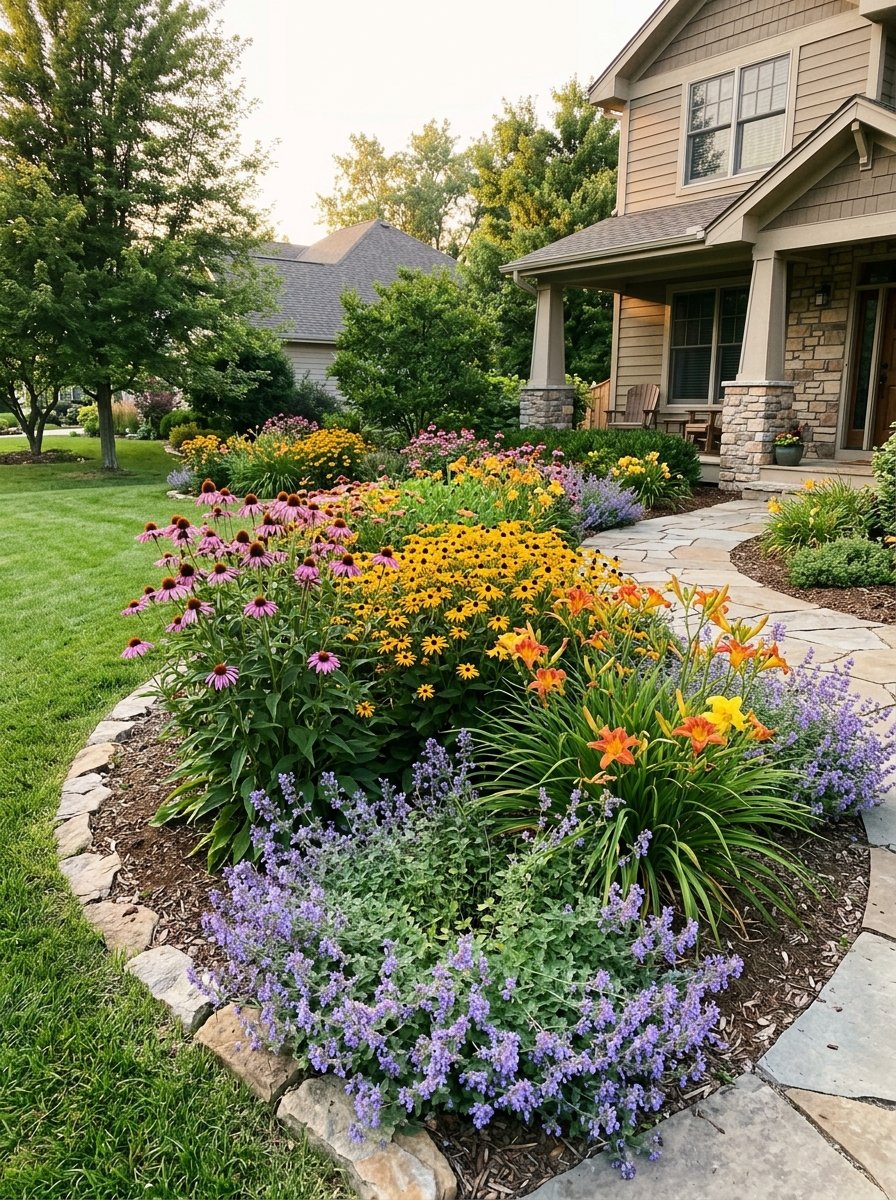
Perennials come back every year, so they’re one of the best values in the garden. A few well-chosen plants can give you color from spring through fall.
Reliable, low-maintenance choices include daylilies, coneflowers, black-eyed Susans, salvia, catmint and sedum. Plant them in groups of three or five for a fuller, more designed look.
Many perennials can be divided every few years, which means your garden can grow for free over time. Ask neighbors if they have extra plants to share when they divide theirs.
9. Fill in with Seasonal Annuals
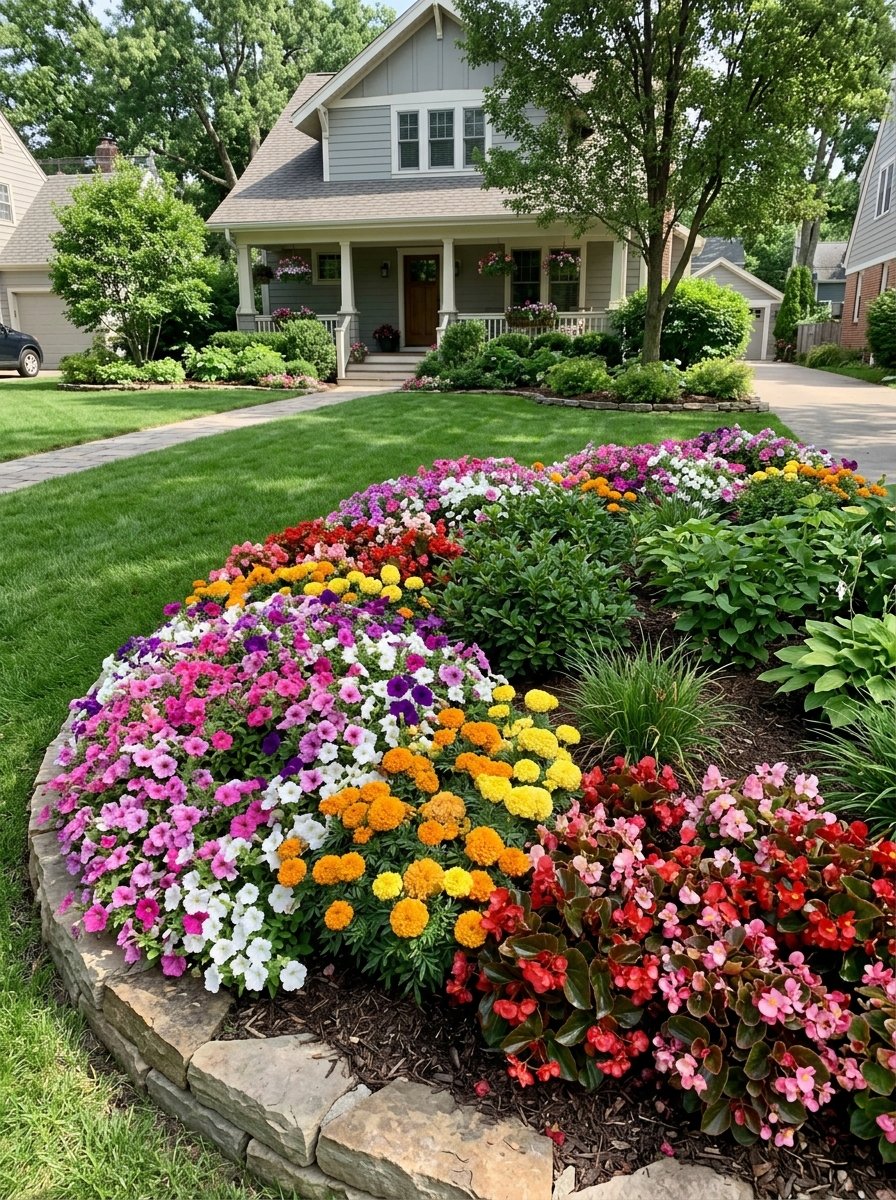
Annuals give you bold, nonstop color for one season. They’re perfect for filling gaps between young perennials or for adding bright spots near the front door.
Petunias, marigolds, begonias, impatiens and zinnias are inexpensive and easy to grow. Buy them in flats to save money, and plant them in drifts of a single color for more impact.
In fall, swap summer annuals for mums, pansies and ornamental kale to keep the front yard colorful as temperatures drop.
10. Use Large Planters by the Front Door
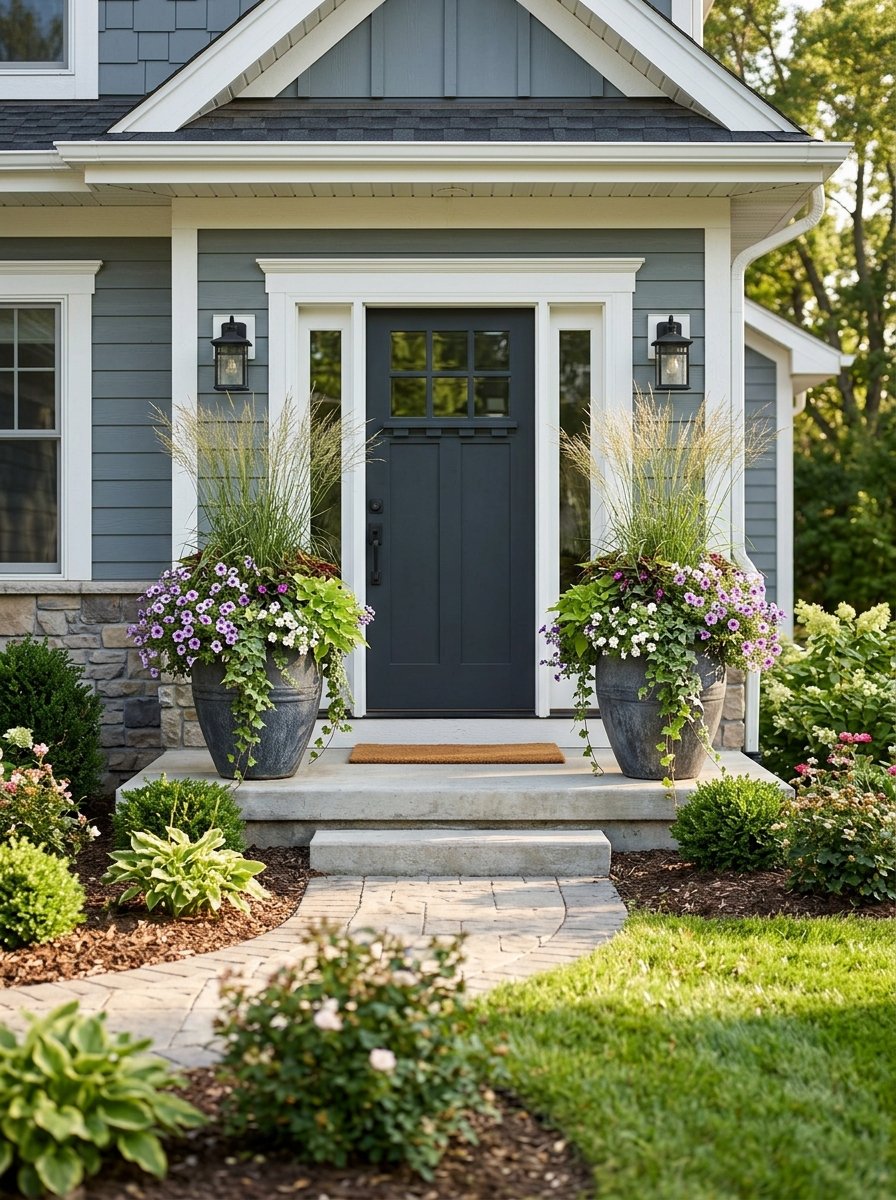
A pair of large planters flanking the front door instantly frames the entrance and adds height and color. Symmetry makes the entry look polished and intentional.
Choose planters that are big enough to be seen from the street. A classic “thriller, filler, spiller” combination works well: a tall plant in the center, fuller plants around it and trailing plants spilling over the edge.
Lightweight resin or fiberglass planters look like stone or ceramic but are much easier to move and won’t crack in freezing weather.
11. Line the Walkway with Solar Path Lights
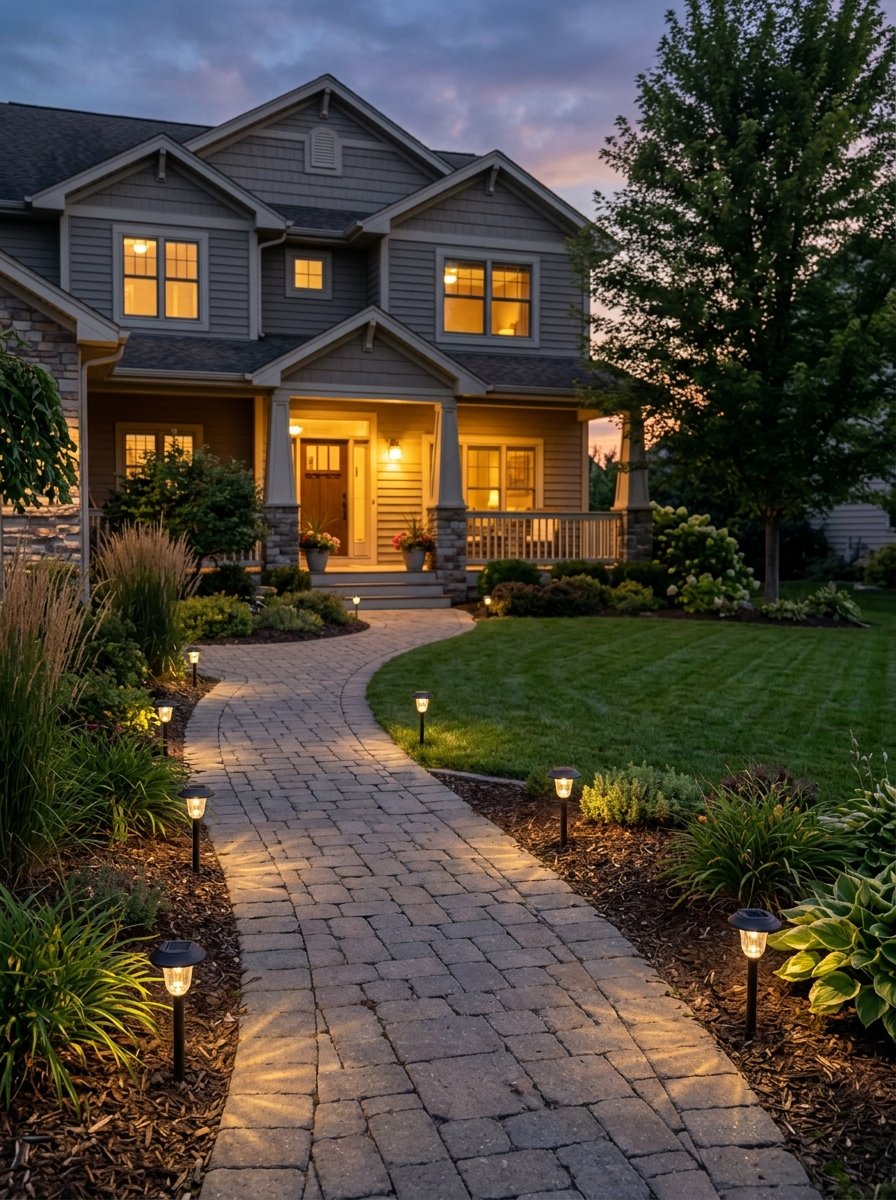
Solar path lights make your home look welcoming after dark and help guests find the door safely. Because they charge in the sun, there’s no wiring or electrician needed.
Space lights 6 to 8 feet apart on both sides of the path, or stagger them for a more natural look. Too many lights close together can look like a runway.
Look for lights with warm white LEDs and a decent battery capacity so they stay on through the evening.
12. Add Uplighting to a Tree or Feature
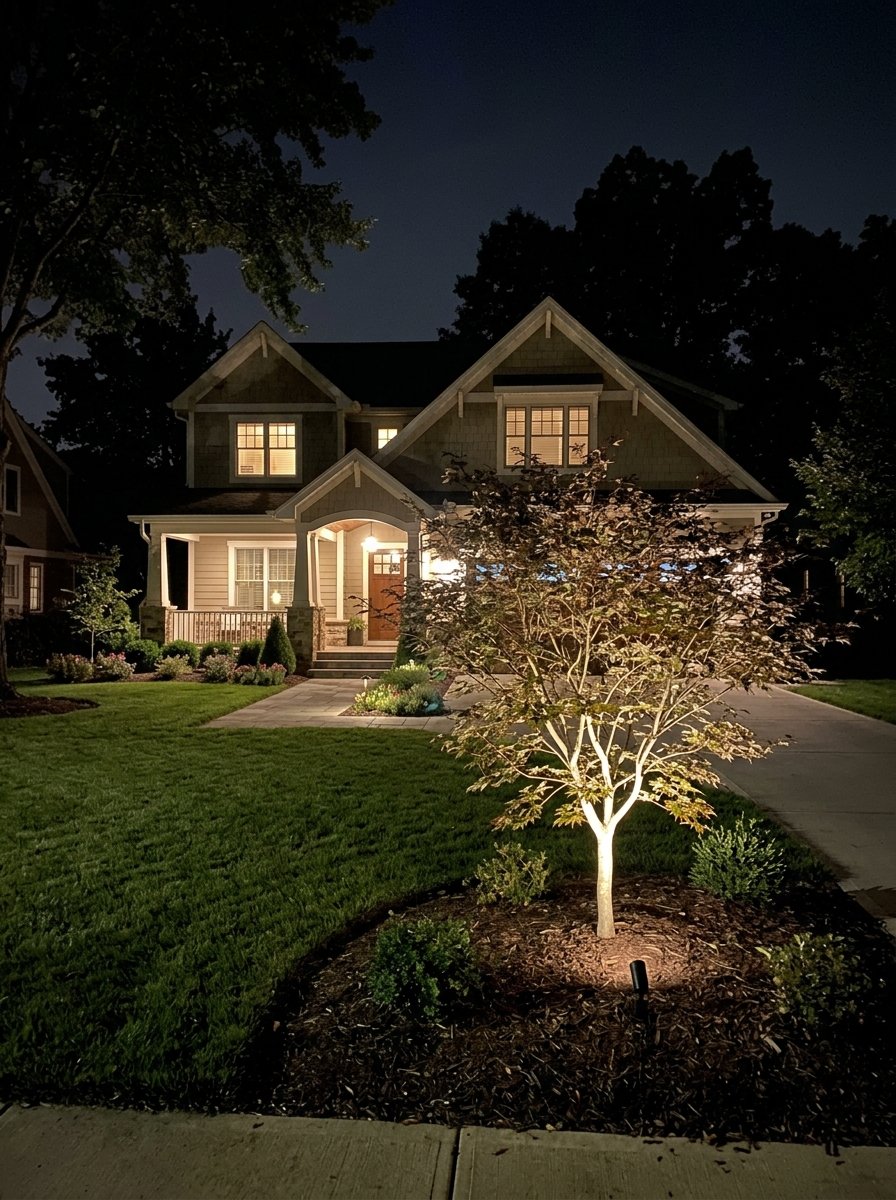
Uplighting a tree, a shrub or the front of the house adds drama and depth at night. It’s a professional landscape trick that looks expensive but can be done cheaply with solar spotlights.
Place a spotlight at the base of a tree and aim it up into the canopy. You can also wash the front of the house with light between windows.
Solar spotlights work best where they get direct sun during the day. If your front yard is shady, a low-voltage plug-in kit is still a budget-friendly option.
13. Refresh the Front Door
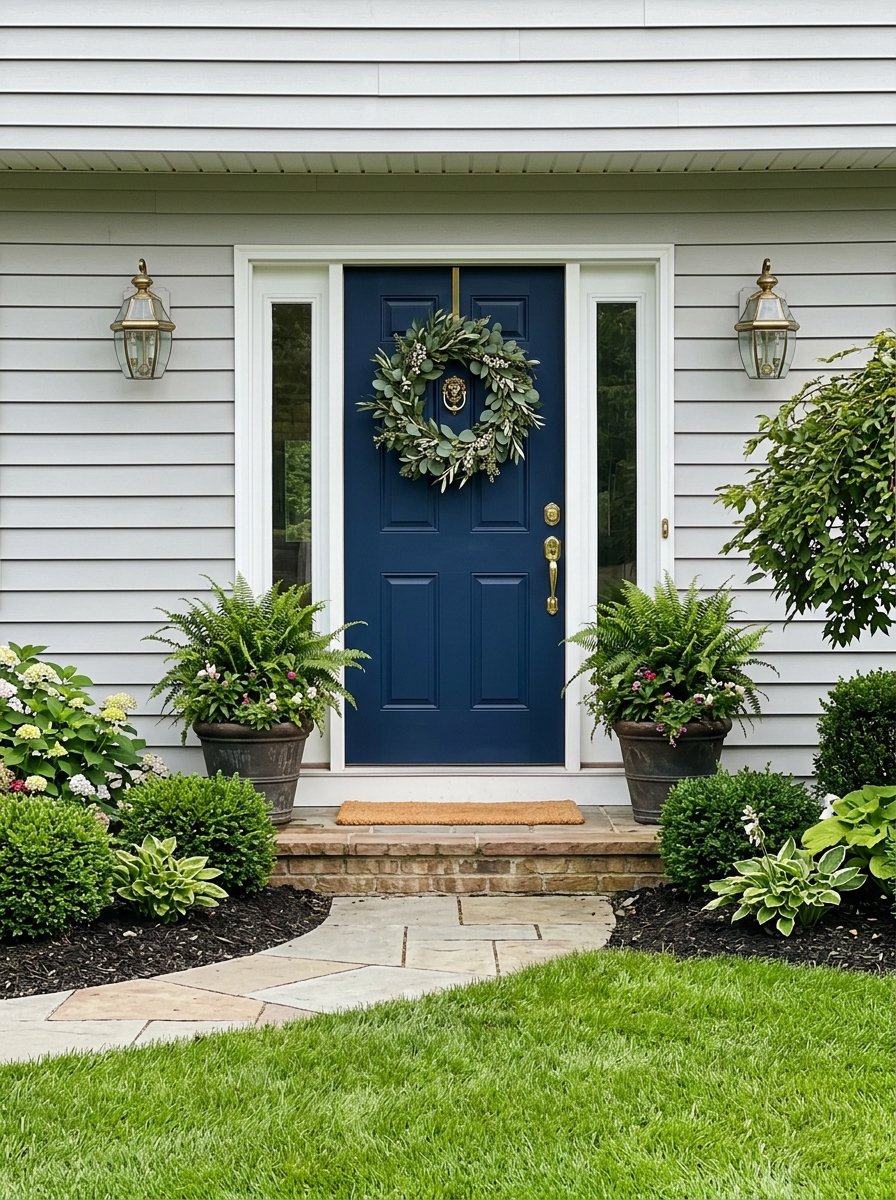
The front door is the focal point of your home’s exterior. A fresh coat of paint in a bold color such as navy, black, red or deep green can transform curb appeal for the cost of a quart of exterior paint.
Remove the hardware, clean and lightly sand the door, then apply a primer and two coats of exterior paint. Choose a color that complements your siding and shutters.
Finish with new hardware, a modern kickplate or a fresh wreath for a complete makeover.
14. Update Your House Numbers
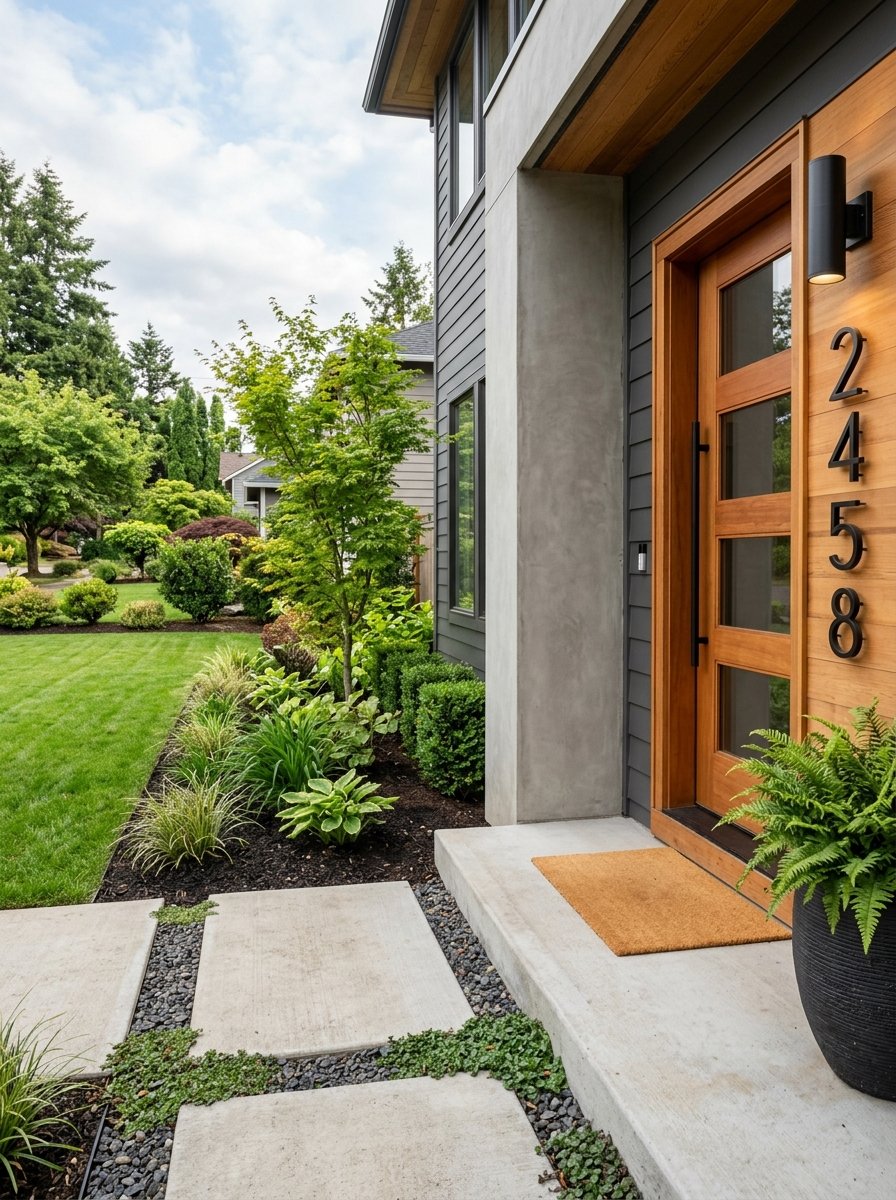
Large, modern house numbers are a small detail that makes a big difference. They help visitors and delivery drivers find your home, and they add a designer touch.
Mount them where they can be seen easily from the street, such as next to the front door, on a column or on a planter box.
Choose a finish that matches your door hardware or light fixtures for a cohesive look.
15. Add a New Doormat and Outdoor Rug
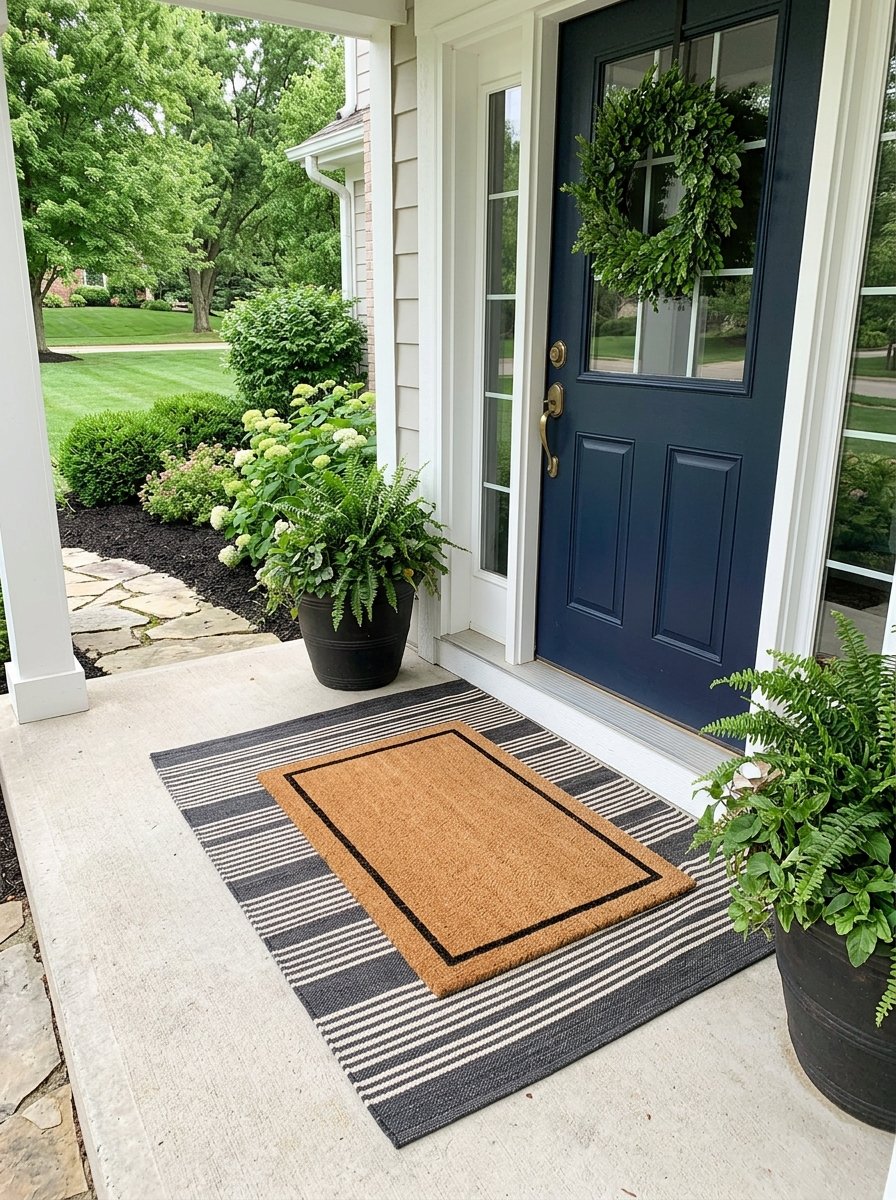
A new doormat, or a layered look with an outdoor rug underneath, makes the entry feel warm and welcoming.
Layer a coir mat over a striped or patterned outdoor rug for an on-trend porch look.
Choose weather-resistant materials and hose them off occasionally to keep them fresh.
16. Install a Mailbox Garden
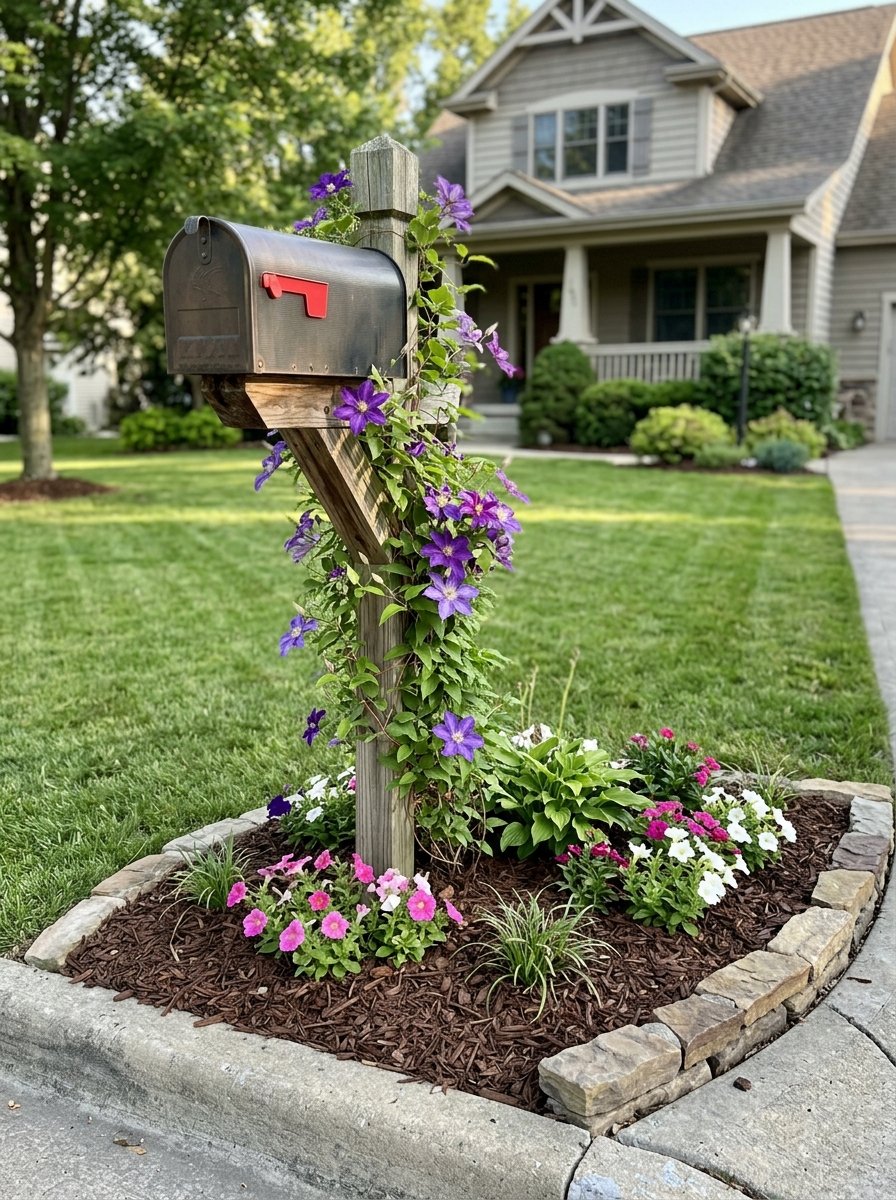
The mailbox is often the first thing seen from the road. A small bed around the post with flowers and mulch makes it a cheerful focal point.
Plant low-growing perennials or annuals around the base, and add a climbing vine like clematis to the post.
If the mailbox itself is worn, a fresh coat of paint or a new post can make a big difference.
17. Use River Rock or Gravel in Tough Spots
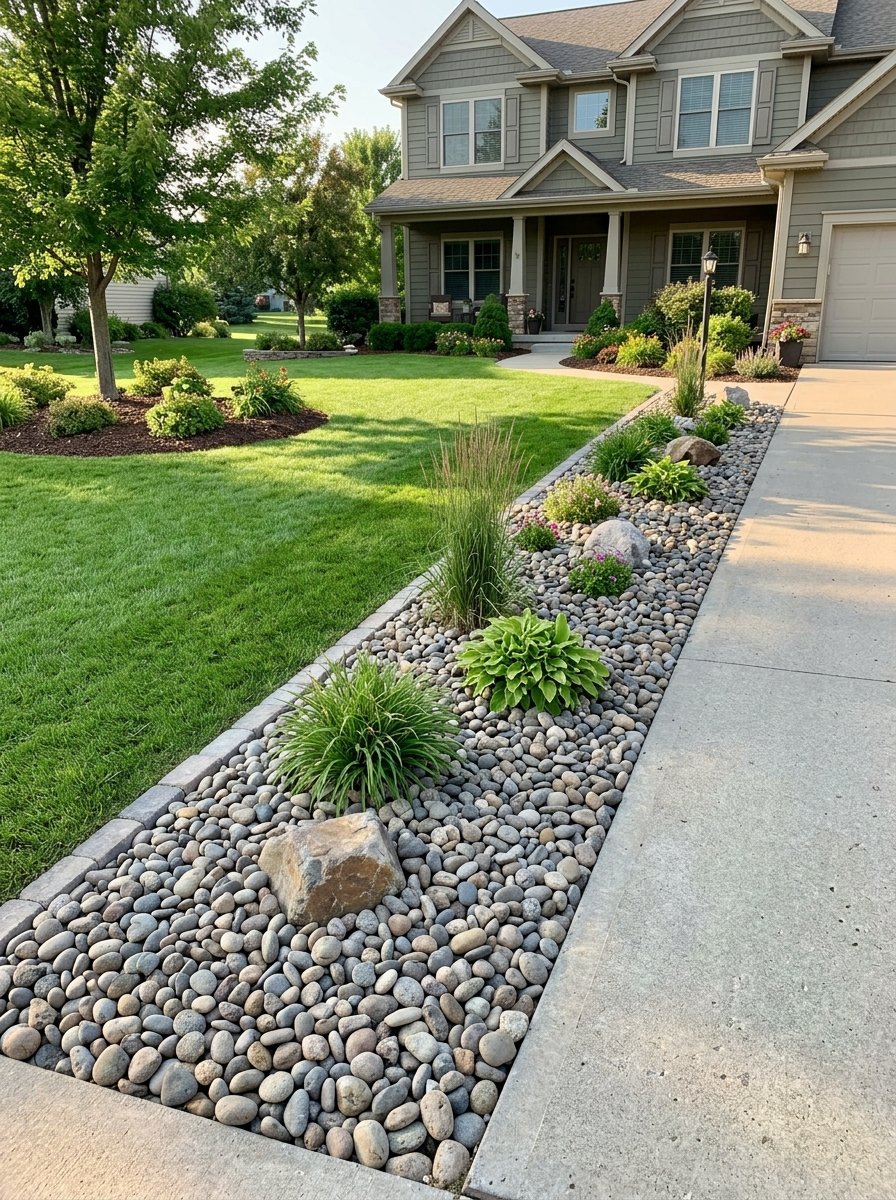
Areas where grass won’t grow, such as narrow strips, shady corners or along the driveway, can be filled with river rock or gravel for a clean, low-maintenance look.
Lay landscape fabric underneath to keep weeds down, and edge the area to keep stones in place.
River rock also works well as a dry creek bed to direct rainwater runoff away from the house.
18. Add a Bench or Seating Area
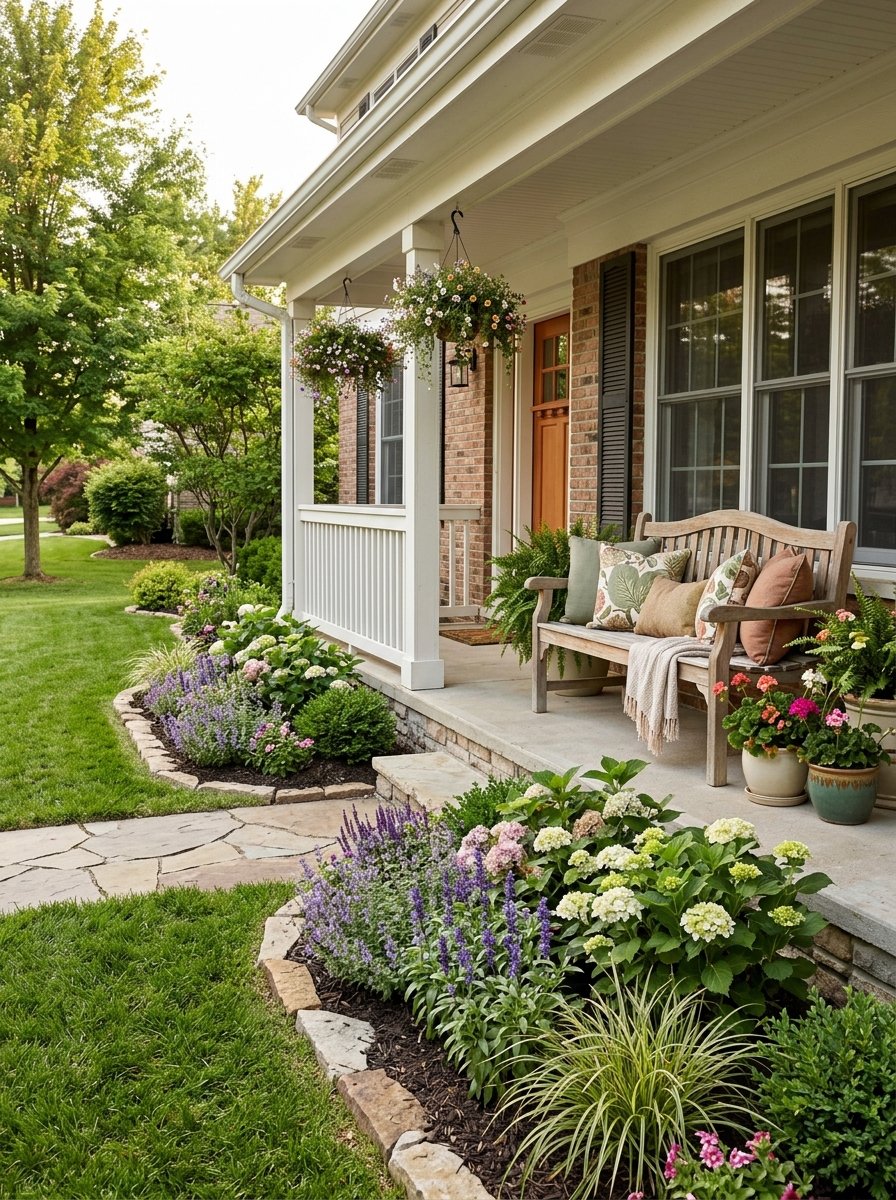
A small bench in the front yard or on the porch makes the home feel lived-in and friendly.
Choose a weather-resistant wood or metal bench and add a couple of outdoor pillows.
Place it near a flower bed or under a tree to create a cozy spot to sit.
19. Plant a Small Ornamental Tree
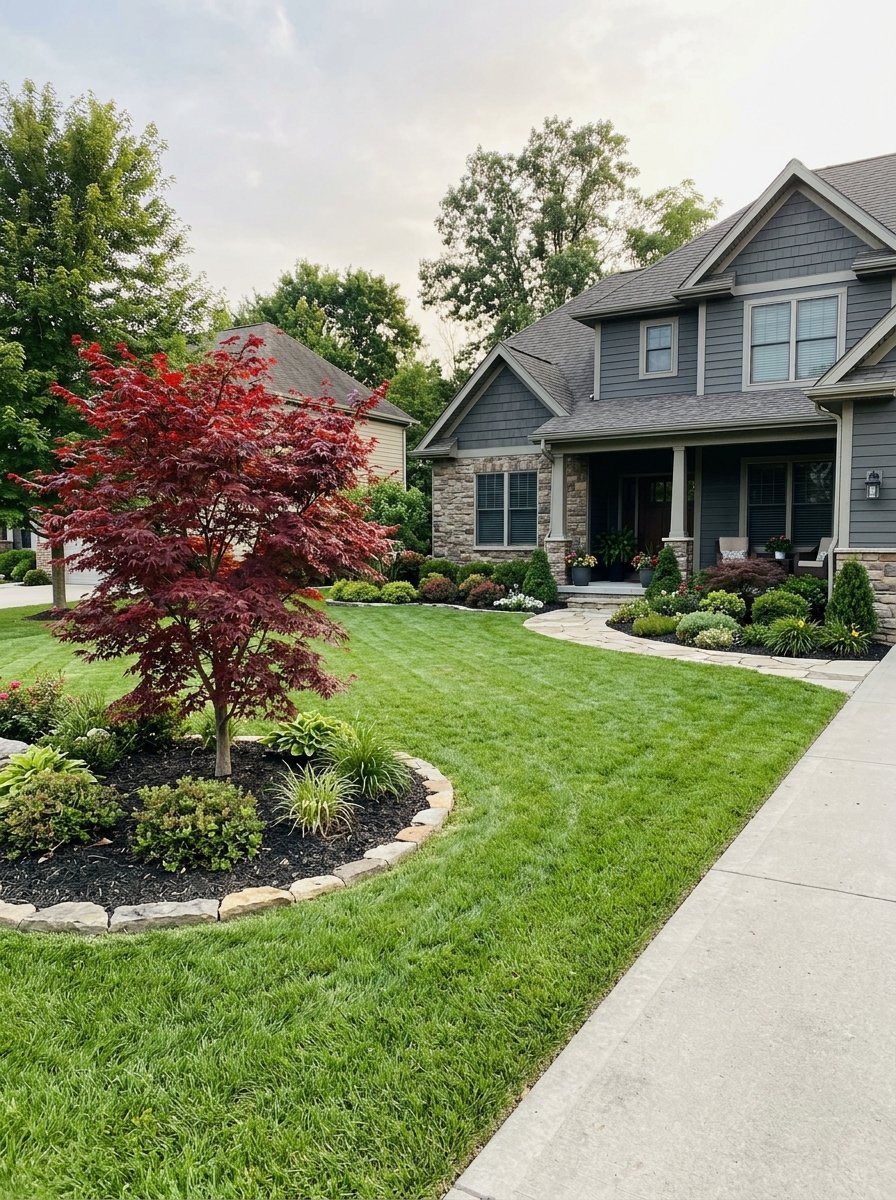
A small ornamental tree adds height, structure and seasonal interest. Japanese maple, dogwood, redbud and crape myrtle are popular choices.
Plant it off to one side of the yard to balance the house rather than blocking the view of the front door.
Young trees are inexpensive and grow quickly with proper care.
20. Clean Up Driveway and Walkway Stains
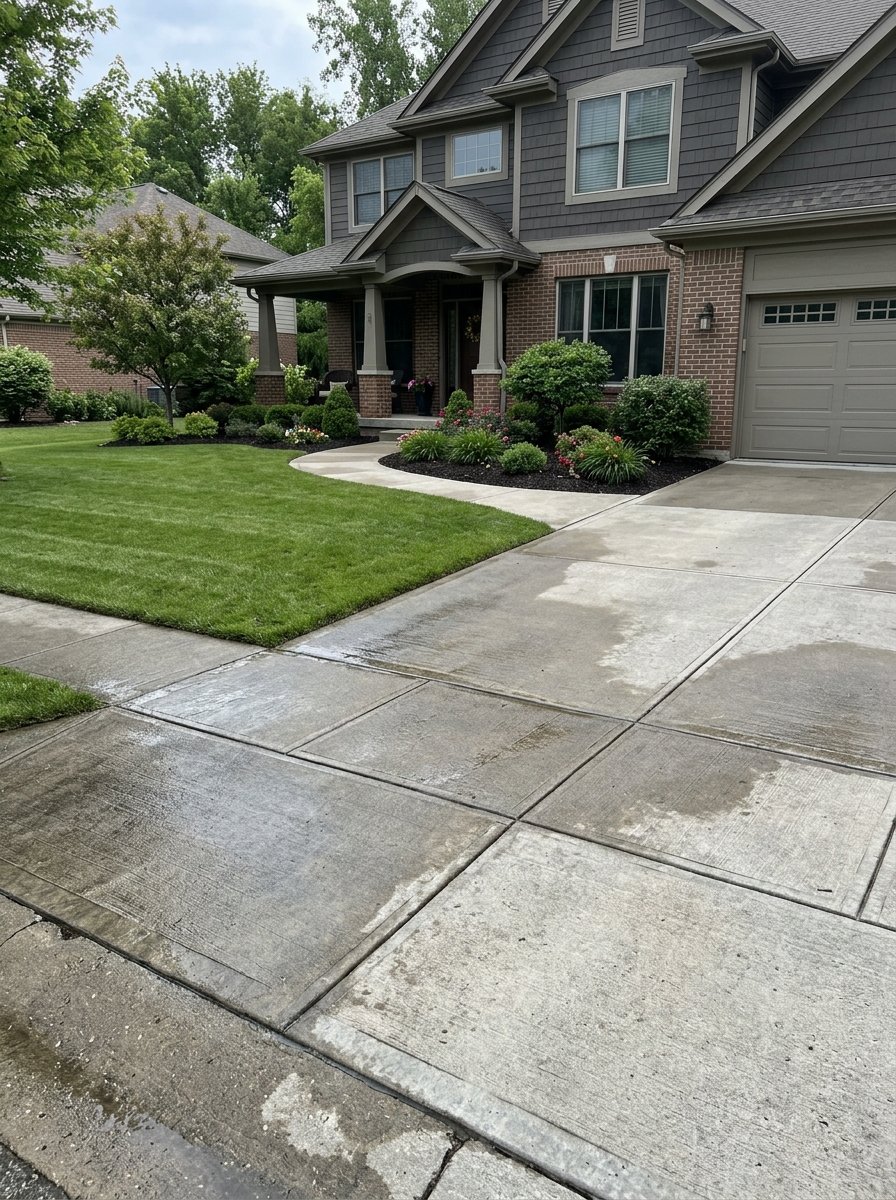
Oil stains, mildew and grime on concrete make a property look neglected. Pressure washing the driveway, sidewalk and front steps is a cheap way to make everything look newer.
You can rent a pressure washer for a day, or use a concrete cleaner and stiff brush for smaller areas.
Seal concrete afterward to help protect it from future stains.
21. Keep Up with Regular Maintenance
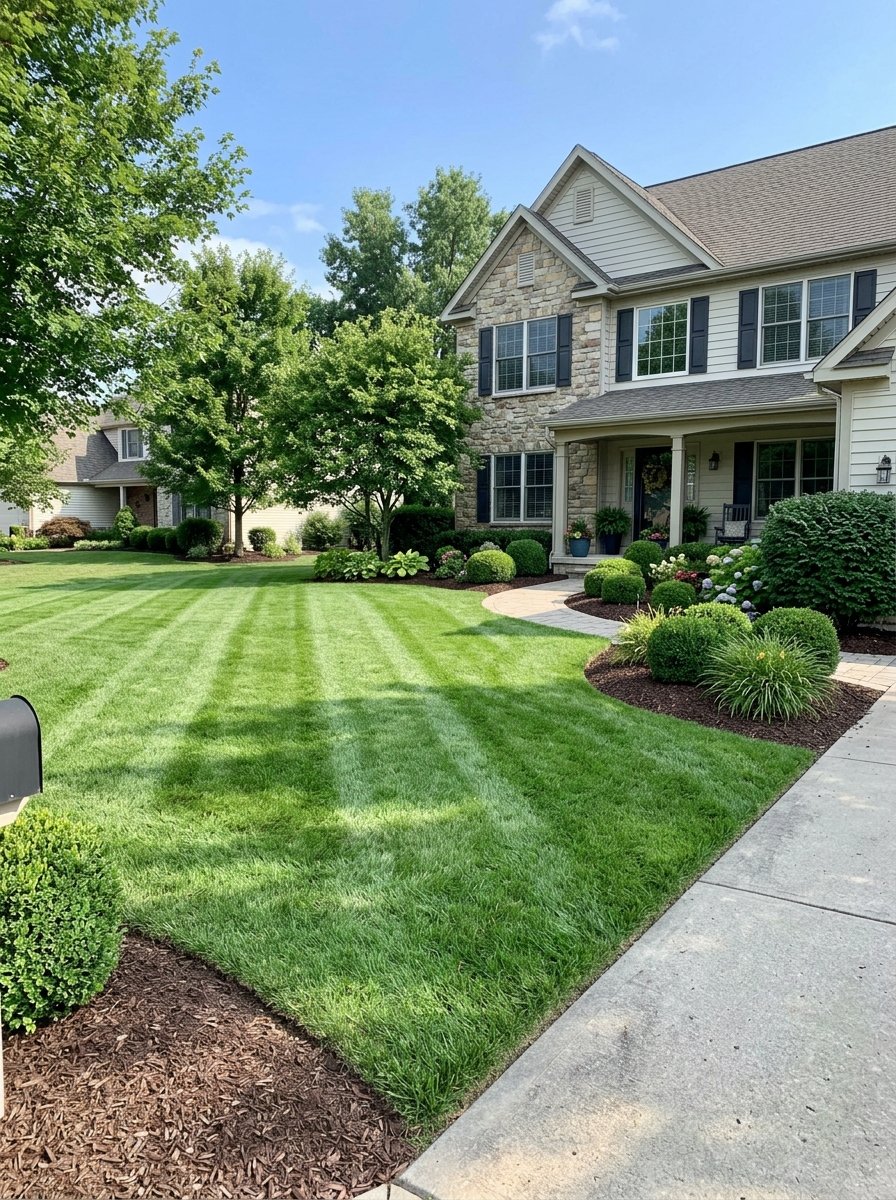
The best landscaping in the world won’t look good without regular care. Mowing at the right height, trimming shrubs, pulling weeds and deadheading flowers keep the front yard looking sharp.
Mow most lawns at 3 to 4 inches high to shade out weeds and keep the grass healthy.
Set aside 30 minutes a week for quick tidying, and your front yard will always look its best.
How to Plan Your Front Yard Makeover
Start by standing across the street and looking at your home the way a visitor would. Make a list of what stands out, both good and bad. Usually the biggest problems are bare or patchy grass, messy edges, overgrown shrubs or a tired front door.
Fix the basics first: clean up, mow, edge and mulch. These steps cost very little but make the most difference. Then add plants, planters and lighting, and finish with details like house numbers and a new doormat.
Spread larger projects over a few weekends, and buy plants at end-of-season sales to stretch your budget even further.
Frequently Asked Questions
What is the cheapest way to improve curb appeal?
Edging the lawn, adding fresh mulch to beds and pressure washing the driveway are the cheapest high-impact projects. Together they can transform a front yard for less than $100.
When is the best time to landscape a front yard?
Spring and early fall are the best times for planting, because temperatures are mild and plants can establish roots before summer heat or winter cold.
How can I make my front yard look expensive on a budget?
Focus on clean lines, symmetry and repetition. Use the same plants in groups, frame the front door with matching planters, and keep everything well maintained.
What plants are best for a low-maintenance front yard?
Hardy perennials such as daylilies, coneflowers and catmint, along with dwarf shrubs like boxwood and spirea, need little care once established.