A small backyard can feel limiting when you want a garden, but the right layout makes even a tiny space productive and beautiful. The secret is planning: deciding where beds, paths and seating go before you start digging.
The 19 layouts below are designed for small yards and can each be built over a weekend with basic tools. Some focus on growing food, others on flowers or relaxing, and many combine all three. Use them as blueprints, or mix elements from several to fit your space.
Before you start, spend a day watching how sun moves across your yard. Most vegetables and flowers need at least six hours of direct sun, so put your growing beds in the sunniest spot and use shady corners for seating or shade plants.
Disclosure: As an Amazon Associate we earn from qualifying purchases. If you buy through our links, we may earn a small commission at no extra cost to you.
1. The Four-Square Raised Bed Grid
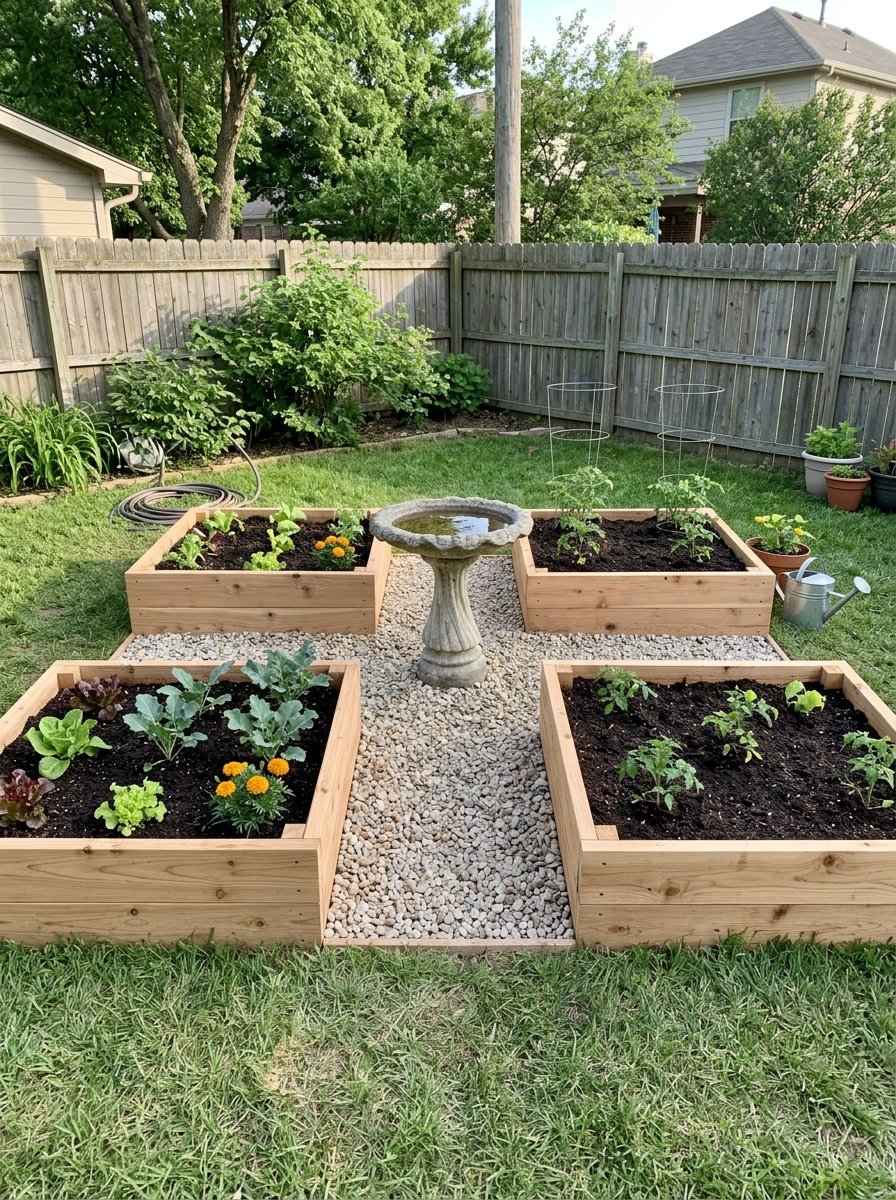
The classic four-square layout uses four raised beds arranged in a square with paths between them. It’s easy to build, simple to maintain and makes crop rotation effortless, since you can move plant families from bed to bed each year.
Four 4×4-foot beds with 2-foot paths fit into a space about 10 by 10 feet. Raised bed kits make this a quick weekend project, and filling them with a mix of topsoil and compost gives plants a great start.
Add a small centerpiece where the paths meet, such as a birdbath, an obelisk for climbing beans or a large pot of herbs.
Use rot-resistant wood like cedar for your beds, and line paths with gravel, mulch or pavers so they stay clean and weed-free.
2. Keyhole Garden
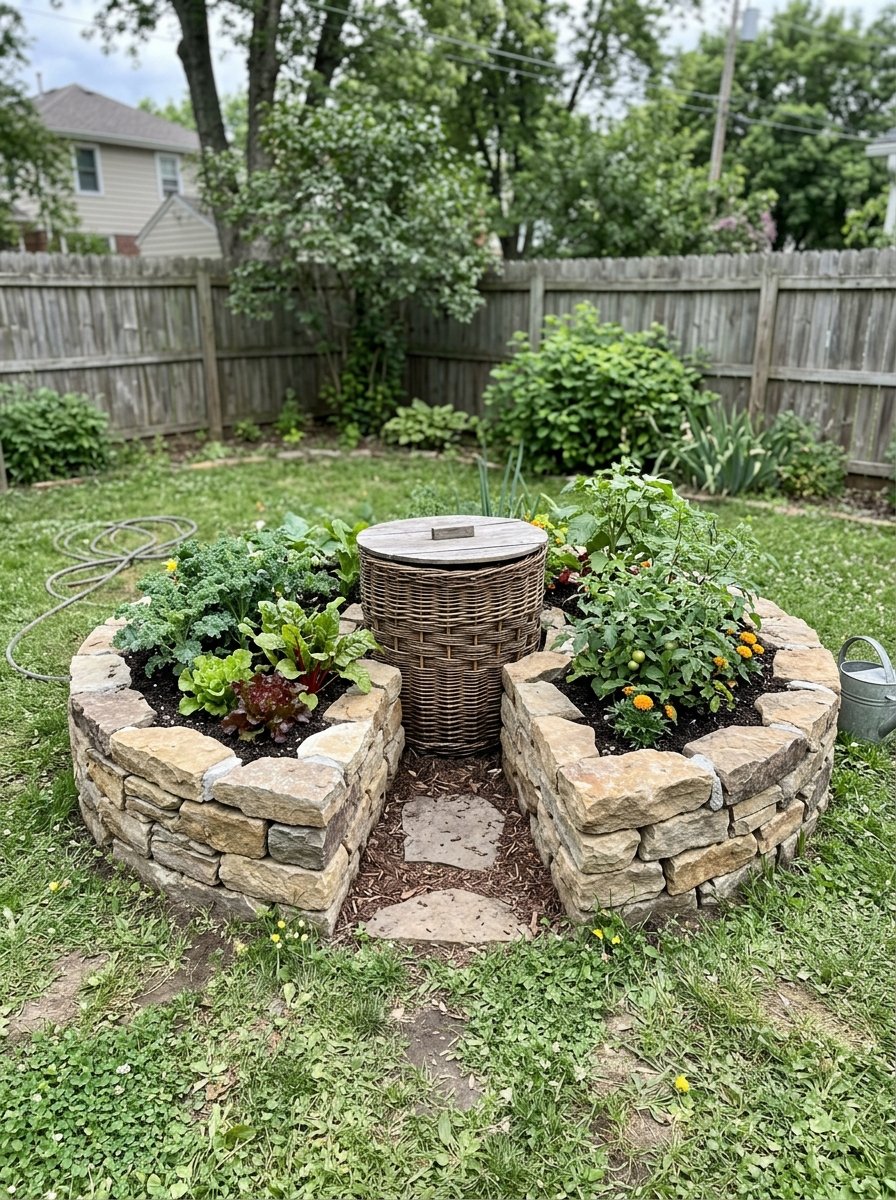
A keyhole garden is a round raised bed with a wedge cut out so you can reach the center. It often has a compost basket in the middle that feeds the surrounding soil as kitchen scraps break down.
This layout packs a lot of growing space into a small circle about 6 feet across and keeps everything within arm’s reach.
Build the wall with stones, bricks or untreated timber, and fill the bed in layers of cardboard, compost and soil.
Keyhole gardens are especially useful in dry climates, because the central compost basket helps the soil stay moist and fertile.
3. Border Beds Along the Fence
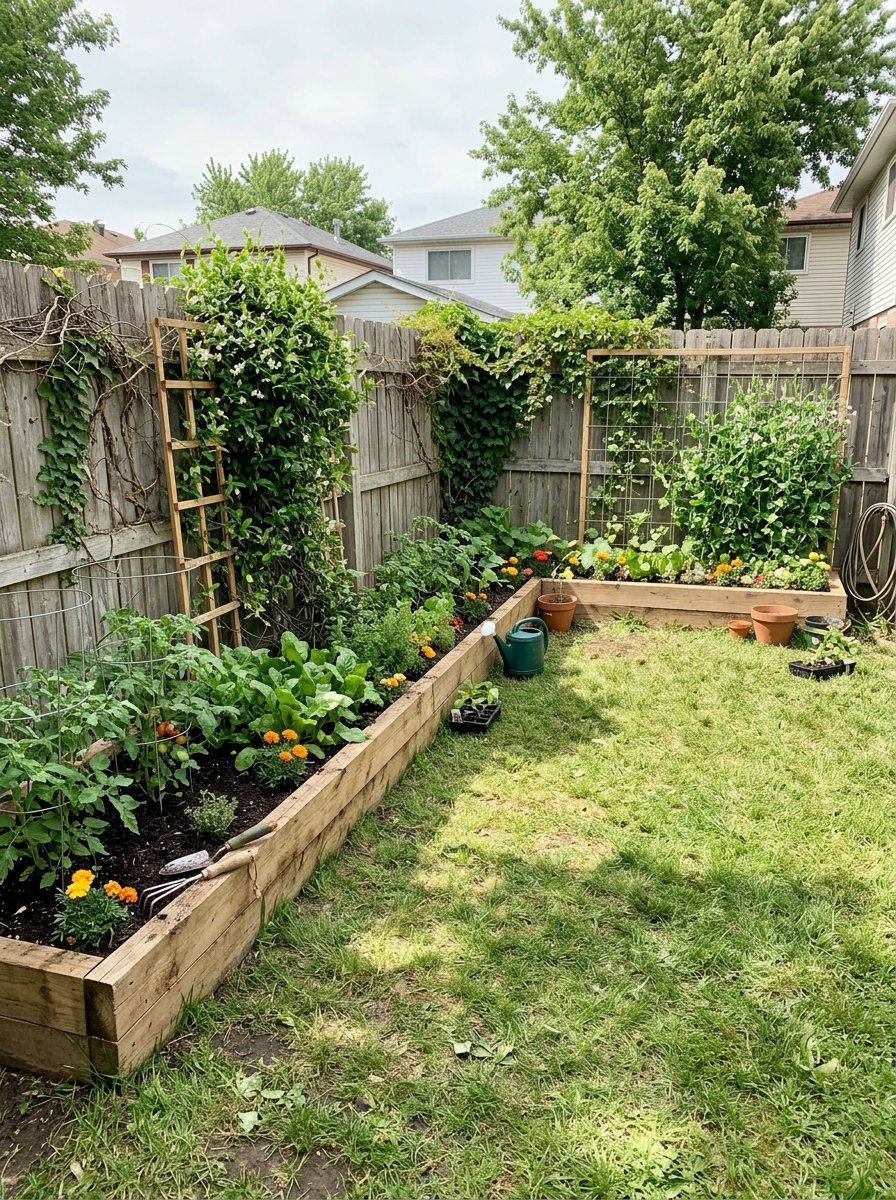
Planting along the fence line leaves the center of the yard open for lawn, play or seating. It’s one of the most practical layouts for small family yards.
Make the beds at least 2 to 3 feet deep so plants have room to grow. Use the fence itself to support climbing vegetables, roses or clematis.
Curve the front edge of the bed slightly to soften the boxy shape of the yard.
Using fence space this way can double your growing area without sacrificing lawn.
4. L-Shaped Corner Garden
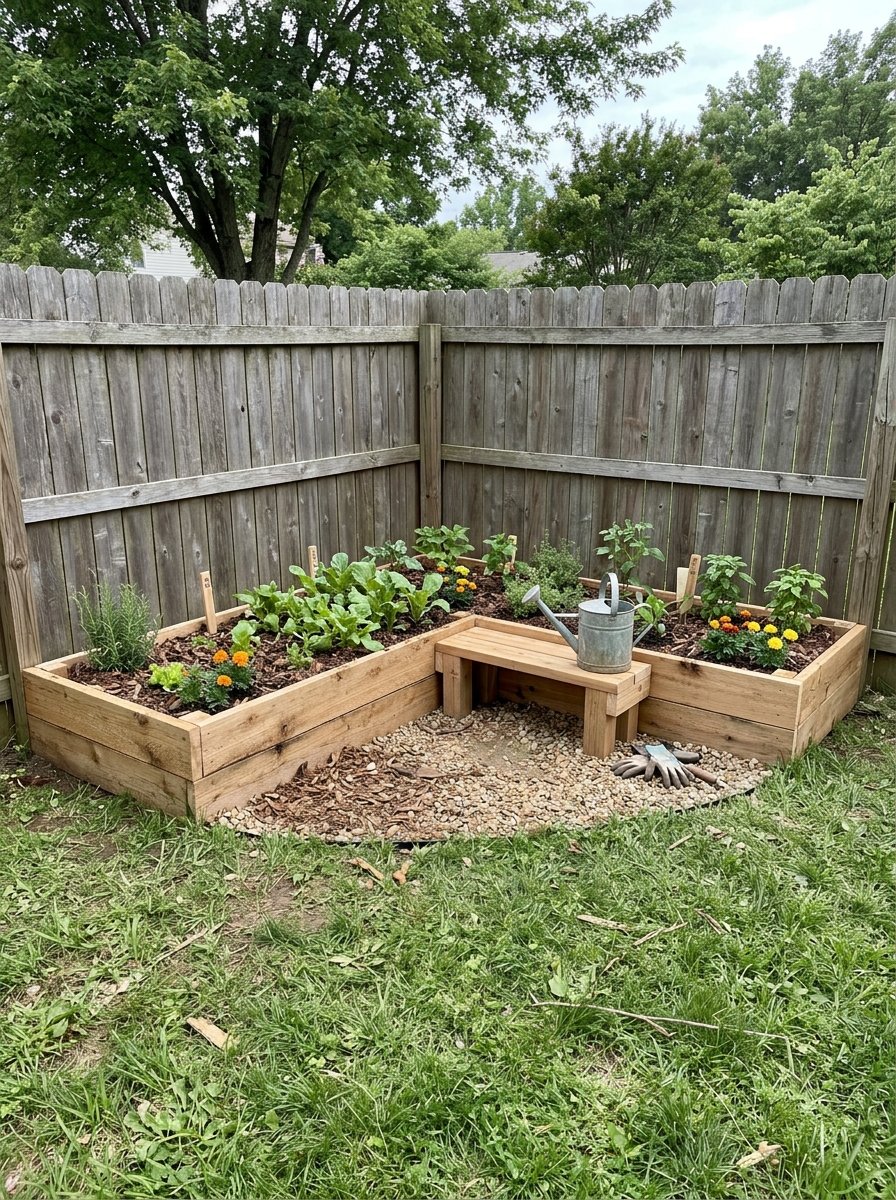
An L-shaped bed wraps around a corner of the yard, using two fence lines to create a cozy, enclosed garden zone.
Put taller plants in the corner and shorter ones toward the open edges so everything gets light.
Add a small bench or bistro set in the inside of the L to create a secluded seating nook.
The inside corner of an L-shaped bed is naturally sheltered, which makes it a warm microclimate for heat-loving plants like tomatoes and peppers.
5. Vertical Garden Wall
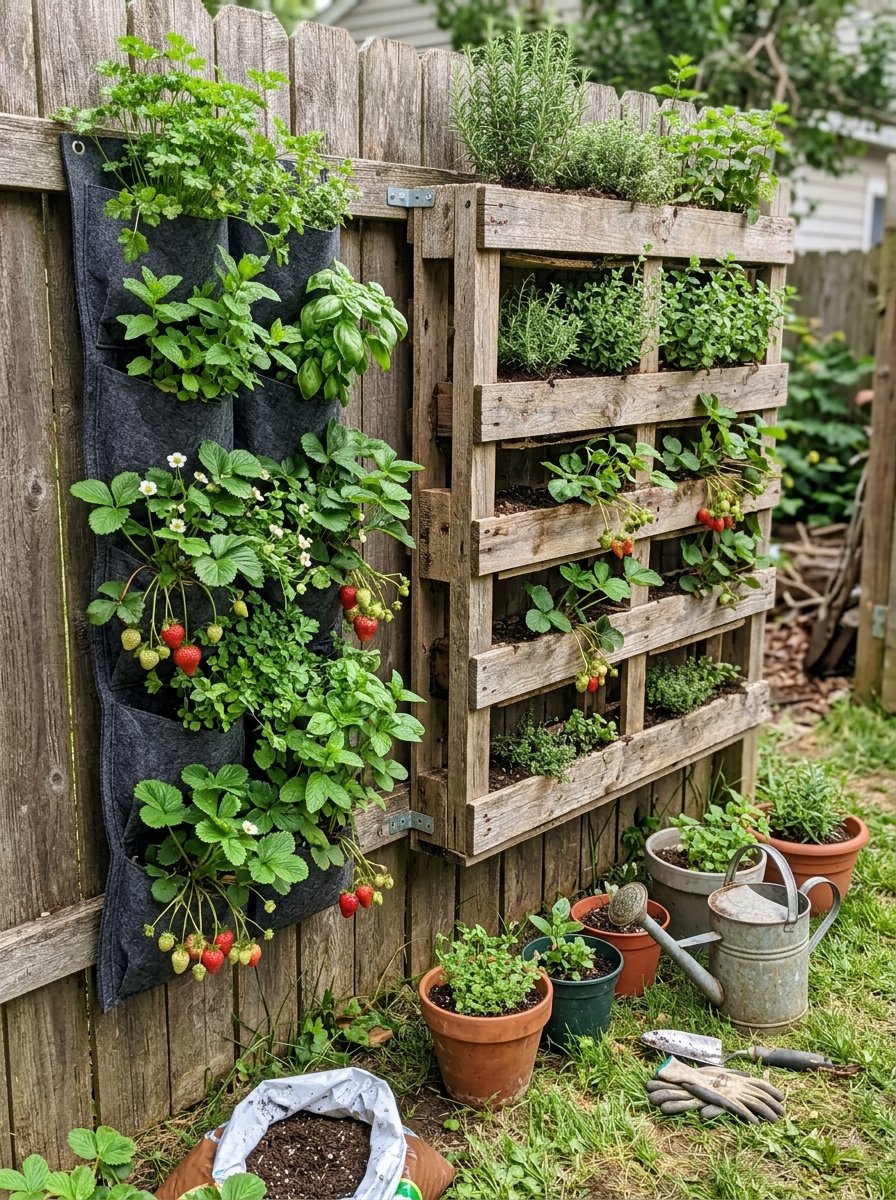
When you can’t grow out, grow up. A vertical garden uses wall planters, pocket planters, pallets or trellises to grow plants on a fence or wall.
Herbs, lettuce, strawberries and trailing flowers do especially well in vertical planters.
Water vertical gardens often, since small planters dry out quickly. A simple drip irrigation kit can make this much easier.
If you’re using a wooden pallet, choose a heat-treated pallet marked “HT” rather than chemically treated wood, and line the back with landscape fabric to hold the soil.
6. Potager Kitchen Garden
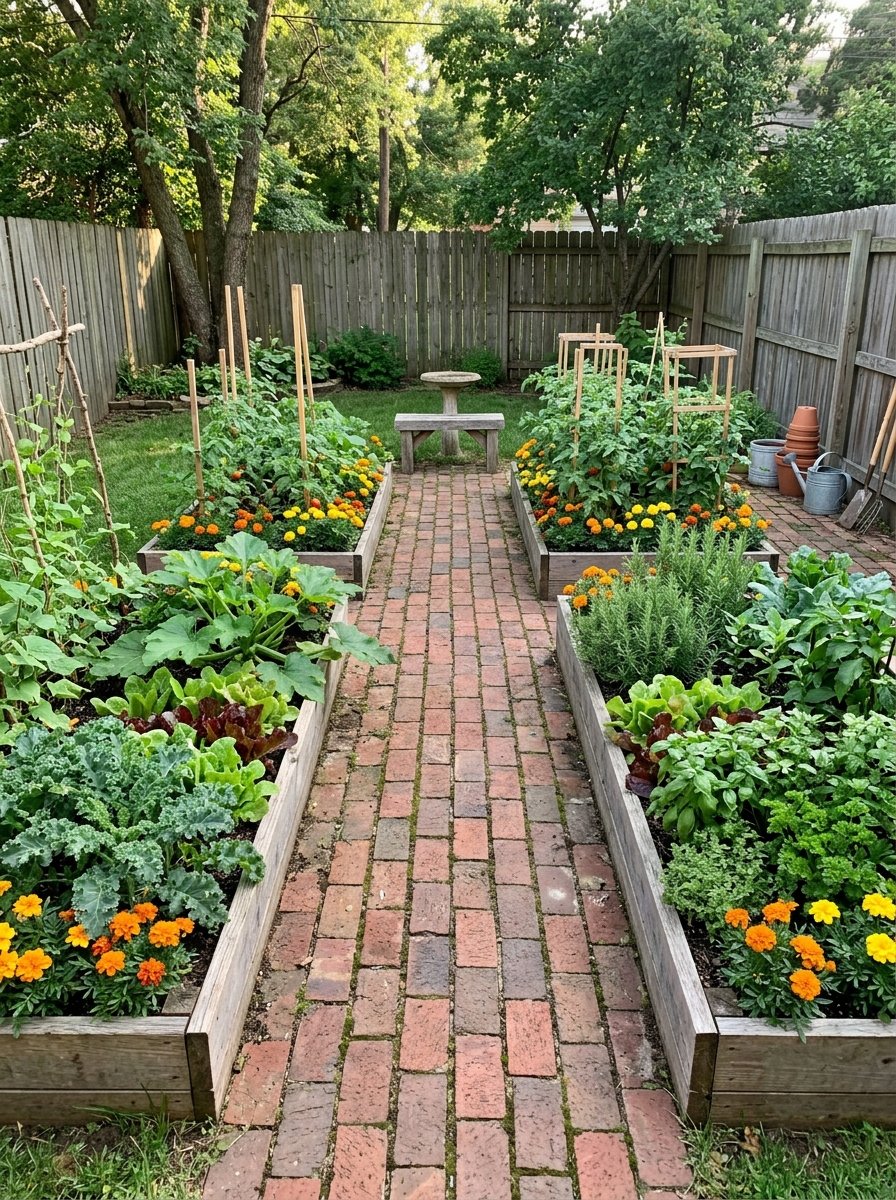
A potager is a French-style kitchen garden that mixes vegetables, herbs and flowers in neat, decorative beds. It’s both productive and beautiful.
Arrange small beds in a symmetrical pattern with gravel or brick paths. Edge beds with herbs like chives, parsley or lavender.
Plant flowers such as marigolds, nasturtiums and calendula among the vegetables to attract pollinators and deter pests.
Potagers are about beauty as much as harvest, so don’t be afraid to plant colorful vegetables like rainbow chard, purple basil and red lettuce for extra visual appeal.
7. Container Patio Garden
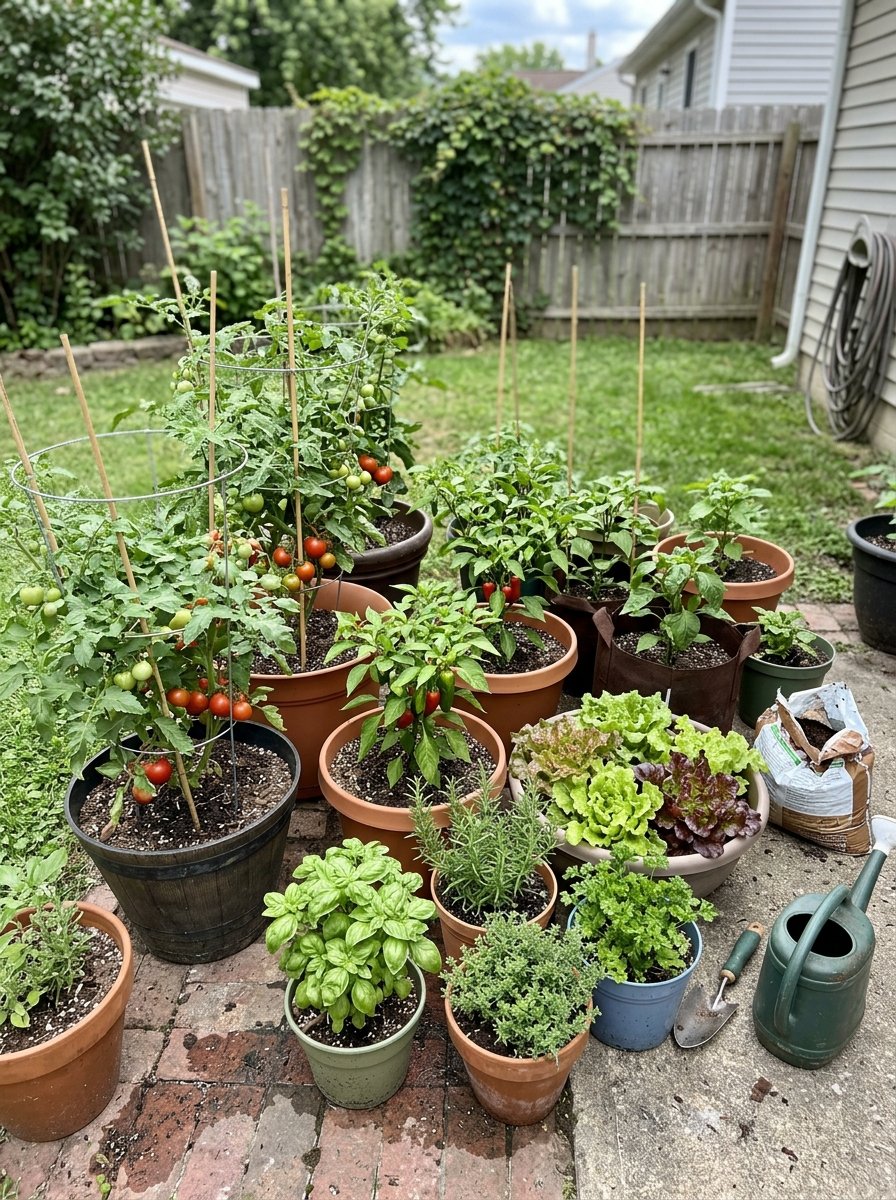
If your yard is mostly paving, a container garden turns a patio into a green space without digging.
Group pots of different sizes together, with larger pots at the back. Tomatoes, peppers, herbs and salad greens all grow well in containers.
Use self-watering pots or saucers to reduce watering, and choose dwarf or patio varieties bred for containers.
Containers need more frequent watering and feeding than garden beds. In summer heat, check them daily, and use a liquid fertilizer every couple of weeks.
8. Narrow Side-Yard Garden
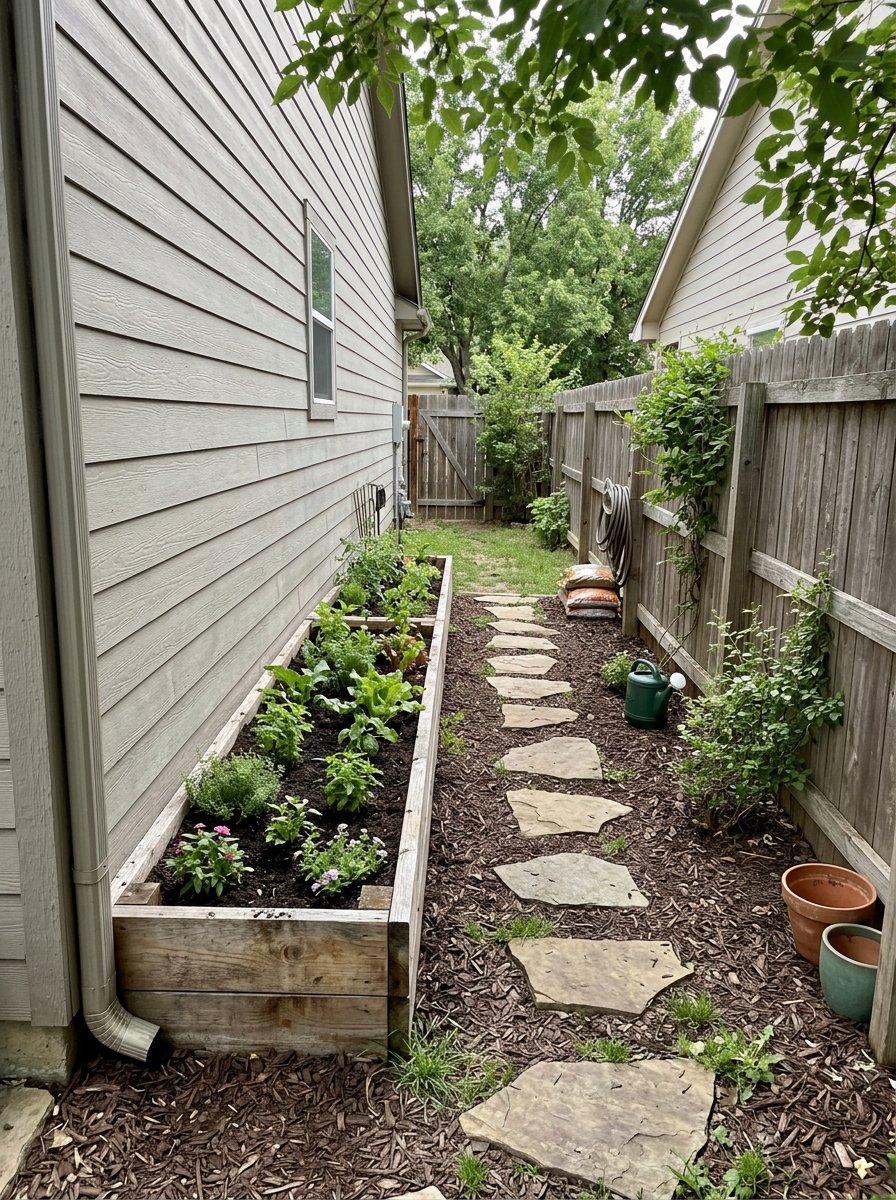
The narrow strip along the side of the house is often wasted space. A long, slim raised bed or a row of containers turns it into a productive garden.
Use a stepping-stone path to keep access easy, and choose plants suited to the light in that space.
Shade-tolerant herbs and greens like mint, parsley, lettuce and spinach work well if the area gets only partial sun.
Light-colored gravel or pavers in a narrow side yard reflect light and make the space feel brighter and wider.
9. Circular Herb Garden
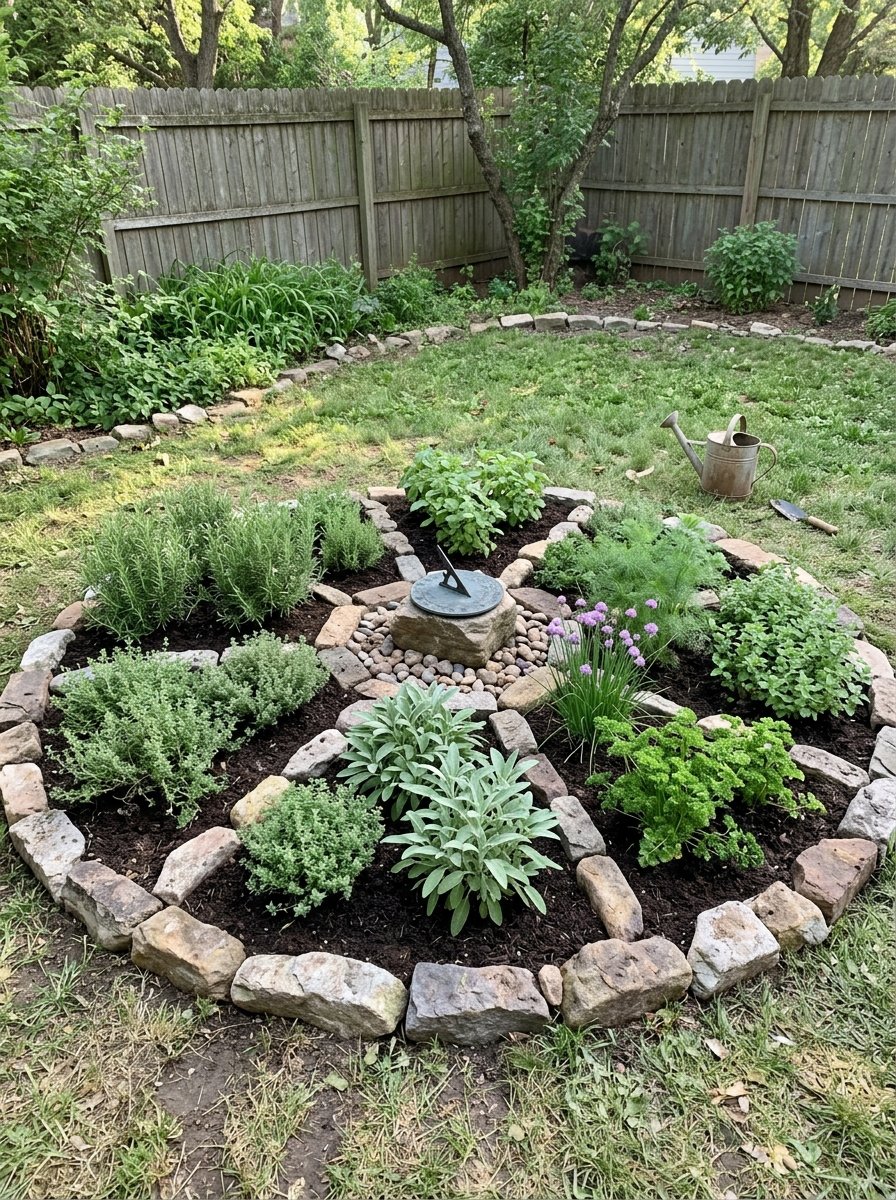
A round herb garden with a central focal point is a classic design that fits nicely in a small lawn.
Divide the circle into wedges, each holding a different herb, separated by stones or bricks.
Plant herbs that like similar conditions together: Mediterranean herbs such as rosemary, thyme and sage prefer dry, sunny spots, while parsley and chives like more moisture.
A circular herb garden near the kitchen door makes it easy to snip fresh herbs while you cook.
10. Herb Spiral
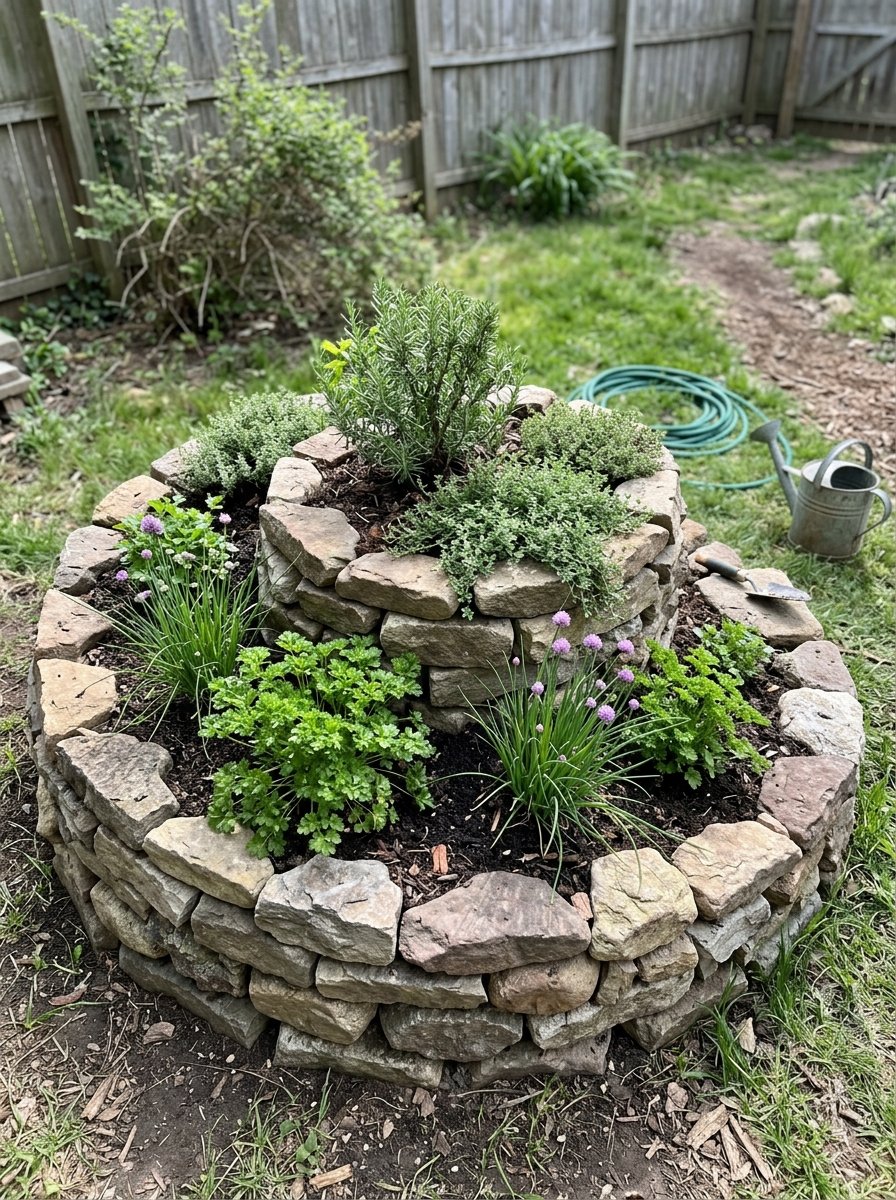
An herb spiral is a raised, spiral-shaped bed built with stones or bricks. It creates different microclimates in one small space, with dry sunny conditions at the top and moister, shadier conditions at the bottom.
Plant rosemary and thyme near the top, and parsley, chives and mint near the base.
A spiral about 5 to 6 feet across can hold a full kitchen herb collection.
Build the spiral on a sunny site, and fill the core with rubble or gravel for drainage before adding soil.
11. Pollinator Garden Patch
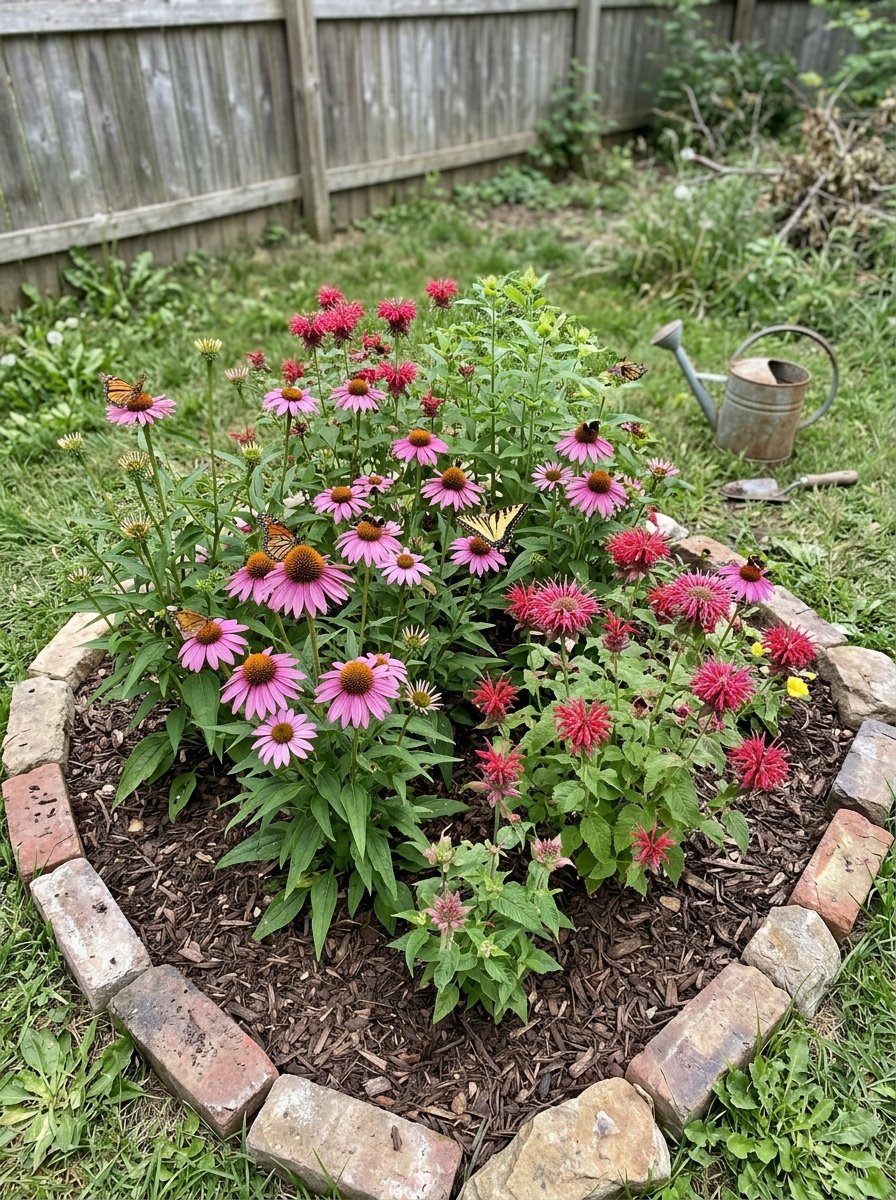
A small patch of native flowers attracts bees, butterflies and hummingbirds and adds color all season.
Choose plants that bloom at different times, such as crocus and alliums in spring, coneflowers and bee balm in summer, and asters and goldenrod in fall.
Leave some areas a little wild and avoid pesticides to keep pollinators coming back.
Include a shallow dish of water with pebbles so bees and butterflies have a place to drink safely.
12. Cottage Garden Bed
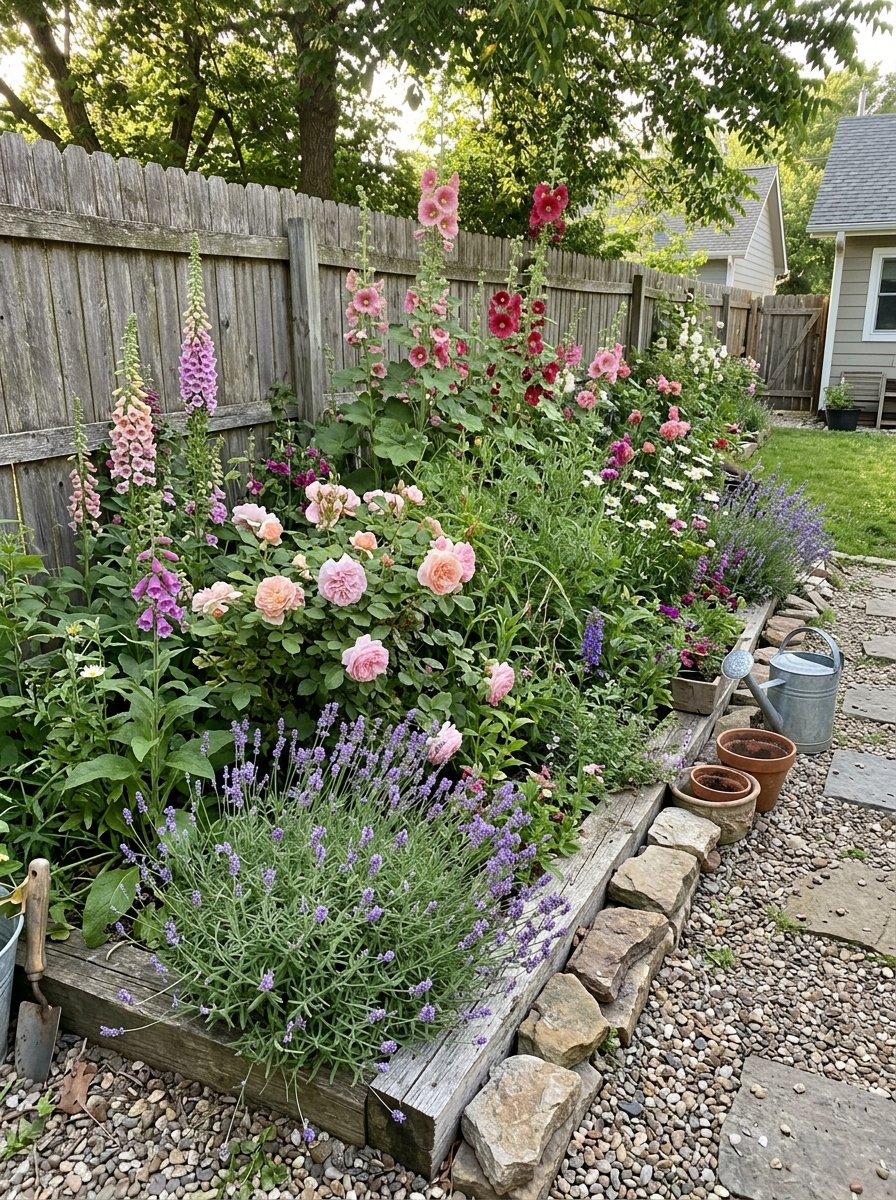
A cottage garden is a relaxed mix of flowers, herbs and climbing plants that looks abundant and charming.
Plant densely so there’s little room for weeds, and repeat a few key plants throughout the bed for cohesion.
Classic cottage plants include roses, foxgloves, hollyhocks, lavender, daisies and sweet peas.
Cottage gardens are forgiving because their informal style hides small mistakes, making them a great choice for beginners.
13. Gravel Garden
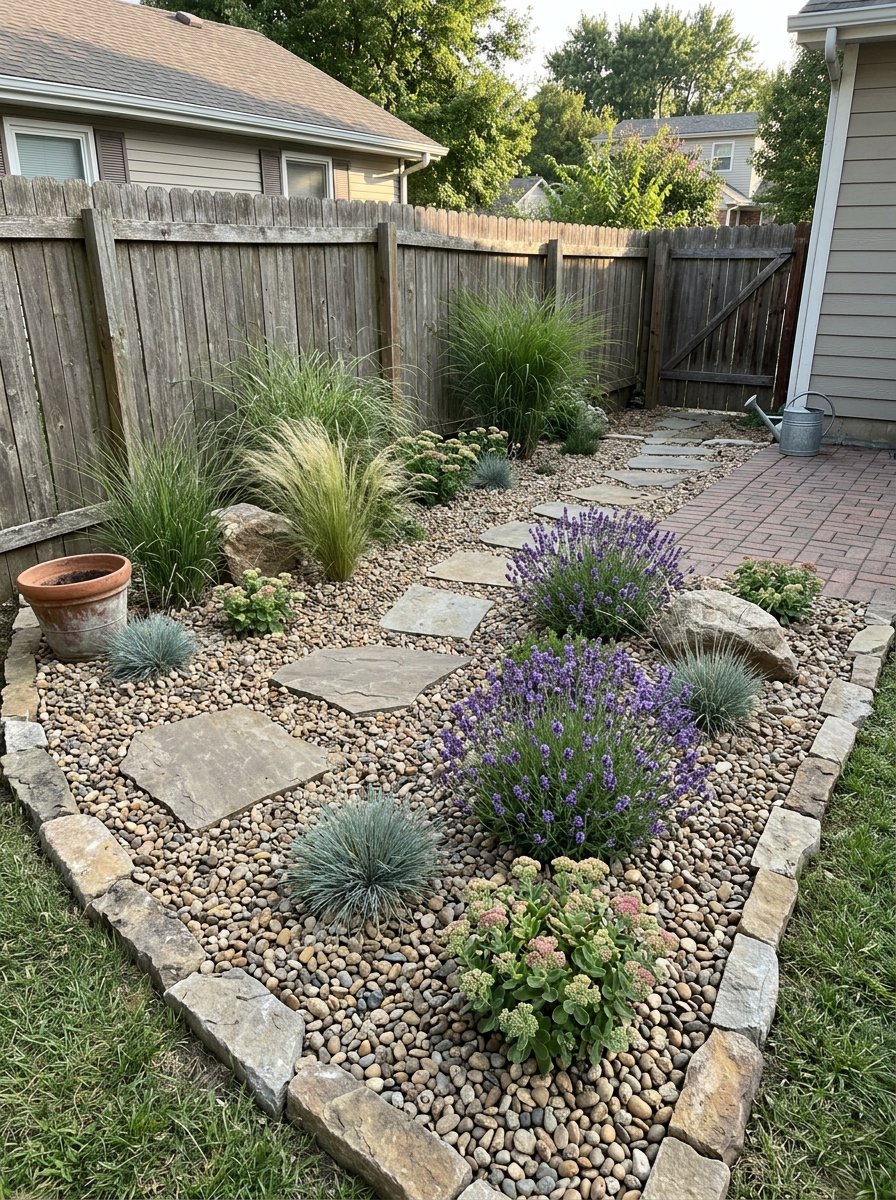
A gravel garden uses drought-tolerant plants set in a gravel mulch. It looks modern, needs little water and is easy to maintain.
Lay landscape fabric, add gravel, and plant ornamental grasses, sedums, lavender and other drought-tolerant plants.
This layout is ideal for hot, dry yards or areas where lawn struggles.
Choose a gravel size of about 3/8 inch for walking areas, as it is comfortable underfoot and stays in place well.
14. Shade Garden Corner
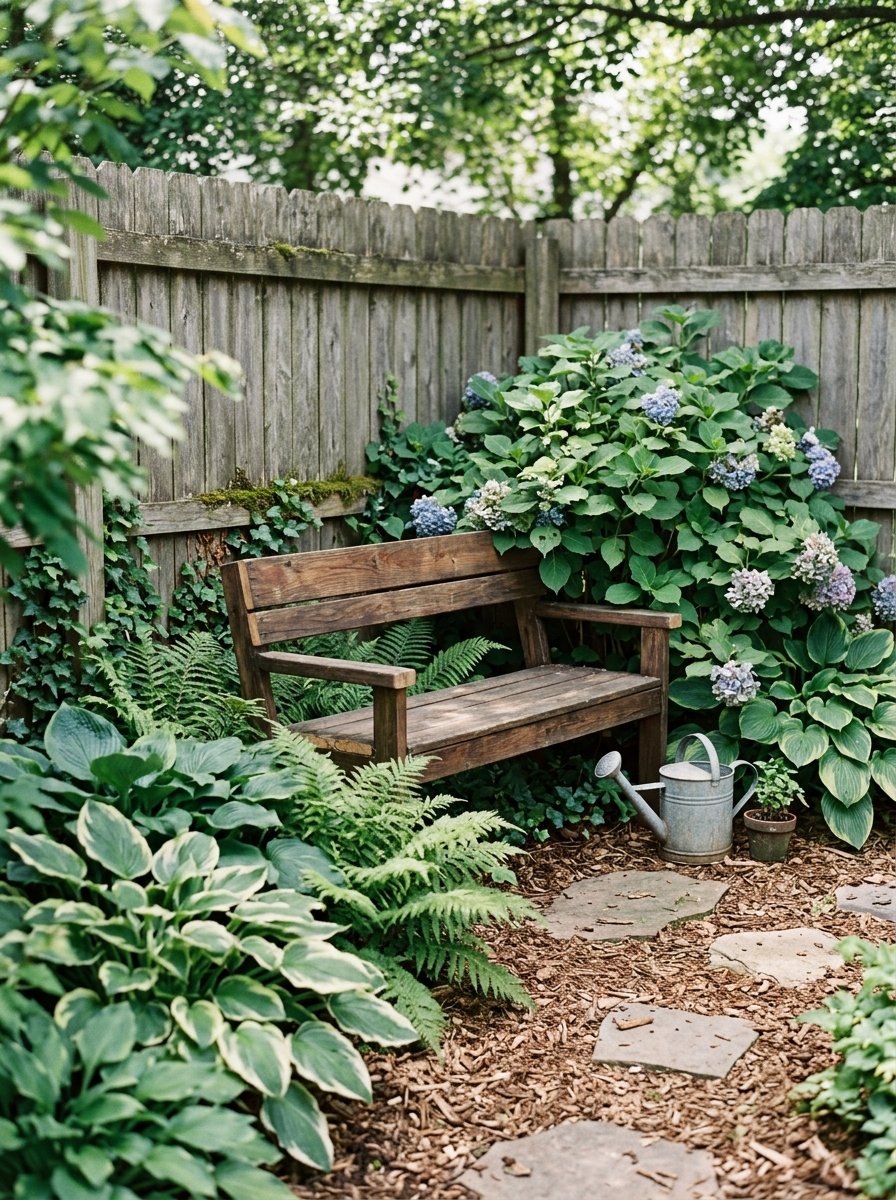
If part of your yard is shady, turn it into a lush retreat with shade-loving plants.
Hostas, ferns, heuchera, astilbe and hydrangeas thrive in shade.
Add a bench and a few stepping stones to make it a quiet place to sit.
Light-colored or variegated foliage brightens shady areas and makes them feel more open.
15. Tiered Raised Beds
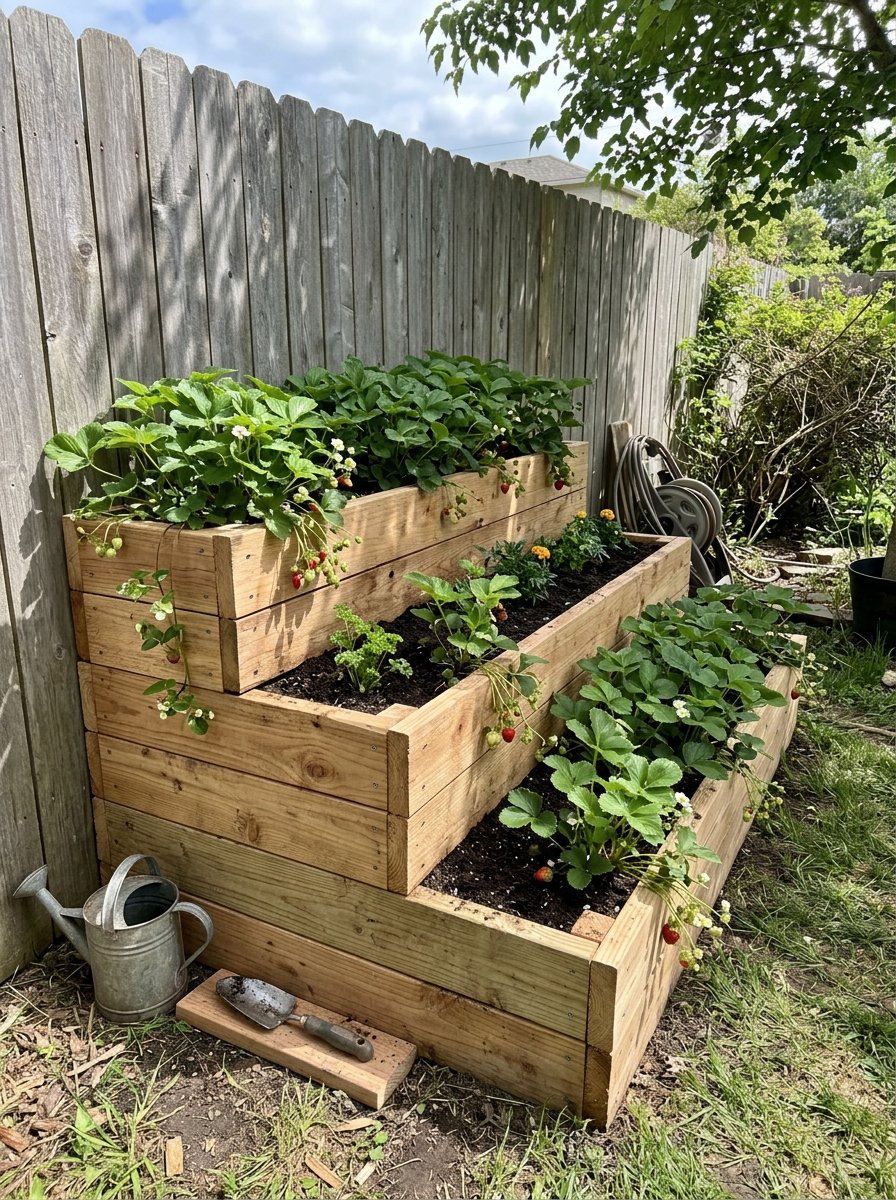
Tiered beds step up in levels, adding height and interest while giving you more planting space in a small footprint.
They work especially well on slopes or against a fence.
Plant trailing herbs and strawberries in the top tiers so they spill down over the edges.
Build tiers from stacked stone blocks or timber, and make sure each level has good drainage.
16. Garden Path with Stepping Stones
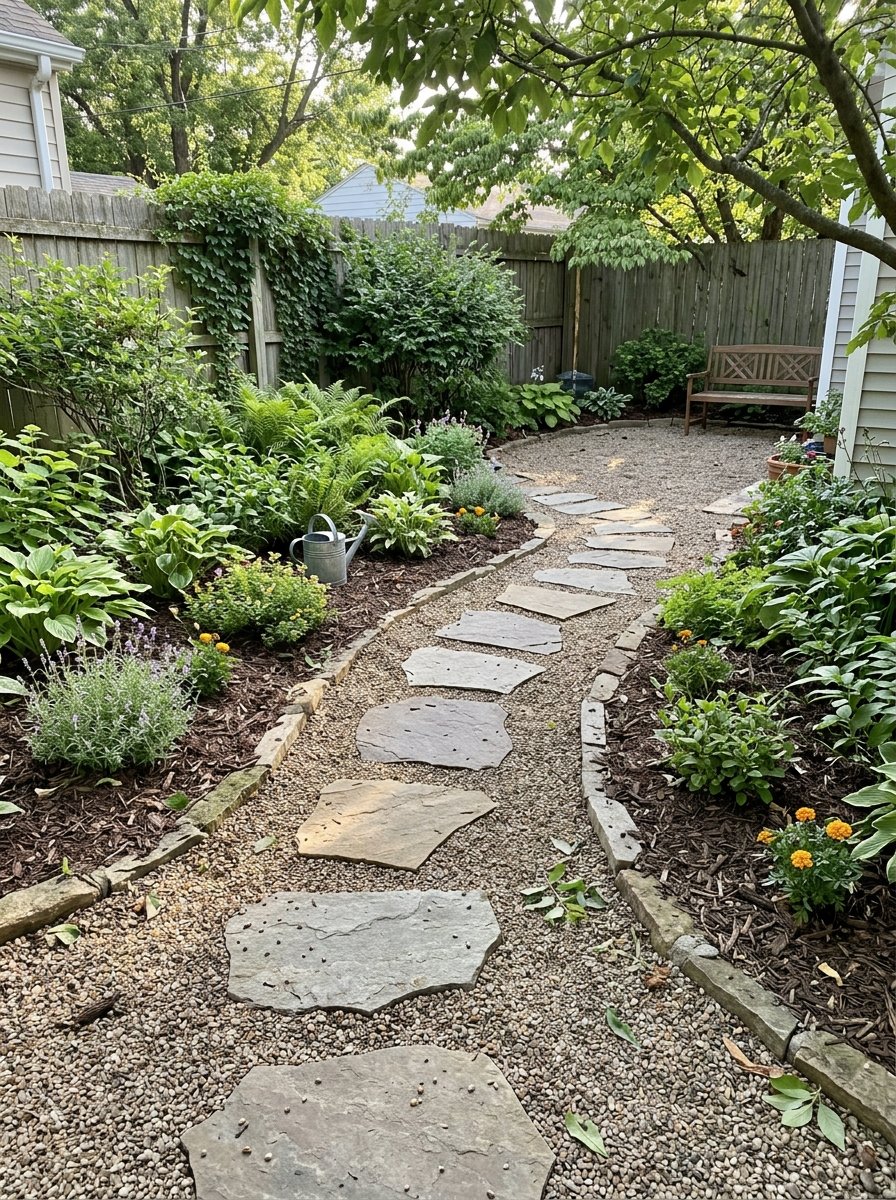
A path through the garden makes it feel larger and more inviting, while protecting the soil from being compacted.
Set stepping stones in gravel, mulch or lawn, spacing them about 18 to 24 inches apart for a comfortable stride.
A curving path makes a small yard feel bigger because you can’t see everything at once.
Use materials that complement your home, such as brick for traditional homes or large concrete pavers for modern spaces.
17. Arched Trellis Entry
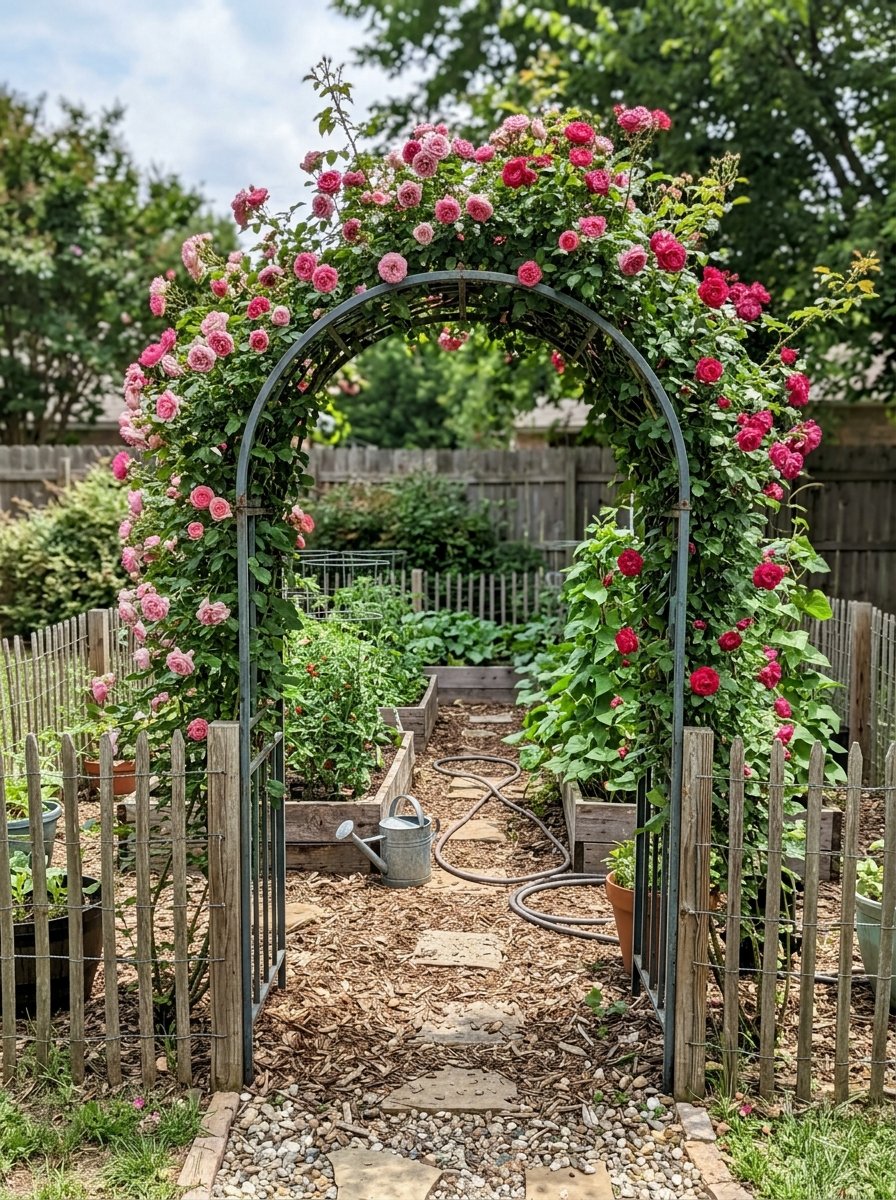
A simple arch or arbor creates an entrance to the garden and a vertical growing space.
Grow climbing roses, clematis, beans or cucumbers over the arch.
Metal arches are inexpensive and can be installed in an afternoon.
Place the arch where it frames a view, such as the entrance to a vegetable garden or the path to a seating area.
18. Square Foot Garden
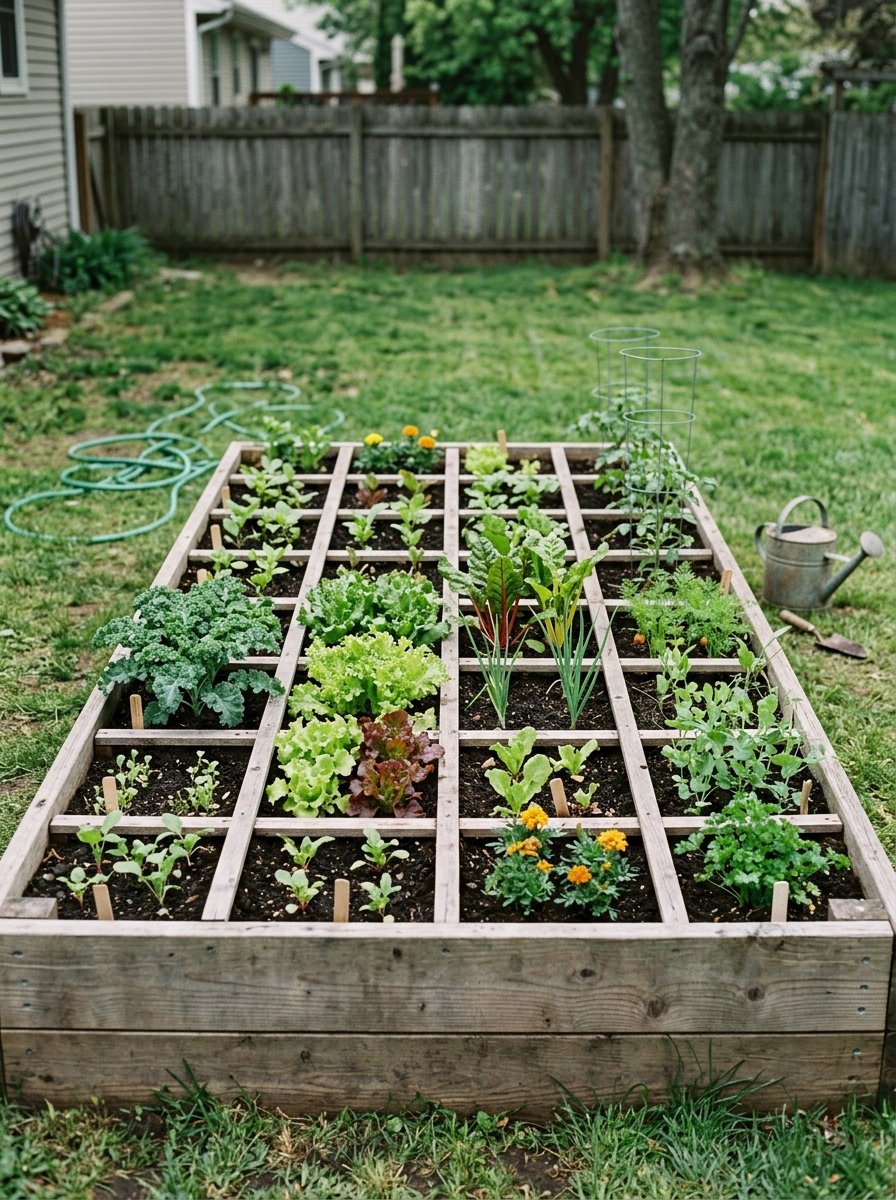
Square foot gardening divides a raised bed into 1-foot squares, each planted with a specific number of plants.
It’s one of the most efficient ways to grow food in a small space and makes planning easy.
Use string or thin wood strips to mark the grid on the bed.
For example, you might plant one tomato, four lettuces, nine bush beans or sixteen carrots in each square, depending on plant size.
19. Seating Nook Surrounded by Plants
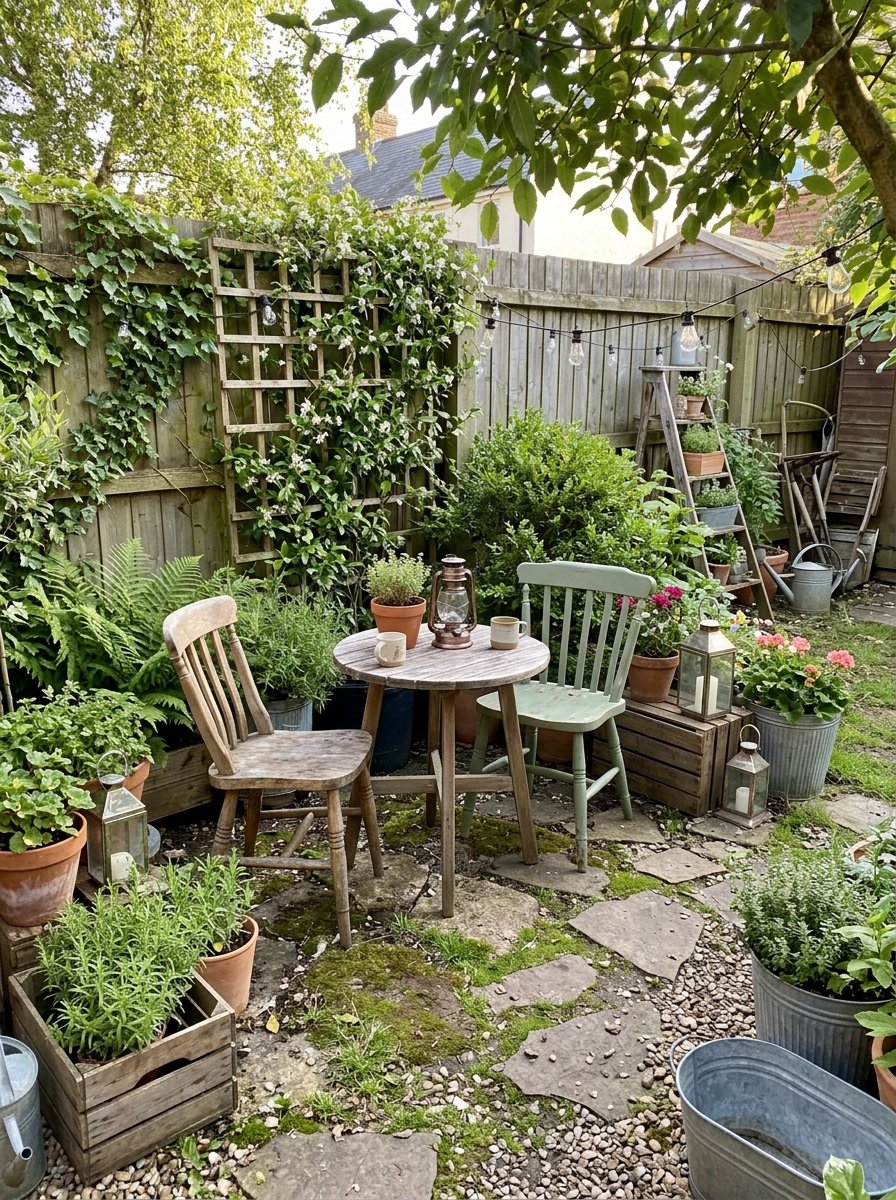
Every garden needs a place to sit and enjoy it. Surround a small bench or pair of chairs with planters and climbing plants to create a cozy retreat.
Put it in a spot with afternoon shade or the best view of the garden.
Add solar lights or lanterns so you can enjoy the space in the evening.
A small outdoor rug and a few cushions make the space feel like an outdoor room.
How to Build a Small Garden in a Weekend
Day one: plan and prep. Measure your space, mark out beds with string or a hose, remove grass and loosen the soil. Assemble raised beds or containers.
Day two: fill and plant. Fill beds with a mix of topsoil and compost, plant your seedlings, and add mulch and paths. Water everything deeply.
Keep the first garden small and manageable. It’s easy to expand next season once you know what works in your space.
Choosing Materials on a Budget
Raised bed kits made from cedar, galvanized steel or composite boards are the quickest option. Galvanized steel beds are long-lasting and modern-looking, while cedar offers a natural look and resists rot.
For paths, wood chips and gravel are the cheapest choices, while pavers and bricks cost more but last much longer. Reclaimed materials like old bricks, stones and untreated timber can cut costs further and add character.
Fill raised beds with a mix of about 60% topsoil and 40% compost, or buy bagged raised bed soil for smaller beds.
Planting Tips for Small Gardens
Grow vertically wherever possible, using trellises and stakes for tomatoes, cucumbers, beans and peas. Choose compact or dwarf varieties bred for small spaces and containers.
Practice succession planting by sowing a new row of quick crops, such as lettuce and radishes, every few weeks for a continuous harvest. Interplant fast-growing crops between slower ones to make the most of every inch.
Mulch beds to retain moisture and suppress weeds, and install a simple drip irrigation system or soaker hose to save time watering.
Frequently Asked Questions
What is the best layout for a small vegetable garden?
Raised beds in a grid or square foot pattern are the most efficient for small spaces, because they maximize growing area and make it easy to reach every plant.
How much sun does a backyard garden need?
Most vegetables and flowering plants need at least six hours of direct sunlight a day. Leafy greens and herbs can tolerate partial shade.
How big should a raised garden bed be?
A width of 3 to 4 feet lets you reach the center without stepping on the soil. Length can vary to fit your yard, and a depth of 10 to 12 inches suits most vegetables.
Can I build a garden on a patio?
Yes. Containers, raised beds on legs and vertical planters let you grow herbs, vegetables and flowers on any paved surface.