
This post contains affiliate links. As an Amazon Associate, I earn from qualifying purchases at no extra cost to you.
A little boy’s bedroom is so much more than a place to sleep. It is where he builds forts, reads his first chapter books, lines up toy cars and dreams up big adventures. The right design makes all of that easier and a lot more fun.
The best boys’ rooms balance imagination with practicality. They have a playful theme or a touch of wonder, but also plenty of storage, safe furniture and a calm sleep space that helps him wind down at night.
Below are 33 little boys bedroom ideas, grouped into themes and walls, beds, play and reading, storage, and decor and lighting. Each comes with a practical tip, and many include products to help you get the look.
Planning a Room That Grows With Him
Children grow quickly, so think a few years ahead. Choose the big pieces, like the bed, dresser and storage, in classic shapes and neutral finishes, then add the theme through bedding, wall decals, art and accessories that are easy to swap.
A toddler needs a low bed, open floor space and toys within reach. A school-age boy needs a desk, more book storage and a place to display collections. A flexible layout makes those changes simple.
Safety First
Anchor every dresser, bookshelf and tall piece of furniture to the wall to prevent tipping. Keep cords from blinds and lights well out of reach, and choose rounded corners where possible.
Use cordless window treatments, low beds for young children and guardrails on top bunks. Check that toy boxes have safe, slow-closing lids so little fingers can’t get pinched.
Choosing Colors
Navy, sage, forest green, mustard, rust and soft grey are popular choices for boys’ rooms because they feel warm, grounded and easy to live with. Pair one or two of these with plenty of white or natural wood.
If you love a bold color, use it on one wall, the ceiling or in the bedding, and keep the rest of the room calm. This makes the space feel playful but still restful at bedtime.
33 Little Boys Bedroom Ideas
The ideas are grouped into themes and walls, beds, play and reading, storage, and decor and lighting. Pick a theme, then add the practical pieces that suit his age.
Themes and Walls
1. A Mountain Mural Accent Wall
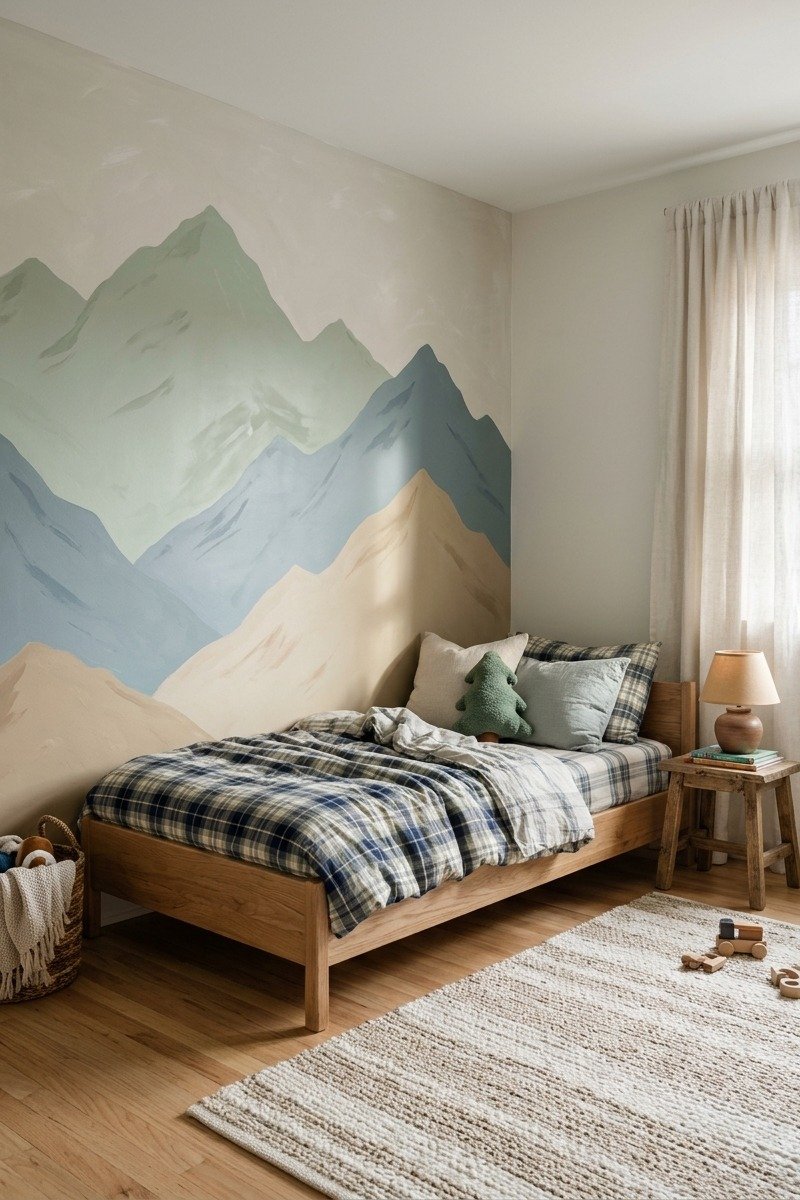
A mountain mural brings the outdoors into a little boy’s room and creates a calm, adventurous backdrop. Soft layered peaks in sage, blue and sand feel peaceful rather than busy.
You can paint one freehand using painter’s tape to mark the peaks, or use a large mountain wall decal for a quick, removable version.
Mountains suit almost any age, from nursery to tween, so the wall can stay as he grows.
Pair it with plaid bedding, wooden furniture and a few woodland plush toys for a cozy cabin feel.
If painting a mural feels daunting, try a simpler version with just two or three gentle peaks along the lower third of the wall. It still delivers the adventurous mood with far less effort.
Pro tip: Paint the lightest mountain layer first at the back, then add darker layers in front. It creates a natural sense of depth.

2. A Starry Outer Space Ceiling
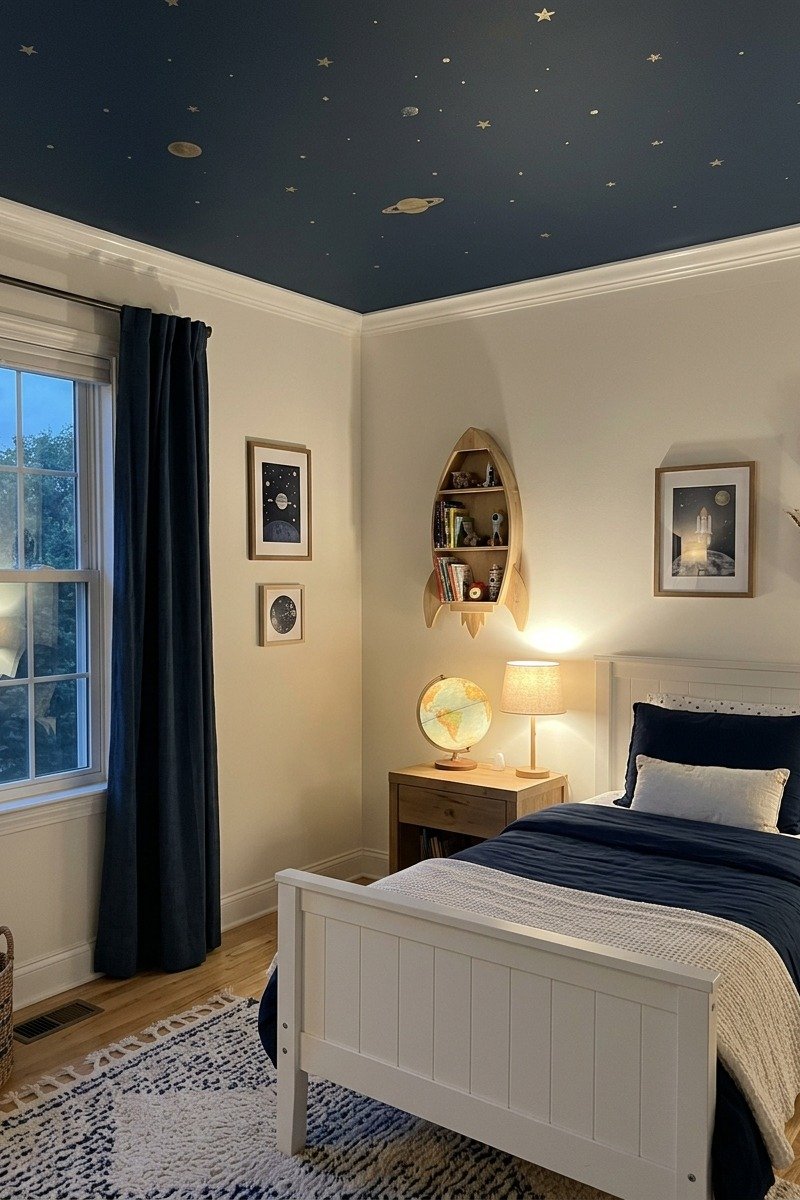
A starry ceiling turns bedtime into a little adventure. Painting the ceiling deep navy and adding small gold or glow-in-the-dark stars makes the room feel magical.
Glow stars charge during the day and softly shine for a while after lights out, which can help children who are nervous of the dark.
Add a few planet decals, a rocket shelf or a globe to complete the space theme without overdoing it.
Keep the walls light so the room still feels bright during the day.
For a removable version, paint a large plywood panel or canvas in navy with stars and hang it above the bed. It gives the same effect and can move with you.
Pro tip: Arrange stars in loose clusters rather than an even grid, and add a few constellations for a more realistic night sky.

3. A Dinosaur Adventure Theme

Dinosaurs are a favorite for many little boys, and a dinosaur room can be fun without feeling like a theme park.
Soft green or sandy walls, a few dinosaur wall decals and dinosaur bedding create the look in a stylish, grown-up way.
Display toy dinosaurs in baskets or on a shelf so they double as decor and are easy to tidy.
When the dinosaur phase passes, the decals and bedding are easy to swap while the calm wall color stays.
Dinosaur bookends, a fossil dig kit and a few dinosaur books on a shelf turn the theme into a learning opportunity too.
Pro tip: Choose decals in muted, natural colors rather than bright cartoon shades, so the room feels designed and not cluttered.

4. A Vintage Cars and Trucks Theme
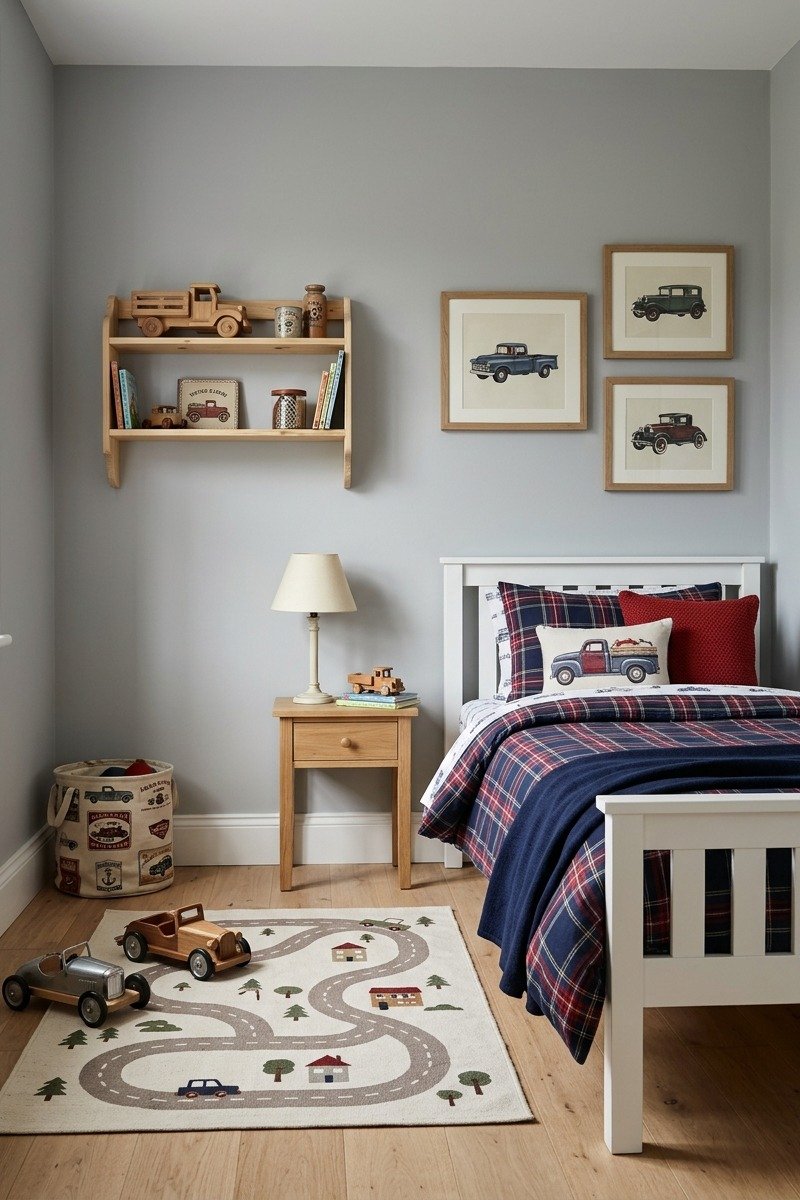
A cars and trucks theme suits little boys who love anything with wheels. Vintage-style prints, wooden toy trucks and a road play rug make it fun and charming.
Red, navy and grey are classic colors for this look and pair well with white furniture.
Frame a few vintage car or truck prints above the bed, and display favorite vehicles on a picture ledge.
A road rug turns the floor into a play town where he can drive cars for hours.
Repurpose an old wooden crate as a parking garage for toy cars. It doubles as storage and fits the theme perfectly.
Pro tip: Keep vehicle toys in a labeled bin or a garage-style shelf so tidy-up time becomes part of the game.


5. A Jungle Safari Room

A jungle safari theme feels warm, playful and adventurous. Palm leaf decals, plush animals and natural textures create a lush, sunny room.
Olive green, mustard and tan pair beautifully with rattan and wood.
Choose animal wall decals that can be arranged as if peeking out from behind leaves, which children love to discover.
A rattan pendant and a woven basket complete the safari look.
A small canopy with a leafy print or a green tent over a floor cushion makes a perfect jungle hideout for imaginative play.
Pro tip: Add a real or faux plant or two, safely out of reach, to make the jungle theme feel even more alive.

6. An Ocean and Nautical Theme

An ocean and nautical theme is fresh, timeless and easy to style. Navy and white stripes, whale prints and rope details create a breezy seaside feel.
Paint wide horizontal stripes on one wall, or use striped bedding and rugs for a lighter touch.
Whales, sailboats and lighthouses make sweet, gender-neutral motifs that suit a wide age range.
Natural wood, rope and woven baskets keep the look relaxed.
Hang a few nautical flags or a small rope ladder decoration for extra seaside charm without crowding the walls.
Pro tip: Use a level and painter’s tape for stripes, and keep them at least 8 to 12 inches wide so they look crisp rather than busy.

7. Navy Board-and-Batten Paneling
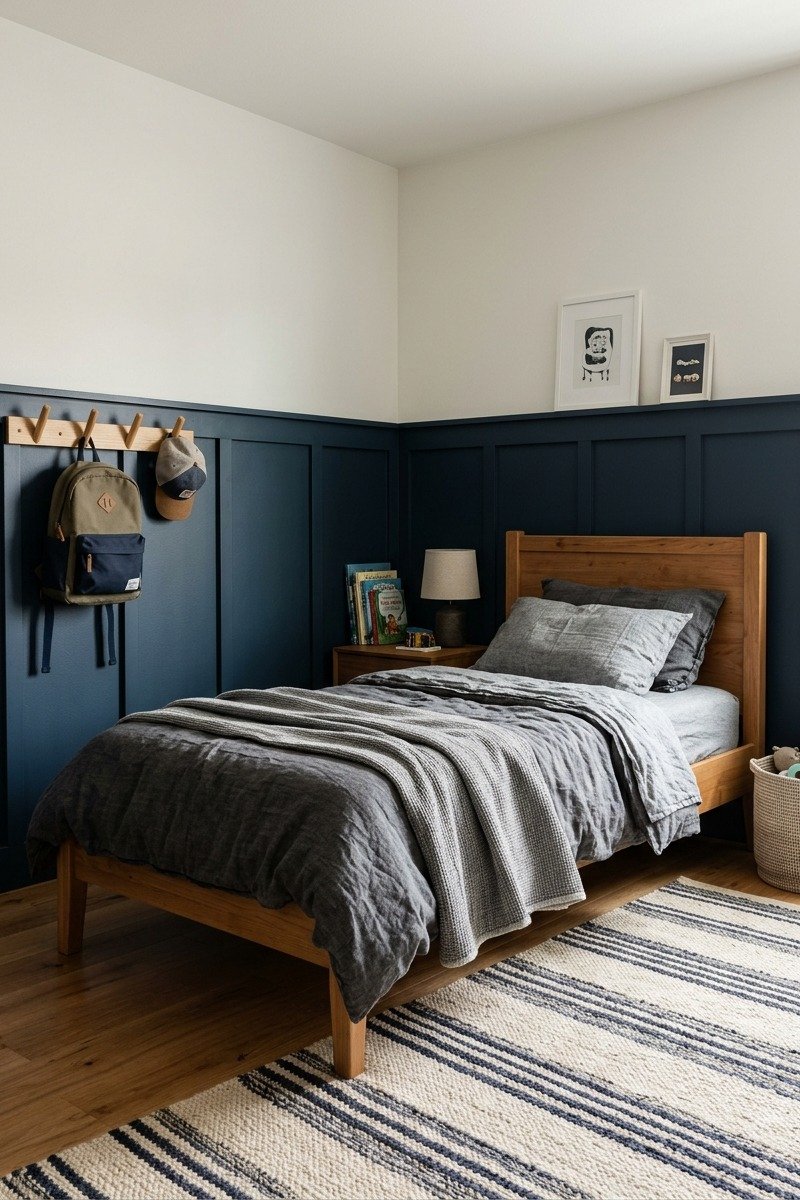
Board-and-batten paneling adds instant character and durability to a boy’s bedroom. Navy on the lower half and white above is a classic, handsome combination.
The paneling protects walls from scuffs, toy cars and sneakers, which is a real bonus in a busy kid’s room.
Add a row of wall hooks along the top rail for backpacks, hats and jackets.
The look works in nurseries, big-boy rooms and teen rooms alike.
For a softer look, choose sage, slate blue or warm grey paneling instead of navy. All pair beautifully with white and natural wood.
Pro tip: Use a semi-gloss or satin paint on the paneling. It wipes clean easily and stands up to everyday wear.


8. A Chalkboard Wall for Drawing

A chalkboard wall gives a little boy his own giant canvas. It encourages creativity and keeps drawings off the other walls.
Chalkboard paint comes in classic black and other colors, and can be applied to a full wall, a panel or the back of a door.
It also works for practicing letters, keeping a simple chore chart or drawing a weekly calendar.
Pair it with a small table and a bucket of chalk for an inviting art corner.
Magnetic chalkboard paint adds even more fun, letting him stick up magnets, drawings and letters alongside chalk art.
Pro tip: Season a new chalkboard wall by rubbing chalk over the entire surface and wiping it off before the first use. It prevents ghosting.

Beds
9. A Montessori House Bed
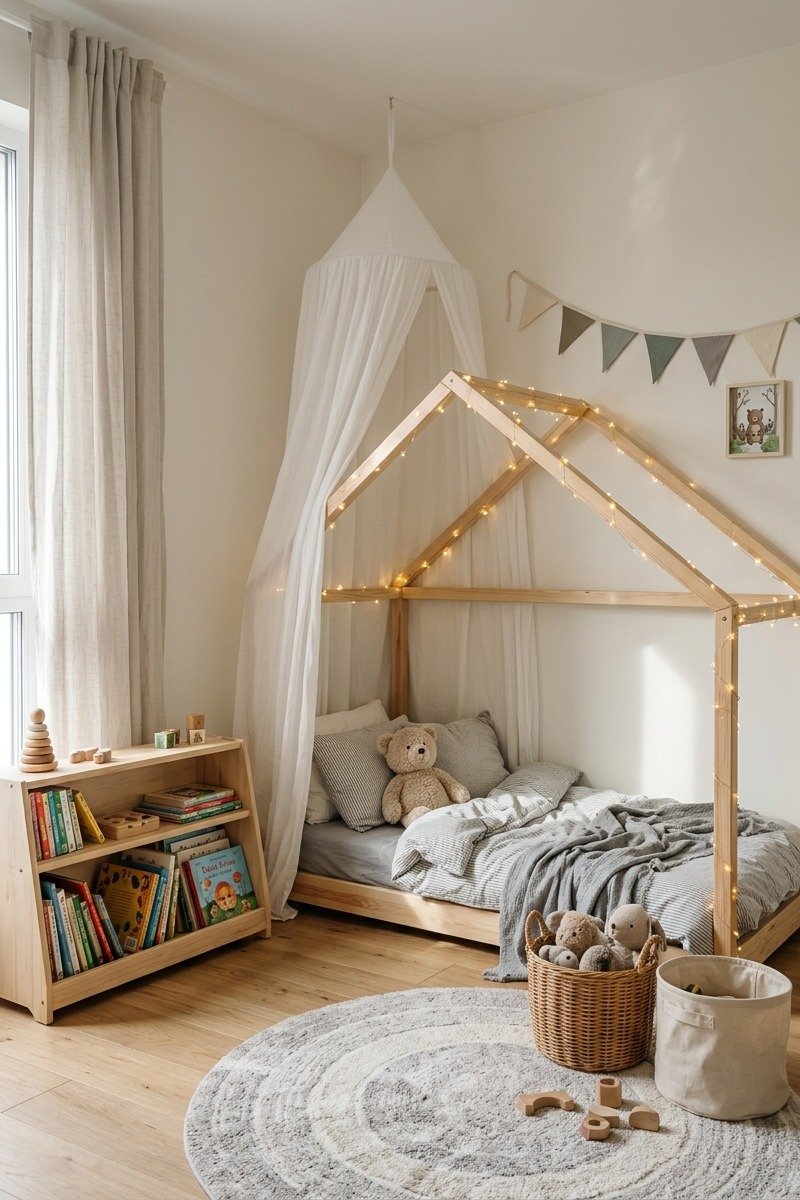
A Montessori house bed is a charming choice for toddlers. Its low height lets children climb in and out on their own, while the house frame feels cozy and secure.
Drape a sheer canopy or string lights over the frame for a magical touch.
Floor-level beds support independence and reduce the risk of falls for young sleepers.
Natural wood keeps the look calm and works with any theme.
As your child grows, many house beds can be raised on legs or converted into a standard twin bed, extending their life for years.
Pro tip: Leave clear floor space around a floor bed so your toddler can get up safely, and use a firm, well-fitted mattress.

10. Bunk Beds for Brothers

Bunk beds are perfect for brothers sharing a room or for hosting sleepovers. They save floor space and add a sense of fun.
Choose a sturdy wood frame with full-length guardrails on the top bunk and a secure ladder.
Add clip-on reading lights and a small shelf for each child, so each bunk feels like a personal space.
Coordinating bedding in two colors helps each child claim their bunk.
Bunk beds that separate into two twin beds are a smart long-term investment, since they adapt if the boys later want their own rooms.
Pro tip: The top bunk is generally recommended for children aged six and up. Always follow the manufacturer’s age guidelines.

11. A Loft Bed With Play Space Below
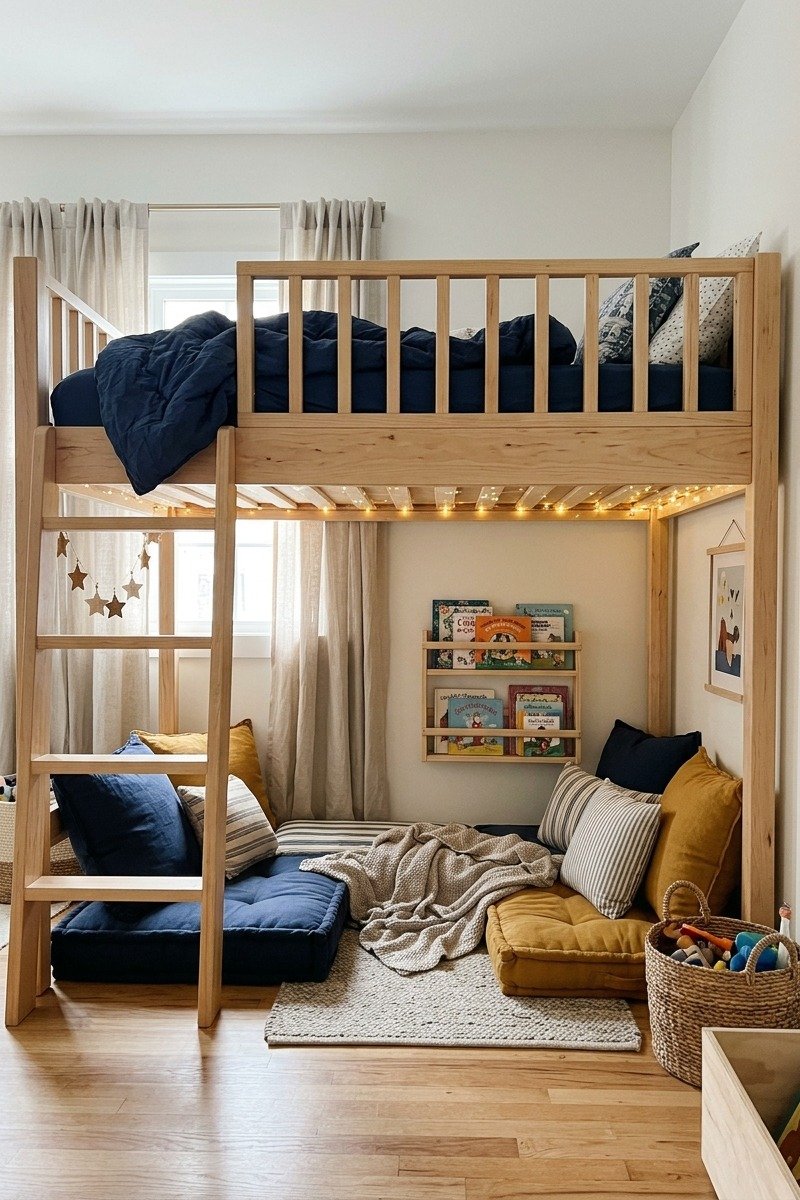
A loft bed frees up floor space below for a play den, reading corner or desk. It is a smart solution for small bedrooms.
Fill the space underneath with floor cushions, fairy lights and a small book display for a cozy hideaway.
As he grows, the den can become a homework station with a desk and lamp.
Choose a loft bed with sturdy rails and a ladder or stairs with handrails.
A curtain hung along the open side of the loft bed creates a private fort that children adore for quiet play and naps.
Pro tip: Check ceiling height. There should be enough space above the top mattress for him to sit up comfortably.

12. A Low Floor Bed for Toddlers
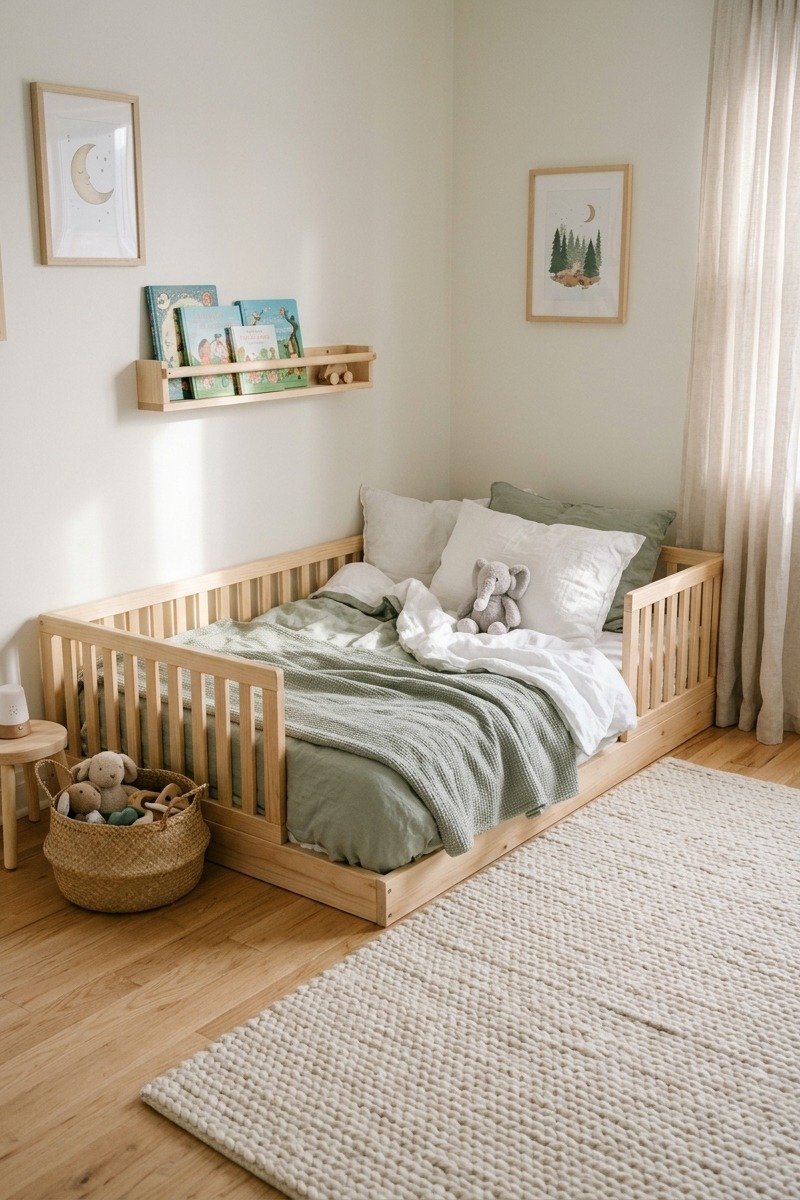
A low floor bed is a calm, safe option for toddlers moving out of a crib. It lets them get in and out independently.
Slatted sides or a low guardrail help prevent rolling out at night.
Natural wood floor beds look beautiful and suit a Montessori-inspired room.
Keep the area around the bed simple and clutter-free to support restful sleep.
A floor bed also makes bedtime stories easy, since you can sit comfortably beside your child on the floor while reading.
Pro tip: Place the floor bed against a wall and away from windows and cords for the safest setup.

13. A Captain’s Bed With Storage Drawers
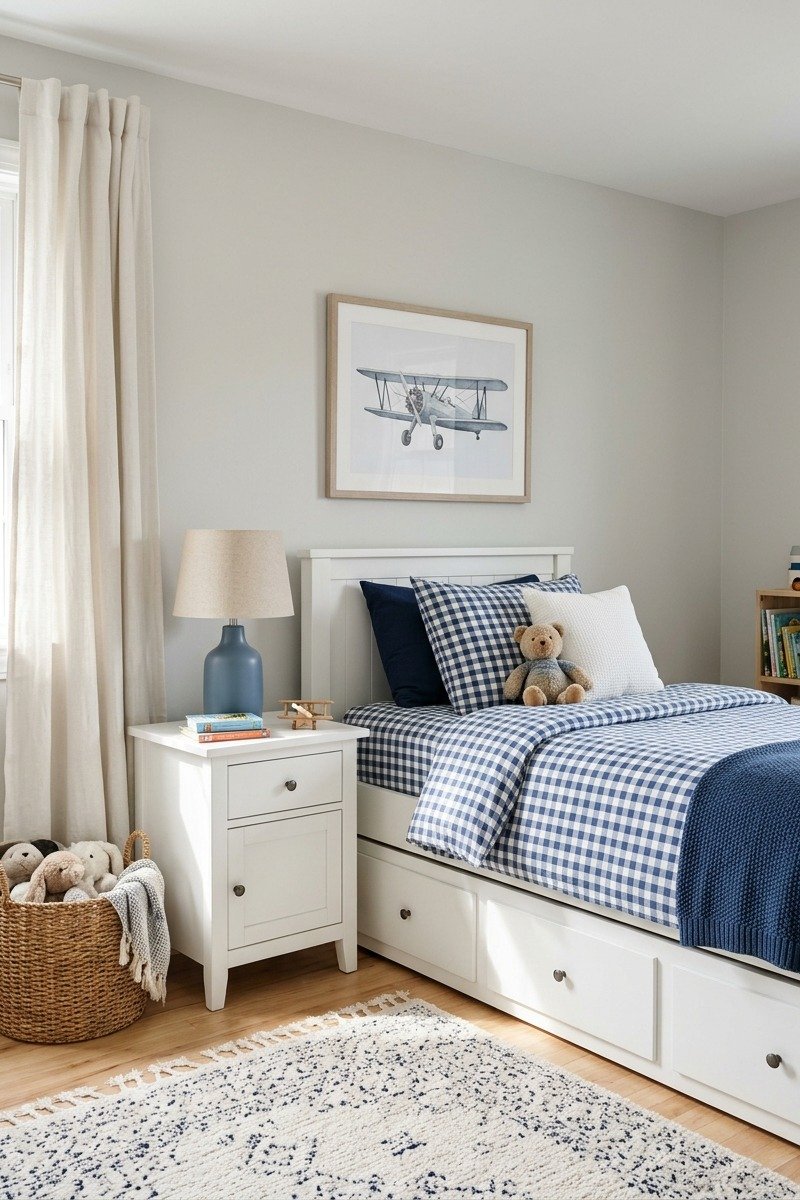
A captain’s bed with storage drawers is ideal for small rooms. The drawers underneath hold clothes, toys or spare bedding.
White and natural wood finishes keep the look fresh and timeless.
A bookcase headboard adds even more storage for books and a night light.
These beds are sturdy and long-lasting, often serving well into the teen years.
Trundle versions of captain’s beds are a great alternative, providing an extra pull-out bed for sleepovers and visiting cousins.
Pro tip: Use one drawer for spare sheets and pajamas, so bedtime and bed changes are quick and easy.

14. Fun Themed Bedding
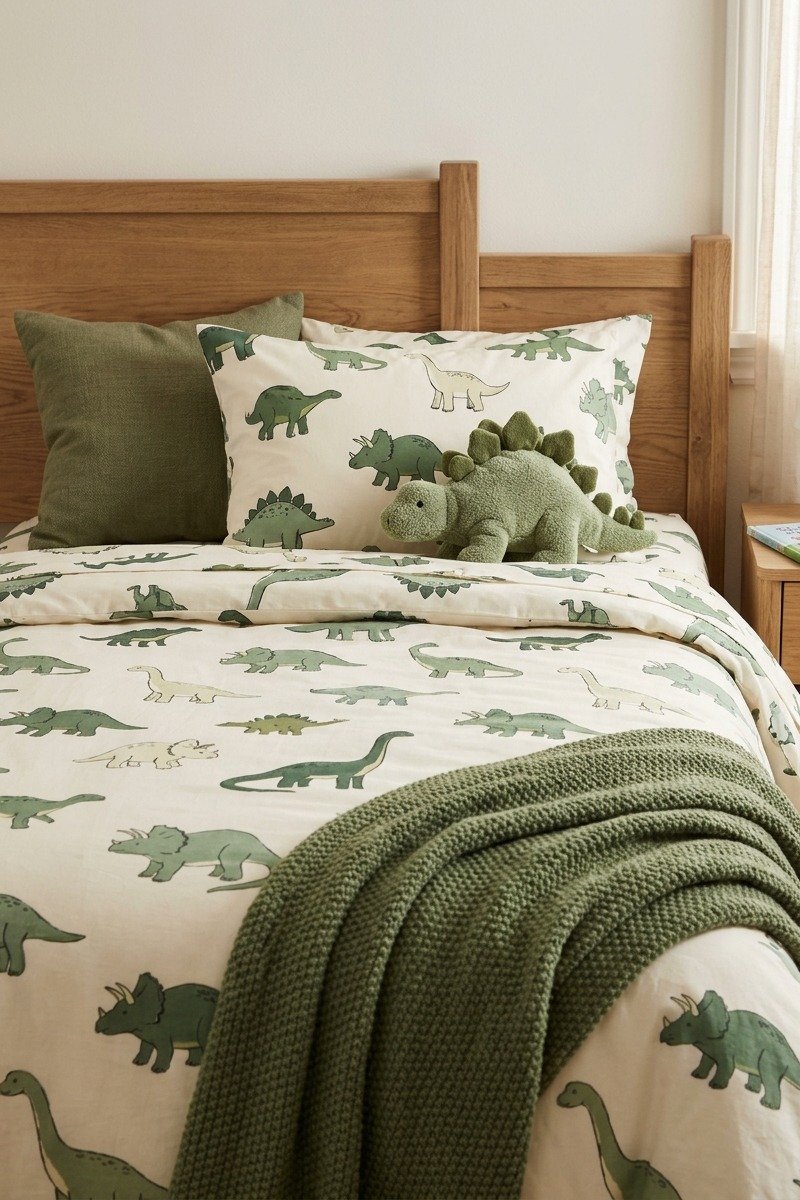
Fun themed bedding is the easiest way to bring personality into the room. Dinosaurs, rockets, trucks and animals all make bedtime more exciting.
Choose soft, breathable cotton that is easy to wash.
Pair a patterned duvet with solid sheets and a knit throw so the bed doesn’t feel too busy.
Swapping bedding is a simple way to refresh the room when interests change.
Let him choose his own bedding from a few options you approve. Having a say makes children more excited about going to bed.
Pro tip: Buy two sets of bedding so one is always clean and ready during busy weeks.

15. A Play Tent Canopy Over the Bed
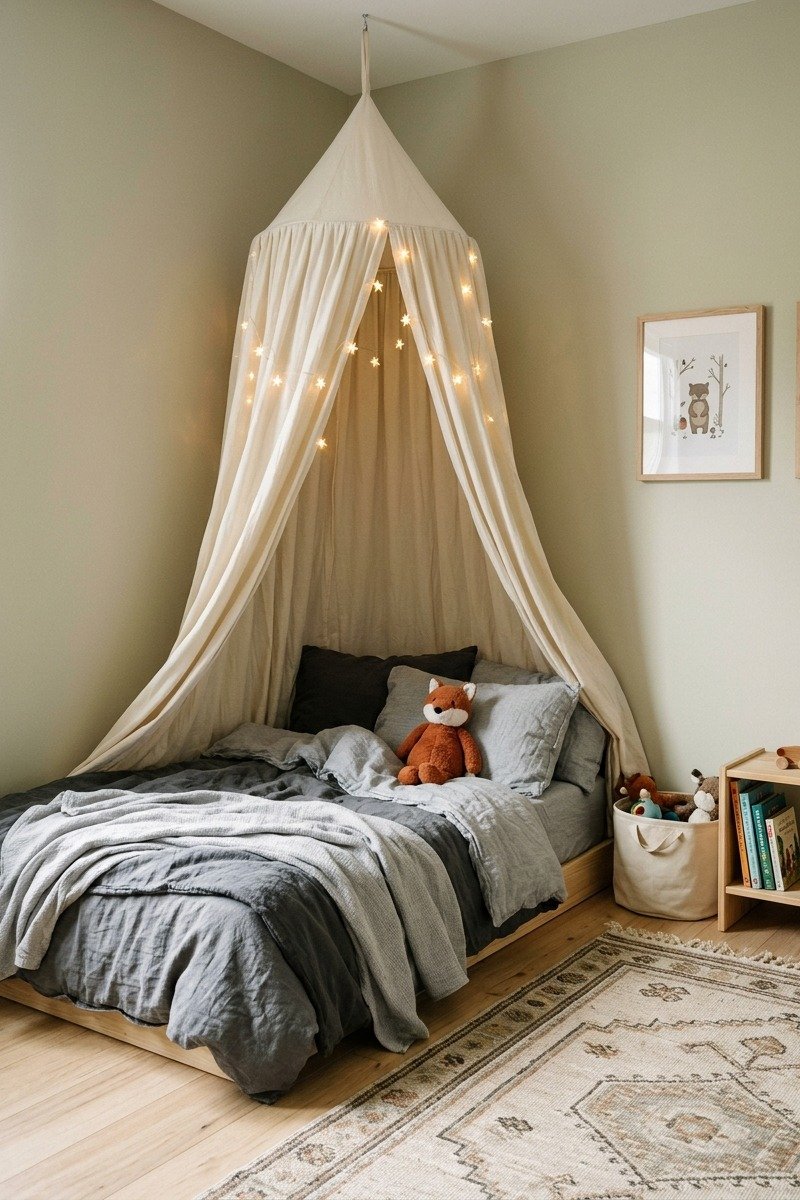
A hanging canopy over the bed creates a cozy, tent-like hideaway that little boys love. It makes the bed feel special and adventurous.
Canvas or cotton canopies in cream, grey or olive suit most themes.
Add star string lights for a magical bedtime glow.
Canopies are easy to hang from a single ceiling hook.
For an even cozier look, place a soft rug and floor cushions under the canopy so the whole corner becomes a special retreat.
Pro tip: Keep string lights and fabric away from heat sources, and choose LED lights that stay cool to the touch.

Play and Reading
16. A Teepee Reading Nook
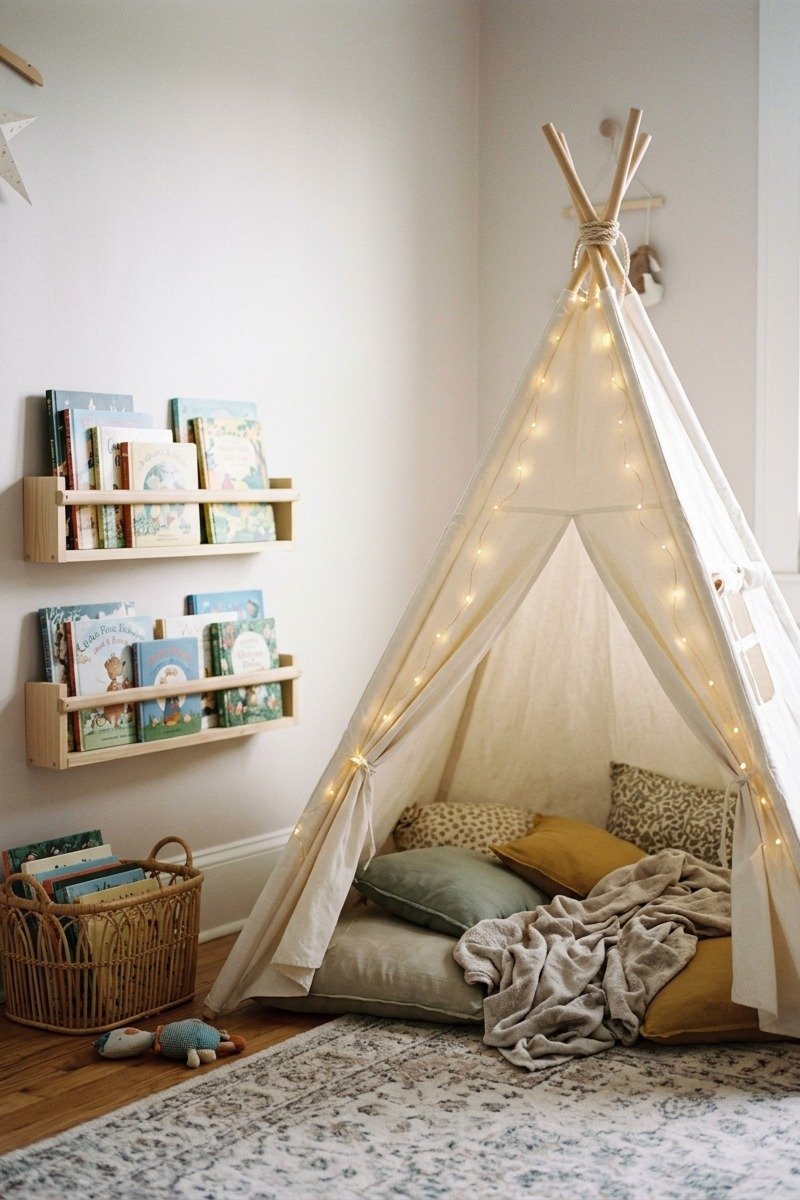
A teepee reading nook gives him a cozy spot to look at books and play pretend. It quickly becomes a favorite hideout.
Fill it with floor cushions, a soft blanket and a few plush toys.
Put a book ledge or basket of books right next to it, so reading is always within reach.
Teepees fold away easily if you need floor space.
A small battery-operated reading lamp inside the teepee makes it usable even in the evening without needing an outlet nearby.
Pro tip: Rotate a small selection of books every couple of weeks. Fewer choices often encourage more reading.

17. A Climbing Wall for Active Play

A climbing wall is a brilliant way to burn energy indoors, especially in rainy or cold weather.
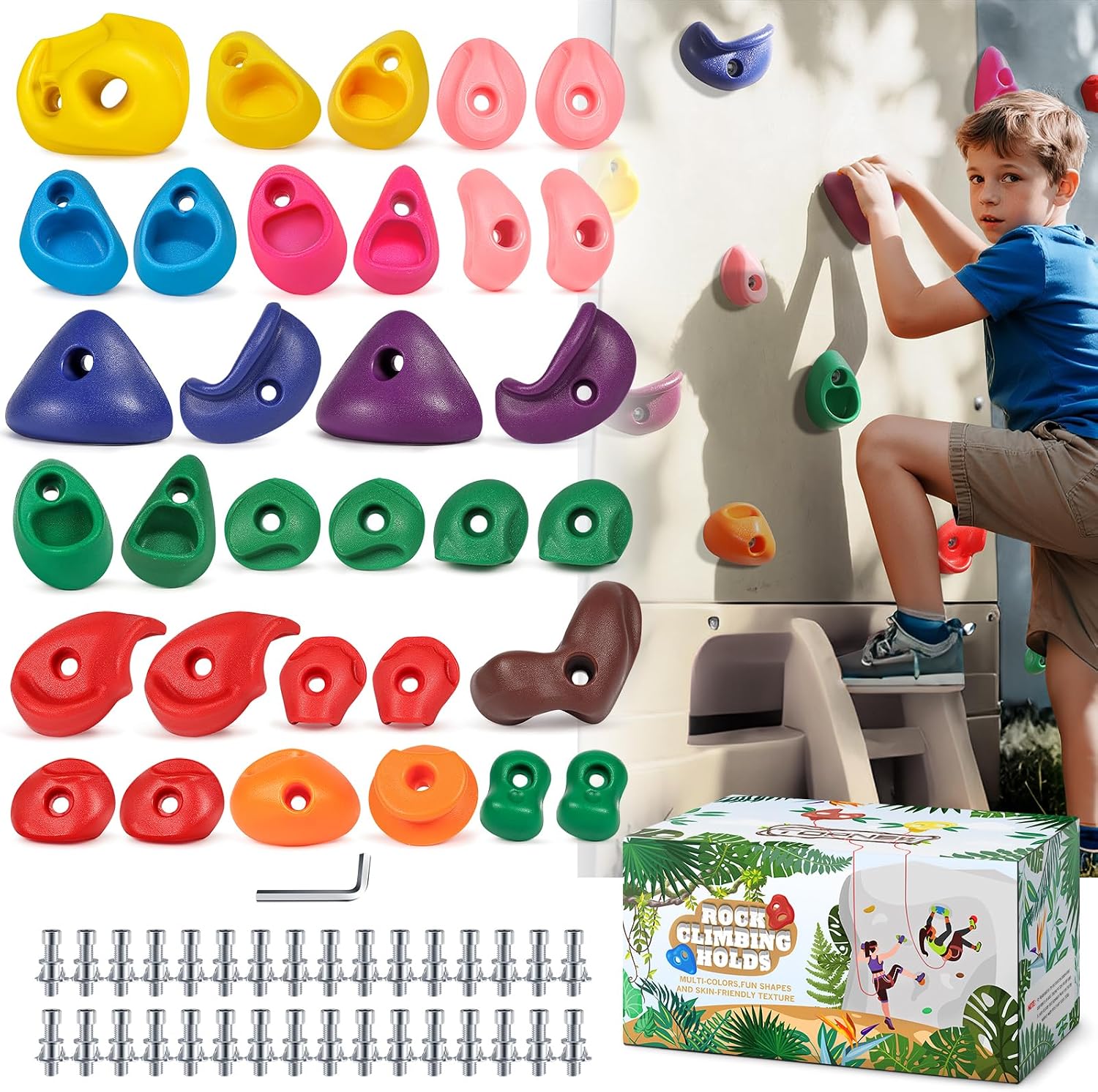
Mount climbing holds on a plywood panel secured into wall studs, and place a thick crash mat below.
Keep the wall low and horizontal for young children, so they traverse sideways rather than climbing high.
It builds strength, coordination and confidence.
If a full wall is too much, a smaller climbing panel paired with a cargo net or monkey bars offers plenty of active fun in less space.
Pro tip: Always secure the plywood panel into studs and have it checked by someone experienced. Safety matters more than height.
18. An Indoor Hammock Swing
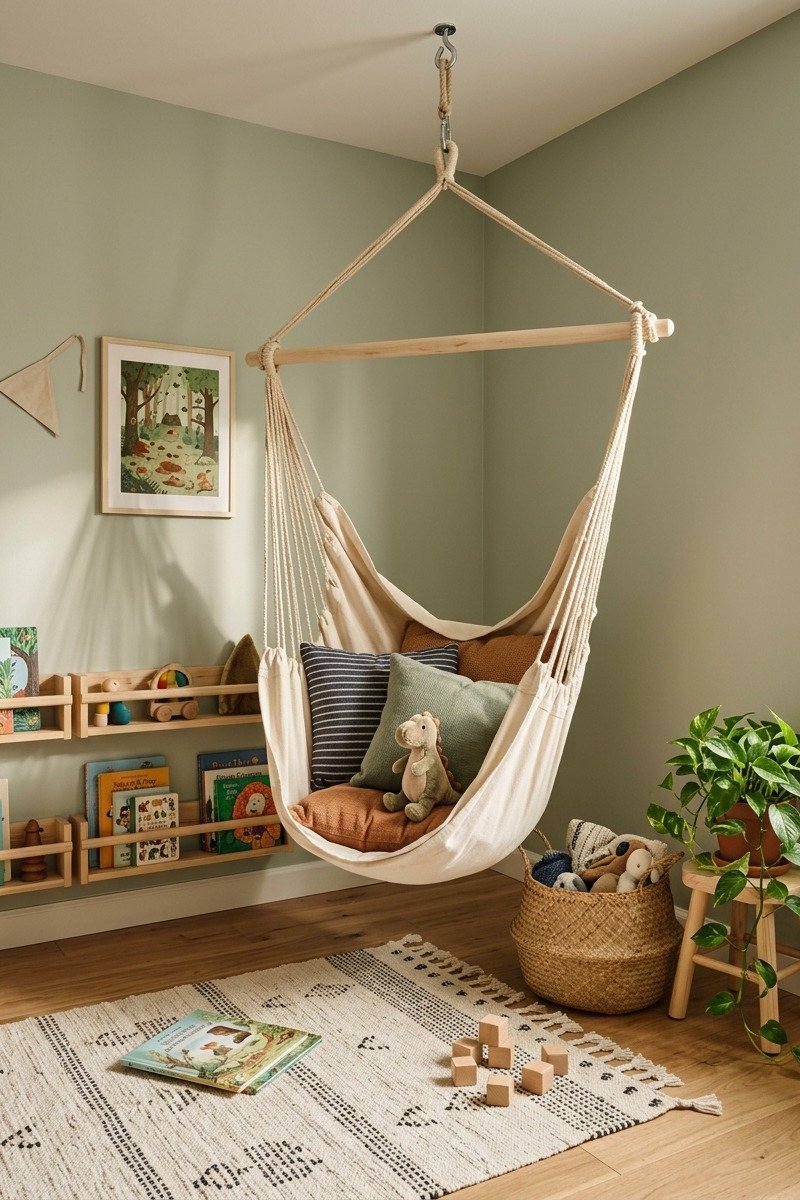
An indoor hammock swing adds fun and calm to a little boy’s room. Many children find the gentle swinging soothing.
Canvas hammock chairs with cushions are comfortable for reading or relaxing.
Hang the swing from a ceiling joist with a rated hook and leave plenty of clearance around it.
It creates a cozy corner that feels like a treat.
A hammock swing also offers sensory input that can help some children calm down and focus, making it a useful tool as well as a toy.
Pro tip: Use a hanging kit rated well above your child’s weight and check the hardware regularly.

19. A Pikler Climbing Triangle

A Pikler climbing triangle is a favorite Montessori piece for toddlers. It encourages safe climbing and builds motor skills.
Natural wood triangles with ramps can be reconfigured for sliding, climbing and making forts.
Place it on a soft play mat for extra cushioning.
Many fold flat for easy storage.
Many Pikler sets come with additional pieces such as arches and climbing cubes, so you can expand the set as your toddler grows more confident.
Pro tip: Supervise young climbers and start with the triangle at its lowest setting.

20. A Building Block Table
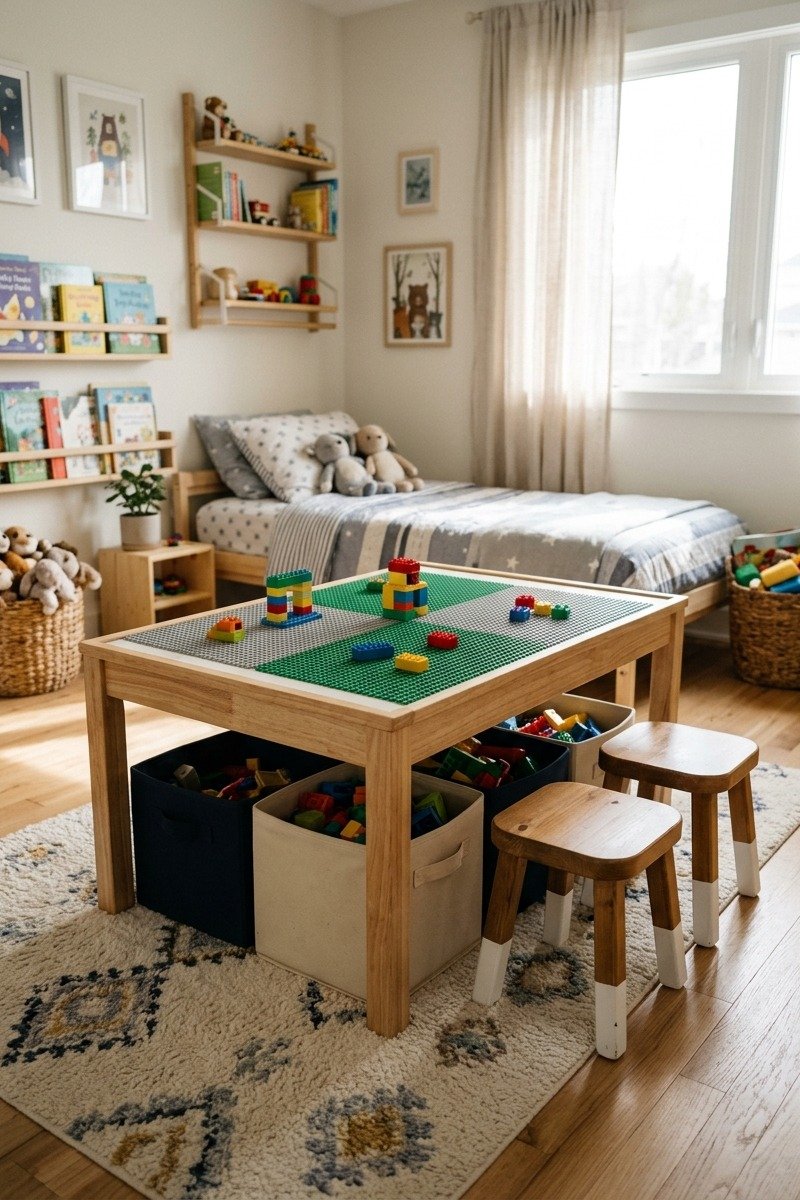
A building block table keeps bricks organized and gives little builders a dedicated workspace.
Tables with baseplate tops and storage bins underneath make cleanup much easier.
Small stools tuck neatly underneath when not in use.
It also works for puzzles, crafts and train sets.
Choose a table with a reversible top so it can switch between a building surface and a smooth tabletop for drawing and games.
Pro tip: Sort bricks by color or size in the bins. It makes finding pieces faster and reduces frustration.

21. An Art Station With an Easel
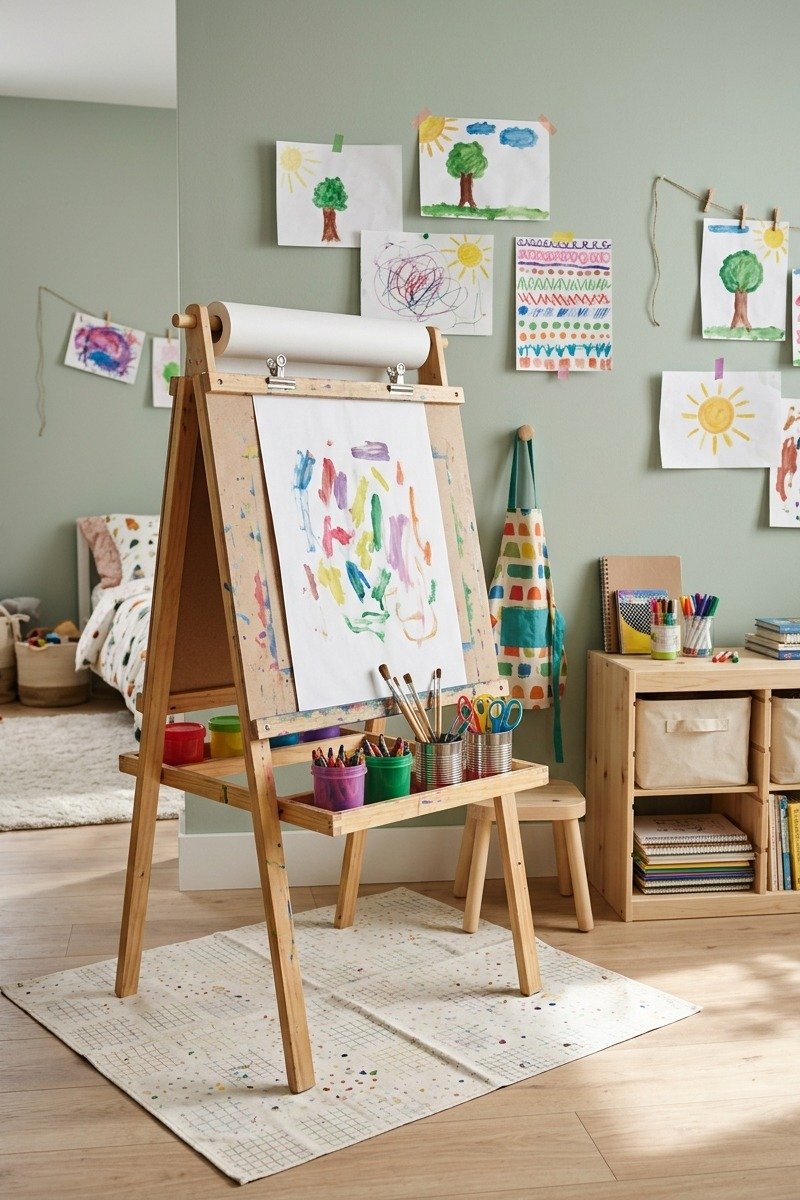
An art station invites creativity every day. A double-sided easel with a chalkboard and whiteboard offers endless possibilities.
Keep crayons, markers and paint in jars or cups within easy reach.
Display artwork on a string line or cork board, so he can be proud of his creations.
A washable splat mat protects floors from paint and marker.
Keep a small apron or old T-shirt near the easel for messy painting days, so clothes stay clean and cleanup is easier.
Pro tip: Rotate displayed art regularly and photograph favorites so you can keep a digital archive.

Storage
22. Toy Storage Cubbies With Bins
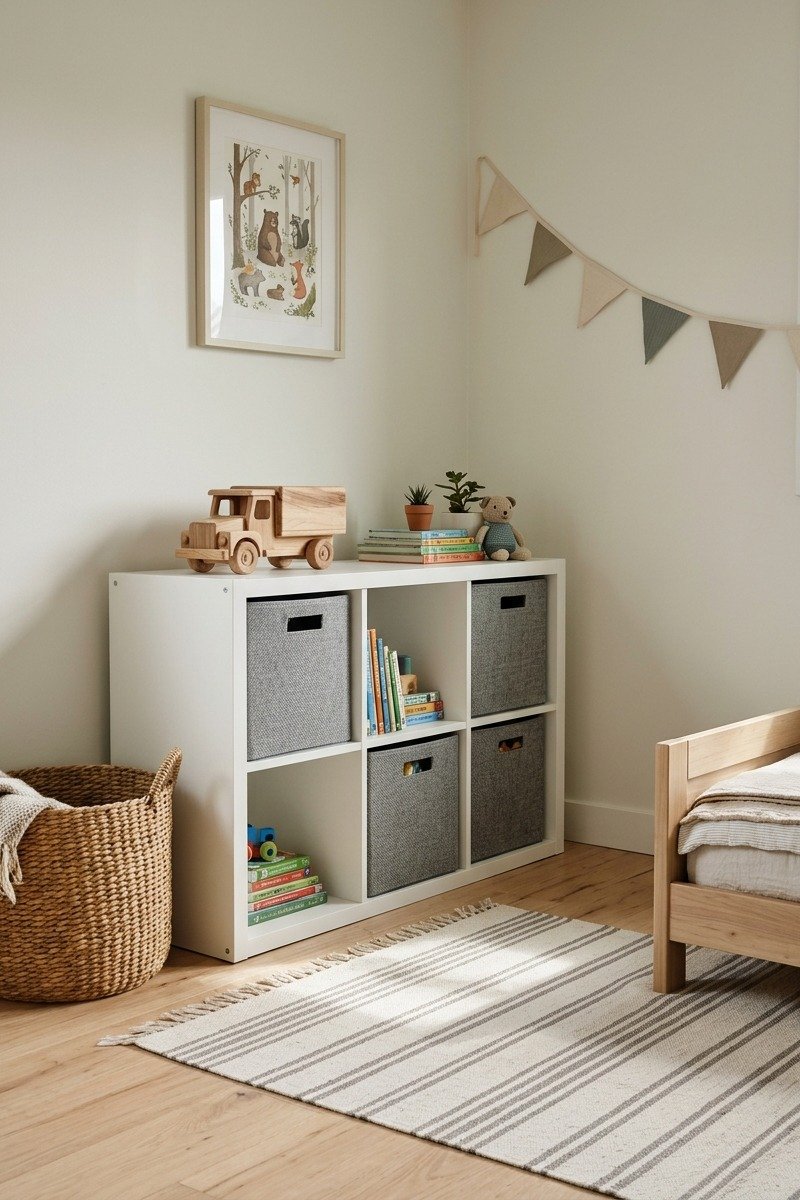
Cube storage with fabric bins is one of the most practical solutions for a boy’s room. It hides clutter and makes tidying simple.
Label bins with pictures for young children who can’t read yet.
Use the top of the cube shelf to display a few favorite toys or books.
Cubes can be rearranged as needs change.
Cube storage also works as a room divider in shared bedrooms, giving each child a defined area and their own set of bins.
Pro tip: Keep the most-used toys in the lowest bins so he can reach them himself.


23. Front-Facing Book Ledges
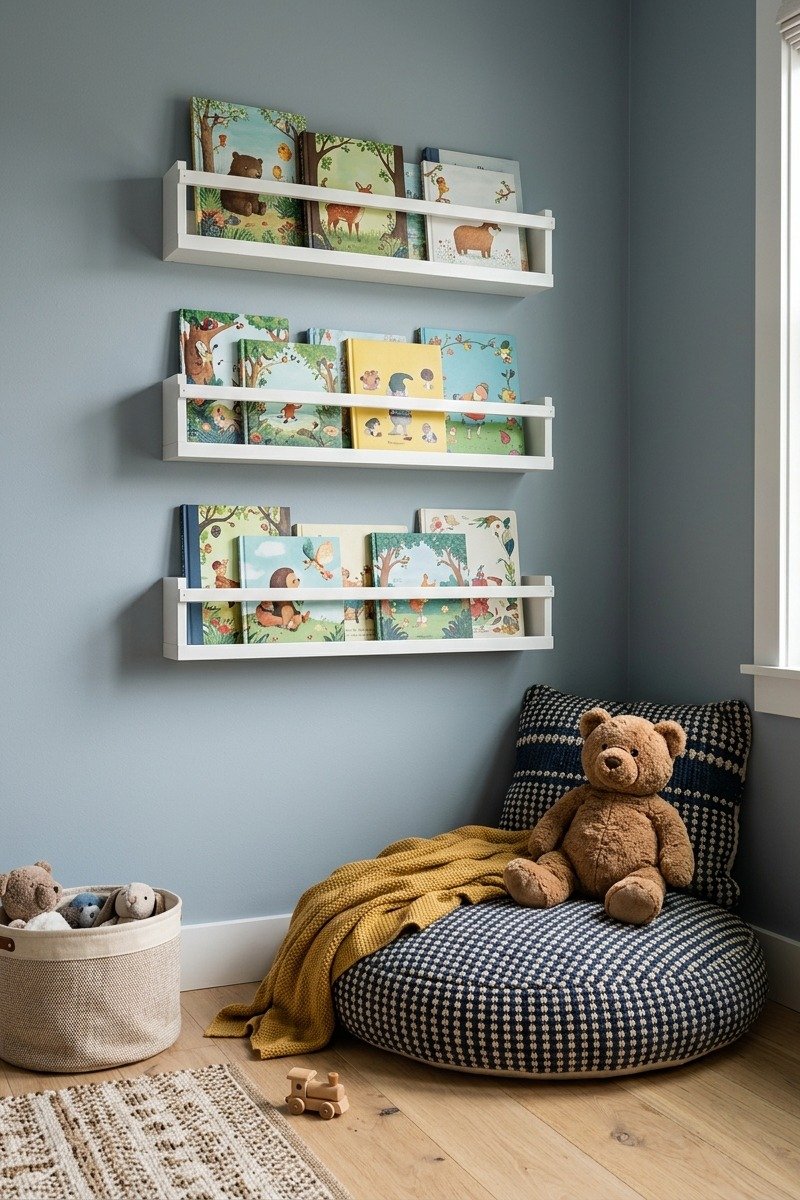
Front-facing book ledges make books more appealing to young readers because they can see the covers.
Floating picture ledges are inexpensive and easy to install at child height.
Rotate books to keep the display fresh and match seasons or interests.
Ledges also work well for displaying small art or treasured toys.
Add a cozy floor cushion and a small lamp under the book ledges to create a complete reading corner he will want to visit every day.
Pro tip: Install ledges about 2 to 3 feet off the floor for toddlers, so they can choose books independently.

24. A Pegboard Organizer Wall
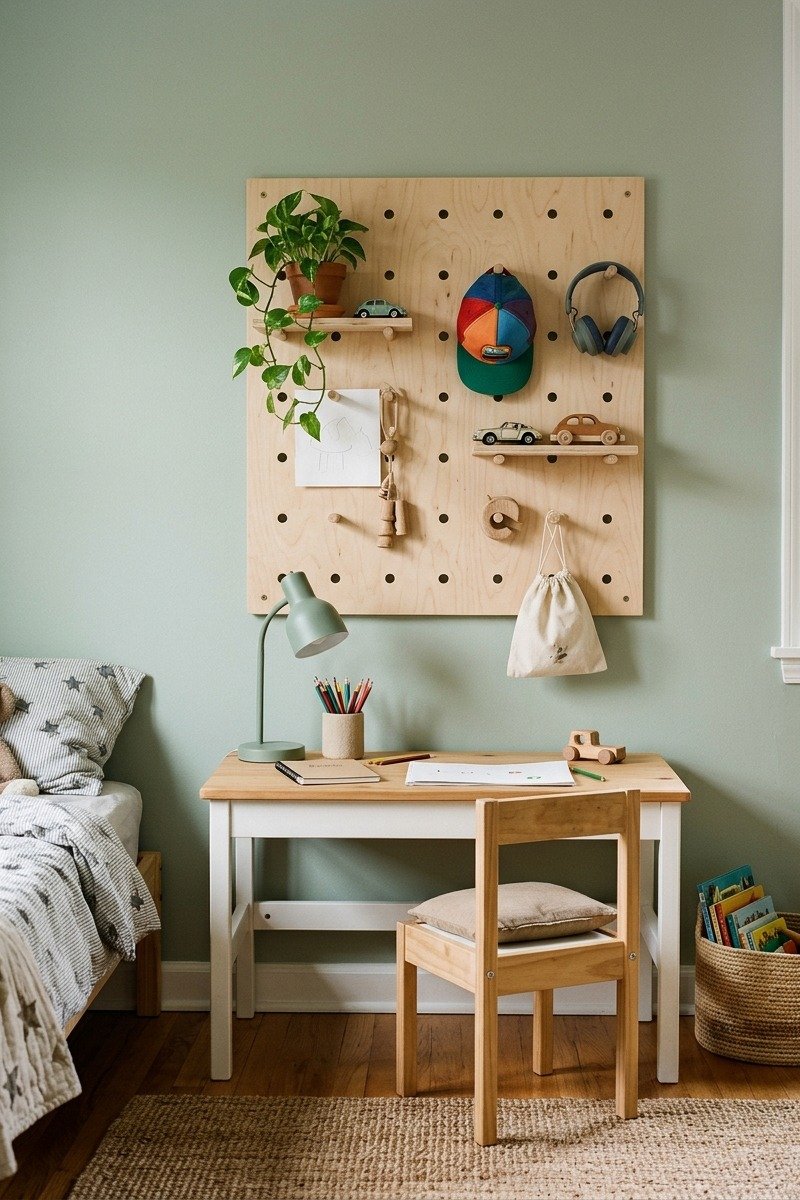
A pegboard wall is a flexible organizer that grows with your child. Move shelves and hooks as needs change.
Use it to hold headphones, hats, art supplies and small toys.
Natural wood pegboards look warm and stylish, especially above a desk.
It keeps surfaces clear and adds a fun, customizable feature.
Pegboards are especially useful for small rooms, since they use vertical wall space instead of taking up precious floor area.
Pro tip: Start with just a few accessories and add more as you see what he actually uses.

25. A Toy Chest Bench
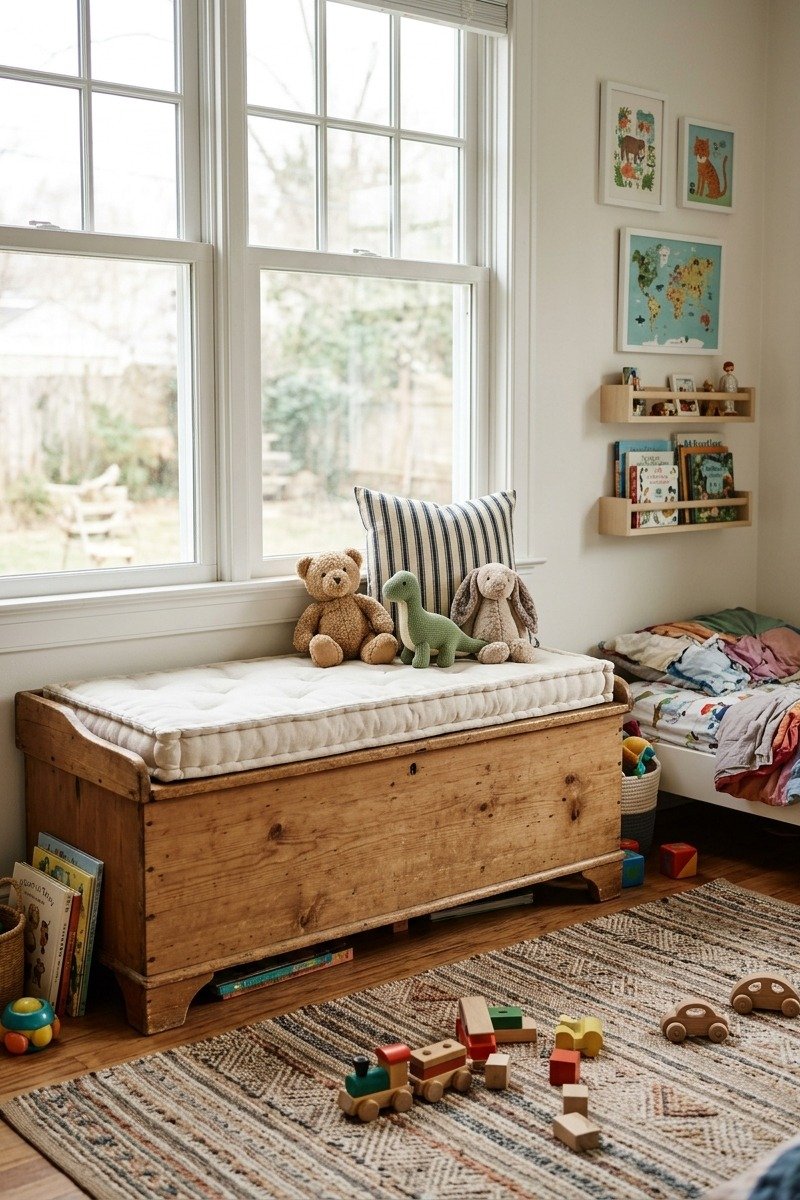
A toy chest bench offers storage and seating in one piece. Place it under a window or at the foot of the bed.
Add a cushion on top to create a cozy window seat for reading.
Choose a chest with a slow-closing hinge to protect little fingers.
It is perfect for bulky toys, blankets and dress-up clothes.
A toy chest bench can later become a blanket chest or extra seating in a teen room, so it is a piece that lasts.
Pro tip: Look for safety hinges that hold the lid open at any position.

26. Wall Hooks for Hats and Backpacks

Wall hooks keep backpacks, hats, jackets and capes off the floor and within reach.
Wooden peg hooks feel classic, while fun animal or shape hooks add personality.
Mount them low so he can hang things up himself.
Hooks also work well for displaying favorite costumes.
Add a small shelf above the hooks for hats, gloves or a few favorite treasures to make the most of the wall space.
Pro tip: Mount hooks at about 3 to 4 feet for young children and raise them as they grow.

27. Under-Bed Storage Drawers
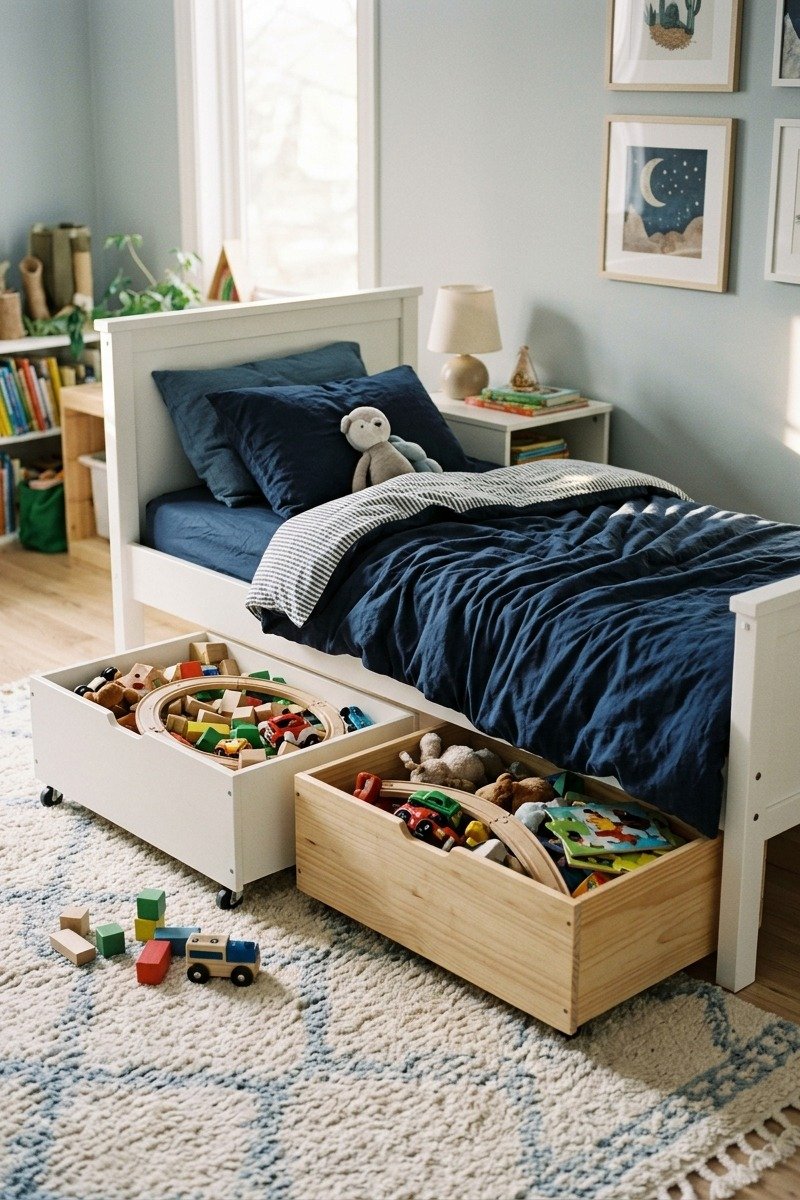
Under-bed storage makes use of space that often goes to waste. Rolling boxes are easy for kids to pull out and push back.
Use them for building blocks, seasonal clothes or spare bedding.
Clear or labeled boxes make it easy to see what’s inside.
This keeps the room tidy without adding more furniture.
Assign each box a category, like blocks, cars or art supplies, so your child knows exactly where things go during cleanup.
Pro tip: Measure the clearance under the bed before buying boxes, and choose ones with wheels for easy access.

Decor and Lighting
28. A Star Projector Night Light

A star projector night light makes bedtime calm and magical. Soft moving stars help children relax and fall asleep.
Many projectors include timers, color options and gentle sounds.
Choose a warm, dim setting for sleep and a brighter one for stories.
It is also comforting for children who don’t like complete darkness.
Look for projectors with a soft white-noise feature, which can help mask household sounds and support deeper sleep.
Pro tip: Set a timer so the projector switches off after your child falls asleep.

29. A Road Play Rug
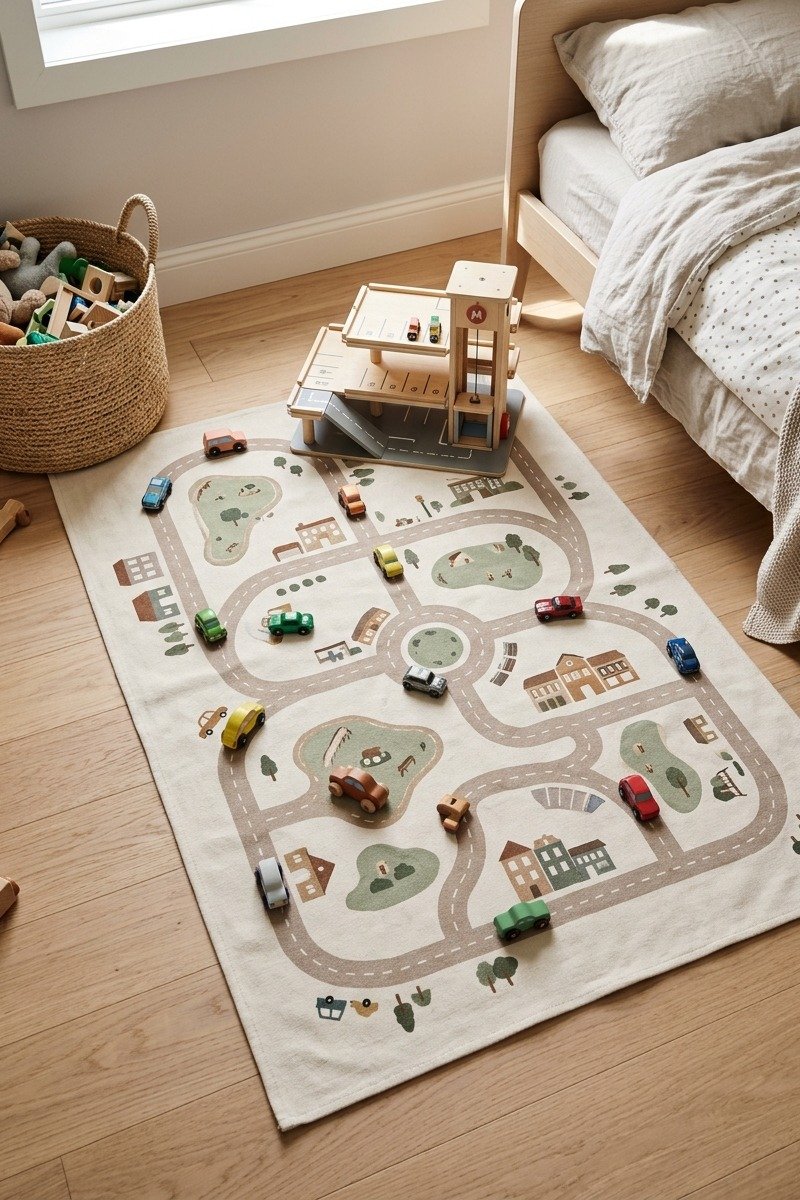
A road play rug turns the floor into a town full of streets, parks and buildings. It encourages hours of imaginative play.
Look for a low-pile, non-slip rug that is easy to clean.
Pair it with a basket of toy cars and a wooden garage.
It also defines the play area in a bedroom.
Store the road rug’s toy cars in a small basket nearby so everything stays together and the floor stays clear when play time ends.
Pro tip: Choose a washable rug so spills and muddy toys are no problem.
30. Framed Art Prints Kids Will Love
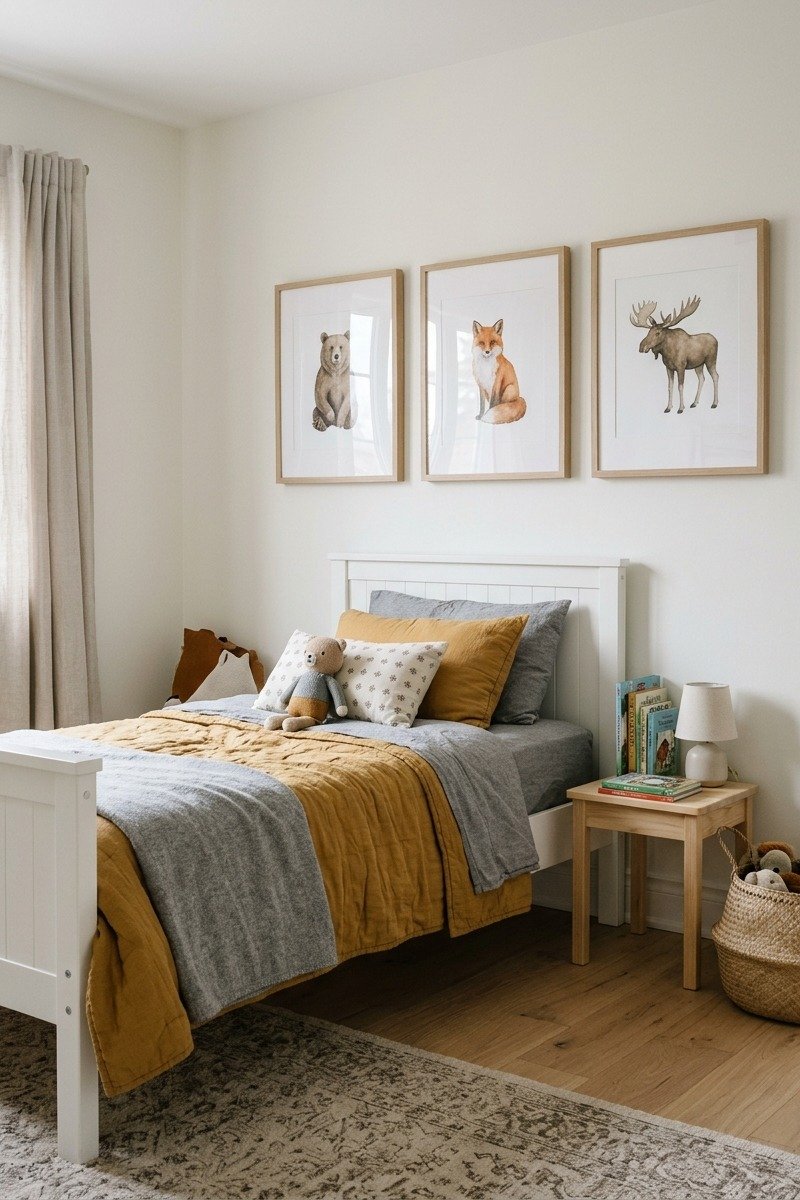
Framed art prints give a little boy’s room a polished, curated look. Animals, maps and vintage illustrations are popular choices.
A set of three matching prints above the bed creates balance.
Choose prints that match your color palette for a cohesive look.
Swap them out as interests change.
Mix in a framed piece of your child’s own artwork among the prints. It makes the gallery personal and boosts his confidence.
Pro tip: Use shatterproof acrylic instead of glass in frames for a child’s room.

31. A Personalized Name Sign
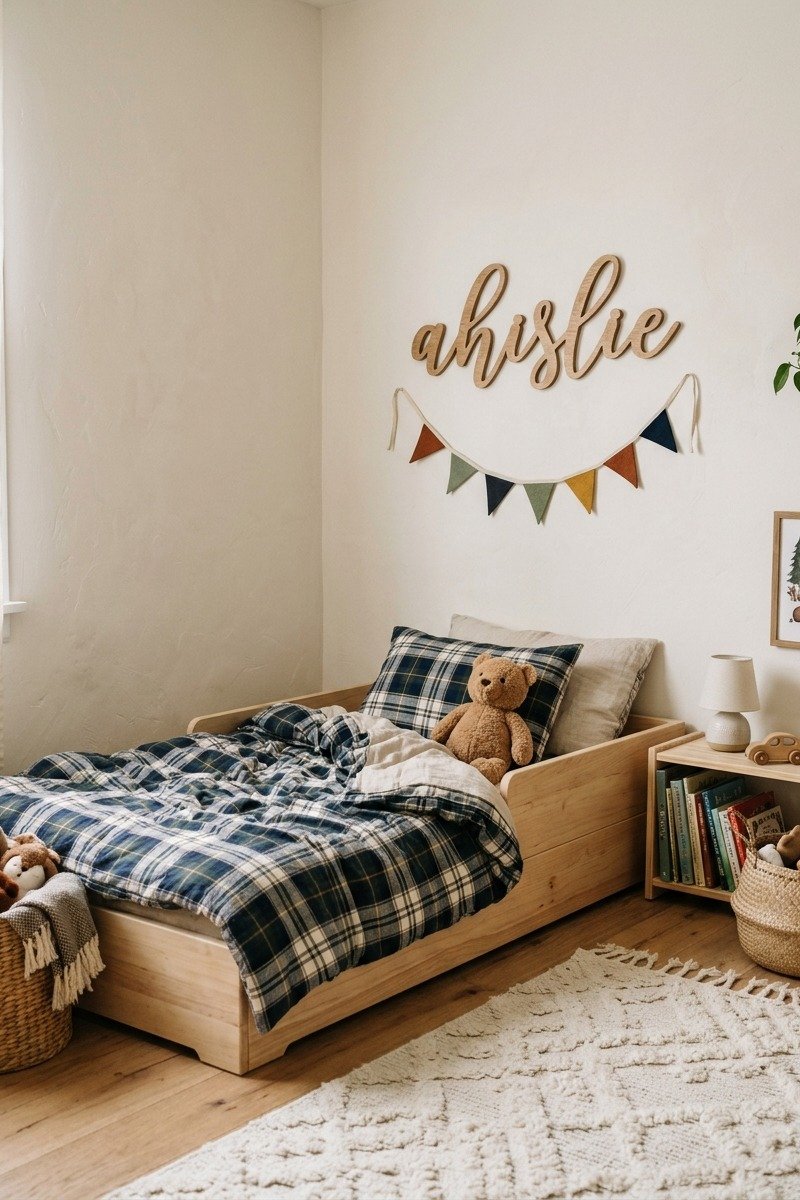
A personalized name sign makes the room feel truly his. Wooden letters, painted signs or felt banners all work well.
Hang it above the bed or on the door.
Choose a style that matches the room’s theme and colors.
It is also a lovely keepsake as he grows.
Painted wooden initials or a felt pennant with his name can also be hung on the door to welcome visitors to his space.
Pro tip: Secure letters firmly to the wall with screws or strong mounting strips, especially above a bed.

32. Blackout Curtains for Better Sleep

Blackout curtains help little ones sleep longer, especially during light summer evenings and early mornings.
Navy, grey and patterned options blend with most room themes.
Mount the rod wide and high to block light from the edges.
They also add insulation and reduce outside noise.
Pair blackout curtains with a dimmable lamp so you can create a calm bedtime atmosphere and adjust the light during stories.
Pro tip: Choose cordless or wand-operated curtains and blinds for safety.

33. A Homework and Craft Desk
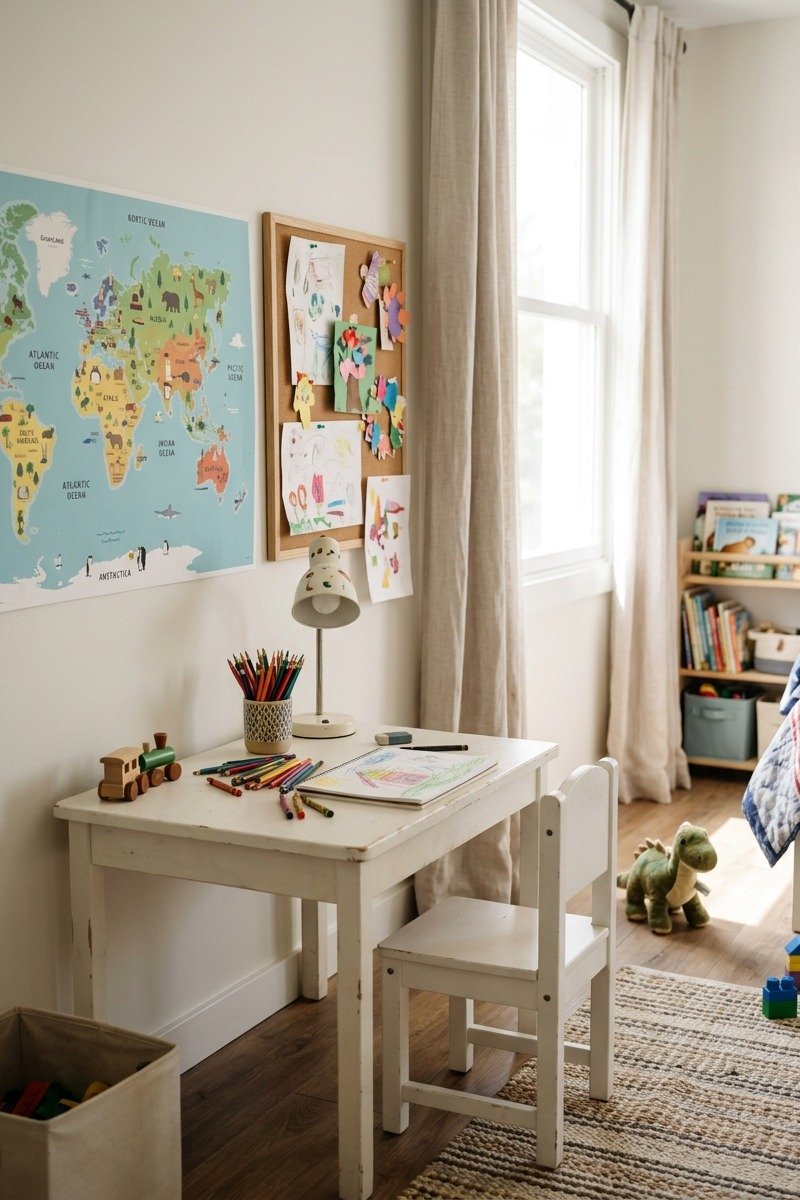
A homework and craft desk gives a school-age boy a dedicated space for drawing, building and learning.
Kids’ desks with storage keep supplies organized.
Add a desk lamp, a cup of pencils and a cork board for notes and artwork.
Place the desk near a window for natural light.
A wall-mounted shelf above the desk keeps books and supplies within reach while leaving the desk surface clear for work.
Pro tip: Choose an adjustable chair so the desk grows with him.

Keeping a Boy’s Room Tidy
Do a quick five-minute tidy every evening as part of the bedtime routine. Small daily resets stop clutter from building up.
Rotate toys. Keep a few out and store the rest, swapping them every couple of weeks to keep play fresh and the room manageable.
Declutter before birthdays and holidays to make room for new things.
Involve him in organizing so he knows where everything belongs.
Frequently Asked Questions
What colors are best for a little boy’s bedroom?
Navy, sage, forest green, mustard, rust and soft grey are popular. Pair one or two with white or natural wood for a calm, timeless room.
At what age can a child sleep in a top bunk?
Generally from age six and up, but always follow the manufacturer’s guidelines and use full guardrails.
How do I make a boy’s room grow with him?
Choose classic furniture and neutral walls, and add the theme through bedding, decals, art and accessories that are easy to change.
How can I add storage to a small boy’s bedroom?
Use under-bed storage, a captain’s bed with drawers, cube shelves, wall hooks and a pegboard to maximize space.
Final Thoughts
A little boy’s bedroom should be a place for big dreams, adventures and restful sleep. With a fun theme, smart storage and safe furniture, you can create a space he loves now and enjoys for years.
Pick a few ideas from this list, involve him in the choices, and watch the room become his favorite place in the house.

