
This post contains affiliate links. As an Amazon Associate, I earn from qualifying purchases at no extra cost to you.
The old money look is luxury that doesn’t shout. Think of a bedroom in a country house that has been lived in for generations: panelled walls, a well-made bed piled with linen, an antique chest, faded rugs and a few treasured pieces of art. Nothing looks brand new, and that is exactly the point.
Unlike trend-driven interiors, an old money bedroom is built slowly and designed to last. It favours natural materials, classic shapes and quality over quantity, which means it never really goes out of style.
Below are 31 old money bedroom designs grouped by theme, from walls and colour to beds, textiles, furniture and finishing touches. Each one comes with a practical tip and a few products to help you create the look at home.
What Defines an Old Money Bedroom?
At its heart, the style is about restraint. Colours are muted and natural, such as cream, ivory, sage, navy, deep green and warm wood tones. Patterns are classic, like stripes, checks, florals and toile, and they are used with confidence but never all at once.
Materials matter more than labels. Solid wood, linen, cotton, wool, velvet, brass, marble and leather all age beautifully and feel substantial. Pieces are chosen to be kept for decades, and many are inherited, antique or vintage.
Finally, an old money bedroom always feels lived-in. A stack of books, a slightly worn rug, fresh flowers and a mix of old and new pieces make the room feel personal rather than staged.
Walls, Colour and Architecture
1. Add Classic Wall Panelling
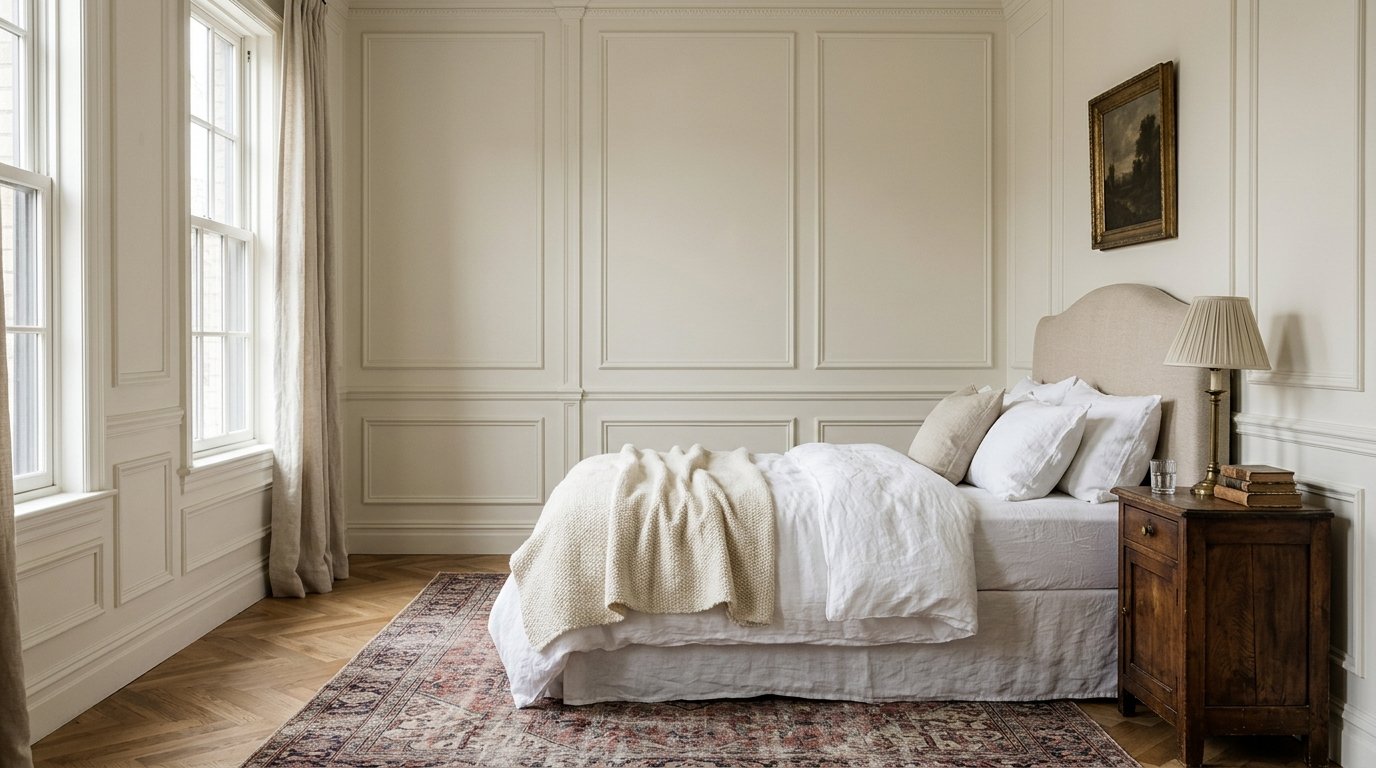
Wall panelling is the backbone of an old money bedroom. Raised or picture-frame panels add depth and architectural interest, and they instantly make a plain room feel like part of a grand old house.
Paint the panels in a soft neutral such as warm white, greige or pale sage, or go darker with navy or forest green for a more enveloping, library-like feel.
If you rent or are on a budget, picture-frame moulding applied to flat walls gives a very similar effect for a fraction of the cost of full panelling.
Pro tip: Paint the walls, panels and trim the same colour in an eggshell finish. It looks more expensive and makes the moulding the star.

2. Choose a Muted, Heritage Colour Palette
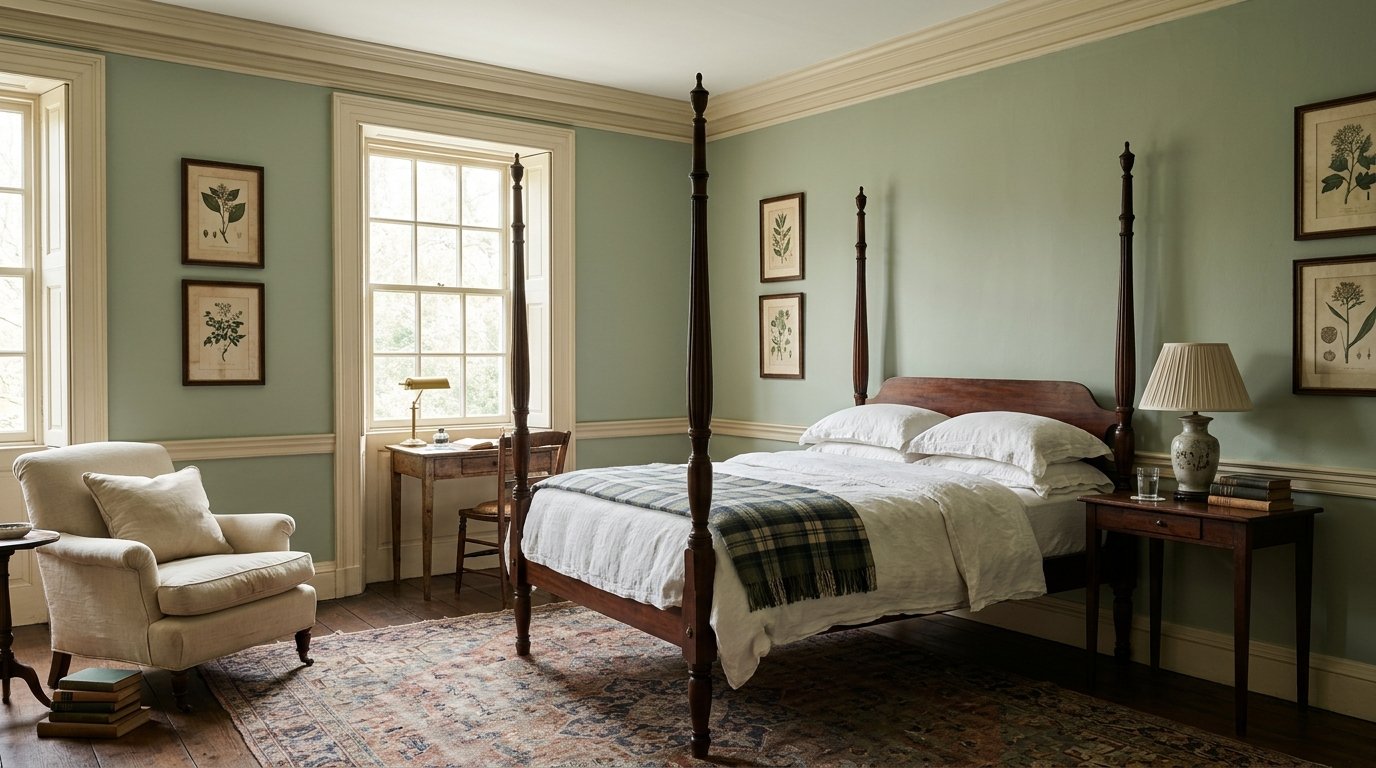
Old money colour palettes are calm and quietly confident. Warm whites, creams, taupe, sage, soft blue and deep green feel timeless and are easy to live with.
Pair these base colours with natural wood, aged brass and touches of a richer accent, such as burgundy or navy, in cushions, rugs or art.
Avoid bright, saturated colours and stark cool whites, which can feel modern and flat. The goal is a room that looks softly faded, as if it has been gently aged by sunlight.
Pro tip: Choose paint colours with warm or grey undertones and test them on large swatches at different times of day before committing.

3. Go Deep With Navy or Forest Green
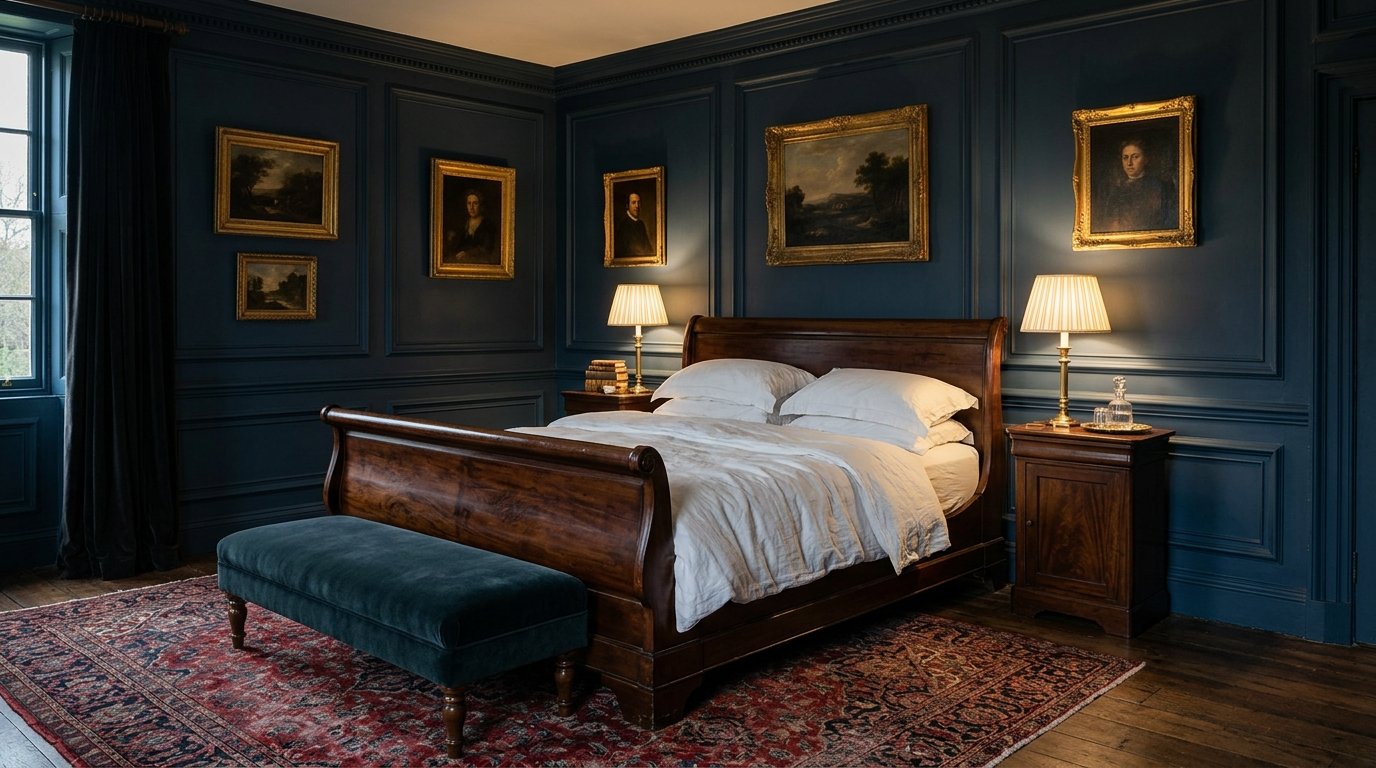
For a dramatic, cocooning bedroom, deep navy or forest green walls create the feel of a gentleman’s club or a historic townhouse.
Dark walls make gilded frames, brass lamps and crisp white bedding glow, and they look beautiful in the evening with warm lamplight.
Balance the darkness with lighter bedding, a pale rug and plenty of warm lighting so the room feels rich rather than heavy.
Pro tip: Paint the ceiling a shade lighter than the walls rather than stark white. It keeps the room cohesive while lifting the space.

4. Hang Hand-Painted or Chinoiserie Wallpaper
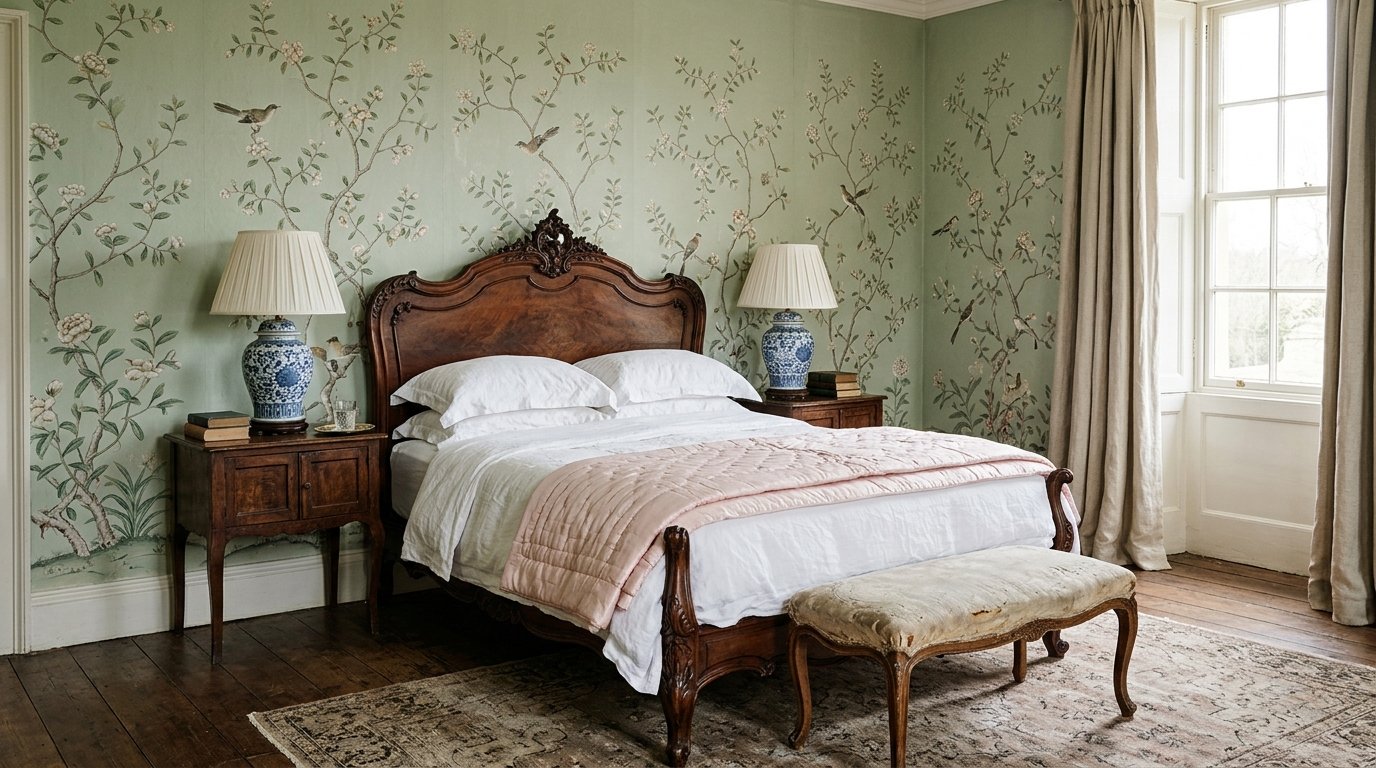
Hand-painted or chinoiserie wallpaper is a classic of grand country houses. Delicate birds, branches and blossoms add artistry and make the room feel collected.
Use it on all four walls for a fully enveloping effect, or on one wall behind the bed if you prefer something more restrained.
If authentic hand-painted papers are beyond budget, many printed designs capture the same look at a far more affordable price.
Pro tip: Keep the rest of the room simple when using a patterned wallpaper. Solid bedding and plain curtains let the paper shine.

5. Add Crown Moulding and Ceiling Detail
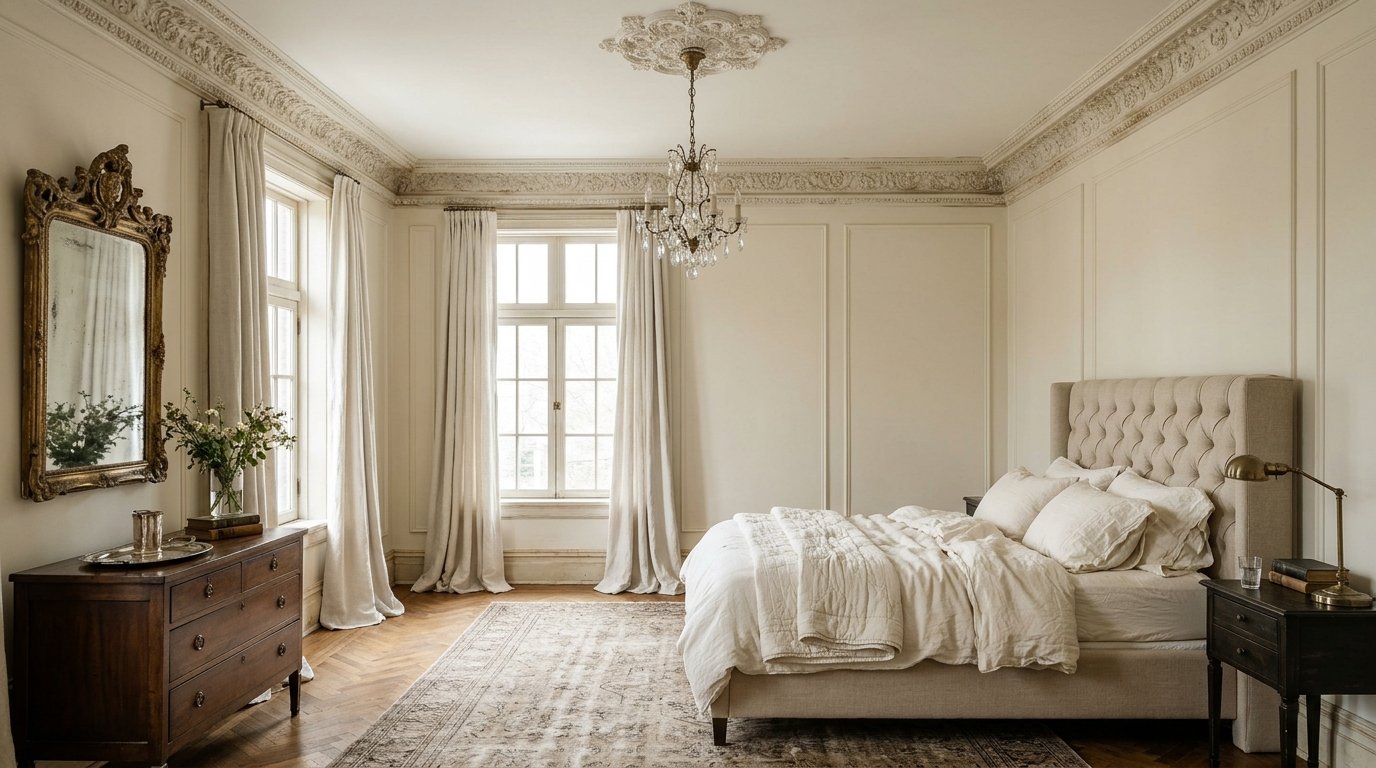
Generous crown moulding, ceiling roses and coffered or beamed ceilings are hallmarks of historic homes. They draw the eye upwards and make even a modest room feel grand.
A plaster ceiling medallion above a pendant or chandelier is a small change with a big impact.
Even in a newer house, adding deeper skirting boards and cornicing helps create the sense of age and quality that defines the old money look.
Pro tip: Choose moulding proportionate to your ceiling height. Taller ceilings can take deeper, more ornate profiles; lower ceilings look best with simpler shapes.

The Bed and Bedding
6. Make a Statement With a Four-Poster Bed
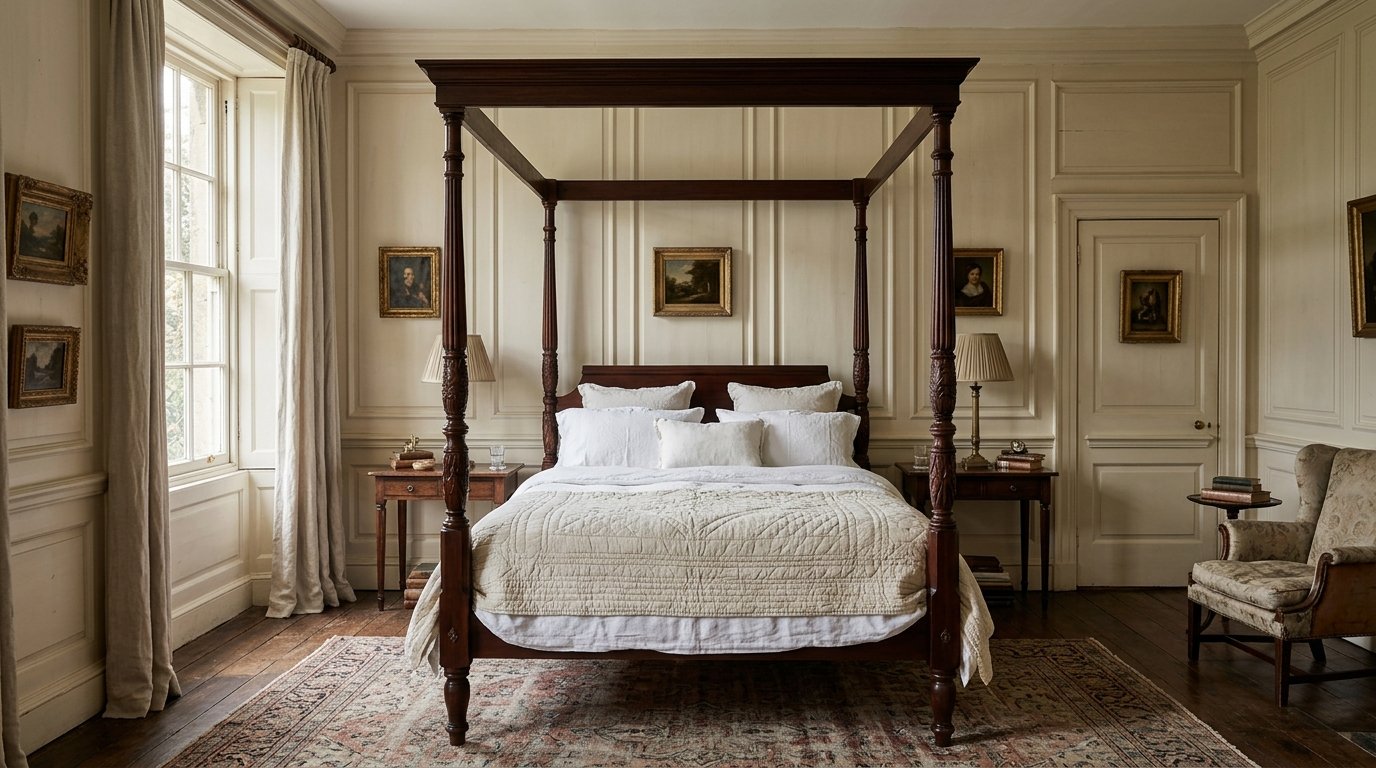
A four-poster bed is perhaps the ultimate old money statement. Its height and presence create a room within a room and give the bedroom an instant sense of history.
Choose dark wood for a traditional feel or a painted or turned design for a lighter country house look.
Leave the posts bare for a cleaner look, or add a simple linen canopy or curtains for extra softness and warmth.
Pro tip: Measure your ceiling height before buying. Most four-poster beds need at least 8.5 feet to avoid feeling cramped.
7. Drape a Canopy for Romantic Softness
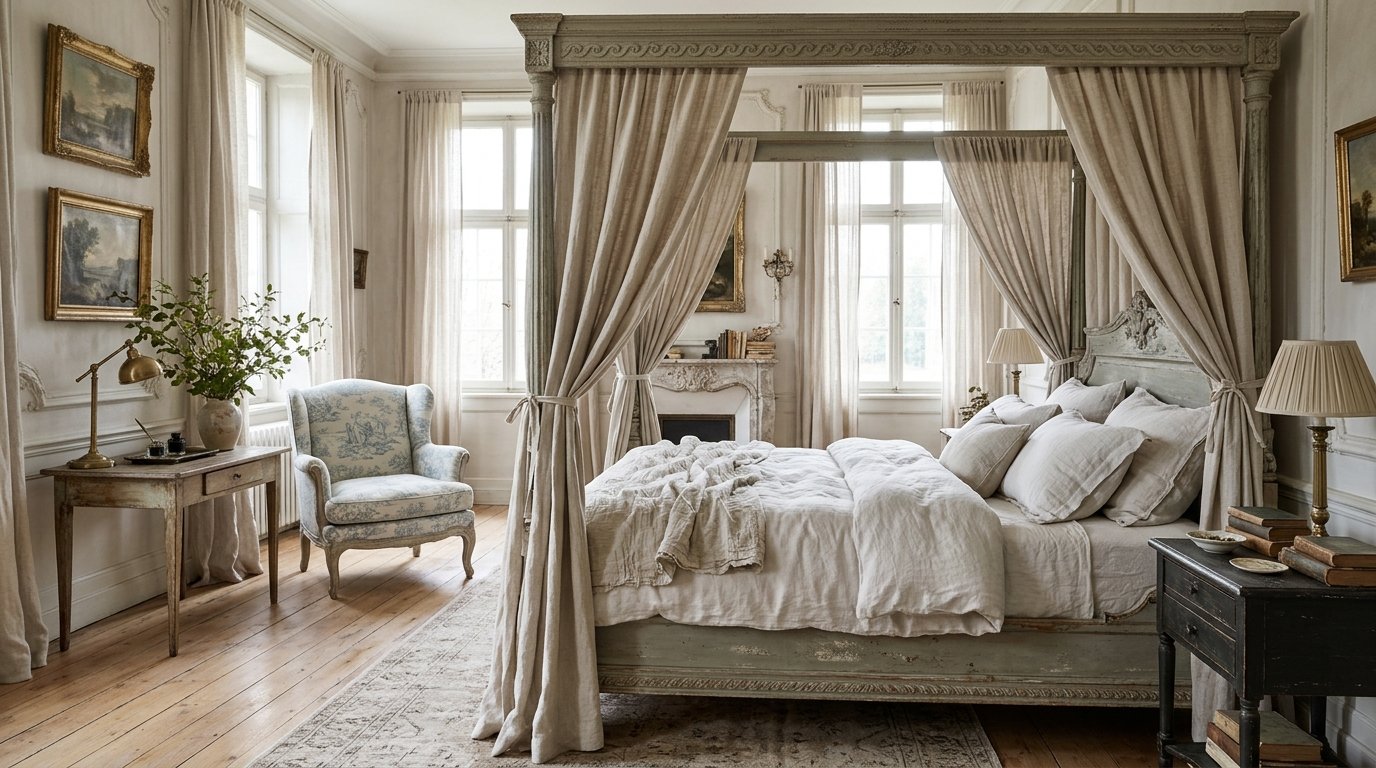
A fabric canopy, whether hung from a four-poster frame or a ceiling-mounted crown, brings romance and a sense of enclosure.
Linen, cotton voile or a classic print such as toile look the most authentic. Keep the colours soft and the fabric generous.
A canopy also adds height to the room, making it a clever trick for bedrooms with lower ceilings when paired with a wall-mounted bed crown.
Pro tip: Choose washable fabrics and hang them on rods that are easy to remove for cleaning.

8. Choose a Tufted or Upholstered Headboard
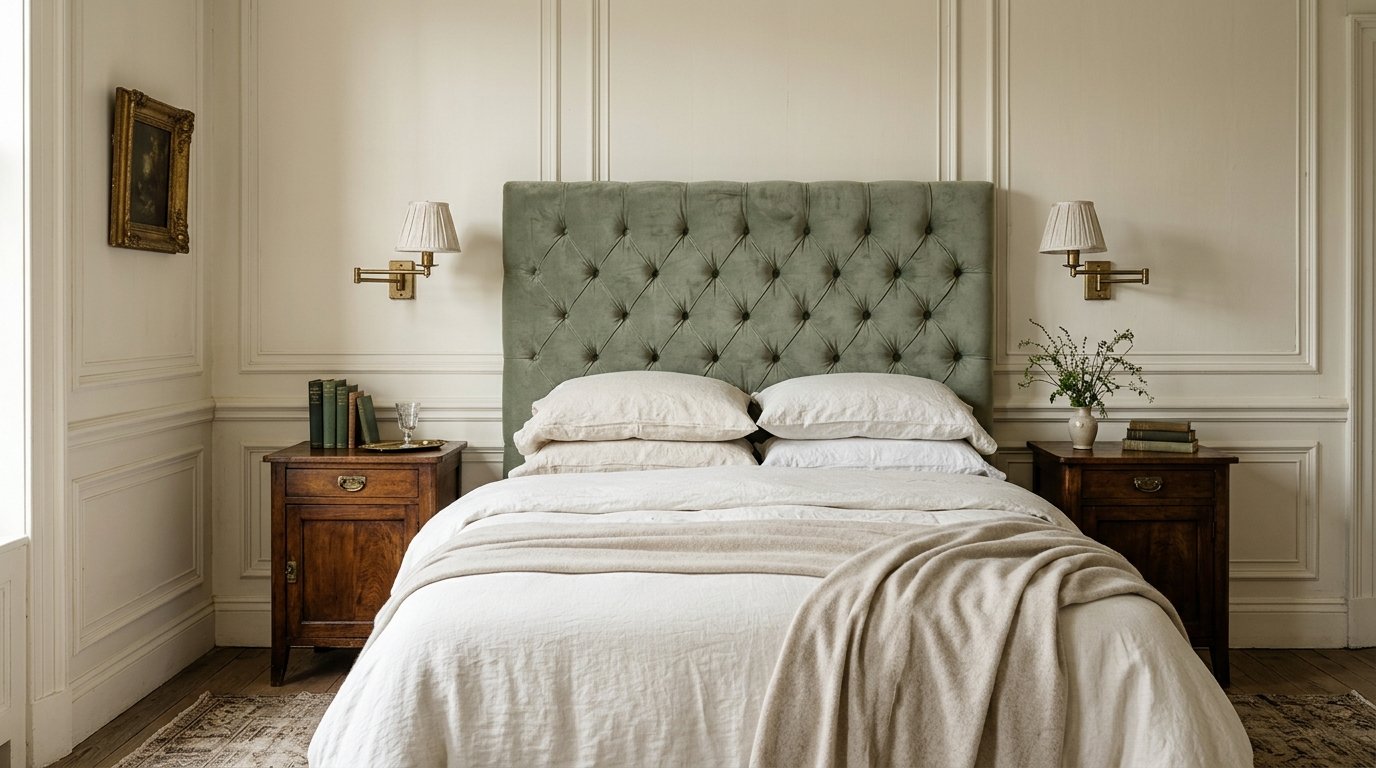
An upholstered headboard adds comfort and refinement. Button-tufted, channel-tufted or simple panelled designs in linen or velvet all suit the style.
Choose classic shapes such as a gently curved camelback or a tall rectangle, and stick to muted colours like ivory, taupe, sage or navy.
A taller-than-standard headboard makes the bed feel grand and gives the room a strong focal point.
Pro tip: Velvet looks rich but shows wear, so choose performance velvet or a tightly woven linen for durability.

9. Layer Crisp White Linen Bedding
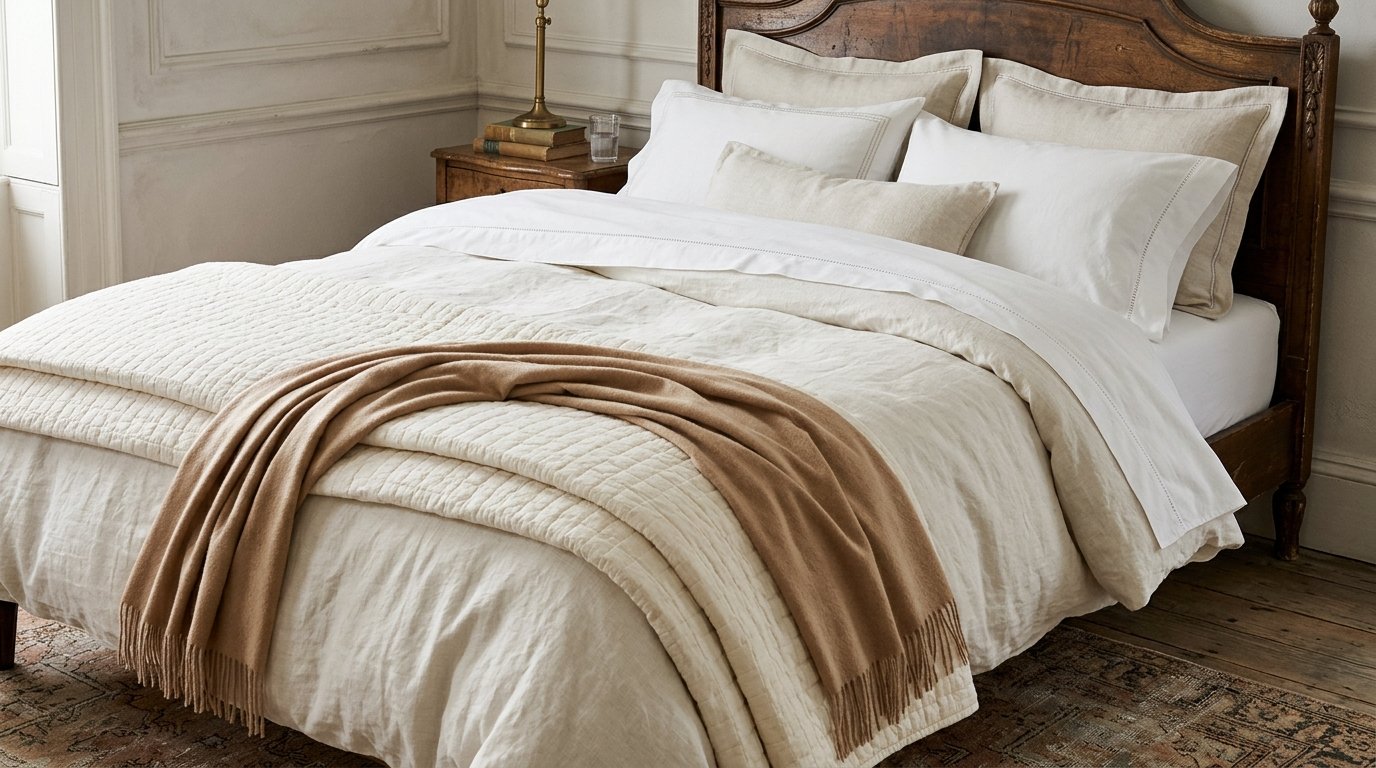
Crisp white or ivory bedding is a constant in old money bedrooms. It feels clean, luxurious and timeless, and it lets the architecture and antiques stand out.
Layer stonewashed linen sheets, a cotton percale duvet, a quilted coverlet and a wool or cashmere throw for depth.
A few rumples are welcome. The aim is a bed that looks inviting and lived-in rather than stiff and staged.
Pro tip: Invest in a good set of sheets in percale or linen. Quality bedding gets softer with each wash and lasts for years.

10. Add a Classic Quilt or Coverlet
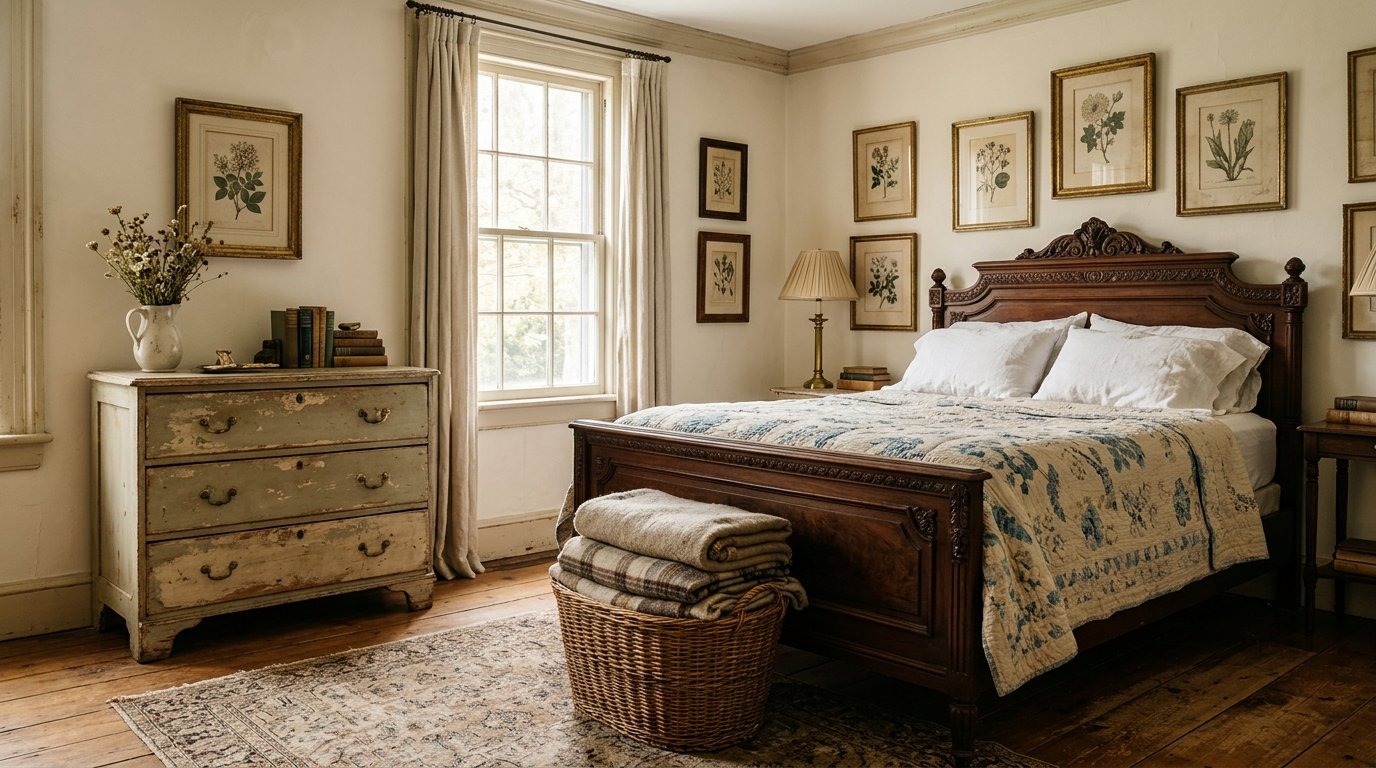
Quilts and coverlets add texture and a sense of heritage. Matelassé, hand-stitched quilts and vintage-style coverlets suggest pieces handed down through families.
Fold a quilt at the foot of the bed or use it as the top layer over crisp sheets.
Pattern can come from the quilt itself, so look for subtle florals, checks or traditional stitching that adds interest without overwhelming the room.
Pro tip: Look for vintage quilts at antique fairs and estate sales. They bring genuine history and character that new pieces can’t match.

11. Use Monogrammed or Embroidered Linens
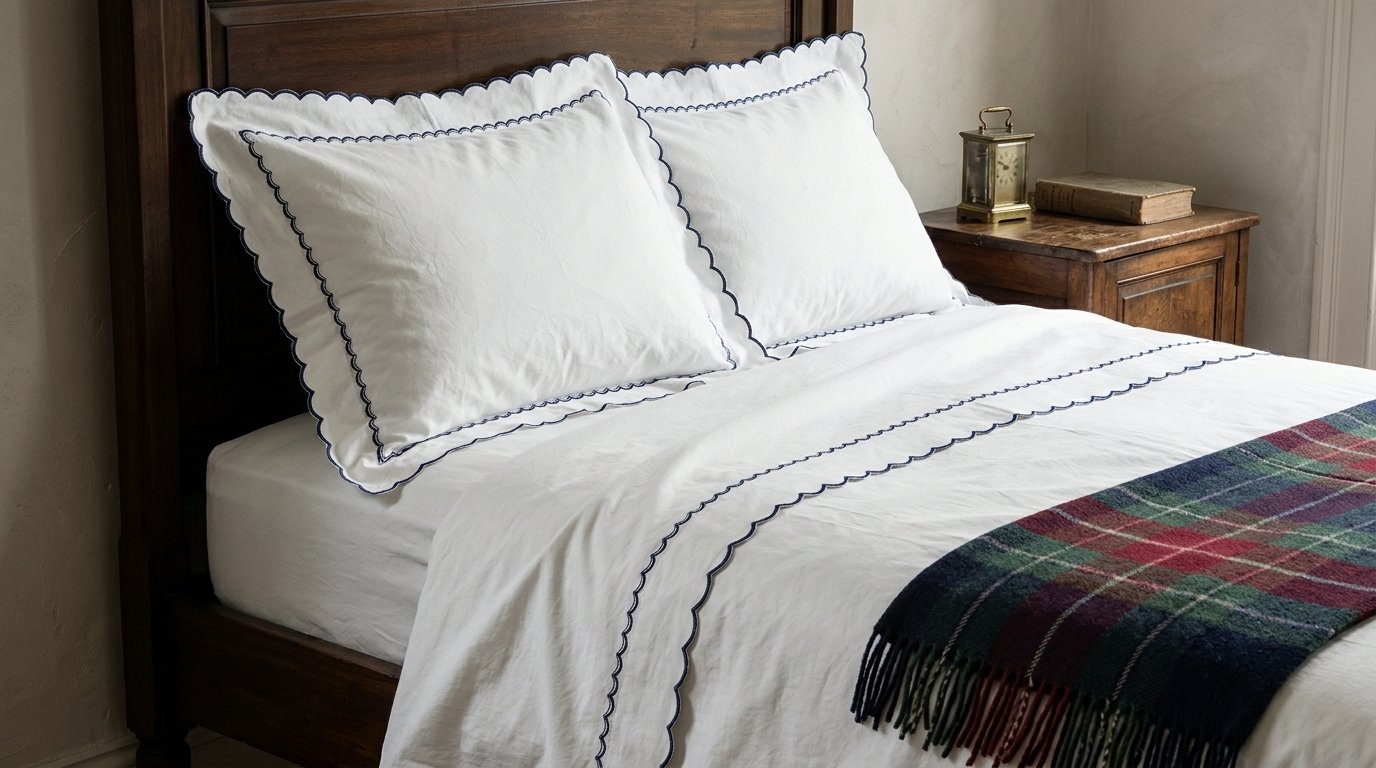
Embroidered and monogrammed linens are a classic signature of old money homes. Pillowcases, shams and towels with simple embroidered borders feel personal and refined.
Keep the embroidery subtle, such as a single colour on white, rather than large or bright designs.
Mixing embroidered pillowcases with plain sheets keeps the look elegant and understated.
Pro tip: Choose a classic embroidered border instead of initials if you want a timeless look that can be passed down or shared.

Furniture and Antiques
12. Invest in Antique or Vintage Nightstands

Antique nightstands instantly give a bedroom character. Mahogany, walnut and painted pieces with brass hardware add the patina that new furniture lacks.
They don’t need to match. A pair of different antiques, balanced by matching lamps, often looks more authentic.
Look for small chests, bedside cabinets or even small writing tables that offer storage and a generous surface for lamps and books.
Pro tip: Check drawers run smoothly and joints are sound. A little wear adds charm, but wobbly legs and broken drawers are costly to fix.

13. Add a Classic Chest of Drawers or Dresser
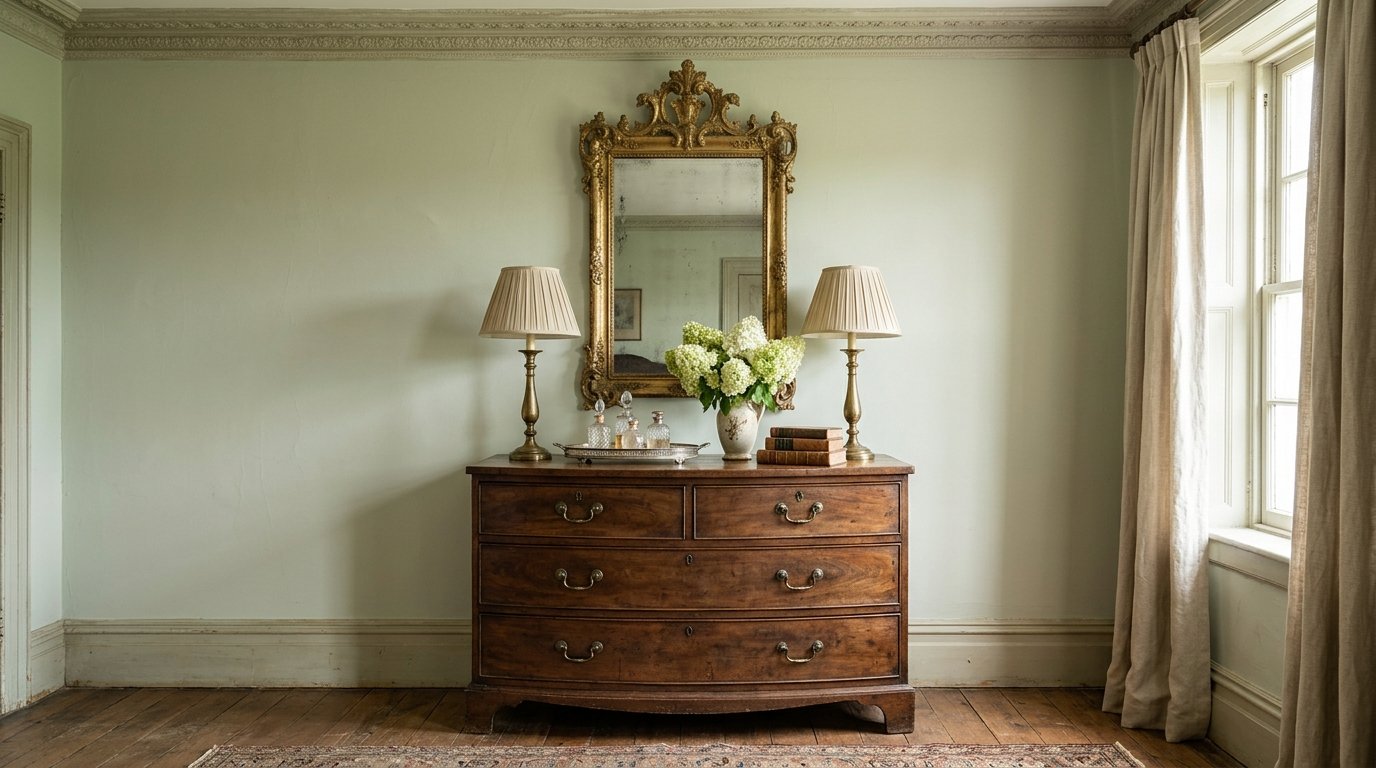
A traditional chest of drawers or dresser gives the room substance and storage. Look for solid wood, dovetail joints and brass handles.
Style the top with a gilt mirror, a pair of lamps, a tray for jewellery and a vase of fresh flowers.
A serpentine front, bow front or campaign-style chest all bring a sense of history and craftsmanship.
Pro tip: Protect antique wood surfaces with a glass top or a tray under vases and perfume bottles to avoid water rings and marks.

14. Mix Periods and Styles
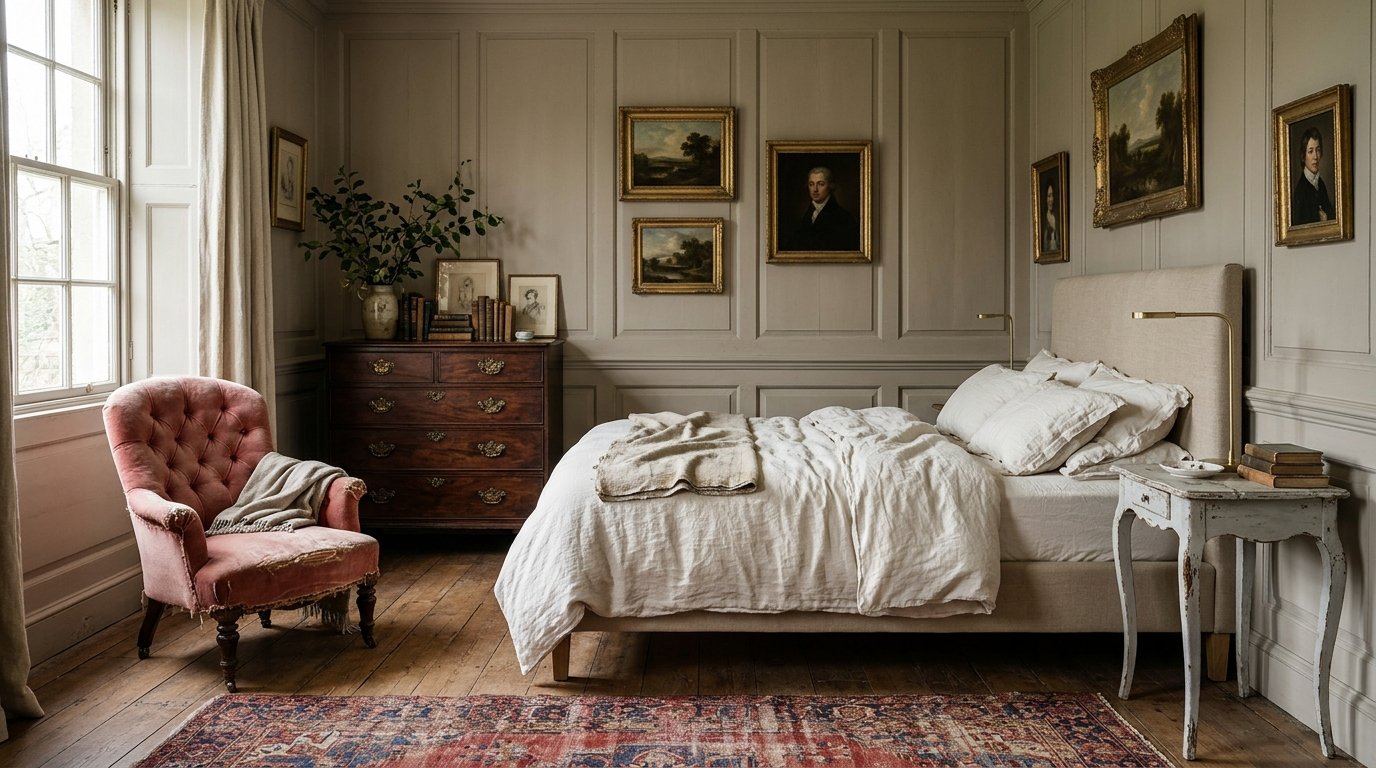
Old money rooms are rarely matched sets. Instead, they mix pieces from different periods, such as a Georgian chest, a Victorian chair and a mid-century lamp, collected over many years.
The secret is to keep a consistent palette and quality of materials so the mix feels intentional.
Repeat finishes, such as dark wood or brass, around the room to tie different eras together.
Pro tip: Buy one antique at a time and live with it before adding more. Collected rooms look best when they evolve slowly.
15. Place an Upholstered Bench at the Foot of the Bed
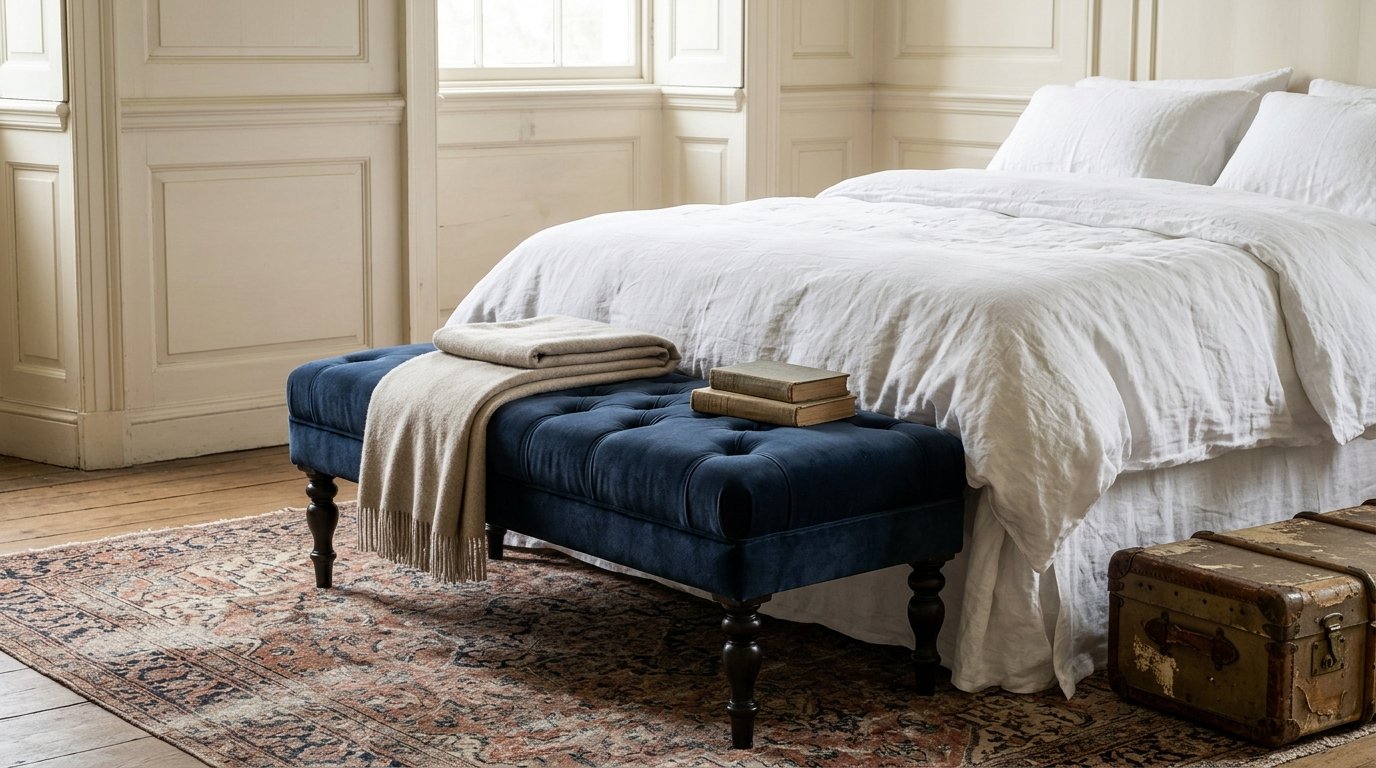
A bench or ottoman at the foot of the bed adds polish and practicality. It’s a spot to sit, lay out clothes or display a folded throw.
Choose tufted velvet, linen or leather with turned wooden legs for a classic look.
An antique trunk or blanket chest works just as well and adds hidden storage for extra bedding.
Pro tip: Choose a bench about two-thirds the width of the bed so the arrangement feels balanced.

16. Create a Sitting Area With an Armchair
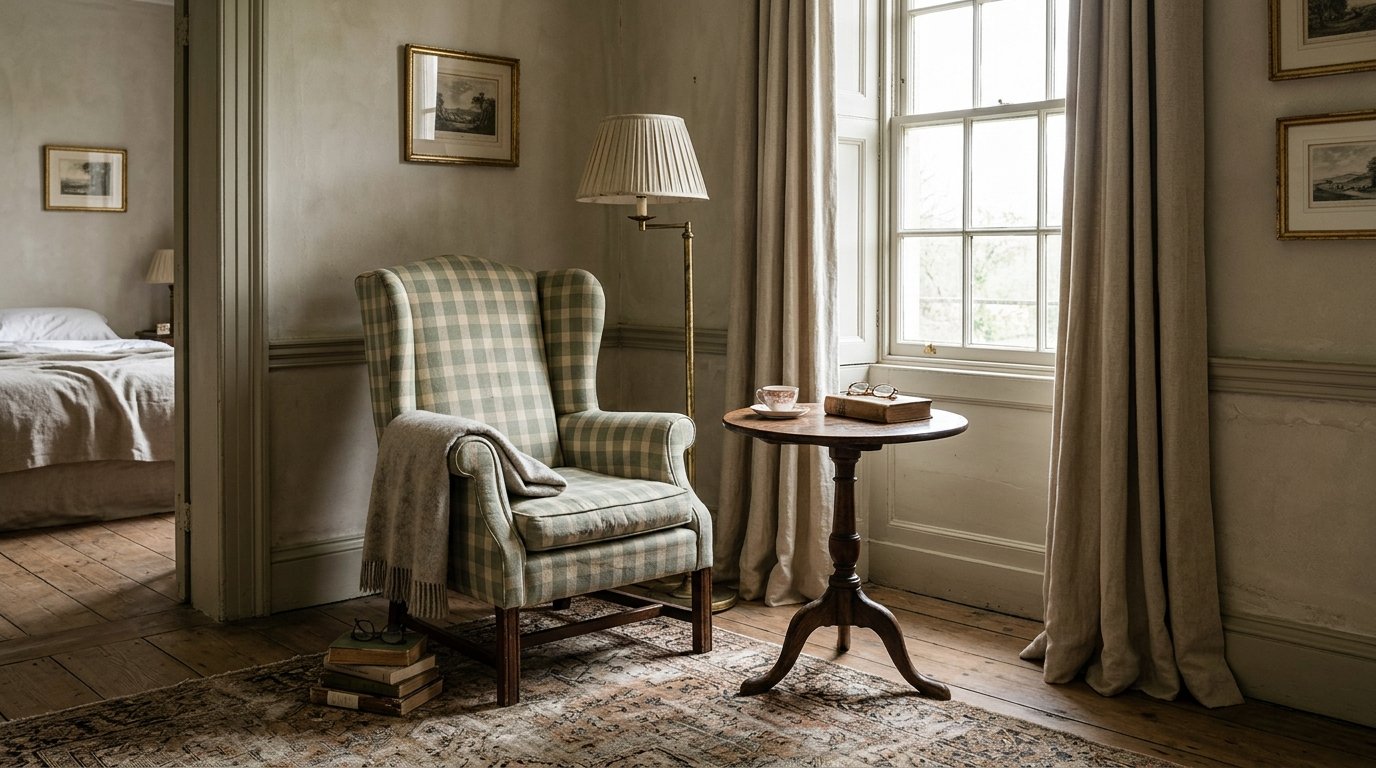
A reading chair by the window turns a bedroom into a private retreat. Wingback chairs, slipper chairs and button-back armchairs all suit the style.
Add a small side table, a reading lamp and a stack of books for a spot you’ll actually use.
In a larger room, a pair of chairs facing each other with a small table between them creates a sophisticated sitting area.
Pro tip: Choose a chair with a high back and good support. It looks more traditional and is far more comfortable for reading.
17. Add a Writing Desk or Secretary
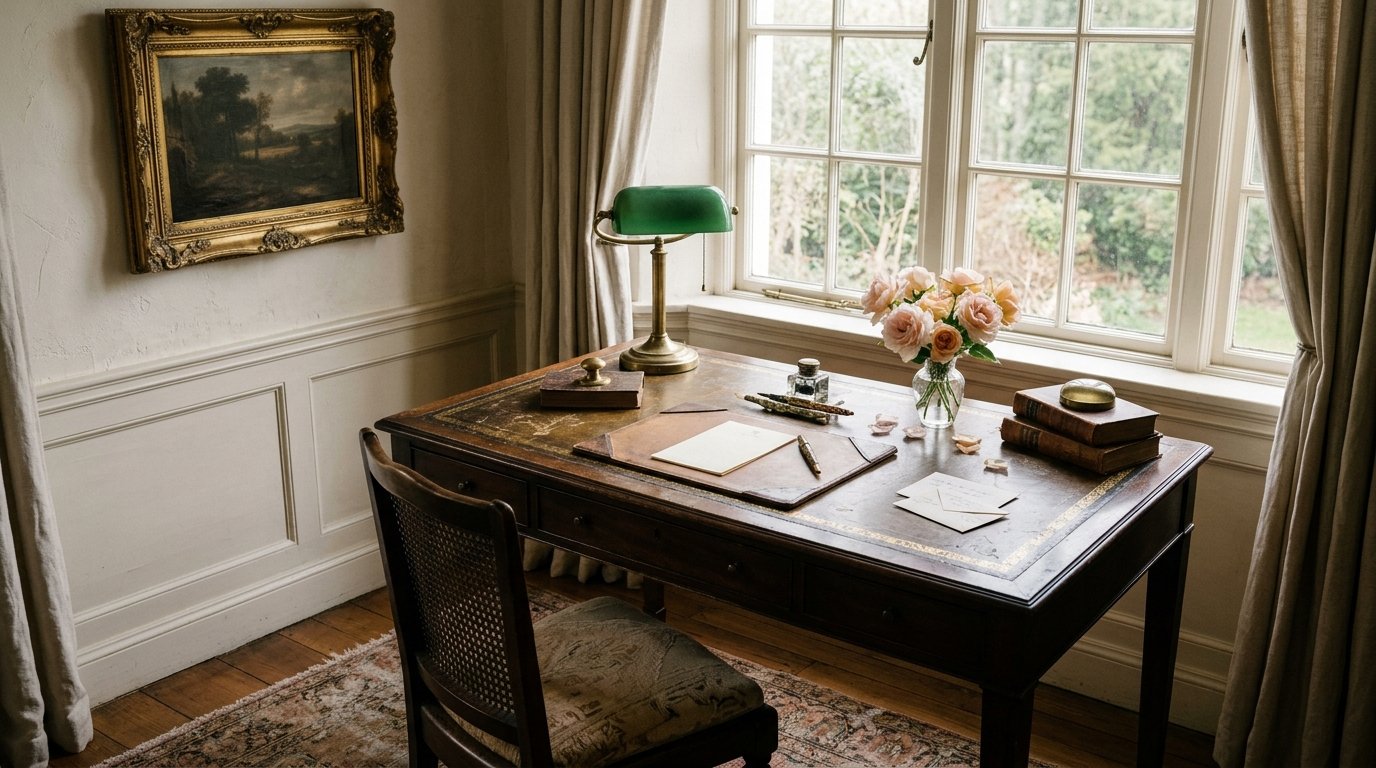
A small writing desk or secretary adds a sense of quiet industry to an old money bedroom. It’s a lovely place for letters, journaling or simply a laptop hidden away.
Choose an antique bureau with a fold-down flap or a simple leather-topped writing table.
Style it with a brass lamp, a leather desk set, a small vase of flowers and a framed photograph.
Pro tip: A secretary desk with a closing lid hides clutter, so the bedroom stays calm when the desk isn’t in use.

Textiles, Rugs and Windows
18. Lay a Faded Oriental or Persian Rug
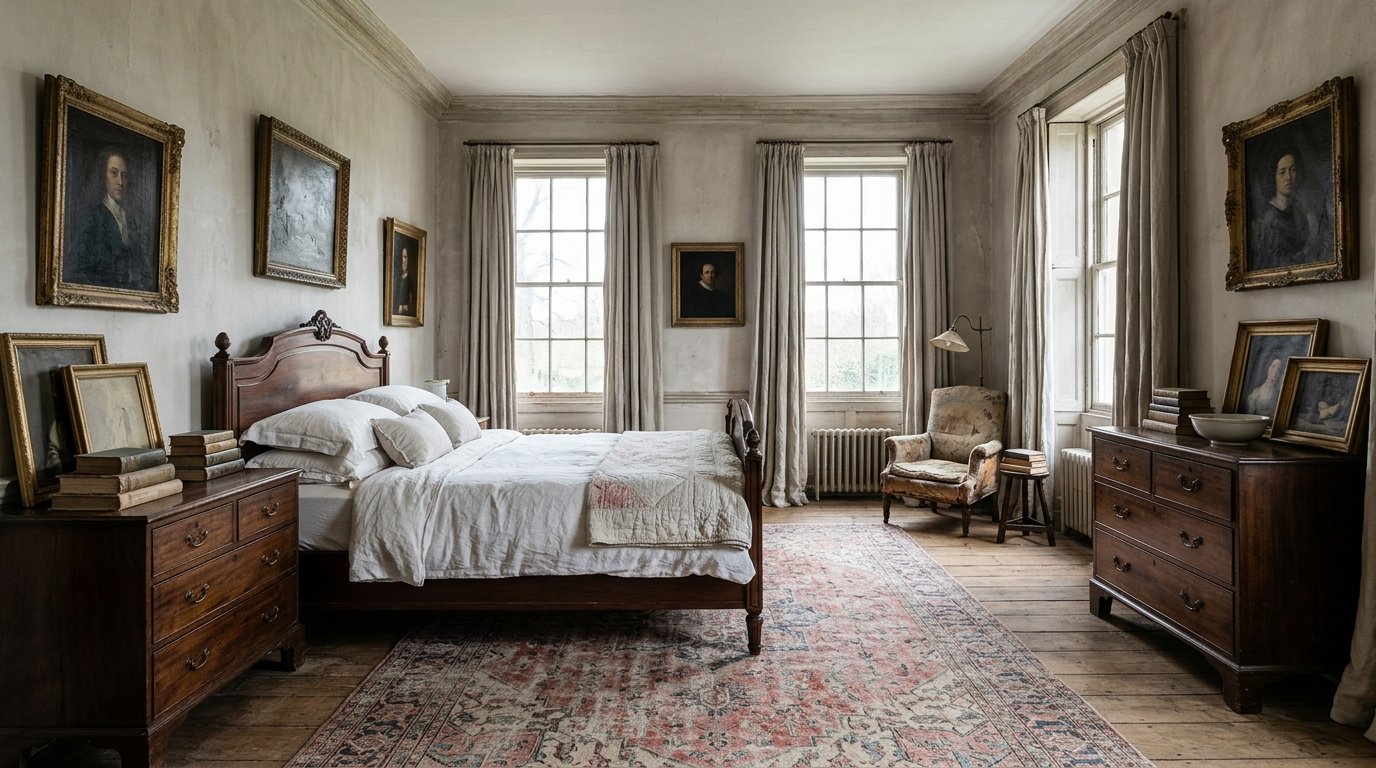
A worn, faded oriental or Persian rug is one of the most recognisable elements of old money style. It adds warmth, colour and a sense of history underfoot.
Look for soft, muted tones such as faded reds, blues and creams rather than bright new colours.
Vintage rugs are durable and often more affordable than new hand-knotted pieces. A few signs of wear only add to their charm.
Pro tip: If an antique rug is beyond budget, choose a washable vintage-look rug. Many now have convincingly faded, distressed patterns.

19. Hang Floor-Length Linen or Silk Curtains
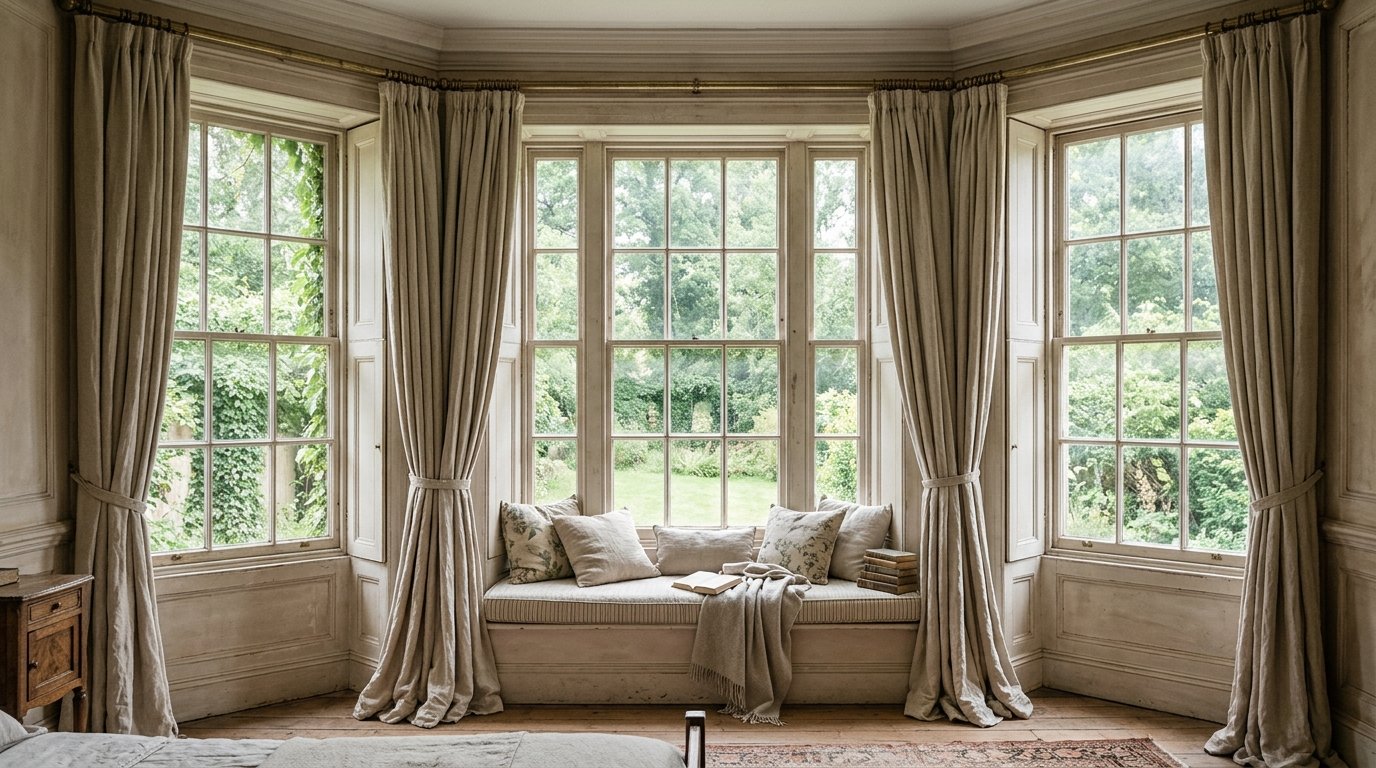
Generous, floor-length curtains add softness and grandeur. Hang them high and wide, close to the ceiling, so the windows look taller.
Natural linen, silk or a classic print look most authentic. Add lining and interlining for a fuller drape and better insulation.
Finish with classic hardware such as brass or wooden poles with simple finials, and tie-backs for an elegant daytime look.
Pro tip: Let curtains just kiss the floor or puddle by an inch or two. Too short looks cheap, while too long collects dust.

20. Mix Classic Patterns With Restraint
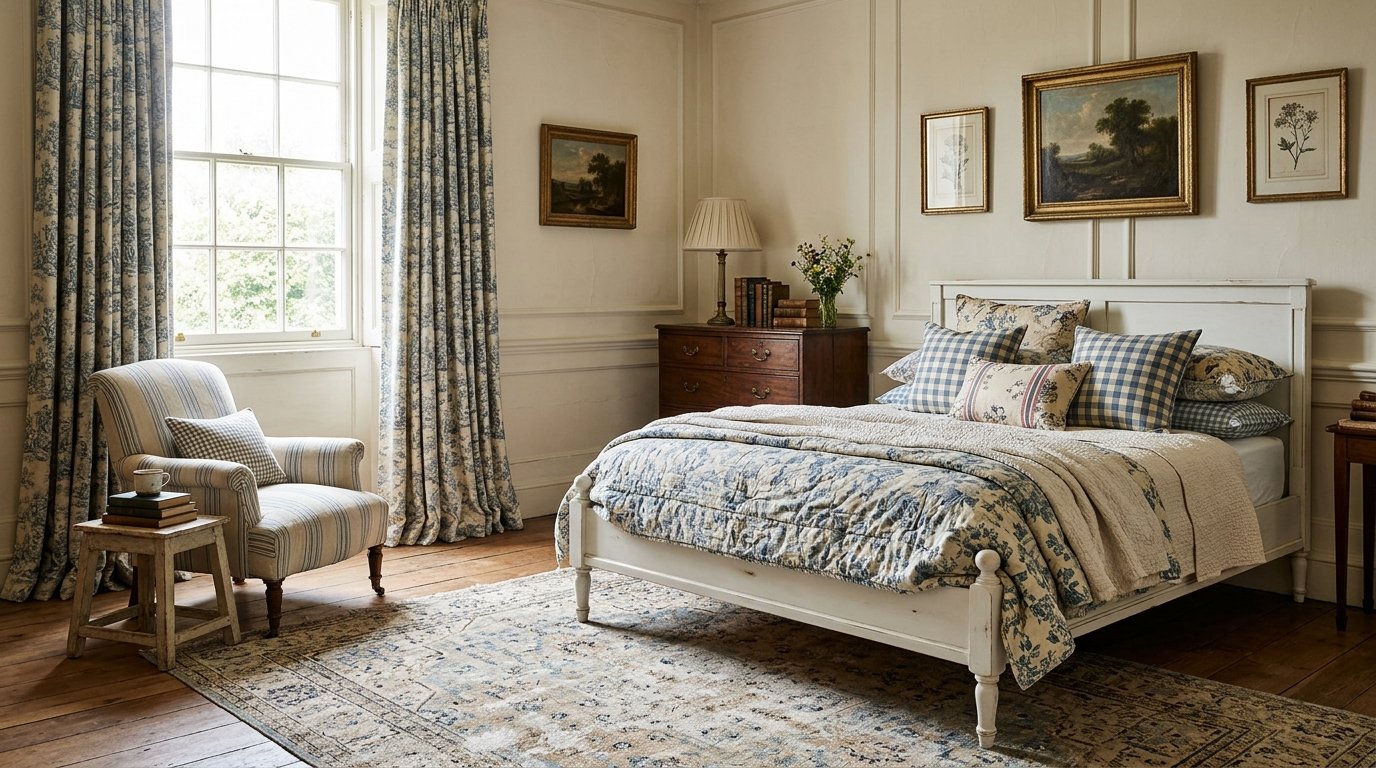
Old money rooms often combine classic patterns: a striped armchair, a floral cushion, a check throw and a toile curtain. The key is a shared colour palette.
Limit the room to two or three main colours and vary the scale of patterns, combining one large, one medium and one small.
Plain areas, such as solid bedding or painted walls, give the eye somewhere to rest.
Pro tip: Collect fabric swatches and lay them together on the bed before buying. You’ll quickly see which combinations work.

21. Add Velvet, Wool and Cashmere Textures
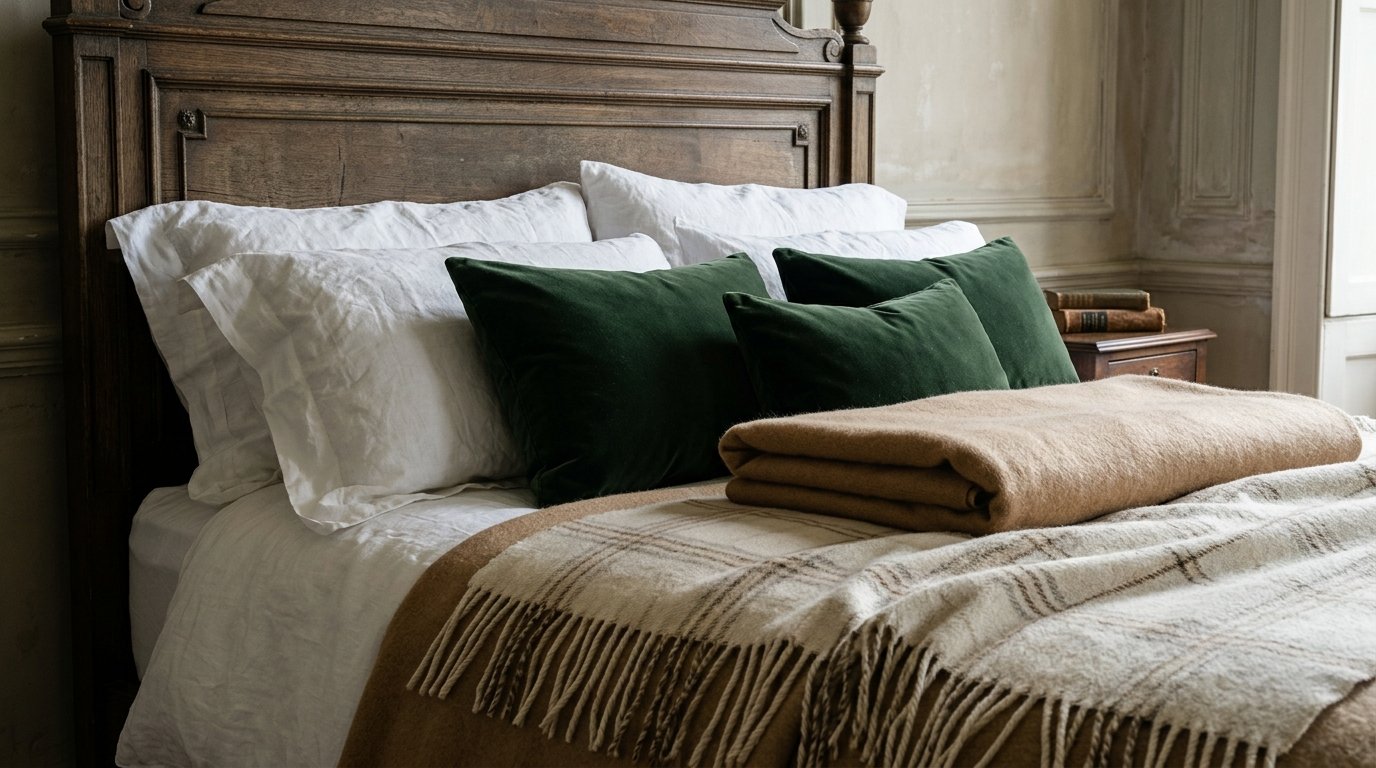
Texture is what makes an old money bedroom feel truly luxurious. Velvet cushions, wool throws, cashmere blankets and linen layers create depth and comfort.
Stick to natural fibres where possible. They age beautifully and feel noticeably better than synthetics.
In winter, add heavier wool blankets and velvet; in summer, switch to lighter linen and cotton.
Pro tip: Rotate textiles with the seasons. It keeps the room feeling fresh and makes your best pieces last longer.

Lighting
22. Use Brass Lamps With Pleated Shades
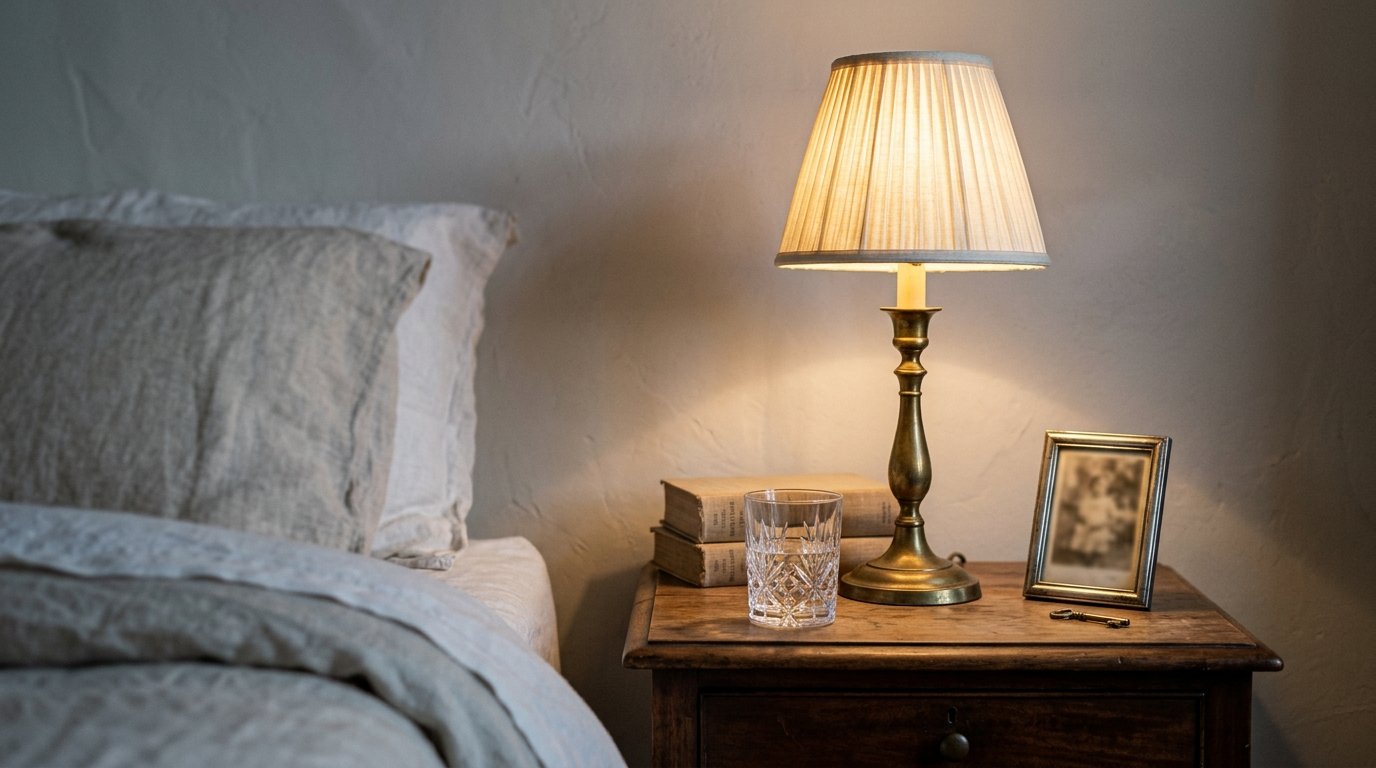
Brass lamps with pleated fabric shades are a defining detail of the old money look. They give off a soft, warm light and add a touch of glamour.
Use a matching pair on nightstands for symmetry, and add one or two more around the room for layered light.
Candlestick, column and urn shapes all look classic. Choose cream or ivory shades for the warmest glow.
Pro tip: Use warm white bulbs (around 2700K) and avoid bare, cool LEDs, which instantly make a traditional room feel modern.

23. Hang a Crystal or Brass Chandelier
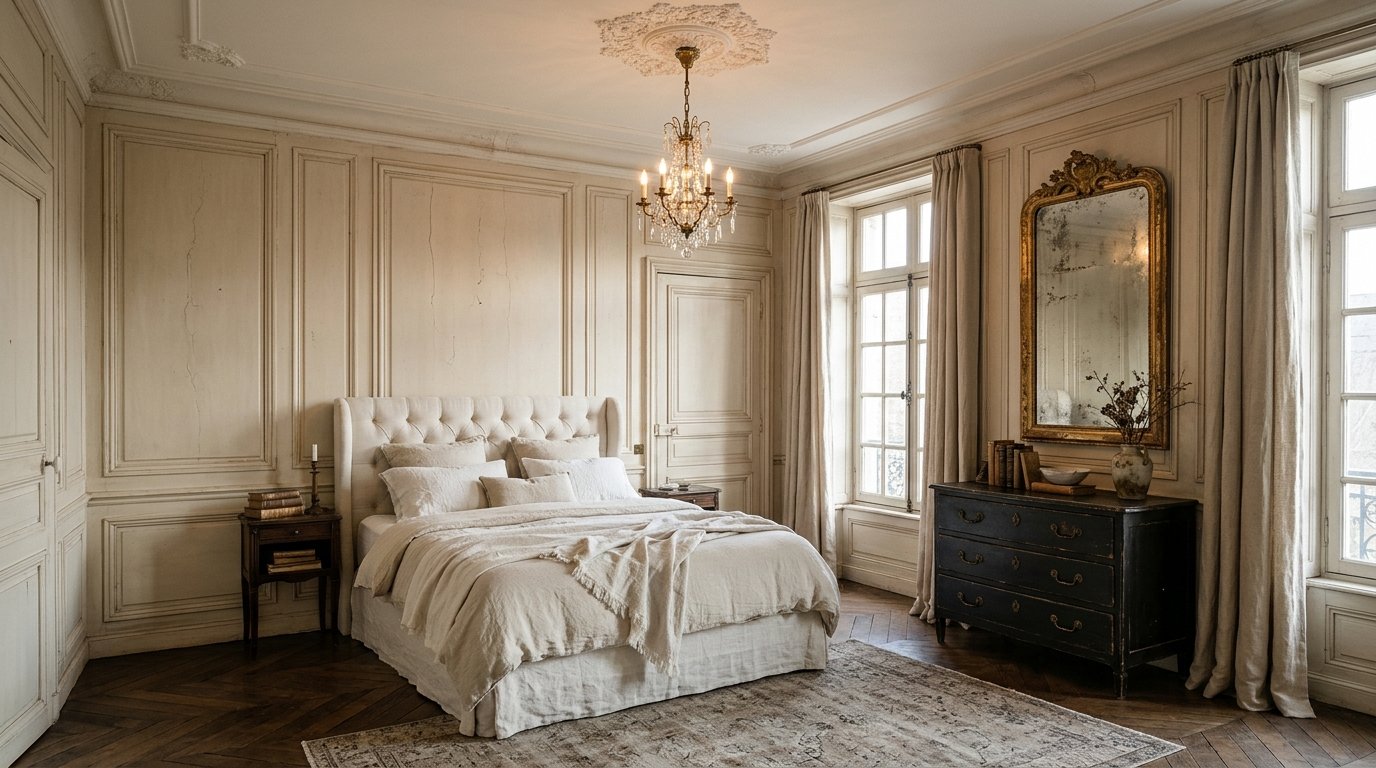
A chandelier adds instant grandeur. Crystal, brass or a simple antique-style fixture in the centre of the ceiling draws the eye and adds sparkle.
Choose a size in proportion to the room, and hang it high enough to clear heads comfortably.
Put it on a dimmer so it can create soft ambient light in the evening rather than overpowering the room.
Pro tip: As a rule of thumb, add the room’s length and width in feet. The total in inches gives a good chandelier diameter.

24. Add Picture Lights Above Art
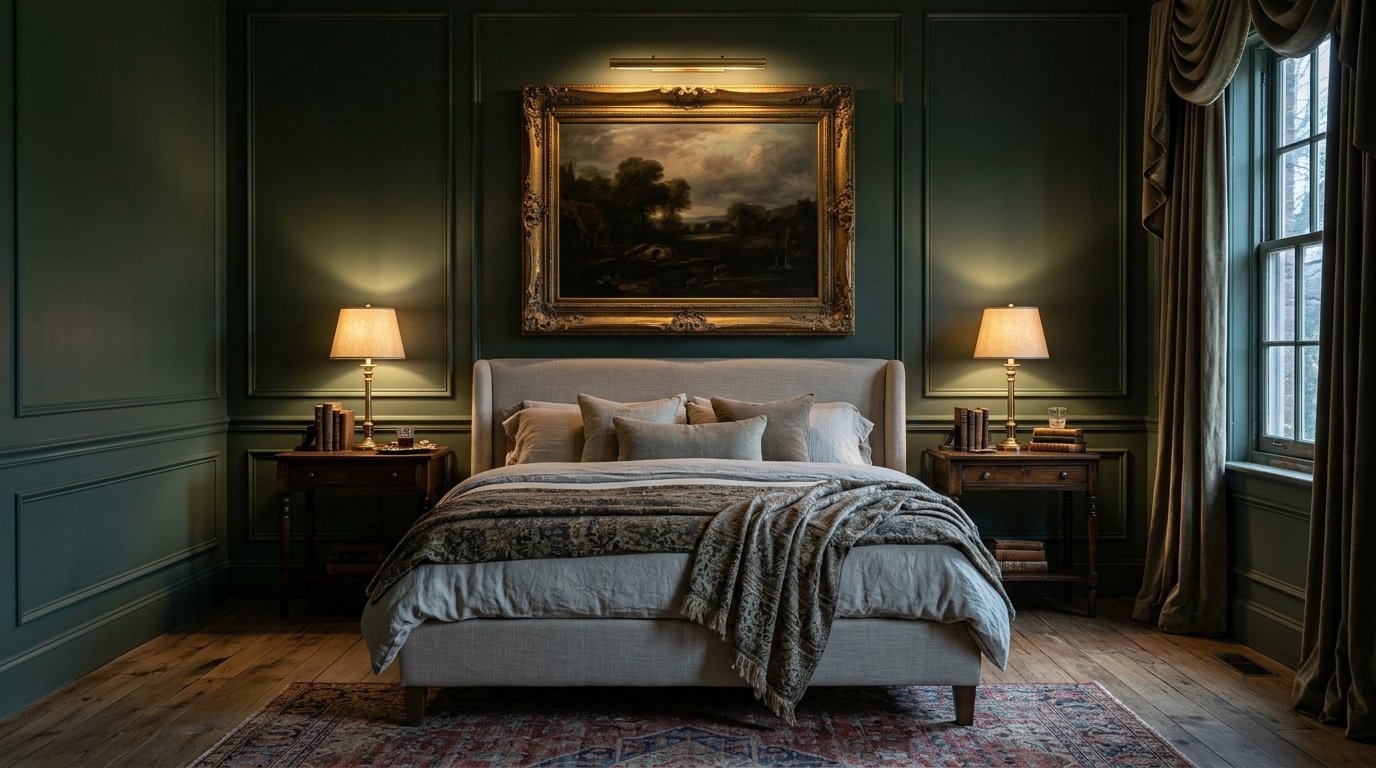
Brass picture lights above paintings are a classic touch in historic homes. They highlight art and add gentle, atmospheric light.
Plug-in or battery-operated versions are easy to install without rewiring.
Use them above a large painting over the bed or a gallery of portraits and landscapes.
Pro tip: Choose a picture light about half to two-thirds the width of the frame for the most balanced look.

Art and Decorative Accents
25. Display Oil Paintings and Classic Art
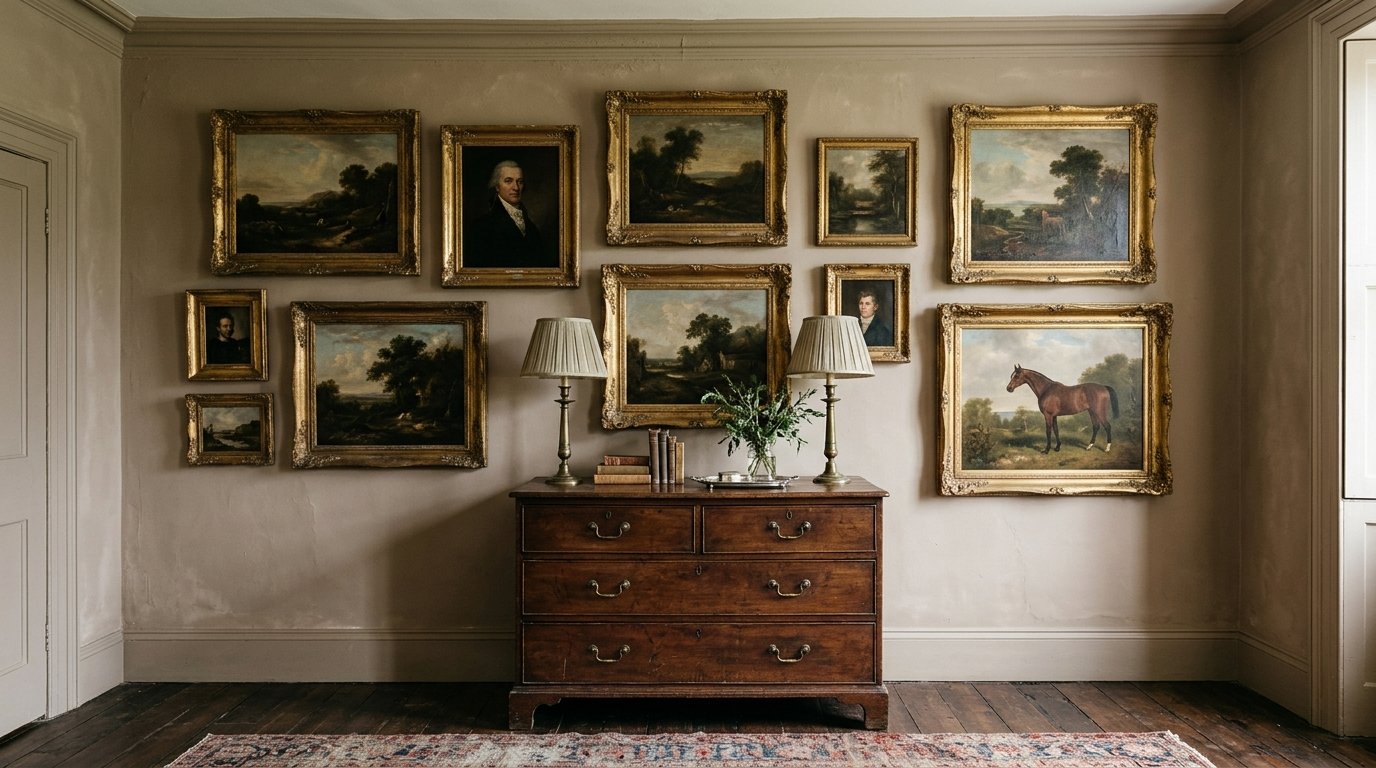
Art is central to the old money look. Landscapes, portraits, still lifes and botanical prints in gilt or wooden frames make a room feel collected over time.
You don’t need originals. Vintage paintings from auctions and flea markets, or quality prints in good frames, create the same effect.
Hang a single large painting above the bed or a grouping of smaller works on a wall for a gallery feel.
Pro tip: Hang art so the centre sits at around eye level, about 57 to 60 inches from the floor, or 6 to 10 inches above a headboard.

26. Add Gilt Mirrors
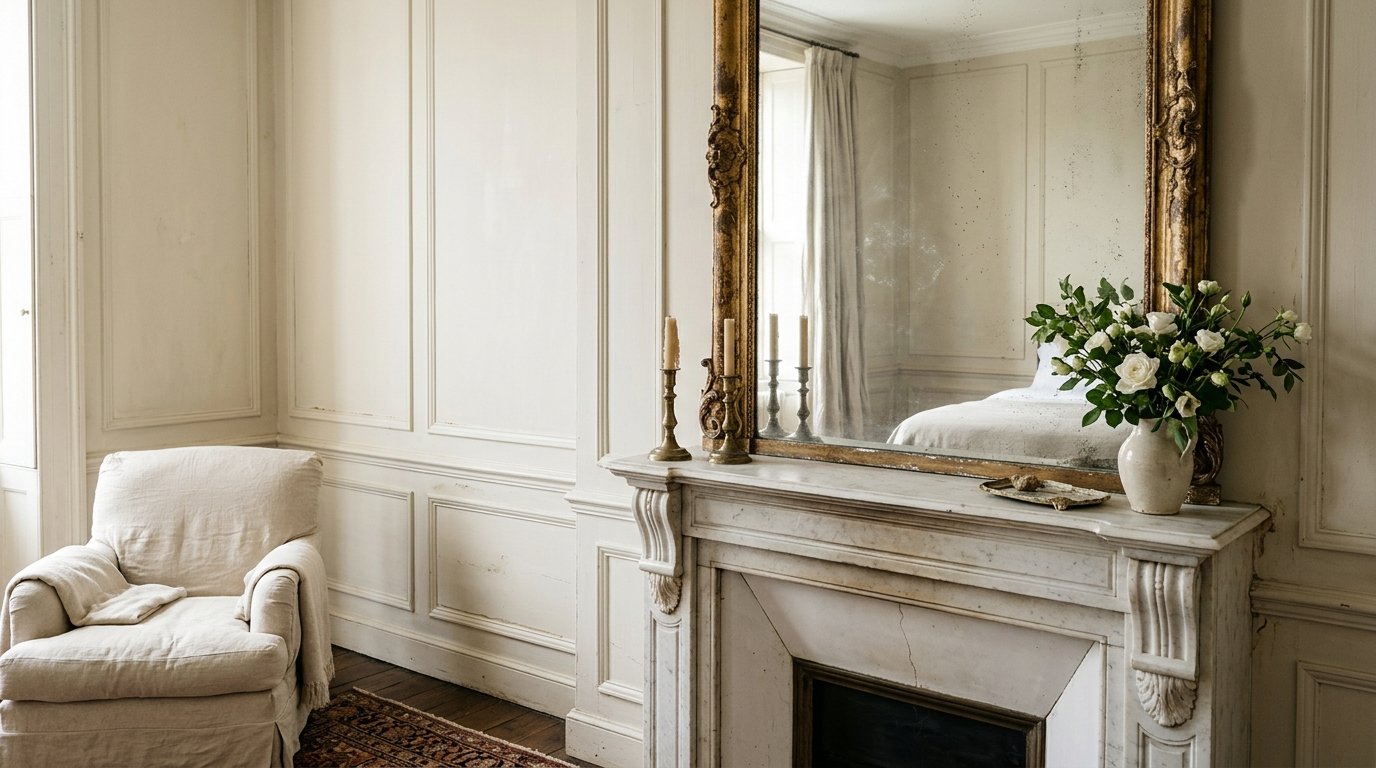
Gilt mirrors bring light, sparkle and a sense of grandeur. Overmantel mirrors, convex mirrors and ornate framed pieces all suit the style.
Hang one above a dresser or fireplace, or lean a large mirror against a wall for a relaxed, collected look.
Slightly aged, foxed glass adds to the antique character.
Pro tip: Hang mirrors opposite windows to bounce natural light around the room.

27. Fill Shelves With Books
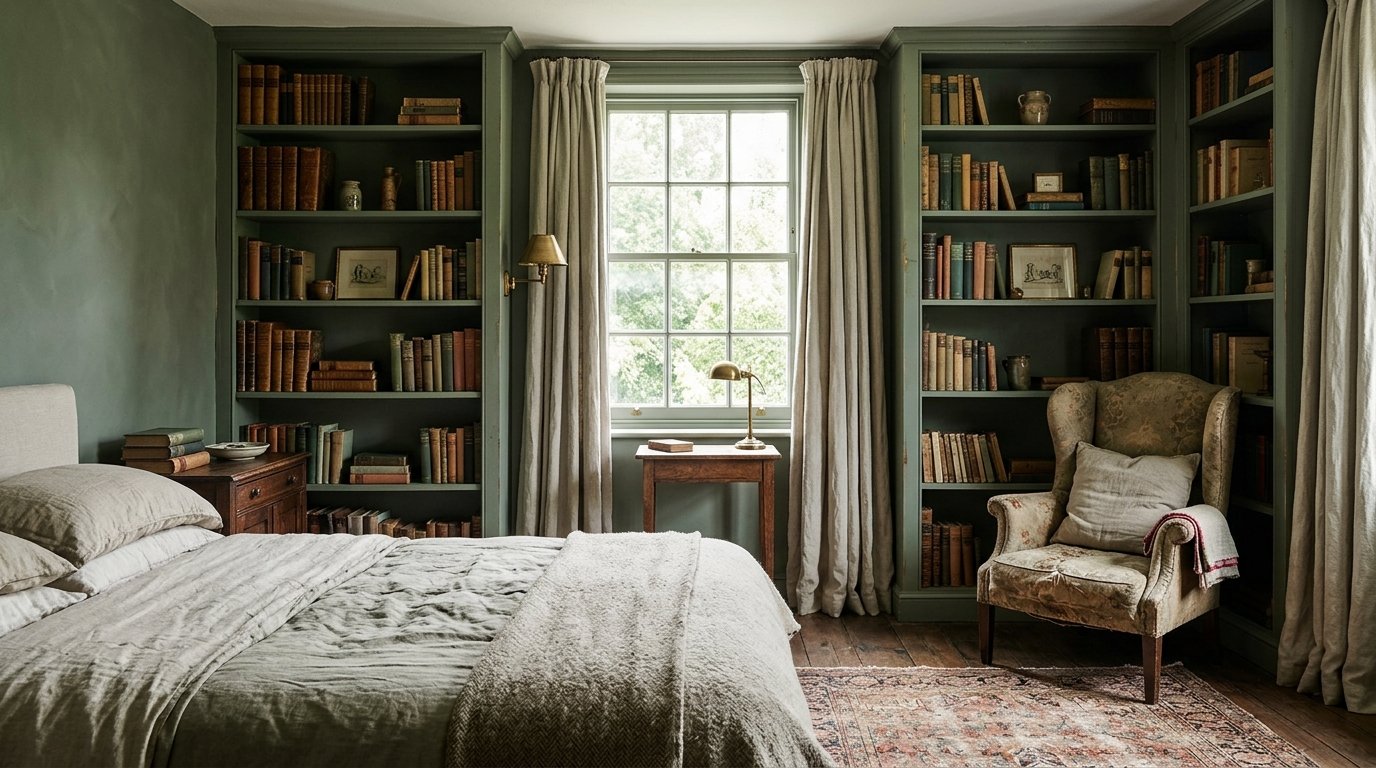
Books are a quiet signal of an old money home. Stacks on nightstands, a bookcase filled with hardbacks or a pile on a bench all add warmth and personality.
Mix leather-bound classics, vintage hardbacks and well-loved favourites. The look should be lived-in, not decorative.
Built-in bookcases on either side of the bed or a window create a library-like bedroom.
Pro tip: Remove brightly coloured dust jackets from hardbacks for a calmer, more classic look.

28. Style With Fresh Flowers and Greenery
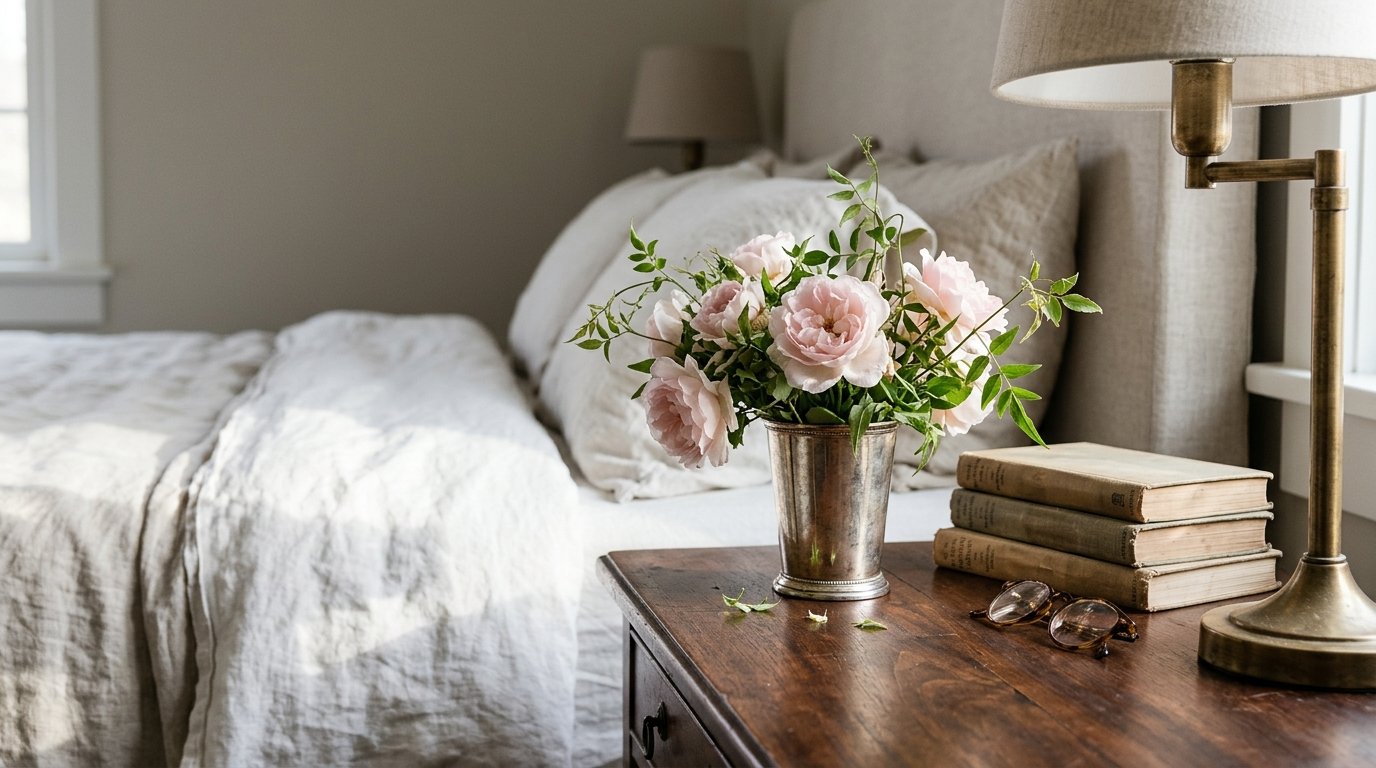
Fresh flowers are an everyday luxury in old money homes. A simple bunch of roses, hydrangeas or garden cuttings in a silver vase or ceramic jug adds life to the room.
Choose loose, natural arrangements over formal florist bouquets for a relaxed country house feel.
If fresh flowers aren’t practical, high-quality faux stems in a classic vase still bring softness.
Pro tip: Choose white or soft-coloured flowers that suit the room’s palette, and replace them often so they always look fresh.

29. Add Heirloom Accessories
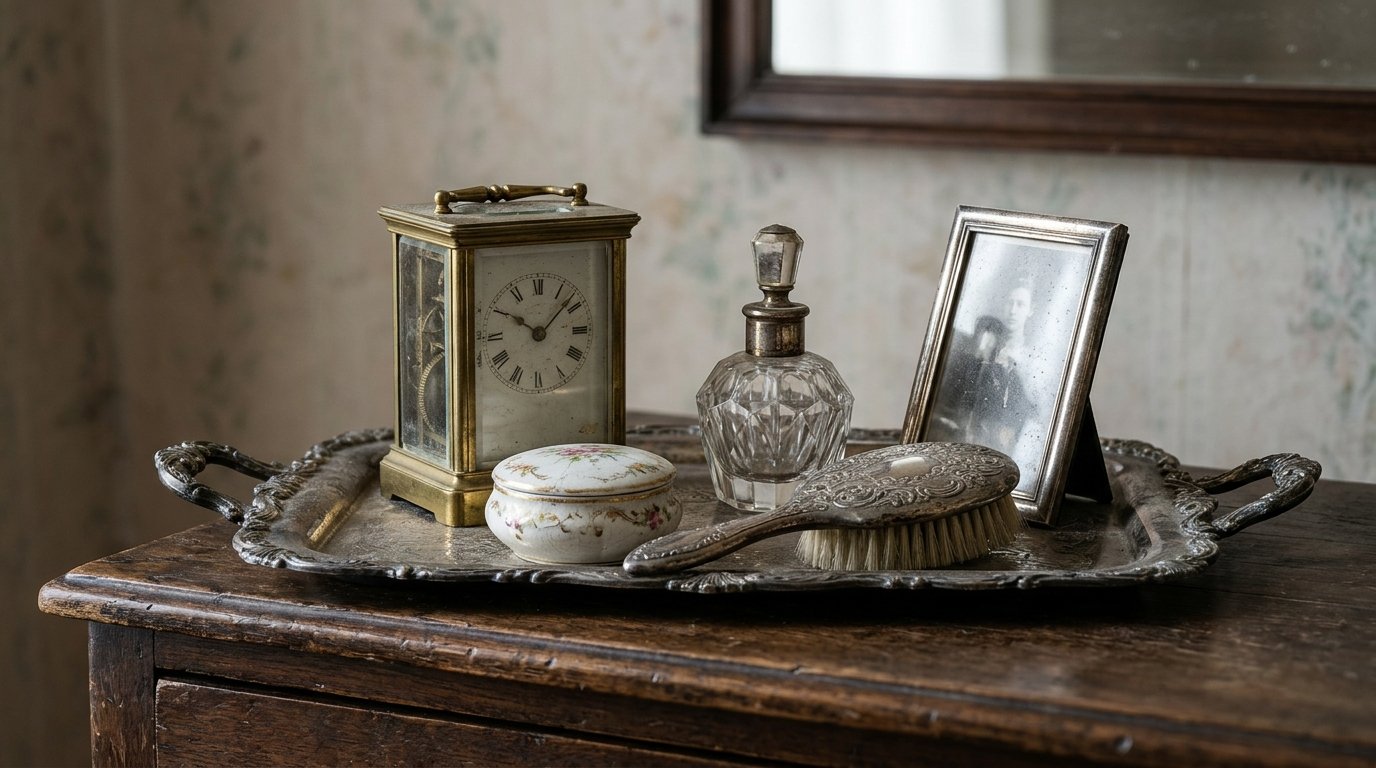
Small heirloom pieces make an old money bedroom feel personal. Silver frames, a carriage clock, a porcelain dish, a trinket box or a vintage hairbrush set all add character.
Group a few on a tray to keep surfaces tidy and intentional.
These pieces don’t need to be valuable. They simply need to look as if they have a story.
Pro tip: Collect slowly from antique shops and markets. A few meaningful pieces are better than a shelf full of new decorative items.

Finishing Touches
30. Add a Fireplace or Mantel
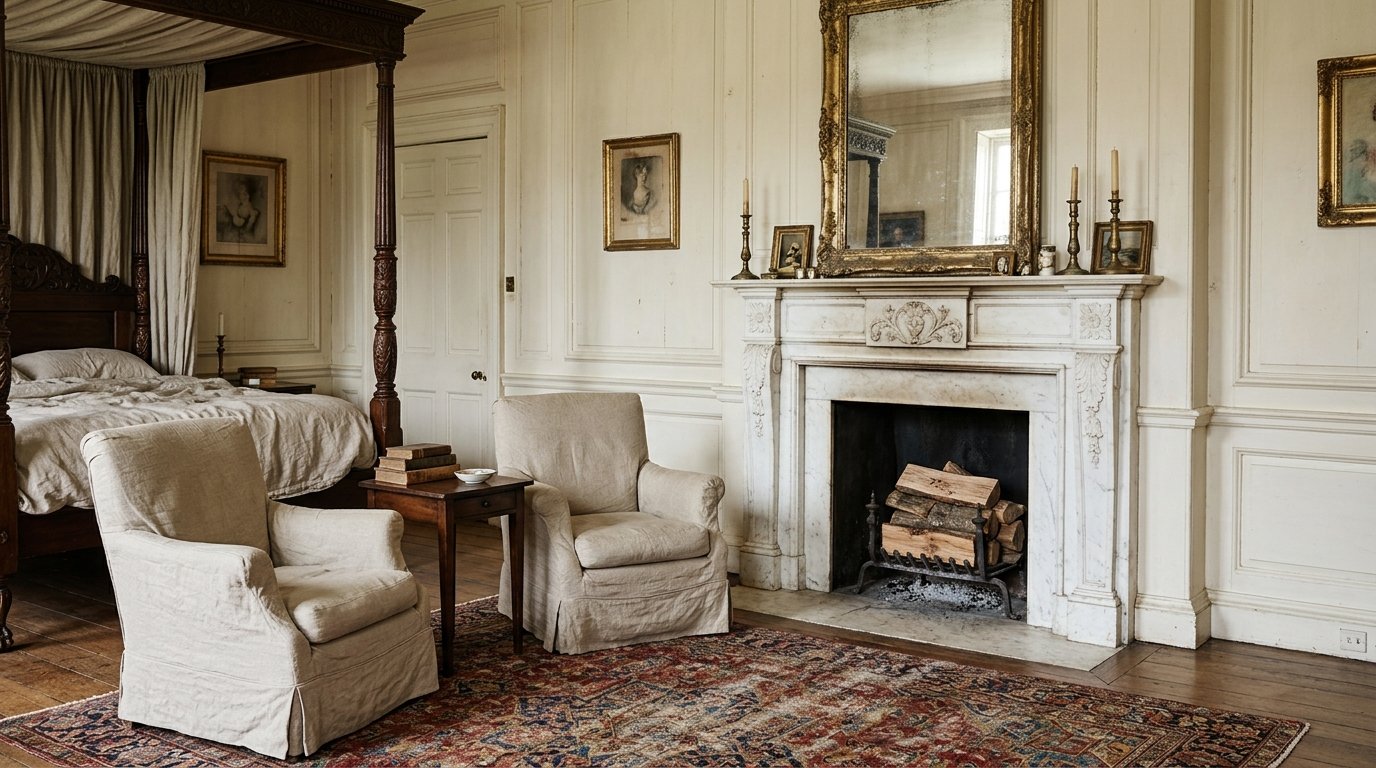
A fireplace makes a bedroom feel truly special. If you have one, style the mantel with a gilt mirror, candlesticks and a few treasured objects.
If not, an antique or reclaimed mantel surround can be fixed to a wall to create the same architectural focal point.
Fill a non-working fireplace with candles, logs or a decorative screen.
Pro tip: Look for reclaimed marble or timber mantels from architectural salvage yards for genuine period character.

31. Keep It Uncluttered and Lived-In
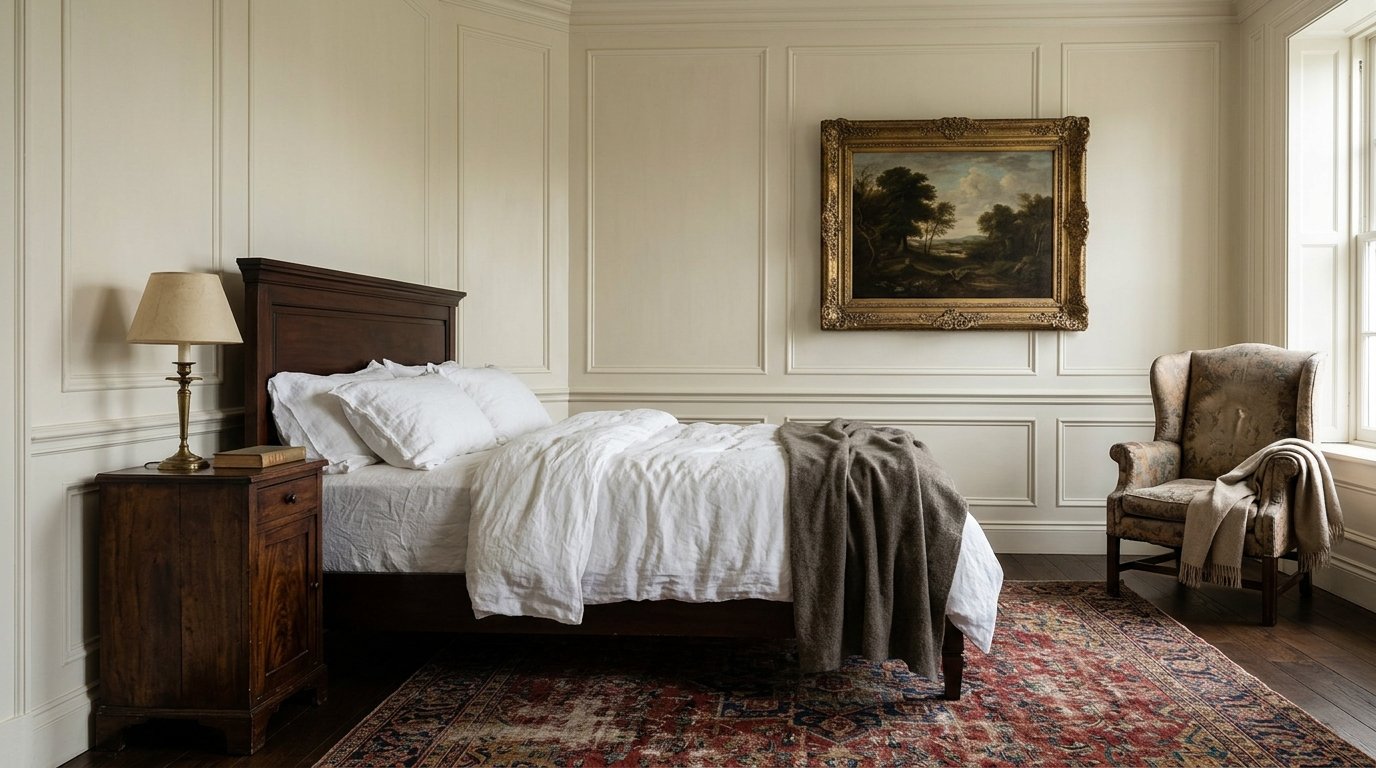
The final rule of old money style is balance. Rooms should feel collected and lived-in, but never cluttered or overdecorated.
Edit surfaces, hide everyday clutter in drawers and baskets, and let a few beautiful pieces stand out.
Leave space between objects and avoid trendy accessories that will date quickly. The result is a bedroom that feels calm, personal and timeless.
Pro tip: Do a quick edit once a season. Remove anything that doesn’t feel useful, beautiful or meaningful.

Frequently Asked Questions
What is an old money bedroom?
An old money bedroom is a traditional, understated style inspired by historic family homes. It focuses on quality materials, antiques, classic patterns, muted colours and a lived-in feel rather than trends or obvious luxury.
What colours are used in old money bedrooms?
Warm whites, creams, taupe, sage, soft blue, navy and forest green are the most common. These are paired with natural wood, aged brass and occasional rich accents like burgundy.
How can I get the old money look on a budget?
Shop antique stores, flea markets and estate sales for furniture, art and rugs. Invest in good bedding, add picture-frame moulding, use brass lamps with pleated shades and keep the room uncluttered.
Is old money style the same as traditional style?
They overlap, but old money style is more relaxed and collected. It mixes periods and allows for wear and patina, while traditional style can be more formal and matched.
Final Thoughts
An old money bedroom is less about what you buy and more about how you build the room over time. Start with good bones, such as panelling, a classic bed and quality linen, then add antiques, art and textiles slowly.
With these 31 ideas, you can create a bedroom that feels quietly luxurious, deeply comfortable and as timeless as the historic homes that inspired it.

