
This post contains affiliate links. As an Amazon Associate, I earn from qualifying purchases at no extra cost to you.
A small bedroom doesn’t have to feel cramped. With the right layout, furniture and a few visual tricks, even a box room can feel calm, stylish and surprisingly spacious.
The secret is to work smarter, not bigger. Choose furniture that does more than one job, take storage up the walls, keep the floor as clear as possible and use colour and light to stretch the space visually.
Below are 31 small room bedroom ideas grouped by theme, from layout and beds to storage, colour, lighting and finishing touches. Each one includes a practical tip, plus products where they genuinely help.
Before You Start: Measure and Plan
Measure the room carefully, including the position of the door, window, radiator, outlets and any sloped ceilings. Sketch a simple floor plan on paper or use a free online room planner before buying anything.
Next, decide what the room really needs to do. Is it just for sleeping, or does it also need to work as a home office, dressing room or guest room? Prioritise the essentials and let go of anything that doesn’t earn its space.
Finally, aim to keep at least 24 to 30 inches of clear walkway around the bed and in front of drawers and wardrobes. A room that is easy to move through always feels bigger.
Layout and Bed Placement
1. Push the Bed Into a Corner
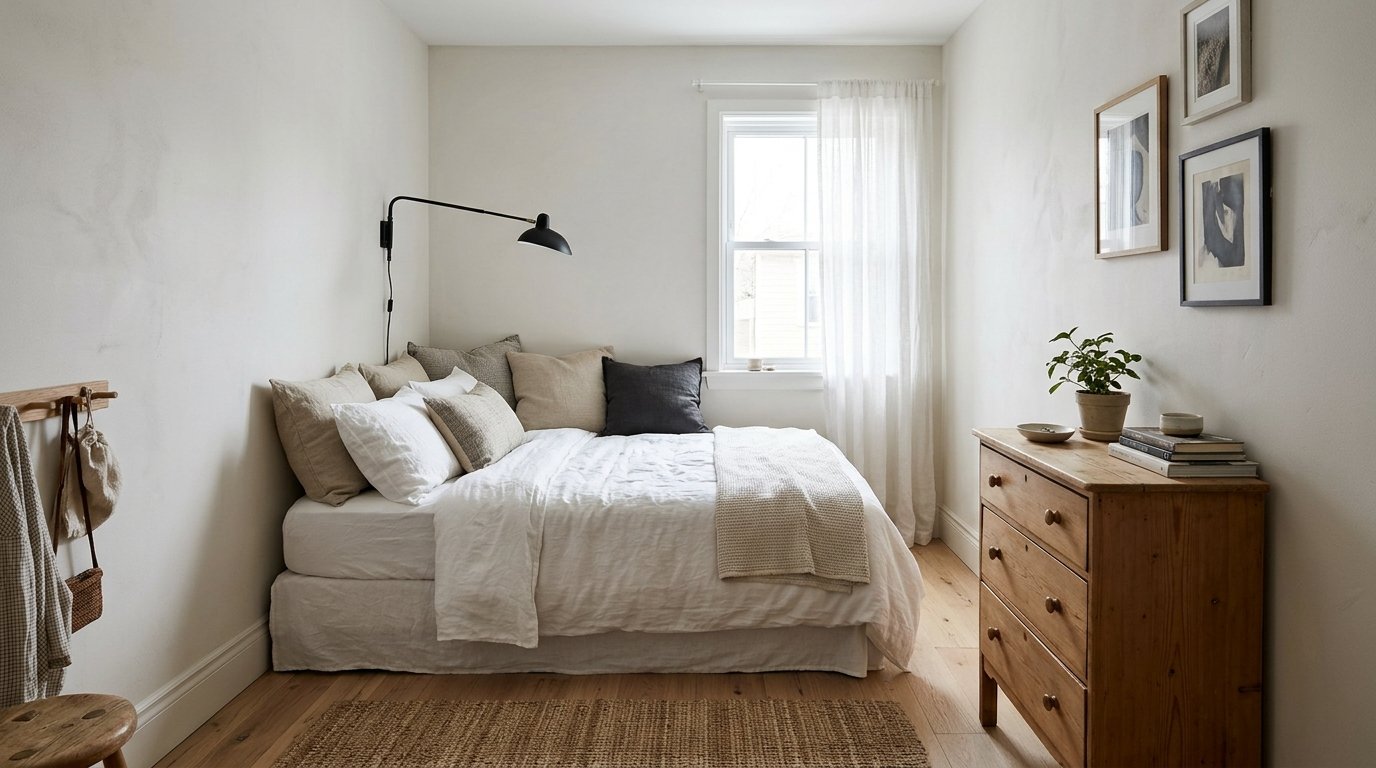
In a very small room, placing the bed in a corner frees up valuable floor space and creates a cosy, nook-like feel. It’s especially effective for single and twin beds.
Add cushions along the wall side so the bed doubles as a daybed during the day.
Keep the opposite side clear for a small desk, chest of drawers or simply a wider walkway.
A corner bed also makes the room feel more intentional and cosy, especially when you add a soft throw and a small wall shelf for a phone and glasses.
Pro tip: Use a wall-mounted reading light on the wall side of the bed, since there’s no space for a nightstand there.

2. Centre the Bed on the Main Wall
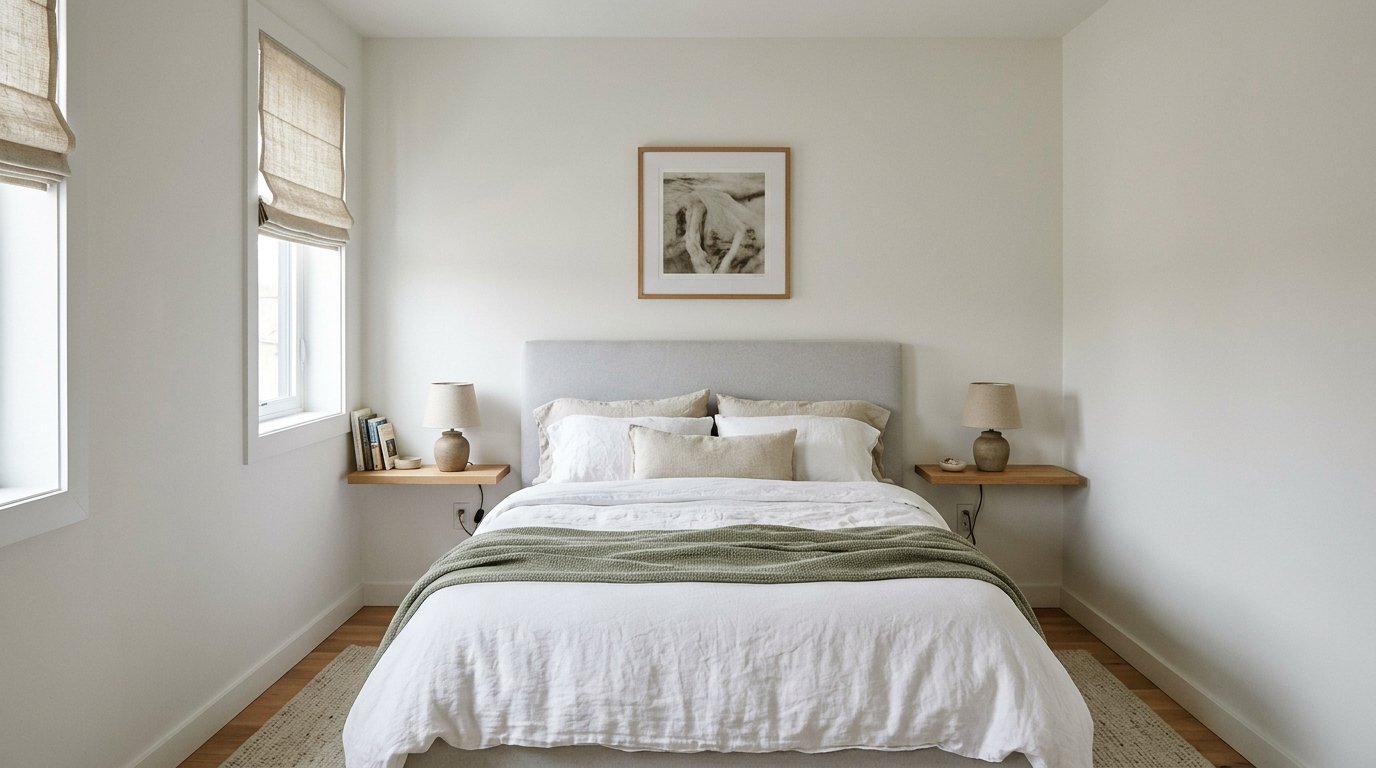
If you have just enough width, centring the bed on the longest wall creates balance and makes the room feel more grown-up and intentional.
Flank it with slim nightstands or wall-mounted shelves rather than bulky bedside tables.
A symmetrical layout tricks the eye into reading the room as larger and more organised.
Keep the headboard simple and the wall above it uncluttered. One framed print or a single shelf is plenty and stops the wall from feeling busy.
Pro tip: Measure at least 24 inches on each side of the bed for comfortable access before choosing this layout.

3. Place the Bed Under the Window
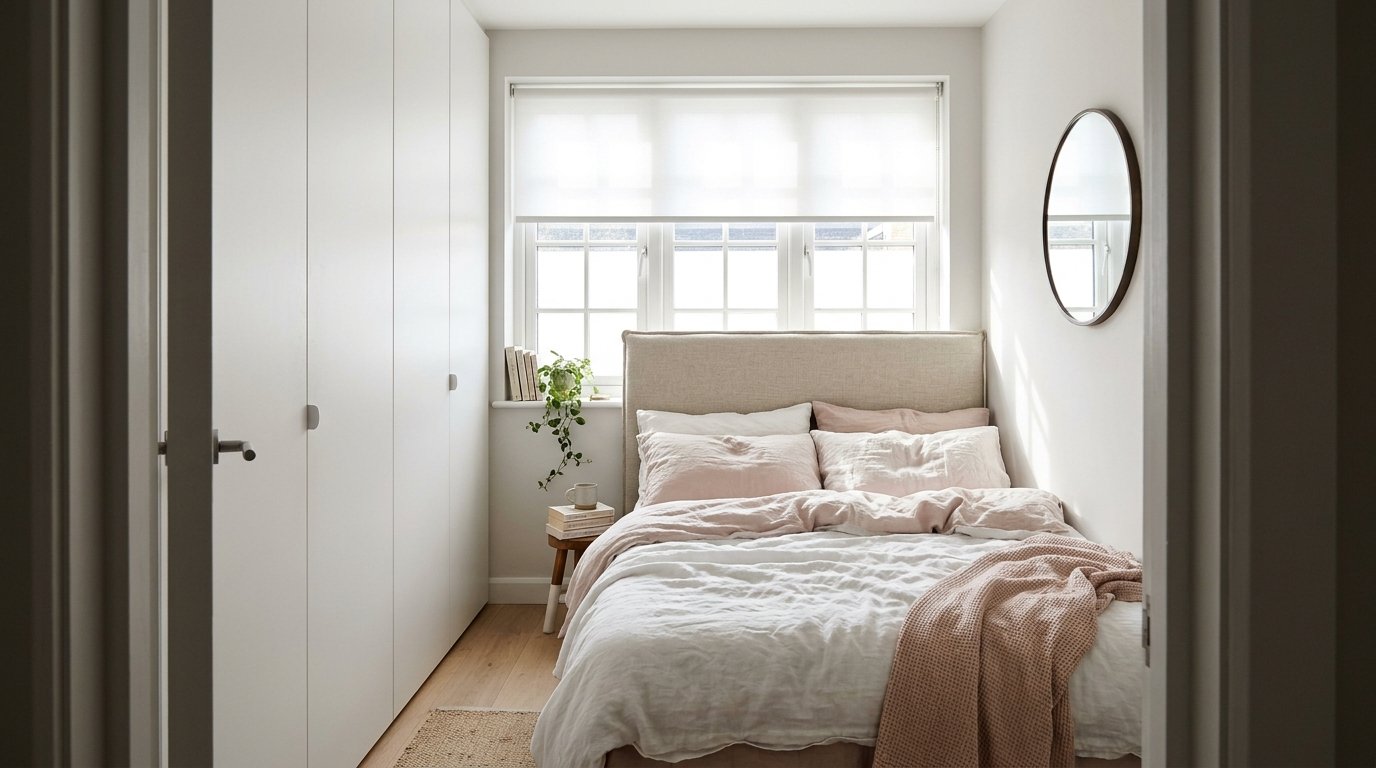
Putting the bed beneath a window can free up wall space for wardrobes or a desk, and it gives you a lovely view of the sky as you fall asleep.
Choose a low headboard so it doesn’t block the light, and use blinds or curtains that are easy to open and close from the bed.
This layout works well in narrow rooms where the window sits on the short wall.
If you choose this layout, keep window treatments simple and make sure the bed sits a few inches away from any radiator beneath the window.
Pro tip: Choose blackout roller blinds fitted inside the window recess. They block light well without taking up space over the bed.

4. Create Zones in a Multi-Use Room
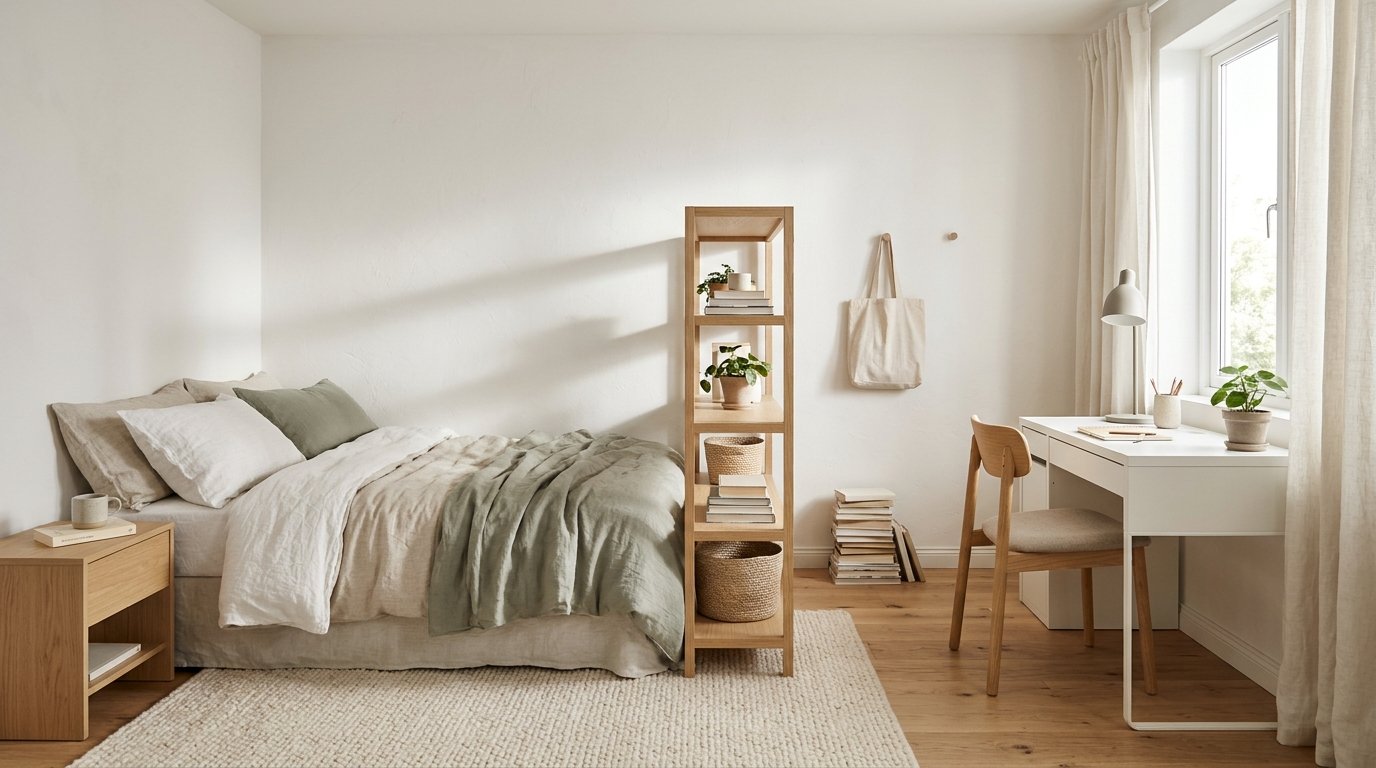
If your small bedroom also works as an office or dressing area, define each zone so the room feels organised rather than crowded.
Use a rug to anchor the sleeping area, a different light for the desk, and a slim shelving unit or curtain to separate spaces.
Zoning helps your brain switch between work and rest, which can improve sleep.
Even a single storage cube or a tall plant can act as a visual divider, signalling where one zone ends and another begins.
Pro tip: Choose furniture in the same finish for each zone. It ties the room together and keeps it calm.

Space-Saving Beds
5. Choose a Storage Bed
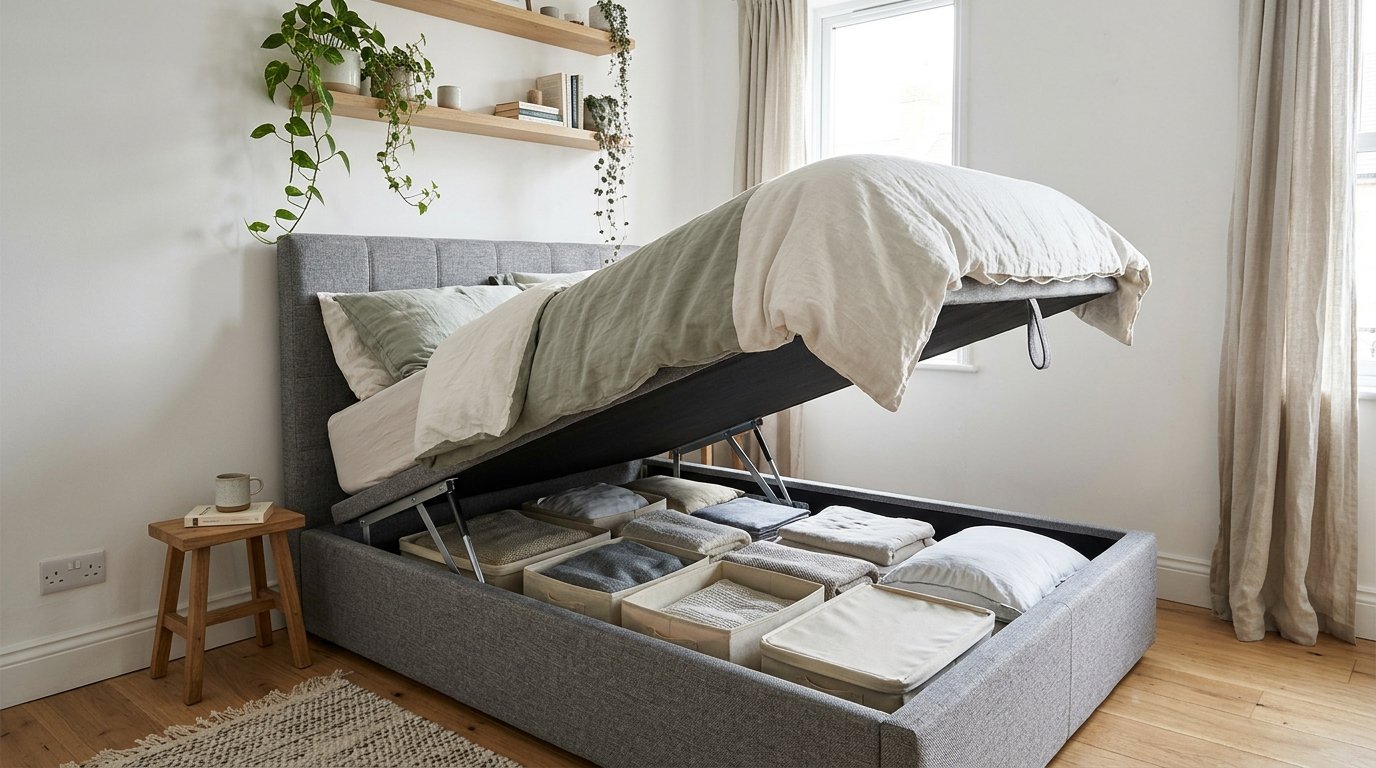
A storage bed is one of the smartest investments for a small bedroom. Drawers or a lift-up ottoman base hide bedding, clothes and seasonal items out of sight.
Lift-up beds offer the most storage, while drawer beds are easier for everyday items.
With the bulk stored under the bed, you may be able to skip a chest of drawers entirely and free up floor space.
Look for a model with a sturdy gas-lift mechanism so the base is easy to open and close, even when it’s full of bedding.
Pro tip: Check that drawers can open fully with your room layout. Lift-up beds are better if you can’t leave clearance at the side.

6. Go Vertical With a Loft Bed
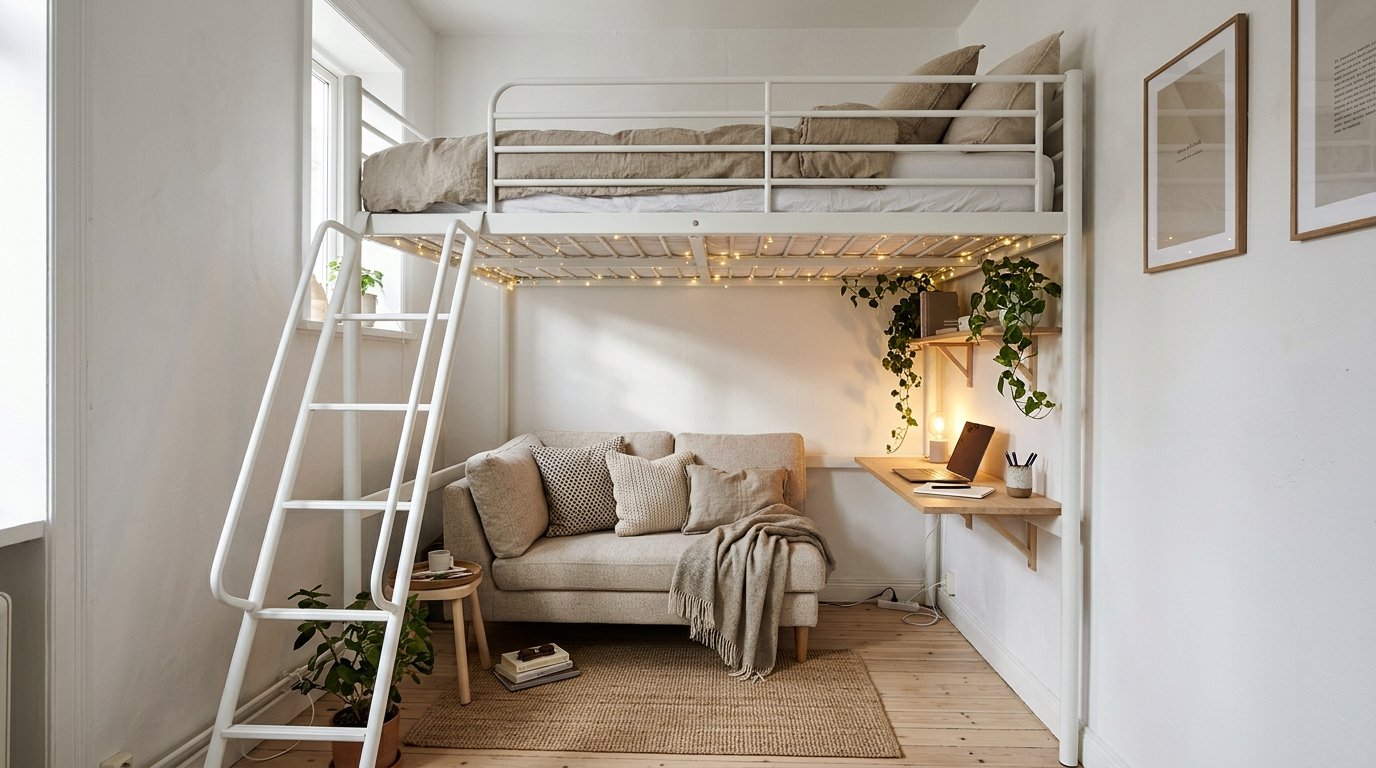
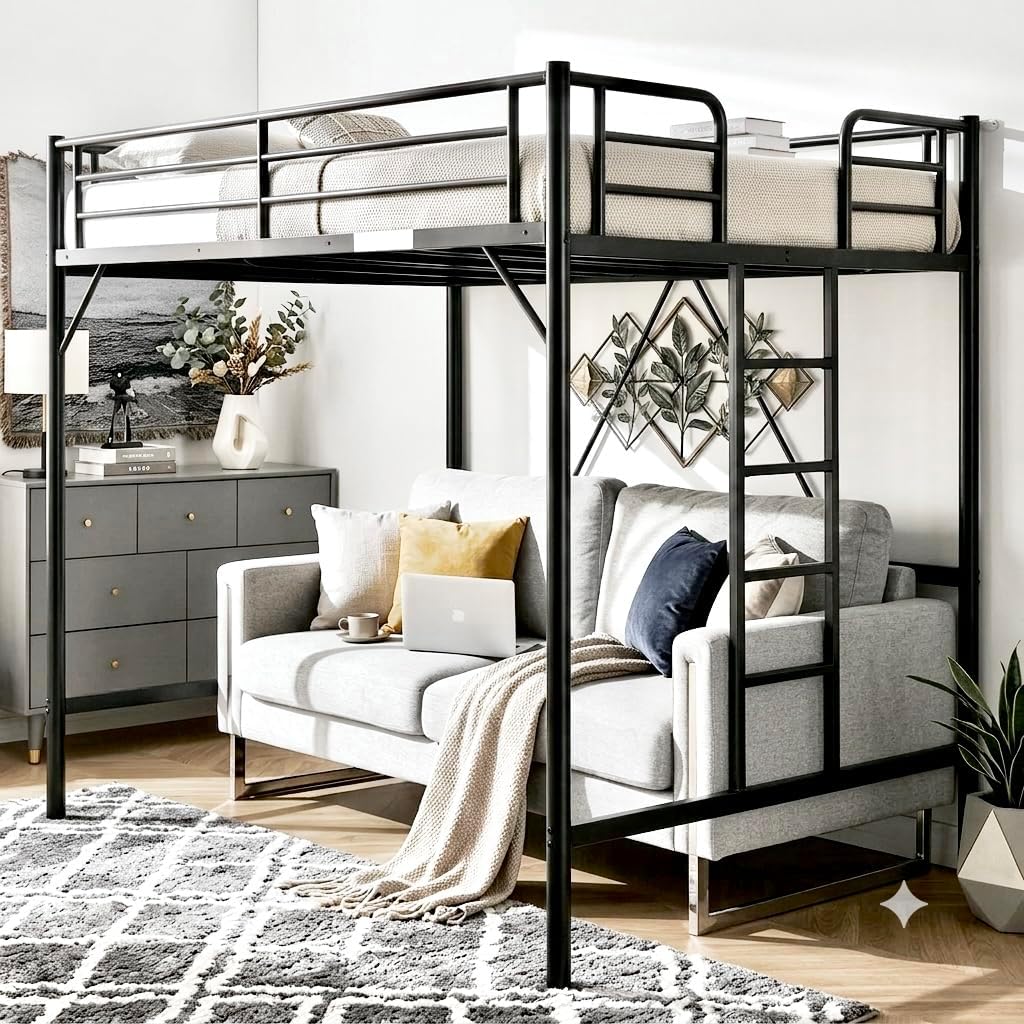
Lifting the bed frees the floor underneath for a desk, sofa or wardrobe. Loft beds aren’t just for kids; adult-sized designs work well in studios and tiny rooms.
Make sure there’s enough headroom above the mattress to sit up, and choose a sturdy frame with guard rails.
Add a clip-on light and a small shelf up top so you have everything you need within reach.
Use the space underneath to create a mini lounge, a home office or even a dressing area with a clothes rail and mirror.
Pro tip: You’ll want at least 30 inches between the mattress and the ceiling. Measure before you buy.
7. Install a Murphy Bed
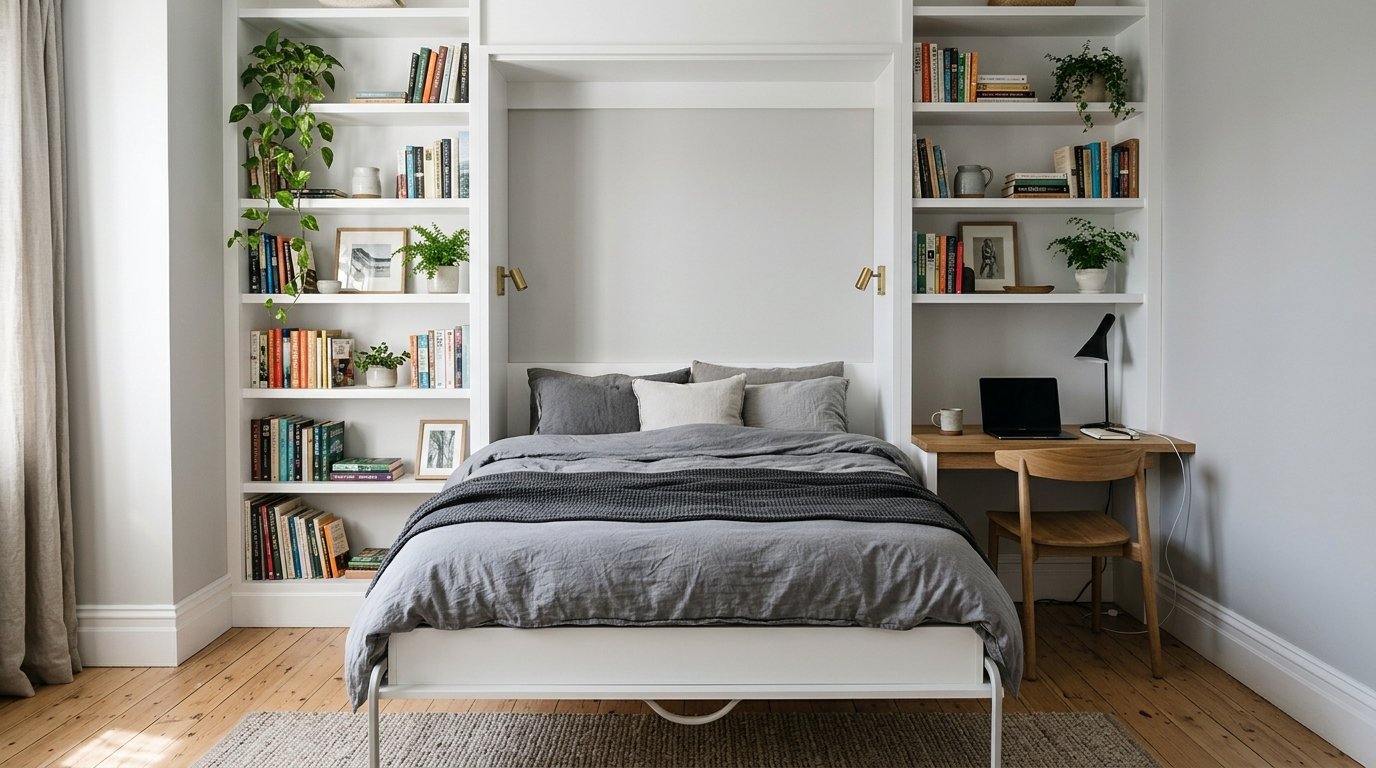
A wall bed, or Murphy bed, folds away when not in use, turning a bedroom into a home office, gym or living space during the day.
Many designs include shelves, a desk or a sofa built into the cabinet.
It’s ideal for guest rooms and studio apartments where floor space is precious.
Modern wall beds are far easier to use than older designs, with counterbalanced mechanisms that let you lower and raise them with one hand.
Pro tip: Have wall beds professionally installed and secured into wall studs for safety.

8. Choose a Daybed or Trundle
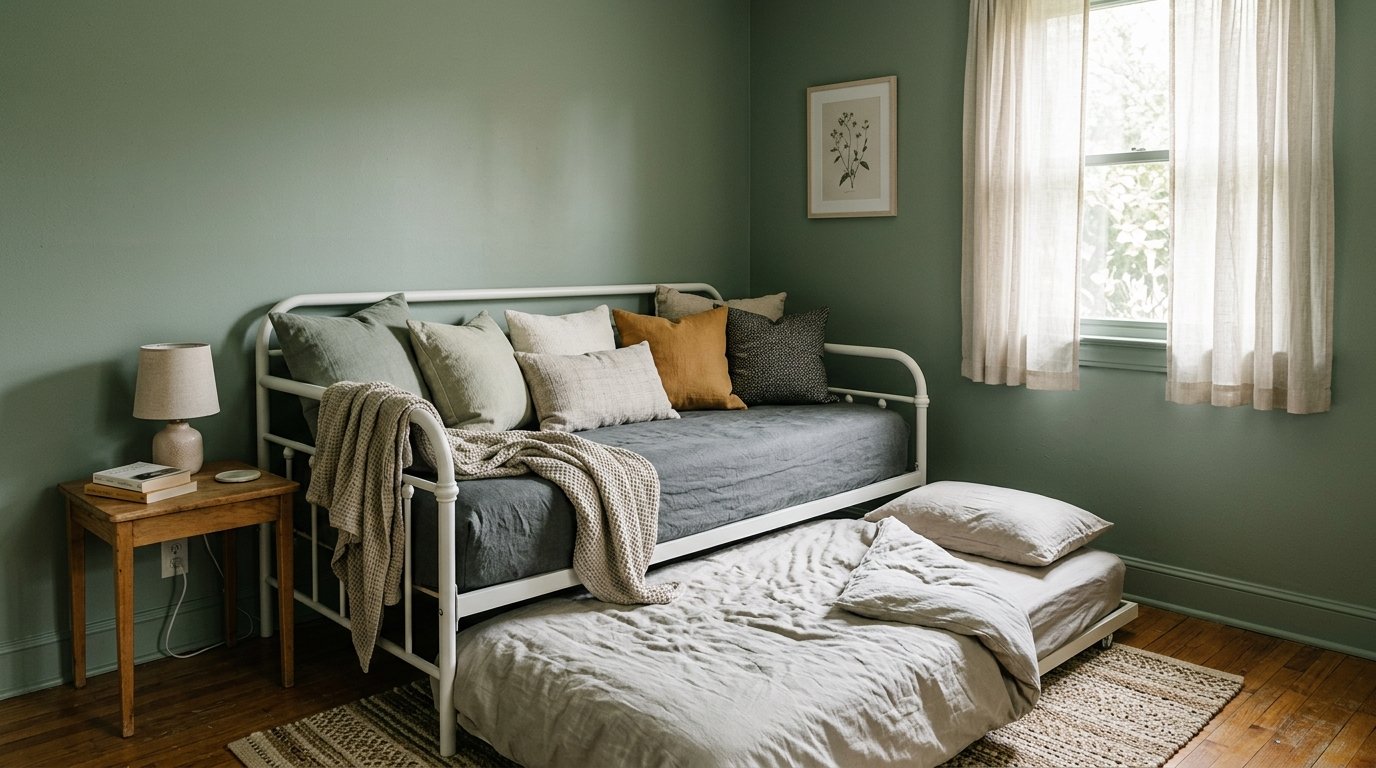
A daybed works as a sofa by day and a bed by night, which is perfect for a small guest room or a teen’s bedroom.
Add a trundle underneath for an extra sleeping space without taking up any more floor area.
Style it with a fitted cover and plenty of back cushions so it feels like a sofa rather than an unmade bed.
Choose a neutral cover and cushions that match the rest of the room so the daybed looks like a deliberate piece of furniture.
Pro tip: Choose a daybed with a slatted base and a firm mattress. It will be comfortable for sitting and sleeping.

9. Pick a Bed With Legs
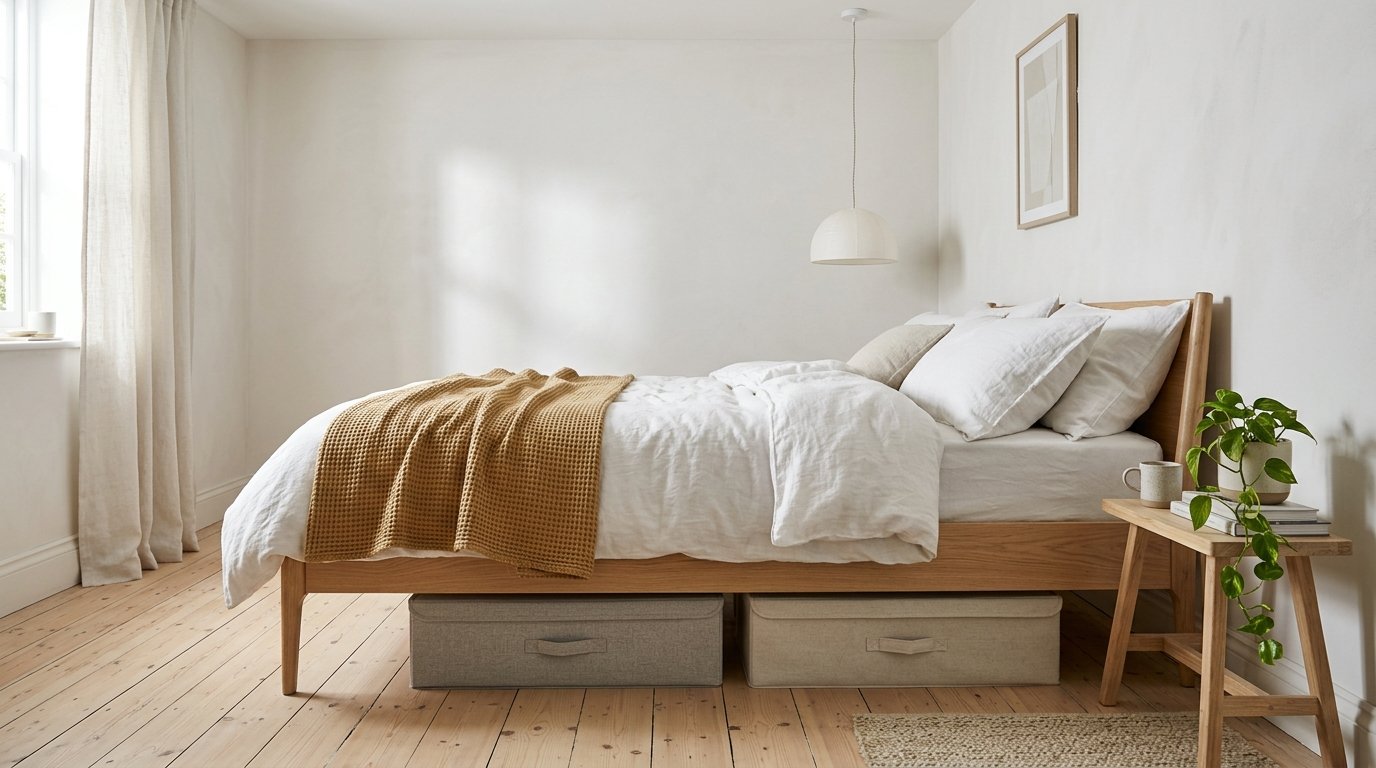
Beds raised on slim legs let you see the floor underneath, which makes the room feel lighter and more open.
Low, chunky beds and heavy frames can visually swallow a small room.
Use the space underneath for slim rolling storage boxes to keep it tidy.
A bed on legs is also easier to clean around and underneath, which helps a small room stay fresh and dust-free.
Pro tip: Look for a bed with at least 6 inches of clearance so under-bed storage boxes fit easily.

Smart Storage
10. Add Floating Shelves
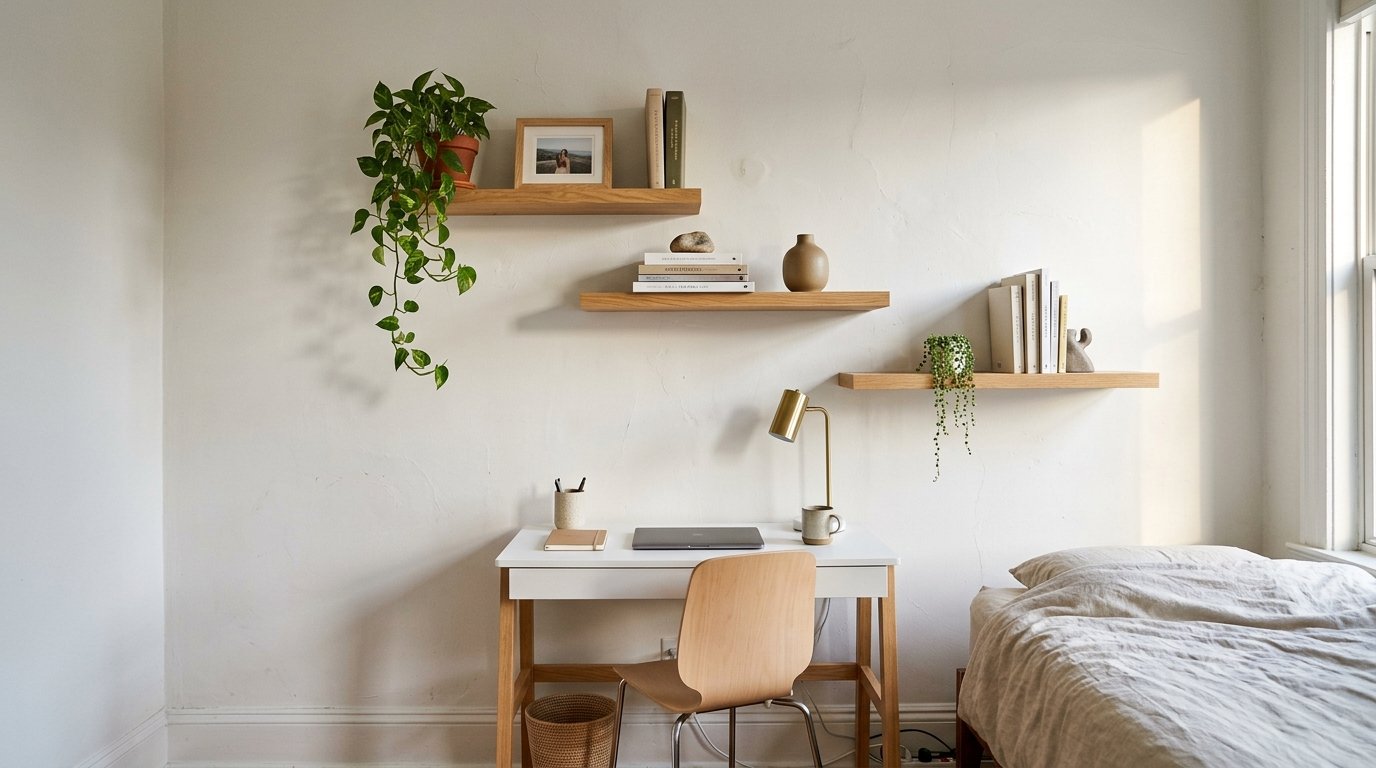
Floating shelves take storage up the walls without eating into floor space. Use them for books, plants and small decor, or as a bedside table.
Keep them light in colour or match them to the wall so they blend in.
A single long shelf above the bed or desk creates a clean, streamlined look.
Choose shelves with hidden brackets for a cleaner look, and fix them securely into wall studs or with heavy-duty anchors.
Pro tip: Style shelves with space between items and a mix of books, plants and objects so they don’t look cluttered.

11. Use Over-the-Door Storage
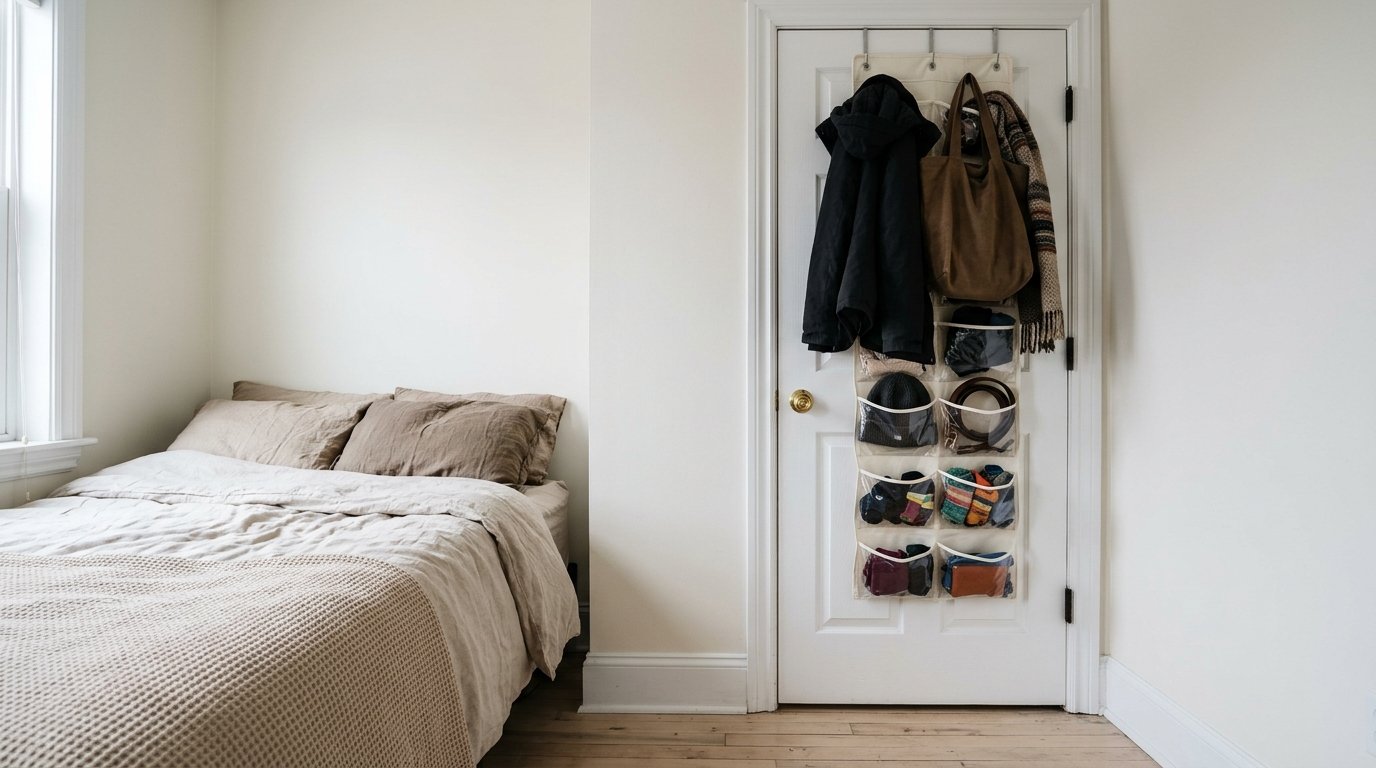
The back of the bedroom door is valuable storage that often goes unused. Over-the-door hooks, racks and organisers hold coats, bags, shoes and accessories.
Choose slim designs so the door still closes properly.
This is an easy, renter-friendly way to add storage without drilling.
Inside wardrobe doors are worth using too. Add slim racks for scarves, belts and jewellery to free up drawer space.
Pro tip: Use a slim over-the-door mirror with hooks. It adds storage and a full-length mirror in one.

12. Build Storage Around the Bed
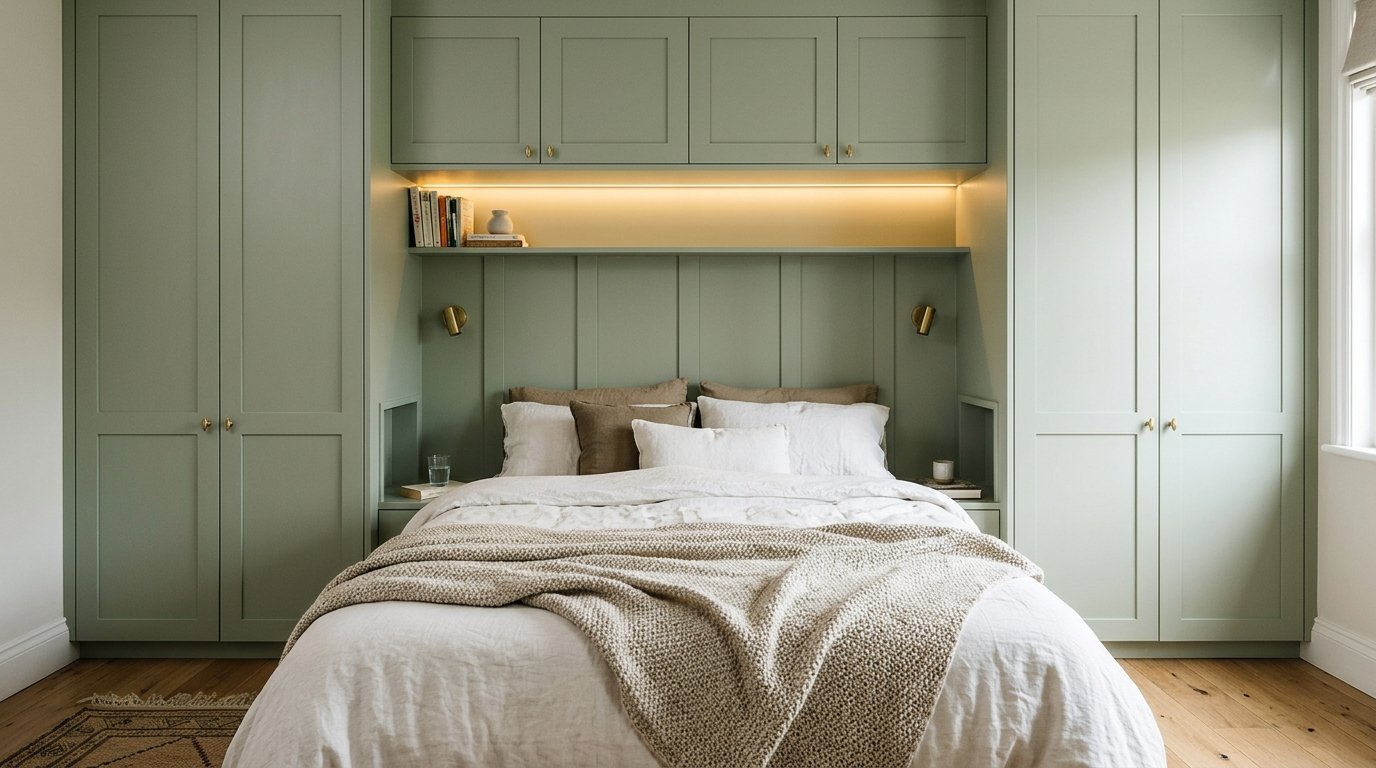
Wardrobes and cabinets built around the bed create a cosy alcove and make use of awkward wall space.
Overhead cabinets can store items you only need occasionally, such as spare bedding or luggage.
Built-ins painted the same colour as the walls feel less imposing and blend into the room.
If a full built-in project isn’t possible, flat-pack wardrobes trimmed with moulding and painted to match the walls can give a similar effect.
Pro tip: Add LED strip lighting under overhead cabinets to create built-in reading lights.
13. Choose a Tall, Narrow Dresser
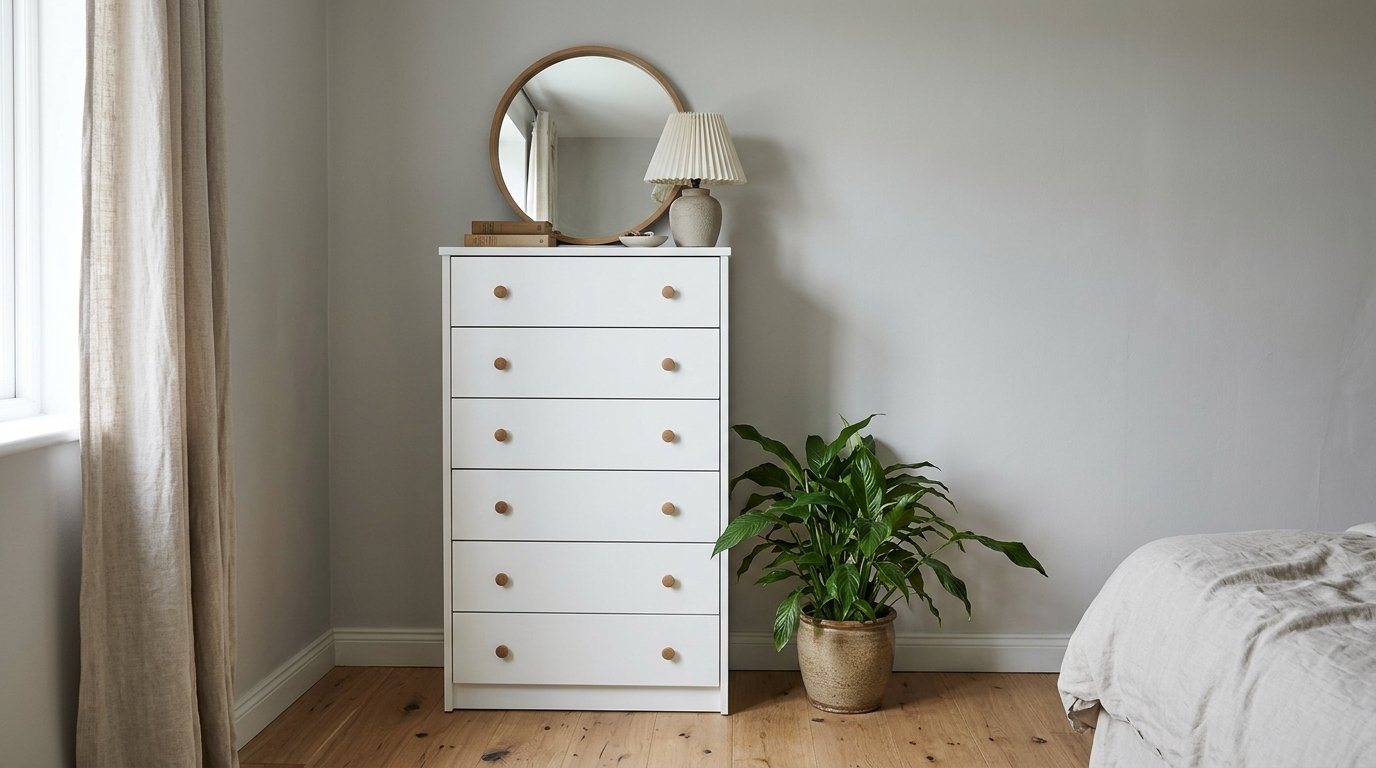
A tall chest of drawers takes up less floor space than a wide dresser but still offers plenty of storage.
Look for slim designs with five or six drawers and simple hardware.
Place a lamp and a small mirror on top to turn it into a mini dressing station.
A narrow dresser can also double as a bedside table if you place it next to the bed, saving the space of a separate nightstand.
Pro tip: Always anchor tall furniture to the wall to prevent tipping.

14. Use Under-Bed Storage Boxes
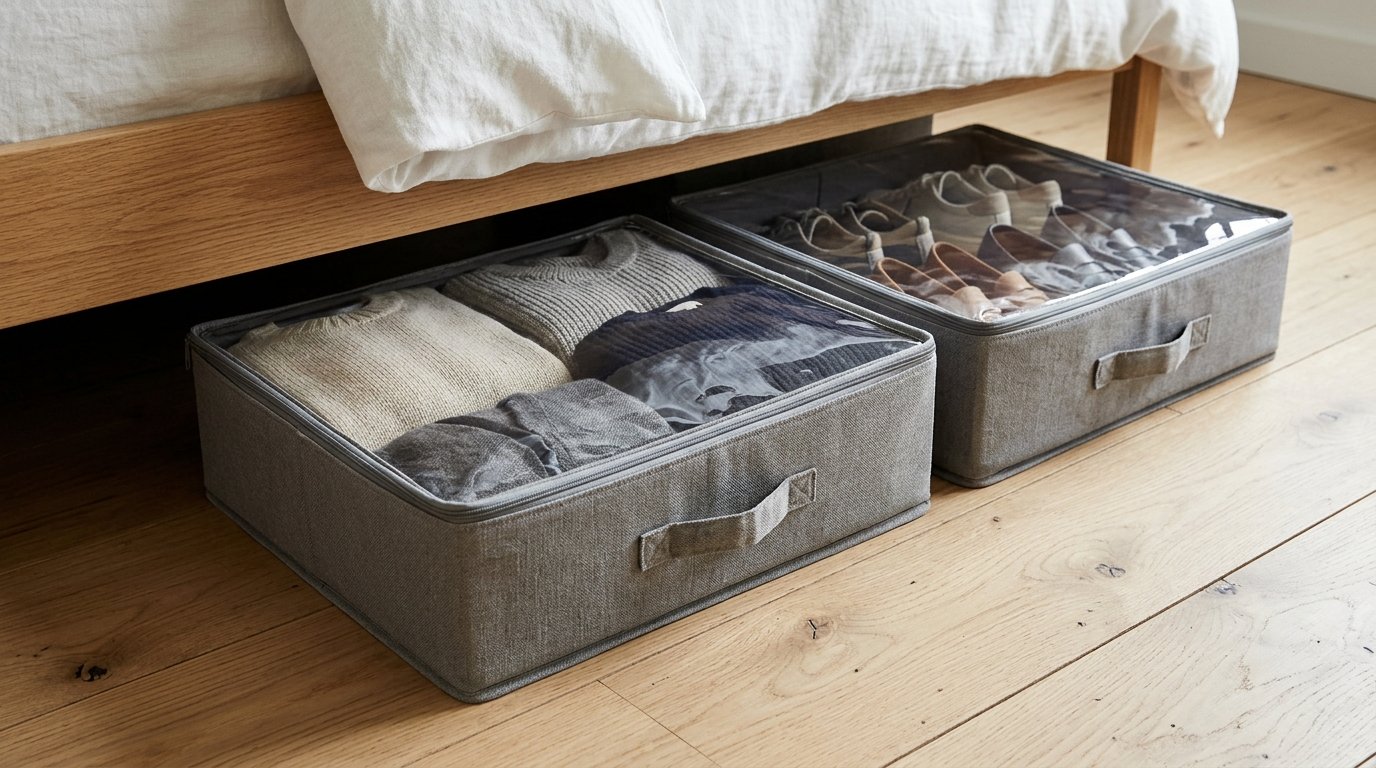
If your bed doesn’t have built-in storage, under-bed boxes are an easy way to reclaim space.
Choose boxes with wheels and lids to keep dust out, and label them so you can find things quickly.
Store out-of-season clothes, spare bedding and shoes here to free up your wardrobe.
Vacuum storage bags are another space saver. They compress bulky duvets and winter coats so more fits into each box.
Pro tip: Measure your bed’s clearance before buying boxes, and leave a little space so they slide in and out easily.

15. Hang Hooks and Peg Rails
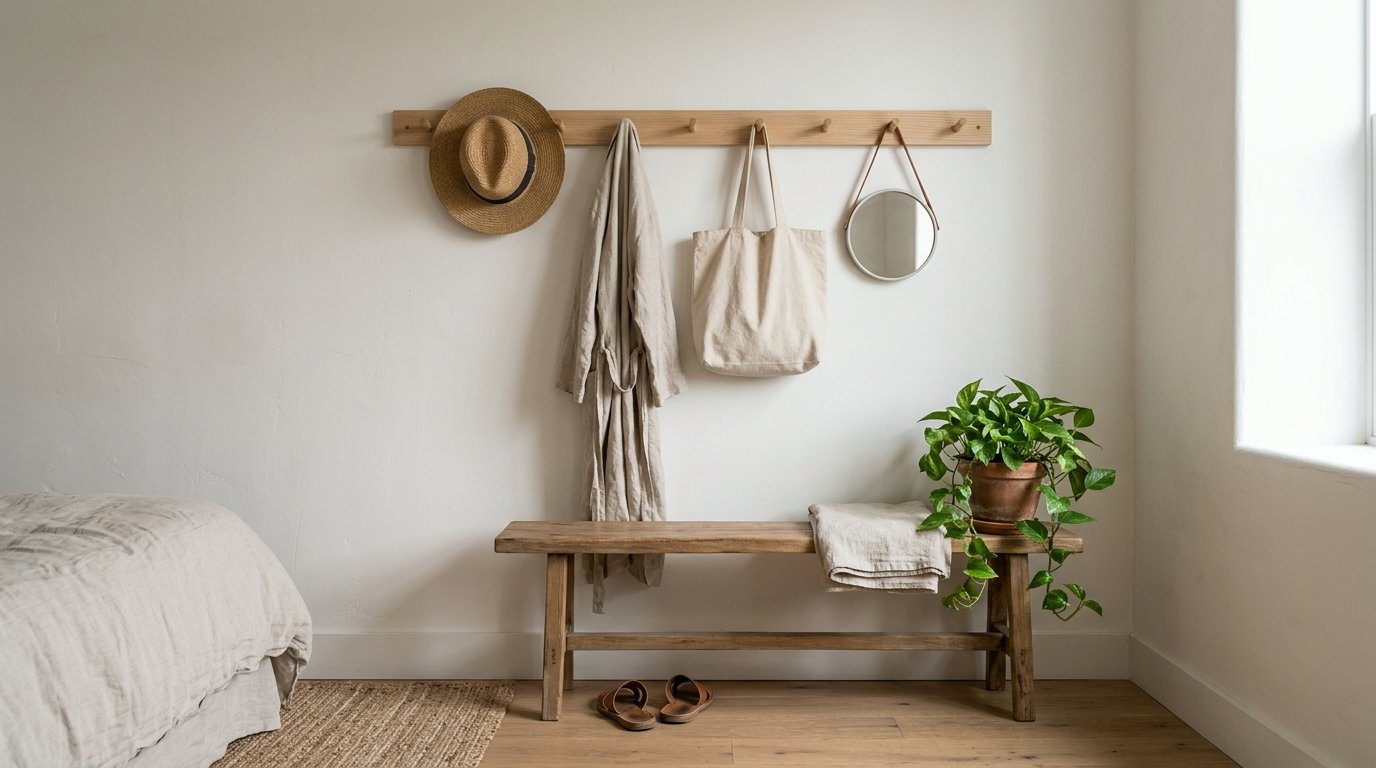
Wall hooks and peg rails are simple, stylish storage for bags, hats, robes and tomorrow’s outfit.
A Shaker-style peg rail running along one wall adds charm and keeps clutter off chairs and the floor.
Keep what you hang curated so the wall looks styled rather than messy.
Hooks behind the bedroom door or beside the bed are also handy for a robe or the clothes you plan to wear again.
Pro tip: Mount peg rails at about 60 to 65 inches from the floor so longer items don’t drag.

Colour and Visual Tricks
16. Paint the Walls a Light, Airy Colour
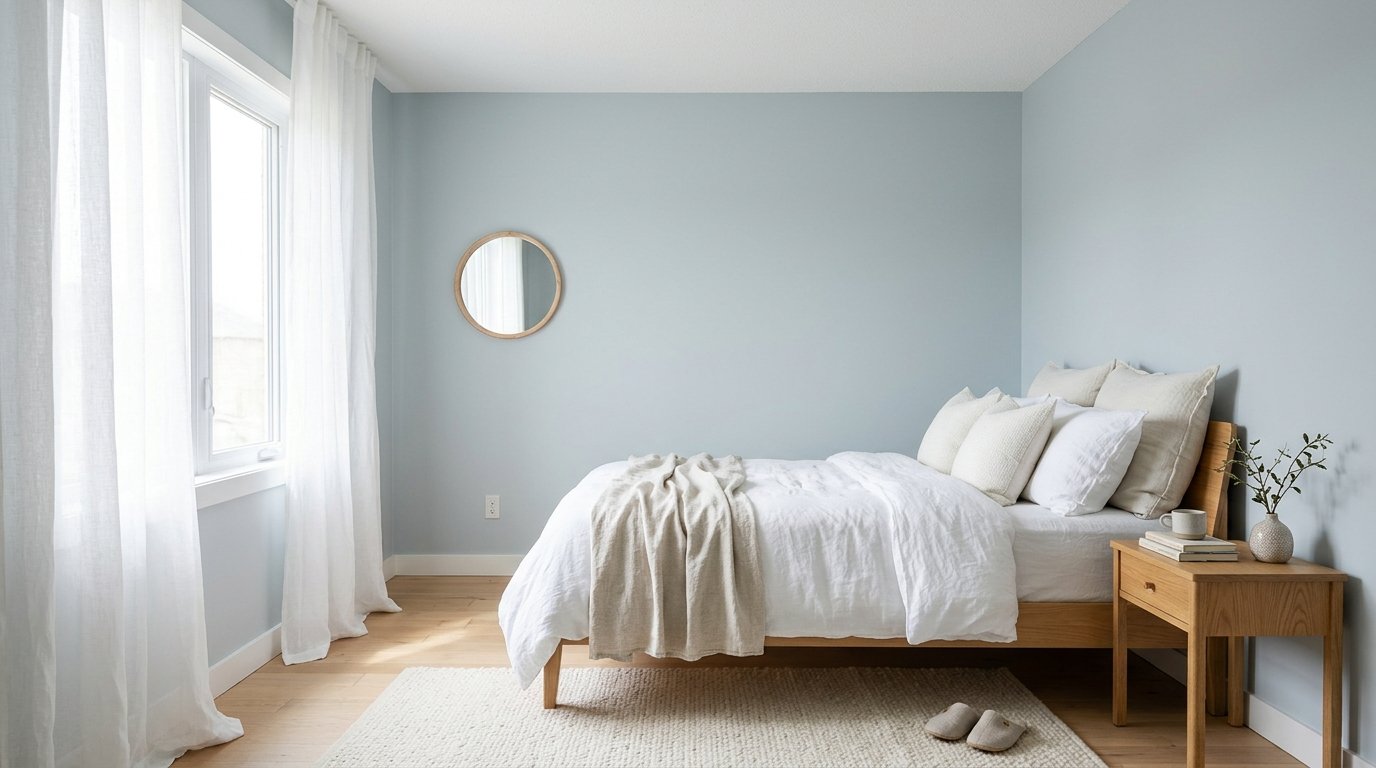
Light colours reflect more light and make walls appear to recede, so the room feels bigger and brighter.
Warm whites, soft greys, pale blues and gentle greens are all good choices.
Paint the ceiling white or a shade lighter than the walls to lift it visually.
Test paint samples on several walls before committing. The same colour can look very different depending on the light in each part of the room.
Pro tip: Choose a paint with a slight sheen, such as eggshell. It bounces more light around than a completely flat finish.
17. Try a Colour-Drenched Look
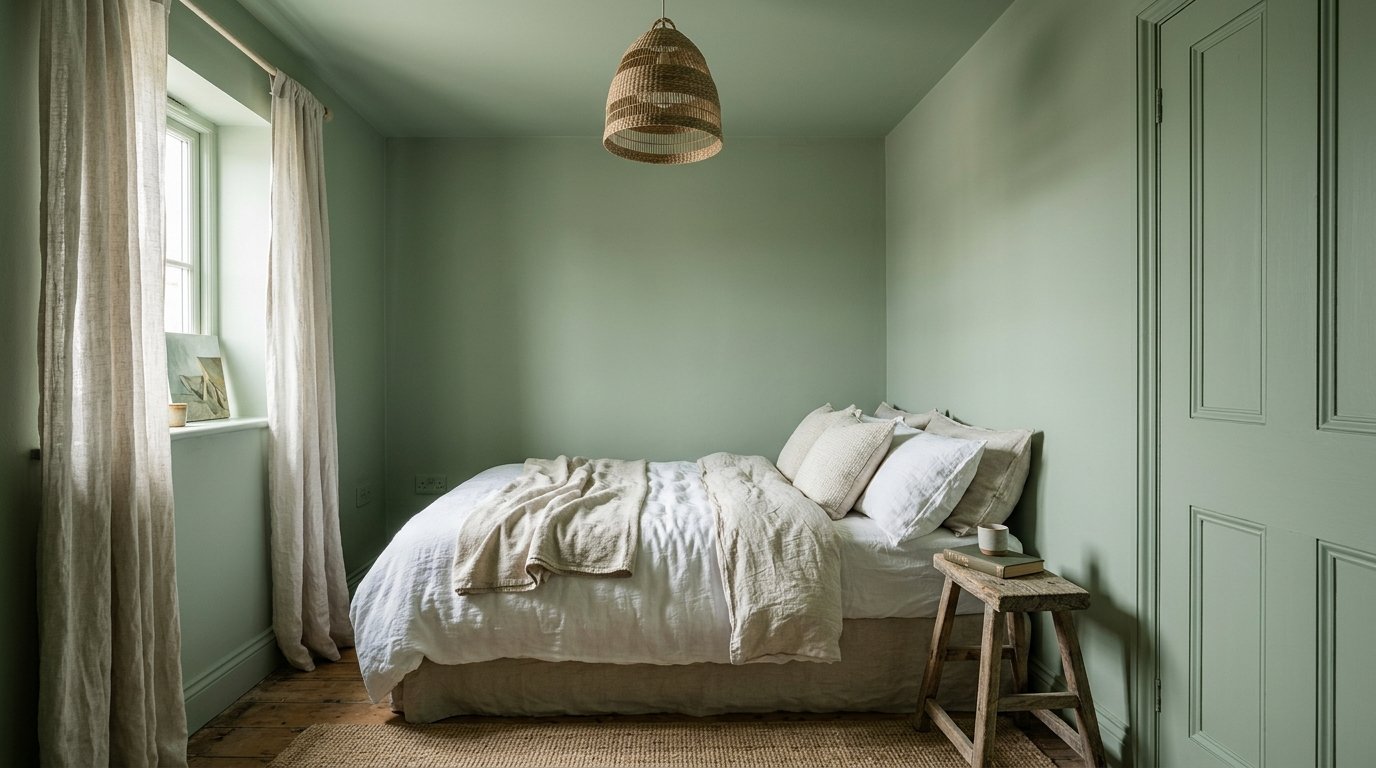
It sounds counterintuitive, but painting walls, ceiling and trim in one colour can make a small room feel larger by blurring the edges.
Mid-tone colours such as sage, terracotta or dusty blue create a cosy, enveloping feel without closing in the room.
This approach works especially well in rooms that are already small and dark.
Colour drenching also hides awkward architecture such as sloped ceilings, uneven walls or radiators, making the room feel calmer.
Pro tip: Use the same colour in different finishes, such as matte walls and satin trim, for subtle depth.
18. Hang a Large Mirror
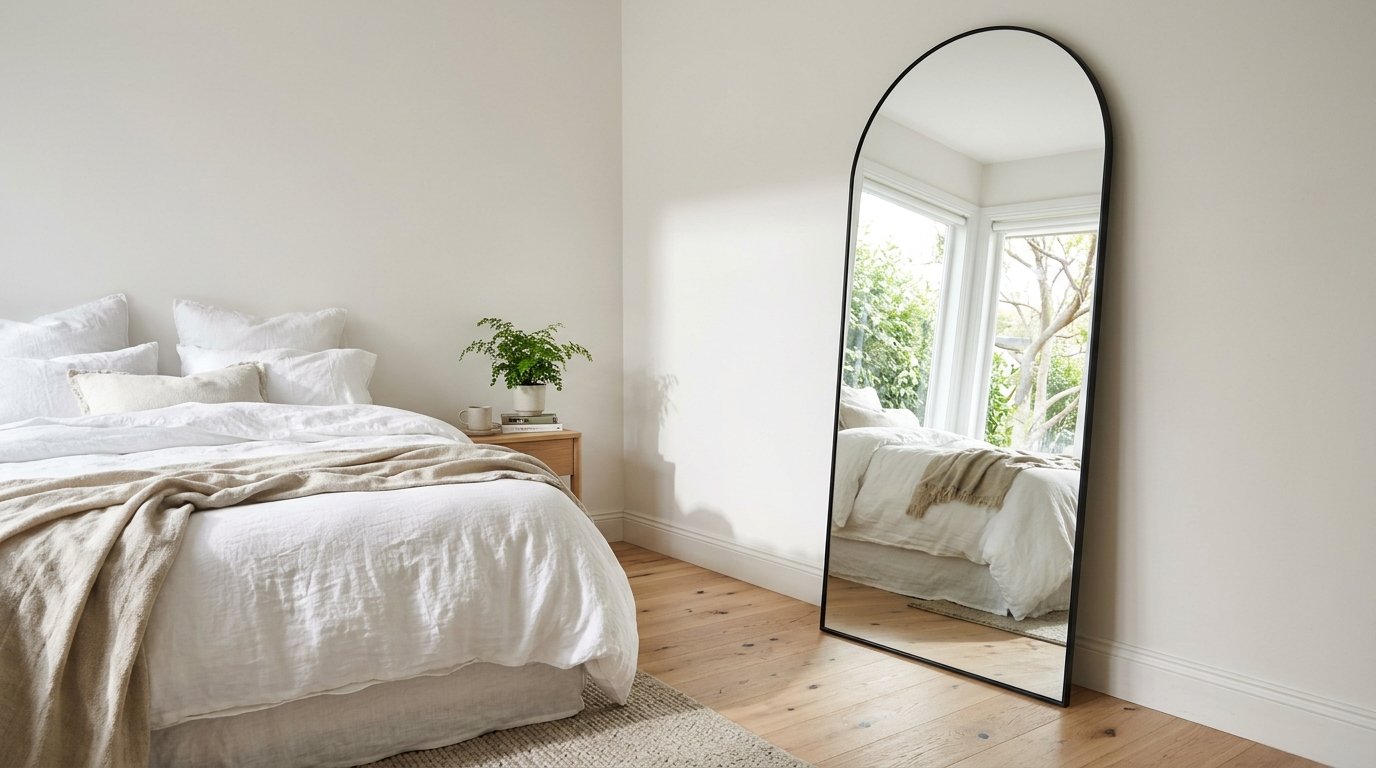
Mirrors are the classic small-space trick. A large mirror reflects light and views, making the room feel twice its size.
Lean a full-length floor mirror against a wall or hang a large mirror opposite the window.
Mirrored wardrobe doors are another way to add reflection without taking up extra space.
If you’re renting, a leaning floor mirror is an easy, damage-free way to bring in this effect without drilling.
Pro tip: Place mirrors where they reflect something pleasant, such as a window or artwork, rather than a cluttered corner.

19. Hang Curtains High and Wide
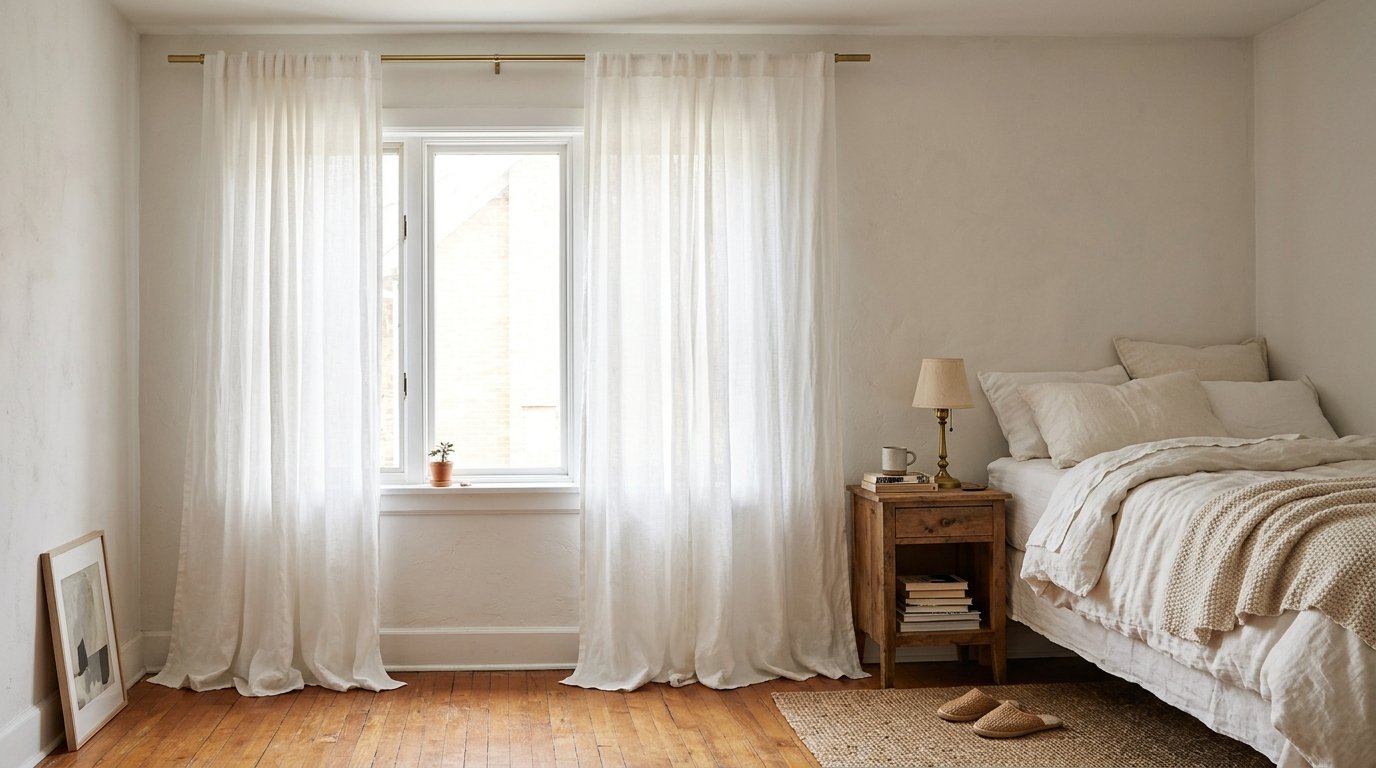
Mounting curtain rods close to the ceiling and extending them past the window frame makes windows look larger and ceilings higher.
Choose light, sheer or linen curtains that let in daylight.
Floor-length curtains in the same colour as the walls keep the look seamless and calm.
Ceiling-mounted tracks are another option. They let curtains start right at the ceiling line for the most dramatic effect.
Pro tip: Extend the rod 6 to 12 inches beyond the window on each side so curtains don’t block glass when open.

20. Use Vertical Stripes or Panelling
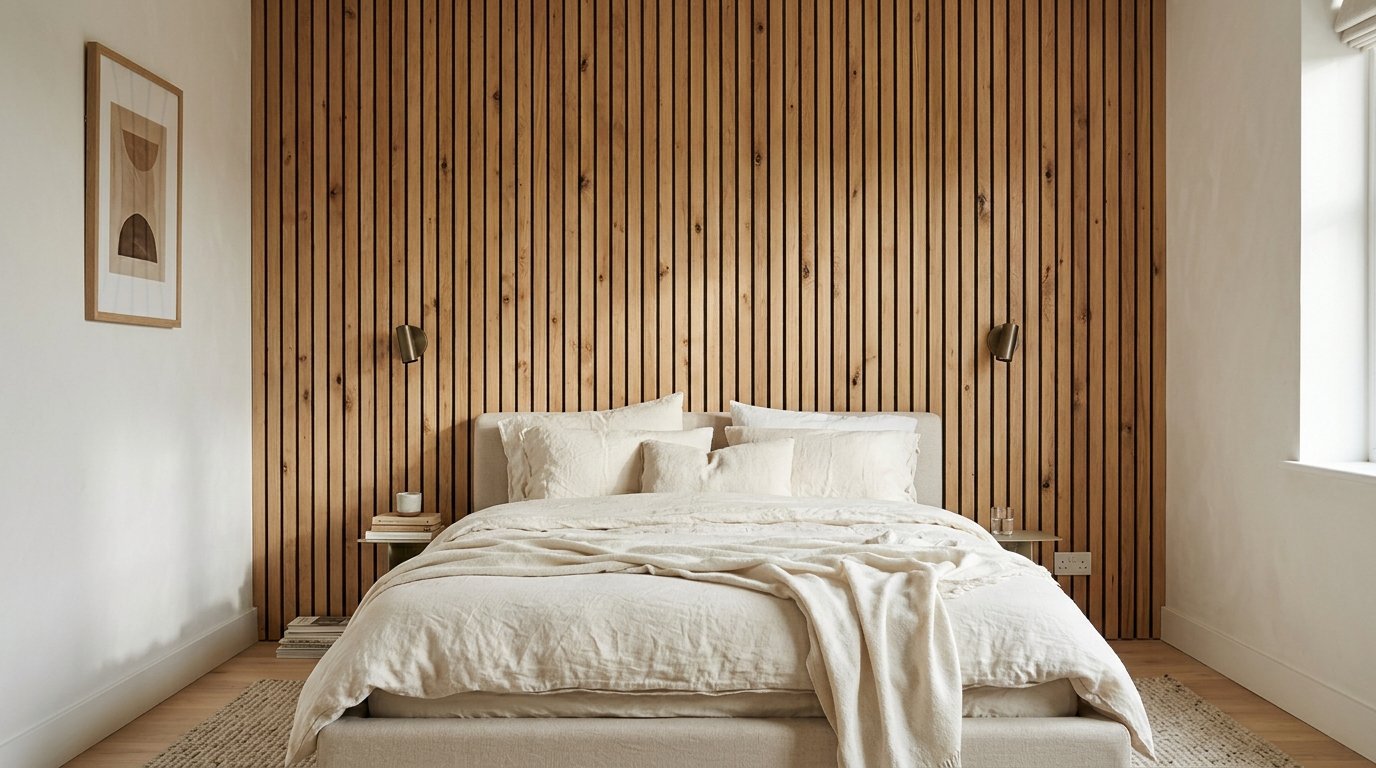
Vertical lines draw the eye upwards, making ceilings feel higher. Striped wallpaper, vertical panelling or tall shelving all help.
Keep stripes subtle, such as tone-on-tone or thin pinstripes, for a sophisticated look.
Vertical slatted wood panelling behind the bed adds texture and height.
Tall, narrow furniture such as a slim bookcase or a ladder shelf also adds vertical lines and draws the eye upwards.
Pro tip: Paint vertical panelling the same colour as the walls for a subtle, architectural look that doesn’t overwhelm.
Lighting
21. Swap Bedside Lamps for Wall Sconces
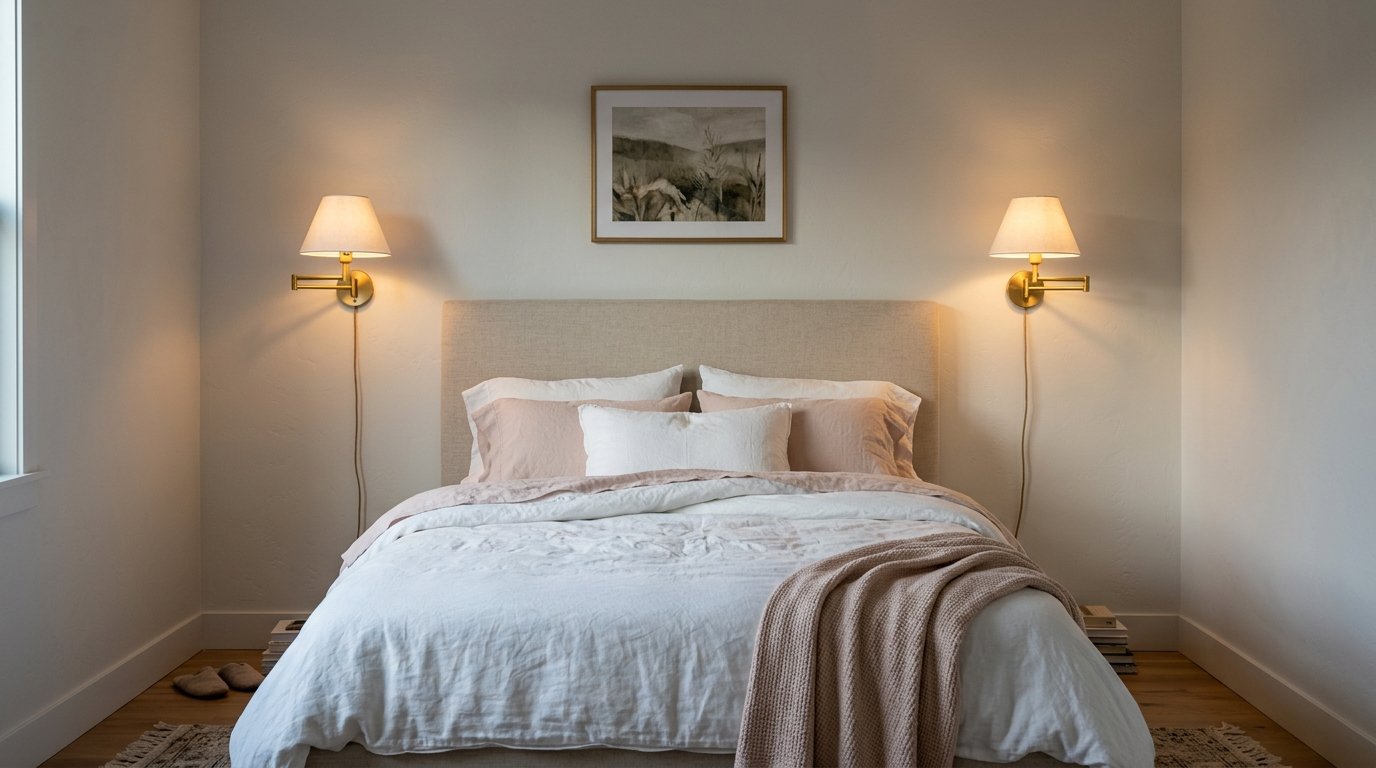
Wall sconces free up surface space on nightstands, or let you skip nightstands altogether.
Plug-in sconces are easy to install without rewiring, making them perfect for renters.
Swing-arm styles let you angle the light exactly where you need it for reading.
Choose fittings with a built-in switch or a dimmer so you can control the light without getting out of bed.
Pro tip: Mount sconces about 24 to 30 inches above the mattress so the light falls on your book, not your eyes.

22. Maximise Natural Light
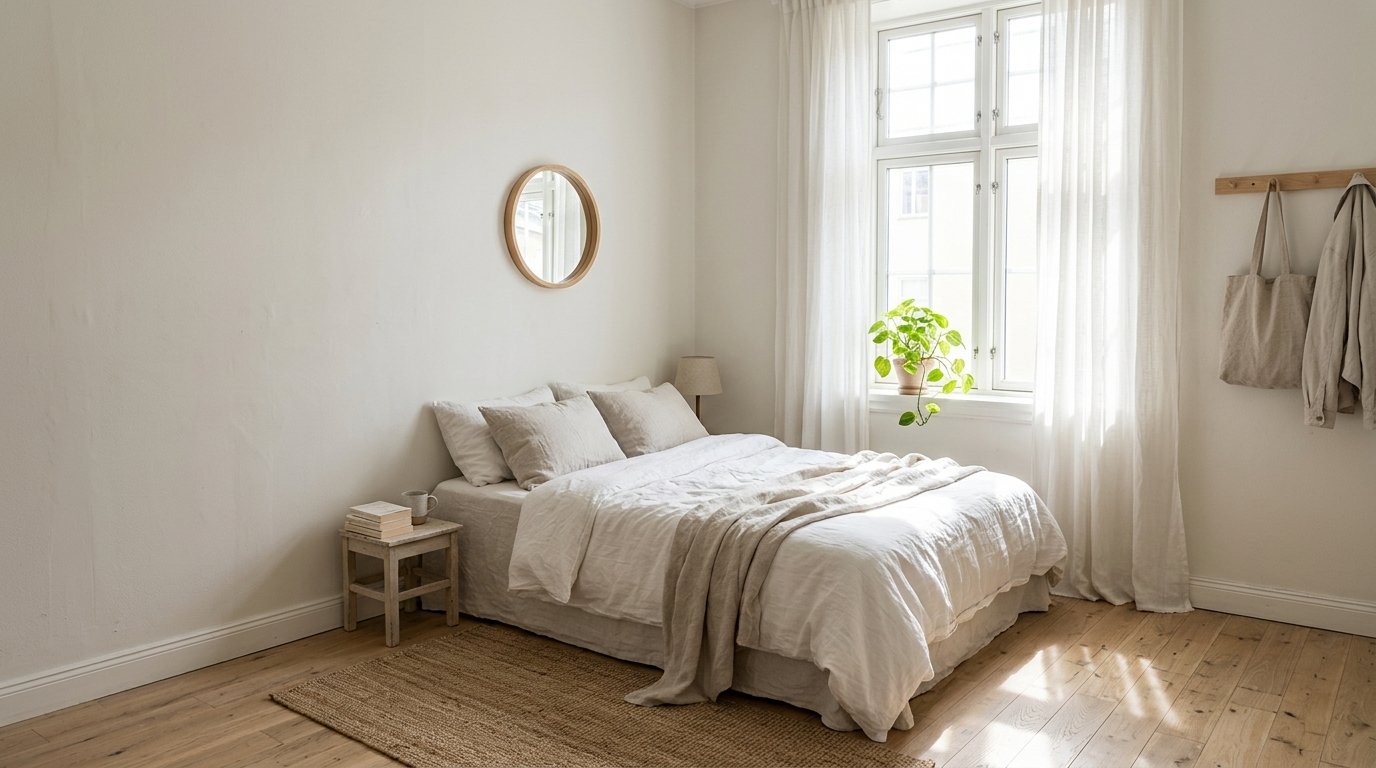
Natural light makes any room feel bigger. Keep windows clear, use sheer curtains and avoid placing tall furniture in front of them.
Light-coloured blinds or curtains let more daylight through during the day.
Clean windows and trimmed outdoor plants can make a noticeable difference.
Keep windowsills clear of clutter and avoid heavy pelmets or valances that block the top of the window.
Pro tip: Use reflective surfaces like a glass lamp base or a metallic tray near windows to bounce light deeper into the room.
23. Add a Statement Pendant Light
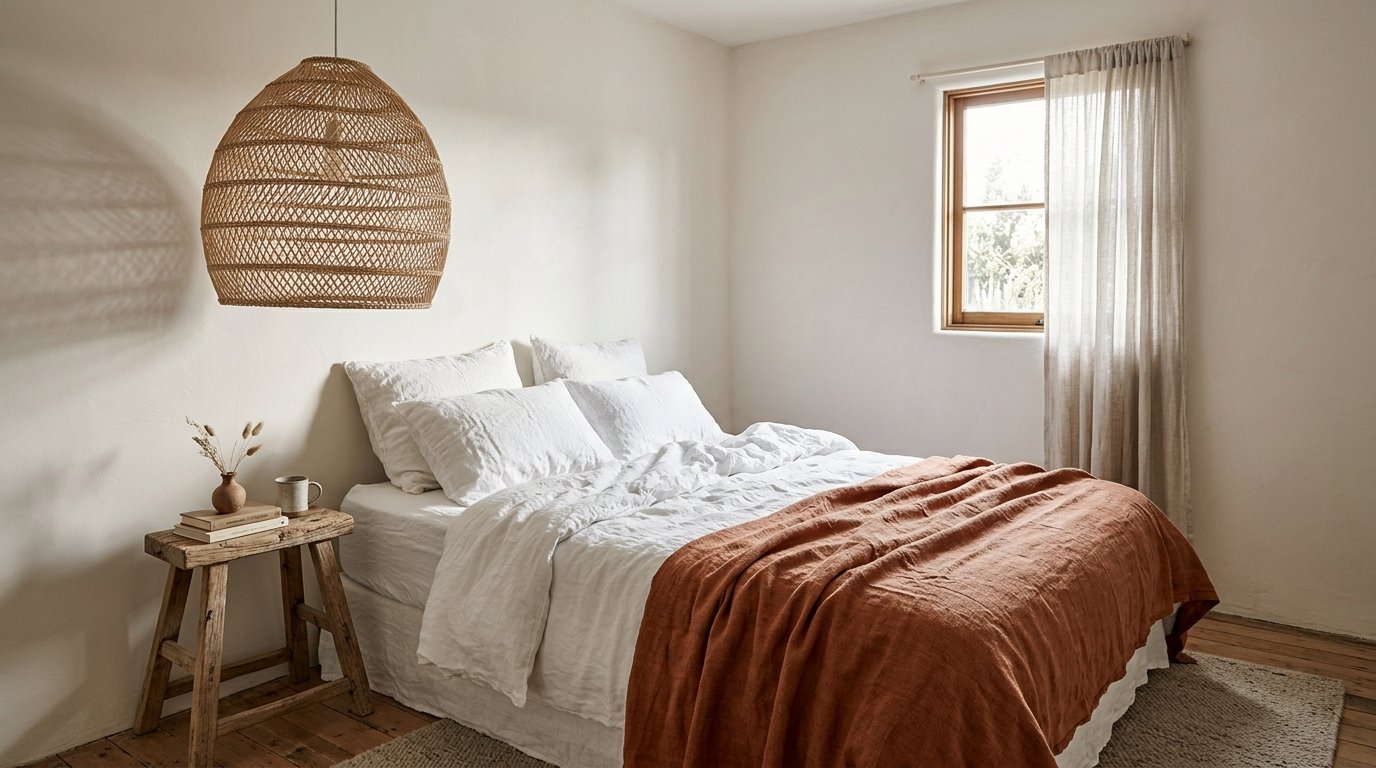
A pendant light frees up floor and surface space while adding personality. Choose a lightweight design, such as rattan, paper or glass.
Hang it slightly lower than a standard ceiling light to create a cosy focal point.
In a very small room, a single pendant can replace floor and table lamps altogether.
Use a ceiling hook and swag kit to hang a plug-in pendant beside the bed if you can’t rewire, creating a stylish alternative to a bedside lamp.
Pro tip: Choose a dimmable bulb so the pendant can provide bright light for cleaning and soft light for winding down.

24. Use LED Strip Lighting
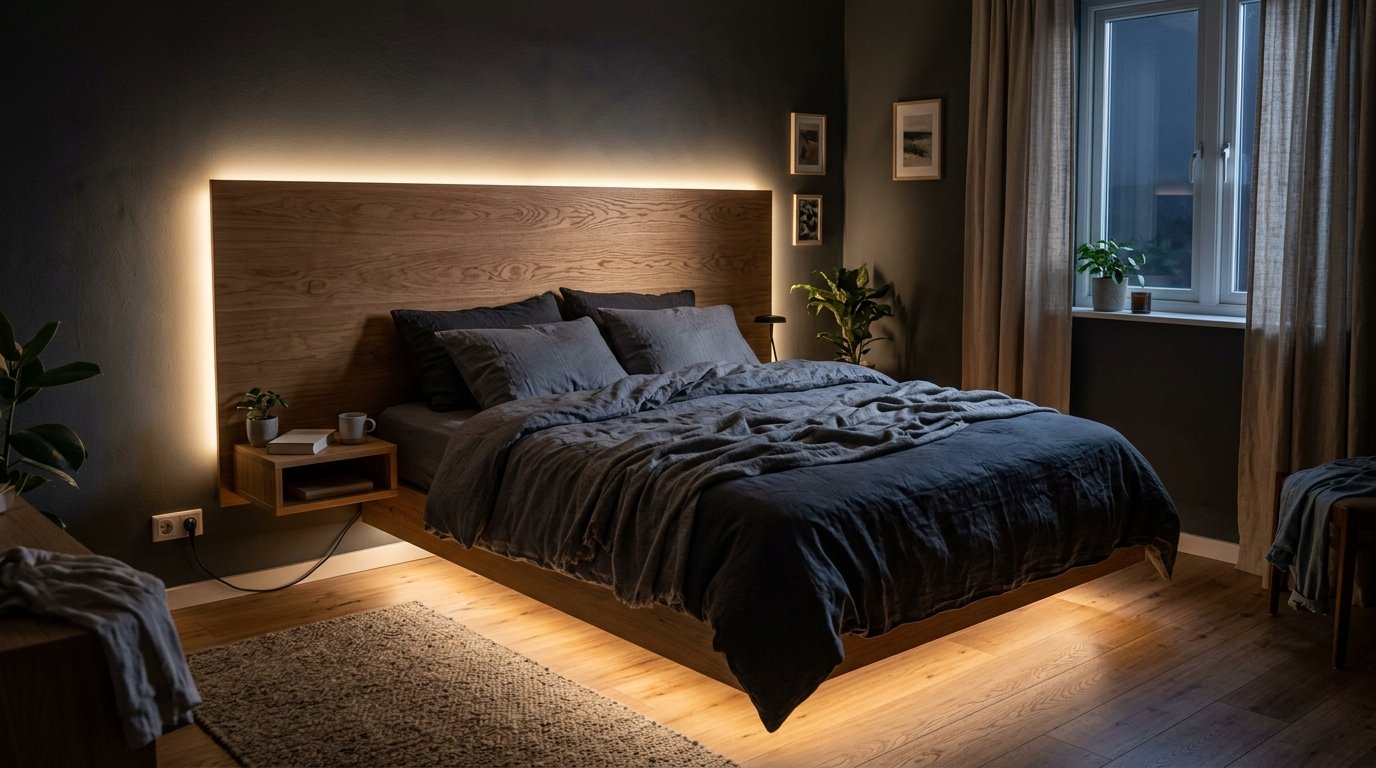
LED strips under the bed, behind a headboard or under shelves add soft ambient light without taking up any space.
Warm white LEDs create a calm, hotel-like glow in the evening.
Motion-sensor strips under the bed act as a gentle night light.
LED strips with a remote or smart app let you dim the lights and set a timer, which is handy for winding down before sleep.
Pro tip: Choose warm white LEDs (around 2700K) for the bedroom. Cool white or bright colours can feel harsh.

Furniture and Decor
25. Choose Multi-Functional Furniture
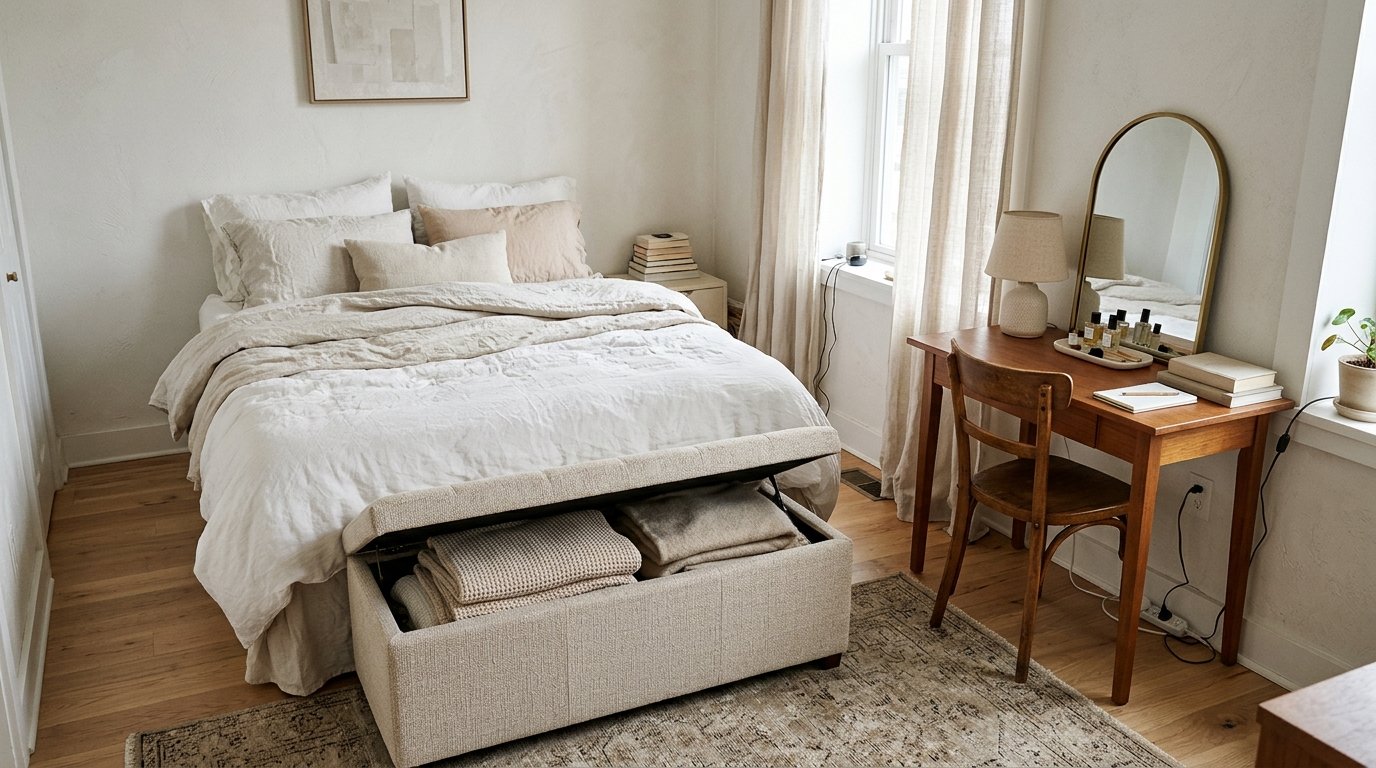
Every piece in a small bedroom should earn its place. Look for furniture that does double duty, such as a storage ottoman, a nightstand with drawers or a desk that doubles as a dressing table.
Nesting tables and folding chairs can be tucked away when not needed.
A storage bench at the foot of the bed adds seating and hidden storage in one.
Ottoman footstools with lift-off lids are another great option. They can act as extra seating, a side table and hidden storage.
Pro tip: Before buying anything new, ask what two jobs it can do. If it only does one, think twice.

26. Use a Wall-Mounted Desk
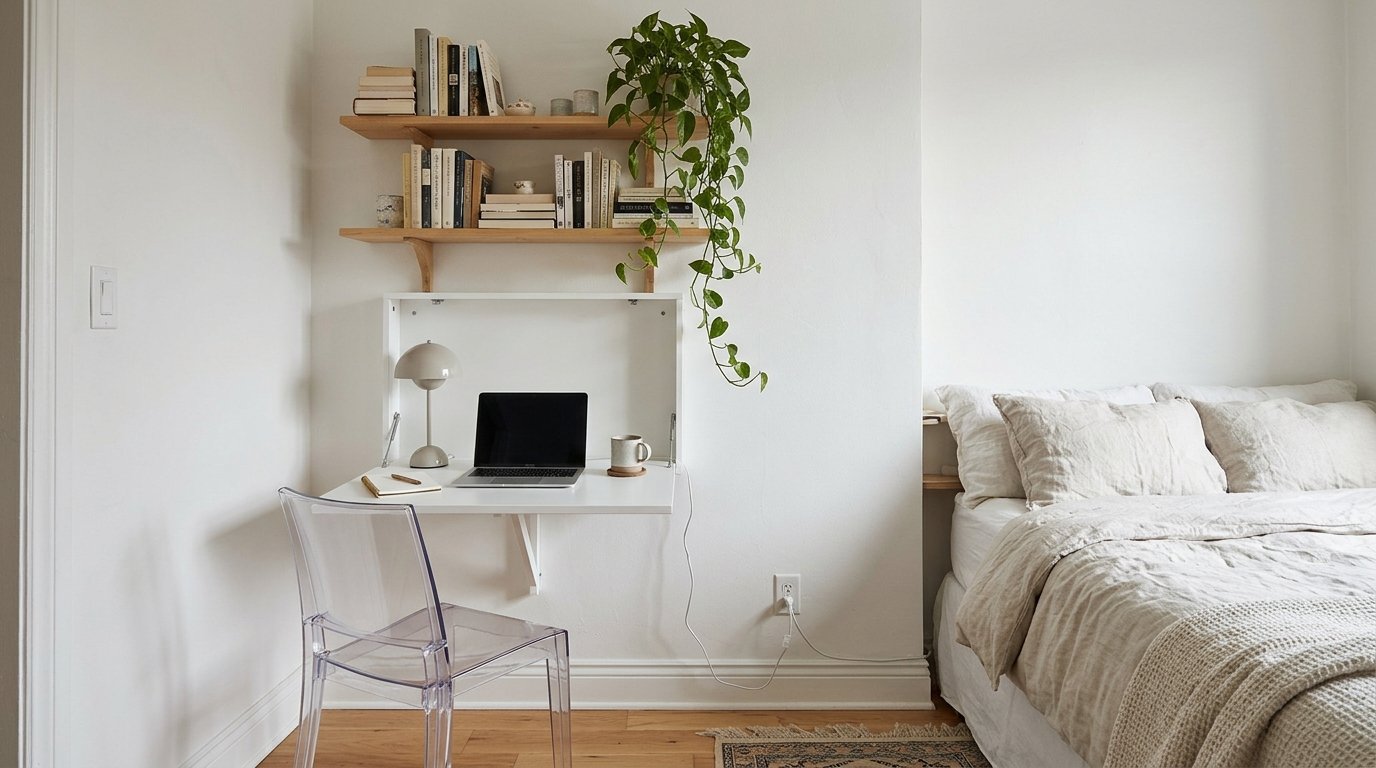
A floating desk takes up minimal space and can fold away when not in use.
Fold-down designs are ideal for occasional work, while a simple floating shelf at desk height works for laptops.
Pair it with a slim chair that tucks completely underneath.
Keep the area above the desk useful with a pegboard or a slim shelf for stationery, so the desktop stays clear.
Pro tip: Mount the desk around 28 to 30 inches from the floor for comfortable typing.

27. Choose Leggy, Light-Looking Furniture
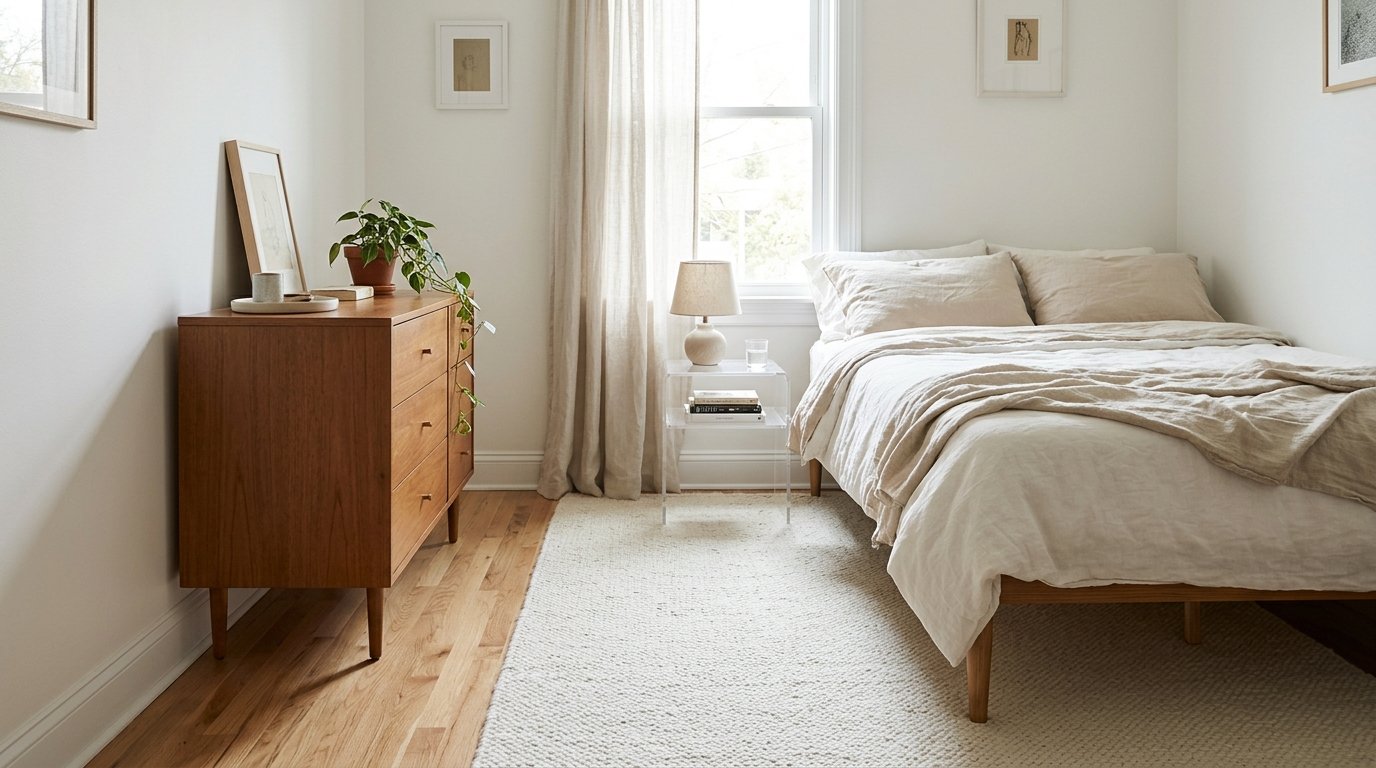
Furniture raised on slim legs feels less heavy because you can see the floor underneath.
Acrylic, glass and open-frame pieces almost disappear, making them perfect for tight spaces.
Avoid bulky, boxy furniture that sits flat on the floor.
Mirrored or glossy surfaces work in a similar way, reflecting light and making furniture feel less solid.
Pro tip: Choose an acrylic or glass nightstand if your bedside space is especially tight. It does the job without visual weight.

28. Keep Bedding Simple and Light
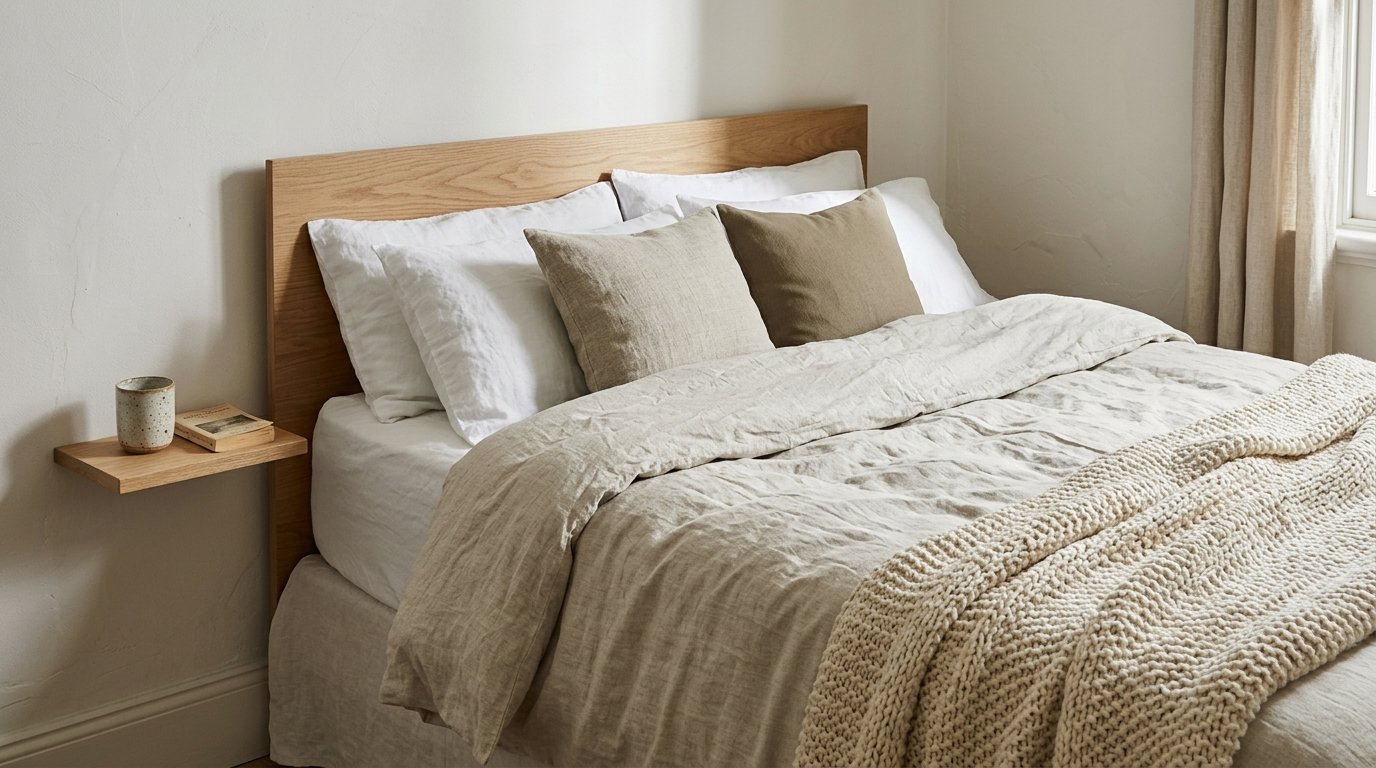
Busy patterns and dark bedding can make a small room feel cluttered. Light, solid-coloured bedding creates calm and visual space.
Add texture with linen, waffle weaves or a knitted throw rather than bold prints.
Limit decorative cushions to two or three so the bed doesn’t overwhelm the room.
Store spare bedding in vacuum bags or under the bed so the linen cupboard and wardrobe aren’t overloaded.
Pro tip: Choose bedding in the same family as your wall colour for a seamless, restful look.

29. Use a Large Rug
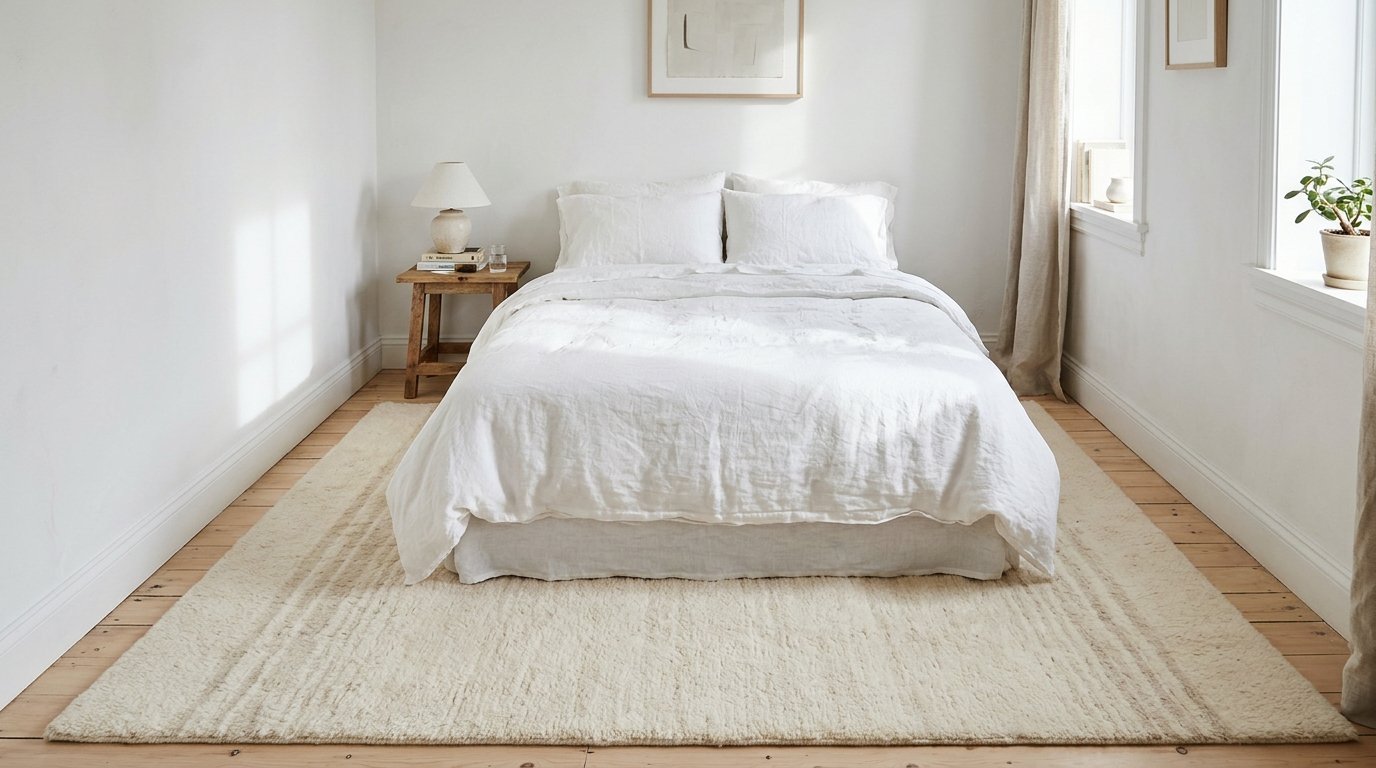
A rug that’s too small makes a room feel choppy. A larger rug that sits under the bed and extends on either side visually expands the floor.
Choose light colours or subtle patterns to keep the space airy.
A rug also adds warmth and softens sound in a small room.
Layering a smaller rug at the side of the bed can add softness underfoot without needing a huge rug if budget is tight.
Pro tip: Choose a rug that extends at least 18 inches beyond each side of the bed.

30. Declutter and Edit Regularly
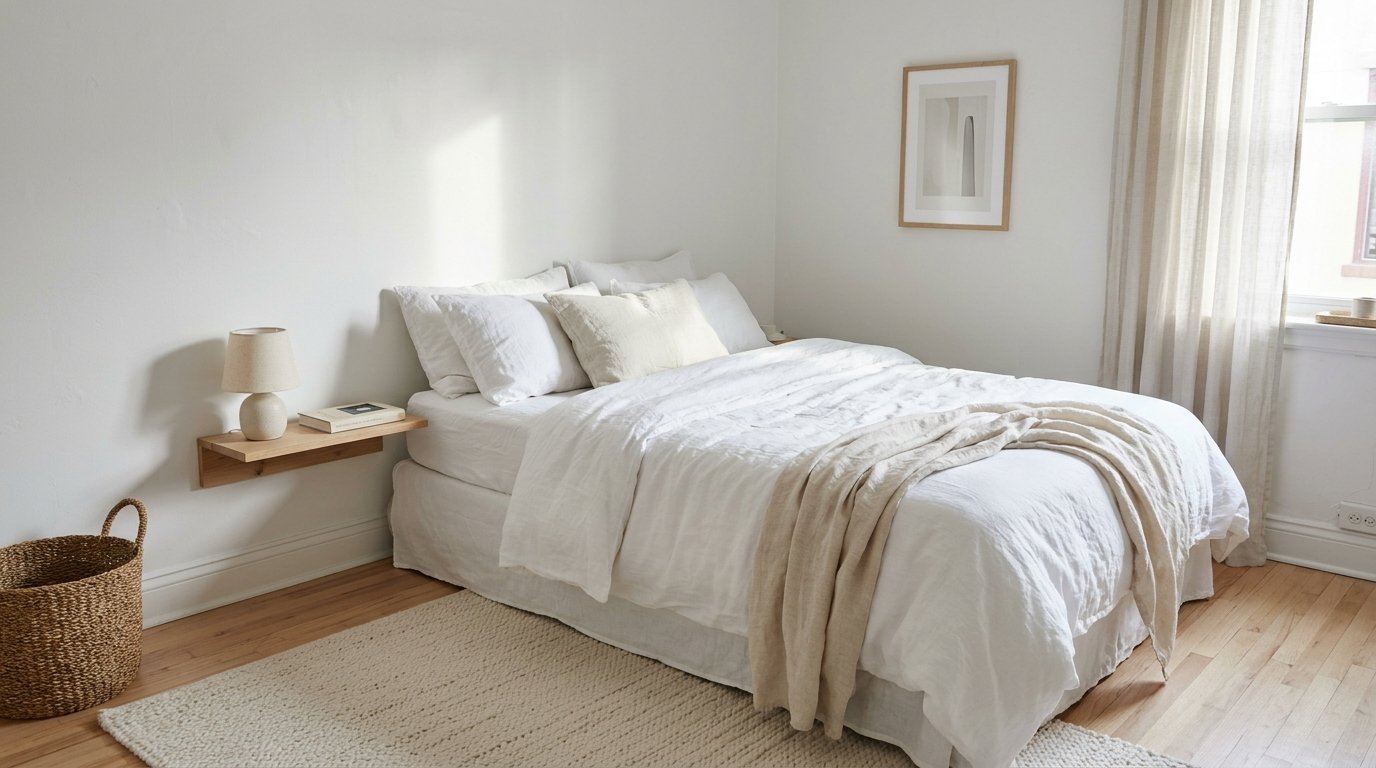
The most effective small bedroom idea costs nothing: keep clutter under control. A tidy room feels bigger, calmer and easier to clean.
Keep surfaces mostly clear, store everyday items in baskets and drawers, and only display a few favourite things.
Do a quick declutter each season and donate anything you no longer use or love.
Keep a small basket or tray for daily essentials, such as keys, glasses and chargers, so they always have a home.
Pro tip: Use the one-in, one-out rule. When something new comes into the room, something old goes.
31. Add Plants for Life and Freshness
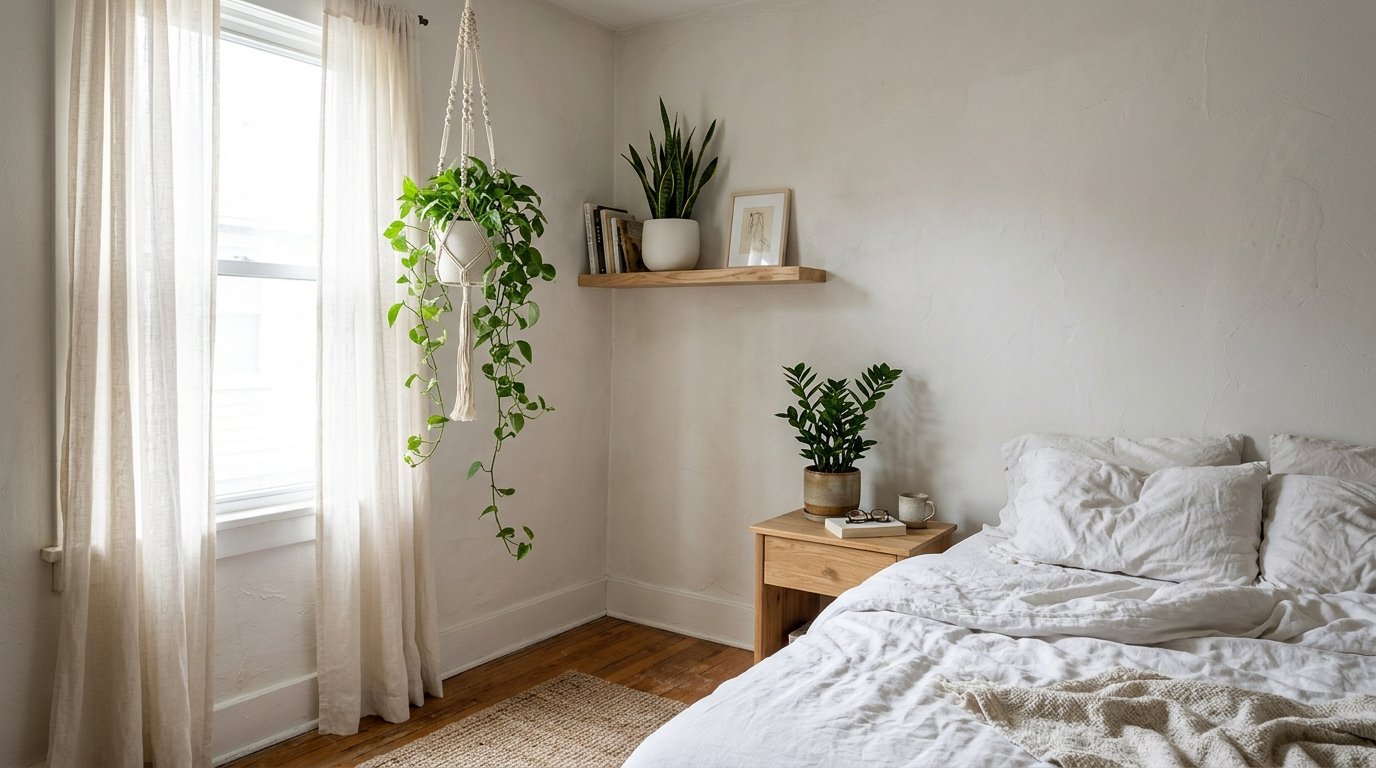
Plants make a small room feel alive without taking up much space. Trailing plants on shelves or hanging planters keep floors clear.
Low-maintenance varieties such as pothos, snake plants and ZZ plants thrive in bedrooms.
Group a few small plants together for impact instead of scattering many around the room.
Choose self-watering pots if you tend to forget to water. They keep plants healthy with minimal effort.
Pro tip: Use ceiling hooks or wall-mounted planters to add greenery without using any floor or surface space.

Frequently Asked Questions
How do I make a small bedroom look bigger?
Use light colours, add a large mirror, keep the floor clear, choose furniture on legs and maximise natural light. Hanging curtains high and wide and using vertical lines also make the room feel larger.
What size bed is best for a small bedroom?
It depends on the room, but a full or double bed often fits best in a small room. If space is very tight, a twin, daybed or loft bed can free up floor space.
Where should I put the bed in a small room?
In very small rooms, a corner placement saves the most space. If the room is wide enough, centring the bed on the main wall feels more balanced. Placing the bed under a window can free up wall space.
How can I add storage to a small bedroom?
Choose a storage bed, add floating shelves, use the back of the door, build storage around the bed and choose a tall, narrow dresser. Under-bed boxes and wall hooks also help.
Final Thoughts
A small bedroom can be just as stylish and comfortable as a large one. The key is to plan carefully, choose furniture that works hard and use colour, light and mirrors to stretch the space.
Start with one or two of these 31 ideas, such as a storage bed or a large mirror, and build from there. Little by little, you’ll create a bedroom that feels open, organised and truly restful.

